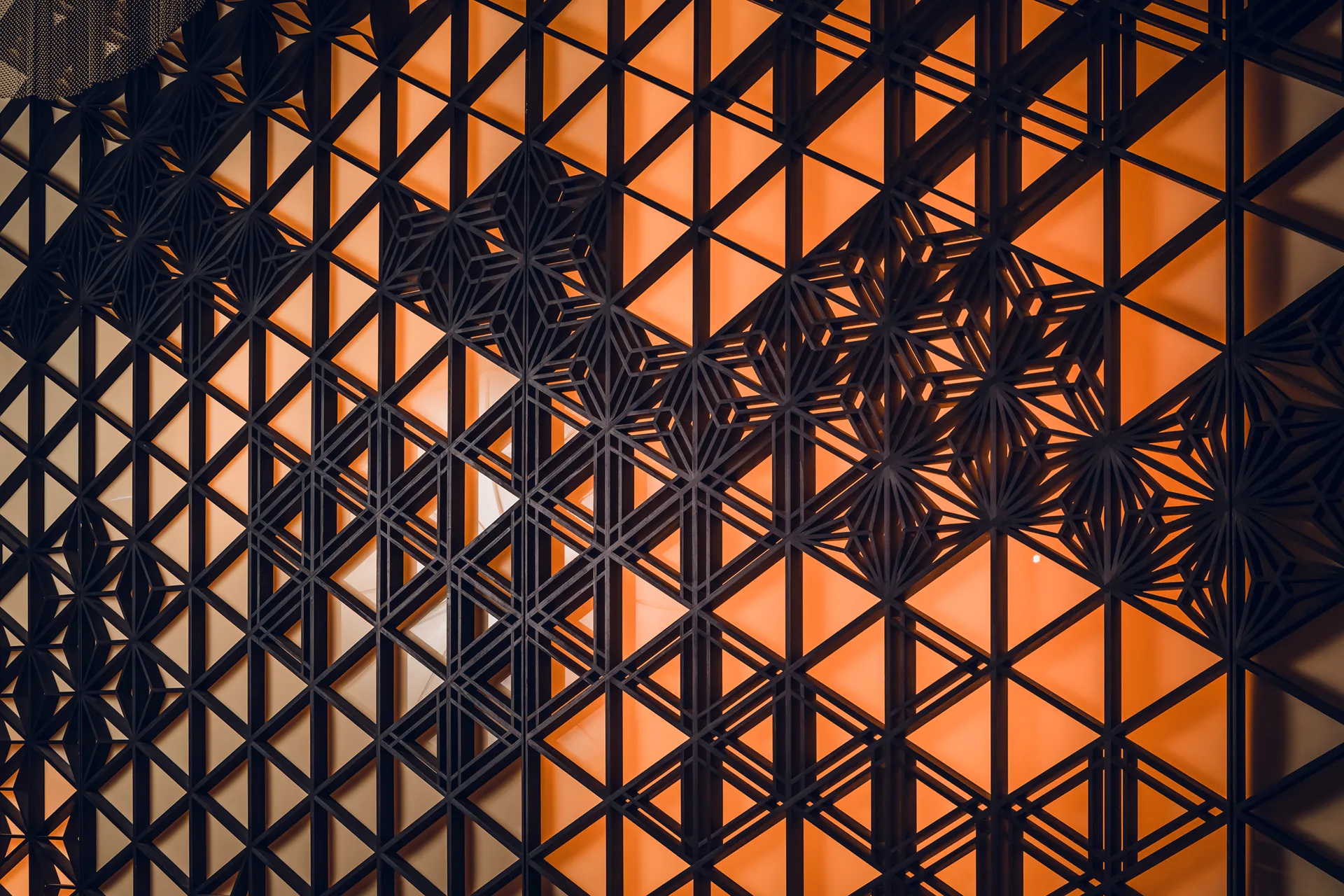

Among the most refined forms of traditional Japanese woodworking is kumiko, a joinery technique where thin timber pieces are assembled into intricate geometric compositions without nails, screws or metal fasteners. At first glance, kumiko screens appear delicate and decorative, yet behind their visual lightness sits an extraordinary level of technical precision developed through patience, repetition and disciplined craftsmanship.
For centuries, kumiko has been used within sliding doors, partitions, transom panels and architectural screens across traditional Japanese interiors. Rather than fully enclosing space, the latticework filters light, airflow and visibility while maintaining openness between rooms. As daylight shifts throughout the day, shadows move gradually across surrounding surfaces, giving interiors a quieter sense of rhythm and depth. Despite the complexity of the construction, the overall effect often feels restrained rather than ornamental.
Today, kumiko continues influencing contemporary architecture and hospitality design because of the balance it creates between geometry, craftsmanship and atmosphere.

Kumiko developed through Japan’s long history of timber construction and advanced joinery traditions. Because earthquakes were common throughout Japan, architecture evolved around flexible timber structures assembled through interlocking systems rather than heavy masonry. Over time, carpenters developed increasingly sophisticated methods for connecting timber without relying on metal hardware.
From this broader joinery culture, kumiko emerged as a specialised craft associated with shoji screens, ranma transom panels and interior partitions used throughout traditional Japanese buildings. Thin strips of cedar or cypress were carefully cut and assembled into repeating geometric patterns that balanced technical accuracy with visual delicacy. Although the technique originated from practical architectural systems, kumiko gradually became recognised as a craft form valued equally for its relationship with light, proportion and atmosphere.
What separates kumiko from many decorative timber techniques is the absence of nails, screws or visible adhesives. Each timber component is individually measured, cut and fitted through precise joinery where small angled pieces lock together through tension and compression alone. Even slight inaccuracies can prevent the entire composition from assembling correctly.
Traditional kumiko craftspeople often work within tolerances measured in fractions of a millimetre. Individual timber pieces may appear fragile independently, yet together they create durable and highly stable assemblies. The process demands patience, consistency and material control. Timber selection, grain direction and moisture content all require careful consideration to minimise movement over time. Specialised hand tools are used to achieve the sharp intersections and clean edges needed for complex geometric compositions. Importantly, kumiko does not hide its construction. The craftsmanship remains fully visible through the joinery itself, allowing the assembly process to become part of the final visual identity of the screen.
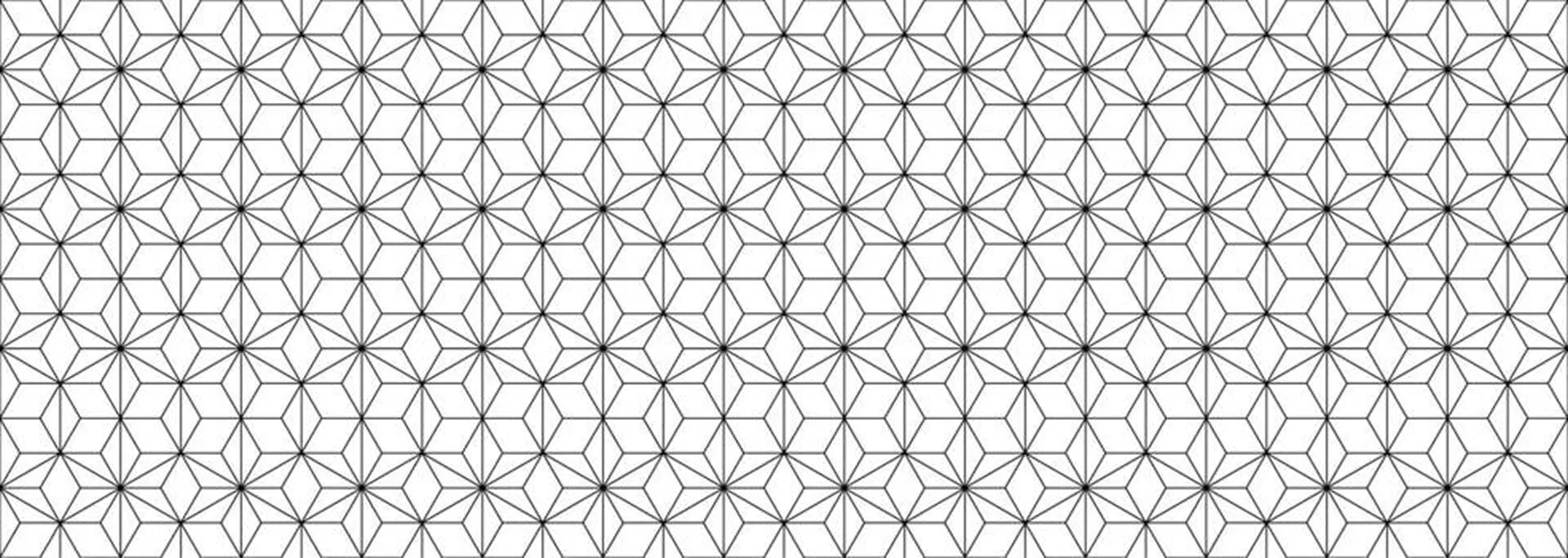
Many kumiko patterns carry associations tied to nature, seasonality and traditional Japanese symbolism. One of the most recognised patterns is asanoha, a repeating hemp leaf motif historically associated with growth and resilience. Other geometries reference mountains, waves, tortoise shells, bamboo leaves and cherry blossoms through layered triangular, hexagonal and diamond formations.
Historically, these patterns introduced subtle visual richness into interiors without overwhelming the restraint of traditional Japanese architecture. Decoration emerged through repetition, rhythm and proportion rather than applied ornament or excessive material contrast. The geometry also affects how light behaves within space. As sunlight passes through the timber lattice, shifting shadows move continuously across walls, floors and ceilings throughout the day. Interiors therefore remain visually active despite relatively restrained material palettes. This sensitivity to light and atmosphere continues making kumiko highly relevant within contemporary design today.

Traditional Japanese interiors often prioritised flexibility and layered spatial transitions rather than rigid enclosure. Sliding partitions, thresholds and screens allowed rooms to adapt according to season, gathering size or daily activity. Kumiko contributed directly to this approach by filtering views and softening daylight while maintaining visual connection between spaces.
Rather than acting as solid barriers, kumiko screens create varying degrees of openness, privacy and hierarchy within interiors. The craft also reflects broader Japanese attitudes toward restraint and material honesty. Timber remains exposed, construction is not concealed and visual richness comes through precision rather than excess. This softer approach to spatial division continues influencing contemporary Japanese-inspired hospitality environments, particularly within restaurants and hotels seeking more controlled transitions between openness and intimacy.
In recent years, kumiko has seen growing use within architecture, furniture and hospitality interiors internationally. Restaurants, hotels and residential spaces increasingly incorporate kumiko screens to divide dining areas, frame views and introduce layered lighting conditions without creating heavy separation between spaces. Backlit timber lattice installations have become especially common within hospitality settings where filtered light contributes to atmosphere and depth.
Kumiko also reflects a different understanding of luxury. Its value comes less from material expense and more from labour, precision and time-intensive construction. The refinement of the craft is tied directly to process. For hospitality interiors focused on craftsmanship and tactile materiality, kumiko introduces visual complexity without relying on excessive ornamentation. In dining environments especially, the screens help shape slower and more intimate atmospheres through light, texture and controlled visibility. The strongest contemporary applications retain awareness of the craft’s structural logic and cultural origins rather than treating the patterns as purely decorative graphics.
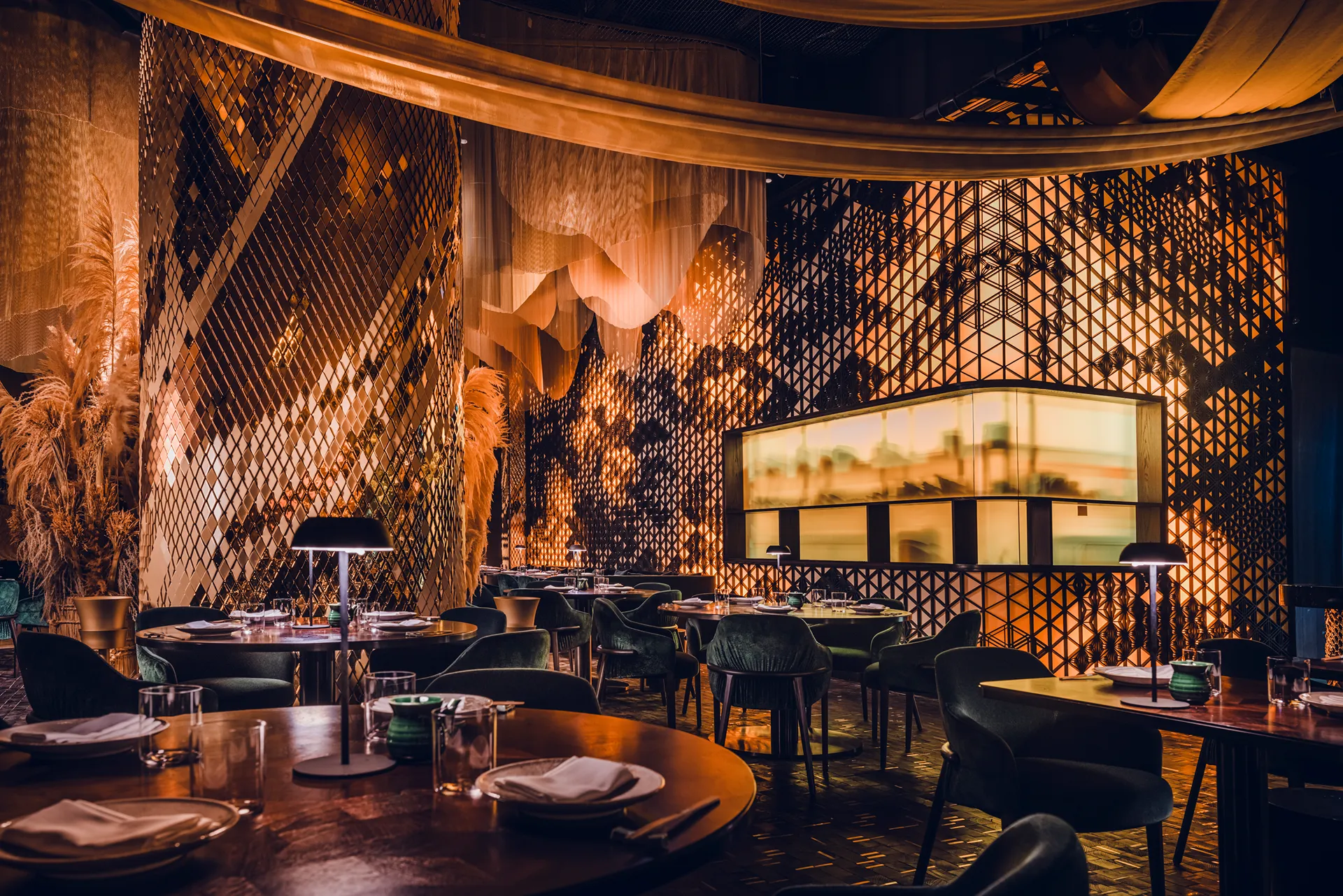
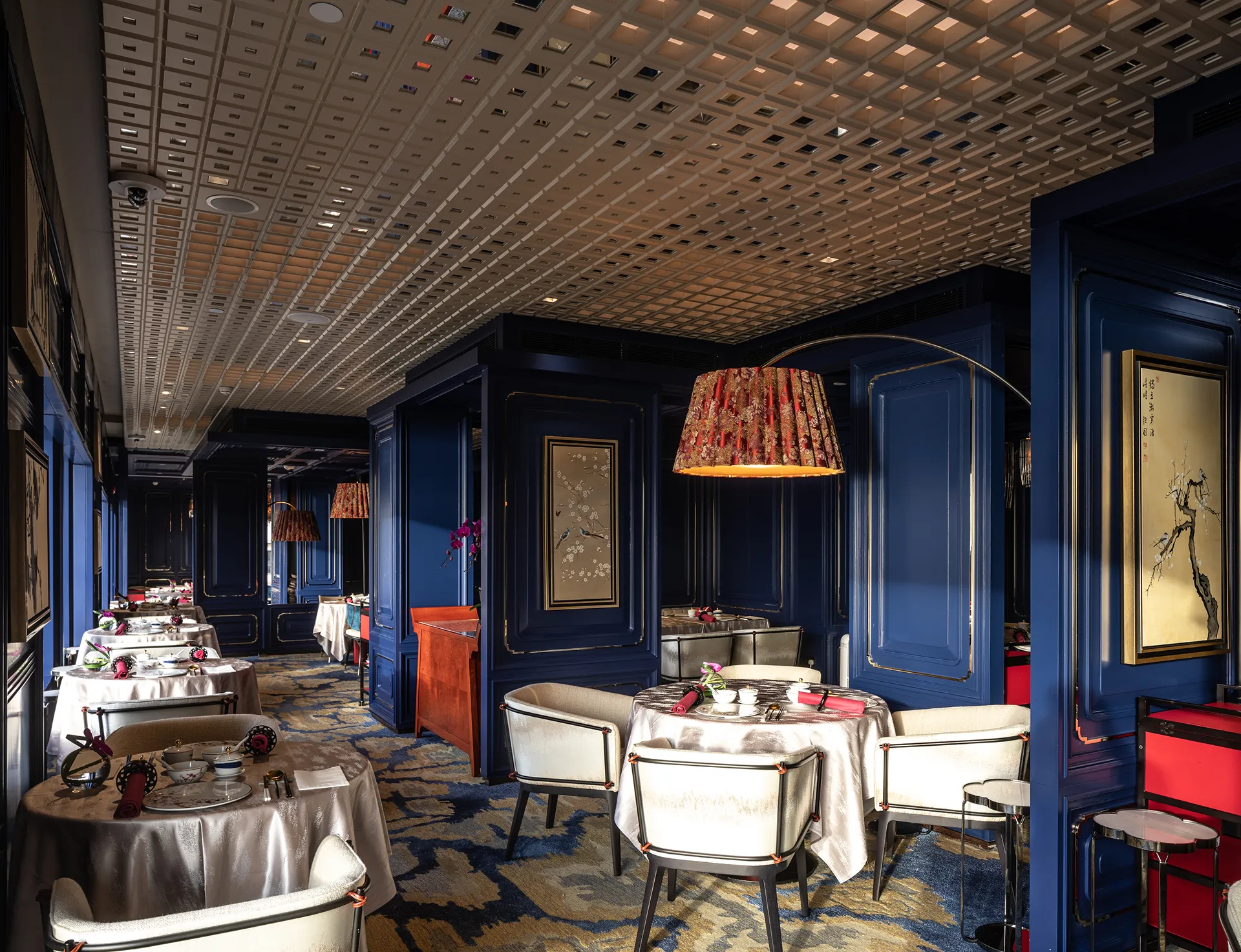
At Strawfire, kumiko screens form part of the restaurant’s wider reference to Japanese craftsmanship and material layering. Used throughout the dining environment, the screens help shape light, atmosphere and movement while introducing depth through illuminated geometric timber compositions.
Their precision also balances the heavier material palette and fire-focused elements elsewhere within the restaurant. The contrast between controlled geometry and open flame becomes part of the overall spatial character. More importantly, the use of kumiko acknowledges the technical discipline behind the craft itself. The absence of visible fasteners, the accuracy of the joinery and the delicacy of the timber assembly all contribute to the atmosphere of the space without relying on overt decoration.
Part of what makes kumiko remarkable is how much visual complexity can emerge from relatively simple materials. Thin timber strips, carefully measured and assembled, become capable of producing compositions that feel almost weightless despite the precision required for their construction. The craftsmanship reveals itself gradually through rhythm, proportion and detail rather than dramatic gestures.
In many ways, kumiko reflects broader Japanese approaches toward making, where refinement comes through repetition, patience and control. Even within contemporary architecture and hospitality design, kumiko continues carrying strong cultural value because it preserves visible evidence of human concentration, technical skill and material understanding within the finished work itself.