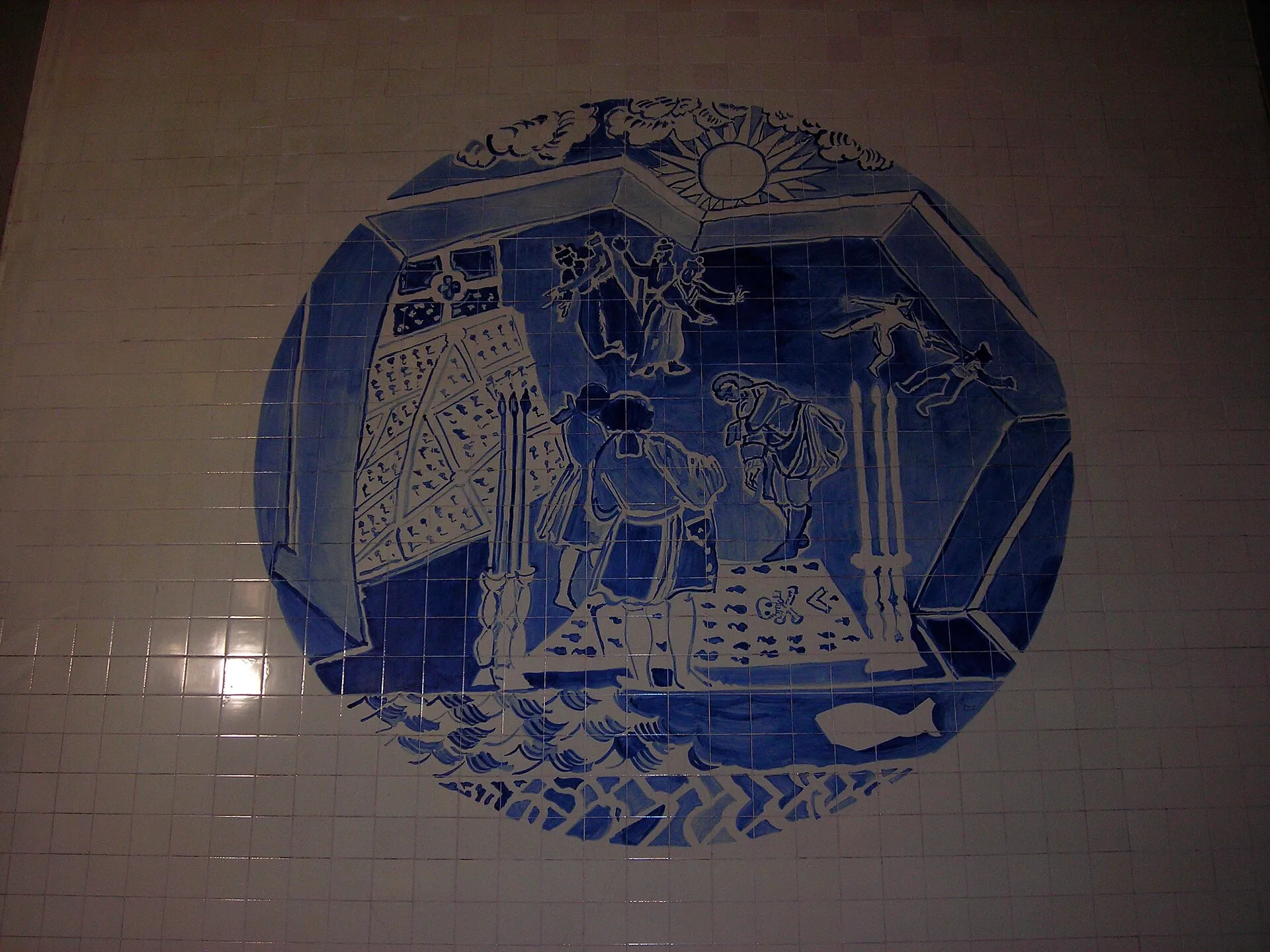


BEFORE THE SKYSCRAPERS, KUALA LUMPUR WAS A MINING SETTLEMENT
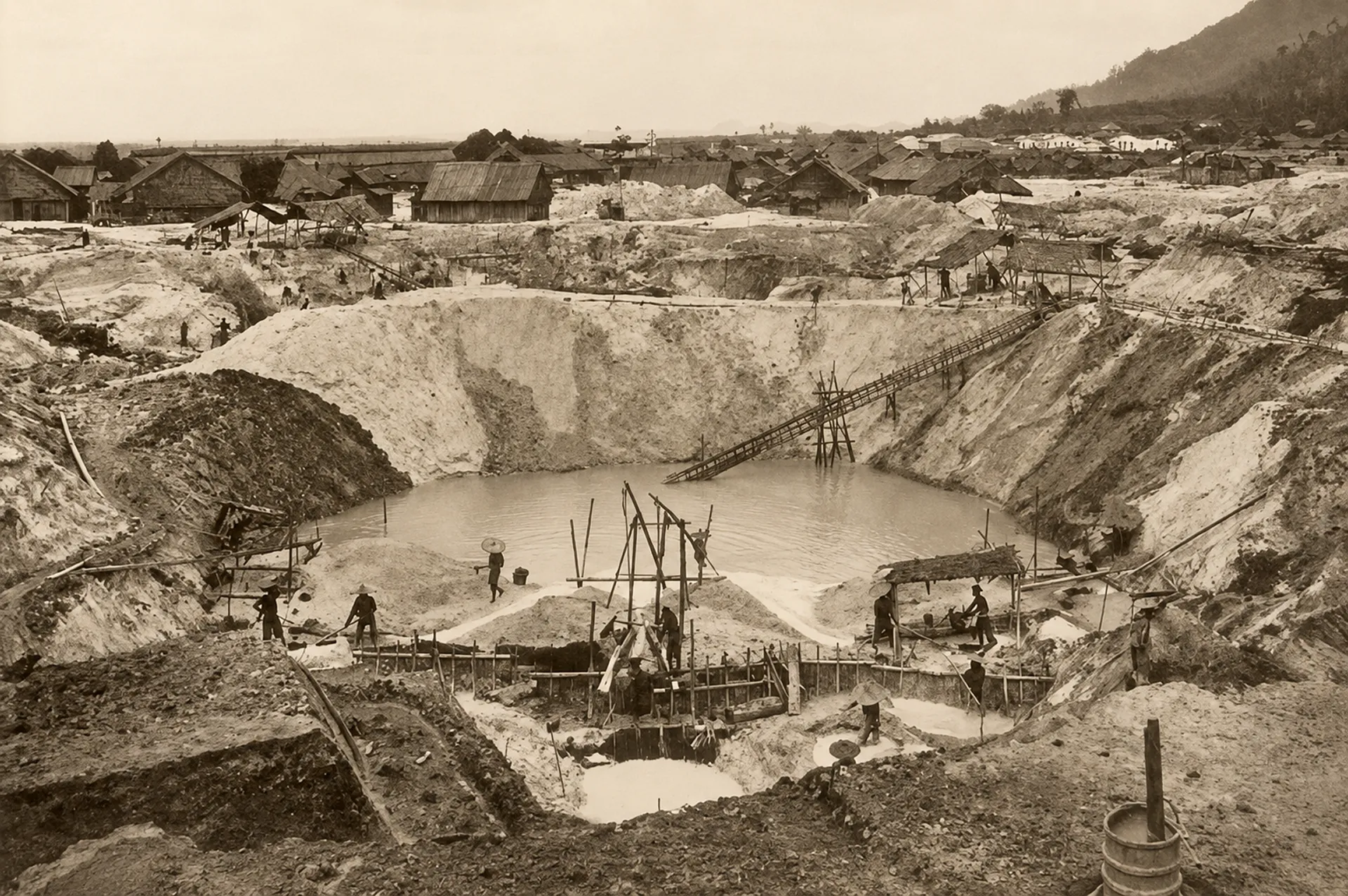
Before Kuala Lumpur became Malaysia's financial and commercial capital, it was a frontier settlement shaped by rivers, mud and tin. The city emerged during the nineteenth century at the meeting point of the Klang and Gombak rivers, an area rich in alluvial tin deposits that attracted miners, traders and entrepreneurs into what was then a largely undeveloped landscape. What began as a rough mining outpost gradually evolved into one of Southeast Asia's most important urban centres, driven largely by global demand for a single commodity.
Even Kuala Lumpur's name reflects these origins. Often translated as "muddy confluence", it refers to the meeting of the two rivers around which the earliest settlement developed. Long before glass towers, expressways and luxury hotels appeared, the area was defined by muddy riverbanks, temporary mining camps and networks of labourers working to extract ore from the surrounding valleys. The city did not grow around a royal court, military stronghold or colonial administrative centre. It grew around an industry.
Many traces of this history remain embedded within Kuala Lumpur today, although they are often overshadowed by rapid urban development. Transport routes, commercial districts, former labour settlements and even the location of certain neighbourhoods can be traced back to decisions made during the mining era. To understand Kuala Lumpur's development is to understand the industry that created the conditions for the city itself to emerge.
WHY TIN BECAME SO IMPORTANT

Tin has been valued for thousands of years because of its versatility. It played an important role in bronze production, metalworking and later industrial manufacturing. During the nineteenth century, demand increased significantly as industrialisation accelerated across Europe and North America. Tin became essential for food preservation through canning, while also finding widespread use in engineering, construction and manufacturing. As global trade expanded, access to reliable tin supplies became increasingly valuable.
The Malay Peninsula contained some of the richest tin deposits in the world, particularly within the western states of Perak and Selangor. Mining activity accelerated rapidly during the mid-nineteenth century as traders, investors and labourers were drawn to the region. Kuala Lumpur's growth was closely linked to this expansion. Chinese miners moved inland along river systems to establish operations around Ampang and the surrounding valleys, creating settlements that gradually developed into permanent communities. What began as a collection of mining camps evolved into a commercial centre supporting a much larger regional industry.
Tin transformed more than the economy. The movement of labour, capital and commerce reshaped the demographics of the region itself. Chinese migrant communities established businesses, clan associations, religious institutions and trading networks that became central to the development of Kuala Lumpur. The multicultural character for which the city is known today was shaped partly through these early industrial migrations, linking the history of mining directly to the social history of the city.
LIFE IN THE EARLY MINES
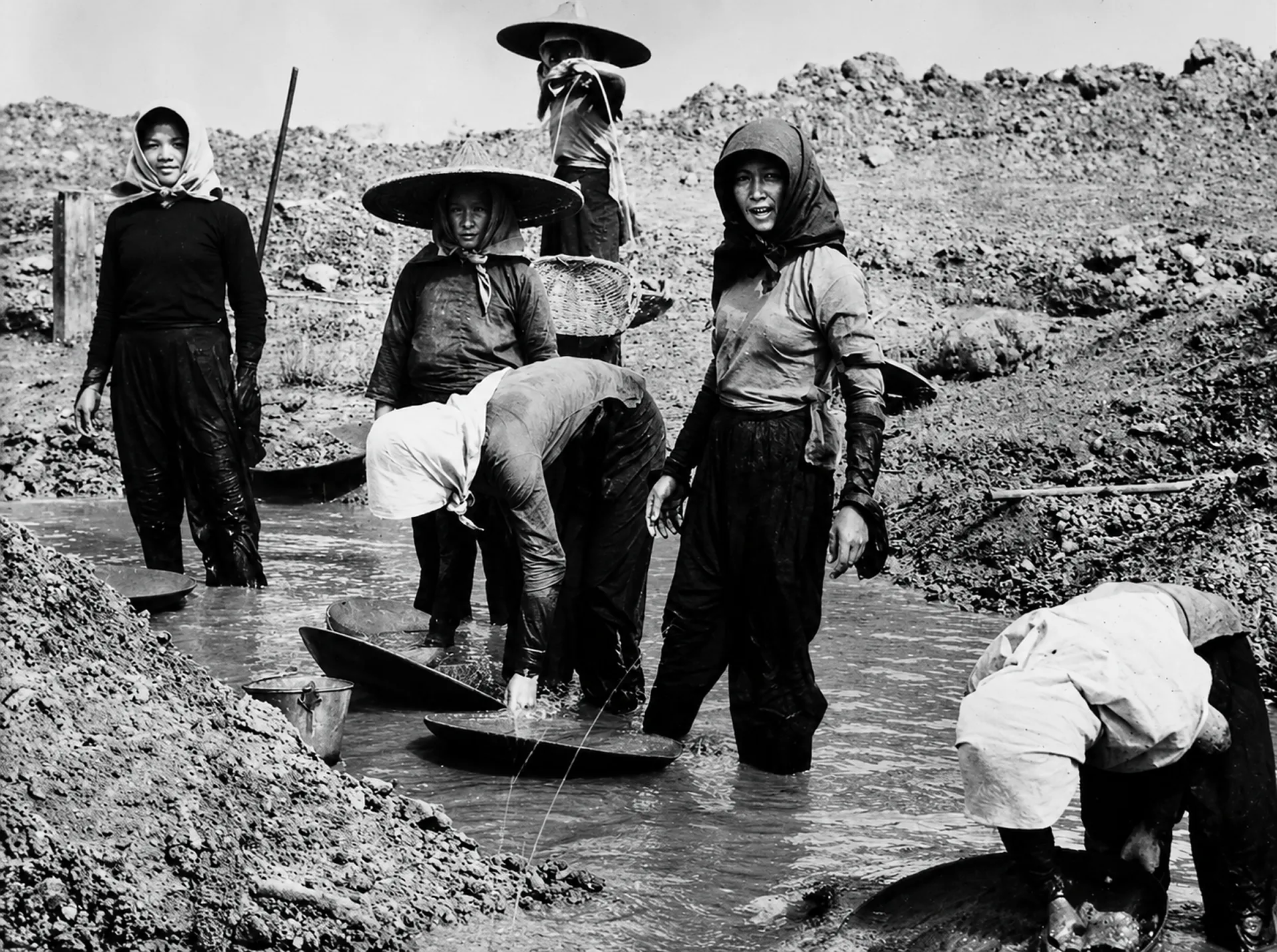
The early decades of tin mining were physically demanding and often dangerous. Much of the work relied on manual extraction methods carried out in tropical conditions with limited infrastructure. Labourers spent long hours standing in waterlogged excavations, separating ore from soil and gravel using relatively simple tools. Rivers and floodplains became primary sites of activity because alluvial deposits were often concentrated in these areas.
Conditions within the mining settlements could be harsh. Flooding was common, disease spread easily and sanitation was often poor. Camps developed quickly around productive mining sites, frequently without formal planning or permanent construction. Yet despite these difficulties, the profitability of tin encouraged continual expansion. New settlements appeared as miners moved further inland in search of richer deposits.
As production increased, operators sought more efficient methods of extraction. Engineering innovations gradually replaced labour-intensive techniques, allowing larger volumes of earth to be processed more quickly. These developments would eventually lead to one of the most distinctive technologies associated with Malaya's mining industry: the tin dredge.
HOW DREDGING CHANGED THE LANDSCAPE

Few machines shaped the landscape of twentieth-century Malaya as dramatically as the tin dredge. These enormous floating structures represented a major shift in mining technology, allowing operators to process vast quantities of earth on a scale that would have been impossible through manual methods alone.
A dredge functioned as a floating industrial plant. Large bucket chains continuously excavated sediment from the ground below before carrying material onboard for washing, sorting and processing. Tin-bearing ore was separated from soil and gravel while waste material was deposited behind the machine. As the dredge advanced slowly through the landscape, it transformed the terrain around it.
The scale of these machines was extraordinary. Constructed from exposed steel frameworks, conveyor systems, platforms, pulleys and rotating machinery, dredges resembled floating factories moving across artificial lakes. Their presence dramatically altered the appearance of entire valleys. Landforms were reshaped, river systems were modified and vast mining ponds emerged throughout the Klang Valley and other mining regions.
Many of the lakes visible throughout parts of Malaysia today are remnants of this industrial process. Although the machinery has largely disappeared, the landscapes it created remain. In some locations, former mining sites have been transformed into residential developments, recreational lakes or commercial districts. Beneath these new uses lies a physical record of one of the most intensive periods of industrial activity in the country's history.
RAILWAYS, TRADE AND COLONIAL EXPANSION
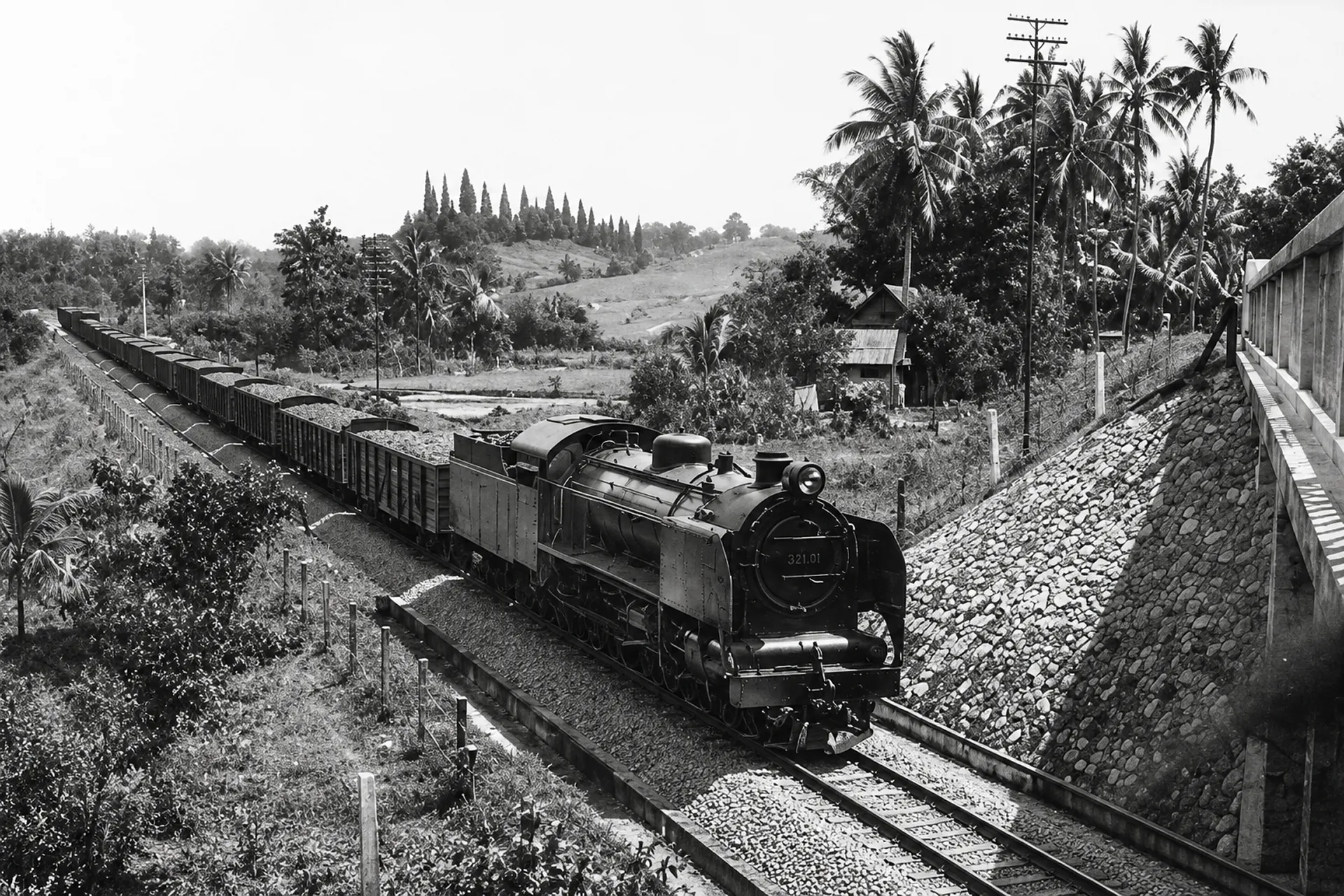
The economic importance of tin also accelerated British involvement throughout the Malay Peninsula. As demand grew, colonial administrators increasingly invested in infrastructure that could support extraction and export. Railways connected mining regions to ports, roads linked settlements and administrative systems expanded alongside commercial activity.
Kuala Lumpur benefited directly from these developments. What had begun as a mining settlement gradually evolved into an administrative and commercial centre serving the wider industry. Government buildings, warehouses, rail infrastructure and trading districts appeared alongside mining operations, creating a city shaped equally by extraction and commerce.
The architecture of early Kuala Lumpur reflected this reality. Shop houses, warehouses, railway facilities and commercial buildings emerged alongside colonial civic structures. Rather than developing through a single urban vision, the city grew through a combination of industrial necessity, commercial opportunity and population growth. The result was an urban landscape where trade, migration and industry became closely intertwined.
TIN, MIGRATION AND THE MAKING OF A CITY
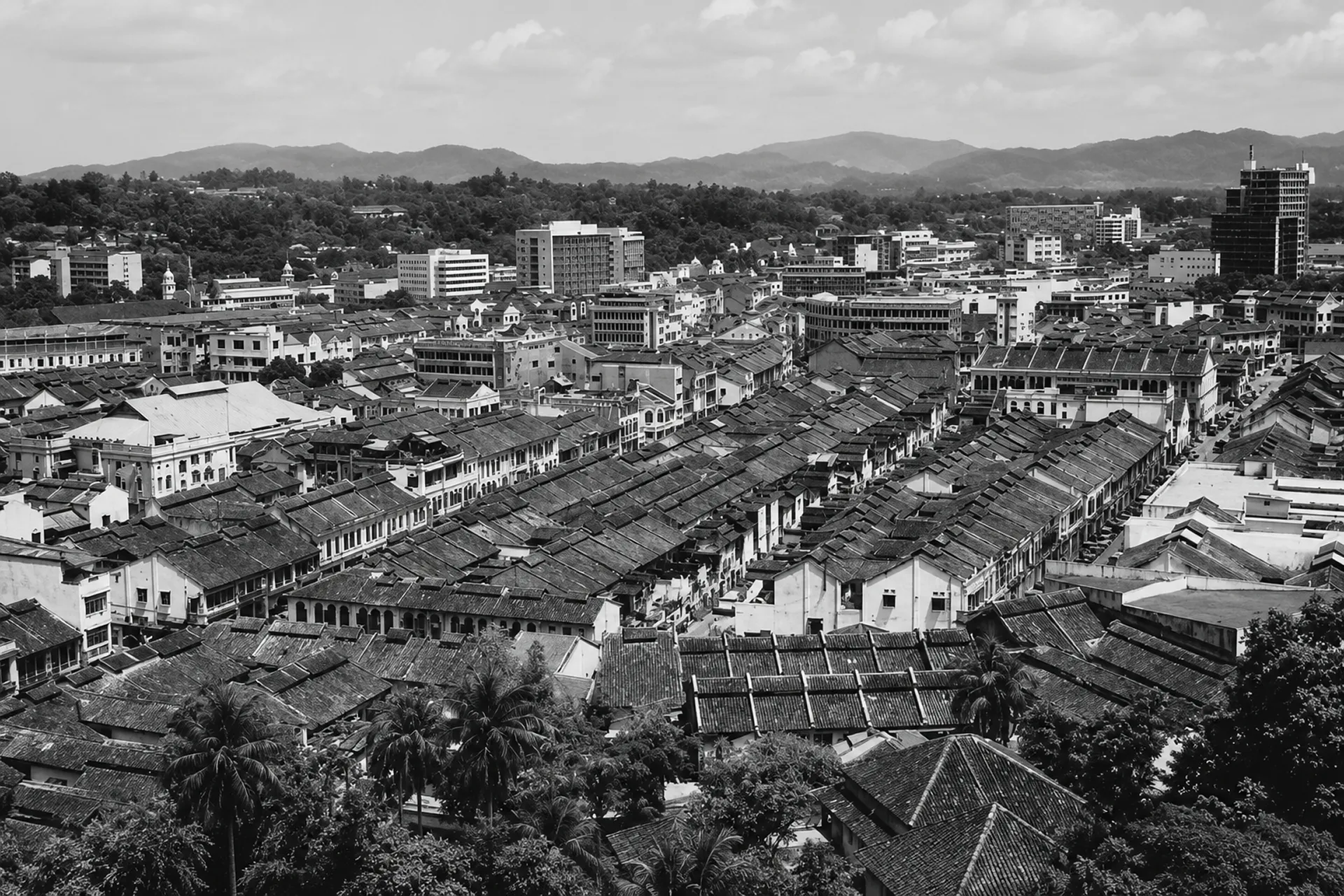
The growth of the tin industry attracted large numbers of migrants, particularly from southern China, who arrived seeking economic opportunity within the mining regions of Malaya. Many initially came as labourers, but over time communities became established, businesses expanded and entire districts emerged around mining-related activity.
Clan associations, temples, schools and commercial organisations became important parts of daily life within these settlements. As mining communities matured, they contributed not only labour but also entrepreneurship, investment and social infrastructure. Wealth generated through mining frequently flowed into property development, commerce and urban expansion, helping transform temporary settlements into permanent towns.
The development of Kuala Lumpur was therefore shaped not simply by extraction, but by the movement of people, knowledge and capital. Mining created employment, attracted investment and encouraged the growth of supporting industries. The city's rise cannot be separated from these broader patterns of migration and commerce that accompanied the industry.
THE DECLINE OF TIN AND THE TRANSFORMATION OF KUALA LUMPUR

By the late twentieth century, Malaysia's tin industry entered a period of decline. Falling global prices, increasing production costs and competition from other markets gradually reduced profitability. Many dredges were abandoned, mining operations closed and former industrial landscapes began transitioning to new uses.
At the same time, Kuala Lumpur was entering a different phase of development. Finance, real estate, tourism and international business increasingly replaced extraction as the primary drivers of economic growth. Skyscrapers rose above districts once associated with mining activity, while large-scale infrastructure projects reshaped the city's image both domestically and internationally.
Yet the foundations created by the mining era never disappeared. Transport networks, commercial districts and patterns of urban growth established during the nineteenth and twentieth centuries continued influencing the city's development long after the industry itself had faded. The modern city remains built upon an industrial landscape that shaped its earliest decades.
INDUSTRIAL HERITAGE AND HOSPITALITY DESIGN

As Kuala Lumpur continues to evolve, designers and cultural institutions have increasingly revisited the city's mining history as an important source of local identity. The industrial landscapes, engineering systems and machinery associated with tin extraction provide a distinctive narrative that differs from the generic visual language found in many global cities.
Particularly influential are the structural qualities associated with dredging machinery. Exposed steel frameworks, mechanical systems, cable formations, industrial textures and engineered structures offer rich design references that connect directly to Kuala Lumpur's origins. These elements are most effective when interpreted rather than replicated, allowing historical ideas to inform contemporary environments without becoming literal reconstructions.
At Hyatt Centric Kuala Lumpur, references to the city's mining heritage appear through forms, materials and details inspired by the industrial world that helped shape the city. Influences drawn from dredges, tin processing systems, steel structures and mechanical infrastructure contribute to a design language rooted in Kuala Lumpur's own history. Rather than relying solely on international hotel aesthetics, the project draws upon the story of the industry that transformed a muddy river settlement into one of Southeast Asia's most dynamic cities.
The history of tin mining is visible far beyond museums and archives. It survives in the shape of the landscape, the structure of the city and the stories that continue to define Kuala Lumpur today.
SOURCES
- Britannica Kuala Lumpur facts
- Britannica Kuala Lumpur summary
- Britannica Yap Ah Loy
- Britannica History of Malaysia: The impact of British rule
- Britannica Tin processing: mining and concentrating
- Economic History of Malaya About Tin Mining
- The Star Last surviving tin dredge TT5 receives British engineering heritage award
- Bernama TT5: Reviving Perak’s tin-mining legacy
- New Straits Times Kinta Valley glory days return to former tin mining areas
- New Straits Times Riches from the labour of tin coolies
- Railway Wonders of the World The Development of Malaya: A Line That Brought Prosperity to the Jungle