A DISH SHAPED BY SCOTTISH SETTLERS, WEST AFRICAN COOKING AND THE BLACK COOKS WHO PERFECTED IT
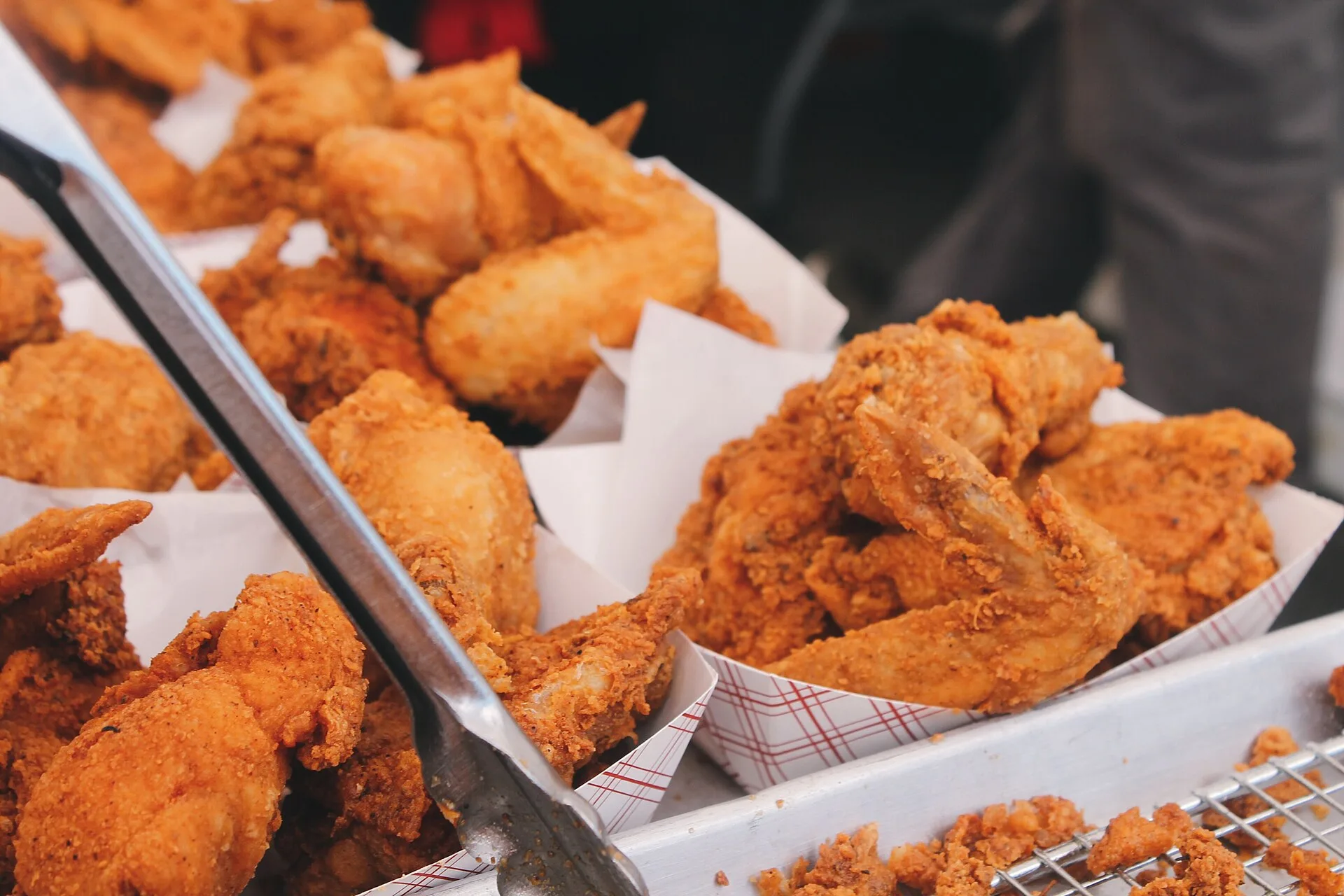
The history of Southern fried chicken has no single inventor and no fixed date of origin. Food writers and historians point to two older traditions that met in the American South: the Scottish habit of frying chicken in fat rather than boiling or baking it, and the cooking techniques West Africans brought with them through the slave trade. The people who refined the dish were largely enslaved cooks working in Southern kitchens, and after emancipation fried chicken became a source of income and property for Black women vendors in Virginia. The first printed American recipe appeared in Mary Randolph's The Virginia House-Wife in 1824. In the twentieth century the dish moved from church life and railway platforms into a Harlem supper club known for chicken and waffles, and a roadside cafe in Kentucky, where Kentucky Fried Chicken began.
WHERE DID SOUTHERN FRIED CHICKEN COME FROM?
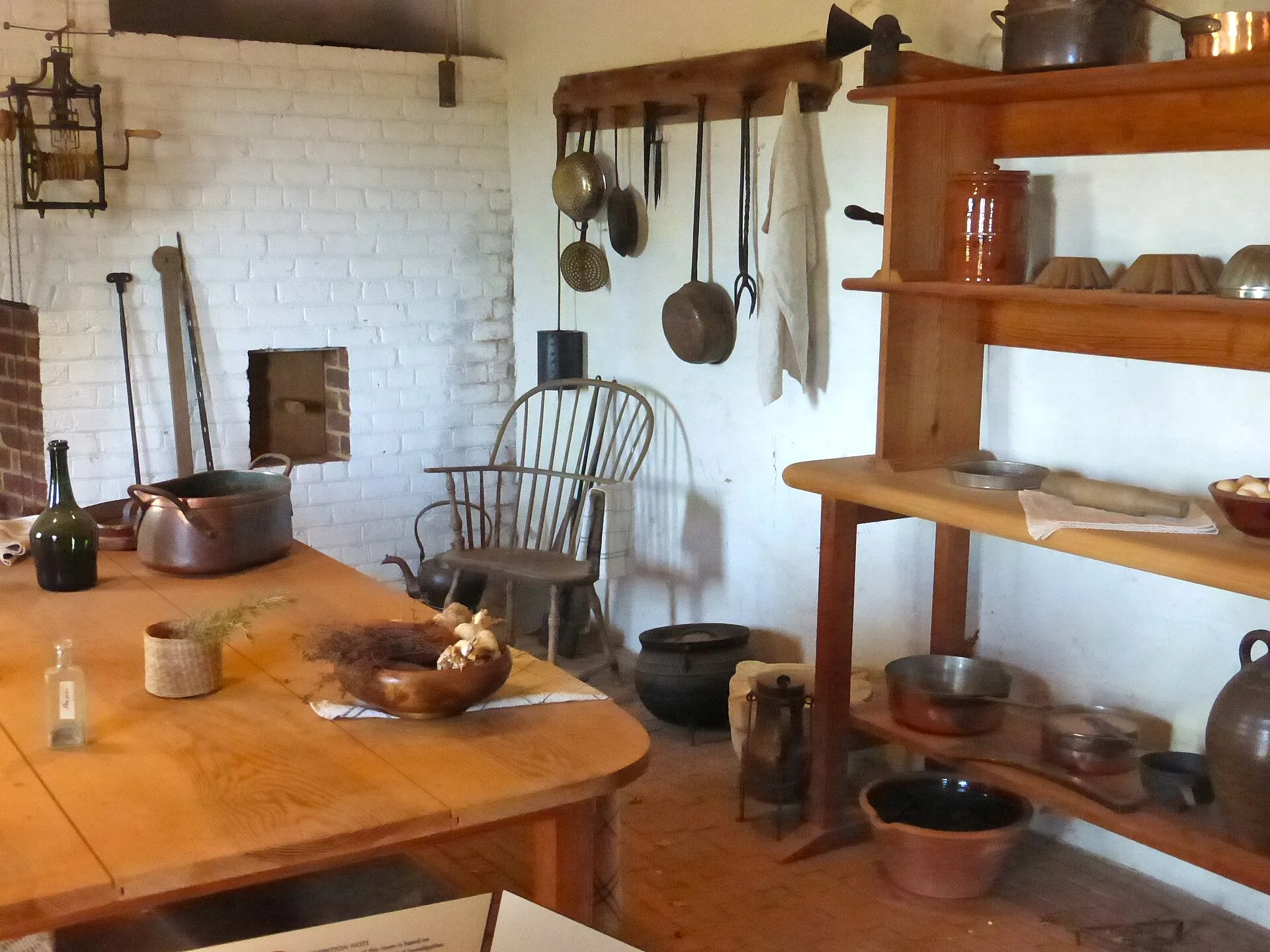
The European side of the story usually begins in Scotland. John F. Mariani, editor of the Encyclopedia of American Food and Drink, wrote that the Scots preferred frying their chickens to the boiling or baking favoured by the English, and suggested they may have carried the method with them when they settled in the South. Settlers from Scotland and Ulster were especially numerous in the Southern colonies from the mid-eighteenth century. The Scotsman notes that chickens were easy to raise and that frying was quick and used little fuel, which kept the dish within reach of poorer households.
Writing for Atlanta Magazine, the critic Bill Addison credited the enslaved kitchen workers of the South with perfecting the dish, combining West African cooking techniques with what may have been a Scottish preference for frying. In Building Houses Out of Chicken Legs (University of North Carolina Press, 2006), the historian Psyche A. Williams-Forson of the University of Maryland traces how chicken, as both bird and food, has figured in the lives of African American women from slavery to the present. Black women were traditionally required to cook chicken for white households, which gave the bird a complicated set of associations from the slavery era onwards.
Chickens also had a place in the economy of enslaved communities. Household accounts kept at Thomas Jefferson's Monticello between August 1805 and October 1808, now held by the Library of Congress, show that chickens, eggs and vegetables were the goods enslaved people sold most often to the plantation kitchen, for payment in money or credit. One gardener, Wormley, sold food to the household on forty-three occasions over four years. Overseers' wives competed with enslaved sellers in the same trade in chickens, eggs and honey.
THE FIRST PRINTED SOUTHERN FRIED CHICKEN RECIPE

The earliest printed recipe for fried chicken in an American cookbook is widely credited to Mary Randolph, born in 1762 at Ampthill, her family's plantation in Chesterfield County, Virginia. After financial reversals she opened a boarding house in Richmond in 1808, and in 1824 she published The Virginia House-Wife, which the Library of Virginia describes as the first American regional cookbook. It went through many editions until the 1860s, and Randolph was revising it for a third edition when she died in 1828. The Library of Virginia notes that her recipes drew on African, American Indian and European cooking.
Randolph's method: the cook cuts the birds into pieces as for a fricassee, dredges them in flour, sprinkles them with salt and fries them in boiling lard until they turn light brown. Smithsonian Magazine notes that Randolph came from a slaveholding family, and that Letitia Burwell, writing about Virginia life before the Civil War, said the housewives of the state, and presumably many enslaved cooks, knew the dishes in Randolph's book. The New York Times food writer Julia Moskin judged that the recipe has never been substantially improved upon.
GORDONSVILLE AND THE WAITER CARRIERS

After emancipation, fried chicken became a business in Gordonsville, Virginia. The Louisa Railroad reached the town on 1 January 1840, and Gordonsville became the junction of the Virginia Central and the Orange and Alexandria lines. Early trains had no dining cars. After the Civil War, Black women from Brown Town, one of the county's freedmen's villages, met the trains with trays of fried chicken, fried apple pies, biscuits and coffee, some carried on their heads. Passengers chose through the open windows and paid by placing money on the tray. According to the Orange County Historical Society, the women were first called waiter carriers and later chicken vendors. Legs and breasts sold for 15 cents, backs and wings for 5 or 10 cents.
The trade made Gordonsville known as the Fried Chicken Capital of the World, and NPR reports that some travellers planned their routes to pass through the town. Bella Winston, who learned the trade from her mother Maria Wallace, told a local newspaper in 1970 that her mother had paid for their home with chicken sales. Bob Coiner, then mayor of Gordonsville, told NPR that this degree of economic independence was rare for African Americans after emancipation. Williams-Forson took her book's title from this history, while noting that the written record on the Gordonsville vendors is sparse.
The town council required vendors to hold a licence and pay a licence tax from 1879. Business tapered off during the Depression and revived briefly with troop trains in the early years of the Second World War. It ended with the arrival of dining cars, sealed air-conditioned coaches and health regulations aimed at trackside food sellers. A tourist panel recording the vendors was dedicated in the yard of the Exchange Hotel Museum in 2002.
THE GOSPEL BIRD, THE CHICKEN BONE EXPRESS AND A HISTORY OF STEREOTYPE
Williams-Forson's study discusses chicken as the gospel bird of Black churches, the dish through which a cook's skill could raise her standing with the preacher. Her research also follows fried chicken north during the Great Migration, when families travelling north carried it packed in shoe boxes, and the route became known as the chicken bone express. Publishers Weekly, reviewing the book, noted that eating or avoiding chicken also became a way for Black Americans to signal class and status.
Williams-Forson documents how chicken imagery in songs, literature and magazine advertising fed racial caricature. NPR's reporting on Gordonsville points to the Coon Chicken Inn, a fried chicken restaurant chain begun in Salt Lake City in 1925. Its menus, silverware and matchbooks carried a racist caricature of a Black man, and diners entered the restaurant through an oversized version of the caricature's open mouth.
FROM BACKYARD BIRD TO FRIED CHICKEN CHAINS
The commercial broiler industry, which raised chickens specifically for eating, began with a hatchery's error in Delaware. In 1923 Cecile Steele, a housewife in Ocean View, received 500 chicks, ten times the number she had ordered. She raised them to about two pounds each and sold them at a profit, and by the third year the Steeles were raising 10,000 birds. According to the Society of Architectural Historians, their success started the Sussex County broiler industry on the Delmarva Peninsula and changed chicken farming across the United States.

The restaurant era of fried chicken began in Kentucky. Harland Sanders, born near Henryville, Indiana, in 1890, opened Sanders' Cafe in 1929 in the back of a service station in Corbin, Kentucky. According to Britannica, in 1939 he settled on his recipe: a blend of 11 spices, with a pressure cooker used to seal in flavour and moisture. By 1964 Kentucky Fried Chicken had more than 600 franchises in the United States and Canada. That year Sanders signed most of the company over to John Brown and Jack Massey in return for 2 million dollars, a salary of 40,000 dollars a year and a seat on the board. When Heublein acquired the business in 1971, it had 3,500 franchises and annual business of around 700 million dollars.
CHICKEN AND WAFFLES AND THE HARLEM SUPPER CLUB
Wells Supper Club opened in Harlem in 1938 and became a late-night stop for jazz musicians finishing their sets, who arrived too late for dinner and too early for breakfast. Fried chicken with waffles answered both, and Wells became known for the combination. According to PBS Food, later patrons included Sammy Davis Jr. and Nat King Cole, who held his wedding reception there.
Herb Hudson, a Harlem native, opened Roscoe's House of Chicken and Waffles in Los Angeles in 1976, using his Motown connections to launch it. Gladys Knight, a patron of the original Wells, started her own chicken and waffles restaurants with the gospel singer Ron Winans in 1996.
SOUTHERN FRIED CHICKEN AT YARDBIRD SINGAPORE

Yardbird was founded by the Miami restaurateur John Kunkel of 50 Eggs Hospitality Group, and the original restaurant opened in Miami in 2011. It is known for its fried chicken, brined for 27 hours and served with a Vermont cheddar waffle and watermelon. The bar centres on bourbon.
Yardbird Southern Table & Bar at Marina Bay Sands Singapore opened in July 2017. Silverfox Studios designed the restaurant around a Barnhouse concept, using reclaimed barn doors, white walls, reclaimed wood and metal.
SOURCES
- Smithsonian Magazine The First Printed Fried Chicken Recipe in America
- The Scotsman Did Scots introduce Americans to fried chicken?
- Library of Virginia Mary Randolph
- Library of Congress Anne Cary Randolph's Household Accounts
- Publishers Weekly Building Houses Out of Chicken Legs: Black Women, Food, and Power
- NPR, via Texas Public Radio The Fried Chicken Capital: Where Racial Progress Began Along the Rails
- Orange County Historical Society The Fried Chicken Ladies of Gordonsville
- SAH Archipedia, Society of Architectural Historians Mrs. Steele's Broiler House
- Britannica Money Harland Sanders
- PBS Food Discover the History of Chicken and Waffles