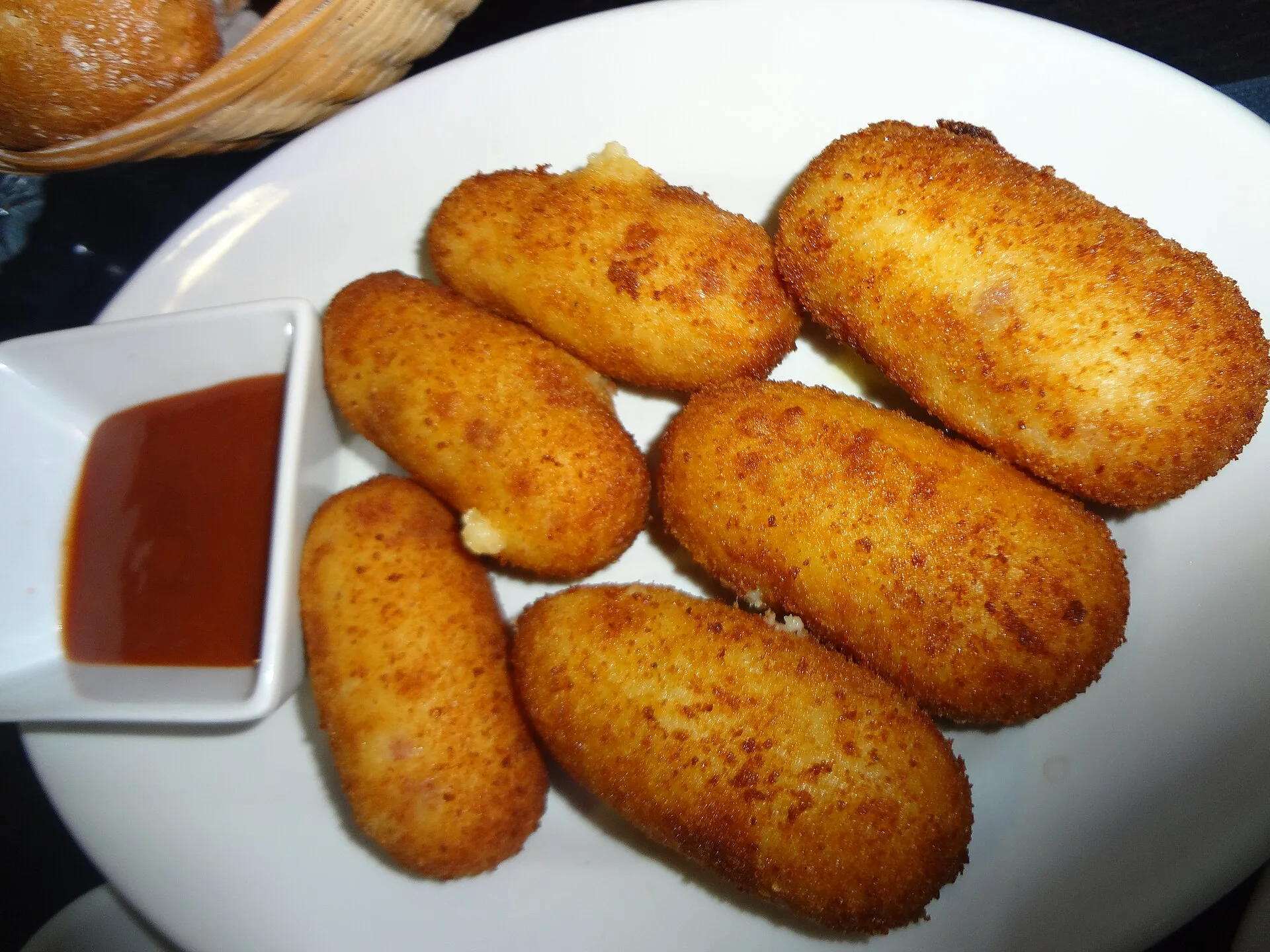
A RICE-STRAW FIRE, A SKIPJACK FILLET AND THE DISH THAT DEFINES KOCHI PREFECTURE

Warayaki is a Japanese cooking technique in which fish or meat is seared over a fire of burning rice straw. It is most closely associated with Kochi Prefecture, formerly the province of Tosa, and with one dish in particular: katsuo no tataki, skipjack tuna (bonito) seared on the outside and left rare inside. The Japanese government's Highlighting Japan magazine calls it Kochi's best-known dish and a source of local pride, and households in Kochi City spend more on katsuo than those of any other prefectural capital in Japan's national household survey. The method is designed to cook only the outer millimetre of a fillet. Visit Kochi, the prefecture's tourism site, describes a surface seared and smoked by the straw over an interior that stays rare. Kochi-style tataki is now sold in bars, restaurants and supermarkets across Japan, while in Kochi the straw fire is still worked in view of diners at markets, at a hotel and at venues where visitors sear their own fish.
WHAT IS WARAYAKI?

Wara is the Japanese word for rice straw, and warayaki is the practice of searing food over it. Visit Kochi describes thick bonito fillets placed on a hand-held grill that closely resembles a pitchfork and held in a strong fire fed by rice straw, which sears the surface and adds smokiness while the inside stays rare. At Hirome Market in Kochi City, the chefs work over piles of burning straw in view of the tables. Highlighting Japan describes the fish going straight into icy water after searing, to halt the cooking and keep the smoky flavour of the wara fire. Jyoseikan, a hotel in Kochi City with its own searing studio, uses locally produced straw and solar salt from Tosasaga in Kochi, and describes the sear as complete in the Tosa style when the surface turns dull in colour and begins to crimp.
Josaku Tanaka, who in 2017 was 84 and had grilled katsuo for 65 years at Tanaka Sengyoten, a family fish shop in Naka-Tosa Town, told Highlighting Japan that only about 1 mm of the outer surface should be seared, a process that takes no more than a couple of minutes. He judges the timing by experience rather than with a counter or timer. His son Takahiro Tanaka, the company's president, left a large corporation at 30 to rebuild the 130-year-old family business, and he told the magazine that katsuo once held the title of king of seafood that tuna has held for roughly the past 30 years.
KOCHI, THE KUROSHIO CURRENT AND THE SKIPJACK

Katsuo is skipjack tuna, usually called bonito in English. According to niponica, the Japanese government's culture magazine, the warm Kuroshio current flows up the Pacific past Kochi Prefecture and has made fishing a major industry there. Bonito arrive off Japan's coast twice a year. In spring they swim north with the warm current and carry little fat, which gives a lighter flavour. In autumn they ride the cold current south, fatter and heartier in taste. Visit Kochi names early summer and late autumn as the best times to eat it, although it is served all year.
Kochi's fishermen are known for ipponzuri, pole-and-line fishing, which Visit Kochi says has been preserved for nearly 400 years. A shoal is lured into one area and the fish, which can weigh up to 5 kg, are caught one at a time. The method is more labour-intensive than netting, but it avoids damaging the fish and avoids bycatch. Fish from pole-and-line fishermen off Kure Bay in Naka-Tosa are considered the finest, according to Highlighting Japan. Josaku Tanaka credits the water quality, the water temperature and surface shoals known as nabura for the local catch. The main season there runs from March to July, after which the fish migrate north to cooler waters and grow larger and fattier.
In the 2024 Family Income and Expenditure Survey, households of two or more people in Kochi City spent an average of 7,369 yen on katsuo over the year, the highest of Japan's 47 prefectural capitals, ahead of Mito at 2,974 yen and about 4.5 times the national average of 1,629 yen. They bought 3,642 g, against a national average of 816 g. Kochi Prefecture notes that the city's sample is small and subject to sampling error, so the figures are a reference rather than an average for all households.
WHAT IS KATSUO NO TATAKI AND HOW IS IT MADE?

Niponica translates the name as pounded bonito. In general Japanese cooking, tataki describes raw fish minced with a knife and mixed with a condiment such as shiso, but katsuo no tataki is made differently. The fish is cleaned and filleted, and the skin sides are broiled over a straw or charcoal flame until evenly scorched. Coarse salt, or a mix of soy sauce and citrus juice, is then sprinkled on, and the fillets are tapped lightly with the back of a knife or by hand to work the seasoning in; niponica says the name comes from this tapping. Highlighting Japan notes that the dish is also called Tosa-zukuri, after the old name of the province.
At Tanaka Sengyoten the seared fish goes into iced water, is cut into 1 cm slices with a handmade sashimi knife and is served with sea salt, chopped green onion and thinly sliced local garlic. Others serve it warm. Narumiya Kenji, head chef of Neboke, a Tosa cuisine restaurant in Akasaka, Tokyo, told niponica that in Kochi it is common to eat it while the skin is still warm, and that coarse salt gives a more intense flavour. Visit Kochi lists ponzu, a citrus sauce often made with local yuzu, and a dusting of salt, with sliced raw garlic, ginger and onion as condiments. Niponica notes recent variations that use grated ginger or mayonnaise.
WHERE DID KATSUO TATAKI COME FROM?

Accounts of the dish's origin differ. The most repeated, given by niponica as a theory, concerns Yamauchi Kazutoyo, lord of the Tosa domain in the early 17th century. He is said to have banned raw sashimi to prevent food poisoning, and townspeople are said to have responded by scorching only the outside of the fish and claiming it was cooked through. A second theory in the same magazine places the dish after 1868, early in Japan's modernisation, as a way of giving Western visitors a taste close to grilled steak.
A third account, reported by Highlighting Japan, links the dish to Sakamoto Ryoma, the 19th-century samurai born in Tosa, who is said to have adopted the technique after seeing foreigners searing meat in Fukuoka. Josaku Tanaka recalls that when he was a child about fifty women sold seafood, including katsuo no tataki, at the Kure-Taisho-Town Market, an area then known as the town's kitchen. The number of sellers there has since halved.
HIROME MARKET AND KOCHI'S STRAW-FIRE COUNTERS

The most accessible place to watch warayaki in Kochi City is Hirome Market (Hirome Ichiba), a food hall a short walk from Kochi Castle that Visit Kochi calls Kochi's kitchen. It holds around 60 eateries and more than 400 seats, many at communal tables for four to eight people, and diners order and pay at each shop. Chefs sear bonito over burning straw in full view. Highlighting Japan counted two katsuo no tataki outlets in the market with glass-fronted counters, one run by Myojinmaru, whose store manager Kei Fujimoto said the grilling technique takes two years to master.
Visitors can also sear their own. At Katsuobune Tosa Tataki Dojo in Kochi City, experienced staff guide guests through a session of about five minutes over an open straw flame, then slice the fish to eat on site or take home with onion, spring onion, garlic and lemon. Service stops when the day's fish sells out. Kuroshio Kobo, on a promontory in Kure in Nakatosa Town, offers searing from April to October by reservation. Tanaka Sengyoten grills as much as 500 kg of katsuo a day, and Jyoseikan says it uses 16 tons of bonito a year, bought directly through the Kochi central wholesale market.
KATSUO NO TATAKI ACROSS JAPAN AND KOCHI'S OTHER BONITO DISHES
Kochi's traditional tataki is now found in many bars, restaurants and supermarkets and is popular across the country, according to niponica. In Tokyo, Neboke in Akasaka serves Tosa cuisine made with bonito caught by pole and line, which protects the fish from injury and gives fresh, firm fillets. Niponica also records variations on the basic method: broiling the fish and then chilling it in iced water, or broiling only the skin and adding no seasoning. Visit Kochi notes that bonito loses freshness quickly, so sashimi is best eaten near where the fish was caught, and that Kochi sashimi is often served with the silver skin attached.
In Kochi the seared fish is only part of the repertoire. Visit Kochi lists tosa-maki, a sushi roll of seared bonito with raw garlic and perilla leaves sold in restaurants and supermarket delis; harambo, the fatty belly gently broiled with salt, of which each fish yields one piece; chichiko, the heart, stewed in ginger and soy sauce or grilled with salt; and shuto, a paste of salted, fermented bonito organs eaten with sake. Highlighting Japan describes Yamasaki, a restaurant in Susaki City run by Masayoshi and Rie Kawasaki, which serves variations including a skipjack roll with ponzu.
STRAWFIRE: WARAYAKI AT EMIRATES PALACE MANDARIN ORIENTAL, ABU DHABI
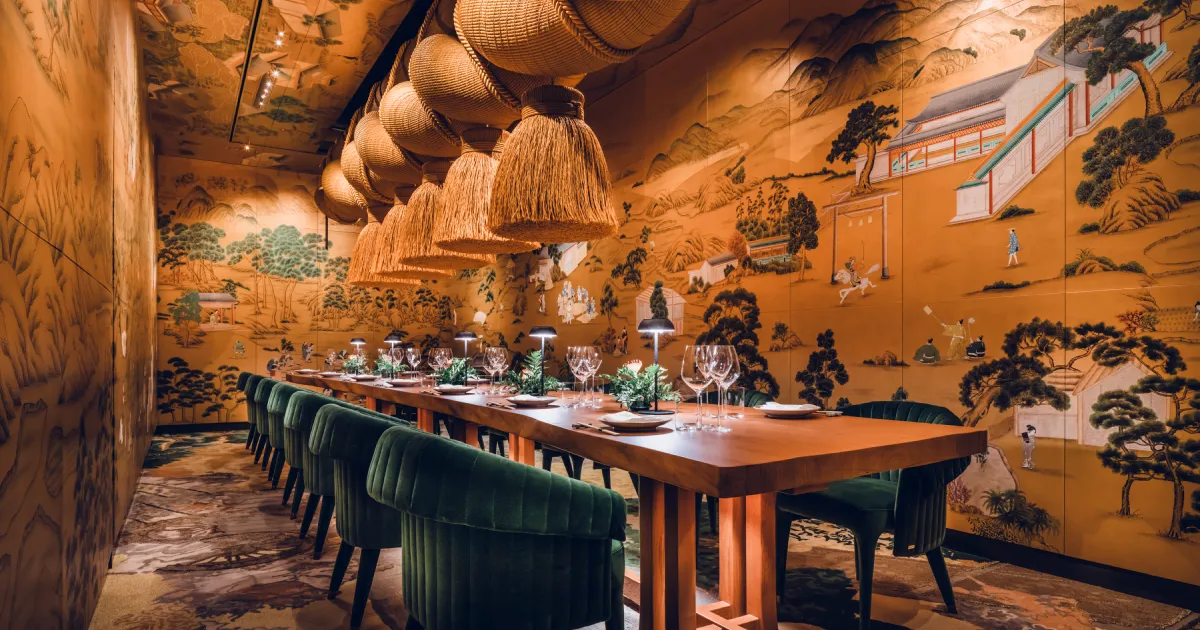
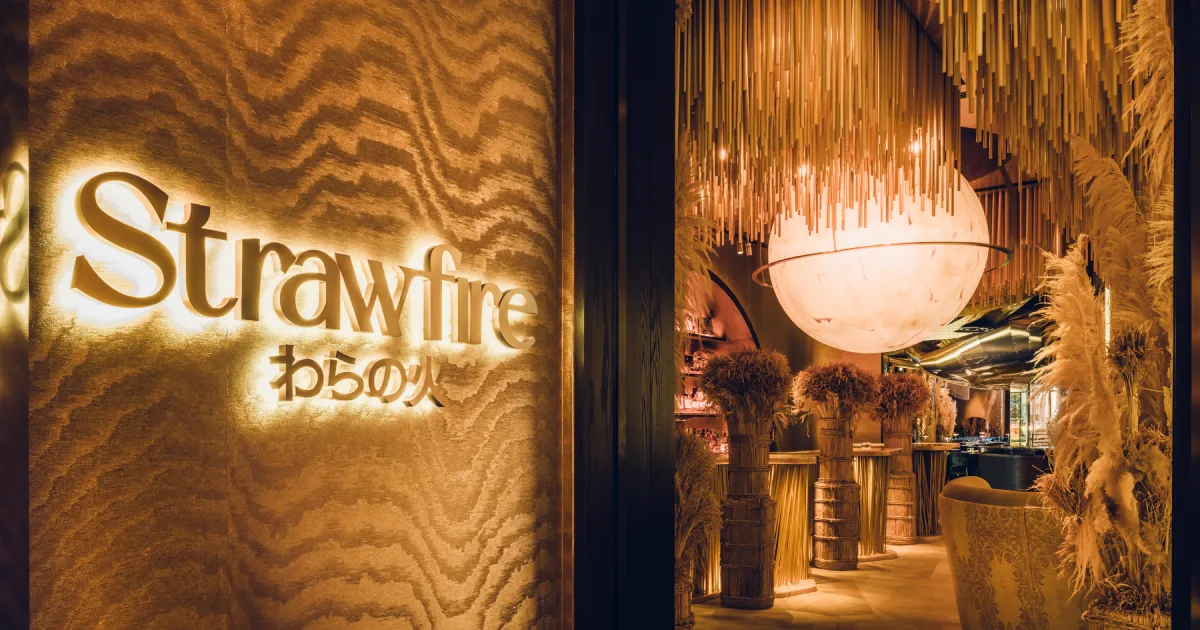
Strawfire at Emirates Palace Mandarin Oriental, Abu Dhabi, is a Japanese restaurant by chef Ross Shonhan, designed by Silverfox Studios and completed in 2024. Its concept draws on rice straw (wara) in rural Japan and on warayaki grilling, in which burning straw sears meat and fish. The design follows three themes: straw, fire and Japanese heritage. Straw is expressed in cream, gold and mustard tones, and fire in orange, gold and rust. In the booths, straw bales stand up to 2 metres tall.
At Strawfire, the warayaki counter sits under a hand-beaten brass hood fronted with faceted gold tiles, and a back-illuminated kumiko screen shows the shadows of the chefs at work.
SOURCES
- Visit Kochi Japan Katsuo no Tataki (Seared Bonito): Kochi's Soul Food
- Visit Kochi Japan Hirome Market
- Visit Kochi Japan Katsuobune Tosa Tataki Dojo
- Highlighting Japan, Cabinet Office, Government of Japan Washoku: Katsuo no Tataki (September 2017)
- niponica, Web Japan Tasty Japan: Time to Eat! Katsuo no Tataki
- Kochi Prefectural Government Family Income and Expenditure Survey Report, Kochi City, 2024 Annual Average
- Jyoseikan Warayaki Tataki Kobo (Searing Studio)