A SORGHUM SPIRIT FROM ONE GUIZHOU TOWN THAT BECAME CHINA'S STATE BANQUET DRINK AND A COLLECTOR'S ASSET
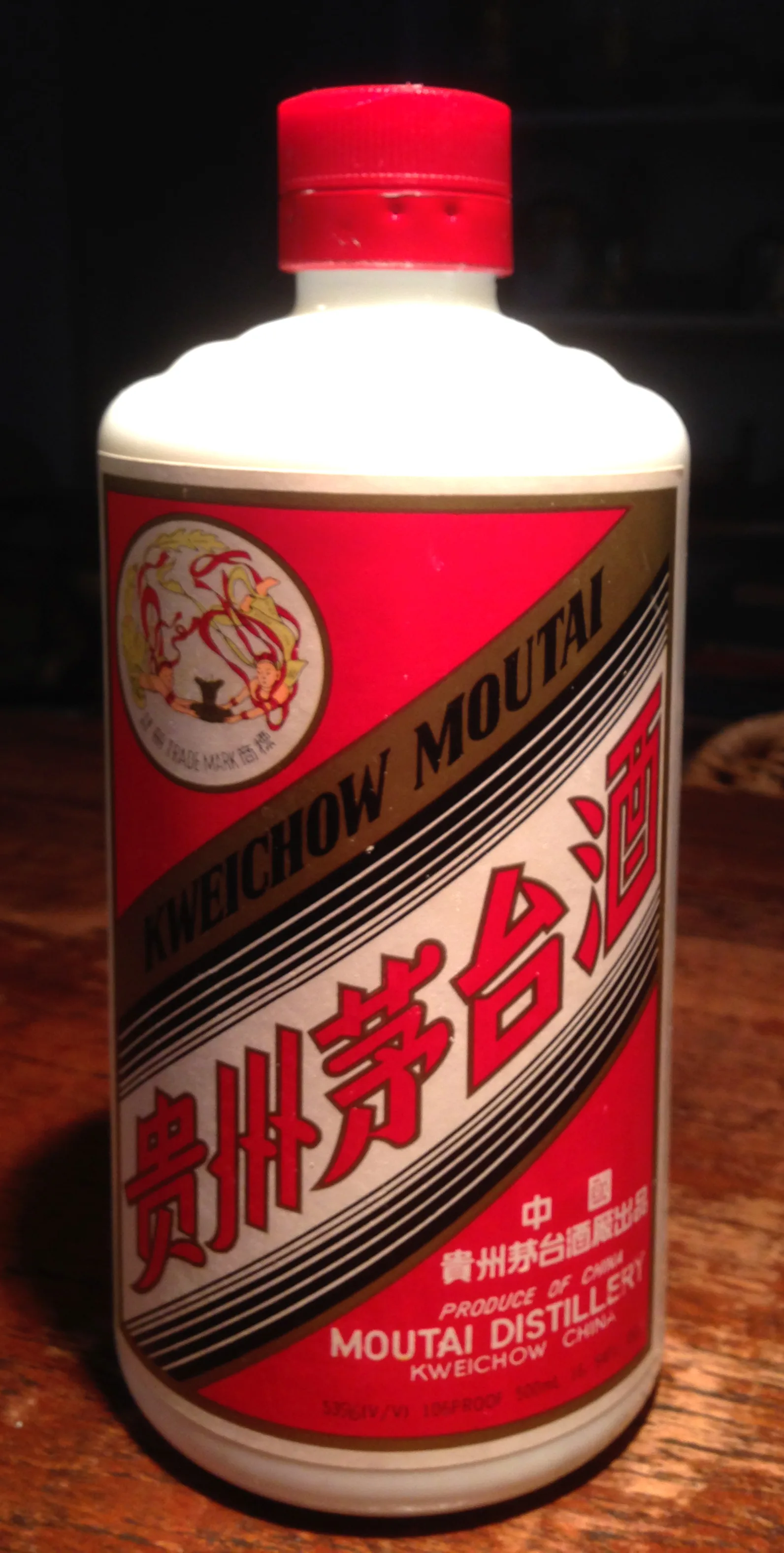
Moutai is a baijiu, the Chinese grain spirit, made in the town of Maotai in Guizhou Province, southern China, by the state-controlled Kweichow Moutai company. It belongs to the sauce-aroma style, named for a savoury fragrance compared to soy sauce, and is made from sorghum and a wheat-based fermentation starter over a year-long cycle of repeated steaming, fermentation and distillation, followed by at least three years of ageing in clay jars. The company traces its international profile to a gold medal at the 1915 Panama-Pacific International Exposition in San Francisco. Premier Zhou Enlai made it the official baijiu for Chinese state dinners in the 1950s, and it was poured at the 1972 welcoming banquet for Richard Nixon in Beijing. In October 2026 the brand valuation consultancy Brand Finance ranked Moutai the world's most valuable spirits brand, and older bottles are now sold at specialist auctions.
WHAT IS BAIJIU AND WHAT MAKES MOUTAI SAUCE-AROMA?
Baijiu means white liquor. A 2026 study of sauce-aroma brewing in the journal Foods describes it as a spirit produced mainly from cereals such as sorghum, rice and wheat, and brewed by solid-state fermentation, distillation, ageing and blending. The same study notes that baijiu is classified into twelve aroma types: sauce, strong, light, rice, mixed, Dong, Feng, Te, sesame, Laobaigan, Fuyu and Chi. Fermentation starts with daqu, a starter that is mixed into the steamed grain. China Daily reports that Moutai is known in China for its alcohol content of 53 per cent.
Sauce-aroma, or jiangxiang, is the style that originated in Maotai. The Oxford Companion to Spirits and Cocktails, in an entry by Derek Sandhaus, describes it as a sorghum spirit fermented in stone-lined pits, the most expensive kind of baijiu to produce, with a fragrance reminiscent of soy sauce. The Companion traces the style to the Qing dynasty (1644 to 1912), when Maotai, a remote mountain village on the Chishui River, served as a distribution point for the government's salt monopoly. Salt merchants there, unimpressed by the local spirits, brought in distillers from the north to improve the pit-fermentation methods already in use, and sauce-aroma baijiu was the result.
MAOTAI TOWN AND THE CHISHUI RIVER

The Chishui River rises in Chishuiyuan Town in Zhenxiong County, Yunnan Province, and flows through Yunnan, Guizhou and Sichuan before it joins the upper Yangtze as a first-class tributary on its right bank. According to a 2018 report by the Environmental Protection Department of Guizhou Province, the river is 436 km long, 268 km of it in Guizhou, and its basin covers about 20,440 square kilometres. Among its local names is the Liquor River, and the report identifies the basin as the origin of several high-quality Chinese liquors, Maotai among them.
The New York Times, reporting from the town in March 2026, describes Maotai as sitting in a remote mountain valley. Its largest employer is Kweichow Moutai, with more than 30,000 workers, and the company's factory stretches for more than a mile along the riverbank. Hundreds of smaller private distilleries operate in the surrounding mountains. The Times reports that dozens of shops in the area have closed or been shut by inspectors during a drive against counterfeit products and fraudulent sales, and that one official notice warned it was illegal to claim to be a special supplier of alcohol to the Communist Party or the military.
HOW IS MOUTAI MADE? THE 12987 PROCESS
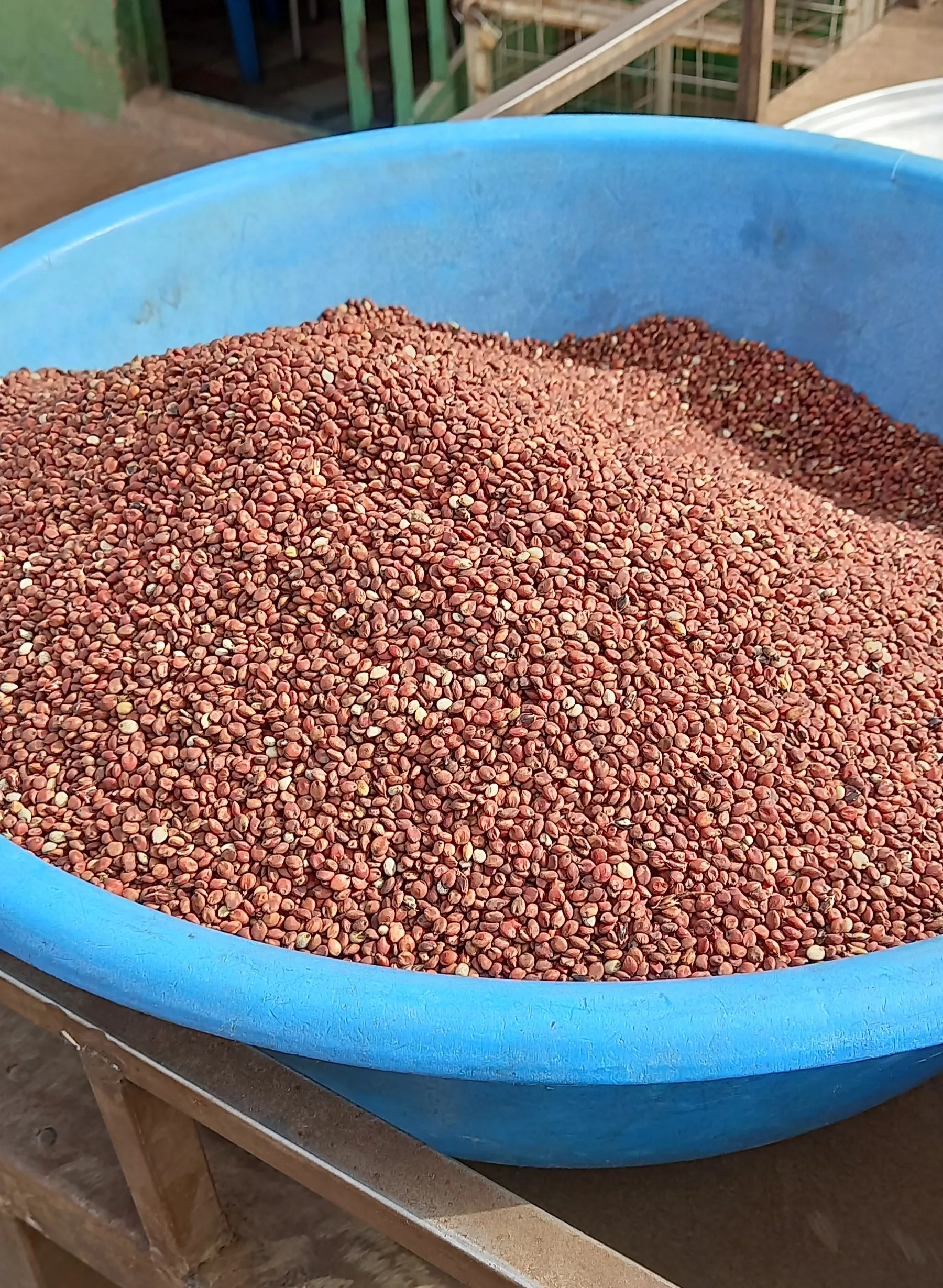
Producers summarise the sauce-aroma method in the number 12987, which the Foods study explains as a one-year cycle with two feedings of grain, nine steamings, eight fermentations and seven distillations. The researchers sampled a producer in Maotai Town, which they describe as the recognised representative production region for the style. The grain is a glutinous sorghum with a hard, thick hull and an amylopectin content above 90 per cent. Brewing generally begins at the Chongyang or Double Ninth Festival, the ninth day of the ninth lunar month. China Daily reports the same timing at Kweichow Moutai, where the grain is put in at the Double Ninth Festival.
Each round has two stages. The steamed grain, mixed with daqu, is piled in open heaps for about five days until its inner temperature rises above 50°C, a stage that draws in microorganisms from the surrounding environment. It is then sealed in a pit for about 30 days, distilled, and returned to the cycle; each full round takes about 35 days. In the study, the heart of each distillation measured between 52.67 and 55.70 per cent alcohol. The heart liquor is aged for at least three years before it becomes base liquor, while the head liquor is mainly used in blending. China Daily reports that each of the seven distillations yields a separate batch, and that Moutai's blending has no standardised formula and depends on the judgement of its blenders.
THE 1915 PANAMA-PACIFIC EXPOSITION STORY

Moutai's best-known origin story concerns the Panama-Pacific International Exposition, which opened in San Francisco on 20 February 1915. A China Daily report published by the Guizhou provincial government describes the exposition as considered the largest international fair of the early 20th century. According to the report, Guizhou recommended sample liquors from two Maotai workshops, Chengyi and Ronghe, which were exhibited under the name Moutai Winemaking Company. The account says that visitors seldom asked for the spirit, which was stored in pottery rather than in the more refined packaging used by other countries' exhibitors. Near the end of the fair, the account continues, a Chinese representative staged an accidental drop of a bottle, which smashed on the floor and filled the hall with its fragrance. The panel tasted the liquor, agreed that it was among the best drinks in the world and awarded Moutai a gold medal. The story is the company's own account, repeated in Chinese state media.
MOUTAI AT THE STATE BANQUET

The spirit's political role is older than the People's Republic. The New York Times records the local legend that Red Army soldiers passing through Maotai in 1935, during the Long March, used the town's baijiu to treat their wounds and lift their spirits. According to the Oxford Companion, Zhou Enlai favoured the spirit and made it the official banquet baijiu for state dinners in the 1950s. The Times notes that Xi Jinping restricted drinking at military functions in 2012, and that alcohol has been banned at all government events since May 2025.
Its most widely seen moment came in February 1972, on the first evening of Richard Nixon's visit to China. The US National Archives records that Premier Zhou hosted a banquet in Nixon's honour in the Great Hall of the People on Tiananmen Square, broadcast live around the world. The drinks were boiled water, orange juice, wine and mao-tai. Photographs of Nixon and Zhou toasting each other with the spirit appeared in newspapers worldwide and came to symbolise a new phase in relations between the two countries. John Holdridge, a National Security Council staff member present, recalled the atmosphere as "electric", noting it was "aided only in part by the mao-tai". The Times adds that Nixon's deputy national security adviser, Alexander Haig, had warned him against drinking baijiu toasts, a warning Nixon ignored.
WHY IS MOUTAI SO VALUABLE?
As a company, Kweichow Moutai overtook Diageo in April 2017 to become the world's most valuable liquor distiller, when Bloomberg reported its market value at US$71.5 billion. The Times reports that its share price later made it China's most valuable company, ahead of Alibaba and Tencent, although it has lost more than a third of its market value over the past five years. As a brand, Brand Finance's October 2026 ranking places Moutai first among spirits brands, up 2 per cent to US$59.6 billion, ahead of the baijiu maker Wuliangye at US$27.3 billion. In 2014 China Daily reported that a bottle sold for 1,099 yuan and that the company sold 17,000 tons of spirit in 2013 for revenue of 40.2 billion yuan.
Demand has since weakened. The Times reports that the flagship Flying Fairy bottling, once called liquid gold and used as an alternative currency, sold for more than US$500 before late 2021 and now sells for around US$200. Older bottles have become a collecting category of their own. On 2 April 2024, Sotheby's Hong Kong offered more than 270 bottles in its inaugural live Moutai sale, including early 1980s Flying Fairy and Five Star bottlings and so-called Iron Cap bottles from 1987 to 1996. A 1980s Flying Fairy carried a pre-sale estimate of HK$200,000 to 260,000, and a 2002 bottling aged 80 years was estimated at HK$180,000 to 260,000.
GRAND IMPERIAL COURT: A MOUTAI DISPLAY AT MGM MACAU

Grand Imperial Court at MGM Macau is a Chinese fine dining restaurant designed by Silverfox Studios and completed in 2024. An automated sliding entry opens onto a Moutai display wall of floating, individually lit jewel-box vitrines in red and gold, which hold rare vintage bottles.
The display wall acts as a brand statement and as a ceremonial introduction to the restaurant. Beyond the entrance, the private suites are themed on gemstones, sapphire, emerald, ruby and gold, and are fitted with custom hand-crafted tapestries.
SOURCES
- The Oxford Companion to Spirits and Cocktails, via Spirits & Distilling Sauce-aroma-style baijiu
- Foods (MDPI) Changes of Physicochemical Indicators and Volatile Compounds in Grains and Liquors During the Sauce-Aroma Baijiu Brewing Process
- Environmental Protection Department of Guizhou Province, via Asian Development Bank Eco-compensation among three provinces in the Chishui River Basin
- The New York Times, via The Boston Globe The good times are over in China's liquor capital
- China Daily The Secrets of a Time-Honored Spirit
- China Daily, via Guizhou Provincial Government Moutai Now Pleasing Palates in S Africa
- US National Archives, Prologue What's Cooking Wednesdays: Dinner Diplomacy Thaws the Cold War
- Bloomberg China's Moutai Tops Diageo as Most-Valuable Liquor Maker: Chart
- Brand Finance Tequila shows spirited growth as cognac and Scotch decline
- Sotheby's What Makes Moutai the Leading Baijiu of China?