

UNDERSTANDING THE ROLE OF TATAMI IN JAPANESE CULTURE

Tatami rooms are among the most recognisable features of traditional Japanese architecture, yet outside Japan they are often reduced to visual references associated with minimalism or simplicity. In reality, tatami spaces carry centuries of cultural, social and architectural significance. Their proportions influenced the planning of Japanese homes, their materials shaped ideas of comfort and seasonality, and their spatial etiquette helped define how people sat, slept, gathered and interacted.
For much of Japanese history, a tatami room was not simply a room with woven flooring. It represented a complete approach to living, one built around flexibility, restraint and behavioural awareness. The arrangement of mats informed circulation, hierarchy and ceremony, while furniture remained limited because rooms were designed to adapt throughout the day. A single space could serve multiple purposes without requiring permanent fixtures or dedicated functions.
Although modern apartments and Western furniture now dominate much of contemporary Japan, tatami rooms remain culturally significant. They continue to appear within ryokans, tea houses, temples, traditional residences and hospitality projects seeking to preserve a connection to Japanese spatial traditions.
THE ORIGINS OF TATAMI IN EARLY JAPANESE ARCHITECTURE

The origins of tatami can be traced to the Heian period, more than a thousand years ago. Early tatami were not installed as permanent floor coverings but existed as portable padded mats used selectively for seating and sleeping. Their use was largely reserved for aristocratic households, where comfort and status were expressed through carefully arranged interiors.
At the time, elite residences were built in the shinden-zukuri style, characterised by raised timber floors, open halls and strong connections to surrounding gardens. Tatami provided insulation and comfort within these expansive spaces, particularly during colder months. Over time, their role expanded beyond individual mats placed for specific occasions. By the Muromachi period, tatami flooring increasingly covered entire rooms, reflecting broader changes in residential planning and the growing influence of Zen Buddhism, tea culture and samurai governance.
As tatami became more widespread, room dimensions themselves began to follow the proportions of the mat. This development transformed tatami from a furnishing into an architectural module, creating one of the earliest standardised systems of spatial planning in residential design. The relationship between flooring and architecture remains one of the defining characteristics of traditional Japanese interiors.
HOW TATAMI DEFINED SPATIAL PLANNING IN JAPAN
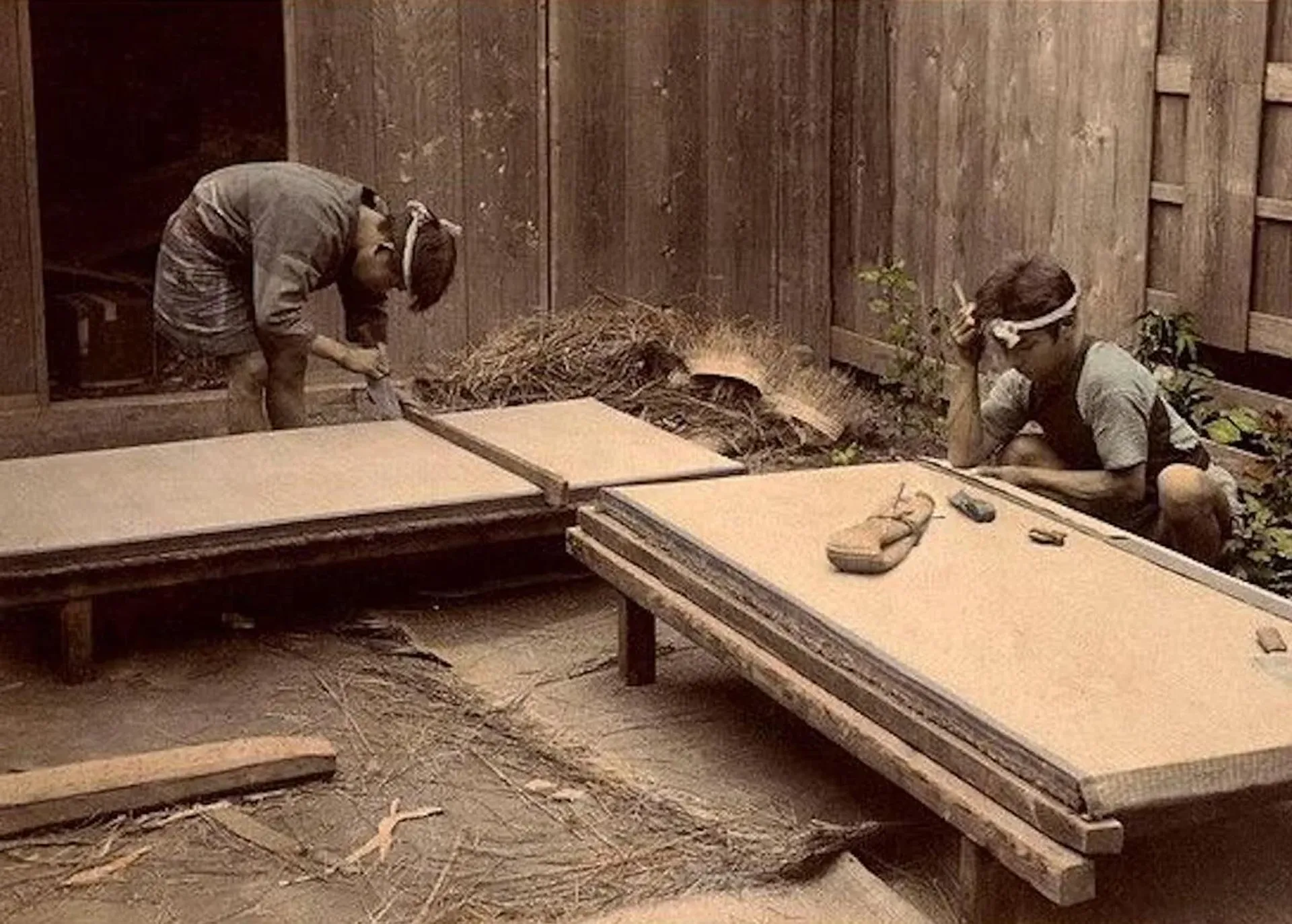
Traditional tatami mats are made from woven rush grass, known as igusa, wrapped around a compressed straw or fibre core. While dimensions vary slightly between regions, their proportions became remarkably consistent over time.
Because rooms were planned around tatami layouts, spaces came to be measured not by square metres but by the number of mats they contained. Even today, Japanese property listings frequently describe rooms as six-mat, eight-mat or ten-mat spaces. The modular nature of tatami influenced everything from circulation and furniture placement to the positioning of doors and partitions.
Layouts were carefully arranged to avoid awkward junctions and to support particular activities, whether domestic, ceremonial or religious. A room could function as a reception space during the day, a dining area in the evening and a sleeping area at night, with futons laid directly onto the mats before being stored away the following morning. This adaptability reflected broader Japanese attitudes toward efficiency, impermanence and the practical use of space. Rather than assigning rooms a single fixed purpose, interiors were designed to change according to time, season and occasion.
TATAMI, TEA CULTURE AND SOCIAL ETIQUETTE

Tatami rooms became especially important through the development of the Japanese tea ceremony during the sixteenth century. Tea masters such as Sen no Rikyū established many of the principles now associated with traditional Japanese aesthetics, including restraint, asymmetry and controlled simplicity. Tea rooms were intentionally modest in scale and designed to encourage attentiveness rather than display wealth. Within these spaces, tatami layouts played a highly structured role. The positioning of mats helped organise movement, determine seating hierarchy and guide ceremonial actions during the preparation and serving of tea.
Even the entrances carried symbolic meaning. Guests often entered through low openings that required them to bow, reinforcing humility and equality regardless of social status. Tatami also shaped physical behaviour. Sitting directly on the floor influenced posture and movement, while the custom of removing shoes reinforced a clear distinction between the outside world and the interior environment. Many of these traditions remain deeply embedded within Japanese ideas of hospitality and social conduct today.
WHY TATAMI ROOMS FEEL DIFFERENT FROM WESTERN INTERIORS

One reason tatami rooms continue to feel distinct from many Western interiors is their emphasis on atmosphere and proportion rather than furniture or decoration. Traditional Japanese rooms were designed around negative space, natural light and material texture. Decorative elements were often limited to seasonal flowers, hanging scrolls or carefully selected objects displayed within a tokonoma alcove. Shoji screens filtered daylight into a soft, diffused glow, while exposed timber framing contributed warmth and rhythm to the room. The tatami surface itself played an important role in shaping the sensory experience. Fresh tatami carries the subtle scent of woven igusa, while its resilient texture changes the way people walk, sit and interact with the space.
Acoustically, tatami softens sound and contributes to a quieter environment. Combined with timber, paper and fabric elements, these rooms often possess a calm and controlled atmosphere rarely found in interiors dominated by stone, concrete or other hard materials. This emphasis on sensory balance aligns closely with concepts such as ma, the Japanese understanding of space, pause and interval, where emptiness is considered as important as the objects that occupy it.
THE DECLINE AND PERSISTENCE OF TATAMI CULTURE
Japan's rapid modernisation during the late nineteenth and twentieth centuries brought significant changes to domestic life. Western furniture, construction methods and apartment planning became increasingly common, gradually reducing the everyday role of tatami rooms within urban housing. By the post-war period, many homes adopted hybrid layouts that combined Western-style living spaces with at least one traditional tatami room. These rooms often remained important for receiving guests, family ceremonies and seasonal gatherings, preserving a connection to older customs even as lifestyles changed.
Today, fully traditional tatami homes are less common in major cities, where space constraints and contemporary living patterns have altered residential design. Nevertheless, tatami rooms continue to hold strong cultural value. They remain central to ryokans, temples, tea houses and heritage buildings, while many modern homes still incorporate smaller tatami areas for rest, meditation or family use. Rather than disappearing, tatami culture has evolved alongside modern Japan.
TATAMI ROOMS IN HOSPITALITY DESIGN
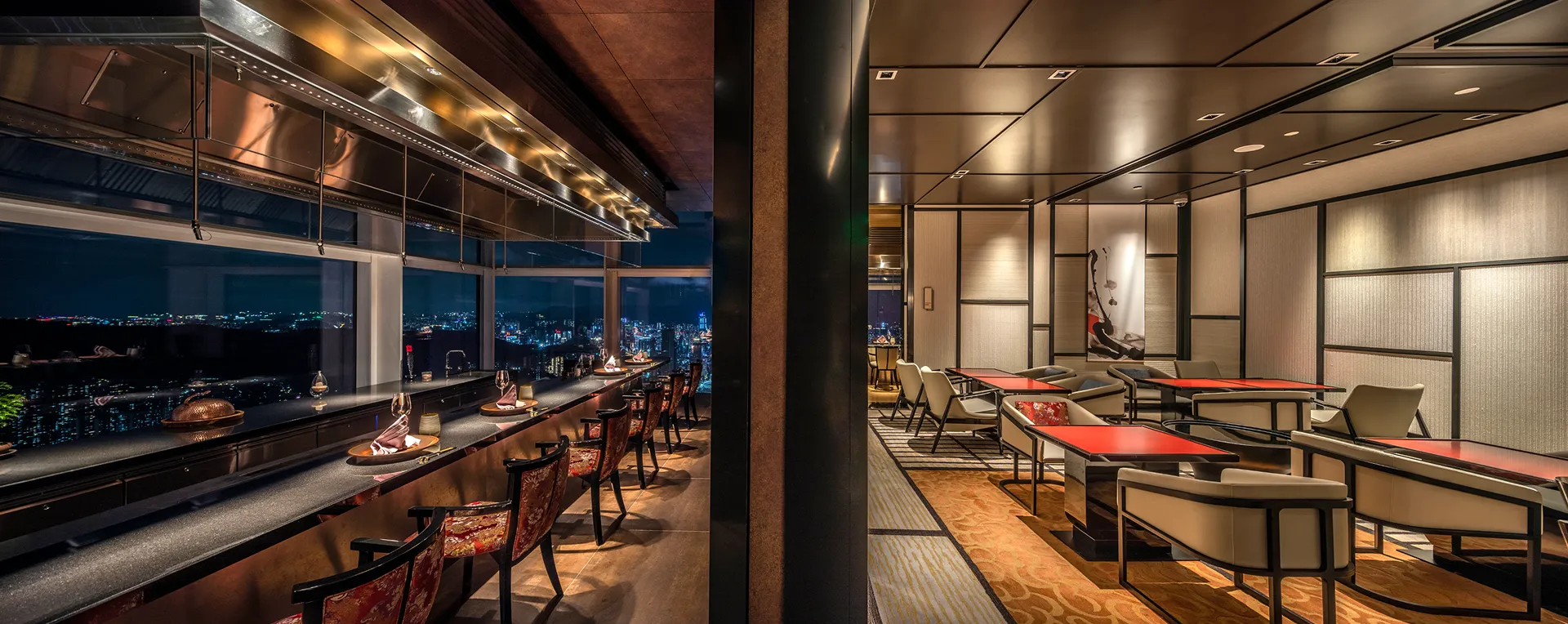
Tatami rooms continue to influence hospitality design, particularly in projects seeking to create a stronger sense of intimacy, ritual and place. Even where traditional tatami is not used directly, many designers borrow principles associated with these spaces, including lowered seating, layered thresholds, softer lighting and restrained material palettes.
Luxury ryokans and Japanese restaurants frequently incorporate tatami rooms for private dining and ceremonial experiences, allowing guests to engage more closely with traditional Japanese hospitality. Contemporary interpretations often move beyond literal historical reproduction, instead adapting tatami principles through modern materials, modular planning systems and carefully controlled spatial sequences. Their continued appeal lies not simply in nostalgia, but in the way these spaces shape behaviour, atmosphere and human interaction. More than decorative interiors, tatami rooms represent a broader architectural tradition built around flexibility, ritual, sensory awareness and the relationship between people and space.
SOURCES
- Nippon.com Tatami
- Britannica Tatami: Japanese flooring, traditional mats and interiors
- Britannica Shinden-zukuri
- Britannica Shoin-zukuri
- Britannica Sen Rikyū
- Nippon.com The Japanese Tea Ceremony
- Japan Objects What are Tatami Mats? 15 Things You Need to Know
- Japanese Tatami Room Let’s learn about the history of tatami