Across Japan, thick twisted ropes hang above shrine entrances, wrap around ancient trees and stretch across torii gates marking places tied to ritual and prayer. Known as shimenawa, these ropes are among the most recognisable symbols within Japanese spiritual culture. Traditionally made from rice straw, shimenawa are used within Shinto, Japan’s indigenous belief system rooted in nature, ceremony and the presence of kami, sacred forces believed to inhabit elements of the natural world.
Although visually restrained, the rope carries considerable symbolic weight. Its purpose is not decorative in the conventional sense. Instead, shimenawa marks a boundary between ordinary space and places treated with spiritual significance. Whether installed around a centuries-old tree or suspended above a shrine entrance, the rope signals that the environment beyond should be approached differently. Over centuries, shimenawa also became associated with protection, purification and ceremony, eventually evolving into one of the most enduring visual motifs within Japanese culture.
%20is%20the%20sun%20goddess%20and%20the%20highest-ranking%20deity%20in%20Shinto.webp)
The origins of shimenawa are closely tied to Shinto mythology and ritual practice. One of the most referenced stories involves Amaterasu, the sun goddess central to Shinto belief. According to legend, Amaterasu hid herself inside a cave after conflict with her brother, causing the world to fall into darkness. Once she was persuaded to emerge, a rope was placed across the cave entrance to prevent her return and preserve the restoration of light.
From this story, the rope became associated with protection and the separation of sacred and ordinary worlds. Within Shinto practice, shimenawa are commonly used to identify places believed to hold spiritual presence or purity. Shrines, waterfalls, forests and ancient trees are often marked with ropes to indicate reverence and ritual importance. Unlike religions structured around fixed doctrine, Shinto developed through seasonal rituals, community practices and close observation of the natural world. Mountains, rivers and forests were treated as spiritually significant long before formal architecture defined sacred space. Shimenawa provided a physical way to identify and protect these environments. In many ways, the rope functions more as spatial language than ornament.

Rice straw plays an important role in the meaning of shimenawa. For centuries, rice cultivation shaped Japanese agriculture, seasonal rituals and rural economies. Rice represented far more than food production alone. It became associated with prosperity, nourishment and collective labour, which naturally extended symbolic value to the straw itself. Historically, straw was reused throughout everyday life across Japan. It was used for roofing, baskets, sandals, mats and rope-making, particularly within rural farming communities familiar with the material’s strength and flexibility.
The making of shimenawa emerged from this wider culture of straw craftsmanship. Twisting and binding the fibres required patience, rhythm and physical coordination. In ceremonial contexts, the construction process often carried significance equal to the finished rope itself, particularly when created for shrines or seasonal festivals tied to purification and renewal. Even today, shimenawa continue to embody both material craft and ritual process simultaneously.
One of the most important ideas surrounding shimenawa is the notion of threshold. Within Japanese spiritual culture, entrances and transitions are treated with heightened awareness because they represent movement between different states or environments. Shimenawa reinforces this idea visually without relying on walls or physical barriers. A rope suspended above a shrine entrance or wrapped around a sacred tree quietly alters how a space is perceived. This indirect way of communicating meaning reflects broader Japanese attitudes toward atmosphere and spatial sequencing, where material cues and ritual gestures often carry more importance than explicit instruction.
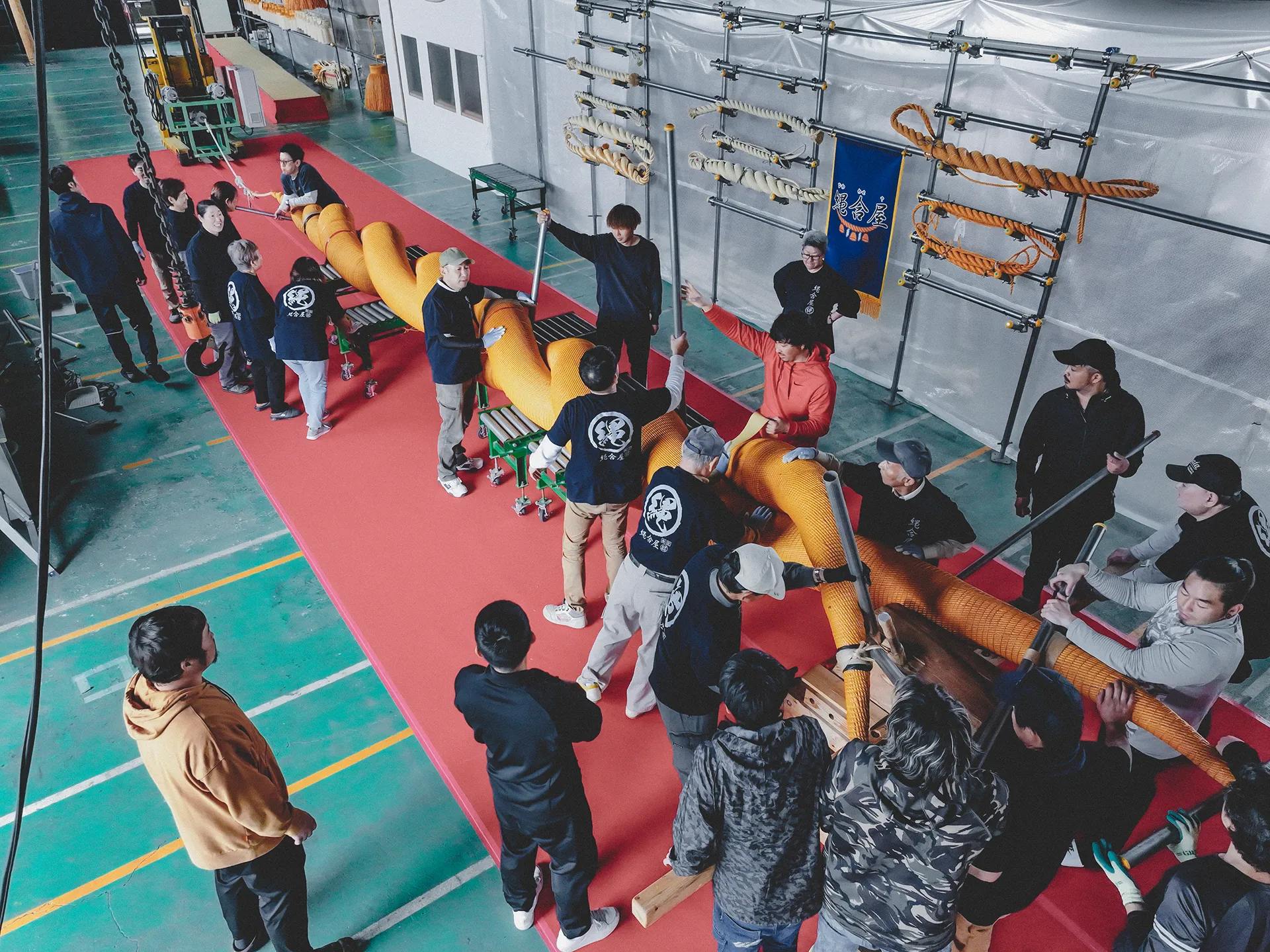
Beyond shrine settings, shimenawa also appear prominently during Japanese festivals and seasonal ceremonies. Large ceremonial ropes are often constructed during New Year celebrations, purification rituals and agricultural festivals linked to seasonal cycles. In some regions, entire communities participate in the making process, producing monumental ropes that require coordinated physical labour across many people.
These traditions reinforce the communal aspect of shimenawa culture. Rope-making becomes not simply craftsmanship, but an act of participation and continuity passed between generations. Many shrine ropes are also replaced periodically as part of renewal rituals. The temporary nature of straw reflects broader Japanese cultural ideas surrounding impermanence and cyclical renewal.
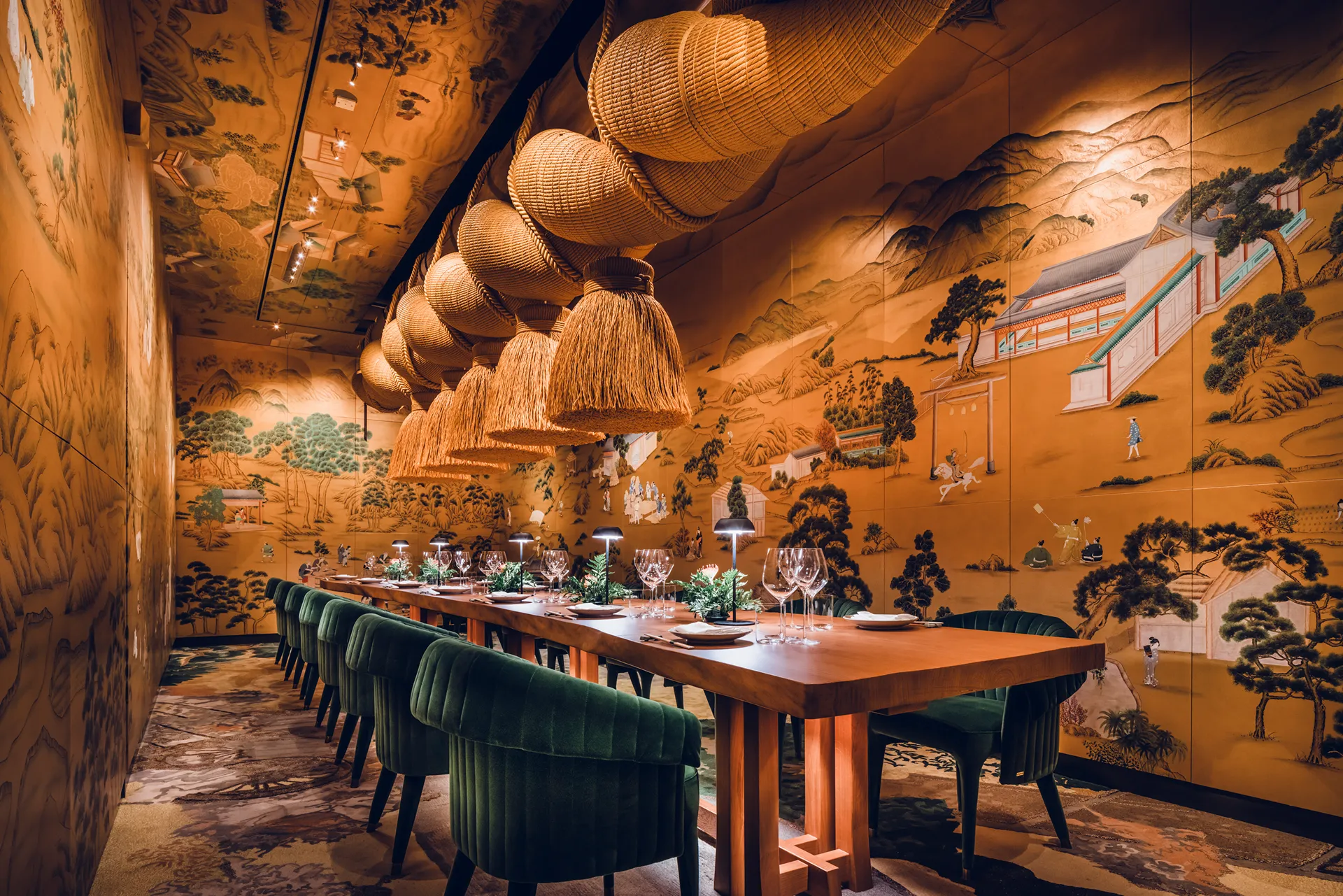
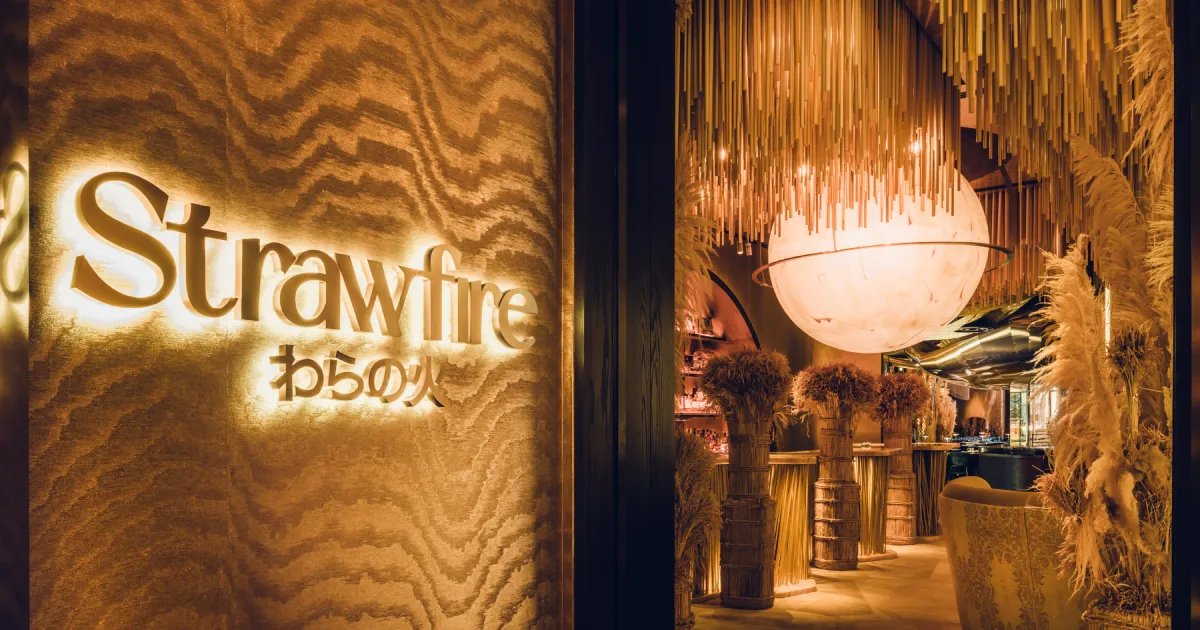
At Strawfire within Emirates Palace Mandarin Oriental Abu Dhabi, a large suspended shimenawa installation forms part of the restaurant’s wider reference to Japanese straw craft and ceremonial traditions. Positioned above the dining table, the rope installation introduces texture, scale and visual focus into the space while referencing traditional Japanese rope-making practices.
Its inclusion also reflects the broader role of straw within the restaurant’s material and culinary narrative. Rather than functioning purely as decoration, the installation acknowledges the craftsmanship and physical process behind traditional shimenawa construction.