A RICE DRINK SHAPED BY SHINTO OFFERINGS, TEMPLE BREWERS, THE EDO TRADE AND MEIJI SCIENCE

Sake is a Japanese alcoholic drink brewed from rice, kōji, water and yeast. The history of sake runs from a third-century Chinese account of people in Japan drinking it while mourning, through brewing at the imperial court and at temples in Nara, to an Edo-period industry centred on Itami and Nada and a national research institute founded in 1904. Its defining technique is multiple parallel fermentation, in which kōji converts rice starch into sugar while yeast turns that sugar into alcohol in the same mash. It is offered to the kami in Shinto ritual as omiki, and served with food at set temperatures. In December 2024 UNESCO inscribed the traditional knowledge and skills of sake-making with kōji mould in Japan on its Representative List of the Intangible Cultural Heritage of Humanity.
WHAT IS SAKE AND HOW IS IT MADE?
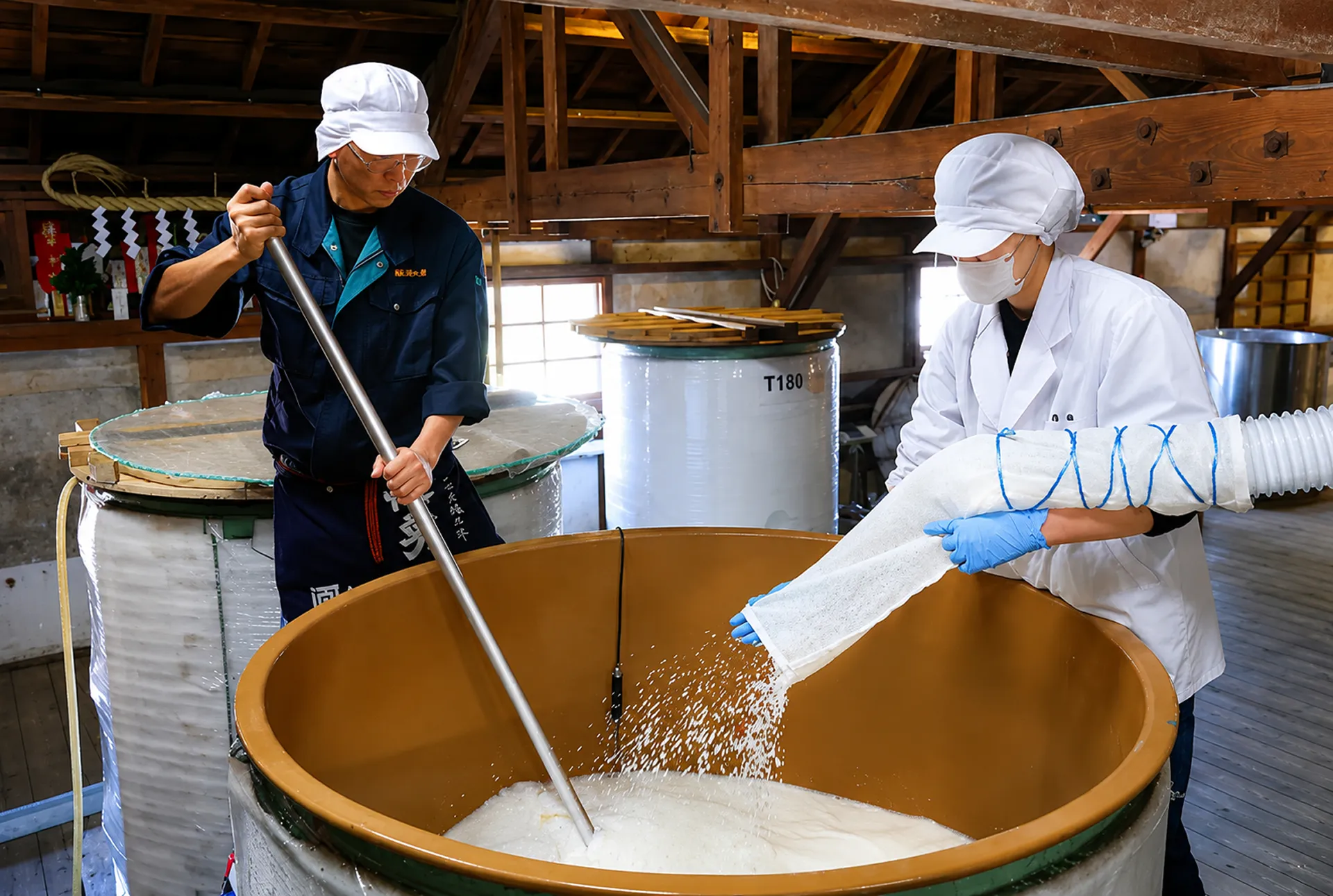
Kōji is steamed rice on which the spores of kōji mould have been spread and left to multiply. The mould converts the starch in the grain into sugar, and according to the Government of Japan's Highlighting Japan, brewers observe the kōji closely and control its growth by hand, a stage that largely determines the quality of the finished sake. The best-known brewing rice, Yamadanishiki, was introduced in 1923, and Nippon.com reports that about 80 per cent of it is grown in Hyōgo Prefecture.
The fermenting mash, called moromi, combines kōji, steamed rice, water and yeast. Saccharification and fermentation then run at the same time in the same tank: as the kōji releases sugar, the yeast converts it into alcohol, and this multiple parallel fermentation allows the mash to reach about 20 per cent alcohol. The work is led by a tōji, a master brewer, who directs brewery workers called kurabito. Japan's four major tōji groups are the Nanbu of Iwate, the Echigo of Niigata, the Tajima of Hyōgo and the Noto of Ishikawa.
WHERE DID SAKE COME FROM? EARLY RECORDS AND THE IMPERIAL COURT

The Japan Sake and Shochu Makers Association dates the arrival of rice cultivation and brewing in Japan to around 2,500 years ago. The earliest written reference is foreign: a third-century Chinese document records that people in Japan drank sake in groups when mourning. The first Japanese record appears in an eighth-century history book. The Encyclopedia of Shinto, published by Kokugakuin University, lists among the ancient forms of sacred sake a strong sake of eight-fold brewing, yashioori no sake, and reishu, an overnight sake that ferments when chewed. UNESCO notes that sake was originally made only by women, and that men joined the work as demand grew.
Brewing then came under the imperial court. The association's timeline records a sake brewing division at the court in 689 and the first record of brewing with kōji mould in 715. By the eighth century, when the court sat at Nara, sake appeared often in official documents, and drinking it was largely limited to court officials and religious leaders. The Engishiki, a tenth-century code of practice, documented the court's brewing methods in 927 and ranked sake by method: clear, rich sake went to those of high rank, and cloudy, unrefined sake to the lower classes.
OMIKI: SAKE AS AN OFFERING TO THE KAMI
In Shinto, sake offered to the kami is called miki, usually in the polite form omiki. The Encyclopedia of Shinto describes it as a necessary part of shinsen, the food offerings presented to the kami. The word joins the respectful prefix mi to ki, meaning sake, and originally referred to sake offered to a person of exalted position. Ancient documents also call it miwa, and Miwa no kami is known as the kami who presides over sake. Offered sake includes white and black sake (shiroki and kuroki), unrefined nigorizake, refined seishu and a sweet hitoyozake.
By drinking omiki with the kami to whom it has been offered, the encyclopedia explains, worshippers deepen their communion with them. The Japan Sake and Shochu Makers Association notes that sake is always served to the gods first, and that many brewers keep a small altar in the brewery and visit their local shrine at the start and end of each brewing season. At a traditional wedding the bride and groom share three cups of sake, taking three sips from each. UNESCO's inscription describes sake as viewed as a sacred gift from the deities and indispensable at festivals and weddings.
TEMPLE BREWING AND SHŌRYAKU-JI IN NARA
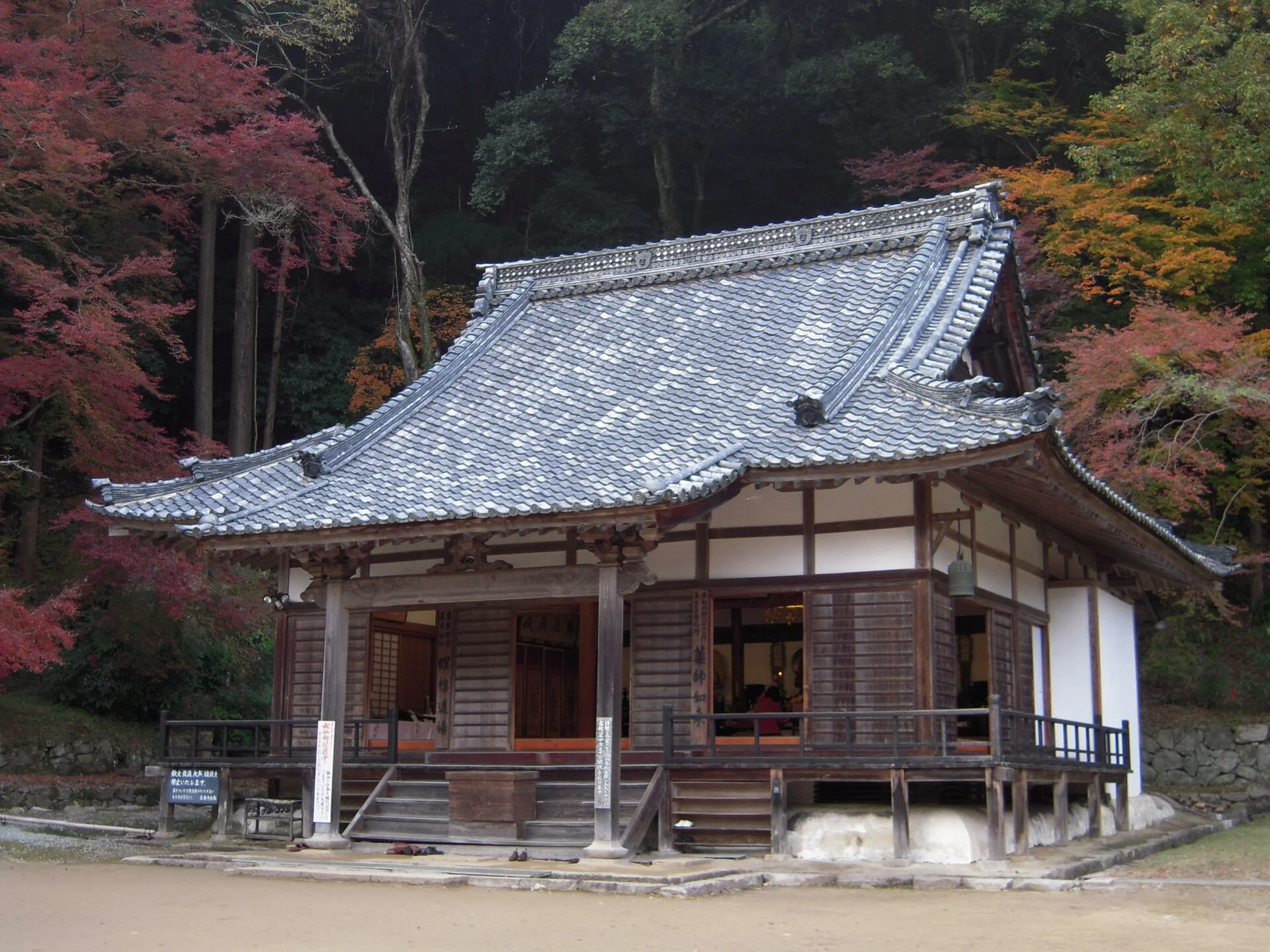
As political power passed from the court to the shogunate, brewing moved to shrines and temples, a shift the Japan Sake and Shochu Makers Association describes as the birth of sake producers. Religious institutions treated sake as a commodity, and their literacy and commercial motives helped refine brewing; the association's timeline includes a record of religious institutions making sake in 1233. Brewers trading under their own names first appeared in the 13th century, and by 1425 records listed 342 sake-related businesses in Kyoto.
The best-documented temple brewery is Shōryaku-ji in Nara, founded in 992 by the priest Kenshun on the order of Emperor Ichijō. Nara Prefecture states that ancient texts show the temple to have been the birthplace of refined sake. Its production appears to have flourished in the mid-15th century. The Goshu no Nikki, a Muromachi-period record of sake, contains a section titled Bodaisen that describes refined sake production at the temple in detail, and the Tamon-in Nikki, compiled by successive monks of Kōfuku-ji, also mentions brewing there.
Two methods are associated with the temple. Morohaku-zukuri used polished rice for both the kōji and the steamed rice, and Nara Prefecture describes it as believed to be the prototype of modern refined sake. Bodaimoto was the temple's method of preparing the yeast mash. The method was revived in 1998, when the temple became the first in Japan to receive a licence to make yeast mash. Highlighting Japan dates staged additions of ingredients (dan-jikomi) and hiire pasteurisation to the late 15th century, and the association gives 1569 as the first record of pasteurisation in sake production, almost 300 years before Louis Pasteur's work in the 1860s.
ITAMI, NADA AND THE EDO SAKE TRADE
The Tokugawa shogunate unified Japan in 1603, and the stable government that followed allowed brewing to become an industry: a government record of 1698 counted 27,251 brewers across the country. Itami, in the Osaka region, became the leading producer, and its brewers added spirits distilled from sake lees to prevent contamination, a technique called hashira-shochu. The market was Edo, whose consumption rose sharply in the Genroku era (1688 to 1704). Trade records cited by the association put annual consumption per head in Edo at up to 54 litres, ten times today's level, with around 90 per cent supplied by Itami and Nada.
Between 1624 and 1644 an Itami brewer moved his operations to Nishinomiya on the coast to use sea transport, and other inland brewers followed. By the late Edo period, Nippon.com reports, an estimated 80 per cent of the sake drunk in Edo came from Nada, five brewing districts on the coast between Kobe and Nishinomiya. The Rokkō oroshi, cold winter winds off the Rokkō mountains, cooled steamed rice quickly, and water wheels drove mills that polished large quantities of rice. In 1840 Yamamura Tazaemon, sixth-generation head of the Sakura Masamune brewery, which had breweries in both Uozaki and Nishinomiya, tested why his Nishinomiya sake was consistently better by having oxen carry Nishinomiya well water more than 7 kilometres to Uozaki. The water was named miyamizu, from Nishinomiya no mizu, and Nishinomiya became a centre of production. Throughout the Edo period, and until well into the 20th century, sake was served warm all year round.
FROM MEIJI SCIENCE TO JUNMAI, GINJŌ AND DAIGINJŌ
After Japan reopened to the world in 1868, sake quality was studied using Western science. In 1878 glass bottles began to replace cedar casks, and in 1895 sake yeast was identified and named Saccharomyces sake Yabe. The National Research Institute of Brewing was established in 1904 to improve brewing techniques, and in 1911 it held the first Annual Japan Sake Award. The Brewing Society of Japan, founded in 1906, has produced and distributed pure cultured yeast since that year; its strains, used by breweries across Japan, became known as Kyōkai yeast.
Modern sake grades rest on the polishing ratio, which the institute defines as the weight of white rice as a percentage of the brown rice it came from: at 60 per cent, 40 per cent of each grain has been milled away. A government grading system introduced in 1943 ended in 1992. Under current regulations, eight special designations require rice of grade 3 or better and kōji rice making up at least 15 per cent of the rice. Junmai sake is made from rice and kōji alone, with no polishing ratio specified. Junmai ginjō requires a ratio of 60 per cent or less, and junmai daiginjō 50 per cent or less. Ginjō and daiginjō follow the same thresholds but may include brewer's alcohol, limited to 10 per cent of the weight of the rice. Honjōzō requires 70 per cent or less. All ginjō grades must show the characteristic qualities of ginjō-zukuri, which Highlighting Japan describes as fermentation at a lower temperature over a longer period.
SAKE WITH FOOD: SERVING TEMPERATURES, PAIRING AND POURING
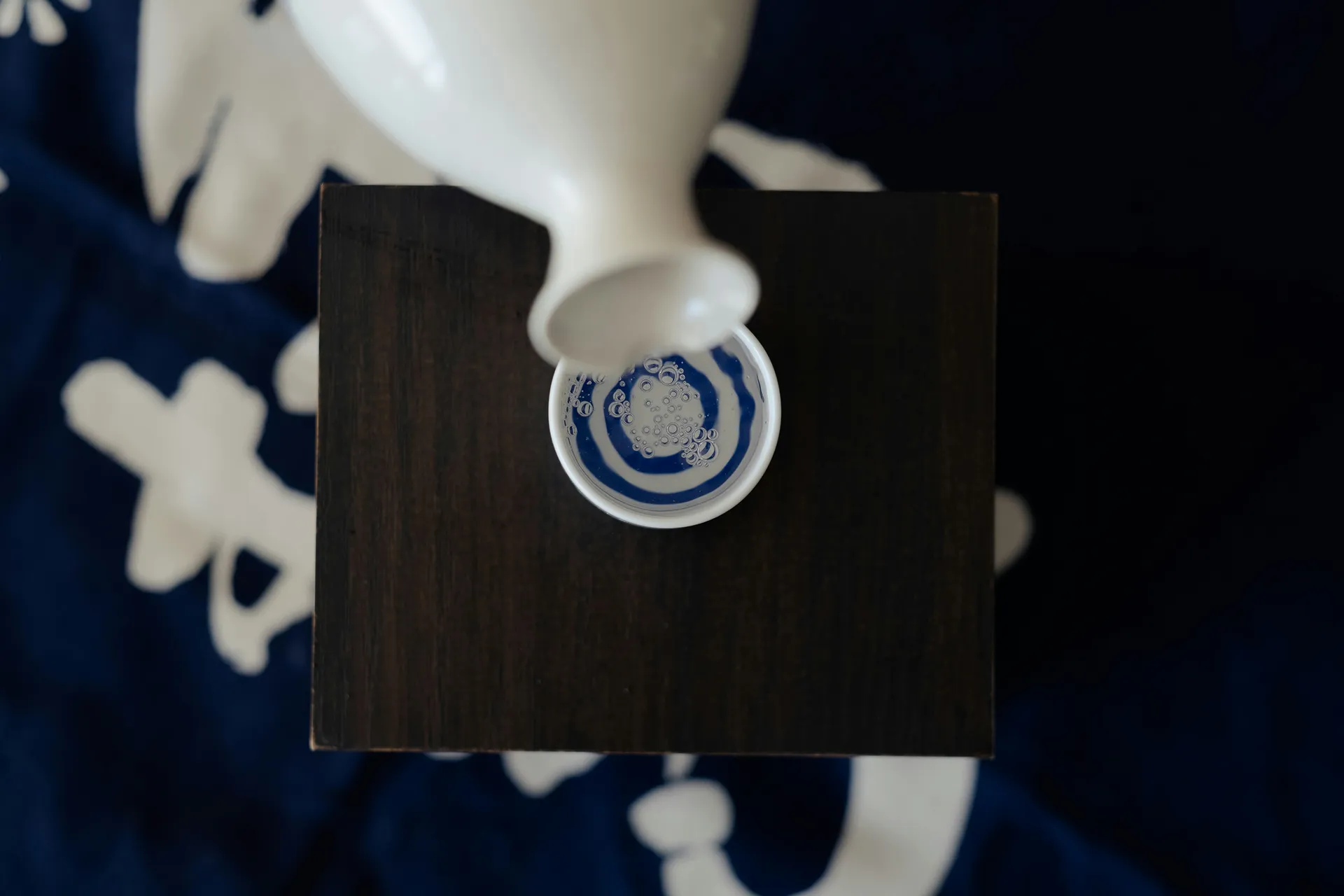
The National Research Institute of Brewing calls warming the traditional way to drink sake and gives 42 to 45°C as the usual range, with 35 to 40°C for sake with mild, delicate flavours. Ginjō-shu loses its aroma when heated, so the institute recommends serving it chilled to around 10°C, as it does unpasteurised nama-zake, while well-aged sake with rich acidity tastes better warm. Temperature also changes how sweetness and bitterness are perceived. On food, the institute's guidance is to match intensity: dishes with strong sweetness or umami suit equally sweet sake, and delicate sake suits lighter dishes. Seafood, the basis of omakase dining, shows the clearest difference: wine can react with the polyunsaturated fatty acids in fish to produce a fishy odour, while sake contains few of the components responsible.
Serving etiquette has a long written history. The Japan Sake and Shochu Makers Association notes that by the 18th century, textbooks set out formal manners covering guest seating, the choice of cup, serving, food pairing and drinking, although formal drinking of this kind is now rare. The convention that has lasted is pouring for others. Sharing sake symbolises a bond and is used to welcome new members to groups at work and in social circles, and pouring for one another sets aside social differences, putting everyone on the same level.
RIN: A SAKE LOUNGE BEFORE THE TEPPANYAKI ROOMS
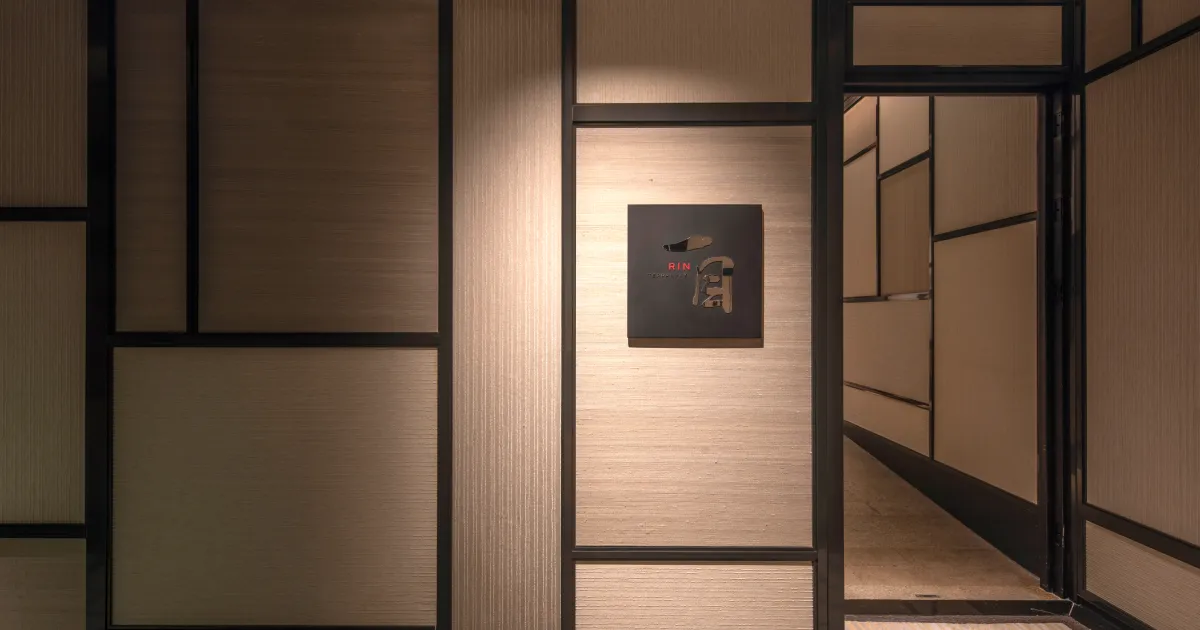
RIN is the signature Japanese restaurant at Mandarin Oriental Shenzhen, completed by Silverfox Studios in 2022 and led by chef Masanobu Hoshina. It is reservation-only, and every dining room is private. The cooking is teppanyaki, with ingredients prepared from raw in front of guests at the counter. Equipment sits under the counter so that the work surface stays clean, and the sightline runs past the chef to the city. The restaurant has three teppanyaki rooms: the Corten Steel Room, the Pine Room and the Concrete Room. All three are entered from a Sake Lounge through low doors. In the Japan Sake and Shochu Makers Association's account of sake in Japanese hospitality, sharing sake is how a bond between those present is marked and how new members are welcomed into a group.
SOURCES
- UNESCO Intangible Cultural Heritage Traditional knowledge and skills of sake-making with koji mold in Japan
- Government of Japan, Highlighting Japan Highlighting Japan, Vol. 201, March 2025
- Japan Sake and Shochu Makers Association The History of Japanese Sake
- Japan Sake and Shochu Makers Association Sake in Japanese Tradition and Culture
- National Research Institute of Brewing Japanese Sake Essentials: Varieties
- National Research Institute of Brewing Japanese Sake Essentials: Pairings
- Kokugakuin University, Encyclopedia of Shinto Miki
- Nara Prefecture Nara and Sake: Shoryakuji Temple
- Nippon.com Exploring the Sake Breweries of Nada
- Brewing Society of Japan About the Brewing Society of Japan