THE COOKING OF THE YANGTZE DELTA, FROM YANGZHOU'S SALT MERCHANTS TO SHANGHAI'S AUTUMN CRAB

Jiangnan cuisine is the cooking of the lower Yangtze, a region the food writer Fuchsia Dunlop defines as Jiangsu and Zhejiang provinces, the city of Shanghai and the southern part of Anhui. Rice is its staple, and its rivers, lakes and coast supply fish, freshwater crabs, shrimp, eel, water chestnuts and water bamboo. Dunlop has called it, under its other names of Jiangsu or Shanghai cooking, one of China's four great cuisines, associated with red braising in soy sauce, rice wine and sugar. Its cities include Yangzhou, described by UNESCO as the cradle of Huaiyang cuisine and a Creative City of Gastronomy since 2019; Hangzhou, the home of Dongpo pork and West Lake fish in vinegar; and Shanghai, whose kitchens are known for red-braised pork belly, xiaolongbao and the autumn hairy crab.
WHAT IS JIANGNAN CUISINE? RICE, RIVER FISH AND THE SEASONS
Dunlop told Munchies that Jiangnan cooking is about balance and eating in tune with the seasons, and that it is less easy to stereotype than Sichuanese cooking, with its chillies and pepper. She singled out fresh bamboo shoots, a huge range of seasonal greens, often simply stir-fried or eaten in soup, and Jinhua ham, used for umami flavour and prized for its garnet colour. She attributed its low profile in the West to the absence of a wave of Jiangnan emigrants opening restaurants and to dishes that need very local ingredients.
On the podcast Conversations with Tyler in 2019, Dunlop described Hangzhou and Yangzhou as the crux of trade paths, and argued that the great Chinese cuisines have always followed the money. The MICHELIN Guide divides Hangzhou cooking into two sections: lake cuisine, which focuses on fish, shrimp and vegetables and was mainly cooked for officials, and city cuisine, which gives priority to domestic animals and fowl. Wang Yong, Chinese executive chef of Jin Sha at the Four Seasons Hotel Hangzhou at West Lake, told the guide that the most important aspect of the Hangzhou style is how the food is cut, that cooks must develop great knife skills, and that his seasonal ingredients include hairy crabs.
The hairy crab is the Chinese mitten crab, known in Cantonese as dai jap hai. Dunlop calls it an autumn delicacy. According to the South China Morning Post, the crabs are caught and served from after the Mid-Autumn Festival until around the end of November. Most of the crabs sold in Hong Kong are grown in Yangcheng Lake and Tai Lake in Suzhou. Tai Lake crabs are usually bigger, with 12 taels the ideal weight, while a Yangcheng crab of around eight taels has the sweetest roe. The simplest preparation is steaming. The South China Morning Post advises buying dried basil leaves and ginger with the crabs, washing each crab thoroughly, placing it stomach-up in the wok and steaming it for half an hour, then serving it with the Zhenjiang vinegar dip.
WHAT IS HUAIYANG CUISINE? YANGZHOU, THE GRAND CANAL AND THE SALT MERCHANTS
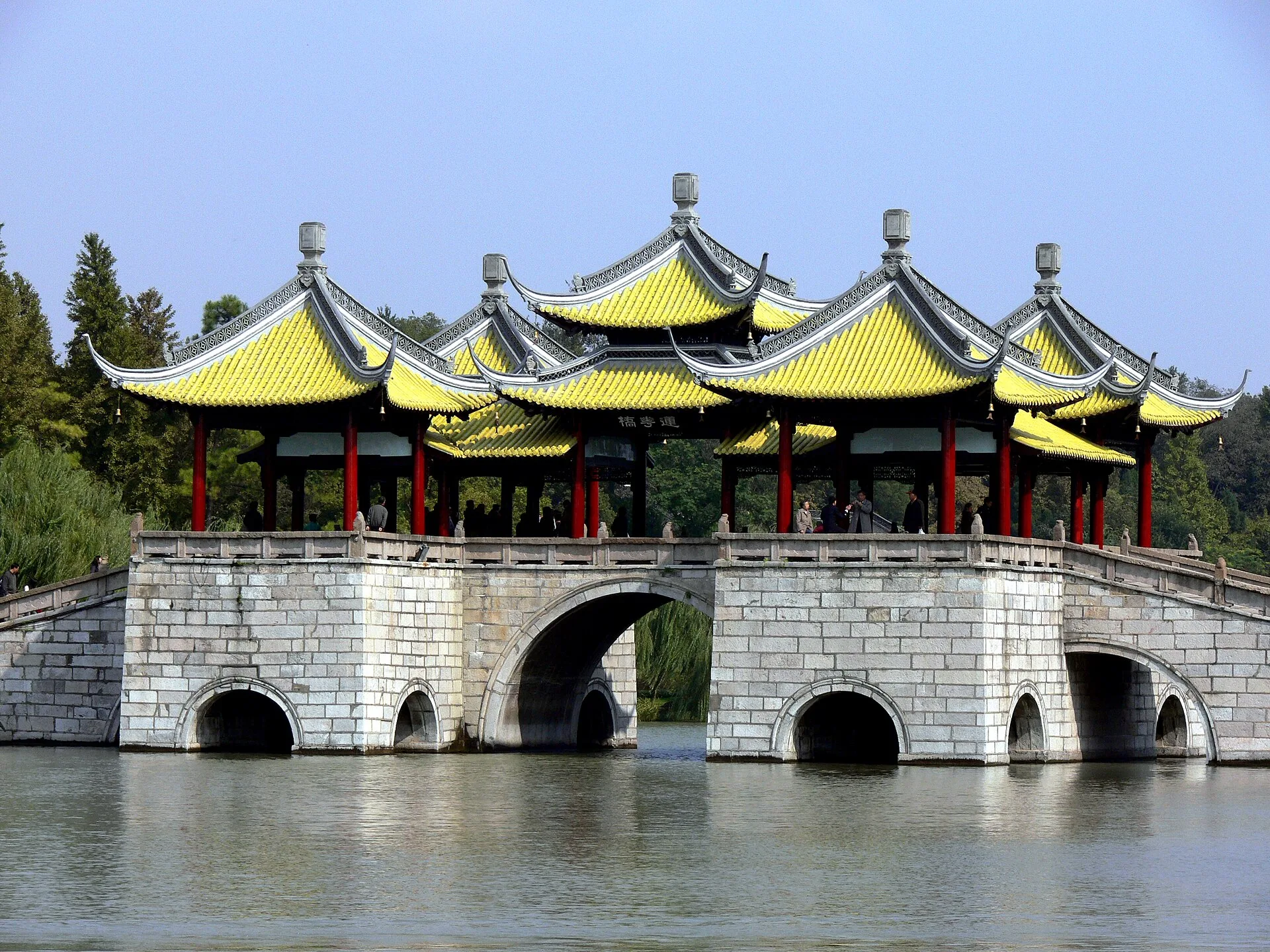
According to China Daily, Huaiyang cuisine originated around the Huai and Yangtze rivers, mainly in Huai'an and Yangzhou in Jiangsu province, and has been well known since the Sui (581 to 618) and Tang (618 to 907) dynasties. Jiangsu holds the longest stretch of the Beijing to Hangzhou Grand Canal, and the Qing emperors Kangxi and Qianlong stayed in Huai'an and Yangzhou on their travels down the canal to the regions south of the Yangtze, which made the cuisine popular across the country.
UNESCO's World Heritage tentative listing for the city's Slender West Lake places Yangzhou at the convergence of the Grand Canal and the Yangtze, and states that its highly developed salt economy kept the city influential through the Ming and Qing dynasties. Suzhou's gardens were mostly owned by government officials, Yangzhou's mostly by wealthy salt merchants, and in the mid-18th century salt traders' villas were joined into a garden belt around the lake to welcome Qianlong's southern inspection. Dunlop has said that the salt trade all went through Yangzhou and that its rich salt merchants hosted lavish dinners, including for Qianlong on his southern tours, the source of many grand old dishes. She called Yangzhou the old gastronomic capital of the region, renowned in the 18th and 19th centuries for its food culture.
Among the dishes China Daily lists for Huaiyang are wensi tofu, in which a square of tofu is cut into more than 5,000 shreds; lion's head, large balls with crab meat stewed for a precise period; and Yangzhou fried rice. UNESCO's profile gives the city of 4.6 million people more than 20,000 catering businesses employing 245,000 people, and a catering income of US$2.322 billion in 2018. Each year it hosts more than 100 food-themed conferences, exhibitions, festivals and contests.
HANGZHOU: DONGPO PORK AND WEST LAKE FISH IN VINEGAR
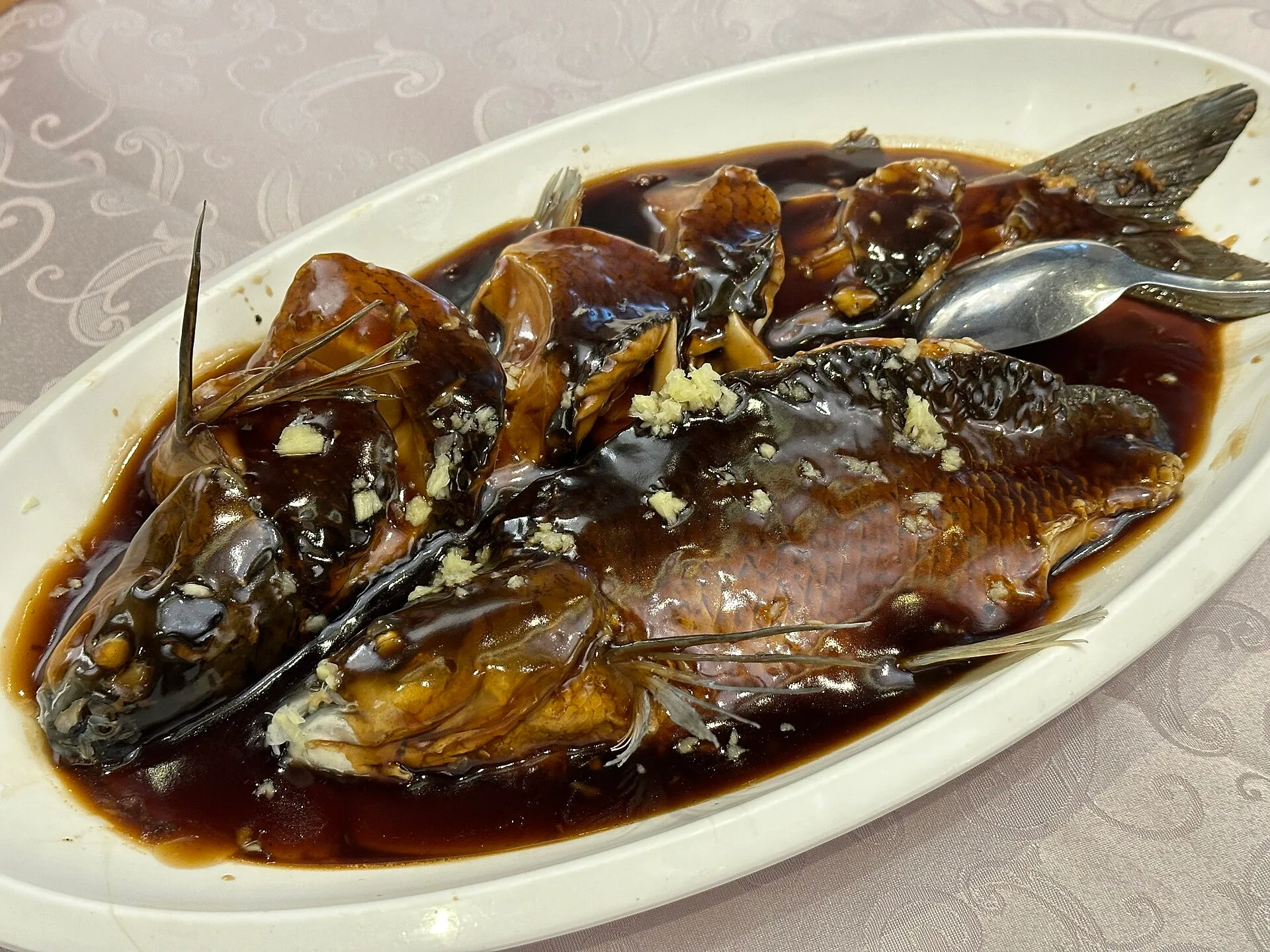
Hangzhou is the capital of Zhejiang province. Dunlop has described how, after the Song capital fled south to the city, it developed an extraordinary cuisine, food writing, poetry about food and restaurants. Wang Yong describes Hangzhou cooking as light, mild and slightly sweet, and explains that cooks in the south add a little sugar to bring out the freshness of a dish. He names West Lake fish in vinegar, xi hu cu yu, as one of the city's representative dishes. Dunlop has said her interest in the cuisine began in Hangzhou, where she visited the Dragon Well Manor restaurant.
Dongpo pork is associated with Su Dongpo (1037 to 1101), a poet of the Song dynasty (960 to 1279), and Munchies identifies it as red-braised pork. Wang Yong names yellow wine as its key ingredient, and the MICHELIN Guide notes that Shanghainese braised pork with abalone in sweet soy sauce is sweeter than the Hangzhou classic. Shanghai's municipal government, in a guide to red-braised pork belly, notes that early references to meat stewed in seasoned liquid appear in the Qimin Yaoshu, an agricultural text attributed to Jia Sixie and compiled around the sixth century, though the text does not describe today's dish.
HOW IS JIANGNAN FOOD SEASONED? SHAOXING WINE, ZHENJIANG VINEGAR AND SUGAR
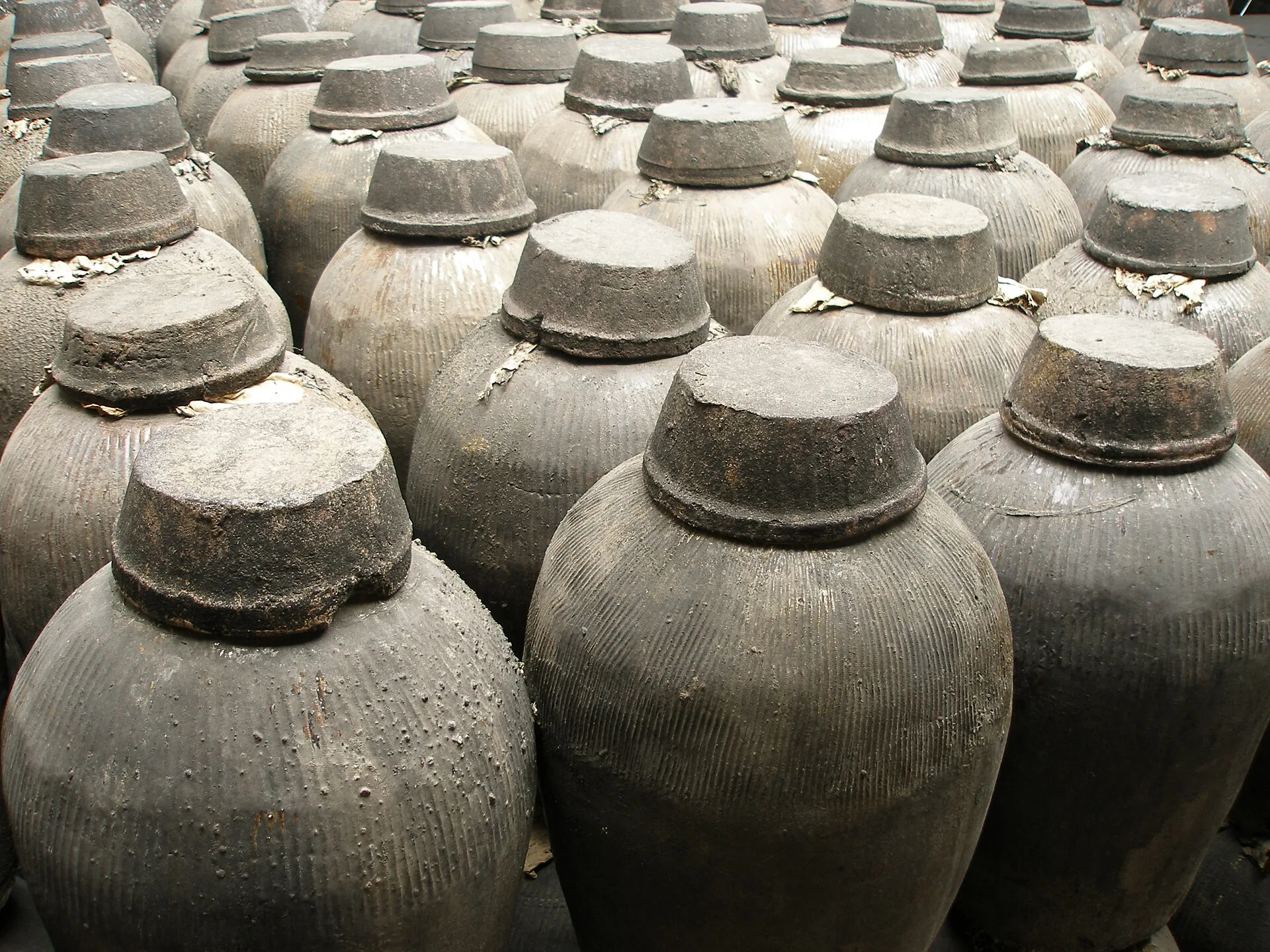
Shaoxing is the home of the rice wine that carries its name. Dunlop told Munchies that although Shaoxing wine is used across China in small amounts, in Jiangnan food is steeped in it. The city also gives the region its drunken dishes, and the residue left over from winemaking is used for its boozy flavour. Shaoxing is also known for its stinky foods. Shanghai's published home recipe for red-braised pork belly adds 10 millilitres of Shaoxing wine to 500 grams of pork. For drinking, the South China Morning Post recommends Shaoxing hua diao wine with hairy crab, or ginger tea as an alternative.
Zhenjiang vinegar goes into the crab dip: the South China Morning Post's guide to hairy crab gives the dipping sauce as Zhenjiang vinegar mixed with shredded ginger, red sugar and a drop of soy sauce. Wang Yong told the MICHELIN Guide that Shanghai cuisine is sweeter, as sugar is an important ingredient there, especially with soy sauce, and the Shanghai red-braised pork recipe uses 25 grams of rock sugar against 25 millilitres of light soy sauce and 10 millilitres of dark soy sauce.
WHAT IS SHANGHAI CUISINE? HOW RED-BRAISED PORK BELLY IS MADE
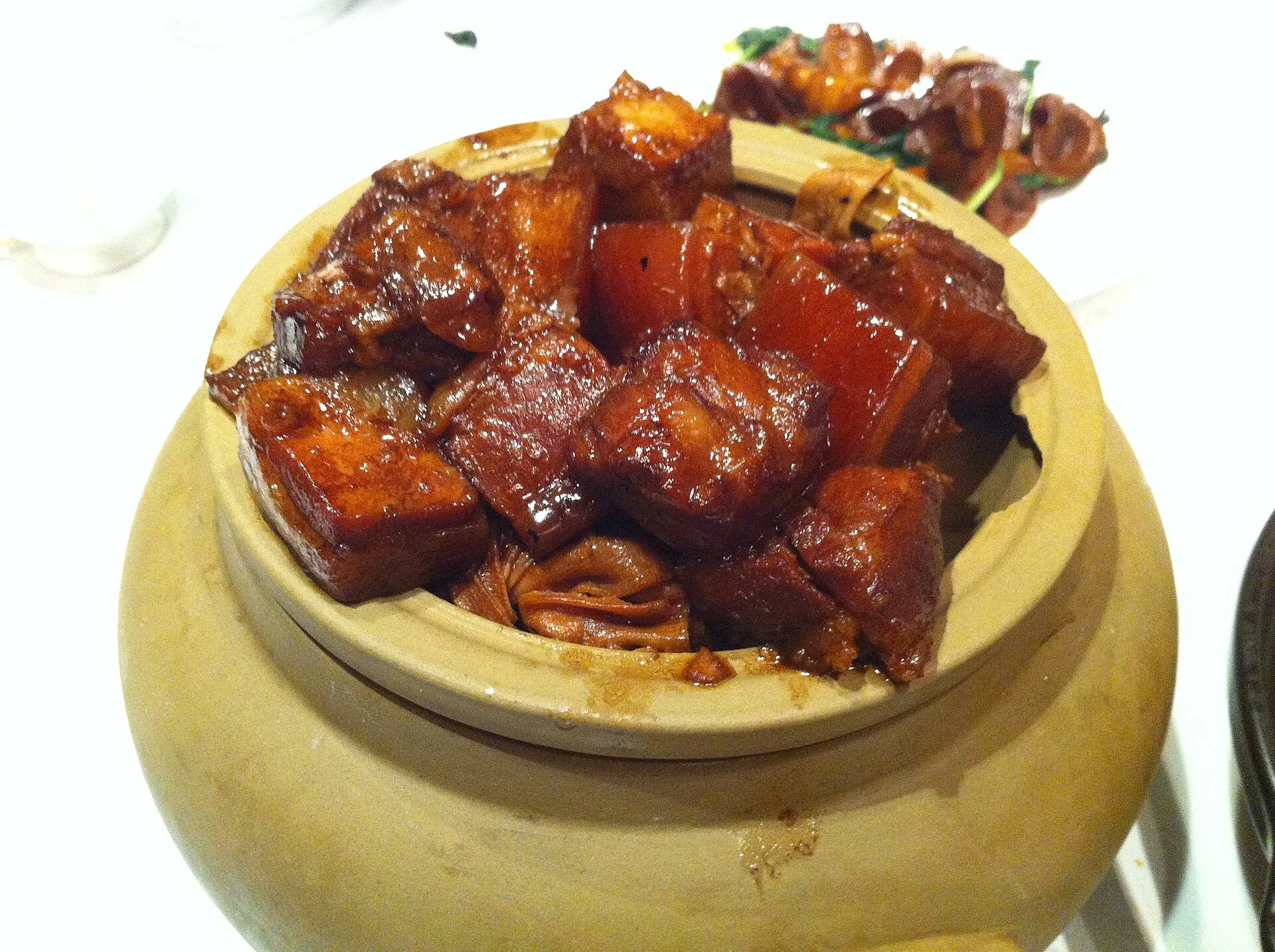
The MICHELIN Guide describes Shanghai cuisine as complex and developed styles of cooking formed under the profound influence of neighbouring Jiangsu province and of Hangzhou. Among its braises is hongshao rou, red-braised pork belly. According to Shanghai's municipal guide, the city's version came to emphasise pork belly, dark soy sauce for colour and rock sugar for a balanced sweetness. In the published home method, skin-on pork belly is brought to the boil from cold water and simmered until just set, cooled, pressed into a compact shape and cut into cubes of 3 to 4 centimetres. The cubes are pan-fried until the fat renders, then simmered with Shaoxing wine, rice vinegar, aromatics and both soy sauces for about two hours. It is served in a grid of three by three or four by four pieces.
The same guide lists restaurants that serve the dish. Yuan Yuan has made it since 1999 using pork belly with ribs attached, dark soy, rock sugar and a long braise without thickeners. Ren He Guan, which the guide credits with more than 200 years of history, serves individual portions with half a braised egg, and Lyceum Restaurant on Jinxian Road cooks it in a wok over steady heat. Fu 1015 serves a variation with black truffle and abalone over rice in a clay pot.
WHERE DID XIAOLONGBAO COME FROM? WUXI, NANXIANG AND SHANGHAI
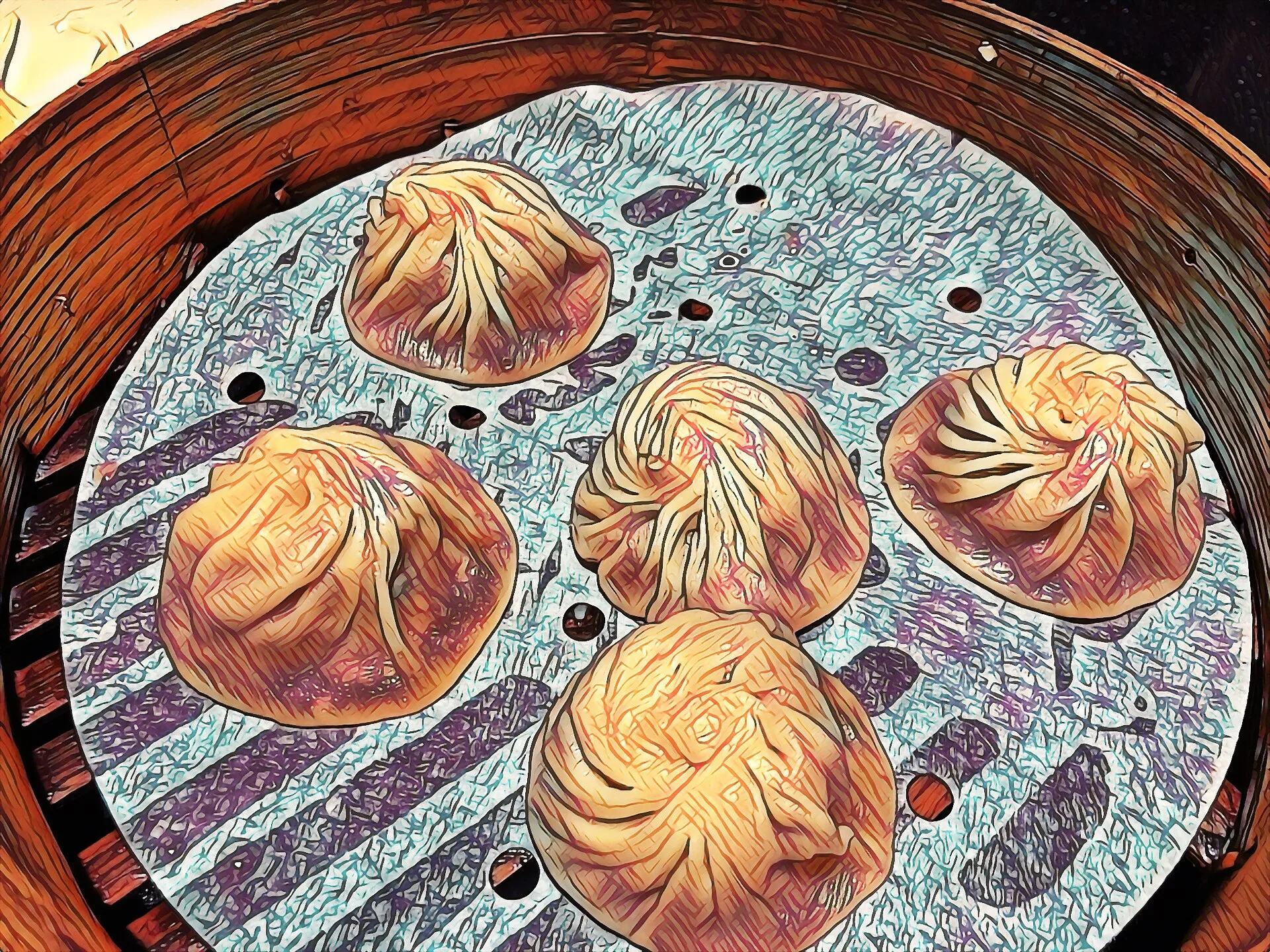
Xiaolongbao, the soup dumpling, has more than one origin story, and the South China Morning Post records two legends. In the first, the Qianlong emperor tasted the dumplings in Wuxi, in Jiangsu province, while travelling through the region, and the xiaolongbao of Wuxi became famous as a result. China Daily lists other Wuxi specialities: sauced spare ribs, made since the Qing dynasty, and Liangxi crispy fried eel. Shanghai's municipal government traces the dumpling's ancestry further back, to taixue mantou, a stuffed steamed bun popular among scholars in Bianjing, now Kaifeng in Henan province, under the Northern Song (960 to 1127).
The second legend places the invention in Nanxiang, now part of Shanghai's Jiading district, and credits Huang Mingxian, owner of the Ri Hua Xuan pastry shop, in the 1870s; the municipal government gives the year as 1871 and says he made the meat bun smaller, thinner-skinned and more delicate. He added aspic to the pork mince, which turns liquid when steamed and fills the dumpling with soup. According to the South China Morning Post, the best xiaolongbao are supposed to have 14 pleats at the top. Steaming is covered in a separate history of the bamboo steamer. The Nanxiang Steam Bun Restaurant, founded in 1900 and recognised as a China Time-honoured Brand, now trades inside the Yuyuan Garden Malls.
THOMPSON SHANGHAI EXPO ON THE HUANGPU

Thompson Shanghai Expo opened in October 2025 as Thompson's first hotel in Asia Pacific, with 254 rooms; Silverfox Studios carried out its full scope. The hotel stands on the former Expo 2010 site, whose buildings are traced in a separate article on what happened to the Expo 2010 pavilions, and faces the river covered in an article on the Huangpu and Shanghai's waterfront. The design avoids literal pavilion imagery. It is organised as buildings within buildings: each public room and each guestroom type is its own structure, with its own ceiling and its own materials.
All-day dining is housed in Fishermen's Pavilion on levels 19 to 20. It is laid out as penthouse pavilions facing the Huangpu and the Expo grounds, and, like the hotel's other public rooms, it is a structure in its own right, with its own ceiling and materials. The river frontage places the hotel in the city whose Nanxiang area is credited in legend with the soup dumpling, where the Nanxiang Steam Bun Restaurant was founded in 1900 and where Yuan Yuan has served red-braised pork belly since 1999.
SOURCES
- UNESCO Yangzhou, Creative Cities Network
- UNESCO World Heritage Centre Slender West Lake and Historic Urban Area in Yangzhou
- China Daily Site birthplace of Huaiyang cuisine
- MICHELIN Guide Ask The Expert: What Is Hangzhou Cuisine?
- Munchies Fuchsia Dunlop on China's Most Underrated Food
- Conversations with Tyler Fuchsia Dunlop on Homestyle Chinese Cooking
- Shanghai Municipal People's Government Red-braised pork belly
- Shanghai Municipal People's Government Xiaolongbao: A small dumpling with a big story
- South China Morning Post Legends: two stories behind xiaolongbao
- South China Morning Post Hairy Crab 101