A STACKABLE BASKET OF SPLIT BAMBOO THAT DESCENDS FROM NEOLITHIC CLAY STEAMERS AND STILL CARRIES THE DIM SUM TRADE
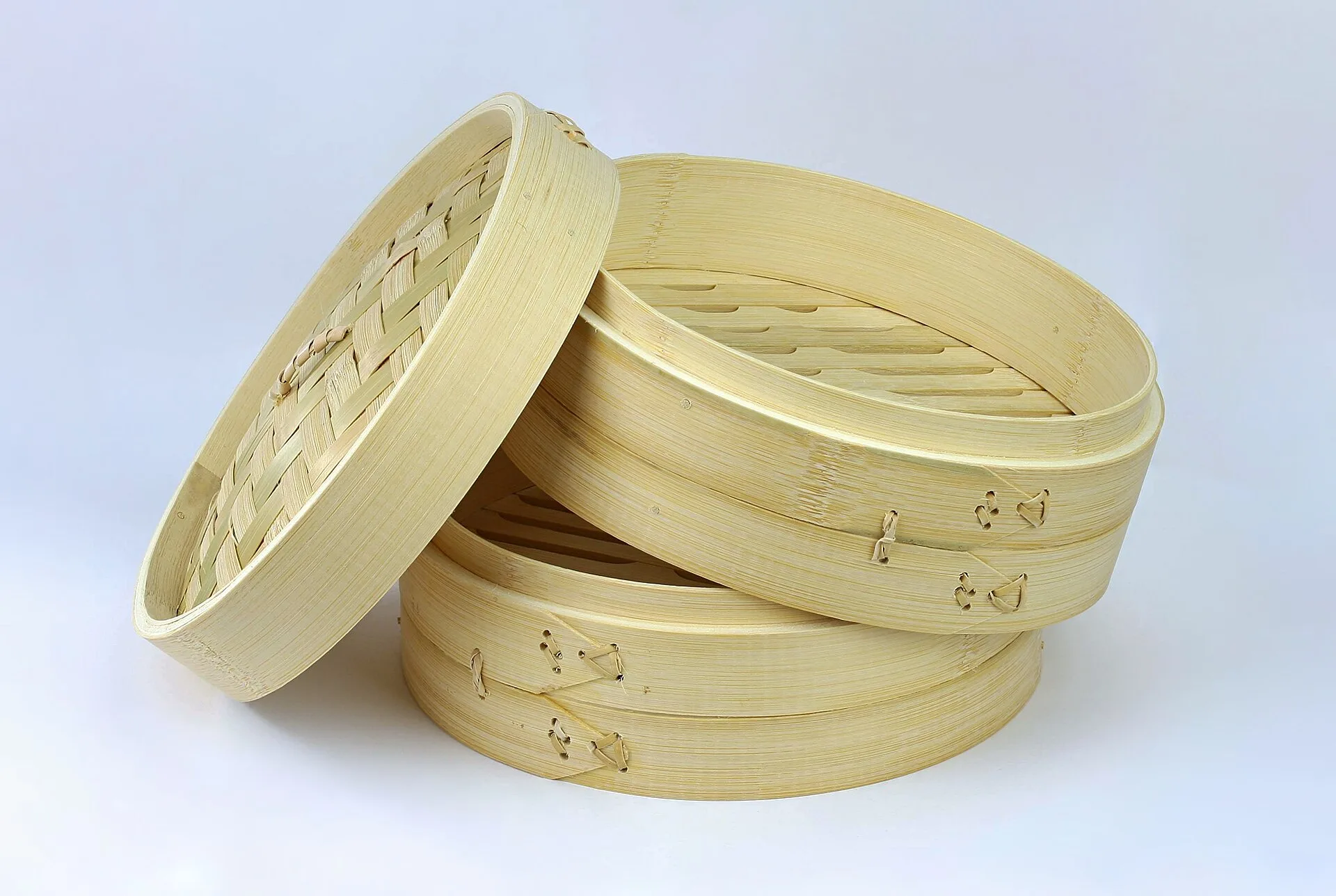
The bamboo steamer is a round, lidded basket of split bamboo that sits over boiling water and cooks food with rising steam. It is used in kitchens across East Asia and is the standard vessel for Cantonese dim sum, where it serves as both cookware and serving dish. Chinese steaming is far older than the basket itself. Clay and bronze steamers built on the same principle survive from the Neolithic period and the Bronze Age, and a Western Zhou bronze in the V&A was designed to hold a bamboo basket of food. An article published by the University of Hong Kong's Making Modernity in East Asia project puts the use of bamboo steamers in East Asian kitchens at about 2,000 years. Bamboo has stayed in use because it deals with the main problem of any steamer: water condensing on the lid and dripping back onto the food.
WHAT IS A BAMBOO STEAMER AND HOW DOES IT WORK
A bamboo steamer is a set of open rings with slatted floors, stacked on top of one another and closed with a woven lid. The stack sits over a wok or pot of boiling water. Steam rises through the floor of the lowest tier, passes up through each tier in turn and cooks whatever sits on the slats. Because every tier is a separate basket, a cook can stack two or three and steam several dishes over one source of heat. Testers at America's Test Kitchen found that lower tiers cook faster than upper ones, which lets foods with different cooking times share a stack.
The material is what separates bamboo from a metal steamer. Bamboo absorbs some of the moisture in the steam, so condensation does not gather on the lid and fall back onto dumplings and buns. The University of Hong Kong article describes a second feature of the traditional build: the woven cover arches upwards, so any water that does form runs to the edge and down through gaps between the support rings rather than onto the food. The trade-offs are durability and care. Bamboo is a natural fibre, more fragile than metal, and must be washed and dried carefully to stop it warping, cracking or growing mould. In the same tests, all-bamboo tiers warped more readily than tiers bound with metal bands.
WHERE DID THE STEAMER COME FROM: CLAY AND BRONZE VESSELS
Steaming cookware in China dates to the Neolithic period, when it was made of clay and known as yan. The working principle can be seen in a pottery zeng from the prehistoric Fantzuyuan Culture, held by Taiwan's National Museum of Natural Science. A zeng is a vessel with a hole in its base. It was set into a pottery jar of water heated from below, and steam rose through the hole to cook food resting on a rack inside. The museum notes that some prehistoric examples have several holes in the base, and that others used a movable perforated pottery disc, close in function to a steamer rack, set inside the belly of a jar.
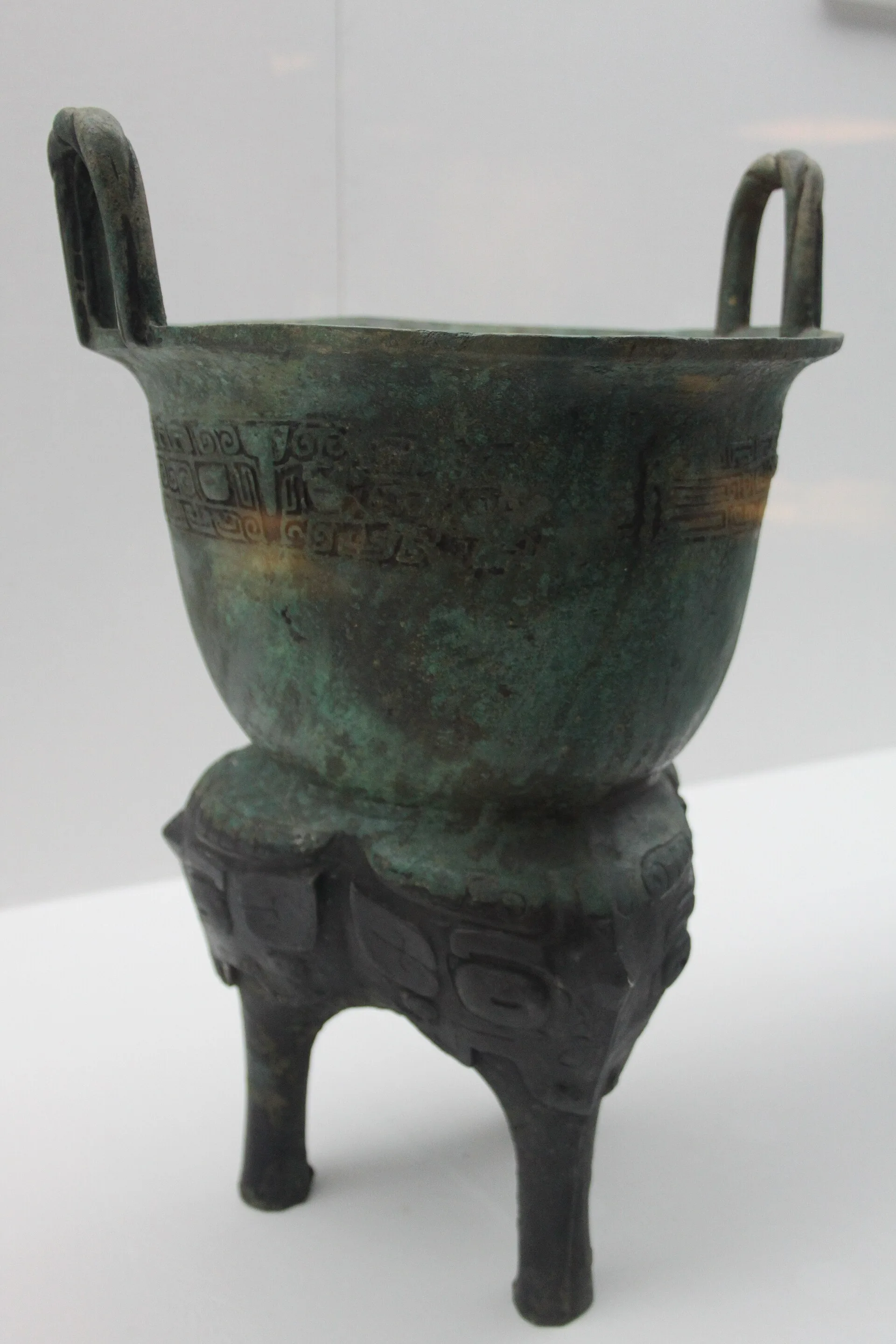
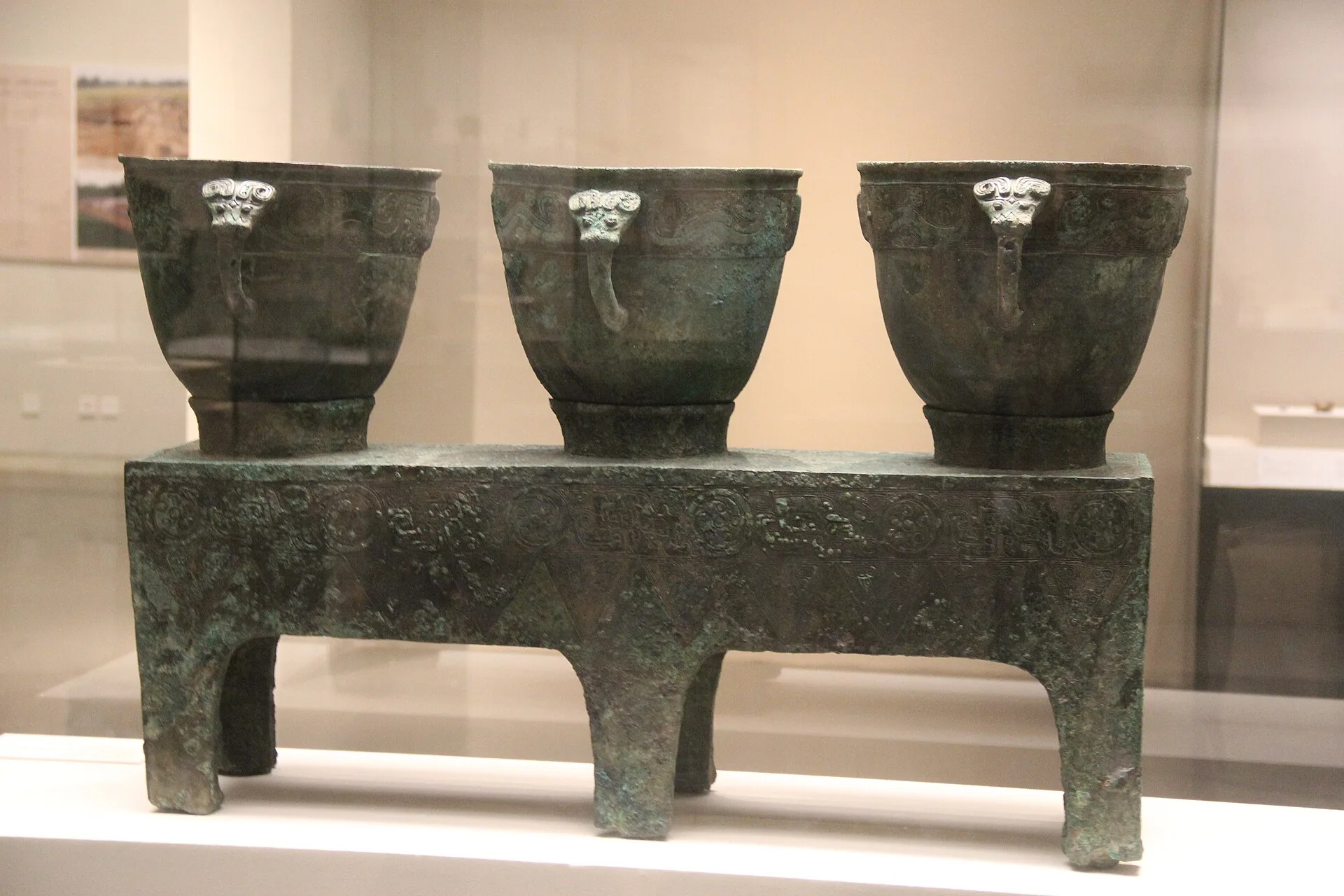
Bronze casters of the Shang and Zhou dynasties kept the same two-part arrangement. A Western Zhou yan in the V&A, made in the eleventh or tenth century BC, has a tripod at the bottom and a bowl with a perforated base above it. Water was poured into the tripod and a fire lit beneath; the steam passed through the holes in the bowl and cooked the food. The museum's description states that the food went into the bowl in a bamboo basket, which places a bamboo container inside the steamer around three thousand years ago. The largest known example is a triple bronze yan made for Fu Hao, wife of the Shang king Wu Ding, unearthed at the Yinxu ruins in Henan in 1976 and now in the National Museum of China. It is more than a metre long and could cook three dishes at once, with three water vessels at the bottom and three food vessels above.
THE HAN DYNASTY AND THE LEGEND OF HAN XIN
The earliest images of the free-standing bamboo steamer cited by the University of Hong Kong article come from the Han dynasty. It points to murals in the Dahuting Han tombs that show cookware resembling the modern bamboo steamer. The same article records a popular origin story: that the general Han Xin, in the early years of the Han dynasty, ordered bamboo steaming equipment for his army so that cooking smoke would not give away its position. The author notes that the story cannot be confirmed, and it is best treated as legend rather than history.
What the record does support is that steaming was well established in Chinese cooking long before dim sum appeared. According to the same article, the term dim sum first appears in the Tang dynasty, and originally worked as a verb meaning to grab a bite. Its later association with small steamed dishes and tea drinking, the two halves of Cantonese yum cha, made the bamboo steamer the vessel most closely tied to that meal. The history of the meal itself, from Guangzhou tea houses to Hong Kong, is covered in our article on dim sum and yum cha.
WHY BAMBOO: THE MATERIAL BEHIND THE BASKET
Bamboo is not a tree but a group of tall, woody grasses. Britannica counts more than 115 genera and about 1,400 species in the subfamily, most concentrated in East and Southeast Asia, and records that some species grow up to 30 centimetres in a single day. The stems, called culms, are hollow between their nodes, and split stems have long been used for buckets, pipes, furniture and utensils, while whole stems are still lashed together as scaffolding on building sites. For steamer makers the useful qualities are the ones the University of Hong Kong article lists: bamboo is durable, pliable and easy to obtain.
Pliability matters because the frame of a steamer is a set of bent rings. The maker needs strips that can be curved into a tight circle without splitting, then held in that shape while they are bound. The traditional fixings are also plant materials: rings are tied with rattan or, in later practice, metal wire, and the structure is reinforced with small bamboo nails. Hong Kong craftsmen have adapted the formula for durability. Lui Ming, one of the last makers in the city, added a steel ring to his steamers and later replaced the bamboo ties at the base with steel wire, according to a report in Hong Kong Baptist University's student publication, The Young Reporter.
HOW A BAMBOO STEAMER IS MADE BY HAND
The University of Hong Kong article sets out the traditional sequence. Bamboo poles are cut to size, the skin is peeled and the strips are smoothed with a knife; makers work without gloves so they can judge each strip's thickness and hardness by touch. The strips are softened by rubbing them against a wooden handle, then bent into a base ring and secured with wire or rattan. Thinner, narrower strips form one or two support rings that reinforce the frame, and an inner ring, slightly smaller than the base, traps air and heat as insulation. The floor combines thicker crosspieces that carry the weight of the food with thinner strips that let steam through, bound with rattan and pinned with bamboo nails. Finally, strips of bamboo skin are woven into the arched lid and fitted into an outer ring.
The speed of a skilled maker is the reason the craft survived as a trade. The same article states that an experienced maker can finish a steamer of any size in about an hour, and a standard dim sum steamer in 15 to 20 minutes. Lam Ying-hung of Tuck Chong Sum Kee told the South China Morning Post that learning to make a steamer from a single piece of bamboo takes at least three years, and that he can produce eight large steamers or 50 small ones in a day. One of the earliest photographs of the work, taken by John Thomson around 1871 and held in the Historical Photographs of China collection, shows a pedlar drilling holes in the side of a steamer so that its parts can be fixed together.
HONG KONG'S LAST BAMBOO STEAMER MAKERS
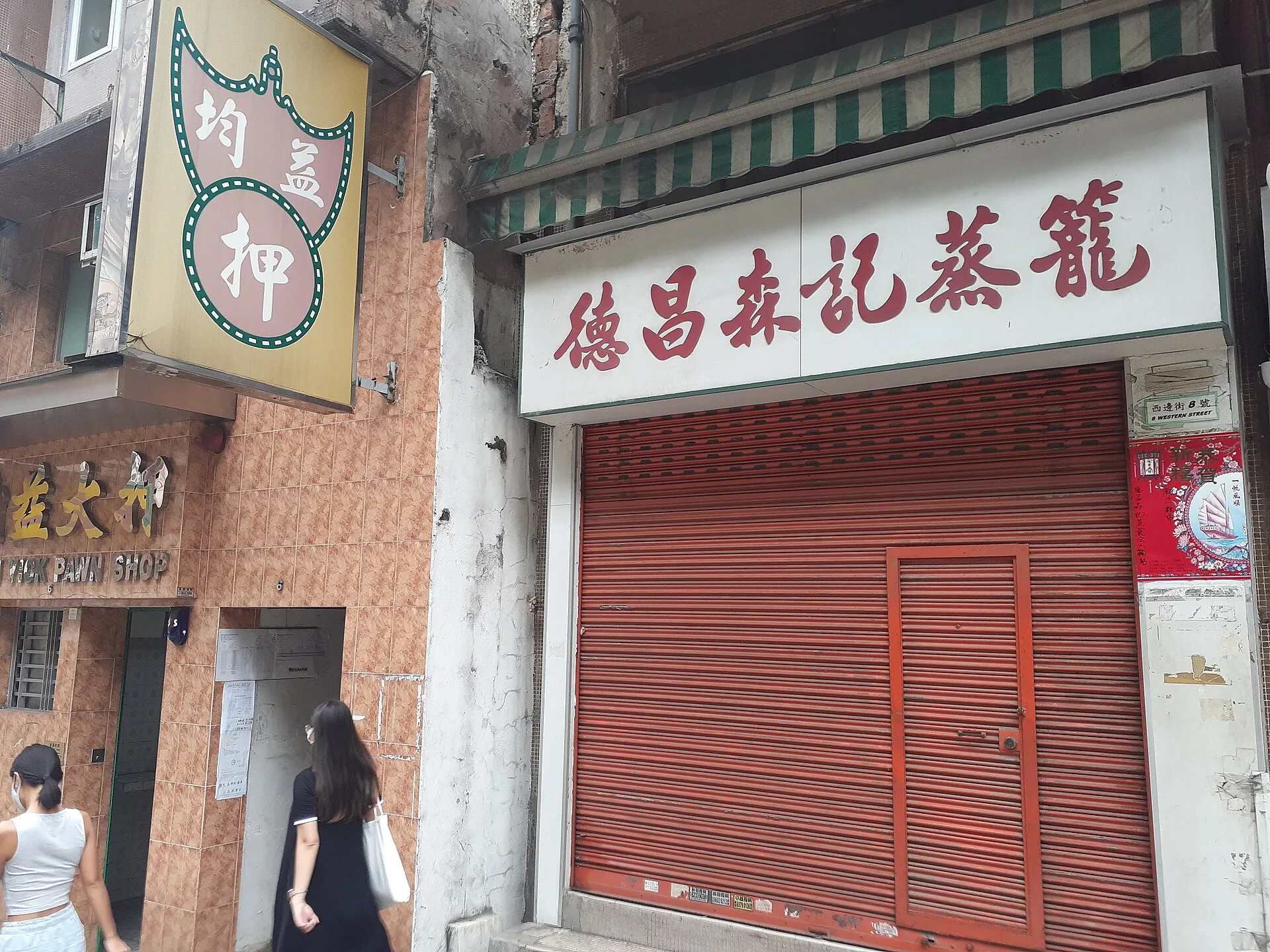
Hong Kong's steamer trade grew with its tea houses. Tuck Chong Sum Kee was founded in the late Qing dynasty by Lam Ying-hung's great-great-grandfather, who sold steamers in villages and markets outside Guangzhou before moving into the city. The family moved to Hong Kong in the 1950s and settled on Des Voeux Road West, close to tea houses such as Luk Yu and Lin Heung. In the 1970s local workers found better-paid jobs and the company struggled to hire, and by the 1980s, the SCMP reports, nearly all bamboo steamer production had moved to mainland China. Lam is described as the last bamboo steamer maker left in Hong Kong. Mainland factories run as production lines on which each worker performs one or two steps, and he has said he may be the last person who can make a steamer from start to finish.
Other family firms have taken different routes. The To family's Sum Hing Kee Bamboo Steamer Company, which has made steamers for a century, now has most of its stock made across the border and keeps hand-making special orders and repairing damaged steamers from a unit in Cheung Sha Wan. Its owner, To Wai-pan, told the SCMP that bamboo gives food a distinct smell and flavour, at a time when some restaurants were switching to silicone. Lui Ming, born in Heshan in Guangdong, moved to Hong Kong in the 1970s, founded his own brand and began supplying local restaurants; at 93 he was still running his shop in Yau Ma Tei and had made more than 10,000 dim sum steamers.
THE BAMBOO STEAMER AT BAZAAR, MANDARIN ORIENTAL SHENZHEN

Bazaar is a restaurant at Mandarin Oriental Shenzhen, designed by Silverfox Studios and completed in 2022. It is organised around open kitchen stations, with a bakery and a bar lounge. Dim sum is prepared at an open station where bamboo steamers sit under a cylindrical stainless steel hood, in view of the dining room. The arrangement puts a basket whose working principle goes back to Neolithic clay steamers under a modern extraction hood, with the stacked tiers and woven lids visible from the tables.
The rest of the restaurant combines timber, steel and rattan; rattan and steel are also the materials steamer makers use to bind and reinforce bamboo rings. Timber post-and-beam structures and a slatted timber ceiling frame the space, including the raw bar. Grill seating sits beside the open kitchen under a steel frame with large gear-wheel forms, and rattan armchairs face the city views, so the dim sum station is one of several cooking stations guests can watch from their seats.
SOURCES
- Victoria and Albert Museum Food vessel (yan)
- National Museum of Natural Science, Taiwan Pottery zeng
- China Daily Ancient triple bronze steamer
- The University of Hong Kong, Making Modernity in East Asia Bamboo Steam: From Kitchenware to Cultural Icon
- Britannica Bamboo
- America's Test Kitchen The Best Bamboo Steamers
- South China Morning Post Six home-grown Hong Kong trades at risk of dying out
- South China Morning Post Humble bamboo basket takes cha siu bow
- South China Morning Post Dying art: Hong Kong bamboo master, 93, steams ahead to keep alive intricate decades-old craft
- Hong Kong Baptist University, The Young Reporter An old inventor of bamboo steamers