WHAT IS TIEGUANYIN? THE OOLONG OF ANXI, FROM QING LEGEND TO GONGFU BREWING AND UNESCO
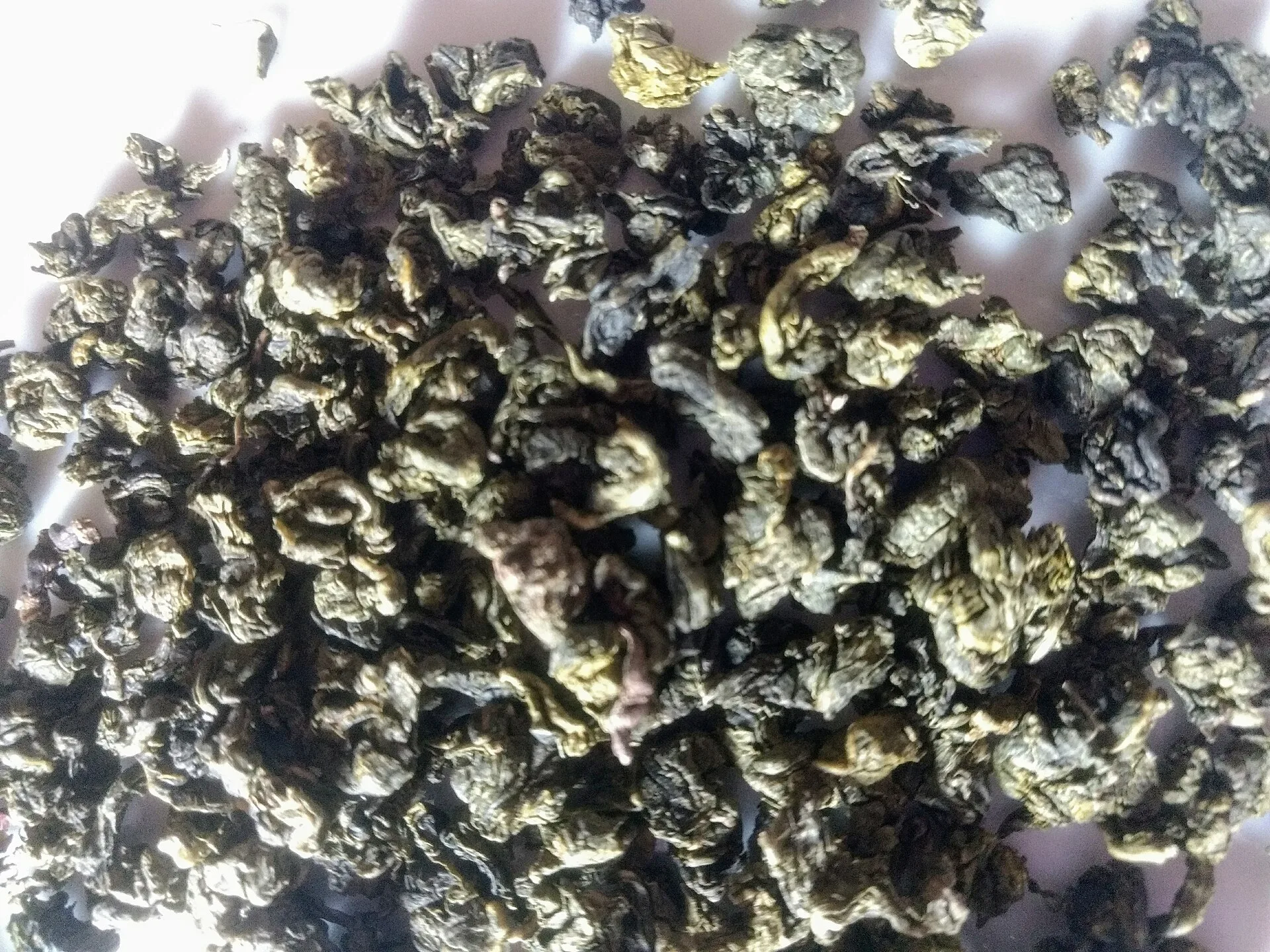
Tieguanyin is a semi-oxidised oolong tea from Anxi County in Fujian province, China, known in English as Iron Goddess of Mercy and named after Guanyin. Britannica records that its harvest was once reserved for the emperor and the imperial court. It is made in a green, floral jade style and in baked styles roasted at about 105°C to 115°C, and it is popular in south China and among Chinese expatriates in Southeast Asia. Two legends set in the Qianlong reign of the Qing dynasty explain its name. The tea master Chang Nai-Miao took Fujian tea plants to Muzha in Taiwan, and in 2022 UNESCO inscribed traditional Chinese tea processing, oolong included, on its Representative List.
WHAT IS OOLONG TEA? PARTIAL OXIDATION AND THE WUYI MOUNTAINS
Britannica defines oolong as a tea of Chinese origin made from partially oxidised leaves, placing it between black tea, which is fully oxidised, and green tea, which is barely oxidised. The Chinese name means black dragon. In Britannica's sequence, the leaves are plucked and withered until they have lost about two-thirds of their water, then rolled to break open their cell walls. The crushed leaves are left to oxidise as amino acids in them react, and are then dried over a fire or in an oven. Black tea ferments for about two to four hours; oolong typically ferments for one to two hours. Britannica calls oolong originally a speciality of southern China.
A Hong Kong Government release for the 2008 exhibition History of Tea: The K S Lo Collection of the Flagstaff House Museum of Tea Ware places the category in the early Qing dynasty (1644 to 1911). Tea makers in the Wuyi mountain region of Fujian let picked leaves wilt and ferment until the edges turned red, then stopped fermentation by pan-firing them. The result was called Oolong tea or Wuyi tea. According to the same release, the method was recorded in Lu Tingcan's Xu Chajing, which drew on a description of Wuyi tea production in the Chashuo by his contemporary Wang Caotang.
WHERE DOES TIEGUANYIN COME FROM? ANXI COUNTY AND TWO ORIGIN LEGENDS
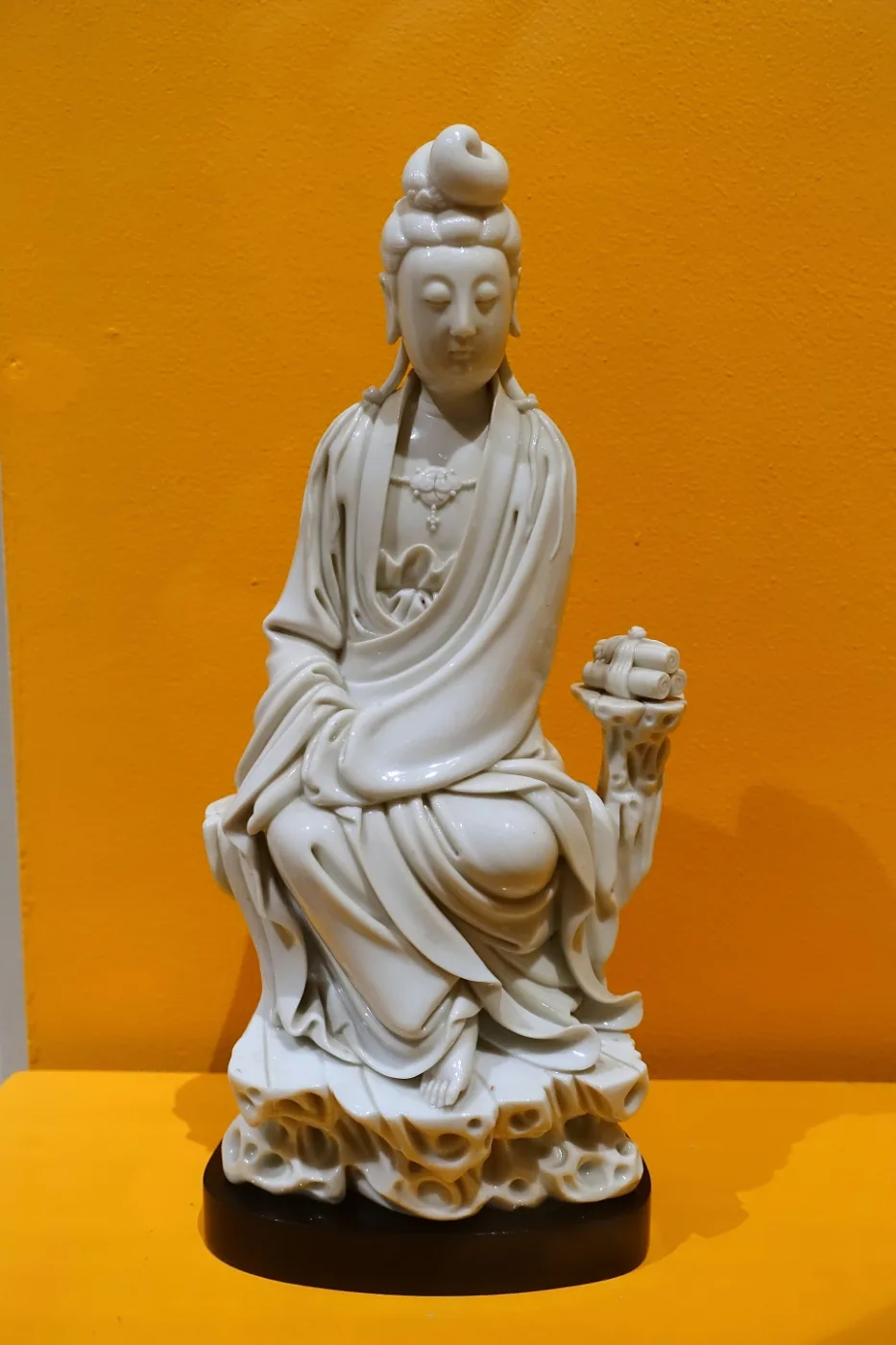
The 2022 study in Frontiers in Nutrition, written by researchers at the Tea Research Institute of the Chinese Academy of Agricultural Sciences in Hangzhou, the University of Limerick and a national tea quality inspection centre in Fujian, identifies Tieguanyin as a semi-oxidised oolong from Anxi county. Britannica adds a story about the Fujian variety: that it was supposedly harvested by monkeys trained to scale cliff faces. The name is explained by two legends, introduced as traditional accounts by the Taipei City Government's Department of Economic Development in a public explainer titled "Why is it called Tieguanyin tea?"
The first legend is dated to 1736, the first year of the Qianlong reign. Wang Shirang of Yaoyang found a tea tree unlike other varieties in an overgrown plot beside his study, below the Guanyin Rock on Nanshan. He transplanted it and made tea from its leaves, and the tea was passed on to the Qianlong Emperor, who asked about it and praised it. The leaves were dark and glossy, as dark as iron, and the tea was rich and sweet. Because the tree had been found at the foot of Guanyin Rock, the tea was named Tieguanyin, from tie, iron, and Guanyin.
The second legend is set more loosely in the Qianlong period and in Songyan village, Anxi. Wei Yin, a Buddhist villager, offered a cup of tea to Guanyin every morning. In the Taipei account, Guanyin, moved by his devotion, appeared in a dream and promised him a tree, which he found on the mountain. He transplanted it home, cultivated it and made tea from its leaves. Because the leaves were as heavy as iron and Wei Yin believed the tree was a gift from the bodhisattva, he named the tea Tieguanyin.
HOW IS TIEGUANYIN MADE? WITHERING, BRUISING, FIXING AND ROLLING
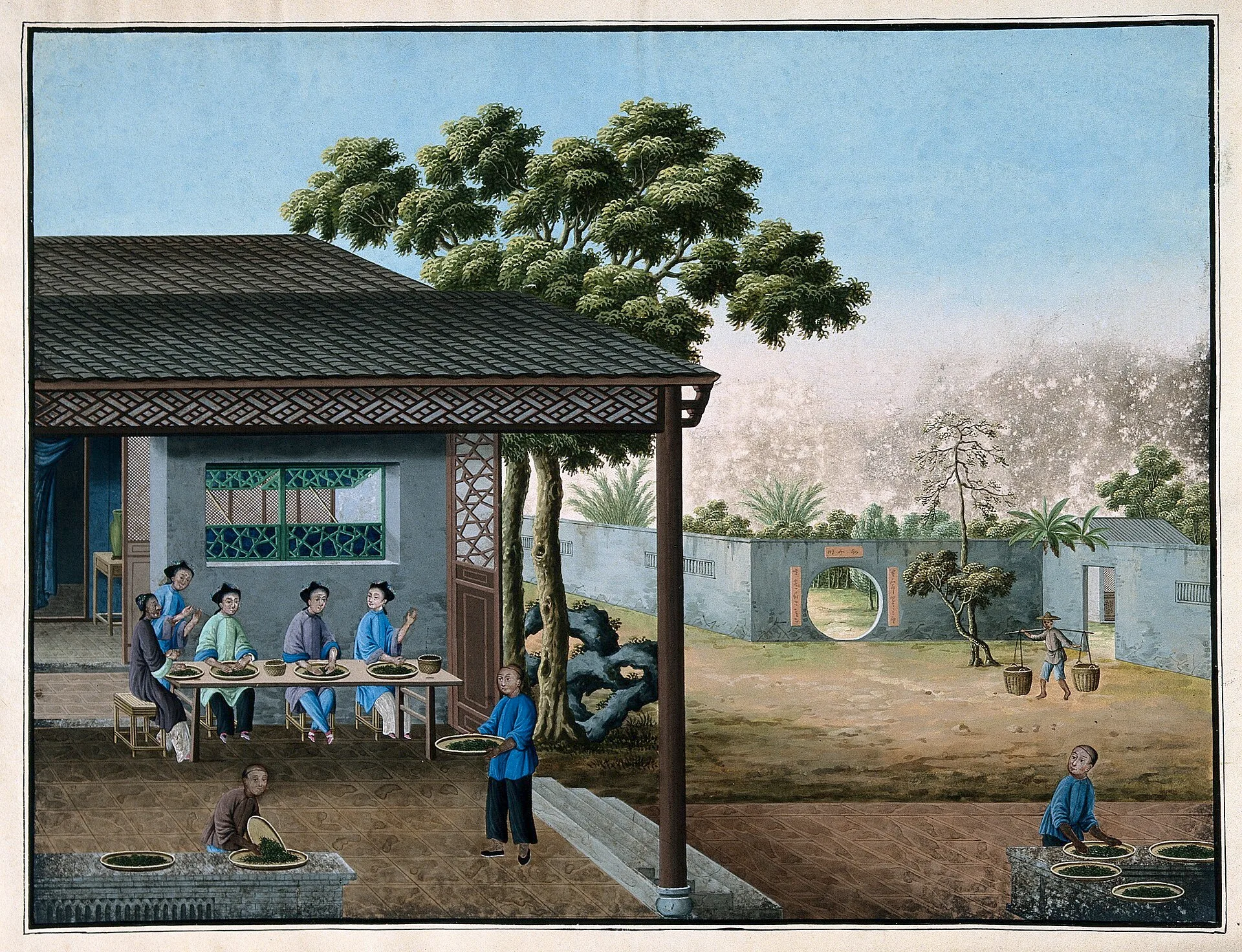
The National Museum of Natural Science in Taiwan holds a set of eight models that uses Tieguanyin to explain how spherical semi-fermented tea is produced. The models show hand-picking, solar withering, shaking, drying, stir fixation, rolling, roasting and tasting. The Frontiers in Nutrition study lists the stages of unbaked, or jade, Tieguanyin in similar terms: harvesting fresh leaves, withering, bruising, partial oxidation, fixing, shaping and drying. The museum's shaking and the study's bruising fall at the same point, between withering and fixation. Both sequences follow the outline of the Hong Kong release's account of early Wuyi oolong, in which leaves were left to wilt and ferment before pan-firing stopped the change.
In the Hong Kong release's account, it was pan-firing that stopped fermentation in early Wuyi oolong. Both the museum and the study place a heat stage, fixation, after shaking or bruising, and the museum names it stir fixation. A 2023 trial at the College of Horticulture, Fujian Agriculture and Forestry University, published in Foods, shows these stages for oolong under controlled conditions: two hours of withering under white light, a first shaking of four minutes at 30 revolutions per minute followed by a 1.5-hour rest, and fixation in a drum roasting machine at 290°C for 2.5 minutes.
Shaping gives Tieguanyin the spherical form that the museum's models are designed to explain. In the 2023 trial, leaves were rolled while still hot, first for one minute without pressure and then for five minutes under medium pressure. Drying followed at 120°C for 30 minutes and then at 90°C for two hours. Jade Tieguanyin is finished at this point. Roasting, the last production stage in the museum sequence before tasting, is a separate step that turns jade Tieguanyin into its baked styles.
LIGHT AND ROASTED TIEGUANYIN: WHAT IS THE DIFFERENCE?
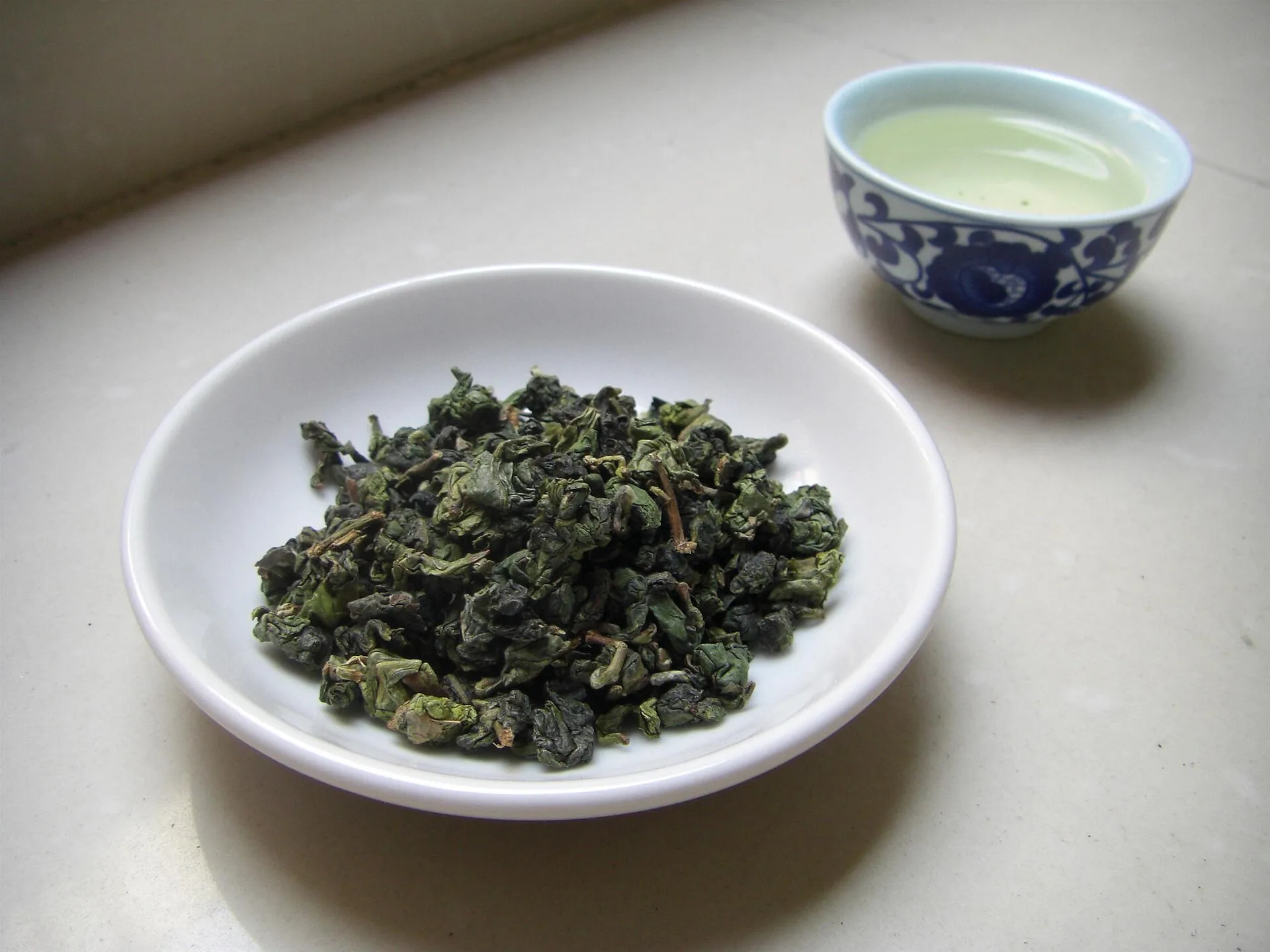
The Frontiers in Nutrition study names three significant types of Tieguanyin: jade, medium-baked and deep-baked. Medium-baked Tieguanyin is made by baking jade Tieguanyin, and deep-baked Tieguanyin by baking the medium-baked tea once more. The authors give typical conditions of about 105°C for three to eight hours for the first baking and about 115°C for two to six hours for the second. In their own trial, the base tea was baked at 107°C for 210 minutes after 12 days of storage, then at 115°C for 150 minutes after a further 22 days.
The styles differ in colour, aroma and drinkers. Jade Tieguanyin is green, smells floral and tastes brisk, and the study reports that it is preferred by women and young drinkers. Deep-baked Tieguanyin is brownish, with a roast aroma and a mellow, thick taste and strong sweet aftertaste. The authors describe it as the favourite of local drinkers in Anxi county and as the most traditional and most expensive of the three. Medium-baked Tieguanyin falls between the two in flavour, and the study reports that many customers find it less distinctive, making it the least popular of the three.
HOW DID TIEGUANYIN REACH TAIWAN? CHANG NAI-MIAO AND MUZHA
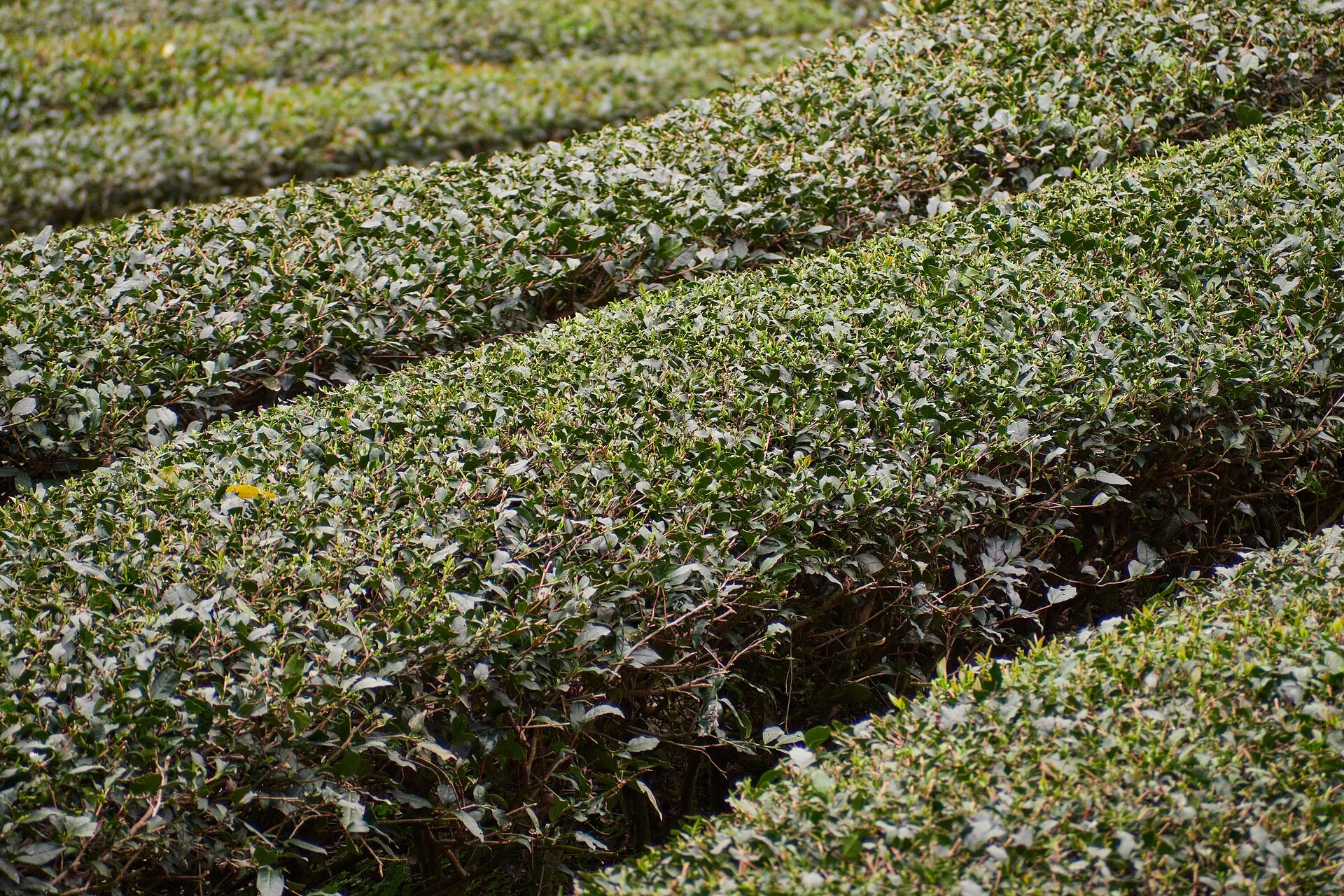
Tieguanyin reached Taiwan through the tea master Chang Nai-Miao. According to the Taipei City Government's Department of Information and Tourism, he introduced the tea to Taiwan at the age of 20, bringing tea plants from his home in Fujian to Muzha. At the time, Baozhong and oolong were the main teas being planted. Muzha is now known for Tieguanyin, which the tourism department attributes to his work. The Tea Master Chang Nai-Miao Memorial Hall commemorates him, and generations of his family have worked there, cooperating with farmers across Taiwan and running advanced tea classes.
The memorial hall serves no meals or other drinks, so that visitors can concentrate on tea. Taiwan has its own oolong traditions: Britannica notes that Baozhong oolong, grown in Taiwan's high mountains, is given as a gift to bring good luck. The Taipei City Government's Department of Economic Development retells both Anxi legends, of Wang Shirang and of Wei Yin, in its own public explainer. Taiwan's National Museum of Natural Science also documents the tea's production, holding the eight Tieguanyin processing models described above.
WHAT IS GONGFU TEA? HOW OOLONG IS BREWED IN CHAOSHAN
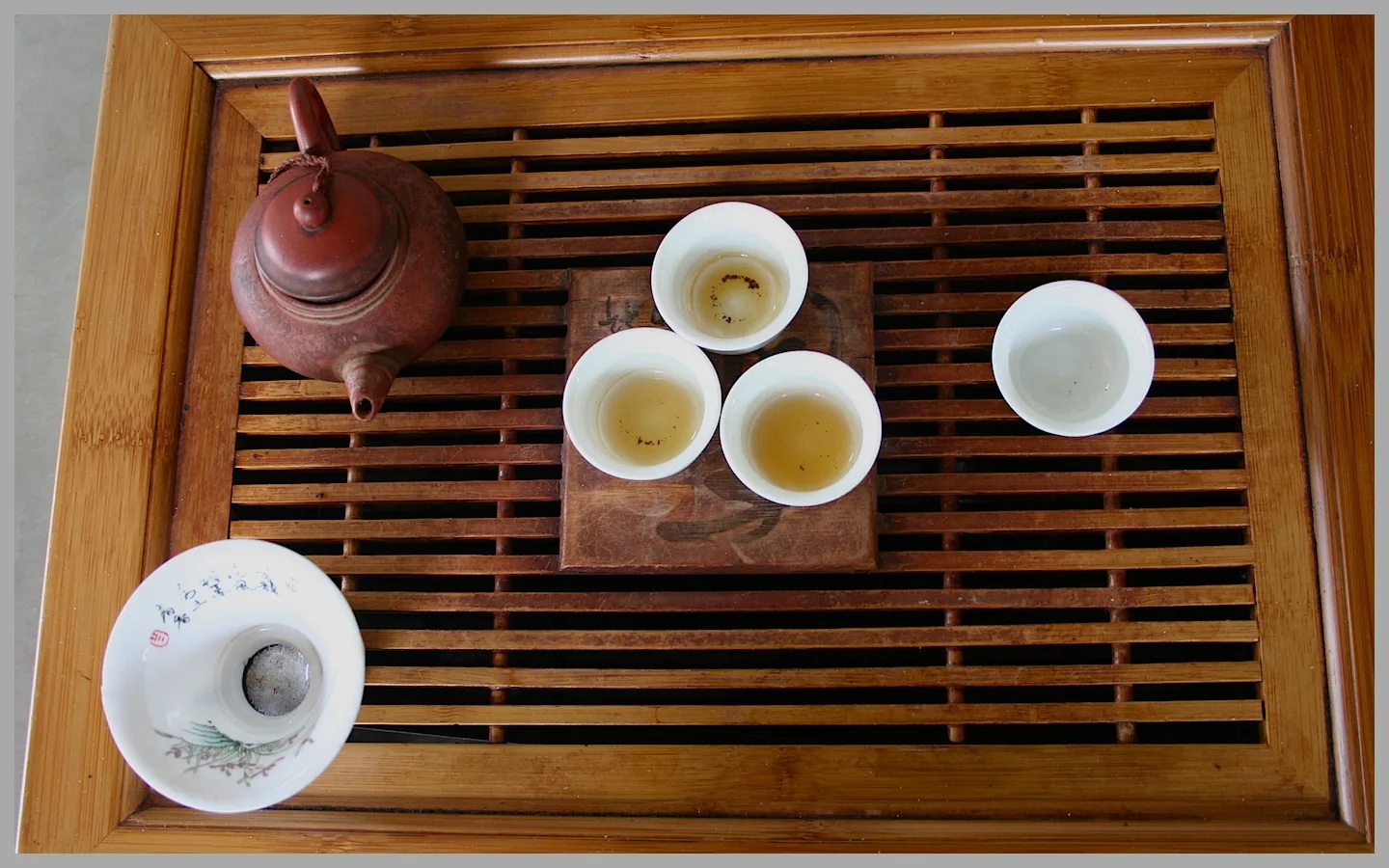
Gongfu tea is a method of brewing oolong in a small pot. The Chaozhou Municipal People's Government describes Chaozhou gongfu tea art as a brewing technique handed down in the Chaoshan area of Guangdong, traces its history to the Song dynasty and notes that it has been on China's national intangible cultural heritage list since 2008. It uses mainly oolong, especially Chaozhou Dancong, and has spread from Chaoshan across China and overseas. China Daily, reporting in 2021, notes that the ritual avoids tender green tea in favour of semi-fermented oolong, with Dancong from Chaozhou's Fenghuang Mountain as the local favourite.
The Chaozhou government sets out a 21-step procedure. Its steps include an explanation of the tea set, lighting a clay stove, drawing water with a sand kettle, boiling it over olive charcoal and placing oolong in the pot, and the sequence ends with smelling the bottom of the cup three times. China Daily describes a teapot that fits in the palm of an adult's hand and handleless cups each smaller than a table tennis ball. Two pouring steps carry the names of figures from Chinese history, Guangong and Han Xin. In Guangong Patrolling City, the cups are set together in a triangle and the teapot moves around them to pour the tea evenly without pause. In Han Xin Inspecting Troops, the last drops are shared among the cups to empty the pot.
TIEGUANYIN AND THE 2022 UNESCO INSCRIPTION OF CHINESE TEA PROCESSING
In 2022 UNESCO inscribed Traditional tea processing techniques and associated social practices in China on the Representative List of the Intangible Cultural Heritage of Humanity, at the 17th session of the Intergovernmental Committee. The element covers tea plantation management, leaf picking, manual processing, drinking and sharing, across six categories of tea: green, yellow, dark, white, oolong and black. UNESCO counts more than 2,000 tea products, including reprocessed teas such as flower-scented teas. The Chaozhou government reports that the inscription brings together 44 national-level heritage items from 15 provinces, regions and municipalities, with Chaozhou gongfu tea art as the only Guangdong item.
In UNESCO's description, tea is served in homes, workplaces, tea houses, restaurants and temples, and forms part of ceremonies such as weddings and sacrifices. Using tea to welcome guests and build family and neighbourhood ties is common to multiple ethnic groups. Knowledge is passed down within families and through apprenticeships, and the bearers include tea producers, farmers and artists as well as the makers of pastries served with tea. Oolong is one of the six categories named, and the withering, bruising, fixing, rolling and baking of Tieguanyin described above are stages of manual tea processing, one of the areas the element covers.
HYATT CENTRIC OCEANFRONT XIAMEN BESIDE ZENGCUO'AN FOOD STREET

Hyatt Centric Oceanfront Xiamen, completed in 2025 as a full-scope Silverfox Studios project, stands on the Xiamen coast beside Zengcuo'an (Ceng Cuo An) Food Street. Its design draws on the street scenes and lanes of the surrounding area, on kiln-fired local bricks and on local craft and music culture. Southern Fujian's kiln-fired brick building tradition is the subject of a separate article on Minnan red brick architecture, and the food street sits in a city whose dishes include shacha noodles, a satay noodle soup.
The hotel is planned as a series of connected "houses". Music is central to the ground floor, where the House of Music is the focal point for live evening music. Xiamen's music culture is also the subject of a separate article on Gulangyu, known as Piano Island. In UNESCO's 2022 description of Chinese tea practices, the tea house is listed among the homes, workplaces, restaurants and temples where tea is served, and Tieguanyin's oolong category is one of the six covered.
SOURCES
- UNESCO Traditional tea processing techniques and associated social practices in China
- Britannica Oolong
- Hong Kong SAR Government Exhibition features Chinese tea culture and tea utensils
- Frontiers in Nutrition Effects of the Baking Process on the Chemical Composition, Sensory Quality, and Bioactivity of Tieguanyin Oolong Tea
- Taipei City Government, Department of Economic Development Why is it called Tieguanyin tea? (為何叫做鐵觀音茶?)
- National Museum of Natural Science, Taiwan Tieguanyin tea processing steps
- Foods (MDPI) Optimizing Processing Techniques of Oolong Tea Balancing between High Retention of Catechins and Sensory Quality
- Taipei Travel Tea Master Chang Nai-Miao Memorial Hall
- Chaozhou Municipal People's Government Traditional Chinese tea-making techniques and related customs successfully inscribed (中国传统制茶技艺及其相关习俗申遗成功)
- China Daily Chaozhou tea ritual steeped in history