HOW A FISH NEVER CAUGHT IN PORTUGUESE SEAS BECAME THE NATIONAL DISH

Bacalhau is Atlantic cod (Gadus morhua) that has been salted and dried. Portugal consumed nearly 55,000 tonnes of salt cod in 2023, about six kilos per person, according to the Cod Industry Association (AIB), and accounts for almost 20 per cent of world consumption of the fish. The cod has never lived in Portuguese seas: it is caught mainly off Iceland and Norway, and the Portuguese call it o fiel amigo, the faithful friend. Its route to the national table runs through Viking stockfish, Basque salting, the Newfoundland fishery, a Christian calendar of meatless days and the 20th-century White Fleet of sailing ships and one-man dories.
WHERE DID SALT COD COME FROM?
Preserving cod began in Scandinavia. Alexander Lee of the University of Warwick, writing in History Today, links it to the late 8th or early 9th century, when Viking shipbuilders began building the first keeled craft and dried cod into stockfish. Around the time of Leif Erikson's voyage of about 1001, the Basques adopted stockfish and helped spread it to other European seafaring peoples. According to António José Marques da Silva, in a paper for the UNESCO Chair in Intangible Heritage at the University of Évora, Basque fishermen may also have been the first to take a new curing technique to high latitudes: salting the fish before drying it.
Salt cod proper appeared after John Cabot reached Newfoundland in 1497 and opened access to the cod stocks of the northwest Atlantic. Air drying alone did not work there, because Newfoundland's muggy climate made it impossible, so the catch was salted first. Salting reduced the water content to around 60 per cent, enough to last a long Atlantic voyage. Silva records that Portuguese fishermen joined the Basques on the Newfoundland banks around 1500 and adopted the same cure alongside Norman, Breton and English crews, although Portuguese and Spanish fishermen were never major players in the migratory fishery of the 16th century.
The European Union register entry for Bacalhau de Cura Tradicional Portuguesa places the Portuguese encounter with the fish in the northern Atlantic during the Portuguese discoveries of the 15th century. The same document dates the first Portuguese records of cod fishing and salt treatment to the mid-16th century and, citing the historian Amzalak, states that drying warehouses were used in Aveiro from at least 1572. Silva describes the method used there: cod was pickled for eight days in brine made with salt from France, Portugal and Spain.
WHY DID BACALHAU BECOME PORTUGAL'S NATIONAL DISH?
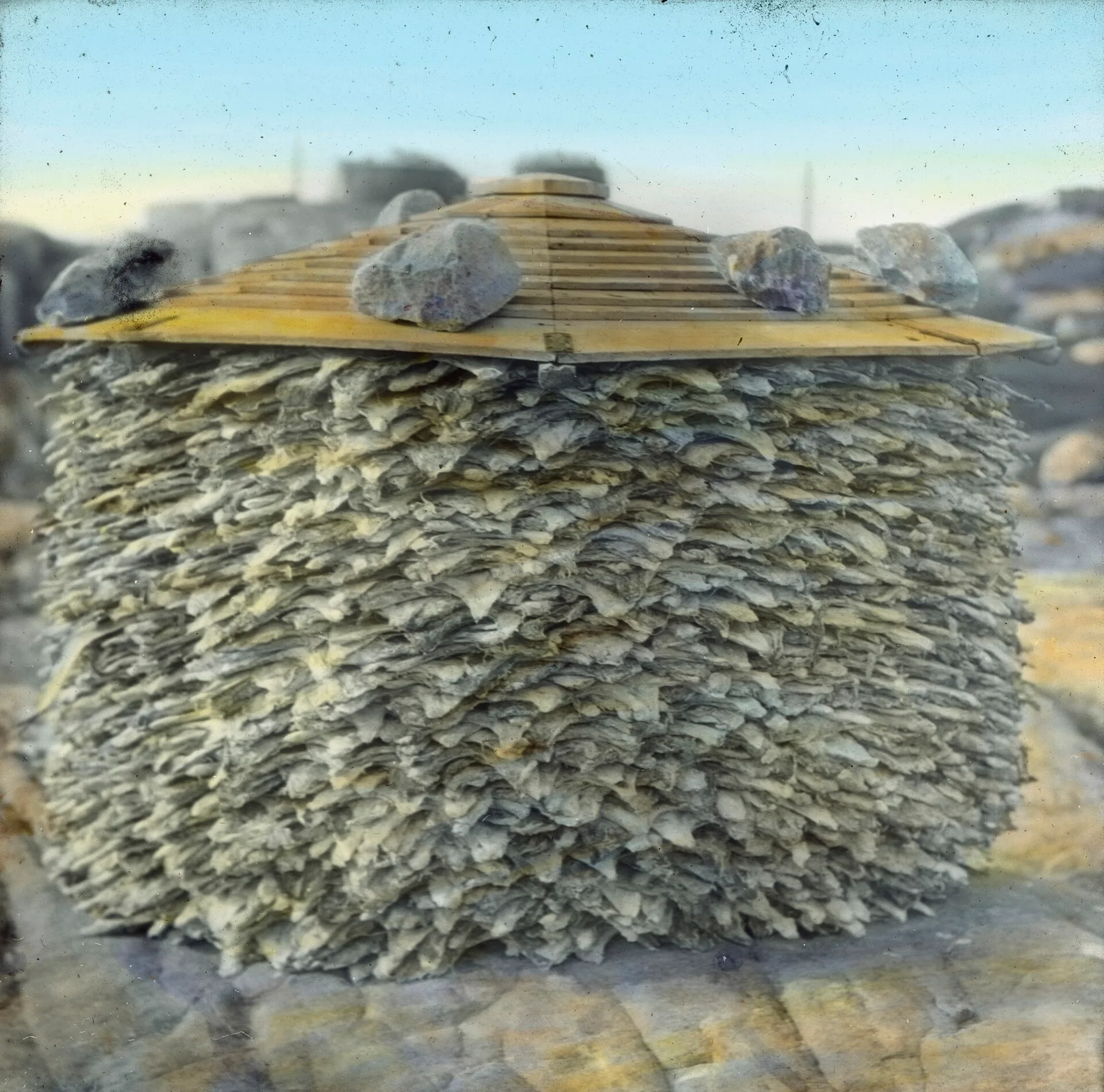
Religious observance created the demand. Throughout the pre-modern period, Lee writes, the Christian calendar was peppered with fasts on which no meat could be eaten. Silva records that by the middle of the 18th century, or even earlier, salt cod had become a staple food of ordinary people in Portugal, and that religious communities included it in their daily diet. Under fasting rules, fish replaced meat even at the tables of the wealthy, and salt cod came to be regarded as the meat of the poor.
Portuguese ships returned to the Grand Banks after 1835. The Bensaúde & C. company went back to the northwest Atlantic after 1872, and Mariano & Irmão was founded in 1884. Silva, citing an account published in 1879, places the elevation of bacalhau to the national food of the Portuguese in the second half of the 19th century. Portugal's salt cod imports came largely from northern countries, mostly Norway and also Iceland, and Silva notes that imports continued to supply an important part of national demand throughout the White Fleet period.
WHAT WAS THE PORTUGUESE WHITE FLEET?
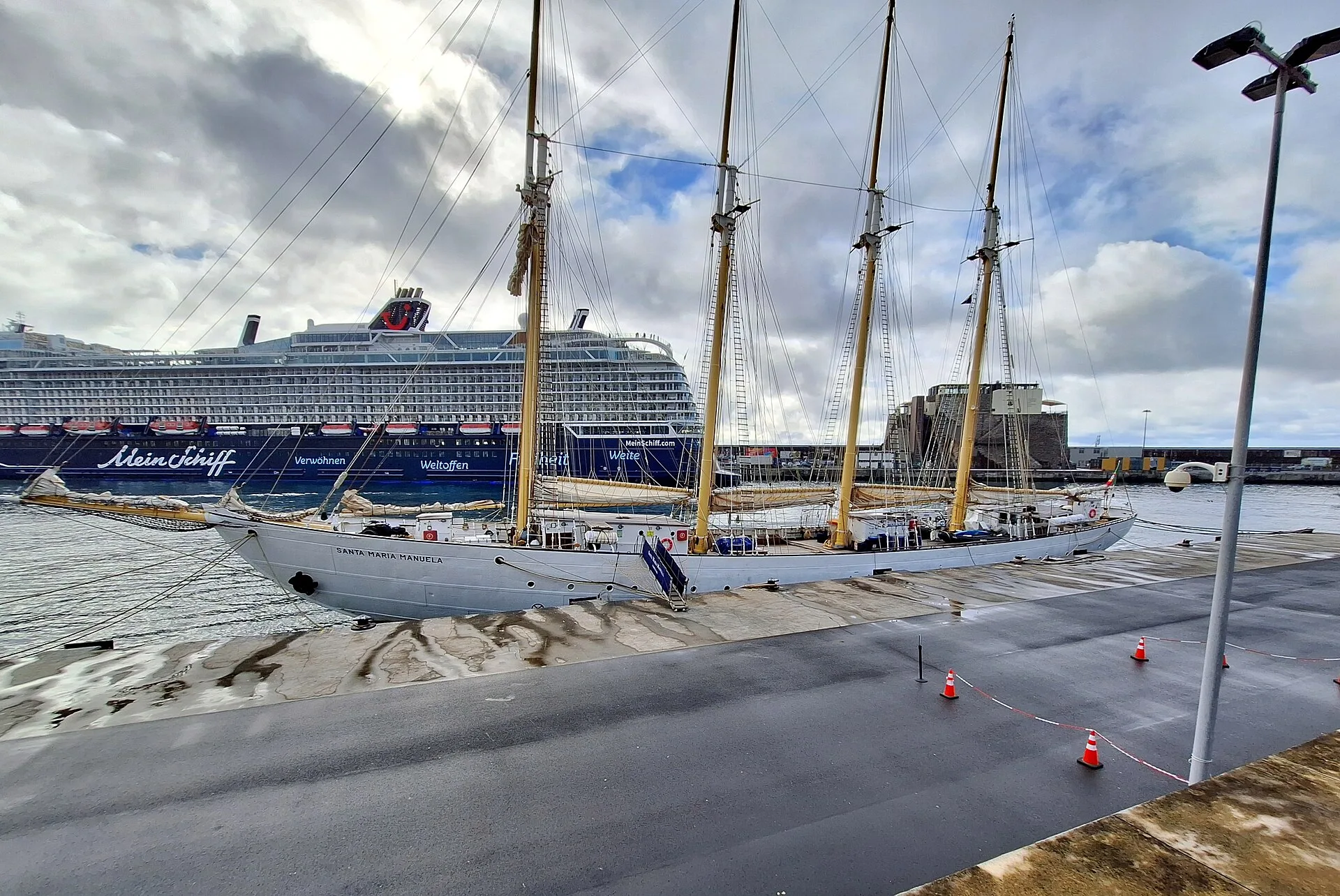
The Portuguese cod fleet has been known internationally as the White Fleet, the frota branca, since the Second World War. It was a fleet of sailing vessels that fished by line. Each fisherman worked alone from a one-man dory, a boat inspired by the wary, which American fishermen developed around the middle of the 18th century, and Silva records that Portuguese fishermen were the only ones still using it until the end of the 1960s. In 1967, more than 35 vessels sailed from Portugal to the Grand Banks, leaving in April for six to seven months.
A film shot that year by John O'Brien, published by CBC, records the routine. The Vila do Conde carried a crew of 23 and 56 fishermen with their dories, stacked on deck and lowered over the side at about 3 a.m. The men set trawl lines up to a quarter of a mile long off the Virgin Rocks, a full dory held up to 10 quintals of fish, and pay depended on the catch brought back to the mother ship.
At 10 p.m. the captain sounded a siren to recall the dories. Before supper the catch was cleaned, split, salted and stacked in the hold. The Gil Eannes sailed with the fleet as its hospital and supply ship. More than 30 vessels docked at St. John's, Newfoundland, for Portugal Day on 17 June, when the fishermen gathered at the statue of Gaspar Corte-Real. In 1967 the hull of the Dom Denise split under the weight of its salted cod, the second Portuguese vessel lost that year after three the year before.
HOW IS BACALHAU SALTED AND DRIED?

The traditional Portuguese cure is set out in the specification for Bacalhau de Cura Tradicional Portuguesa, published by the European Union in 2013 and recognised by the European Commission as a traditional speciality in April 2014. The cod is opened by cutting the stomach and removing the upper two thirds of the vertebral column, then washed thoroughly in clean water to remove entrails and blood. It is salted with approximately 0.33 kg of salt for every kilo of fish and stacked so the brine drains freely, a method called free salting, then pressed in cold storage at around 10°C for at least 30 days.
The salted fish then matures in cold storage at 4°C or below for at least another 30 days, and is washed and drained for two days. Drying follows, either naturally, by exposing the fish to wind and sunlight, or artificially over two to four days depending on the size of the cod, until moisture is no more than 47 per cent. A further period of no less than 90 days in cold storage completes the cure, giving a minimum of 150 days from fresh fish to finished bacalhau. The specification describes the finished exterior as a uniform pale yellow to straw yellow and the interior as yellowish.
WHERE DOES PORTUGAL'S BACALHAU COME FROM TODAY?
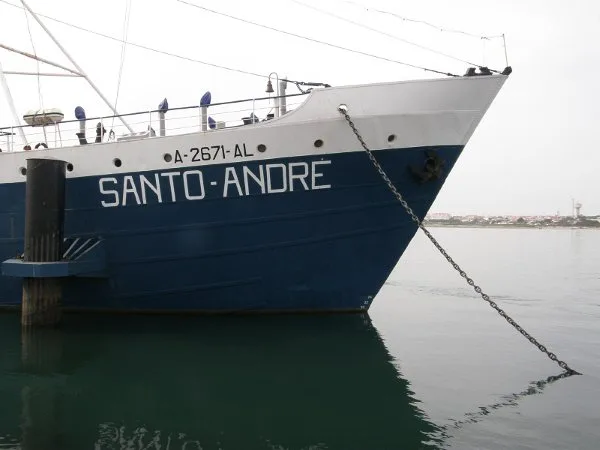
Line fishing gave way to trawling. The Santo André, at the Ílhavo Maritime Museum, was built in the Netherlands in 1948 for the Empresa de Pesca de Aveiro. It is a side trawler almost 71 metres long, with a hold for 20,000 quintals of fish, or 1,200 tonnes. Restrictions on fishing in distant waters from the late 1970s led to the scrapping of much of the Portuguese cod fleet in the following decades. The Santo André was decommissioned in 1997 after almost half a century of fishing and opened as a museum ship in 2001.
Most of the fish now comes from Norway. The Norwegian Seafood Council lists Portugal as the largest market for Norwegian clipfish, the salted and dried product, and gives Norway a 62 per cent share of the Portuguese cod market, with Iceland at 15 per cent. Cod consumption in Portugal consists almost entirely of clipfish, sold under the name Bacalhau da Noruega, which 76 per cent of Portuguese consumers recognise. The salt cod sector employs more than 2,500 people in Portugal, and prices rose nearly 15 per cent in 2024 to almost 14 euros a kilo.
WHAT ARE THE CLASSIC BACALHAU RECIPES?
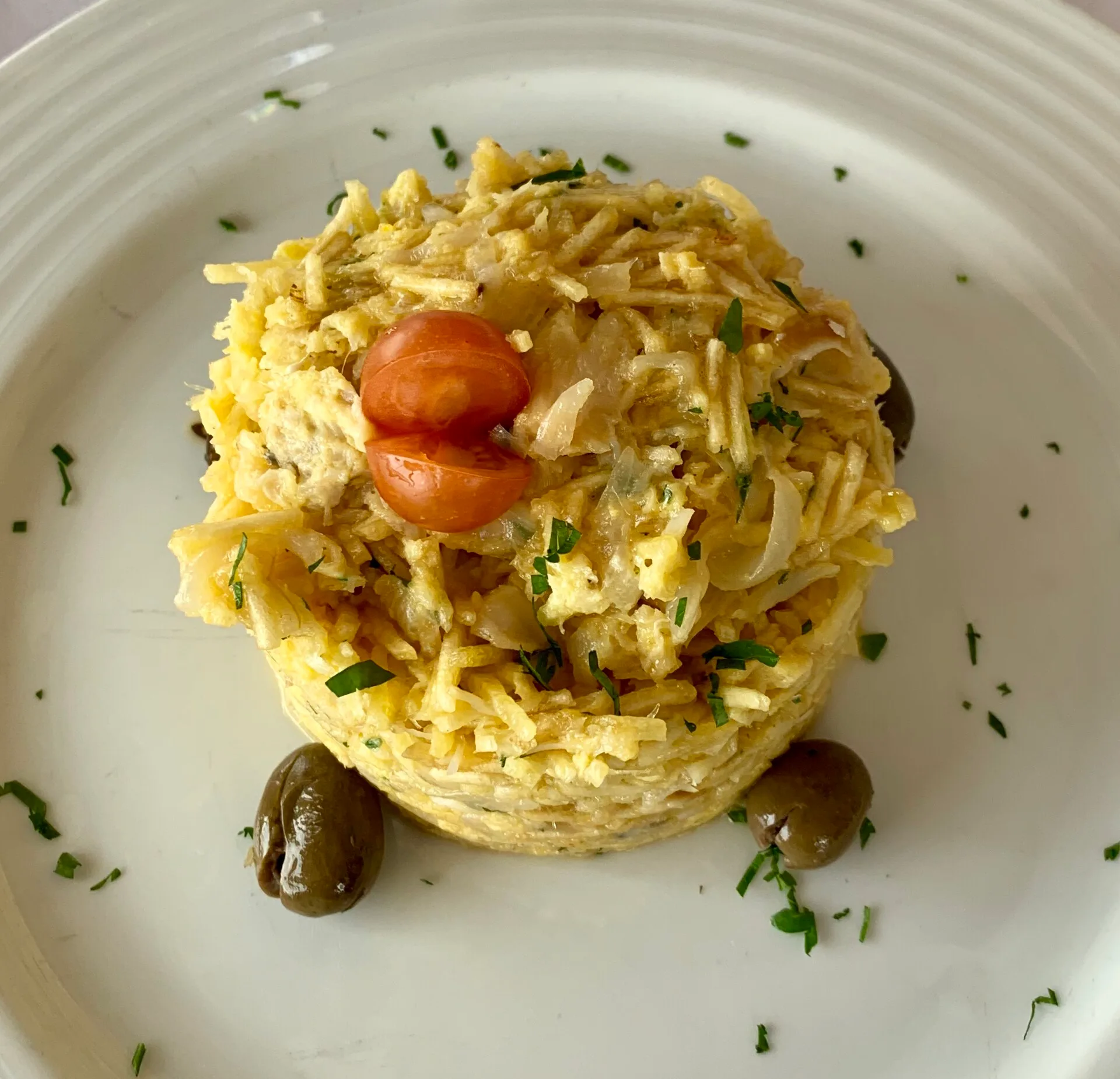
A common Portuguese saying holds that there are as many recipes for bacalhau as there are days in the year. Silva records a larger figure: Portuguese cookbooks, at least since the 20th century, describe salt cod as cooked in more than one thousand ways. The most traditional preparation is cod baked in the oven and served with boiled potatoes, and the fish is also grilled, turned into fritters or used in place of meat in lasagne. Two classic recipes are named after individuals.
Bacalhau à Gomes de Sá comes from Porto. José Luís Gomes de Sá Júnior was born in the city on 7 February 1851 and died in 1926, and is recorded as a cod merchant whose family kept a warehouse on Rua de Muro dos Bacalhoeiros in the Ribeira district. Legend, as told by the Centro Interpretativo, says he sold his recipe to a cook named João at the Restaurante Lisbonense. The recipe combines cod, potatoes, onions, garlic, olive oil and milk, finished with hard-boiled eggs, black olives and parsley.
Bacalhau à Brás belongs to Lisbon. The Centro Interpretativo attributes its invention, by legend, to a tavern keeper in the Bairro Alto, and notes that the exact history of the dish is uncertain. Its recipe combines 600 grammes of shredded, desalted cod with an onion, two garlic cloves and four tablespoons of olive oil, 200 grammes of straw potatoes and six eggs, and is finished with chopped parsley and 50 grammes of black olives. The soaked cod has its skin and bones removed before it is shredded by hand.
WHY IS BACALHAU EATEN ON CHRISTMAS EVE?
The Christmas Eve supper, the consoada, is the single largest occasion for salt cod. Silva records that cities in the north of Portugal celebrated the Nativity on the night before Christmas with a meal of cod, observing the Catholic ban on meat, a custom dating from at least the 19th century, while wealthy households in Lisbon held a festive meal based on meat, generally turkey. Bacalhau is now the national favourite for Christmas Eve, and roughly one third of annual cod sales take place around Christmas.
The Centro Interpretativo's recipe for bacalhau da consoada boils thick, well-soaked cod steaks together with couve penca, Portuguese cabbage. Potatoes are boiled separately in their skins, with one boiled egg per person. The dressing is olive oil, about 0.5 decilitres per person, heated with halved garlic cloves, with vinegar. Every bacalhau recipe starts with desalting. The cured fish must be soaked in several changes of cold water before cooking, and the time this takes is one reason younger Portuguese consumers are buying less of it. The Norwegian Seafood Council reports that younger buyers prefer fish sold already soaked and frozen, a format that accounts for around 37 per cent of clipfish sales in Portugal, and that lower cod quotas are pushing prices up.
TASCA AT MANDARIN ORIENTAL JUMEIRA DUBAI
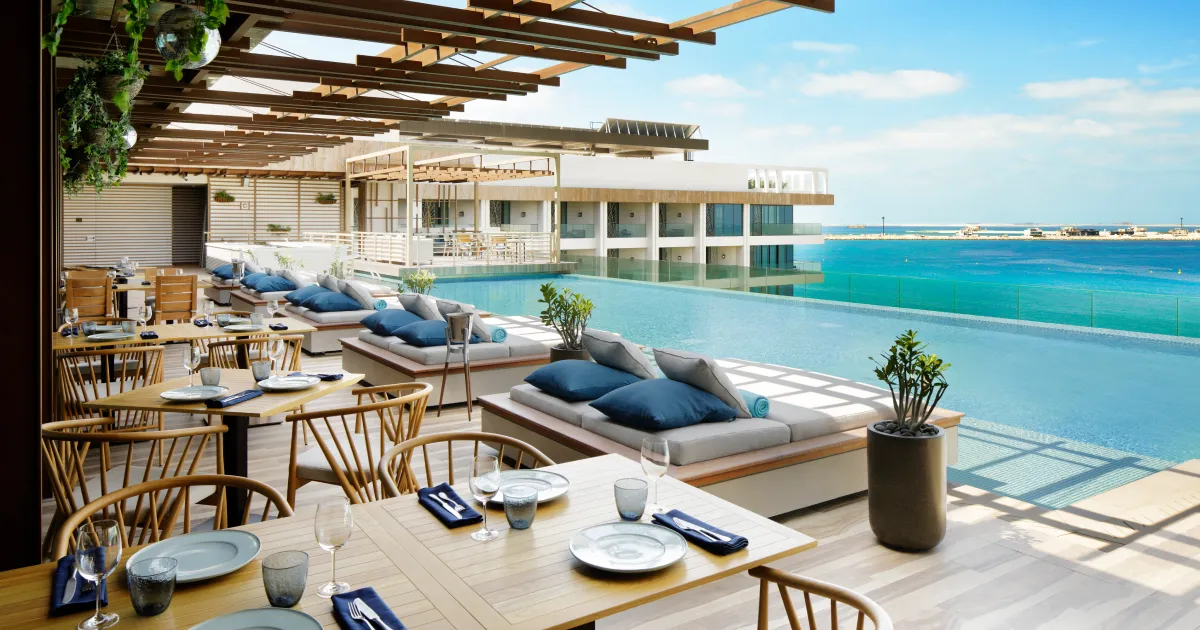
Bacalhau reached the Portuguese table through the fast-day calendar and the Newfoundland fishery, is caught today mainly off Norway and Iceland, and remains the standard dish of the Christmas Eve consoada. Tasca is the Portuguese word for a plain, everyday tavern, the format traced in Petiscos and the Tasca. Tasca at Mandarin Oriental Jumeira, Dubai is a contemporary Portuguese restaurant by chef José Avillez, with a terrace and a bar, and was completed in 2019. The restaurant holds one MICHELIN Star.
The interior combines timber tables, a slatted ceiling and marble bar counters, with turquoise glassware and blue cushions. Illuminated shelving displays ceramics, and a rooftop terrace overlooks the Arabian Gulf. The salt cod dishes described above, from bacalhau à Gomes de Sá in Porto to bacalhau à Brás in Lisbon's Bairro Alto and the boiled cod of the consoada, came from Portuguese merchants, tavern keepers and household cooks. Each begins with salted and dried Atlantic cod soaked in several changes of cold water.
SOURCES
- Norwegian Seafood Council Portugal
- Fortune / AFP Forget turkey, supermarkets in Portugal overflow with salted cod as holiday season approaches
- EUR-Lex, European Union Publication of an application: Bacalhau de Cura Tradicional Portuguesa
- University of Évora, UNESCO Chair in Intangible Heritage The fable of the cod and the promised sea: about Portuguese traditions of bacalhau
- History Today A History of Salt Cod
- CBC News Stunning footage of the Portuguese White Fleet in 1967
- Museu Marítimo de Ílhavo Navio-Museu Santo André: história
- Centro Interpretativo da História do Bacalhau Bacalhau à Gomes de Sá
- Centro Interpretativo da História do Bacalhau Bacalhau à Brás
- Centro Interpretativo da História do Bacalhau Bacalhau da Consoada