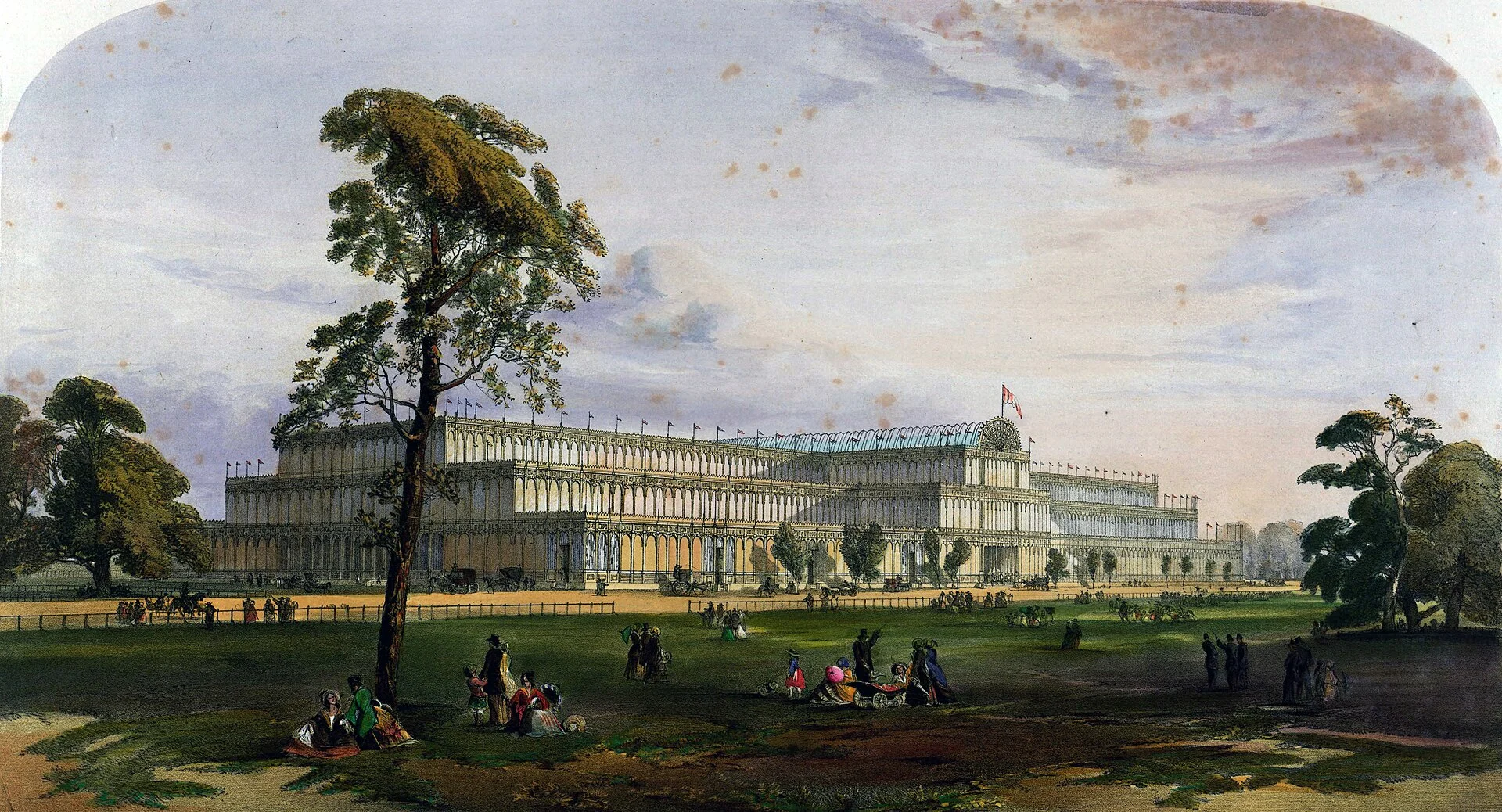
PEPPER, CLOVES AND CINNAMON THROUGH LISBON'S CASA DA ÍNDIA, AND CHILLI FROM BRAZIL TO MOZAMBIQUE, GOA AND MACAU

The Portuguese spice trade took shape after Portugal's ships rounded the Cape of Good Hope and reached India in 1498. A royal trading house in Lisbon, the Casa da Índia, regulated the eastern trade from about 1503 and held the crown's monopoly on pepper, cloves and cinnamon. The same sea routes carried a newer ingredient in the other direction: chilli, first cultivated in the Americas, which Portuguese ships exported from Brazil and which spread through African and Indian ports. Several dishes are traced to these exchanges, including piri-piri sauce, the Goan vindaloo that grew from the Portuguese marinade vinha d'alhos, and the cooking of Macau, which combines Portuguese dishes with ingredients from Africa, India and Southeast Asia.
WHAT DROVE THE PORTUGUESE SPICE TRADE?

Black pepper was one of the three spices the Portuguese crown reserved for itself. Britannica describes the plant, Piper nigrum, as a perennial climbing vine native to the Malabar Coast of India. Its fruits are picked as they begin to turn red, immersed in boiling water for about 10 minutes, which darkens them to brown or black, and then dried in the sun for three to four days. Pepper had long been carried overland between India and Europe, and tributes were levied in pepper in ancient Greece and Rome. In the Middle Ages, Venetian and Genoese merchants dominated its distribution in Europe, and Britannica records that this monopoly helped spur the search for a sea route to the East, the route Portugal opened in 1498.
Cloves came from further east. They are the dried flower buds of Syzygium aromaticum, a tropical evergreen tree thought to be native to the Moluccas, the Spice Islands of present-day Indonesia, and the buds are picked by hand and dried in the sun. Envoys from Java brought cloves to the Han court in China around 200 BCE, and the spice was traded in Ceylon, now Sri Lanka, between the 10th and 12th centuries. According to Britannica, the Portuguese reached the clove's source in the Moluccas in the 16th century and controlled its trade for nearly a century. The Dutch took over in the 17th century and limited cultivation to Amboina and Ternate to keep prices high, until the French missionary Pierre Poivre smuggled clove seeds out of the Moluccas in 1770, which led to plantations in the Seychelles and Zanzibar.
WHAT WAS THE CASA DA ÍNDIA?

The Casa da Índia, or House of India, grew out of an earlier trading house. Britannica records that it began as the House of Guinea, created to handle goods from Guinea, and was based first in Lagos before moving to Lisbon after the death of Prince Henry the Navigator in 1460. As trade from São Jorge da Mina on Africa's Gold Coast grew, it became the House of Guinea and Mina. Until 1499 it stored goods, collected duties, maintained the merchant fleet and scheduled shipments. After Vasco da Gama's voyage around the Cape of Good Hope it was renamed the House of India and divided into boards for spices, finances, ships, the training of seamen, records and legal matters.
The historian Stanley G. Payne dates its role in regulating the eastern trade to about 1503. The Casa kept a royal monopoly on pepper, cloves and cinnamon and levied a nominal 30 percent tax on the profits of regulated trade in other goods. Payne notes that the monopoly system concentrated trade disproportionately in Lisbon, and that its profits were largely absorbed by the court and aristocracy rather than reinvested. Spices and other imports were paid for in bullion, drawn at first partly from Portugal's African trade and later mainly from Spanish America. Britannica adds that the house later oversaw the settlement of Brazil and eventually became a government ministry.
HOW BIG WAS THE PORTUGUESE SPICE TRADE IN LISBON?
Payne places the golden age of the trade between 1510 and 1540. By 1510 the crown was earning a million cruzados a year from the spice trade alone, and Payne records that this profit led the French king Francis I to call Manuel I le roi épicier, "the grocer king". Between 1503 and 1535 the new sea route substantially reduced the volume of Venice's Levantine trade, and Portuguese spice exports grew large enough to depress the spice market in western Europe. Much of the cargo was sold wholesale, at a reduced profit, to Italian and German merchants. By 1550 Lisbon had reached a population of 100,000.
The advantage narrowed within a generation. After about 1535 Venice rebuilt its position as middleman in the eastern Mediterranean, and by the middle of the century the spices reaching Italian merchants through Middle Eastern channels were almost as large in volume as before the Portuguese breakthrough. In 1549 the Portuguese trade centre in Antwerp closed because of bankruptcy, and by about 1560 the Casa da Índia, clearing house for the Asian trade, could no longer make payments. Revenue from the eastern trade dropped by at least a third after 1587. Lisbon's own food trades of the period, from sardine sellers and street fryers to wine taverns, are traced in the history of Portugal's small-plate taverns.
HOW DID CHILLI ENTER THE PORTUGUESE SPICE TRADE?
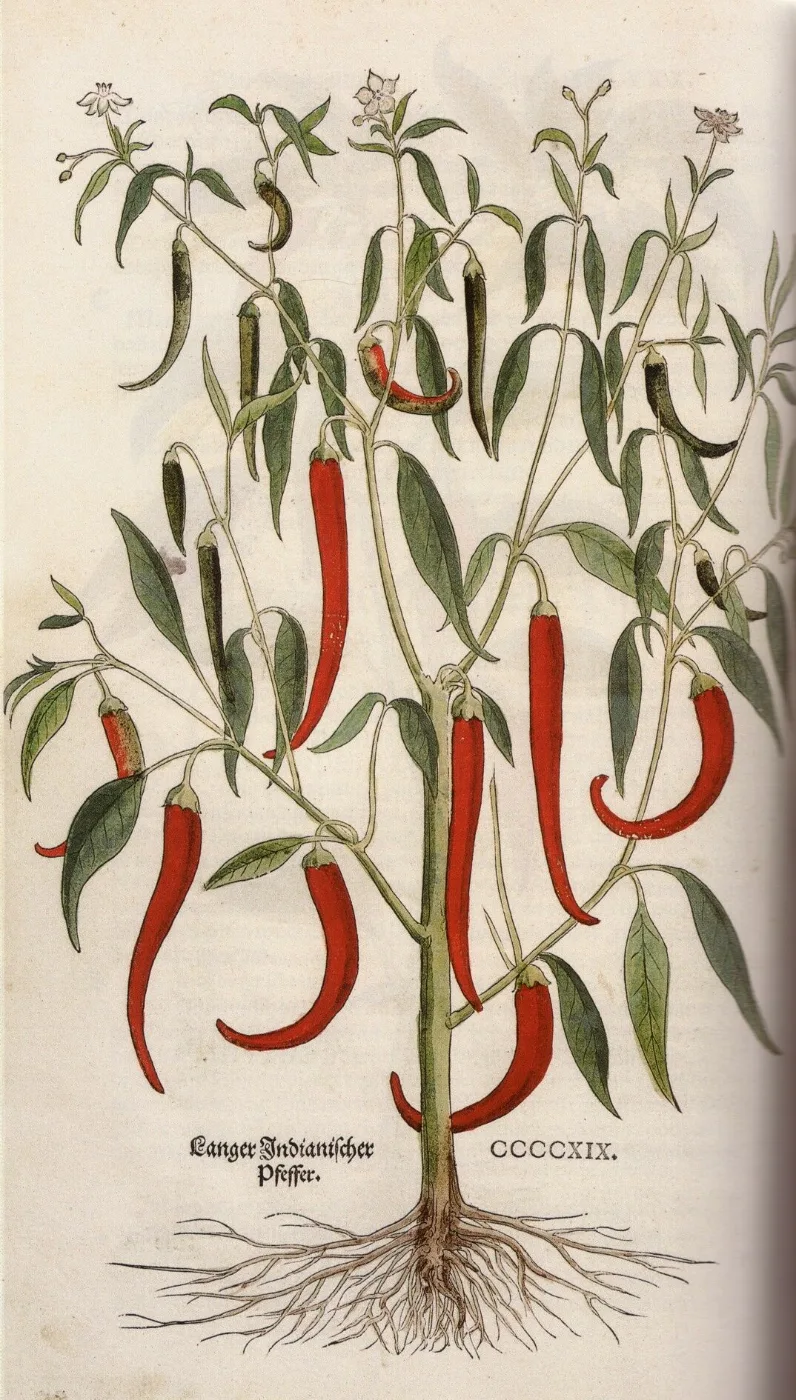
Chilli reached the Portuguese trade from the Americas rather than from Asia. YaleGlobal Online, published by Yale University, reports that chilli peppers are thought to have been eaten in Mesoamerica as early as 5000 BCE, with cultivation beginning between 5000 and 3400 BCE. Christopher Columbus, who was searching for black pepper, confused the plant with the pepper he had hoped to find, named it pimiento, Spanish for pepper, and brought it to Spain, calling it a spice. Portugal's route around the Cape of Good Hope then gave the plant a path out of South America, and by the 1500s Portuguese ships were regularly exporting chilli peppers from Brazil.
Portuguese ships called at African ports where chillies were quickly adopted, and the plant soon travelled east to Mozambique. One 16th-century botanist referred to chillies from Goa as "Pernambuco peppers", after a region of Brazil. By 1540 the Portuguese were trading in Indonesia, and chillies reached China soon afterwards, although YaleGlobal notes that earlier Indian and Arab trade may also have carried them there. It is likewise unclear whether the Portuguese introduced chilli to Japan. In 1564 the chilli reached the Philippines along a Spanish trade route and moved on to Melanesia and Micronesia.
WHAT IS PIRI-PIRI?

Piri-piri names both an African chilli and the sauce made from it. SBS Food, the food service of Australia's public broadcaster, reports that the Portuguese name comes from Swahili and means roughly "pepper-pepper", and that variant spellings include pili-pili and peri-peri, the form common in South Africa. The chilli is the African bird's eye, which grows across the lower two-thirds of the continent and is commonly cultivated around Zambia and Zimbabwe. It can reach about 175,000 Scoville heat units, hotter than a Thai chilli but milder than the bhut jolokia.
According to SBS, Portuguese settlers in Africa combined that local chilli with garlic, red wine vinegar, paprika and other European ingredients. Portuguese-Angolans and Portuguese-Mozambicans both claim to have created the mix, so its exact origin is still debated. Jose Silva, chef and co-owner of Sydney's Bibo Wine Bar, told SBS that Portuguese cooks do not use much chilli, and that Portuguese returning from Mozambique and Angola brought charcoal cooking and piri-piri home. The sauce also travelled east: the South China Morning Post describes Macau's galinha à Africana, or African chicken, as roast chicken in a spicy piri-piri sauce.
HOW DID VINHA D'ALHOS BECOME VINDALOO?
Lizzie Collingham, writing in Saveur, describes the word vindaloo as a garbled pronunciation of carne de vinha d'alhos, a Portuguese dish of meat marinated in wine vinegar and garlic that reached India with Portuguese explorers. In Goa, wine vinegar was not available, so Franciscan priests fermented their own from palm wine. Tamarind, black pepper, cinnamon and cardamom were added, and chilli, a legacy of Portugal's trade network, was what Collingham calls "the most important addition". Christian Goan cooks made beef and pork versions, which the British in India took to. Early cookbooks of British India kept close to the Goan original. When the dish was exported to England it became "another hot curry", and, in Collingham's account, the tang of vinegar disappeared along with the practice of marinating the meat. She notes that many Goan versions still use cinnamon and cardamom in the older way.
Britannica gives a shorter account of the same exchange. It records that Portuguese traders introduced spicy chilli peppers to India in the 16th century, and that Indian cooking had previously used the milder black pepper, the spice whose European trade, in Britannica's account, helped spur the search for a sea route to the East. Britannica derives the name vindaloo from the Portuguese vinho de alho, or "wine of garlic", a slightly different form from the carne de vinha d'alhos given by Collingham. Both accounts trace the dish's name to Portuguese, and Britannica's date for chilli's arrival in India matches the 16th-century trade that YaleGlobal describes through Goa.
WHAT DID PORTUGUESE TRADE BRING TO JAPAN AND MACAU?

Japan's National Diet Library records that sugar, with its strong sweetness, was a precious import, and that until the Muromachi period the main sweeteners were honey, amazura, a sweetener made from a vine, and mizuame, a syrup made from grains such as rice. In the era of the Nanban trade, sugar began to be imported regularly on Portuguese ships. Imports grew further through Chinese and Dutch ships in the Edo period, and domestic sugars such as Ryukyu black sugar and wasanbon from Sanuki spread. The library names Portuguese merchants as the figures who opened this path. The same trade brought Western confectionery, of which the library calls castella the most representative example; the cake is illustrated in the Wakan Sansai Zue, compiled in the early 18th century.
Macau grew from a small fishing village in the 13th century into a Portuguese trading post in the 16th century. The South China Morning Post describes Macanese food as "one of the world's first true fusion cuisines", built from ingredients that arrived by sea from Malaysia, Indonesia, Angola, Mozambique and India and were blended with Portuguese cooking and Chinese methods. Pork bafassá is roasted with turmeric, white wine and bay leaves, porco balichão tamarindo is a sweet-and-sour dish combining Portuguese techniques with flavours from India, Malaysia and China, and minchi is minced beef or pork stir-fried with vegetables. Payne records that about 2,000 Portuguese lived in Southeast Asia in the late 16th century, in the East Indies, Malacca and Macau, nearly all of them in commerce.
TASCA AT MANDARIN ORIENTAL JUMEIRA DUBAI
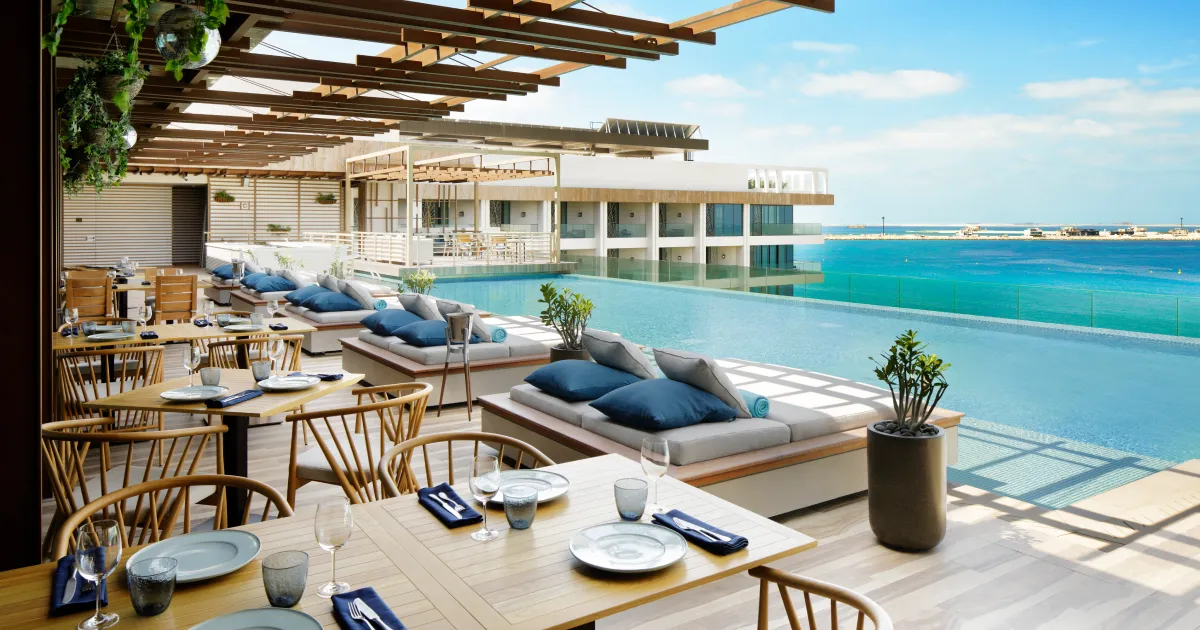
Tasca is a contemporary Portuguese restaurant by chef José Avillez at Mandarin Oriental Jumeira, Dubai, with a terrace and bar. Silverfox Studios completed the project in 2019, and the restaurant holds one MICHELIN Star. A rooftop terrace overlooks the Arabian Gulf. Its cuisine is Portuguese, the cooking of the country whose ships reached India around the Cape of Good Hope in 1498, and whose Casa da Índia in Lisbon held the crown's monopoly on pepper, cloves and cinnamon from about 1503.
The interior uses timber tables, a slatted ceiling and marble bar counters. Turquoise glassware and blue cushions add colour, and illuminated shelving displays ceramics. Chilli took a different route into Portuguese cooking: Portuguese ships were exporting it from Brazil by the 1500s and calling at African ports on the way to India, Portuguese settlers in Africa combined the local bird's eye chilli with garlic, red wine vinegar and paprika as piri-piri, and Portuguese returning from Mozambique and Angola brought piri-piri to Portugal itself.
SOURCES
- Britannica House of India
- Britannica Black pepper
- Britannica Clove
- Libro, Library of Iberian Resources Online Stanley G. Payne, A History of Spain and Portugal, Chapter Twelve: Sixteenth-Century Portugal
- YaleGlobal Online, Yale University Chili: Small Fruit Sets Global Palettes on Fire
- SBS Food Uncovering the origins of peri-peri sauce
- Saveur Fired Up: The History of Vindaloo
- Britannica One Good Fact about Vindaloo
- National Diet Library, Japan 駆け足でたどる和菓子の歴史 (A brief history of wagashi)
- South China Morning Post The evolution of Macanese cuisine, from Portuguese roots to global flavours