FROM LIMEWASHED WALLS TO GLAZED BRICK AND SUBWAY TILE

Limewash, a matt paint made from lime and water, was used inside and outside buildings in Britain for centuries, mostly in vernacular building, and came into widespread use in North America in the 19th century. It was cheap to make, it had to be renewed every few years, and its alkalinity made it a sanitary coating: in Andalusia houses were whitewashed after epidemics between the 16th and 19th centuries, and an Act of 1802 required British mills to be cleaned down with quicklime and water twice a year. White brick walls have been produced in three ways: with limewash, with modern paint, and with glazed or enamelled brick and tile, which New York specified for its first subway stations in 1899.
WHAT IS LIMEWASH AND HOW IS IT MADE?

Lime begins as limestone heated in a kiln to produce quicklime. Slaking, the addition of water, turns quicklime into lime putty stored in tubs, into a dry bagged hydrate, or into a dry-slaked mix in which the reaction takes place in sand. Lime then sets by reabsorbing carbon dioxide from the air and returning to calcium carbonate, a process the Society for the Protection of Ancient Buildings (SPAB) calls the lime cycle. Lime was the usual binder for mortars, plasters, renders and washes in Britain until the mid-19th century, and nearly all older British buildings were built with it. Limewash is the simplest product of the cycle: lime putty diluted to roughly the consistency of milk, with any pigment pre-mixed in hot water. Putty was once made on site from quicklime; it is now generally bought ready-made.
Application followed a fixed routine. A 2007 study by the US National Center for Preservation Technology and Training records that craftsmen mixed limewash on site, applied it in spring or autumn, dampened the wall first and built up three or more thin coats, letting each dry before the next. As it dries the wash carbonates into a hard matt film; if it dries too fast, carbonation is disrupted and the finish is weak and cohesionless. Historic recipes called for tallow to be added during slaking and earth pigments for colour. Tallow helped the wall shed water but reduced breathability. SPAB advice is to apply at least three or four thin coats with a large brush, re-dampening between coats, and to expect to renew the finish about every five years. Limewash also turns much lighter as it dries, so colour has to be judged on trial patches.
WHY ARE ANDALUSIA'S WHITE TOWNS WHITEWASHED?
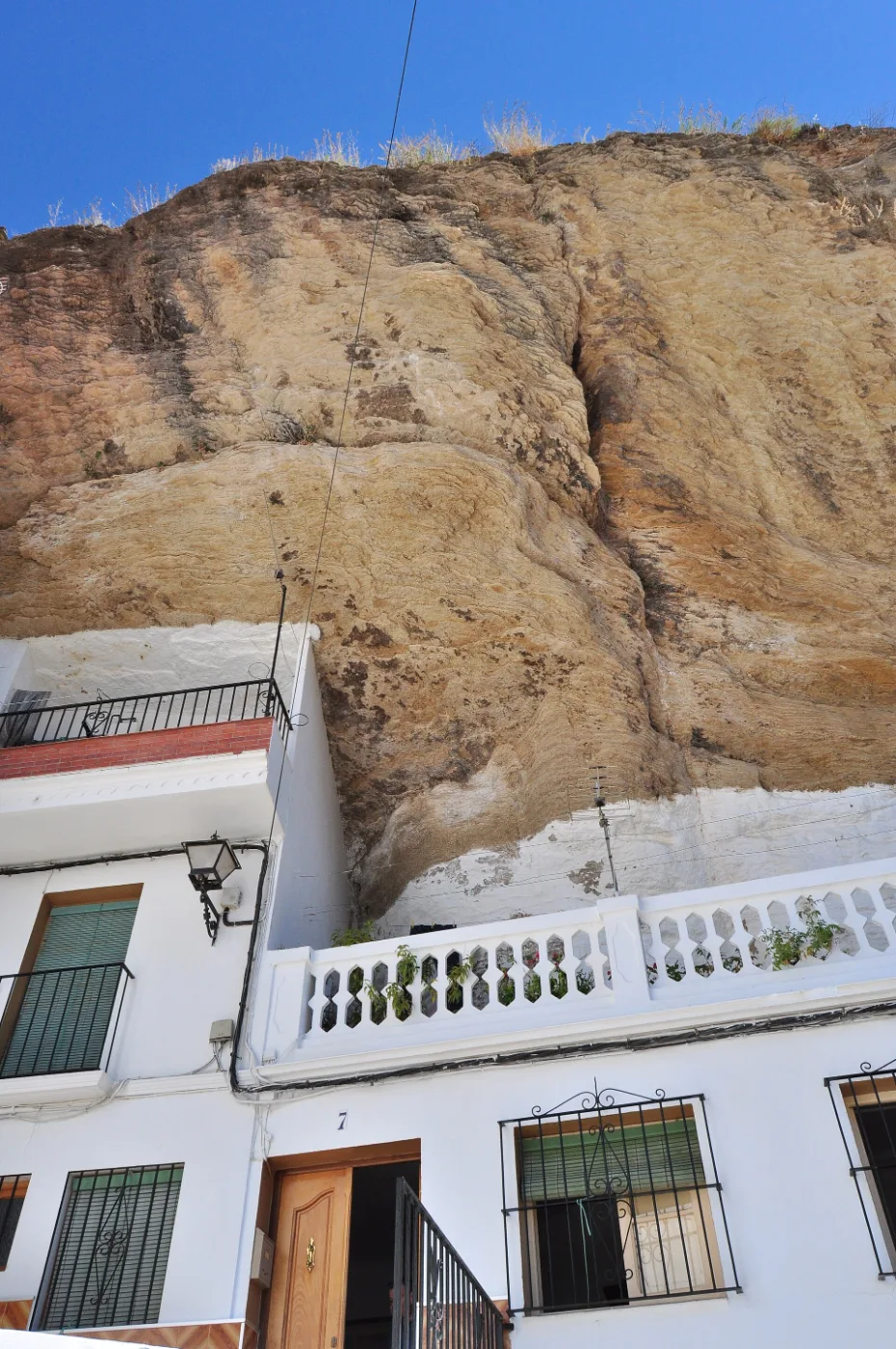
Andalusia's pueblos blancos, or white towns, include Zahara de la Sierra, Grazalema, Olvera and Setenil de las Bodegas. National Geographic reports that epidemics of plague, cholera and yellow fever struck the region between the 16th and 19th centuries, and that houses were painted with cal, the local whitewash, in the wake of infection. The colour became associated with hygiene, and studies cited in the same report show that slaked lime kills the bacteria that cause cholera. Eduardo Mosquera Adell, a historian of architecture at the University of Seville, says cal also helped keep houses cool in summer, and that the villages probably took on their white colour in the Islamic era. The 14th-century scholar Ibn Khaldun described a method for making cal from slaked lime.
Industrial paint has largely replaced cal, and industrial lime eclipsed traditional lime-making. At Morón de la Frontera, in the province of Seville, the kilns fell into disuse and knowledge of the craft stopped being passed on. A Cultural Association of the Lime Kilns of Morón was established and gave rise to an ethnographic centre and a living museum that shows the craft in situ, the kilns were restored, and in 2011 UNESCO selected the project for its Register of Good Safeguarding Practices. The anthropologist Gema Carrera Díaz credits the listing with helping to spur a revival of artisanal cal.
LIMEWASH OR WHITEWASH: WHAT IS THE DIFFERENCE?

In Britain the two words were once interchangeable. SPAB notes that limewash was used inside and outside buildings for centuries, mostly at the vernacular level, and that whitewash now often means poor-quality limewash or white distemper. Early lime contained impurities, so an unpigmented wash dried off-white. Pigments gave regional colours: SPAB associates pink with Suffolk and a vibrant orange with the Lothians. Limewash was inexpensive and solvent-free, and its alkalinity deterred wood-boring beetles and helped sterilise walls. That property was written into law in 1802, when the Health and Morals of Apprentices Act required all mills to be cleaned down with quicklime and water twice a year, according to the Royal Commission on the Ancient and Historical Monuments of Wales.
In North America, the 2007 preservation study dates the spread of limewash to the 19th century, and in Europe it links the growth of sacrificial surface finishes to the scarcity of good hardwoods after the 17th century. Limewash remained in use on plaster and in informal areas of American buildings after oil-based paints appeared, but ready-made paint gained ground only after the American Civil War. Limewash was used less in cities from the 1900s, while rural use lasted until about the middle of the 20th century. Rising labour costs, longer-lasting modern materials and the time that layering and carbonation required all contributed to its decline.
HOW WAS LIMEWASH USED ON HISTORIC BRICK?
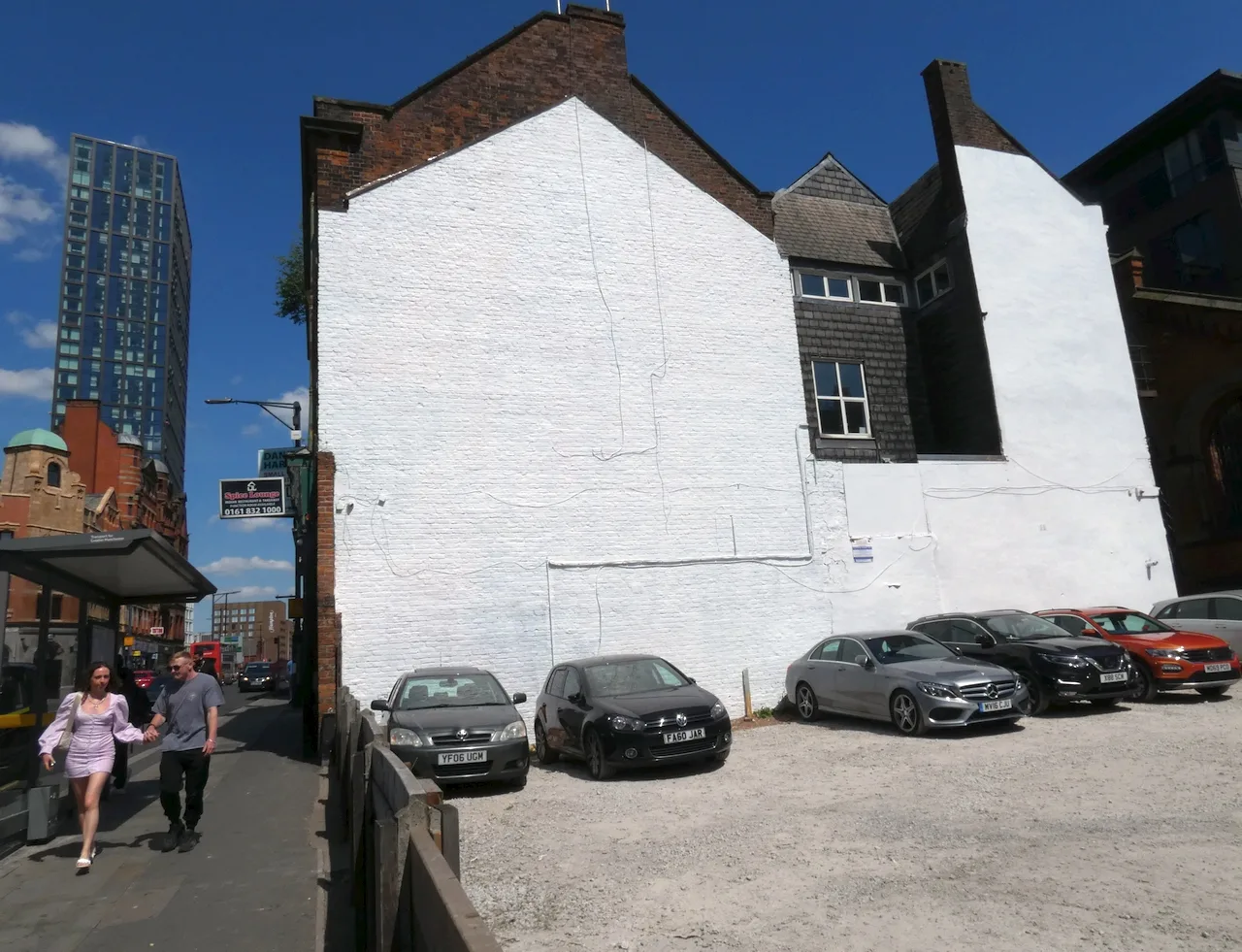
Limewash was applied to brick as protection as well as colour. The 2007 study, carried out at Cane River Creole National Historical Park near Natchitoches in central Louisiana, notes that limewash was historically used on interior and exterior walls to protect softer materials such as handmade brick and bousillage, a mix of clay or mud with moss and hair packed between timbers. The park holds more than 42 historic vernacular structures, including mid-19th-century brick buildings at Magnolia, where brick was costlier than the more common timber. In trials on handmade brick, salvaged modern brick, weathered wood, new rough-sawn wood and epoxy, limewash adhered best to porous brick, and handmade brick needed no primer. A plain lime putty and water wash performed best and was recommended for field use, while washes containing salt performed poorly.
Paint on brick can also be original. The National Park Service's preservation brief on cleaning and water-repellent treatments, by Robert C. Mack and Anne Grimmer, states that paint was often applied to brick at construction or soon after. It was used to cover poor repainting or mismatched repairs, to protect soft brick, or as a fashionable treatment of the period, and paint that has been in place for a long time may have become part of a building's character. In England, Historic England notes that in areas with little building stone, especially the south, brick served as a “poor man's stone” and was hidden under stucco or painted to represent stone. Soft, incompletely fired brick of the 18th and early 19th centuries can become porous enough to need a coating. SPAB, by contrast, lists hard brick and flint as impervious materials unsuitable for limewash, which it recommends for lime plaster and render, earth walls, limestone and timber.
HOW WERE NEW YORK'S FIRST SUBWAY STATIONS TILED?

A third white wall came from glazed ceramics. When New York contracted its first subway in 1899, the Interborough Rapid Transit (IRT) contract called for white or light-coloured tiles or enamelled brick on the station walls, except where colour was added for architectural effect. On 7 March 1901 the architects Heins & LaFarge were chosen to design the decoration of the underground stations, working with the chief engineer, William Barclay Parsons. The first section of the line opened to the public on 27 October 1904. These details come from the 1979 report in which the New York City Landmarks Preservation Commission designated the original IRT underground interiors as a landmark. Contemporary accounts described the stations as a delight to the eye.
The report describes a consistent wall system. A wainscot of buff Roman brick or rose-coloured marble lined the lower wall, capped with brick or marble. Above it the wall was covered with 3 by 6 inch white glass or glazed tile. Cornices and mouldings were glazed terracotta or faience, which the report defines as terracotta double-glazed to produce brilliant colours. Colour also came from symbolic plaques and name tablets, and the Commission cited these, together with the stations' faience, terracotta, glass and mosaic tile, marble and Roman brick, among its reasons for designation.
SHOULD OLD BRICK BE PAINTED?
Conservation advice now turns on moisture. SPAB's technical note The Need for Old Buildings to Breathe, written by the building surveyor Philip Hughes and reissued in a 2020 edition, explains that buildings from before the mid-19th century rely on absorbent walls of stone, brick, timber or earth, which take in moisture and let it evaporate from the surface. Modern buildings keep water out with barriers instead. Exterior paints on solid walls prevent that evaporation, but water still gets behind the film over time and is trapped. In hot weather the trapped moisture vaporises and blisters the paint, in cold weather frost damages the wall surface, and decay of the walling directly behind the film causes flaking. The note also shows salts crystallising behind strong cement pointing and forcing it off the wall.
The National Park Service brief reaches similar conclusions for American masonry. It separates water-repellent coatings, which are vapour permeable, from waterproof coatings such as bituminous coatings and some elastomeric paints, which block both liquid water and vapour. An elastomeric coating, it states, holds moisture in the masonry because it does not breathe, and waterproof coatings should almost never be applied above ground on historic masonry. Most water penetration, the brief adds, comes from leaking roofs, blocked gutters and missing mortar rather than porous brick. SPAB states that limewash is far more breathable than most modern paints, and its breathability note advises that a wall with patchy paint that cannot yet be removed can be redecorated in limewash until the paint has decayed enough to take off.
THE BAY AT MANDARIN ORIENTAL JUMEIRA, DUBAI

Silverfox Studios completed the interior of The Bay at Mandarin Oriental Jumeira, Dubai, in 2019. The restaurant's walls are white brick, set over a geometric tiled floor. Earlier white brick walls were produced with limewash, with paint, or with the white tile and enamelled brick that the 1899 Interborough Rapid Transit contract specified for the walls of New York's first subway stations. At The Bay the ceiling is beamed timber, the glazing is steel-framed and the seating is on green banquettes.
The restaurant has a marble buffet counter and white marble stations carrying chalkboard menus. A timber-topped bread and pastry island stands under pendants, so timber appears both at the island and in the beamed ceiling. Marble appears a third time on the front of the bar, which faces the beach terrace and the sea. Brick and marble were also paired in the IRT stations, where a wainscot of buff Roman brick or rose-coloured marble lined the lower walls beneath the white tile.
SOURCES
- SPAB Limewash
- SPAB Lime
- SPAB The Need for Old Buildings to Breathe (Technical Advice Note)
- National Park Service Durability of Traditional and Modified Limewashes
- National Park Service Preservation Brief 1: Assessing Cleaning and Water-Repellent Treatments for Historic Masonry Buildings
- Royal Commission on the Ancient and Historical Monuments of Wales Cotton Mills and the Early Days of Safety and Health in Work
- National Geographic Andalusia's white towns were forged by past epidemics
- UNESCO Revitalization of the traditional craftsmanship of lime-making in Morón de la Frontera, Seville, Andalusia
- Historic England The History of Brick Building in England
- New York City Landmarks Preservation Commission IRT Subway System Underground Interior designation report (LP-1096)