HOW LISBON'S NEIGHBOURHOOD TAVERNS SERVED WINE BY THE GLASS, FRIED FISH AND SMALL PLATES
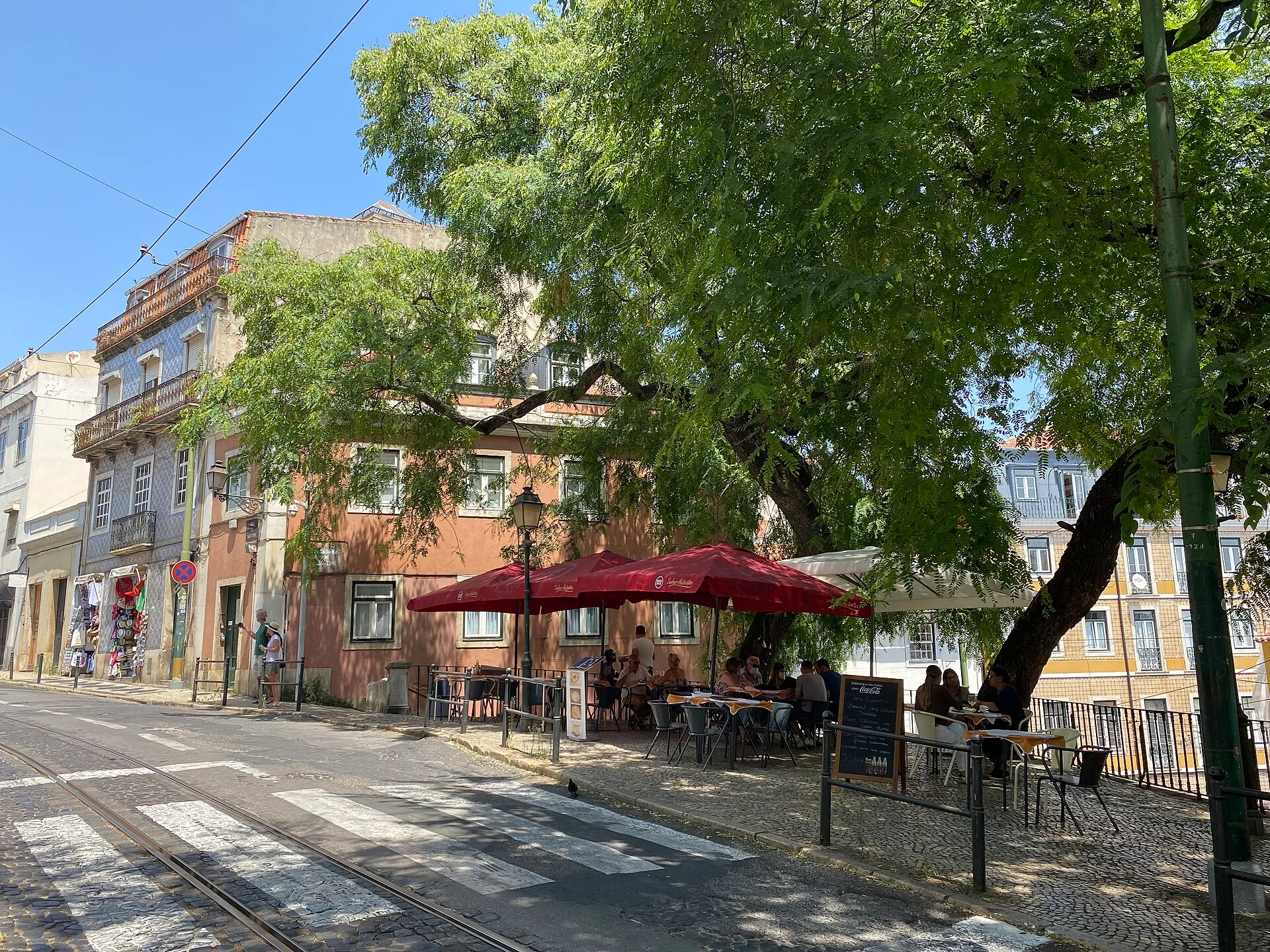
A tasca is a small, plain Portuguese eating house, the everyday tavern of Lisbon's older neighbourhoods, and petiscos are the snacks and small dishes served in it with wine or beer. The tasca descends from the taberna, a house selling wine and something to eat. Lisbon had about 300 wine taverns in the 16th century, and street stalls frying sardines fed the workers who drank in them. After the 1755 earthquake, Galician migrants took over much of the city's food and drink trade and added dishes such as iscas com elas, fried liver with potatoes. Long dismissed by Lisbon's elites, the tasca is now treated as part of the city's culture.
WHAT IS A TASCA?
The Portuguese words for cheap places to drink and eat overlap. The 1789 dictionary of Bluteau and Morais defines the taberna as a house that sold wine by the small measure, oil and alguma coisa de comer, something to eat, and does not record the word tasca. By 1968 Aulete's dictionary defined a tasca as a very ordinary casa de pasto, taberna or bodega. A casa de pasto was a modest eating house; the taberna's main trade was drink. Inês Garçoni's 2021 master's dissertation at the University of Coimbra traces how these terms shifted in a history of the taverns of Lisbon and Rio de Janeiro.
Garçoni separates the tasca from the café, a bourgeois space with finer drinks and food. The taberna sold wine a miúdo, by the small measure, with aguardente and beer, and cheap wine was a major source of calories for the poor. Taverns were daily meeting places for workers, mostly men. One building could carry several of these names. Imperial de Campo de Ourique, opened as a tavern in 1947, is described by Lisbon's Lojas com História (Shops with History) programme as a taberna, a casa de pasto or, in more modern terms, a tasca.
WHERE DID LISBON'S TASCAS COME FROM?
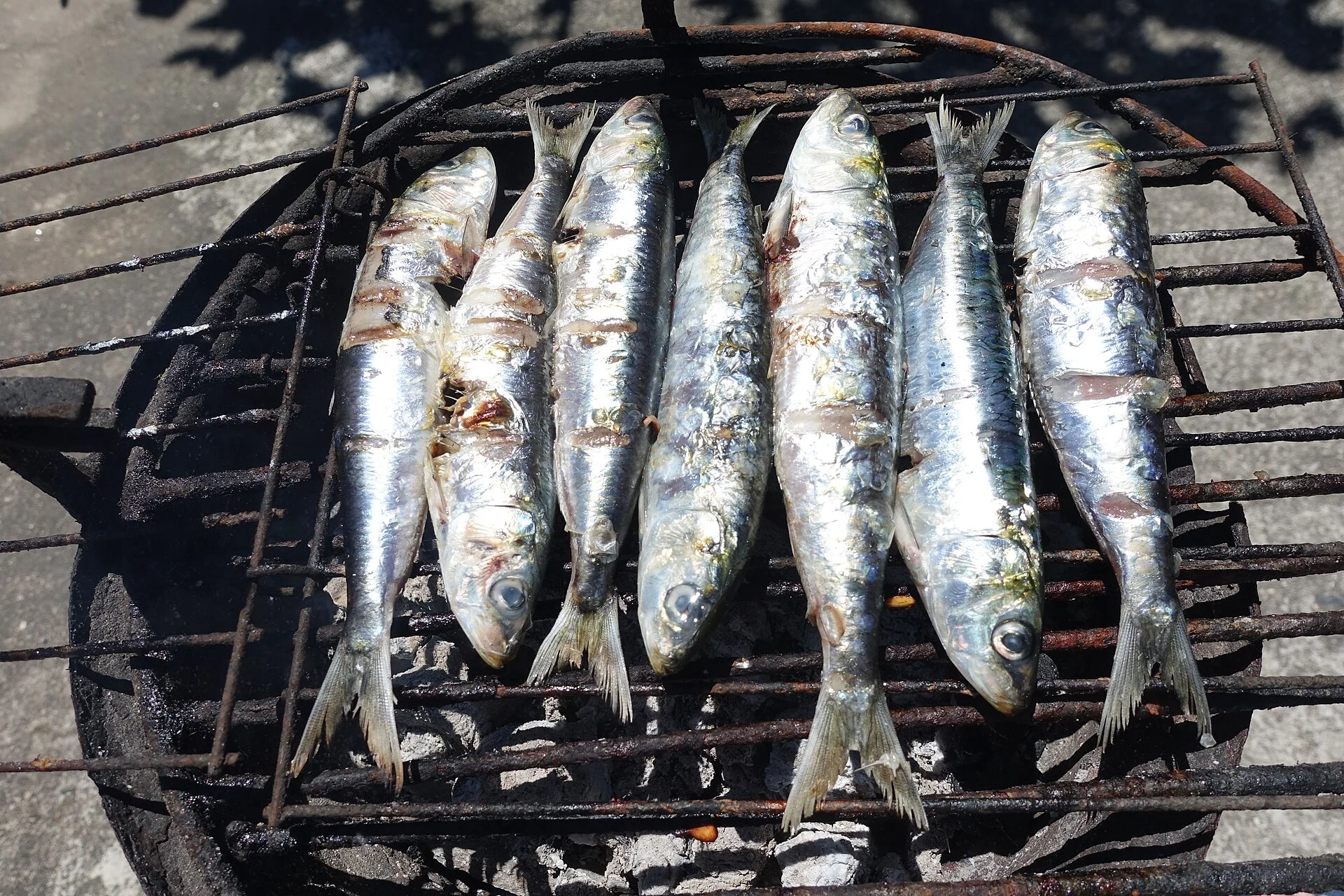
Lisbon's tavern trade is centuries old. Records cited by Garçoni list 45 sardinheiras (sardine sellers), 110 frigideiras (street fryers) and 118 taberneiras (tavern keepers) in the 15th century, and about 300 taverns selling wine in the 16th century, which together got through some 70 pipes of wine a day. The frigideiras fried and grilled fish, and workers ate it in or beside the nearby taverns with bread and wine. The writer Júlio de Castilho, describing the late 18th century, called the street fryers countless and described customers buying a glass of wine in the tavern to go with their sardines.
At the Ribeira, on the riverfront, fixed stalls known as Malcozinhado sold grilled sardines and other ready food from at least the 16th century; a source of 1552 counts ten of them. Their customers included riverside workers and men about to board boats and barges. The Malcozinhado taverns were ordered removed in 1830, after about 300 years, and from the mid-19th century the city cleared the remaining stalls from the streets. Their role was absorbed by the taverns, tascas and casas de pasto, which now cooked as well as poured.
HOW GALICIAN TAVERN KEEPERS SHAPED THE TASCA MENU
After the 1755 earthquake, migrants from Galicia came to Lisbon to work on the reconstruction. Garçoni's sources give more than 40,000 at first and, in another count, over 80,000 by the end of the 19th century. Many went into the food and drink trade: between 1850 and 1910 almost all of Lisbon's cafés and casas de pasto were in Galician hands. Citing a 2018 study, Garçoni records that Galicians still run tascas, beer halls and seafood houses in the Baixa, Santos, Martim Moniz, Anjos and Almirante Reis.
The Galician houses served cheap, filling food. A 1940 account lists boiled salt cod, tripe, bean stew, pig's trotters with greens, chickpeas with spinach, duck with rice and fried linguiça sausage. The best known dish was iscas com elas: liver cut into strips, fried in large pans and served with or without elas, the potatoes. It became the speciality of the Galician-run tabernas de iscas. Chanfana, an offal stew, salt cod with chickpeas, the empadas (small pies) still sold in Lisbon's tascas, and the cherry liqueur ginjinha are also attributed to Galicians.
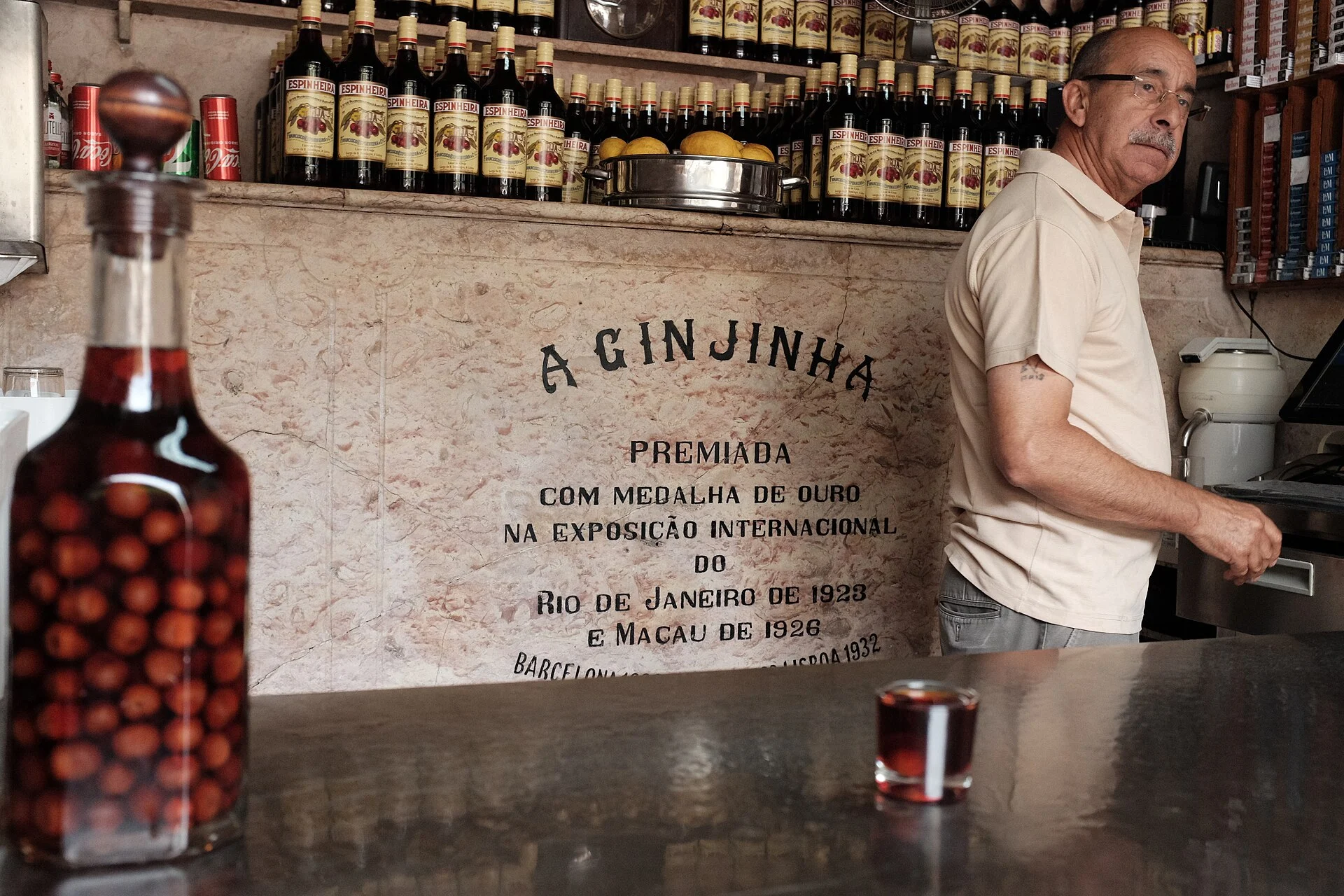
Ginjinha shows how the counter trade worked. A Ginjinha in Largo de São Domingos, also called Ginjinha Espinheira, was opened in 1840 by a Galician of that name. Its liqueur is made by steeping cherries in brandy with sugar, water and cinnamon, from a recipe the shop credits to a monk. With its neighbour, Sem Rival, the shop introduced the sale of ginjinha over the counter, a practice now common across the city. Staff ask each customer whether they want it with or without cherries, and because the shop is so small, customers drink outside in the square.
WHAT ARE PETISCOS?

Petiscos are the snacks and small dishes eaten with a drink in a tasca. Garçoni quotes an account of Sunday outings in which Lisbon families went out for um bom petisco, a good petisco, and a jug of local wine. The everyday menu of a poor tasca was bread sold by weight, soup, boiled meats, fried or salted fish, salads and vegetables. Marisqueiras, seafood bars, spread across Lisbon in the 1940s. Grilled sardines follow the calendar: Visit Portugal, the national tourism board, notes that they are especially traditional in Lisbon during the Popular Saints festivities in June, served with grilled peppers and olive oil.
AFAR's guide to Lisbon's tascas lists the petiscos at Tendinha do Rossio, founded in 1840 on Rossio square: the bifana, a pork sandwich, ham or fresh cheese sandwiches, pastéis de bacalhau (salt cod cakes) and shrimp croquettes, with house beer or red wine. At A Tasca do Chico the guide recommends chouriço assado, a chouriço sausage set on fire; diners let the flame die out and eat it with bread. At Zé da Mouraria it notes salt cod with plenty of bread, and walls decorated with blue tiles, photographs and drawings in the style of a classic tasca.
PEIXINHOS DA HORTA AND THE PORTUGUESE ROOTS OF TEMPURA
Peixinhos da horta, or little fish of the garden, are battered and deep-fried green beans, served as a starter in Portuguese family restaurants and homes. The chef Leandro Carreira, author of Portugal: The Cookbook, published by Phaidon, gives the method: the beans are blanched for 30 seconds, cooled in iced water, coated in a batter of milk and flour and fried in sunflower oil. Carreira links battered and fried food in Portugal to the Catholic fasting periods, when meat was forbidden. The beans were once tied to fasting days and are now eaten all year round.
Carreira also tells the best-known story attached to the dish: that Portuguese merchants, the first Europeans to reach Japan, introduced battered and fried food there in the 16th century, and that the word tempura comes from the Latin tempora, the fasting times. The MICHELIN Guide's history of tempura gives the Japanese side without the Latin etymology. It records that Portuguese Catholic missionaries brought the method of coating food in flour and frying it in the 16th century, and that Nagasaki tempura, derived from this Namban cooking, appeared in the late 16th century. Tempura reached Edo, present-day Tokyo, in the late 18th century.
FADO AND THE TASCA
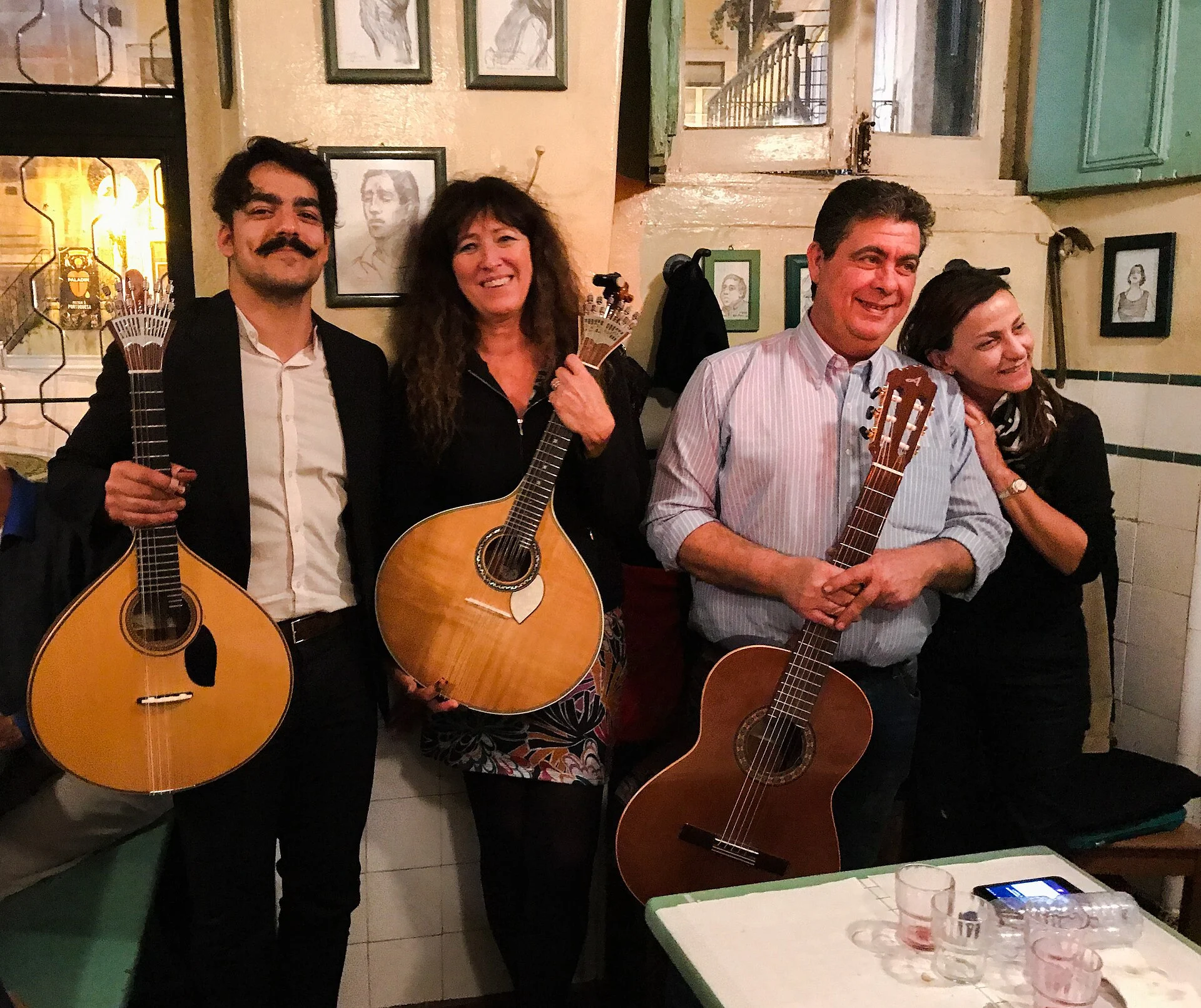
Fado, the urban popular song of Lisbon, has long been linked with eating and drinking out. UNESCO, which inscribed fado on its Representative List of the Intangible Cultural Heritage of Humanity in 2011, describes it as a synthesis of Afro-Brazilian sung dances, local song and dance, rural music brought by internal migration, and early 19th-century urban song. It is accompanied by a wire-strung acoustic guitar and the Portuguese guitarra, a pear-shaped cittern with twelve wire strings. Garçoni's sources describe 19th-century Sunday outings to the hortas, the garden taverns on the city's edge, with food, wine and music, sobretudo o fado, above all fado.
UNESCO records two settings for fado today: professional performance in concerts and small fado houses, and amateur singing in grassroots associations in Lisbon's older neighbourhoods. AFAR reported in 2021 that A Tasca do Chico, an old tavern restored in 1993, holds fado vadio, sung by amateurs, on Mondays and Wednesdays. The fado house is the professional form. Sr. Vinho, founded in 1975 by António de Mello Corrêa, Maria da Fé and José Luís Gordo, two fado singers and a lyricist, serves Portuguese food with fado every night and became an informal school for young singers and musicians.
HOW THE TASCA BECAME PART OF LISBON'S HERITAGE
For most of their history the taverns were looked down on by Lisbon's elites, who called them templos da vadiagem, temples of idleness. Many have since closed, a large number replaced by snack bars. Garçoni traces a change of attitude that began in the 20th century and peaked from the late 1900s onwards, as public authorities and local communities came to recognise the tasca as part of the city's culture. She reads it as nostalgia, an effort to recover a memory tied to residents' identity as the places disappear. Two guidebooks to Lisbon's tascas appeared in 2016.
Lojas com História lists old taverns among the city's historic businesses. Imperial de Campo de Ourique was taken over in 1985 by João Gomes and his wife, Adelaide Fernandes, from the Minho region, who renovated it to meet safety and hygiene rules while keeping its old design, which the programme describes as rare in Lisbon. Not every account of the revival is positive. Domingues, in a 2019 book quoted by Garçoni, recalls taverns of barrels, the smell of wine and dark rooms, and finds that the popular tavern now survives mostly in sanitised houses of tapas and petiscos or in name only.
Garçoni also finds that the revaluation has produced new bars and restaurants for middle and upper-class customers whose decoration and cooking openly draw on the old popular houses. José Avillez is one of the chefs Visit Portugal names as developing modern Portuguese cuisine in Lisbon. His flagship, Belcanto on Rua Serpa Pinto in Chiado, holds two MICHELIN Stars in the 2026 MICHELIN Guide Portugal. The guide reports that his dishes draw on Lisbon's light, coastline and neighbourhoods, and that he describes cooking as our very own fado.
TASCA AT MANDARIN ORIENTAL JUMEIRA DUBAI
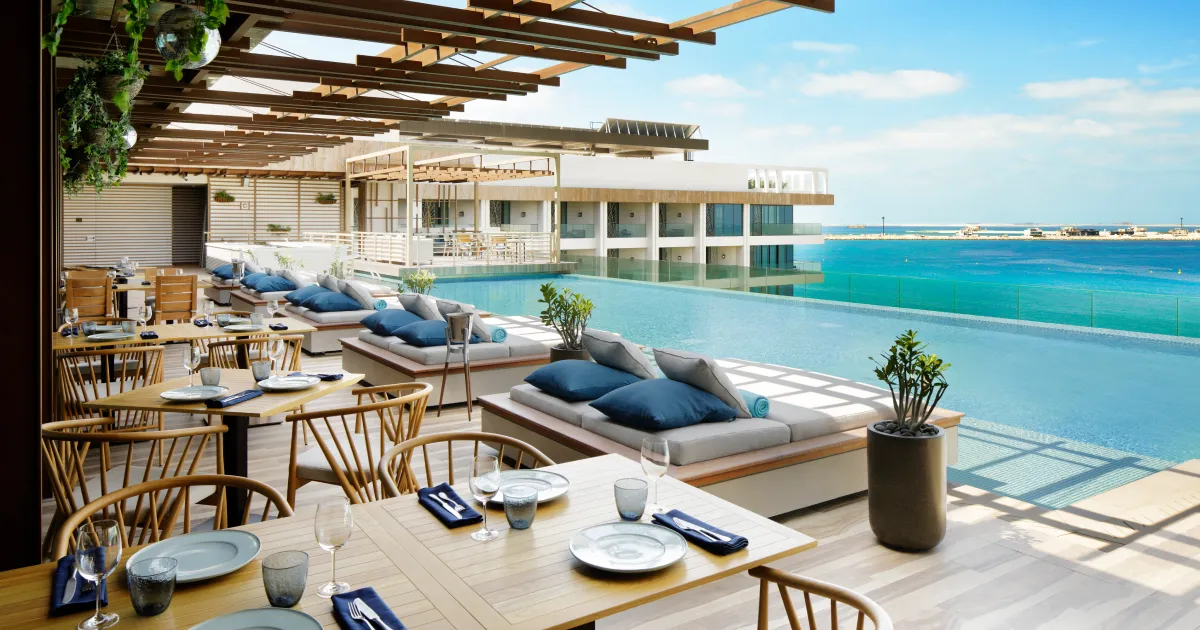
Tasca is a contemporary Portuguese restaurant by chef José Avillez, with a terrace and bar, at Mandarin Oriental Jumeira Dubai. It was completed by Silverfox Studios in 2019 and holds one MICHELIN Star. Its name is the Portuguese word for the plain eating house that grew out of Lisbon's taberna, where wine was sold by the small measure with petiscos alongside, and which since the late 20th century has been taken up by new restaurants that draw on its decoration and cooking.
The interior uses timber tables, a slatted ceiling and marble bar counters. Turquoise glassware and blue cushions add colour, and illuminated shelving displays ceramics. A rooftop terrace looks out over the Arabian Gulf. The counter has a long history in Lisbon's tavern trade. The taberna sold its wine across it by the small measure, and the ginjinha shops of Largo de São Domingos introduced the sale of their cherry liqueur over the counter, a practice now common across the city.
SOURCES
- Universidade de Coimbra, Estudo Geral Inês Garçoni, Tascas, tabernas e botequins em Lisboa e no Rio de Janeiro: da plebe às elites (séculos XIX a XXI), 2021
- Lojas com História, Câmara Municipal de Lisboa Imperial de Campo de Ourique
- Lojas com História, Câmara Municipal de Lisboa A Ginjinha
- Lojas com História, Câmara Municipal de Lisboa Sr. Vinho
- AFAR Lisbon's Best Tascas
- Visit Portugal Lisbon Gastronomy
- Phaidon The Portuguese greens that changed Japan's cuisine
- MICHELIN Guide The History of Tempura
- UNESCO Intangible Cultural Heritage Fado, urban popular song of Portugal
- MICHELIN Guide Belcanto