THE BREED, THE OAK PASTURES, THE LABELS AND THE CURING BEHIND SPAIN'S MOST PRIZED HAM

Jamón ibérico is a dry-cured ham made from the hind leg of the Iberian pig, a breed traditionally raised in the oak pastures of south-west Spain. Spanish law defines it through Royal Decree 4/2014, which grades every ham by two measures: the share of Iberian ancestry in the pig, from 50% to 100%, and the way the animal was fed, from acorns on open pasture to cereal feed on a farm. Each grade carries a coloured seal: black, red, green or white. Hams sold as de bellota come from pigs fattened on acorns during the montanera, the autumn and winter acorn season. Four Protected Designations of Origin (DOPs) for Iberian ham, Guijuelo, Jabugo, Dehesa de Extremadura and Los Pedroches, add their own rules on breed, territory and curing.
WHAT IS JAMÓN IBÉRICO? THE IBERIAN PIG AND ITS CROSSES
The Iberian pig is a rustic breed raised for centuries in the south-west of the Iberian Peninsula, in extensive systems built around the dehesa, according to researchers at the Universidad Complutense de Madrid. Intensive and semi-extensive farms also exist today. The MICHELIN Guide describes the animals as black-skinned, with conical snouts and ears that flop forward. Under Royal Decree 4/2014, which came into force on 12 January 2014 and replaced a standard from 2007, an animal sold as 100% ibérico must have parents that are both 100% Iberian and registered in the breed's genealogical book.
The decree allows crosses with the Duroc, a separate breed, but the mother is always an Iberian sow. A 75% ibérico pig is born to an Iberian sow and a boar whose mother was Iberian and whose father was Duroc. A 50% ibérico pig is born to an Iberian sow and a pure Duroc boar. Any product that is not 100% Iberian must state its percentage on the label. The term pata negra, meaning black hoof, is reserved for products from pigs that are both 100% Iberian and acorn-fed. Each pig yields two jamones, from the hind legs, and two paletas, the smaller shoulder cuts.
THE DEHESA AND THE MONTANERA: HOW ACORNS SHAPE THE HAM
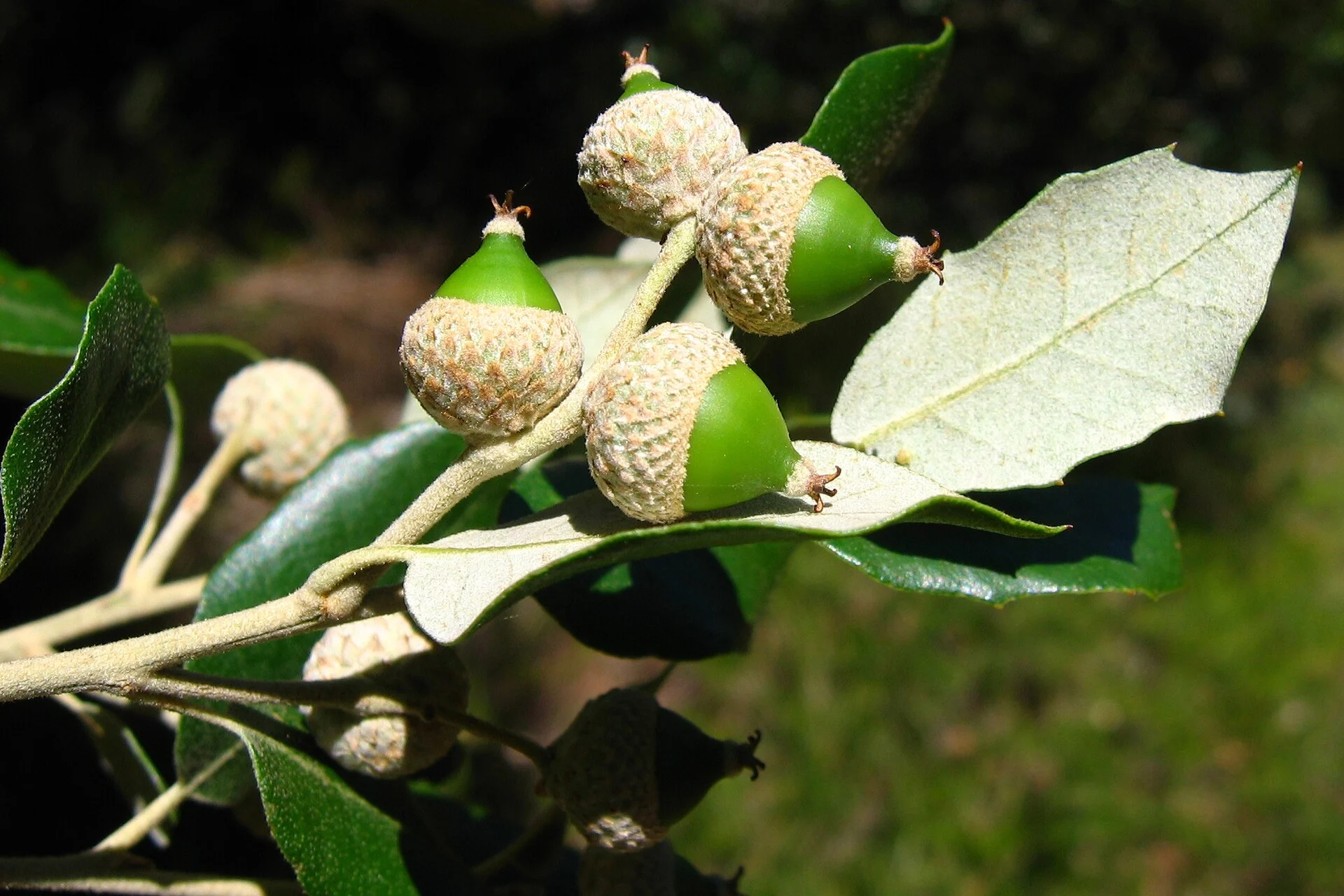
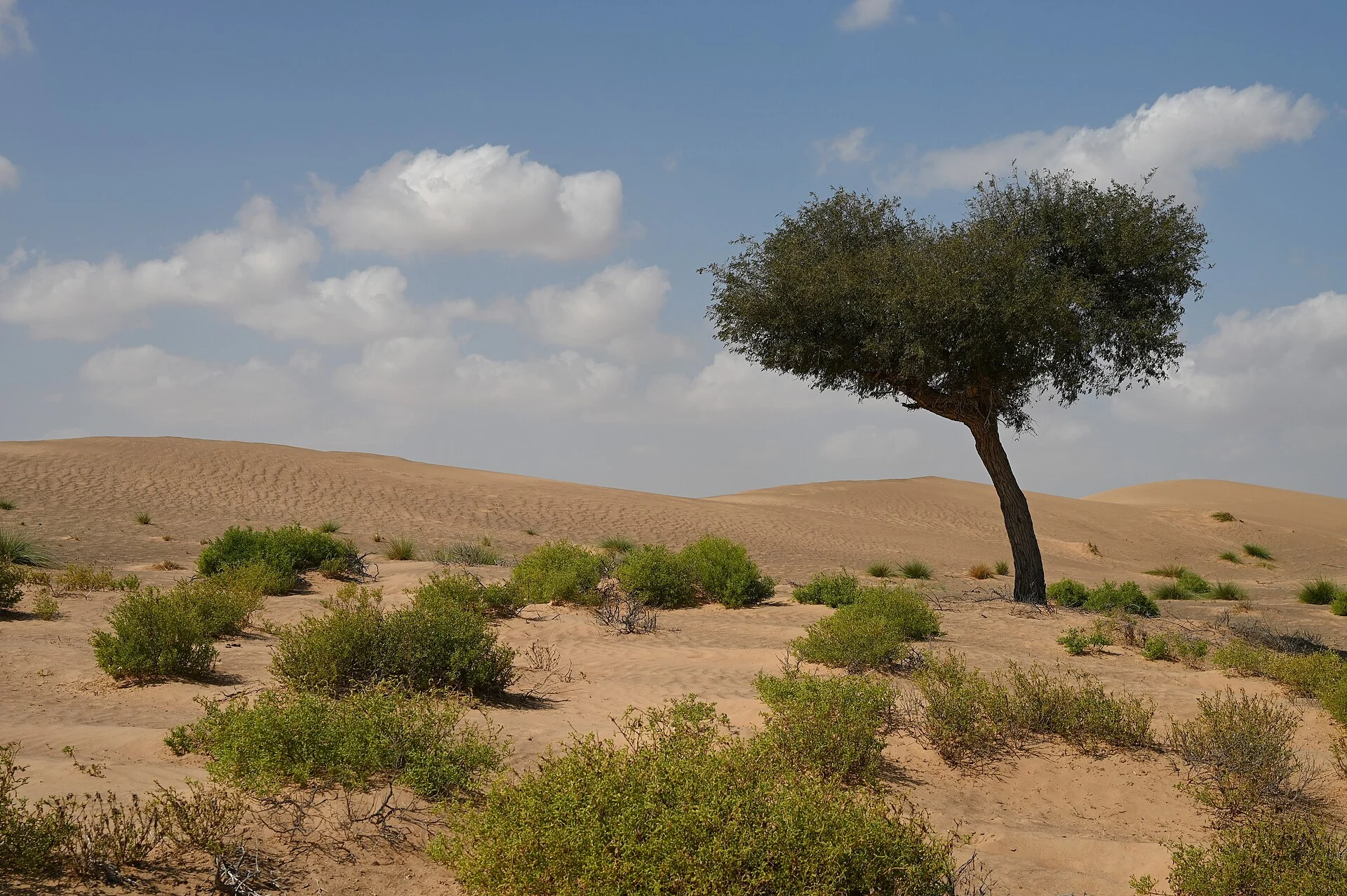
The dehesa is an agroforestry system in which pasture grows beneath scattered oaks, mainly holm oak and cork oak. Extremadura alone has nearly one million hectares of it, according to the Dehesa de Extremadura DOP specification, which describes the Iberian pig as central to its conservation. Acorn yields range from 3,500 to 12,000 kg per hectare a year, depending on climate, tree species and management. The montanera is the autumn and winter fattening period that coincides with the acorn fall, and the MICHELIN Guide reports that pigs on the dehesa walk nearly nine miles, about 14 km, a day.
For a ham to be sold as de bellota, the decree requires the pigs to enter the dehesa between 1 October and 15 December, in lots averaging 92 to 115 kg, and to gain at least 46 kg over more than 60 days on acorns, grass and other natural resources, with no supplementary feed. Slaughter takes place between 15 December and 31 March, at a minimum age of 14 months. The diet changes the fat. In the Complutense study, pigs on montanera ate about 8 kg of acorns a day, and their shoulders contained 39.7% intramuscular fat on a dry-matter basis, against 29.1% in pigs fed concentrate. This infiltrated fat is the marbling seen in a cut ham, which the Guijuelo DOP specification describes as pink to purple-red, with veins of fat running through the muscle.
A HISTORY OF IBERIAN HAM: FROM MEDIEVAL CHARTERS TO THE RAILWAY
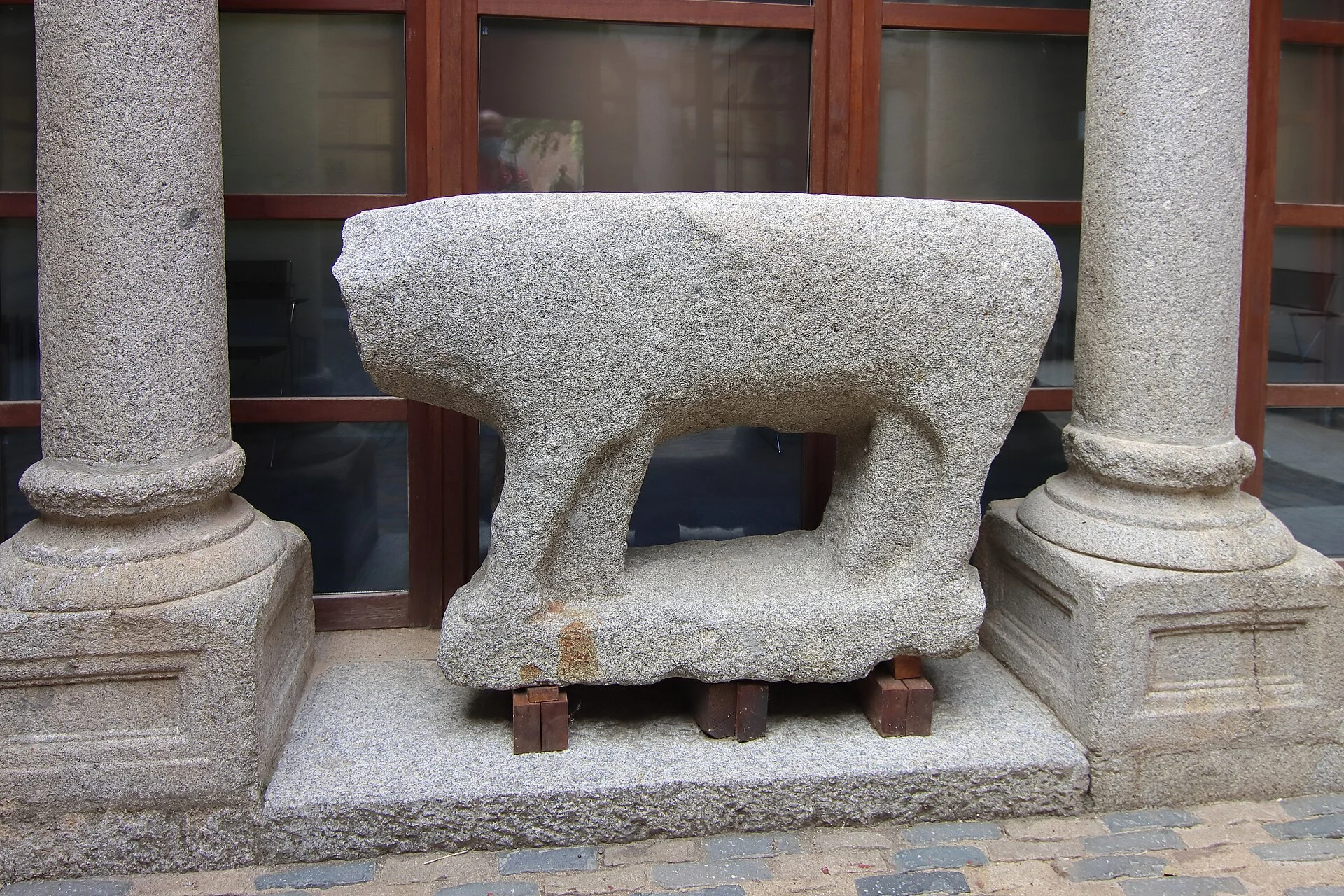
The DOP specifications, which must document a product's link with its territory, set out the historical record. The Dehesa de Extremadura specification cites the verracos, stone animal sculptures from the 5th to 2nd centuries BC found across the region, and the Fuero de Montánchez of 1236, the earliest mention it records of dehesas reserved for acorn production for pigs. Ordinances issued in Valencia de Alcántara on 5 August 1489 regulated pig breeders, butchers and slaughterers. In 1616 the writer Iván de Sorapán praised acorn-fed meat and hams, which by then were exported to the New World.
The Jabugo specification cites verses by Lope de Vega from 1604 referring to the hams of the Aracena mountains in Huelva. A Jabugo producer was registered in 1895, and the specification records that by 1905 its distribution network reached Seville, Jerez, El Puerto de Santa María, San Fernando and Cádiz. Further north, the Guijuelo specification traces the sale of hams from household pig slaughters to the 16th century, when muleteers carried them to market. Industrial pig slaughter began in Guijuelo in 1880, helped by the national road and the railway.
JAMÓN IBÉRICO LABELS: THE BLACK, RED, GREEN AND WHITE SEALS
Royal Decree 4/2014 sets three feeding designations. De bellota applies to pigs slaughtered straight after the montanera. De cebo de campo applies to pigs that may have grazed but were fed mainly on cereals and legumes, raised extensively or in outdoor intensive systems; they must spend at least 60 days outdoors before slaughter and be at least 12 months old. De cebo applies to pigs fed mainly on cereals and legumes in intensive systems, with a minimum slaughter age of 10 months.
Each ham and shoulder carries a seal, or precinto, in a colour set by the decree. Black marks de bellota 100% ibérico, the only category that may be called pata negra. Red marks de bellota ibérico, from 75% or 50% Iberian pigs. Green marks de cebo de campo ibérico, and white marks de cebo ibérico. The decree also sets minimum weights for the finished product: 5.75 kg for a 100% ibérico ham and 7 kg for other Iberian hams. Turespaña, Spain's tourism board, uses the same four colours to explain the categories to visitors.
HOW JAMÓN IBÉRICO IS CURED: SALTING, SECADERO AND BODEGA
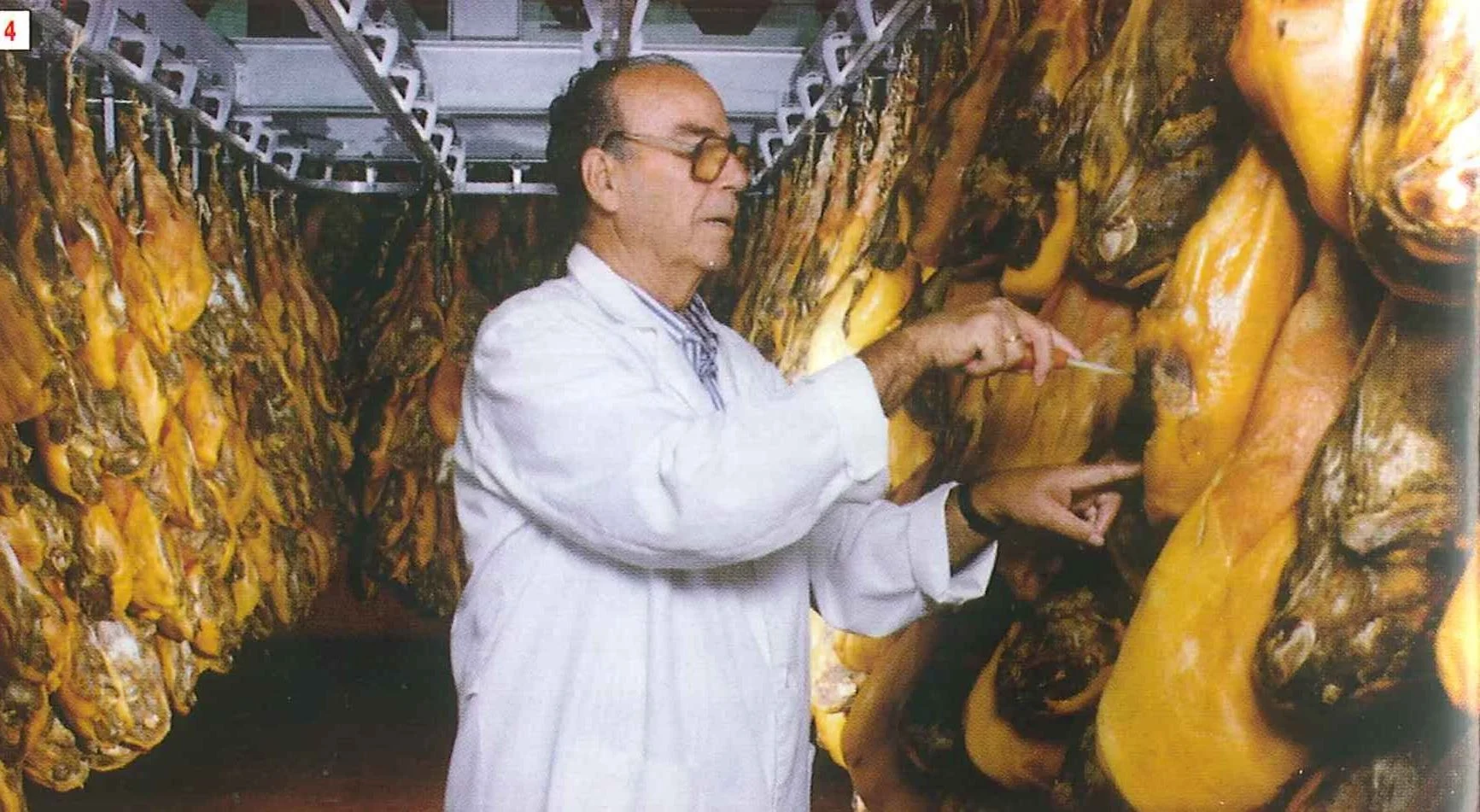
The DOP specifications describe the process in stages. In the Dehesa de Extremadura specification, the fresh hams are first covered in salt at 1 to 5°C and 80 to 99% relative humidity, for roughly one day per kilogram of weight. The hams are then washed in cold or lukewarm water to remove surface salt and left for 35 to 45 days at 2 to 6°C and 80 to 90% humidity, a stage called asentamiento in which the salt spreads evenly through the piece.
The hams then move to the secadero, a drying room with windows that are opened and closed to control natural ventilation. The Guijuelo specification sets at least six months for this stage, during which the hams go through the sudado, or sweating, as rising temperatures melt the fat. The specification links this to local climate: long, cold winters allow slow natural drying, and mild summers drive the sudado that produces the marbling. Surface moulds develop, which it lists as white, grey-blue, dark or violet.
The final stage takes place in the bodega, or curing cellar, where the hams are classified by weight and quality. Royal Decree 4/2014 sets minimum curing times counted from the start of salting: 600 days for a ham under 7 kg, 730 days for one of 7 kg or more, and 365 days for a shoulder. Guijuelo requires 730 days for all its hams and allows the term Gran Selección beyond 800 days. In Jabugo, the specification leaves the length of each stage to the maestro jamonero, the master ham maker.
THE FOUR DOPS: GUIJUELO, JABUGO, DEHESA DE EXTREMADURA AND LOS PEDROCHES
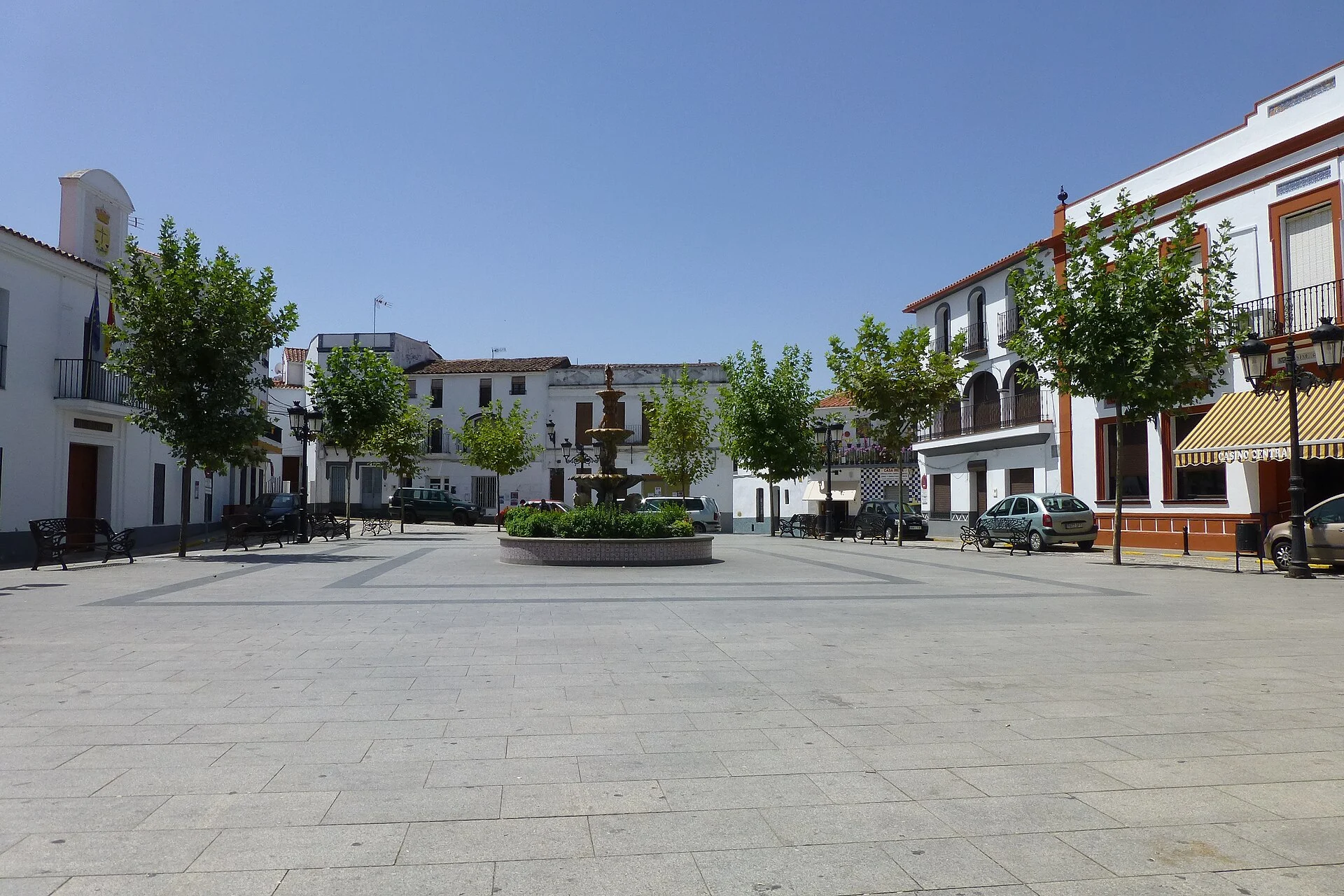
The Guijuelo DOP is the northernmost of the four, and Turespaña notes that it was the first to be created. Its hams are cured in 78 municipalities in the south-east of Salamanca province, at an average altitude of 1,000 metres, between the Sierra de Béjar and the Sierra de Francia. The pigs, at least 75% Iberian, can be raised on dehesas in 11 provinces. The Jabugo DOP, formerly called Jamón de Huelva, accepts only 100% Iberian pigs, and its hams are cured in 31 municipalities of the Sierra of Huelva, between 500 and 1,042 metres above sea level.
The Dehesa de Extremadura DOP also requires 100% Iberian pigs and keeps every stage within the region: the pigs are raised on holm oak and cork oak dehesas in Cáceres and Badajoz, and the hams are cured there. It has two classes, de bellota and de cebo de campo. Los Pedroches, recognised in 2006, is the most recent. Rearing and curing both take place in the Valle de los Pedroches, 32 municipalities in the north of Córdoba province, and Turespaña describes its hams as more slender and elongated than the others.
THE CORTADOR: HOW JAMÓN IBÉRICO IS CARVED
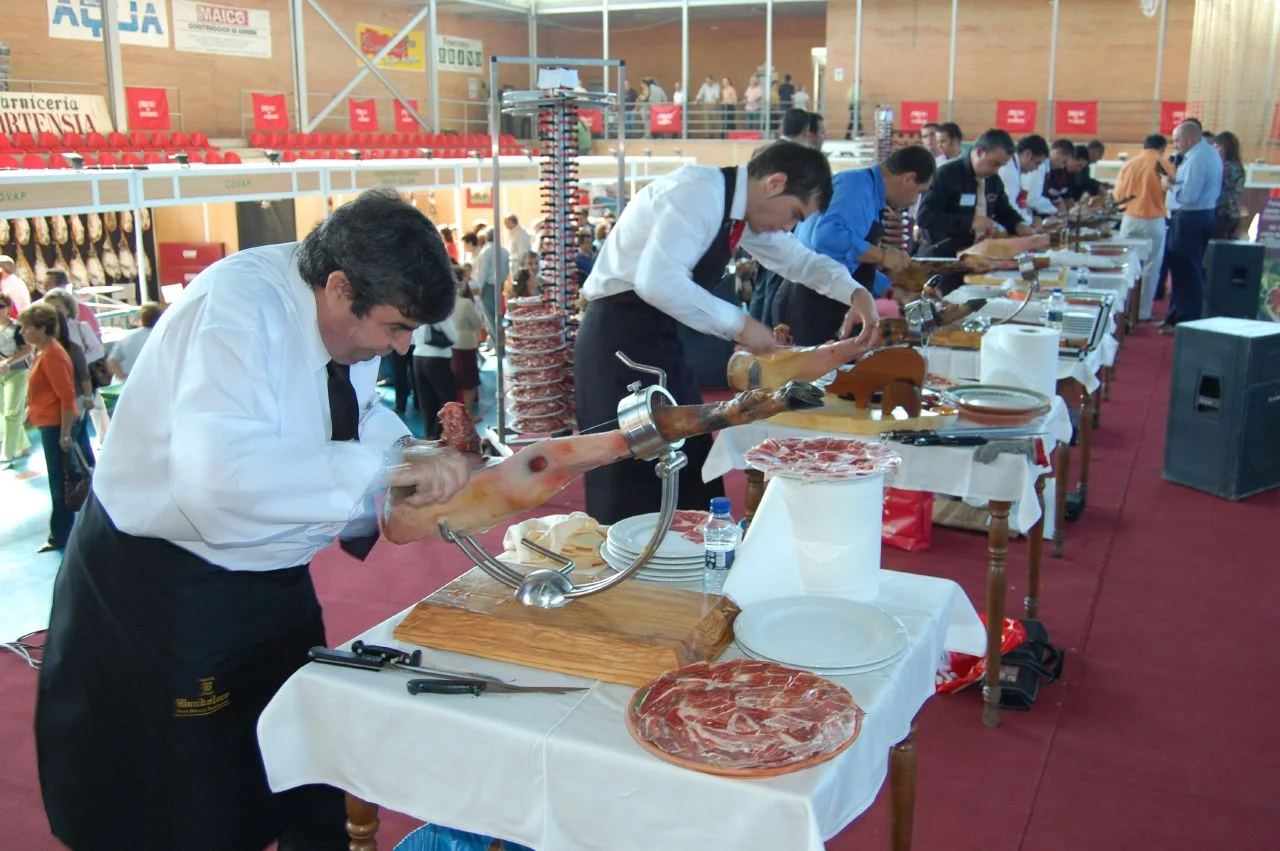
A whole ham is carved by a cortador, a specialist ham carver. The MICHELIN Guide's account of Carlos Sánchez, a self-taught carver who works for the producer Cinco Jotas, describes the tools. The ham is clamped in a jamonera, a curved metal stand that allows it to be turned, and cut with a cuchillo jamonero, a long, thin knife with a flexible blade. The carver first trims away the outer fat, since the meat cannot be judged until it is exposed, then works the blade forward along the maza, the thickest part of the leg.
Each slice is about 1 mm thick and roughly rectangular, combining lean meat and white fat, and the flavour varies with the ratio of the two. A ham yields about 2,600 slices and takes a couple of hours to carve. Sánchez told the guide that it took him about a year to make his slices consistent in size and thickness. The slices are laid on a platter, slightly overlapping, and the guide advises pressing a slice against the roof of the mouth so the fat melts before chewing.
TAPAS AT MANDARIN ORIENTAL SHENZHEN

Tapas is a restaurant and bar at Mandarin Oriental Shenzhen, completed by Silverfox Studios in 2022. It shares its name with Spain's small-plate tradition. The interior is built from exposed brick and steel-framed glazing, with a glass-fronted wine display set into the brick walls. Seating includes banquettes upholstered in red leather, and framed photographs hang on the walls. Black metal shelving is suspended overhead, a wrought-iron chandelier lights the room, and a marble bar counter looks out over the city.
The link to jamón ibérico is the cellar. A ham ends its curing in the bodega, where the pieces are stored and classified by weight and quality, and the law sets a minimum of 600 days from the start of salting before a ham is finished, or 365 days for a shoulder. At Tapas, wine is stored in view behind glass in the brick walls. In Spain, the finished ham is clamped in a jamonera and carved by a cortador with a long, flexible knife into slices about 1 mm thick, laid slightly overlapping on a platter.
SOURCES
- Boletín Oficial del Estado Real Decreto 4/2014, norma de calidad para la carne, el jamón, la paleta y la caña de lomo ibérico
- Ministerio de Agricultura, Pesca y Alimentación Pliego de condiciones, DOP Guijuelo
- Ministerio de Agricultura, Pesca y Alimentación Documento único, DOP Jabugo
- Ministerio de Agricultura, Pesca y Alimentación Pliego de condiciones, DOP Dehesa de Extremadura
- Distribución y Consumo (Mercasa) Alimentación en España: Jamones
- Turespaña (spain.info) Jamón ibérico
- Revista Complutense de Ciencias Veterinarias Contenido en grasa intramuscular del lomo y la paleta de cerdos ibéricos según su sistema de alimentación y manejo
- MICHELIN Guide Carlos Sánchez's Guide to Jamón Ibérico