A FORTIFIED WINE FROM THE CHALK SOILS OF CÁDIZ, AGED IN TIERS OF CASKS AND POURED WITH SMALL PLATES IN ANDALUSIA'S TAVERNS
Sherry wine is the fortified wine of Jerez de la Frontera and the surrounding towns of the province of Cádiz in Andalusia, and its English name is an anglicisation of Jerez. It is made mainly from the Palomino grape grown on chalky albariza soil, fortified with high-proof brandy after fermentation and aged in American oak casks through the solera system, a method of fractional blending that keeps each style consistent from year to year. The styles run from pale, dry fino and manzanilla, aged under a layer of yeast called flor, to dark oloroso and sweet Pedro Ximénez. Sherry also has a long place at the Andalusian bar: the region's taverns and grocery shops sold wine by the glass with food in the eighteenth century, and the body that regulates sherry today still lists Iberian ham, olives and nuts as the tapas to serve with fino.
WHAT IS SHERRY? THE JEREZ DENOMINATION OF ORIGIN
Authentic sherry carries the Denominación de Origen Jerez-Xérès-Sherry. Britannica notes that Spanish producers have worked to reserve the name for Spanish wine, although fortified wines sold as sherry have also been made in Cyprus, South Africa, Australia and the United States. According to the Consejo Regulador, the council that governs the denomination, ten towns have registered vineyards within their boundaries: Jerez de la Frontera, El Puerto de Santa María, Sanlúcar de Barrameda, Chiclana de la Frontera, Chipiona, Puerto Real, Rota, Trebujena, San José del Valle and Lebrija, the last of them in the province of Seville. Jerez, Sanlúcar and El Puerto de Santa María form what is known as the sherry triangle.
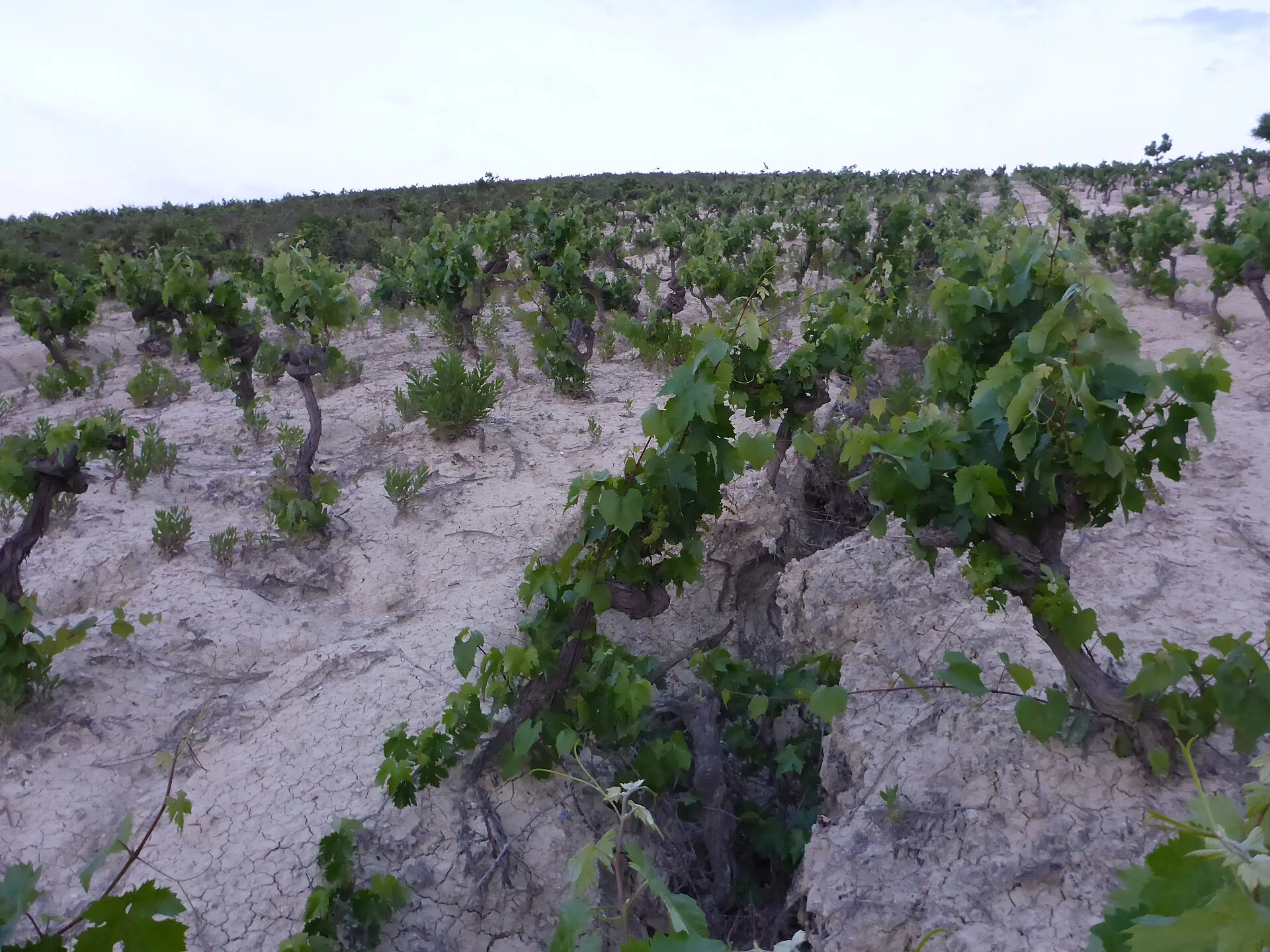
The vineyards are planted on albariza, a chalky soil rich in limestone that covers the hills around Jerez. Britannica names Palomino and Pedro Ximénez as the main grapes, with muscat used in some of the sweeter styles, and the Consejo describes Moscatel as one of the region's most symbolic varieties, closely tied to Chipiona. The summers along the coast from Sanlúcar to Chiclana are long and hot, tempered by sea breezes from the Atlantic. Sanlúcar de Barrameda has its own protected name, Manzanilla-Sanlúcar de Barrameda, a denomination in its own right that sits within Jerez-Xérès-Sherry.
THE HISTORY OF SHERRY: FROM XERA TO JEREZ DE LA FRONTERA
The Consejo Regulador dates winemaking in the area to around 1100 BC. Citing the Greek geographer Strabo, it credits Phoenician settlers with bringing vines, points to the remains of wine presses found at Castillo de Doña Blanca, and says the Phoenicians called the area Xera. After Scipio Aemilianus brought the region of Baetica under Roman control in 138 BC, wine from Cádiz was traded to Rome as Vinum Ceretensis, and the Cádiz-born Roman writer Columella set out rules for the area's vineyards in his treatise De re rustica.
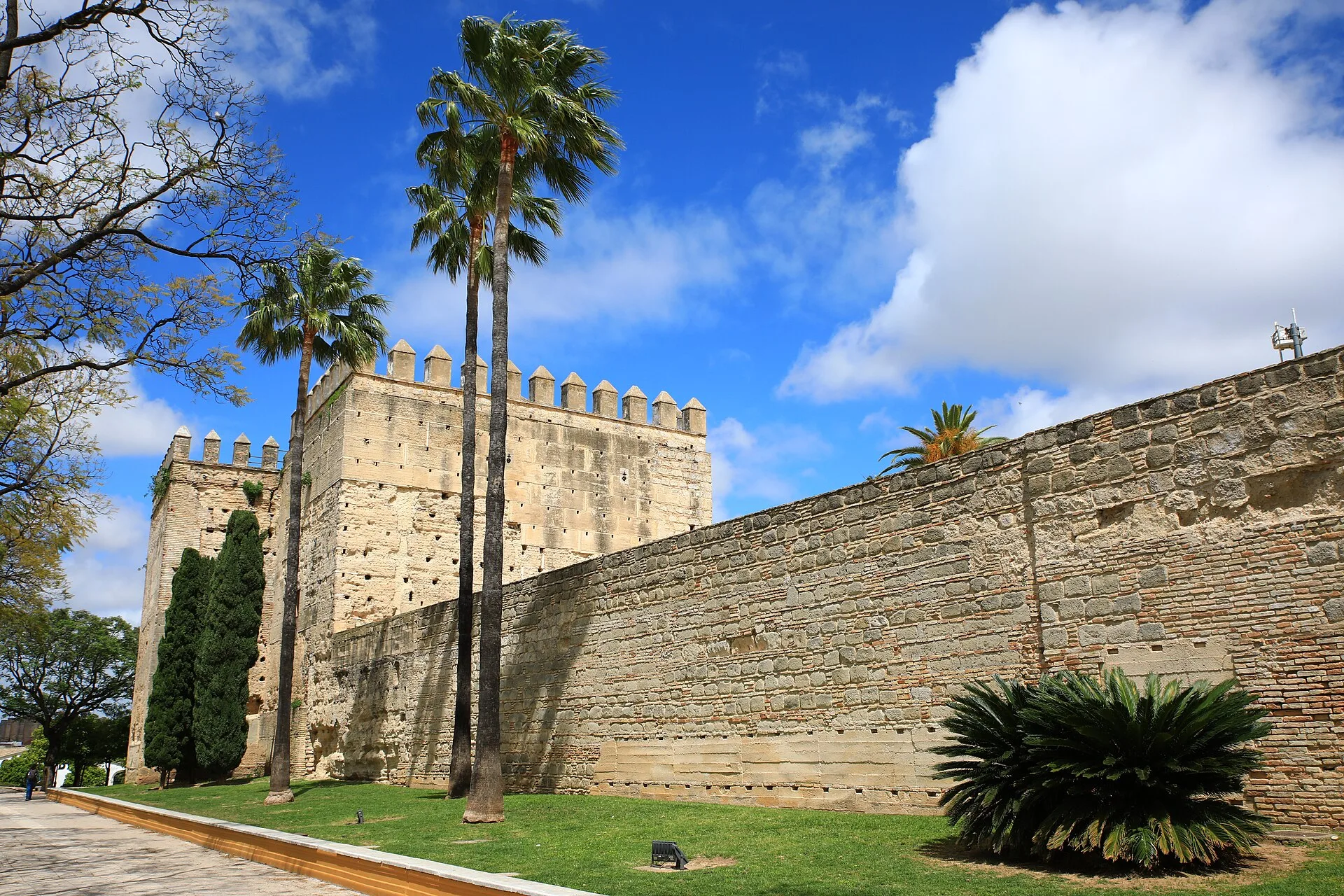
Moorish rule began in 711, and Jerez remained a wine centre for more than five centuries. The Consejo records that in 966 the caliph Al-Hakam II ordered the vines uprooted, but only about a third were removed after the growers argued that their grapes made raisins for the army. A twelfth-century map drawn for King Roger of Sicily by the geographer Al-Idrisi names the city Sherish. Alfonso X of Castile took Jerez in 1264, and as a town on the frontier with Moorish territory it became Jerez de la Frontera. On 12 August 1483 the town council issued regulations for the guild of raisin and grape harvesters.
SHERRY IN ENGLAND: DRAKE, SHAKESPEARE AND THE MERCHANT HOUSES
According to the Consejo, sherry was shipped to England as early as the twelfth century under the Moorish name Sherish. By the sixteenth century it was a wine of the English court: Catherine of Aragon complained that Henry VIII kept the best Jerez wines for himself, and the royal cellars of James I later limited the king's table to 12 gallons a day. In 1587 Sir Francis Drake attacked Cádiz and carried off about 3,000 casks, and National Geographic Traveller links the sixteenth-century boom in sherry production to that raid. The Consejo also records that Magellan's expedition bought 417 wineskins and 253 kegs of sherry, and that Shakespeare refers to the wine in several plays.
Trade with the Americas helped too. In 1680 the head of the Spanish fleet to the Indies moved to Cádiz, ending Seville's monopoly, to the benefit of Jerez. From the late eighteenth century merchants including Juan Haurie, Lacoste and Gordon built large bodegas, and the solera and criadera system and the modern character of the wines began to take shape. In the nineteenth century British-linked firms such as Sandeman, Williams & Humbert, J.W. Burdon and Wisdom & Warter traded alongside Spanish houses. Phylloxera reached the region in 1894 and devastated the vineyards, and the Spanish Wine Law of 1933 recognised the Jerez denomination and its Consejo Regulador.
HOW THE SOLERA SYSTEM WORKS
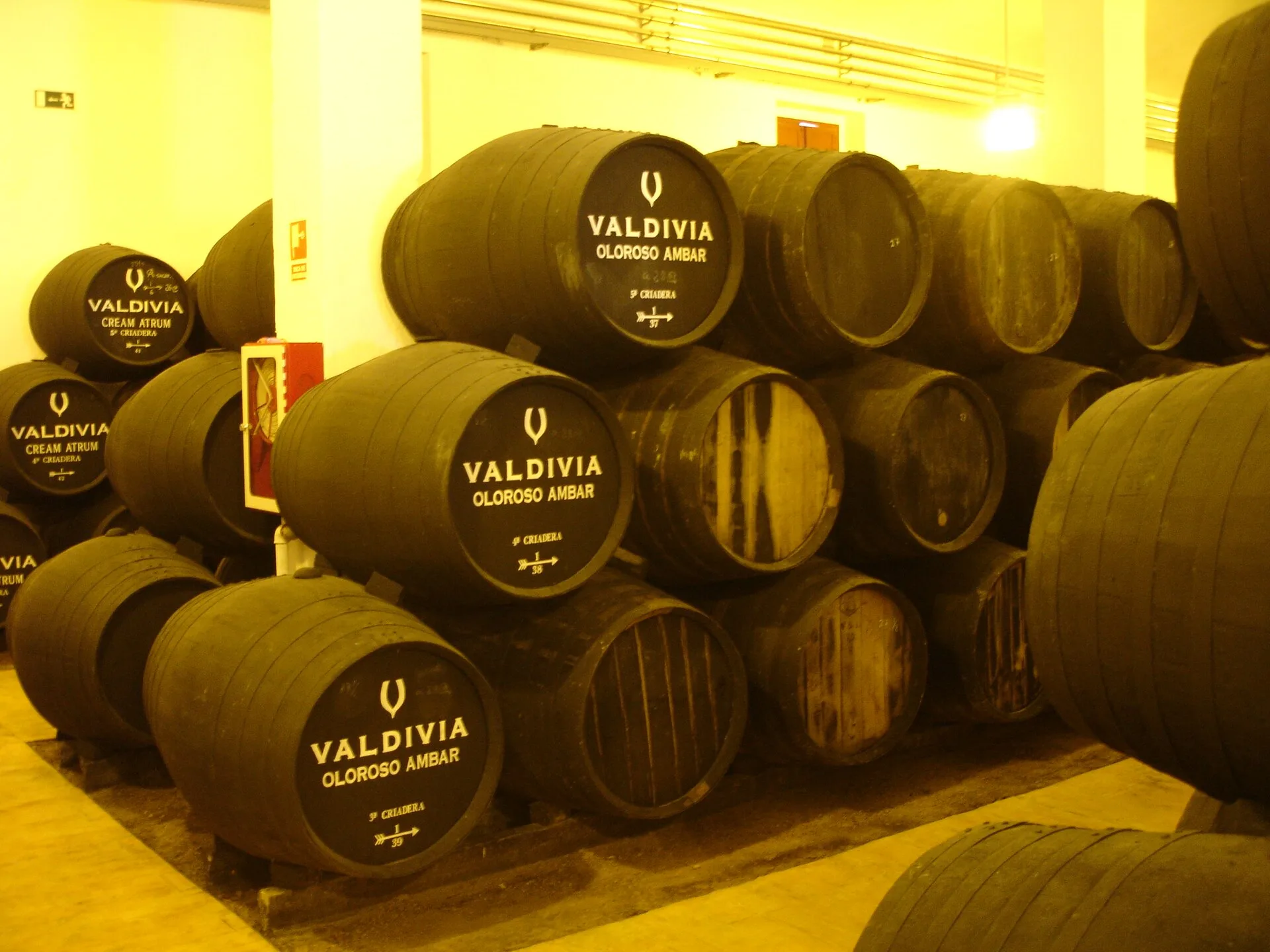
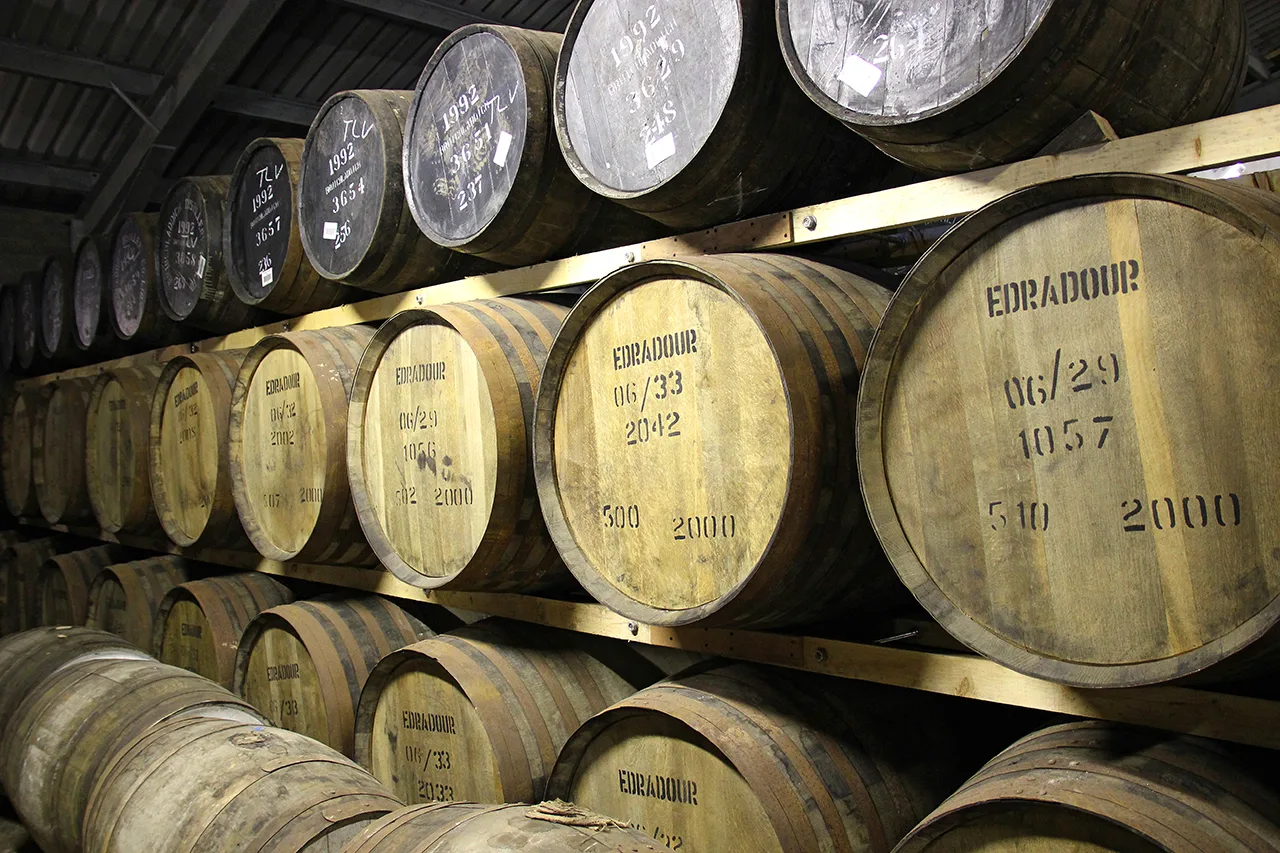
The solera system blends wines of different ages so that each bottling of a style tastes the same. Britannica describes a solera as three to eight tiers of barrels with the oldest wine at the bottom: wine for bottling is drawn from the bottom tier and replaced with wine from the tier above. In Jerez the bottom tier is the solera itself and the tiers above are the criaderas, or nurseries, numbered by age, so that the first criadera is the one closest to the solera; the youngest tier is topped up with añada, the young wine of a single year. Drawing wine off is the saca, refilling from the next younger tier is the rocío, and a full cycle through the system is called running the scales. Because the wine is blended continuously, a date on a bottle refers to the year the solera was started.
The Consejo's rules set a minimum ageing of two years, and the average age of the wine, calculated as the total volume of the system divided by the volume drawn from the solera each year, must be greater than two years. The standard cask is the American oak bodega butt of 600 litres. Butts used for ageing under flor are filled to about 500 litres, leaving roughly two fists of air above the wine to give the yeast a surface to grow on, and evaporation, the merma, takes 3 to 5 per cent of the stored wine each year.
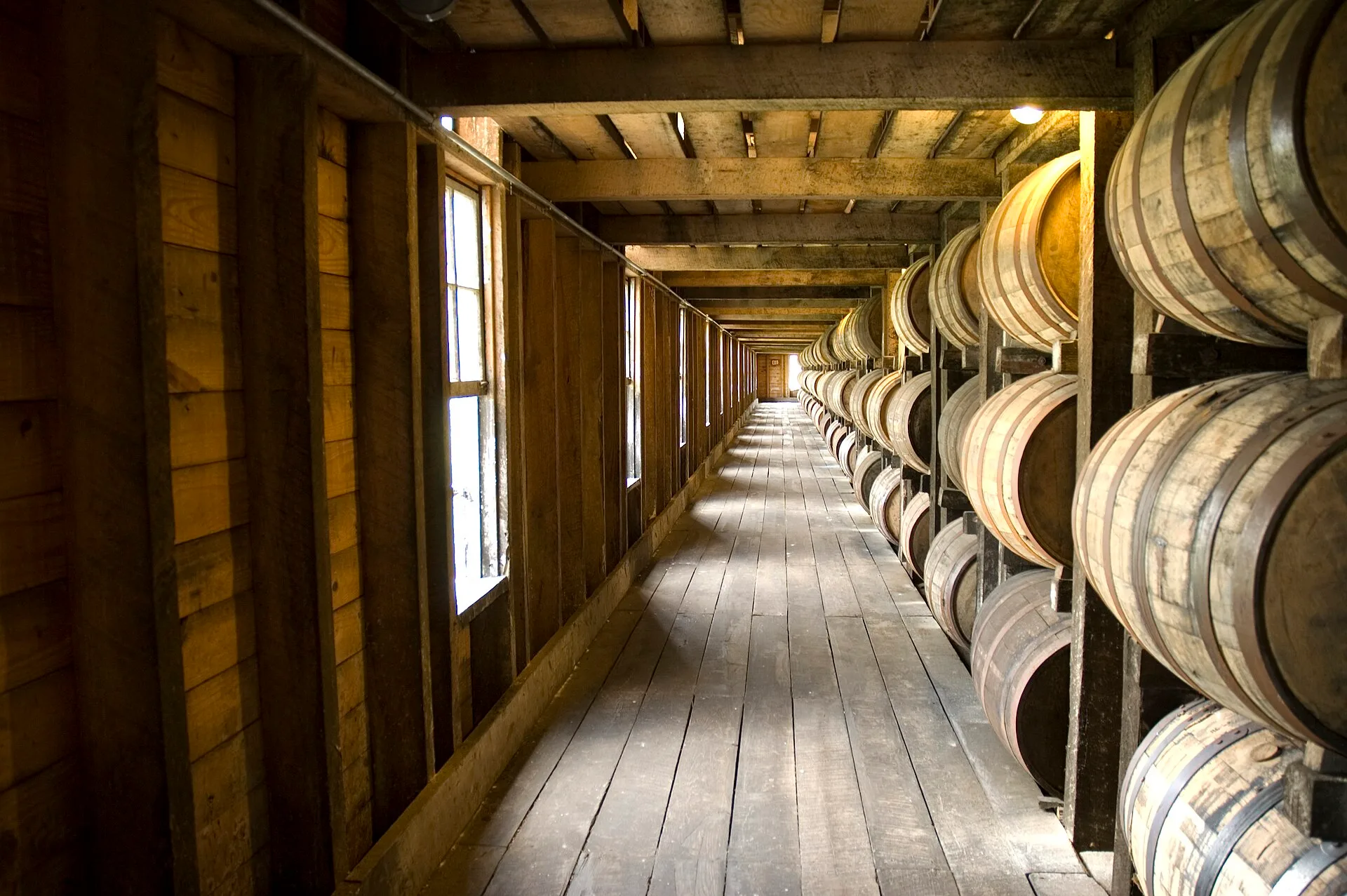
The buildings are part of the method. The tallest bodegas in Jerez, known as cathedral bodegas, rise up to 15 metres at the central arch, a volume of air that supplies oxygen to the flor and evens out temperature and humidity. High vents in the east and west walls draw out the hot air that rises to the roof, windows are small and set in the upper third of the walls, and single-skin walls at least 60 centimetres thick provide thermal mass. The floors are covered with albero earth, which can be watered to cool the room and raise the humidity.
FINO, MANZANILLA AND OLOROSO: THE TYPES OF SHERRY
The strength to which a sherry is fortified decides how it ages. Fino is made from Palomino, fortified to 15 per cent and aged under flor, a film of yeast that protects the wine from oxygen, consumes alcohol, glycerine and volatile acidity, and raises the acetaldehydes that give fino its sharp nose. The Consejo requires at least two years of this biological ageing in American oak through the solera and criaderas. Manzanilla is made the same way but must be aged entirely in the bodegas of Sanlúcar de Barrameda, where the town's position at the mouth of the Guadalquivir, between the Atlantic and the marshes, gives milder temperatures and higher humidity that favour the flor. Amontillado also begins its life under flor.
Oloroso is fortified to 17 per cent, a strength that stops flor from forming, so it ages in contact with oxygen from the start. Over long ageing water evaporates through the cask, concentrating the wine, and some olorosos exceed 20 per cent alcohol; the Consejo notes that the darker an oloroso, the longer it has aged. Britannica lists the main styles from driest and palest to sweetest and darkest as fino, manzanilla, amontillado, oloroso, cream and Pedro Ximénez, the sweet styles being made mainly from Pedro Ximénez grapes.
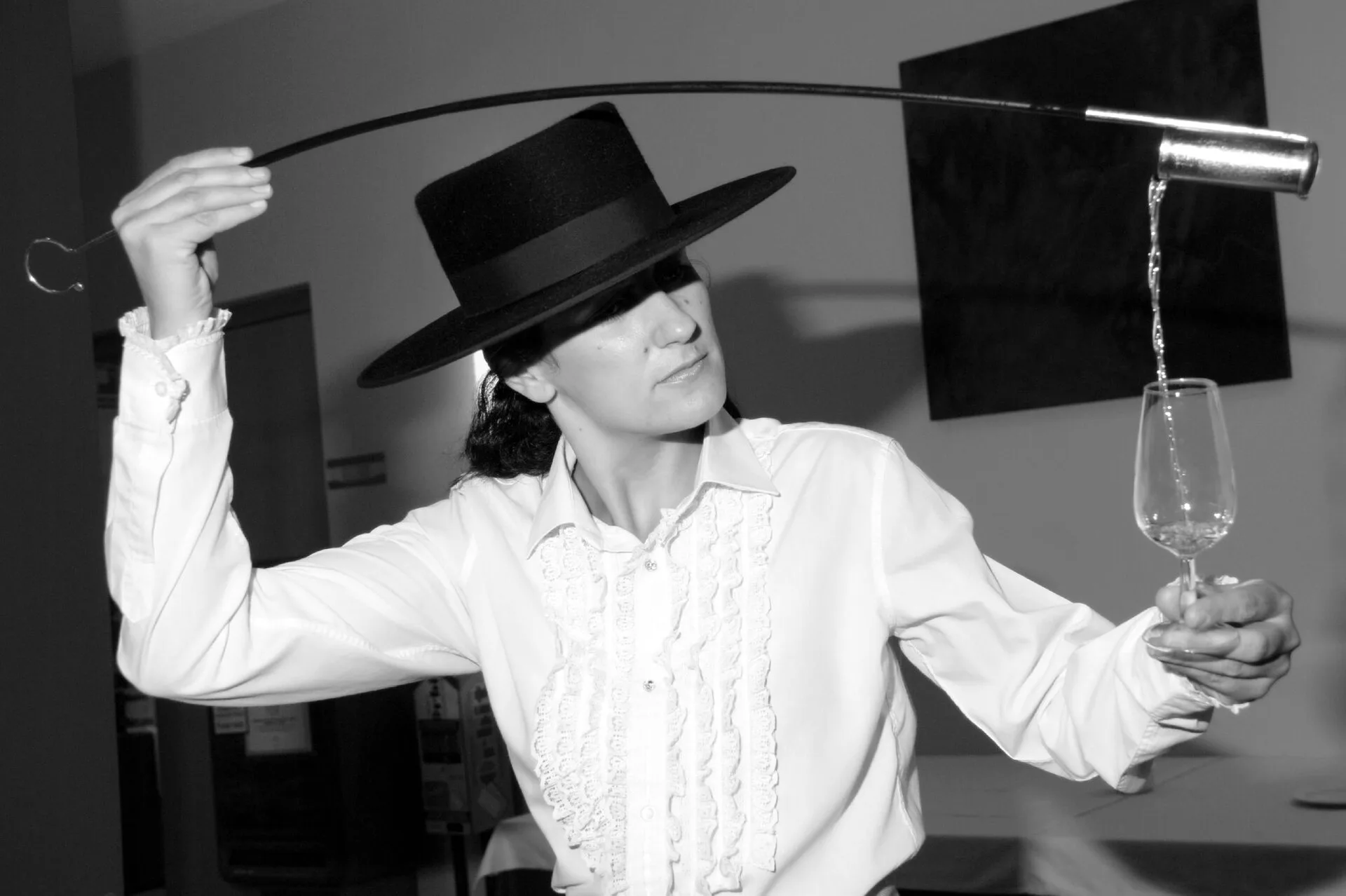
Drawing a sample from the cask is a trade of its own. The venenciador uses a venencia, a flexible shaft about a metre long with a 50 cc cup at one end, once silver and now stainless steel, to take wine through the bung-hole from the middle of the cask without touching the sediment or breaking the flor. The wine is poured from a height into a tasting glass, the catavino, so that it aerates. In Sanlúcar a simpler venencia is cut from a single cane, with the cup carved between two knots.
WHY SHERRY AND TAPAS GREW UP TOGETHER
The Real Academia de Gastronomía presents Andalusia as the birthplace of modern tapas. In the eighteenth century, it explains, taverns, bodegas and grocery shops in the region sold wine by the glass, and customers could sample food alongside it. In 1795 establishments selling wine by the glass were licensed to set out tables and chairs and serve cold or fried food, although stews were not allowed. The best-known tapas legend also involves sherry: King Alfonso XIII is said to have been drinking it at an Andalusian inn when a waiter covered his glass with a slice of sausage to keep out the sand, and several taverns in Cádiz and Seville claim to be the setting.
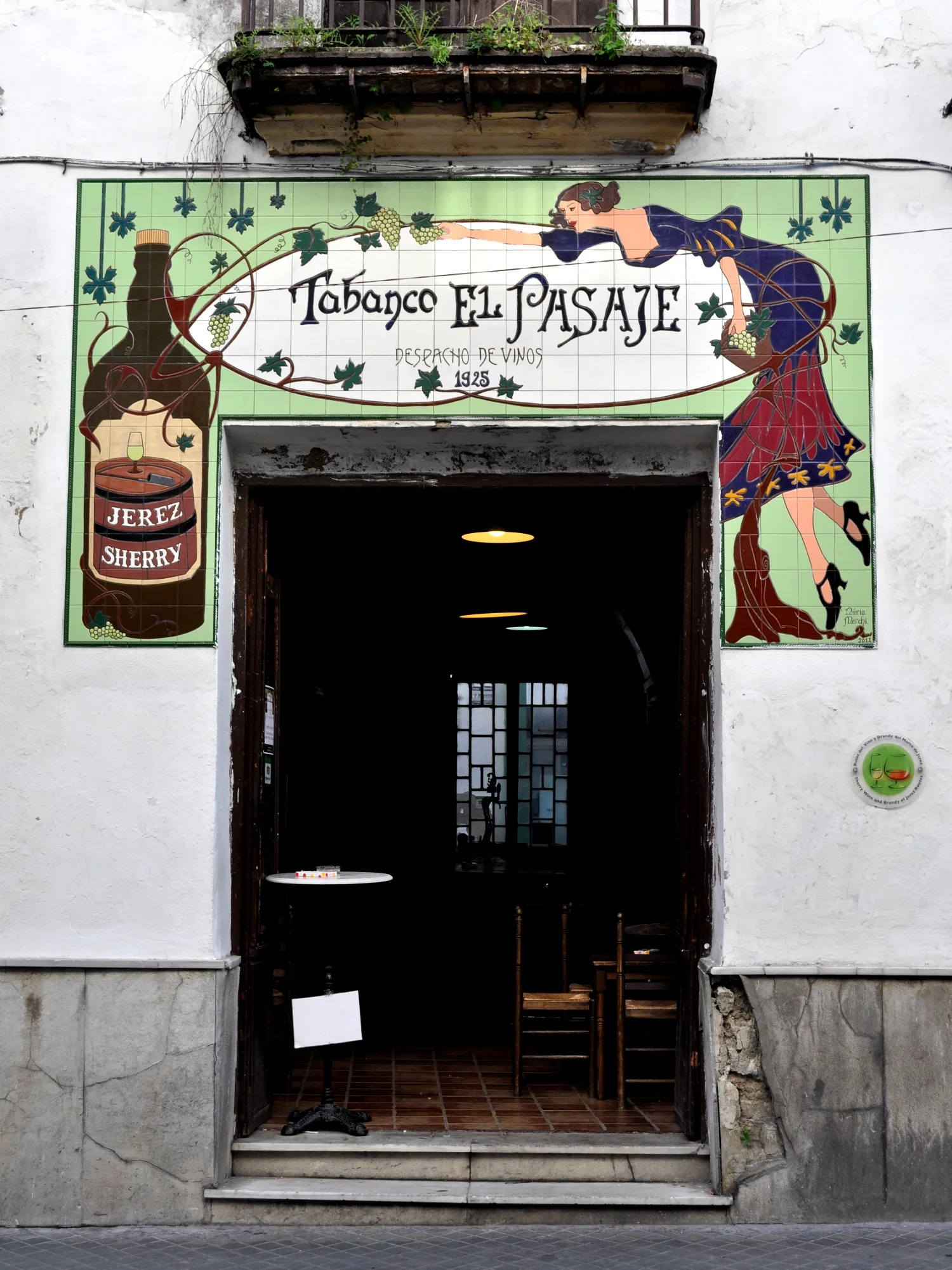
In Jerez the sherry bar has its own name. Tabancos were originally drinking places for workers from the sherry bodegas, National Geographic Traveller reported in 2025, and the traditional ones serve simple cold snacks with the wine. The same report described Tabanco El Pasaje as the oldest in the city, then 100 years old, and recorded plates of Iberian ham passed along the bar at Las Banderillas while customers drank fino. The Consejo Regulador recommends serving fino chilled at 6 to 8°C and lists Iberian cured ham, olives and nuts as tapas to pair with it, along with shellfish and salty fish such as anchovies. Manzanilla, it suggests, suits fish, seafood, salted fish and cured meats.
TAPAS AT MANDARIN ORIENTAL SHENZHEN

Tapas is a restaurant and bar at Mandarin Oriental Shenzhen, designed by Silverfox Studios and completed in 2022. Its walls are exposed brick, combined with steel-framed glazing, and a glass-fronted wine display is set into the brick walls. The furnishings include red leather banquettes, framed photographs, suspended black metal shelving and a wrought-iron chandelier. The bar is a marble counter with views over the city. It is the element of the room that corresponds most directly to the format this article traces, from the eighteenth-century Andalusian shop that sold wine by the glass to the tabanco counter where fino is served with a plate of ham.
SOURCES
- Britannica Sherry
- Consejo Regulador Jerez-Xérès-Sherry History of Sherry
- Consejo Regulador Jerez-Xérès-Sherry The Sherry Wine Region
- Consejo Regulador Jerez-Xérès-Sherry Ageing
- Consejo Regulador Jerez-Xérès-Sherry Fino
- Consejo Regulador Jerez-Xérès-Sherry Manzanilla
- Consejo Regulador Jerez-Xérès-Sherry Oloroso
- Consejo Regulador Jerez-Xérès-Sherry The Venenciador
- Real Academia de Gastronomía, Google Arts & Culture The Art of Tapas
- National Geographic Traveller Where to drink in Jerez, the birthplace of Spanish sherry