FOUR INGREDIENTS, A BAKER'S BLADE AND A PLACE ON UNESCO'S LIST
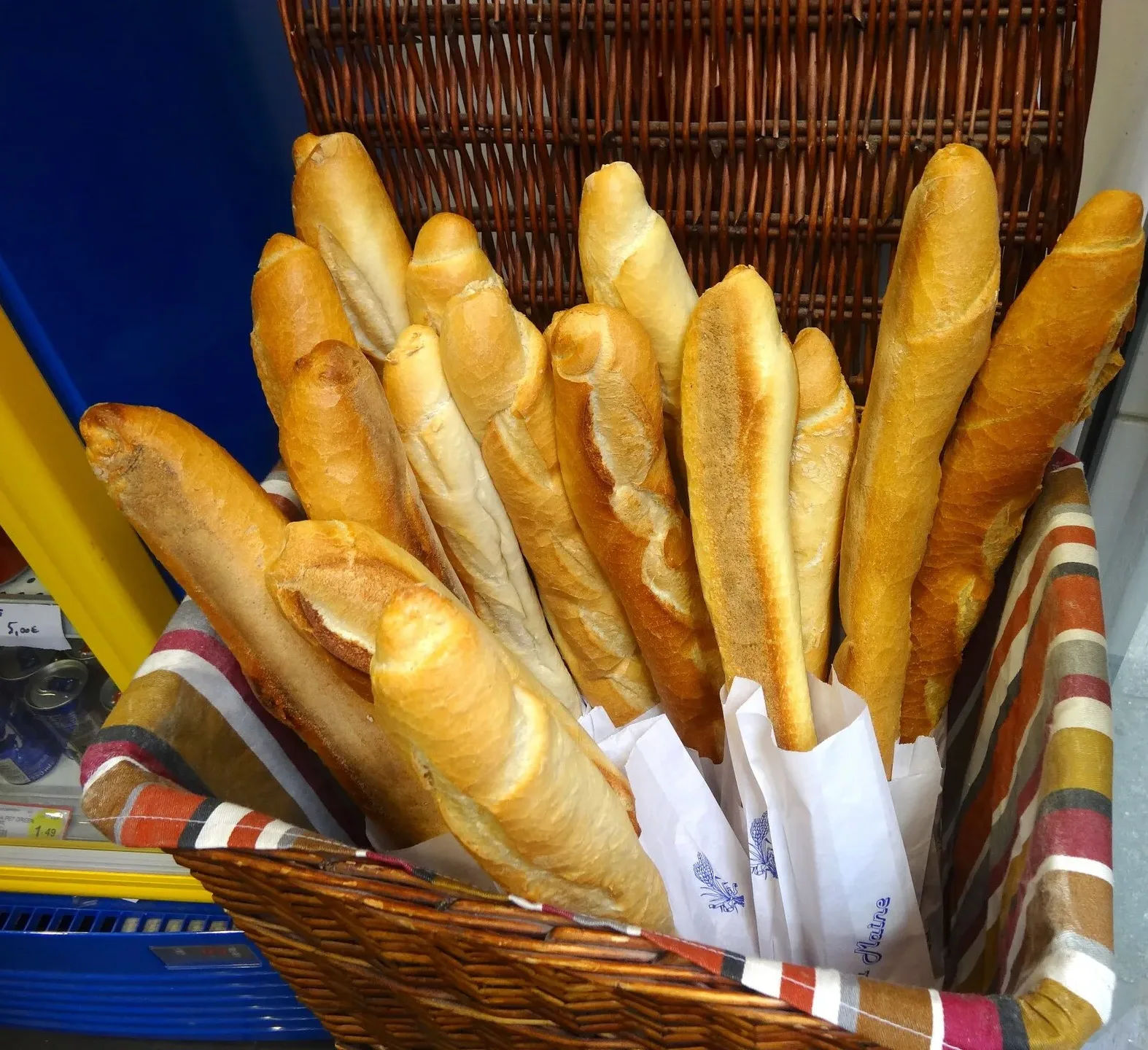
The baguette is a long, thin, crusty loaf of French bread that Britannica describes as a symbol of French cuisine and a point of cultural pride. UNESCO calls it the most popular bread in France. Its traditional form uses only four ingredients: flour, water, salt, and leaven or yeast. The loaf has no documented inventor. Its lineage runs back to the long breads of 17th-century France, its name became official in 1920, and a 1993 decree defined the pain de tradition française. On 30 November 2022 the artisanal know-how and culture of baguette bread was inscribed on UNESCO's Representative List of the Intangible Cultural Heritage of Humanity, after a candidacy led by France's national bakers' confederation.
WHAT IS A BAGUETTE?
Britannica gives the typical baguette as about 250 grams in weight, roughly 70 centimetres long and 5 to 6 centimetres in diameter. The word itself means "little rod", "wand" or "baton". French law limits the components of the traditional loaf to yeast, white flour, water and salt, while elsewhere the dough may include whole wheat or rye flour. Britannica puts the number made and eaten each day around the world in the tens of millions. In France the loaf is split for the jambon-beurre, a ham and butter sandwich, or served with pâté. In Vietnam it is the base of the banh mi sandwich, and in Algeria it is served with tajines.
UNESCO's description of the element sets out what distinguishes the bread: a crisp crust and a chewy texture, produced by bakers from the same basic ingredients. Because the loaves are long, bakeries display them on racks suited to their shape. According to the National Federation of French Bakeries, cited by AFP in 2022, more than six billion baguettes are baked in France each year. UNESCO records that the bread is bought through daily visits to the bakery and eaten at family meals, in restaurants and in work and school canteens.
WHERE DID THE BAGUETTE COME FROM?

The French Ministry of Culture traces the baguette's artisanal know-how to the long loaves of the 17th century, and the UNESCO nomination form makes the same link. Other accounts, reported by AFP, place long loaves as common in the 18th century. Britannica states that by the middle of the 19th century a longer form of the modern baguette was common in French life, especially in Paris, and that the bread probably emerged as flour became cheaper and finer and ovens grew more powerful. Loïc Bienassis of the European Institute of Food History and Cultures, who helped prepare the UNESCO dossier, told AFP that the baguette was once a luxury item, while workers ate sturdier rustic breads.
The figure most often linked to the baguette is August Zang, whom AFP describes as an Austrian baker and Britannica as an Austrian entrepreneur. AFP reports that some credit his steam ovens of the 1830s with the bread's development, and an AP report credits the Vienna-born baker with inventing the baguette in 1839 and introducing the steam oven to France. Britannica is more cautious: it notes that Zang helped introduce the croissant to France and is sometimes credited with the baguette, but that evidence for the claim is lacking.
Several popular stories offer other origins. In one, told by both Britannica and AFP, Napoleon ordered bread made long and thin so that it would fit in the pockets of his soldiers' uniforms. Another, reported by AFP, links the baguette to the building of the Paris Métro in the late 19th century, because a long loaf was easy to share. Britannica concludes that most of the origin stories told about the baguette lack real historical basis, but that they reflect the bread's place as a symbol of French culture.
WHEN DID THE BAGUETTE GET ITS NAME?
According to Britannica, the term "baguette" was not used officially for the bread until 1920. AFP reports that a law of that year made the name official and set a minimum weight of 80 grams and a maximum length of 40 centimetres. Britannica and the AP also link the loaf's shape to a rule on working hours. Britannica records that a 1920s law barred bakers from working between 10pm and 4am, and suggests this may have led them to make longer, narrower loaves. The AP gives a similar explanation: a law barring bakers from working before 4am helped make the baguette popular, since a thin loaf could be baked quickly for breakfast.
The Ministry of Culture describes the baguette's consumption as becoming widespread during the 20th century. Bienassis told AFP that the countryside adopted the baguette in the 1960s and 1970s. The number of bakeries making it has since fallen. According to the UNESCO nomination form, France had 55,000 artisanal bakeries in 1970, about one for every 790 inhabitants, and around 35,000 at the time of the nomination, about one for every 2,000, a loss of about 400 a year, mostly in rural communes. AFP lists the pressures behind the decline: industrial bakeries, out-of-town supermarkets in rural areas, and city customers turning to sourdough or swapping the ham baguette for a burger.
WHAT IS A BAGUETTE DE TRADITION?

The legal answer came with Decree no. 93-1074 of 13 September 1993, which the UNESCO nomination form cites as the text that sets the names pain de tradition française, pain traditionnel français and pain traditionnel de France, or a combination of these terms. The loaf made under this name is known as the baguette de tradition, and it is the subject of the Ville de Paris's Grand Prix de la baguette de tradition française, whose winner becomes the official supplier of baguette de tradition to the Élysée Palace for a year.
A second law protected the word for the craftsman. The Confédération Nationale de la Boulangerie-Pâtisserie Française states that a law of 25 May 1998, passed unanimously at the profession's request, added articles to the Code de la consommation on the use of the title. Under it, businesses that do not themselves knead the dough, ferment it, shape it and bake the bread at the point of sale may not use the name boulanger or the shop sign boulangerie. The same rules state that the dough and the bread may not be frozen at any stage of production or sale.
HOW IS A BAGUETTE MADE?

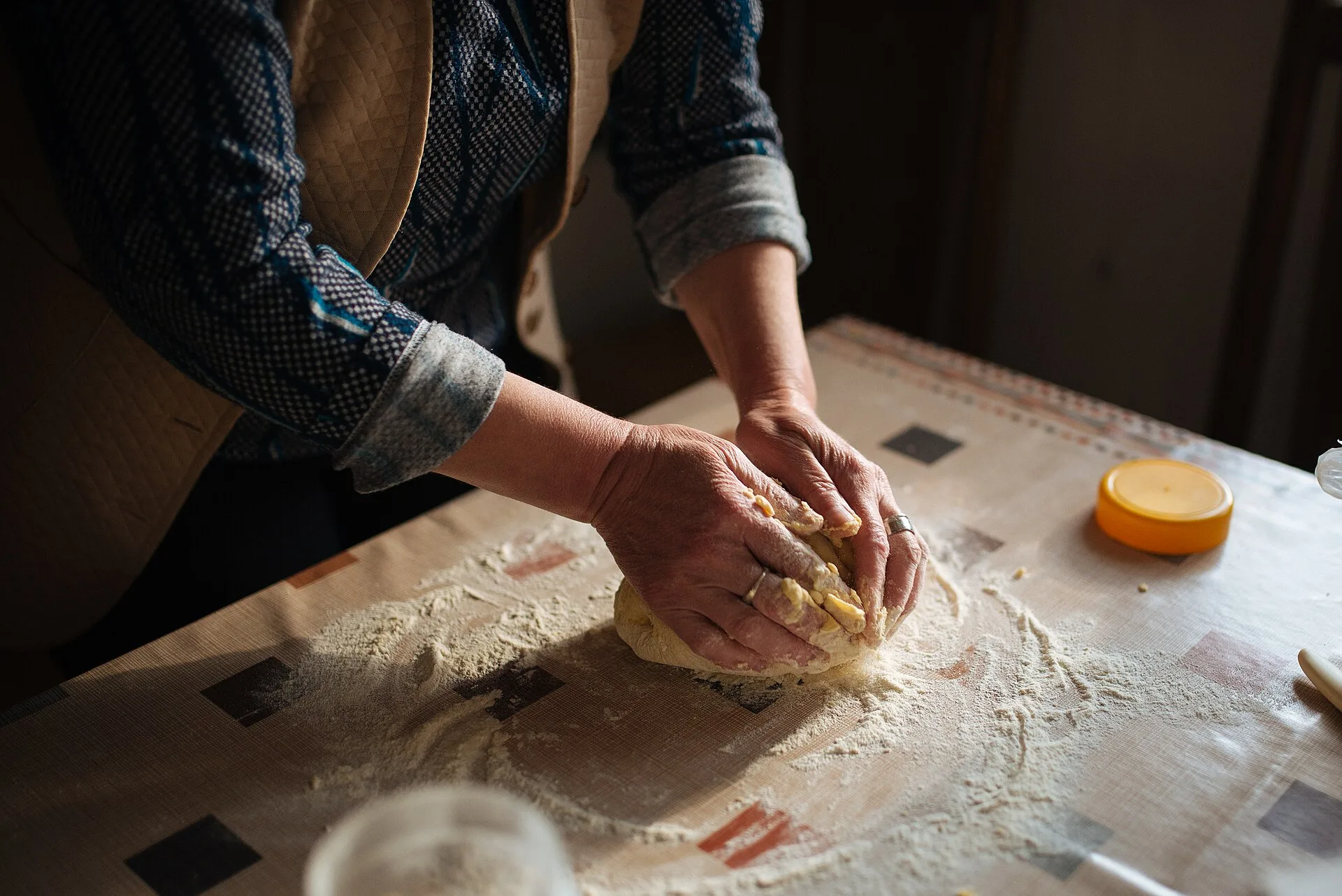
UNESCO lists the stages of the traditional process in order: weighing and mixing the ingredients, kneading, a first fermentation, dividing the dough, letting it relax, shaping it by hand, a second fermentation, scoring and baking. The baker whisks water and yeast together, adds the flour and then the salt, and kneads until the dough is smooth, in Britannica's account. The dough often rises in cloth-lined baskets that stop it from spreading. Once it has doubled in size it is divided and shaped by folding and rolling. UNESCO allows for leaven, yeast or both: leaven, the starter at the centre of sourdough bread history, is one of the four ingredients named in the description of the element.
Scoring is the step most closely tied to the individual baker. UNESCO describes shallow cuts made in the dough just before baking that serve as the baker's signature, and the nomination form uses the same phrase, signature du boulanger, for the scarification and also uses the bakers' technical term grigne. Britannica explains the practical purpose: the blade cuts help the loaf bake more evenly, and the bread goes into a hot oven until the crust is golden and crisp. Because baguettes are baked in small batches through the day, UNESCO notes, the results vary with the temperature and humidity of each day.
THE GRAND PRIX DE LA BAGUETTE IN PARIS

The Grand Prix de la baguette de tradition française de la Ville de Paris reached its 26th edition in 2019, organised in partnership with the Syndicat des boulangers du Grand Paris. The city's rules for that edition required each entry to measure between 55 and 70 centimetres, to weigh between 250 and 300 grams and to contain 18 grams of salt per kilogram of flour. Of the 228 baguettes submitted, the jury chose one by Fabrice Leroy of the bakery Leroy-Monti at 203 avenue Daumesnil in the 12th arrondissement. The prize carried 4,000 euros and the title of official supplier of baguette de tradition to the Élysée for one year.
The 2019 jury combined six Parisians with professionals, among them the deputy mayor for commerce and crafts, specialist journalists and the previous year's winner, Mahmoud M'Seddi of the bakery 2M at 215 boulevard Raspail in the 14th arrondissement. The baguettes were judged on five criteria: bake, taste, crumb, smell and appearance. The UNESCO nomination form lists other contests, among them the Concours national de la Meilleure Baguette de tradition française and the Coupe du monde de la Boulangerie. AFP reports that in national competitions the loaves are sliced down the middle so that judges can see the honeycomb of the crumb and check that the interior is cream in colour.
WHY DID UNESCO LIST THE BAGUETTE?
The candidacy began in 2017, when the bakers' confederation and artisan bakers set up a steering committee and a scientific committee chaired by Bruno Laurioux, and carried out an anthropological study with master's students from the Université de Tours. The baguette entered France's national inventory of intangible cultural heritage in November 2018, and in March 2021 the Ministry of Culture chose it as France's nomination, ahead of the zinc roofs of Paris and a wine festival in Arbois. The Intergovernmental Committee, meeting in Rabat, Morocco, for its 17th session, inscribed it on 30 November 2022. The same session added Japan's Furyu-odori ritual dances and Cuba's light rum masters.
The Ministry of Culture describes the inscription as recognising not only bakers but the wider chain behind the bread: millers, grain farmers, employees and apprentices. UNESCO notes that the know-how is passed on mainly through work-based training that combines school with experience in a bakery. The nomination form lists the qualifications involved, from the CAP boulanger to the brevet de maîtrise, and the Compagnons du devoir, who train through their Tour de France. The committee also asked France to avoid terms such as "authenticity" and "origin", to ensure that standard procedures do not limit bakers' creativity and to guard against over-commercialisation. UNESCO's director general, Audrey Azoulay, said the listing "celebrates a whole culture", and AP reported a plan for an artisanal baguette day called Open Bakehouse Day.
THE BAY, MANDARIN ORIENTAL JUMEIRA: A TIMBER-TOPPED BREAD AND PASTRY ISLAND

Silverfox Studios completed the interior design of The Bay at Mandarin Oriental Jumeira, Dubai, in 2019. The interior includes a marble buffet counter and white marble stations, each with its menu written on a chalkboard. Bread and pastry are given their own piece of furniture: a timber-topped island set under pendant lights. In a French bakery, as UNESCO's description of the baguette records, loaves are baked in small batches through the day and displayed on racks suited to their long shape. At The Bay, the counter for bread and pastry is the timber-topped island, while the buffet counter and the stations are marble.
The other finishes are white brick over a geometric tiled floor, green banquettes and a beamed timber ceiling, with steel-framed glazing. A marble-fronted bar faces the beach terrace and the sea. Across the room, marble is used for the buffet counter, the white stations and the front of the bar, and timber for the top of the bread and pastry island and for the beamed ceiling. The chalkboards on the marble stations carry the menus, and the pendants hang over the timber-topped bread and pastry island.
SOURCES
- UNESCO Intangible Cultural Heritage Artisanal know-how and culture of baguette bread
- UNESCO Intangible Cultural Heritage Decision of the Intergovernmental Committee: 17.COM 7.B.8
- Encyclopaedia Britannica Baguette
- Ministère de la Culture La baguette de pain inscrite au patrimoine immatériel de l'Unesco
- Confédération Nationale de la Boulangerie-Pâtisserie Française UNESCO nomination form ICH-02: les savoir-faire artisanaux et la culture de la baguette de pain
- Confédération Nationale de la Boulangerie-Pâtisserie Française Les savoir-faire artisanaux et la culture de la baguette de pain à l'UNESCO
- Confédération Nationale de la Boulangerie-Pâtisserie Française Appellations
- South China Morning Post (AFP) French baguettes get Unesco heritage status
- Irish Examiner (AP) Crumbs! UN puts French baguette on cultural heritage list
- Ville de Paris La meilleure baguette de Paris 2019 se trouve dans le 12e arrondissement