SPAIN'S OLDEST DESIGNATION OF ORIGIN ON BOTH BANKS OF THE EBRO

The Rioja wine region lies in northern Spain on both banks of the River Ebro, with more than 66,000 hectares of vineyard in 144 municipalities, 118 of them in La Rioja and most of the rest in the Basque Country and Navarre. Its designation of origin was created by royal decree on 6 June 1925 and is described by its regulatory council as the oldest in Spain. In 1991 Rioja became the first wine in Spain to be awarded the higher status of Qualified Designation of Origin, or DOCa (Denominación de Origen Calificada). The council recognises 14 grape varieties, led by Tempranillo, and defines the ageing categories Crianza, Reserva and Gran Reserva. The region's barrel-aged style took shape in the 19th century, when Bordeaux methods, the railway and the phylloxera crisis in France brought French buyers and investors to Rioja and made Haro the centre of its wine trade.
WHERE IS THE RIOJA WINE REGION?

The Consejo Regulador, the regulatory council of the DOCa, describes a region almost 100 kilometres long, running from Tormantos at its western limit to Alfaro in the east, and no more than 40 kilometres wide. It lies between the Sierra de Cantabria and the Sierra de la Demanda, and its land is divided into seven valleys formed by tributaries of the Ebro. Vineyards climb successive hillsides to a maximum altitude of about 900 metres. Two climates meet along this strip: an Atlantic influence in the west and a Mediterranean influence in the east.
The region is split into three zones. Rioja Alta lies in the west, Rioja Alavesa in the northern part of the province of Álava, and Rioja Oriental in the east. Rioja Oriental is the newer name for the zone formerly called Rioja Baja, or "low Rioja". Haro, Logroño, Laguardia, Elciego and Briones are among the wine towns named in Spain's 2013 submission of the Rioja vineyard landscape to UNESCO. Each zone name can appear on a label as a Vino de Zona, one of the place-based categories the council now uses alongside its ageing terms.
TEMPRANILLO, GARNACHA AND THE GRAPES OF THE RIOJA WINE REGION
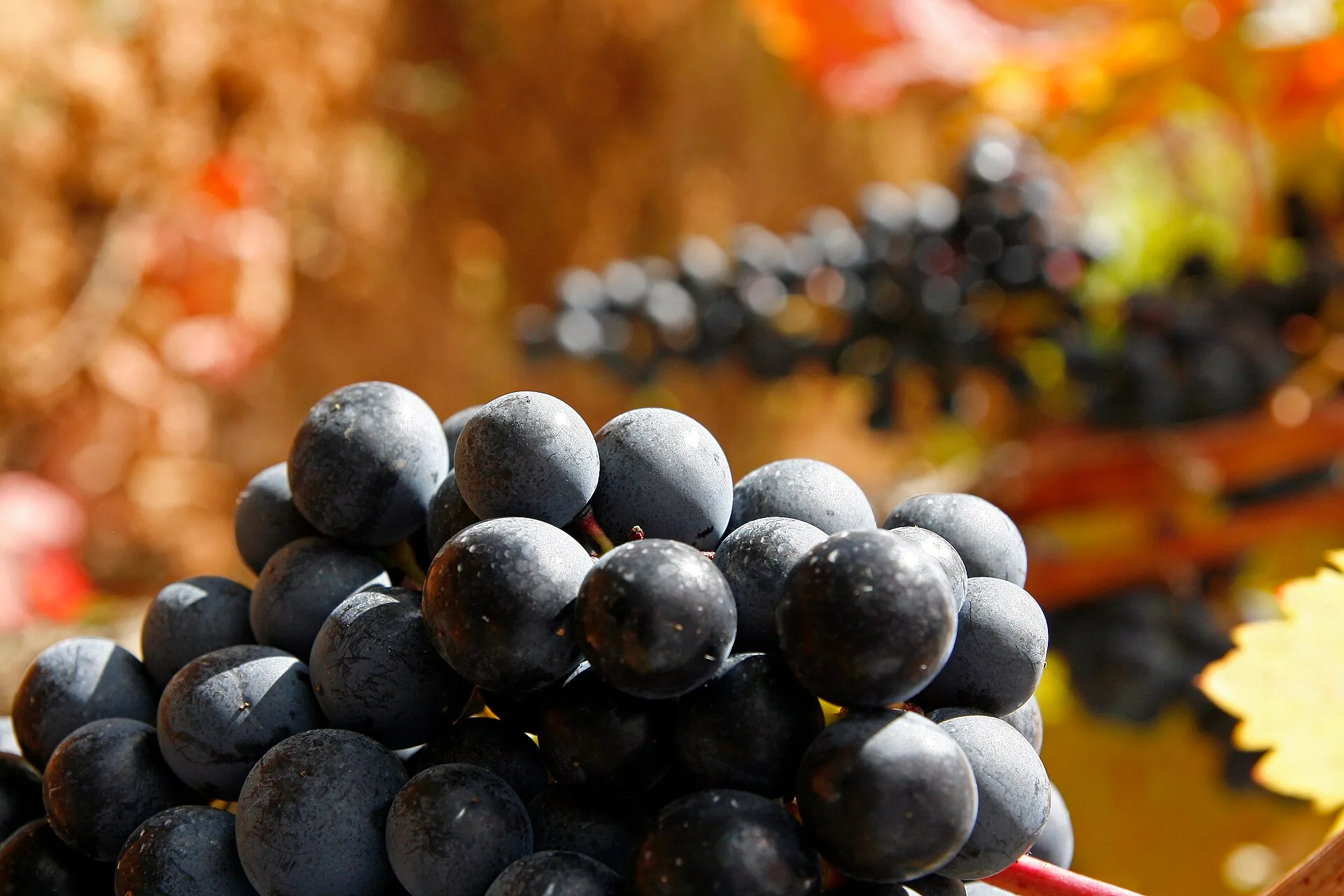
The council authorises 14 grape varieties: five red and nine white. Tempranillo, which it calls the iconic variety of the region, occupies most of the vineyard. Garnacha Tinta is valued for its freshness and versatility. Graciano is grown for its aromas, colour, acidity and intensity on the palate, and Mazuelo for its abundant tannins, high acidity and stable colour. The fifth red, Maturana Tinta, was added to the regulations in the 2000s, although the council notes it has one of the longest histories of all the region's varieties.
Viura has been the predominant white grape since the 1970s, when its cultivation was encouraged. The other whites are Garnacha Blanca, Malvasía, Tempranillo Blanco, Maturana Blanca, Turruntés, Chardonnay, Sauvignon Blanc and Verdejo. Several arrived in 2007 and 2008, a period the council's centenary history calls the "white revolution", when the Control Board approved six new varieties; the white additions included Maturana Blanca, Tempranillo Blanco, Chardonnay, Sauvignon Blanc and Verdejo. White Rioja sold 27.1 million litres in 2024, out of more than 240 million litres of Rioja sold that year.
WHERE DID RIOJA WINE COME FROM?

The council's centenary dossier cites cave wine presses and cellars more than 2,000 years old. By the 10th century, the cartularies of the monasteries of San Millán, Valvanera, Nájera and Albelda show vineyards spread across the region, and in the 13th century the monk Gonzalo de Berceo praised the wines of La Rioja in his verse. In 1560 producers agreed to place a common label on their bottles, and a document of 1650 is the first dated record of measures to protect the quality and origin of Rioja wine.
Bordeaux methods arrived in two attempts, according to the Master of Wine Pedro Ballesteros Torres writing in Decanter. In 1790 the priest Manuel Quintano brought Bordeaux winemaking knowledge to Rioja, but other producers and local governments opposed it and the change was abandoned. In the mid-19th century the Marqués de Riscal and the Marqués de Murrieta introduced Bordeaux science and technology to the region, including destemming, extended maceration and controlled ageing in oak barrels, and aimed their wines at luxury markets. Some of the century-old wines he describes were aged in American oak. Riscal kept its wines in oak for three to four years, while Murrieta, Paternina and others aged theirs for decades.
PHYLLOXERA, THE RAILWAY AND HARO'S STATION DISTRICT
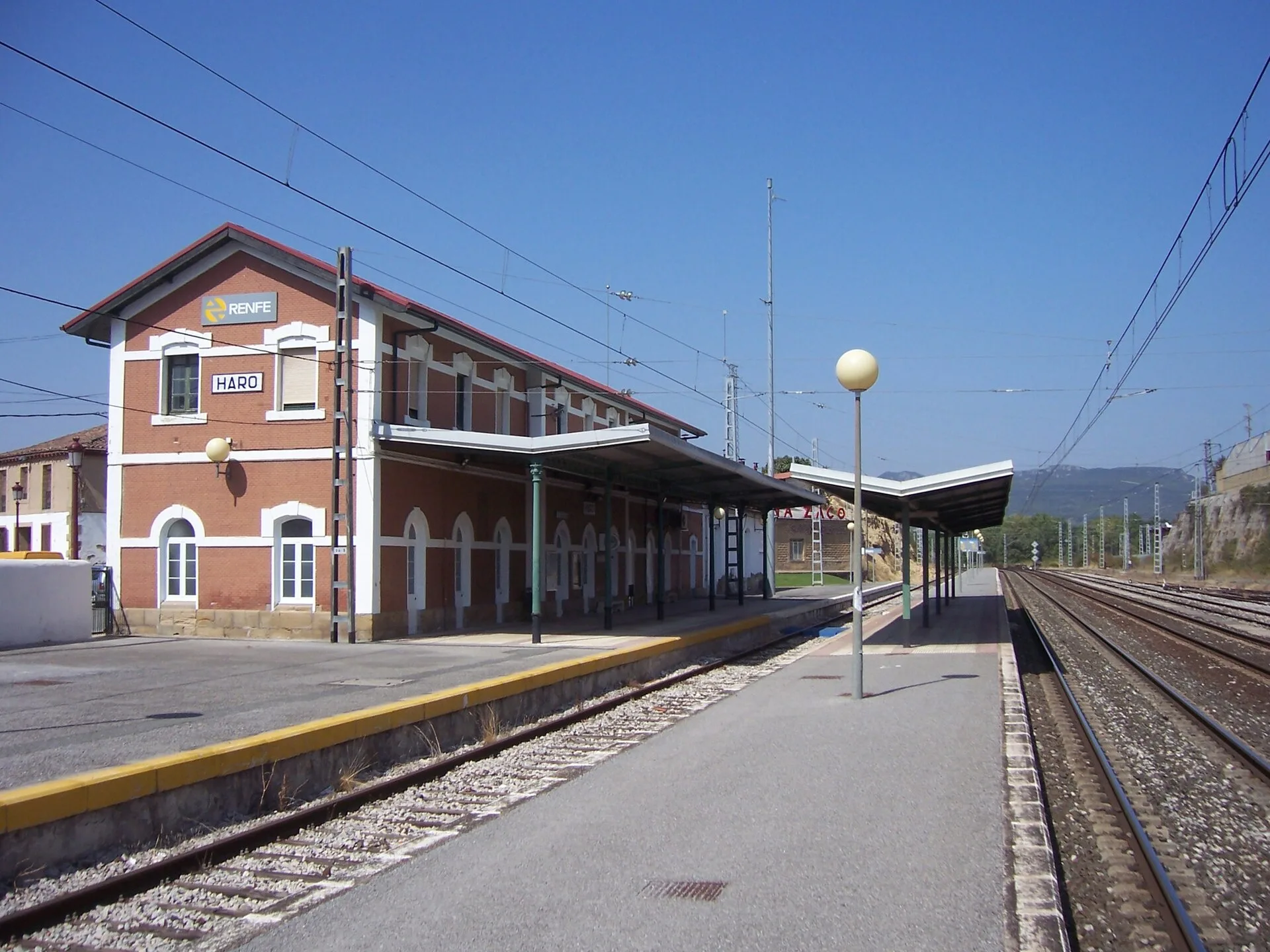
The phylloxera plague appeared in France, Portugal and Italy in 1867, according to the council, and demand for Rioja wine rose. Over the next 20 years the region's vineyard grew to 55,174 hectares, producing about 129 million litres. French winemakers and importers came to buy bottled and bulk wine and brought their barrel-ageing methods with them. The council credits them with moving Rioja from wines of ordinary quality to fine wines specialised in barrel ageing. The Spanish trade agency ICEX describes the years from 1877 to 1892 as a golden age for the wine trade in Haro.
The railway made Haro the centre of that trade. ICEX dates the opening of the Tudela to Bilbao line through the town to 1863, and warehouses built near its station to hold goods for export became the Barrio de la Estación. French importers put up the district's first wine building in 1877, helped by Rafael López de Heredia, who founded the first of its Spanish wineries. CVNE followed in 1879, Gómez Cruzado in 1886, La Rioja Alta in 1890 and Bodegas Bilbaínas in 1901. Muga, founded elsewhere in Haro in 1932, moved to the district in 1970, and RODA became the last of its seven wineries in 1987. Cooperages opened in Haro to supply barrels, the Haro Oenological Station was created in 1892, and in 1907 sixteen wineries founded the first Wine Exporters' Union of La Rioja in the town.
HOW THE RIOJA WINE REGION BECAME SPAIN'S FIRST DOCA
In 1924 a group of Rioja producers asked for a guarantee seal of their own to distinguish their wine from others. The royal decree of 6 June 1925 created the Rioja Designation of Origin and defined its territory, and 1926 counts as year one of its Control Board. Further guarantees followed. In 1974 the council introduced a seal certifying wines aged in barrel, in 1980 it began certifying vintage and category, and in 1985 it started a systematic control of batches of under 100,000 litres. In 2000 a holographic band was added to the guarantee seals to prove authenticity.
The DOCa awarded in 1991 was the first Qualified Designation of Origin in Spain, and the council states that only two Spanish regions meet its standards. To qualify, a region must have held a designation of origin for at least ten years. Its cellars may use only grapes from DOCa vineyards, must be dedicated exclusively to Rioja wine, and must bottle only in Rioja cellars, and wines are tested by analysis and tasting in homogeneous batches of limited volume. The council counts about 13,000 winegrowers and nearly 600 wineries today, and in 2024 the DOCa sold 328,461,466 bottles worldwide; Rioja is present in 136 countries.
CRIANZA, RESERVA AND GRAN RESERVA: HOW RIOJA WINE IS AGED
The ageing category on a Rioja label is set by the council's classification. Generic wines are young wines of one to two years that keep their freshness and fruit. A red Crianza must age for at least two years, of which at least one year is spent in 225-litre oak barrels. A red Reserva must age for three years, with at least one year in oak and six months in bottle. A red Gran Reserva requires five years, with two years in oak and two in bottle.
White and rosé wines follow shorter rules. A white or rosé Crianza needs six months in barrel; a Reserva needs two years of ageing, including six months in barrel; and a Gran Reserva needs four years, including at least six months in oak. Since 2017 the region has also been permitted to make Espumosos de Calidad, traditional-method sparkling wines. The generic sparkling category needs at least 15 months in bottle, Reserva needs 24 months, and Gran Añada at least 36 months, and a sparkling rosé must include at least 25 per cent red grapes.
In 2017 the council introduced the Viñedo Singular and strengthened its zone and municipal categories, classifying wine by place rather than time. A Viñedo Singular, or single-vineyard wine, must come from hand-picked vines at least 35 years old with relatively low yields and pass a tasting test, and a winery buying the grapes must have bought from that grower for at least ten years. A Vino de Municipio carries the name of one of the 144 Rioja municipalities, provided the winery is located in that village, and a Vino de Zona names Rioja Alta, Rioja Alavesa or Rioja Oriental.
THE VINE AND WINE LANDSCAPE OF RIOJA AND RIOJA ALAVESA

On 29 January 2013 Spain's Ministry of Education, Culture and Sport added the "La Rioja and Rioja Alavesa Vine and Wine Cultural Landscape" to UNESCO's Tentative List. The proposed property covers 603 square kilometres with a buffer zone of 554 square kilometres, lies within the Rioja designation and runs along both sides of the Ebro, whose meanders and tributaries shape the landscape. The towns named in the description include Briones, Haro, Laguardia, Logroño, Nájera and Elciego, and the text notes terracing on steep slopes, historic town centres and abandoned medieval villages.
The UNESCO text lists the structures built for wine. More than 1,700 vineyard shelters, known locally as casillas, chozas, chozos or guardaviñas, have been catalogued in Rioja Alavesa. Some towns have more than 300 calados, cellars dug into the ground, with ventilation chimneys called tuferas, and San Asensio, Ollauri, Elciego and Samaniego have whole cellar neighbourhoods. Four types of press cut into the rock, each with a collecting tank called a torco, have been identified, mostly on the left bank of the Ebro. The council counts 204 wineries open to visitors and nearly 900,000 wine tourists in 2023.
TAPAS AT MANDARIN ORIENTAL SHENZHEN

Tapas is a restaurant and bar at Mandarin Oriental Shenzhen, designed by Silverfox Studios and completed in 2022. The interior design combines exposed brick walls with steel-framed glazing, and wine is displayed in a glass-fronted case set into the brick walls. In Rioja, a red Crianza spends at least a year in 225-litre oak barrels, and towns such as San Asensio, Ollauri, Elciego and Samaniego keep whole neighbourhoods of calados dug into the ground. At Tapas, the bottles are held behind glass within the brickwork.
The room is furnished with red leather banquettes and framed photographs. Suspended black metal shelving is hung above the room, and a wrought-iron chandelier provides the central light fitting. The bar is a marble counter with views over the city of Shenzhen. Haro's Barrio de la Estación grew from warehouses built near the railway station to store goods for export, and its seven wineries were founded in or moved to the district between 1877 and 1987. Cooperages were established in Haro after French oak-ageing methods arrived.
SOURCES
- Consejo Regulador DOCa Rioja The Qualified Designation
- Consejo Regulador DOCa Rioja History
- Consejo Regulador DOCa Rioja Centenary dossier
- Consejo Regulador DOCa Rioja Production areas
- Consejo Regulador DOCa Rioja Grape varieties
- Consejo Regulador DOCa Rioja Classification
- ICEX Foods and Wines from Spain Haro's Station District
- Decanter Built to last: the wonders of Rioja's old wines
- JancisRobinson.com Rioja embraces geography
- UNESCO World Heritage Centre La Rioja and Rioja Alavesa Vine and Wine Cultural Landscape