HOW RESTAURANTS HAVE STORED AND DISPLAYED WINE, FROM CHAMPAGNE'S CHALK CELLARS TO GLASS WINE WALLS
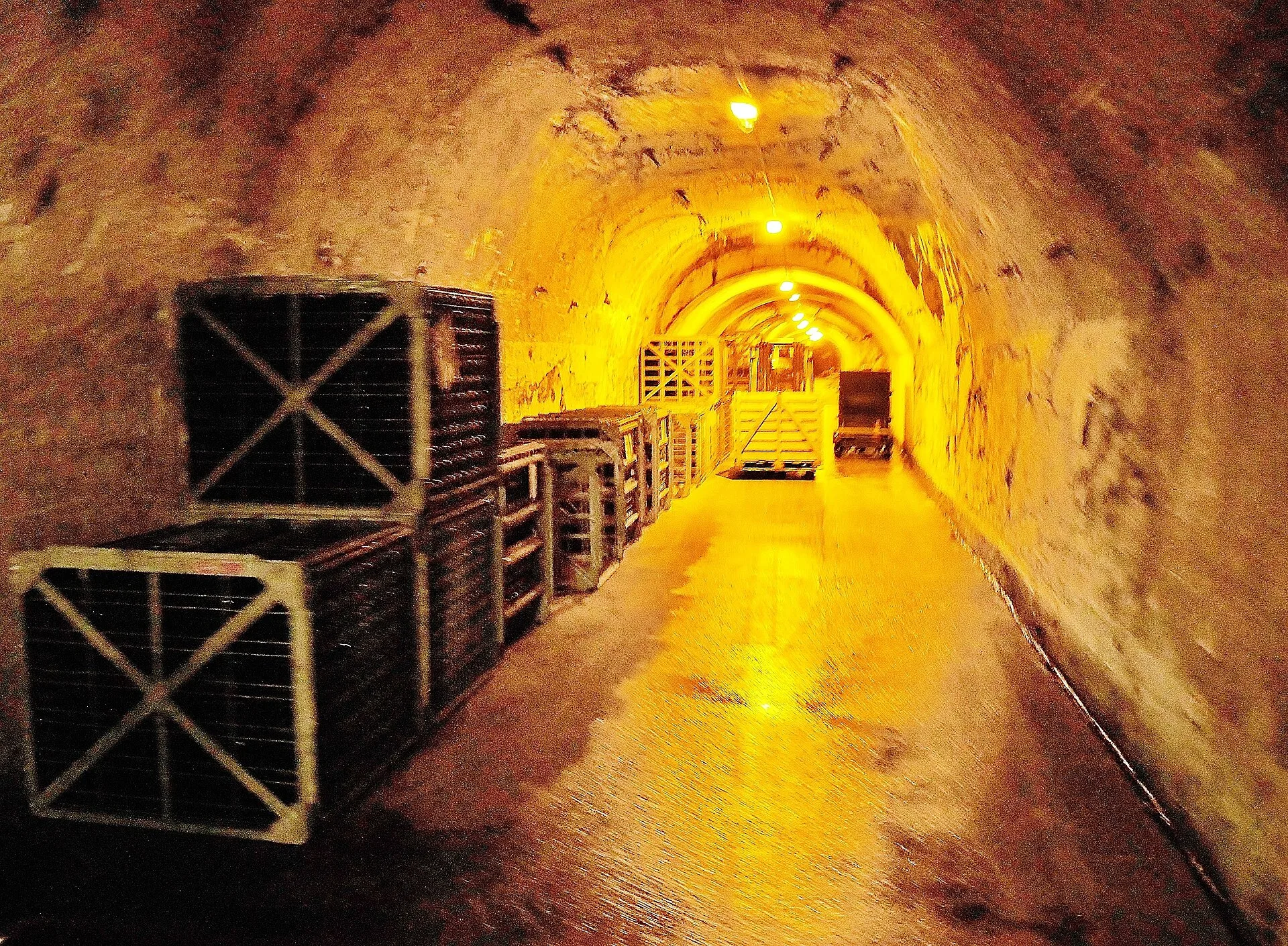
Wine walls and wine towers place a restaurant's bottles behind glass in the dining room, while traditional cellars keep wine below ground at a constant temperature, high humidity and little or no light. Purdue University's extension service puts the long-term storage range at 10 to 16°C. In Champagne, the method of secondary fermentation in the bottle required a network of cellars cut into chalk; in Bordeaux, barrels age in buildings called chais; and in 1850 to 1851, Household Words reported vaults under the London Docks with room for 60,000 pipes of wine. The Master Sommelier examination dates from 1969, Wine Spectator's restaurant wine list awards from 1981, and in 1999 Aureole in Las Vegas opened with a four-storey wine tower.
HOW SHOULD WINE BE STORED? TEMPERATURE, BOTTLE POSITION AND LIGHT
Christian Butzke, professor of oenology at Purdue University, set out commercial standards in the Purdue Extension leaflet Wine Storage Guidelines (FS-58-W), published in March 2010. For long-term storage he gives 10 to 16°C (50 to 60°F), held constant to within 1 to 1.5°C. Short periods outside that range are tolerated: 24°C or below for one to four weeks, and 29°C or below for spikes of 30 minutes or less. Wine should never reach 30°C. At the cold end, spikes down to 0°C are tolerated, while minus 5°C should never be reached. Butzke notes that day and night temperature swings during commercial shipping are common but should be avoided, and that wine should be kept without excessive ultraviolet light.
Bottle position depends on the closure. Butzke advises that bottles sealed with natural bark or synthetic corks be stored sideways or upside down, to minimise gas exchange between the outside atmosphere and the wine and so avoid accelerated oxidation, and that cases be marked to show how the bottles inside are lying. In October 2000 the Las Vegas Sun reported that Andre Rochat stored the red wines of Andre's French Restaurant, in downtown Las Vegas, in a downstairs cellar kept at 70 per cent humidity and controlled for temperature. The paper also noted the restaurant's selection of large format bottles and vintage Bordeaux.
Light causes a separate fault. A 2021 review in Trends in Food Science & Technology by Daniela Fracassetti and colleagues at the Università degli Studi di Milano describes the light-struck taste, a sulphide-like aroma of onion and cooked cabbage that affects white and rosé wines, both still and sparkling. Riboflavin (vitamin B2) in the wine absorbs light, particularly between 370 and 450 nm, and then degrades the amino acid methionine into methanethiol and dimethyl disulphide. The reactions can occur within minutes or days. Flint glass lets through about 90 per cent of the harmful light below 500 nm, and in a 1989 study by Dozon and Noble cited in the review, a trained panel detected a change in still wine in flint bottles after 3.4 hours of exposure.
THE CHALK CELLARS OF CHAMPAGNE
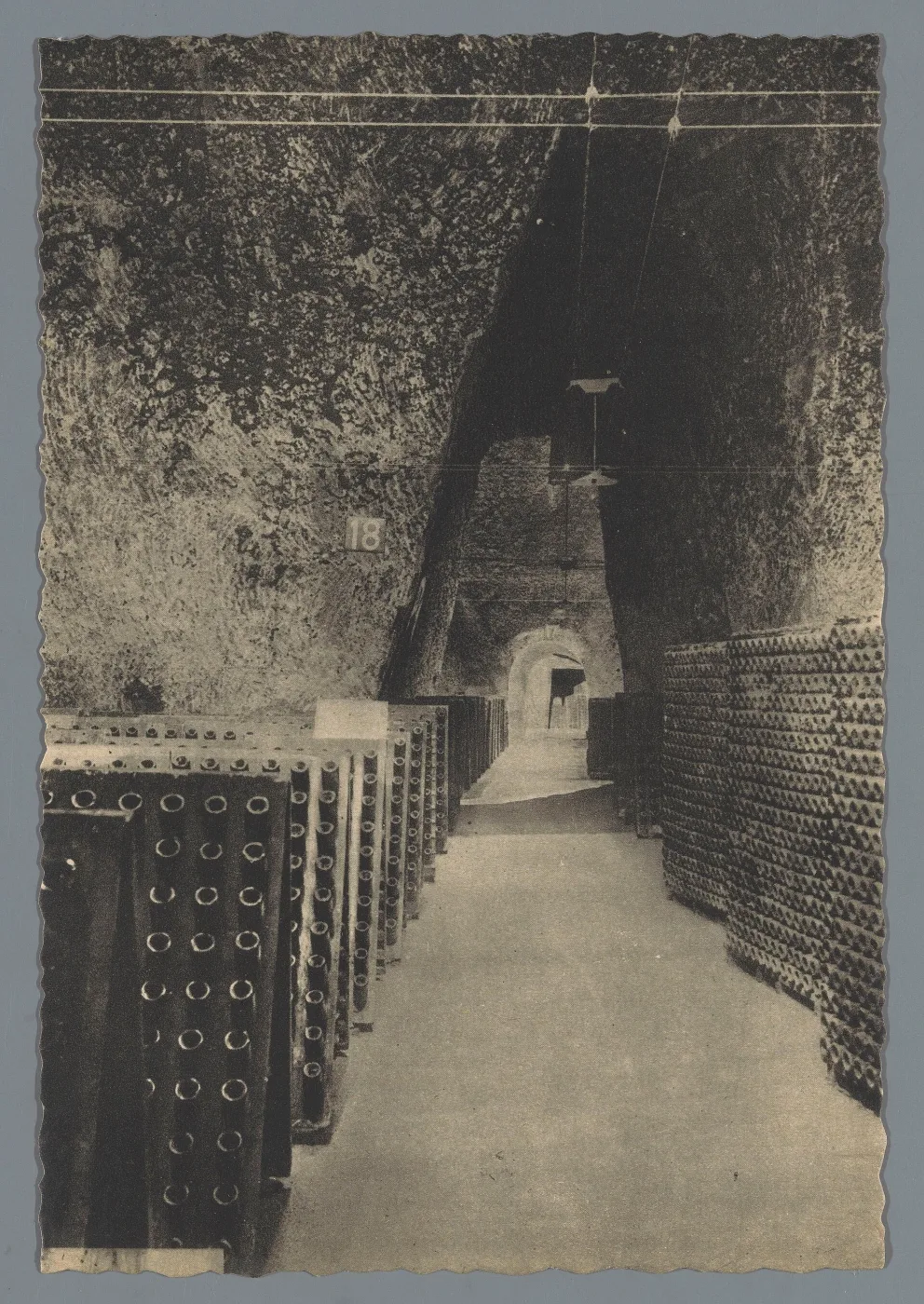
UNESCO inscribed Champagne Hillsides, Houses and Cellars on the World Heritage List in 2015. The listing describes how sparkling wine was developed from the early 17th century on the principle of secondary fermentation in the bottle, and states that this method required a vast network of cellars. The chalk beneath the region is easy to hollow out. In Reims, Champagne producers took over former Gallo-Roman and medieval chalk quarries, while in Épernay and on the hillsides new cellars were dug, creating what UNESCO calls an exceptional underground landscape.
The property has three components: the historic vineyard hillsides; Saint-Nicaise Hill in Reims, with its monumental quarry-cellars and early Champagne houses; and the Avenue de Champagne and Fort Chabrol in Épernay. UNESCO lists the production sites together with their underground cellars, and traces the system from its origins in the early 17th century to its early industrialisation in the 19th century. The chalk quarries are still used in Champagne production, and UNESCO records that the network of cellars is well preserved.
WHAT IS A CHAI? BORDEAUX'S BARREL CELLARS
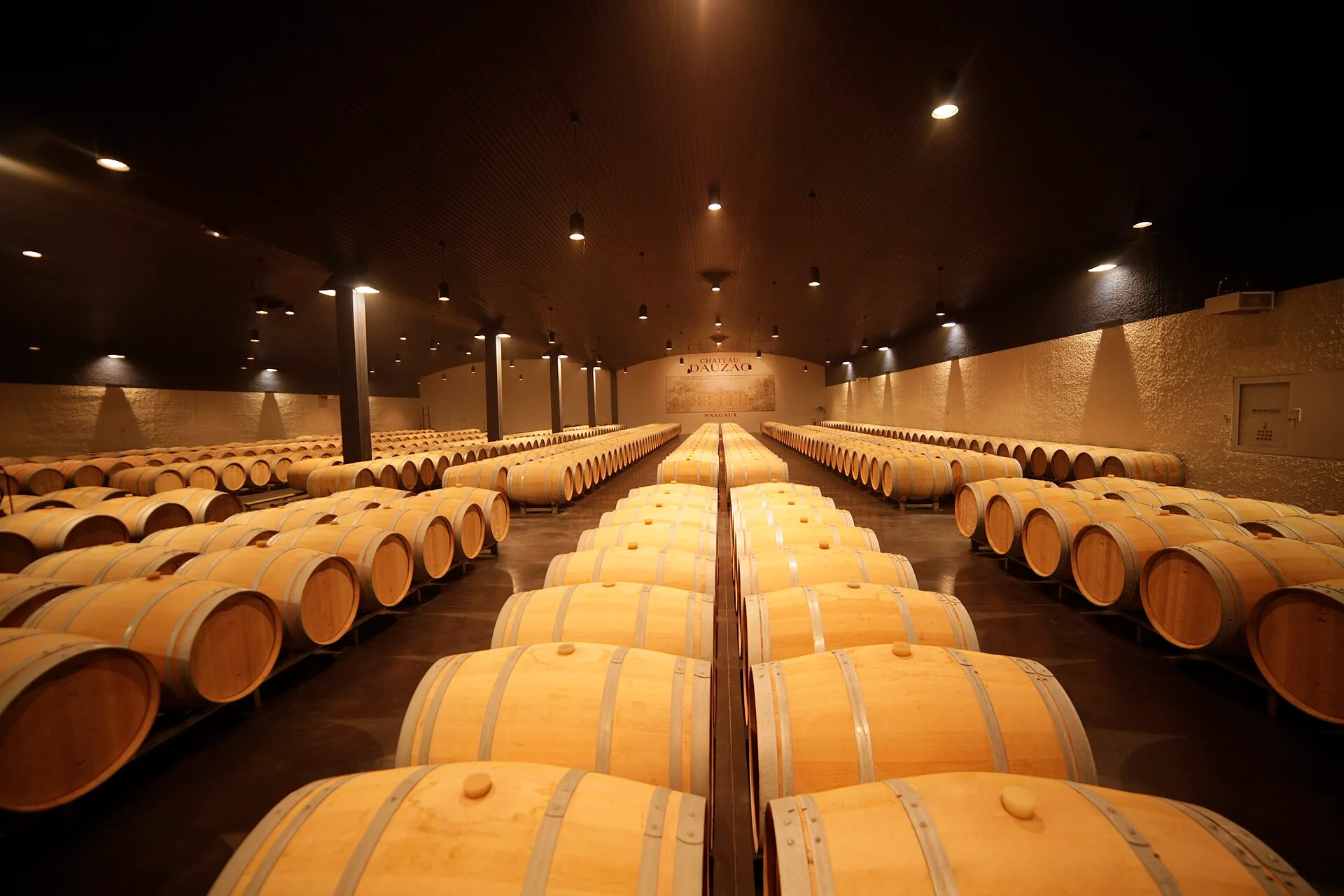
The Oxford Companion to Wine, edited by Jancis Robinson, defines a chai as a French, and especially Bordelais, term for a place where wine, and sometimes brandy, is stored, usually in barrels. A well-equipped Bordeaux château may divide the work between separate buildings: a cuverie, where fermentation takes place; a first-year chai, where the newest vintage begins its ageing; and a second-year chai, to which the wine is moved before the end of the year to free space for the next harvest. The château building itself has no direct role in making the wine. In New World wineries, the Companion notes, the equivalent space is often called the barrel hall.
Château Mouton Rothschild in Pauillac follows this sequence. Its barrels spend a year in the Grand Chai and then move to the second-year cellar, which holds the barrels of the previous vintage. The château describes its cellars as kept at a constant 12 to 15°C, with 80 to 90 per cent humidity and little or no light, which falls within the 10 to 16°C range in the Purdue guidelines. Mouton also keeps a reserve of its own wine preserved for posterity, in bottles, magnums and jeroboams, and the oldest bottle in it is from the 1859 vintage.
THE WINE VAULTS OF THE LONDON DOCKS
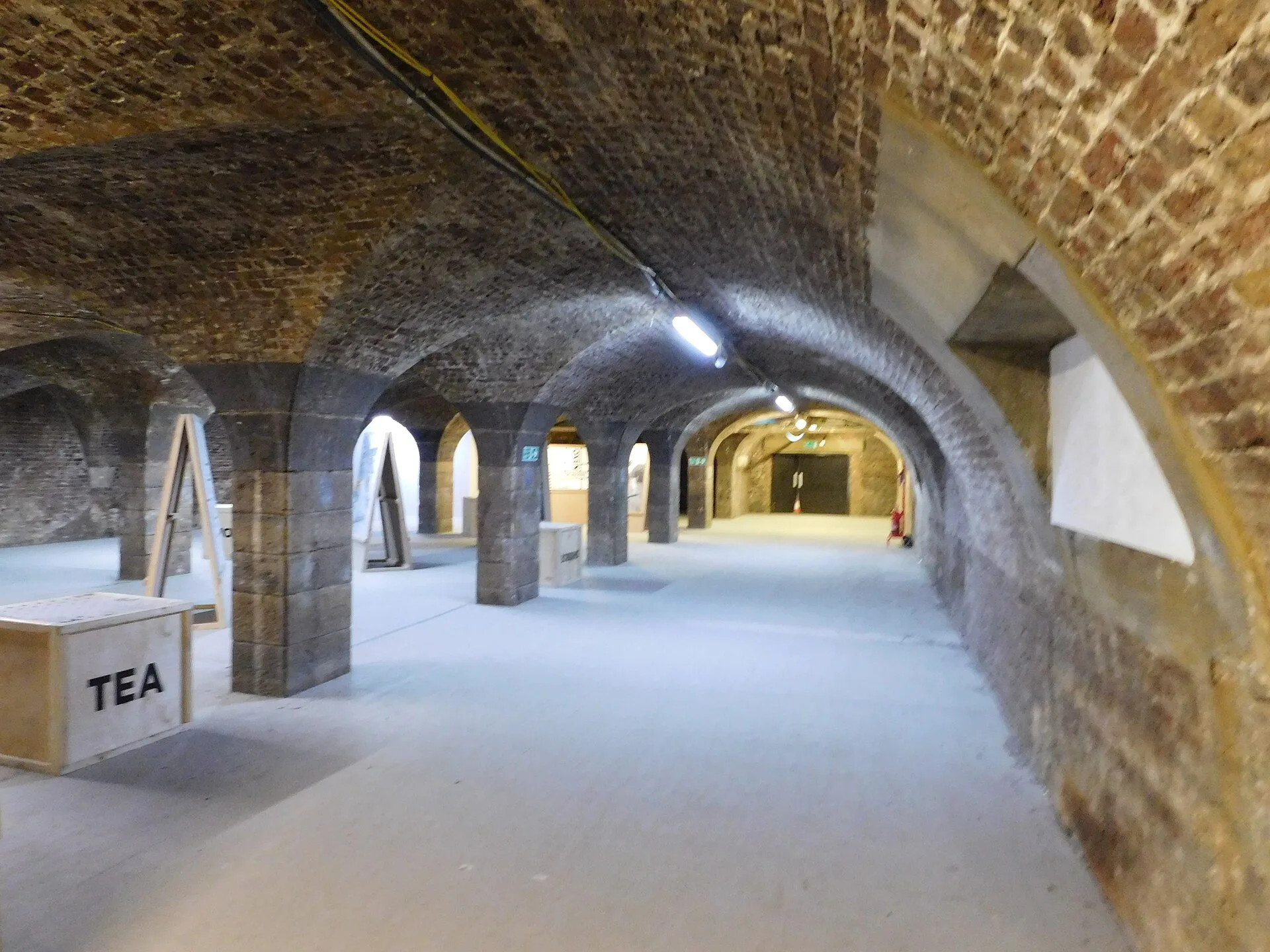
In the 19th century the London Docks held wine in cask in underground cellars. An article titled The Queen's Tobacco-Pipe, in the second volume of Charles Dickens's weekly Household Words (1850 to 1851), describes these wine vaults. One vault that had covered seven acres had been extended under Gravel Lane to upwards of twelve acres, and the depot could hold no less than sixty thousand pipes. The pipes were ranged on either side in thousands, along cellar passages the article calls small streets.
Visits to the vaults ran every day. Each visitor was given a lamp on the end of a lath about two feet long, as the cellars were only faintly lit, and anyone wishing to taste needed a tasting order. A cooper accompanied each party, bored the head of the chosen pipe and drew the wine into glasses closer to goblets in size; what was not drunk was thrown on the ground, about a hogshead a day by the writer's estimate. Black growths, some a yard or more long, hung from the roof, and the article attributes them to the fumes of the wine. Above the cellars, in the Mixing House, merchants could blend wines of one vintage in vats, the largest holding 23,250 gallons.
THE SOMMELIER AND THE COURT OF MASTER SOMMELIERS
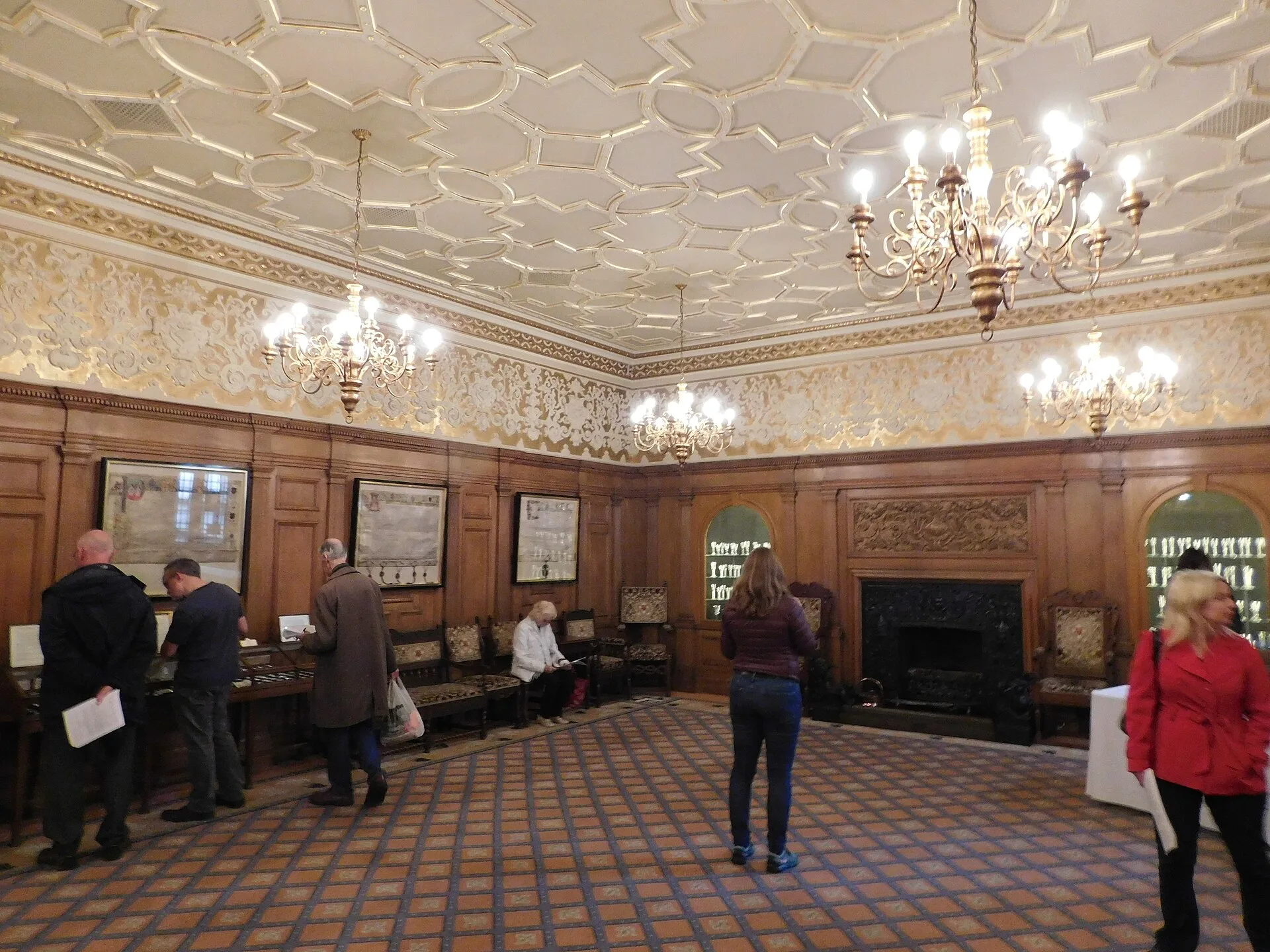
Britain's wine trade examined its own members before it examined the staff who served wine at table. According to the Court of Master Sommeliers, the Worshipful Company of Vintners and the Wine and Spirits Association gave an examination about the wine trade to 21 people in 1953, and six passed to become Masters of Wine. The Court names the Vintners Company, the Institute of Masters of Wine, the British Hotels & Restaurants Association, the Wine & Spirit Association of Great Britain and the Wholesale Tobacco Trade Association as bodies that lacked a service component and needed knowledgeable staff to sell and serve their products correctly.
In 1969 these organisations created an examination at Vintners' Hall in London, designed to encourage sommeliers to become credible professionals; it led to the Master Sommelier Diploma. Cyril Ware, Danny Lydon and George Clarke were the first to pass. The Court of Master Sommeliers was formed on the actions of Brian Julyan MS, who rallied other Master Sommeliers to establish an official organisation, and Ware became the first chairman of the new Court in 1977. By 1987 the Court of Master Sommeliers Americas had been created, holding its first examination in Monterey, California.
GLASS WINE WALLS AND TOWERS: AUREOLE IN LAS VEGAS
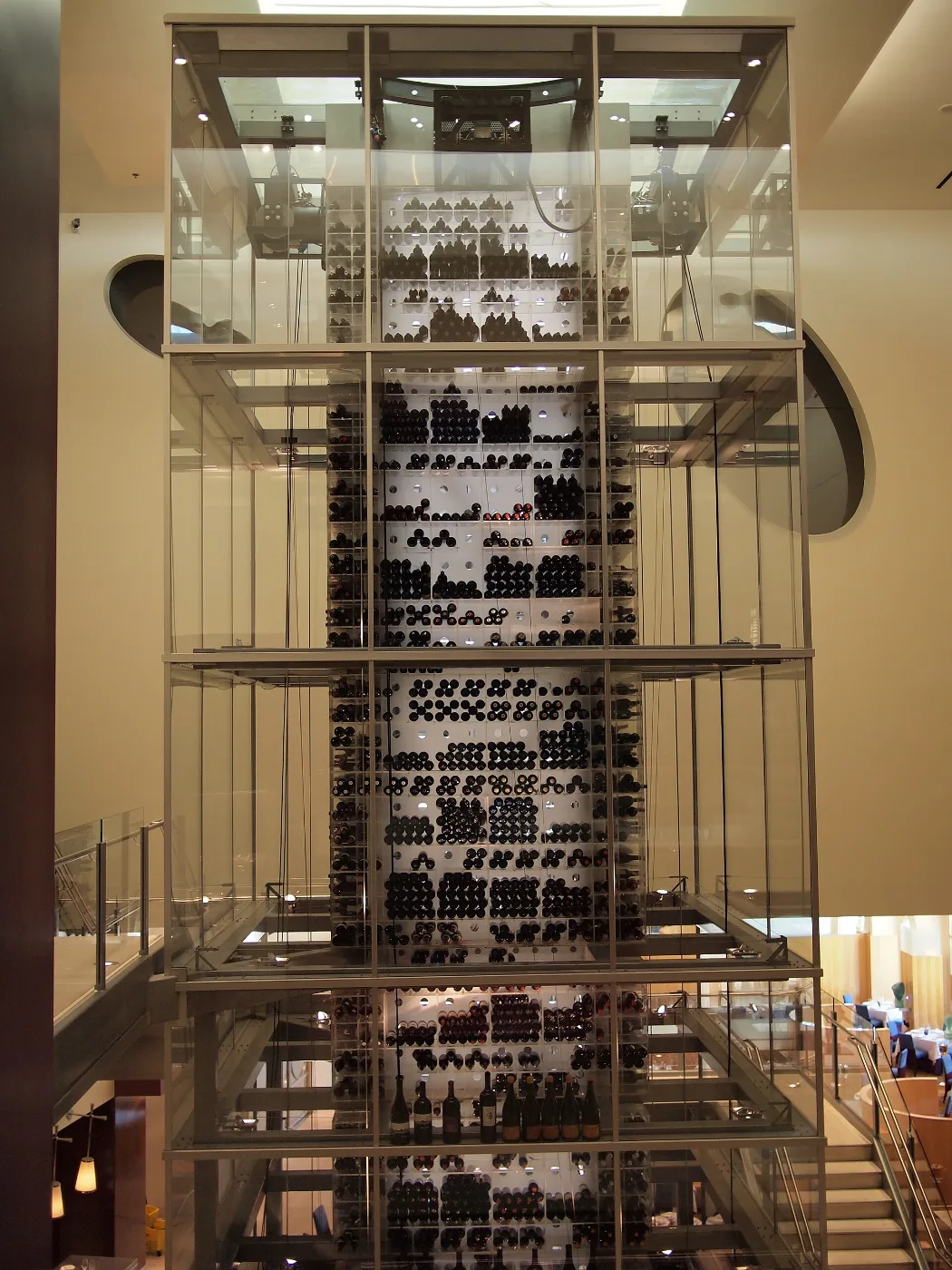
Chef Charlie Palmer opened Aureole at the Mandalay Bay Resort & Casino in Las Vegas in 1999, taking the name of his original Aureole in New York. In October 2000 the Las Vegas Sun wrote of Adam Tihany's 32-foot, 9,500-bottle Plexiglas wine tower at Aureole, calling it “a breathtaking restaurant design and a signature item of the new Las Vegas”. Wine Spectator later described the structure as four storeys high, with staff known as wine angels who sailed on wires to retrieve bottles.
The restaurant's wider inventory reached 26,000 bottles, with deep holdings of Burgundy, California, Italy and Bordeaux, and its list had held the Grand Award since 2000. In February 2023 Wine Spectator reported that Aureole would close after 24 years, with final service in April; Palmer had already closed the original New York Aureole in 2020, after 34 years. He told the magazine he was not certain what would become of the wine tower and its wine angels. Its space was to be taken by Retro by Voltaggio, a one-year culinary residency from the brothers Michael and Bryan Voltaggio.
HOW ARE RESTAURANT WINE LISTS JUDGED?
Wine Spectator, whose editor and publisher is Marvin R. Shanken, launched the Grand Award in 1981 to recognise restaurants with extraordinary wine lists. That first year, 13 restaurants in the United States were selected from more than 500 candidates, and 12 more received the award in 1982. Before the awards were given, the magazine's editors personally visited the final candidates to evaluate inventory and storage, service and ambience, and the quality of the cuisine, so the condition of a restaurant's cellar formed part of the judgement of its list.
The programme honoured its first international recipients in 1984. In 1985 it added the Award of Excellence and the Best of Award of Excellence, creating the three-tier system still in use. In its history of the awards, last updated in 2023, Wine Spectator counts more than 90 Grand Award winners, with lists starting at around 1,000 selections. Aureole held the Grand Award from 2000 until it closed in 2023, placing its Las Vegas list in that top tier for 23 of its 24 years, and the Las Vegas Sun reported in 2000 that it was the first restaurant in the city to receive it.
OPUS AT MANDARIN ORIENTAL SHENZHEN

Opus is a restaurant at Mandarin Oriental Shenzhen, completed in 2022. Its interior includes glass wine cabinets, which keep bottles behind glass within the restaurant. Aureole in Las Vegas applied the same principle on a four-storey scale in 1999, with Adam Tihany's 32-foot, 9,500-bottle Plexiglas tower and its wine angels on wires. Below ground, cellars such as Château Mouton Rothschild's in Pauillac hold wine at 12 to 15°C, with 80 to 90 per cent humidity and little or no light, within the 10 to 16°C range that Purdue Extension gives for long-term storage.
Opus also has a chef's table counter with a stainless hood, a dining format whose origins and development are set out in the chef's table and how kitchen counter dining became fine dining's best seat. The rest of the interior is built from geometric metal and lattice screens, globe pendants and panelling in brass, an alloy whose use in interiors is covered in brass in interior design. Seating combines red leather banquettes with blue chairs, and the restaurant has city views.
SOURCES
- UNESCO World Heritage Centre Champagne Hillsides, Houses and Cellars
- Purdue Extension Wine Storage Guidelines (FS-58-W), Christian Butzke, 2010
- Università degli Studi di Milano Light-struck taste in white wine: reaction mechanisms, preventive strategies and future perspectives (Trends in Food Science and Technology, 2021)
- Oxford Companion to Wine (ckbk) Chai
- Château Mouton Rothschild The cellars
- Dickens Journals Online Household Words, Volume II, page 356: The Queen's Tobacco-Pipe
- Court of Master Sommeliers History of the Court of Master Sommeliers
- Las Vegas Sun Fine wines abound in Las Vegas restaurants (2000)
- Wine Spectator Aureole Las Vegas closing after 24 years (2023)
- Wine Spectator History of Wine Spectator's Restaurant Awards