FROM THE QUEEN'S BUILDING SITE ON CONNAUGHT ROAD TO AN INTERNATIONAL HOTEL GROUP
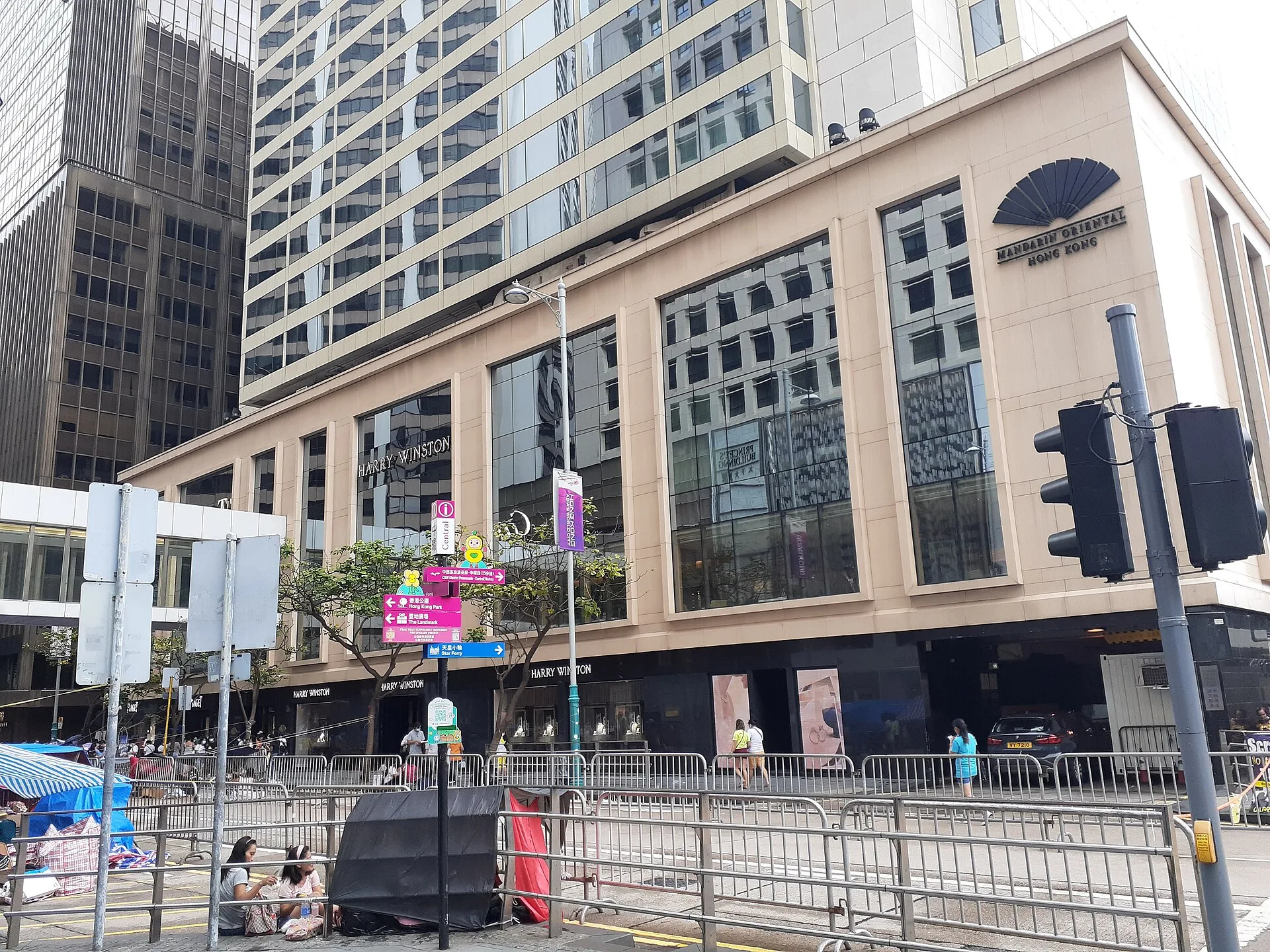
Mandarin Oriental Hong Kong opened in 1963 as The Mandarin, a 650-room, 27-storey hotel at 5 Connaught Road Central, built on the former site of the Queen's Building. It was designed by the architect John Howarth of Leigh & Orange, with interiors by the film art director Don Ashton. The hotel arrived as Hong Kong's tourist trade was being organised: the government set up the Hong Kong Tourist Association in 1957, a year in which 50,000 tourists arrived. In 1974 its owners formed Mandarin International Hotels Limited and took a 49% stake in The Oriental in Bangkok, the partnership that became the Mandarin Oriental Hotel Group in 1985. The hotel closed for a nine-month renovation in 2005 and reopened on 28 September 2006.
WHAT WERE HONG KONG'S GRAND HOTELS BEFORE THE MANDARIN?

The Hongkong Hotel Company was incorporated with limited liability on 2 March 1866, and its Hongkong Hotel opened in 1868 at Queen's Road and Pedder Street in Central. The company built the Repulse Bay Hotel, which opened on New Year's Day 1920, and in 1923 it acquired The Shanghai Hotels and took the name The Hongkong and Shanghai Hotels, Limited (HSH). Its next project was planned for Kowloon, an area the company's 150th anniversary history describes as a sleepy backwater at the time. HSH links its history to the evolution of world travel, including the luxury steamship cruises that followed the opening of the Suez Canal in 1869.
The Peninsula opened on 11 December 1928 with a party in its Roof Garden Ballroom. According to HSH, royalty and celebrities became regular guests, among them Charlie Chaplin and Paulette Goddard. The company moved into air catering in 1958, when Gaddi's restaurant began preparing meals for flights, and The Peninsula later became a city-centre check-in terminal. In the 1960s Sir Horace Kadoorie oversaw a renovation of The Peninsula, and in 1966 a discotheque opened in the hotel's basement. The Mandarin was not an HSH project: it was proposed in 1958 by the chairman of the Hong Kong Land Company, for a site in Central on Hong Kong Island.
HOW DID TOURISM GROW IN HONG KONG IN THE 1950S AND 1960S?
The historian J. M. Carroll, in a 2019 paper held on the University of Hong Kong's Scholars Hub, dates Hong Kong's emergence as a major tourist destination to the early 1950s. In 1957 the government set up the Hong Kong Tourist Association (HKTA) to develop Hong Kong as a visitor destination. Its later remit, as recorded in the 1997 Hong Kong Yearbook, covered improving visitor facilities, promoting Hong Kong overseas and advising the government on tourism, with funding from a government subvention, membership dues and the sale of publications, souvenirs and tours. Carroll describes how the association promoted Hong Kong as a blending of East and West and of old and new, with a modern metropolis beside the rural New Territories.
The HKTA's first head was Harry Stanley, recruited from the Royal Automobile Club in London. The South China Morning Post (SCMP) records that 50,000 tourists arrived in Hong Kong in 1957, the year he took the post. Stanley worked to raise Hong Kong's hospitality standards and to put Kai Tak airport on the region's aviation route maps, and he was a founder of the East Asia Travel Association and a life member of the Pacific Asia Travel Association. When he retired as executive director in 1971, after 14 years, the SCMP reports that Hong Kong was preparing for its first million-visitor year, twenty times the 1957 figure.
WHEN DID THE MANDARIN HONG KONG OPEN?

Mandarin Oriental dates the idea to 1958, when Hugh Barton, chairman of the Hong Kong Land Company, proposed a hotel for the Central district. On 9 July 1960 the SCMP announced it under the headline "New Hotel Will Be On Queen's Building Site", and a later Post report described a $55,000,000 luxury hotel that would be one of the tallest buildings in Hong Kong, with televisions in the rooms and telephones in the bathrooms. The working name was the Queen's Hotel. On 24 August 1962 the name was changed to the Mandarin, after a survey in the United States found that American tourists preferred the "exotic-sounding Mandarin".
The building was topped off on 28 March 1963 with Mandarin lion dancers performing to bring good luck. On 1 September 1963 the Post reported that the Mandarin had opened quietly to accept guests from the closing Gloucester hotel, with only part of the 650-room, 27-storey building in use and full services due within weeks. Mandarin Oriental describes this as a soft opening. The official opening followed on 25 October 1963. The University of Hong Kong Libraries' image database catalogues the building under the name Mandarin Hong Kong, at 5 Connaught Road Central in the Central District.
WHO DESIGNED THE MANDARIN HONG KONG?
The hotel's history names John Howarth of the architectural firm Leigh & Orange as architect. Responsibility for the interiors, the company states, fell to Don Ashton, an art director whose film credits included The Bridge on the River Kwai, Indiscreet and Billy Budd. The hotel gives the construction cost as HK$42 million and the cost of the interior design as HK$66 million, so the interior budget was HK$24 million larger than the building budget. The hotel stands on the former site of the Queen's Building, the site named in the SCMP's announcement of July 1960.
The hotel opened its first restaurants and bars in 1963, the year of both its soft and official openings. The Saddle & Sirloin, a grill room on the first floor, later became the Mandarin Grill + Bar. The Captain's Bar opened the same year, and Mandarin Oriental records that the South China Morning Post described it as the city's "fashionable new rendezvous". The Chinnery Bar opened in 1963 as a gentlemen-only club. Another venue, the Harbour Restaurant, was already operating before 1973, when the hotel renamed and remodelled it.
THE MANDARIN'S ARCADE, BALLROOMS AND RESTAURANTS FROM 1965 TO 1980
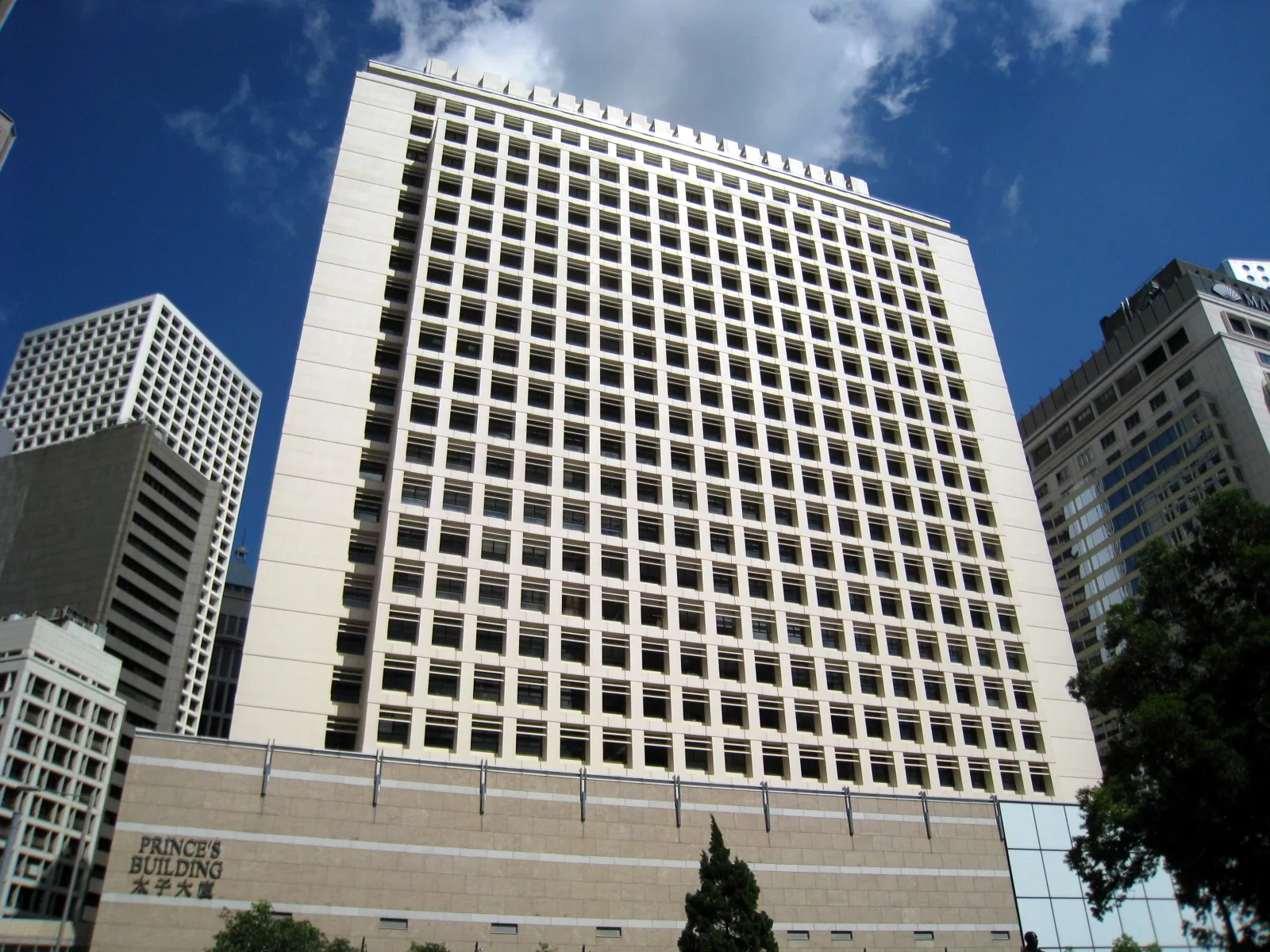
In 1965 the Prince's Building shopping arcade opened next door, connected to the hotel's mezzanine by a covered bridge. In 1968, according to Mandarin Oriental, the Button Supper Club was replaced by Man Wah, the hotel's Cantonese restaurant; the wider story of hotel Chinese restaurants in the city is covered in how Cantonese fine dining evolved in Hong Kong's luxury hotels. In 1969 the hotel created the Connaught Room, a meeting and banqueting area built for the needs of the Hong Kong business community, and it still hosts receptions and business meetings.
In 1973 the Harbour Restaurant was renamed the Harbour Room and given a golden new look and a stage for cabaret. Eartha Kitt opened its season, which coincided with the first Hong Kong Arts Festival. The space later became the M bar. In 1980 the hotel restyled its lobby and opened a business centre; the hotel lobby as a public living room has its own history. In 1990 the hotel opened a new Health Centre, and the same year the Chinnery Bar reopened to both men and women.
HOW DID THE MANDARIN BECOME MANDARIN ORIENTAL HONG KONG?
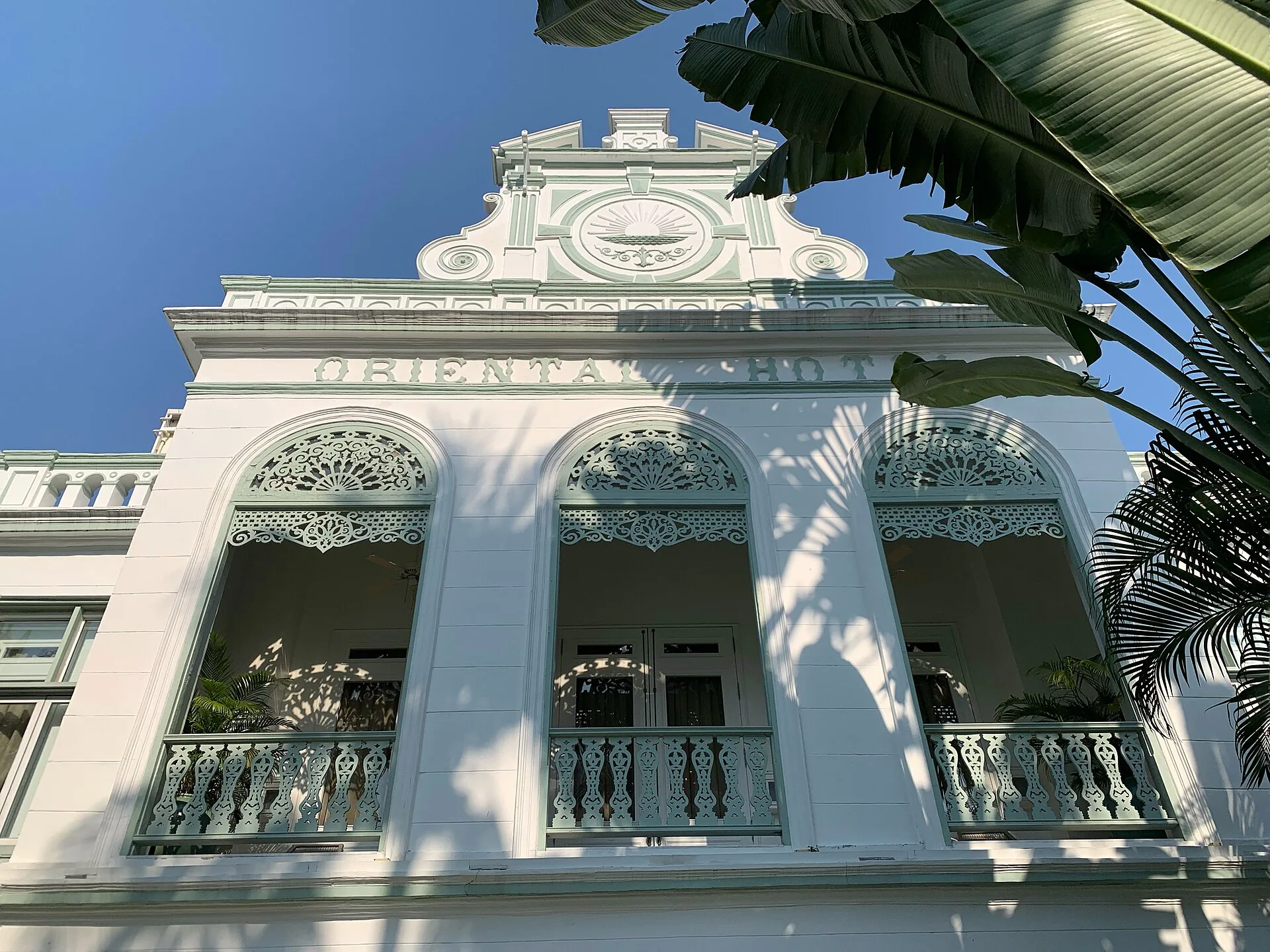
In 1974 Mandarin International Hotels Limited was established, in the hotel's words, for the development and operation of deluxe hotels worldwide. The same year, the company took a 49% equity holding in The Oriental in Bangkok. The group's own history describes The Oriental as partially acquired in 1974. Through the management of those two hotels, the company rationalised its corporate structure in 1985 to form the Mandarin Oriental Hotel Group. In 1987 the group was floated on The Stock Exchange of Hong Kong, and the fan logo still used by the group was launched.
The group is a member of the Jardine Matheson Group, which was founded in Canton in 1832. After the listing it expanded outside Asia: its first US property opened in San Francisco in 1987, it bought its London flagship in the mid 1990s and it purchased the Rafael Group of hotels in 2000. Mandarin Oriental, New York opened in late 2003 and Mandarin Oriental, Washington D.C. in 2004. In 2005 the group opened a second luxury hotel in Hong Kong, The Landmark Mandarin Oriental. The 1963 building on Connaught Road, now named Mandarin Oriental, Hong Kong, is described by the hotel as the group's flagship.
WHAT CHANGED IN MANDARIN ORIENTAL HONG KONG'S 2005 RENOVATION?
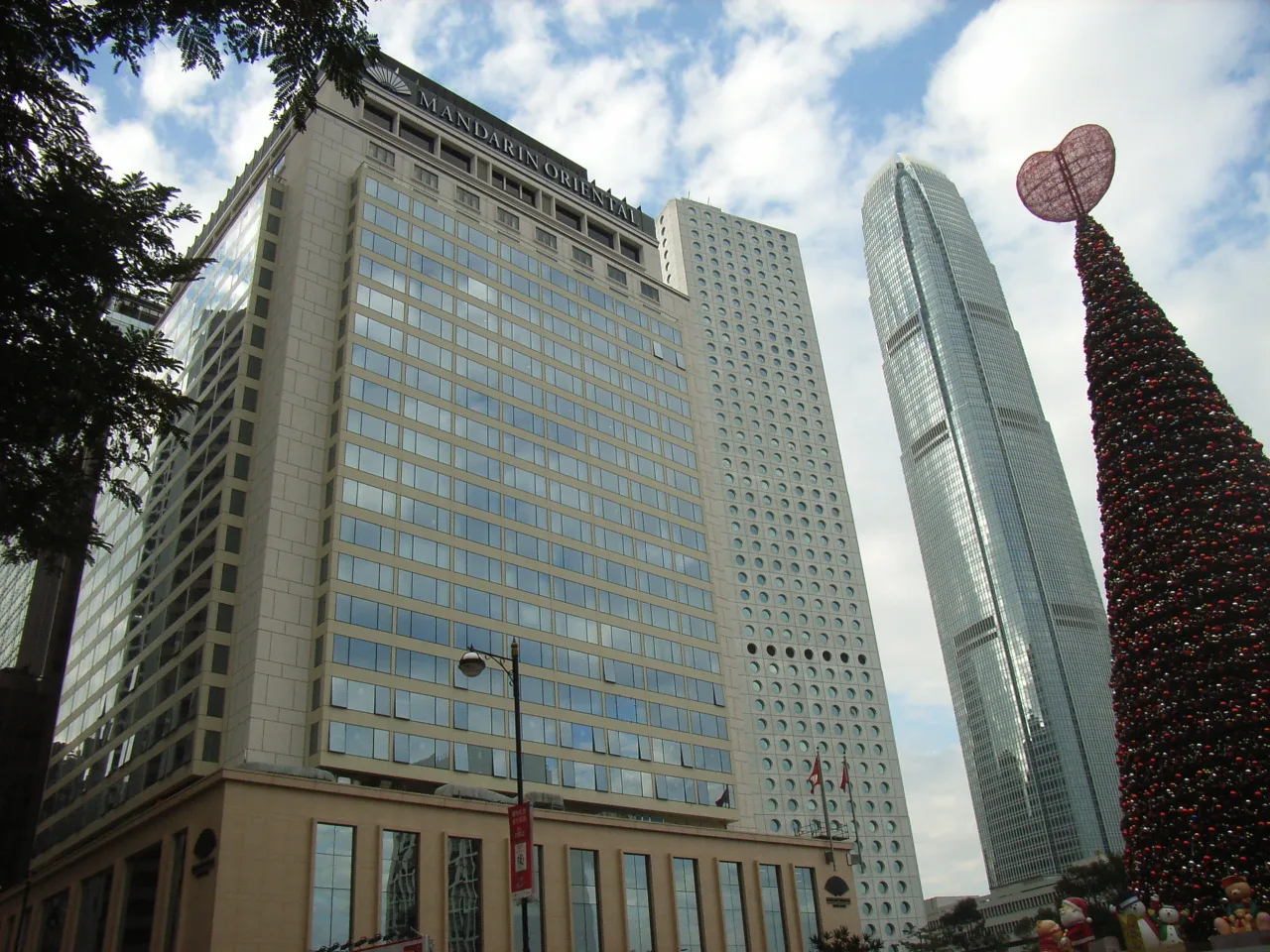
In 2005 the hotel closed for nine months for a complete renovation. The hotel's history gives the cost as US$150 million, while the group's corporate history gives US$140 million. It reopened on 28 September 2006 as a 501-room hotel, down from 650 rooms in 1963: fewer rooms and suites were offered, and balconies were enclosed to create larger rooms. New technology was integrated throughout the building. In 2007 the hotel unveiled The Mandarin Spa across three floors, with an indoor swimming pool and fitness centre, an enlarged Mandarin Barber on the second floor, the Mandarin Salon on the 24th floor overlooking Victoria Harbour, and the Lichfield Suite on the 20th floor, inspired by the photographer Lord Lichfield.
A second programme followed in August 2020: a six-month renovation of the dining facilities on the top floor of the hotel. Pierre Gagnaire's MICHELIN-starred restaurant closed after 14 years, and the hotel stated that Man Wah would be expanded into the space occupied by M Bar, the former Harbour Room of 1973. The work was completed on 1 February 2021, when the hotel presented a new club lounge, The Mandarin Club, and The Aubrey, a new Japanese izakaya on the 25th floor. The hotel today has 10 restaurants and bars, 13 meeting rooms and a spa.
MAN WAH AT MANDARIN ORIENTAL HONG KONG
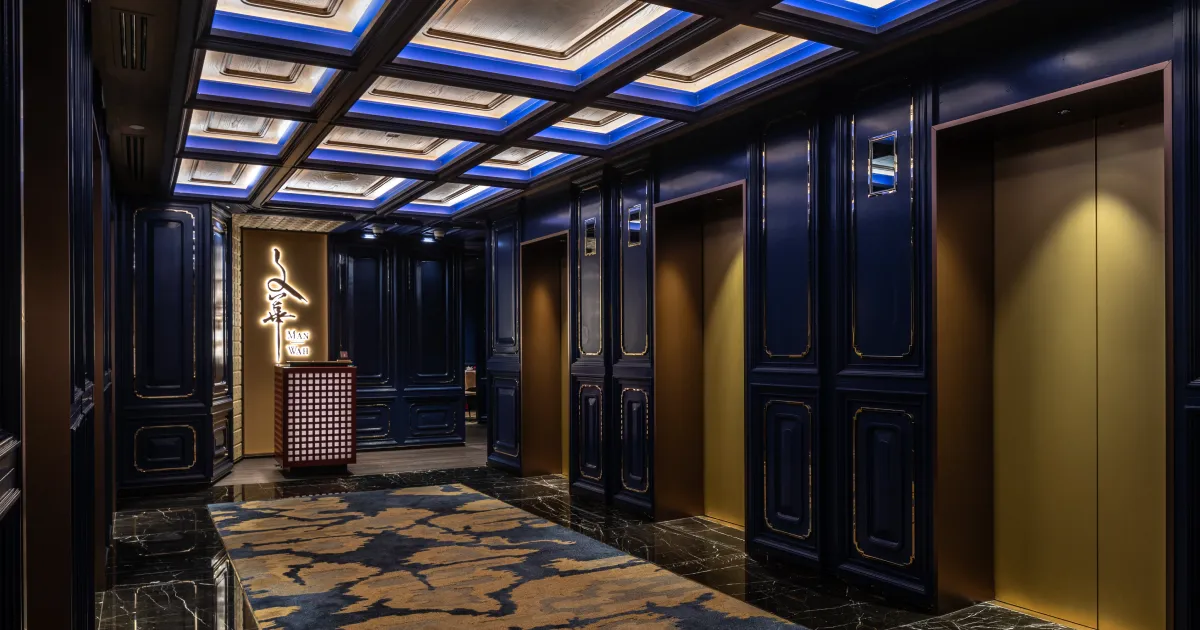
Man Wah is the Cantonese restaurant on the 25th floor of Mandarin Oriental Hong Kong, and it holds One MICHELIN Star. Silverfox Studios redesigned it in 2021. The design interprets the Hong Kong skyline and Victoria Harbour as seen from the restaurant's windows, alongside references to the hotel's heritage. The walls use navy panelling with gold trim, and the floor is a bespoke blue and gold silk carpet with hand-carved patterning that evokes light on the harbour. Embroidery also appears on a navy wall panel, which carries dragon and floral artwork.
Among the heritage references are the restaurant's lanterns, which reinterpret the original Man Wah lanterns. They are clustered brass cages fitted with embroidered, pleated shades; the older history of the Chinese lantern runs from Han dynasty lamps to the Lantern Festival. The navy panelling and its gold trim, the lanterns, the embroidered panel and the blue and gold carpet are all part of the 2021 redesign, in a hotel that opened as The Mandarin on Connaught Road Central in 1963.
SOURCES
- South China Morning Post How Hong Kong got its Mandarin hotel, which opened quietly in 1963
- Mandarin Oriental, Hong Kong Hotel History
- Mandarin Oriental Hotel Group Our History
- Mandarin Oriental Hotel Group Press Information
- South China Morning Post The father of tourism
- Hong Kong Yearbook 1997, Hong Kong Government The Hong Kong Tourist Association
- The University of Hong Kong Scholars Hub There's No Place Like It: Promoting Colonial Hong Kong as a Tourist Destination
- The Hongkong and Shanghai Hotels, Limited Tradition Well Served: 150 Years of The Hongkong and Shanghai Hotels
- The Hongkong and Shanghai Hotels, Limited, via HKEXnews The Glamour of Travel
- The University of Hong Kong Libraries Mandarin Hong Kong, Central District