MACAU'S ISLAND OF FERRY PIERS, TEMPLES AND BOATYARDS
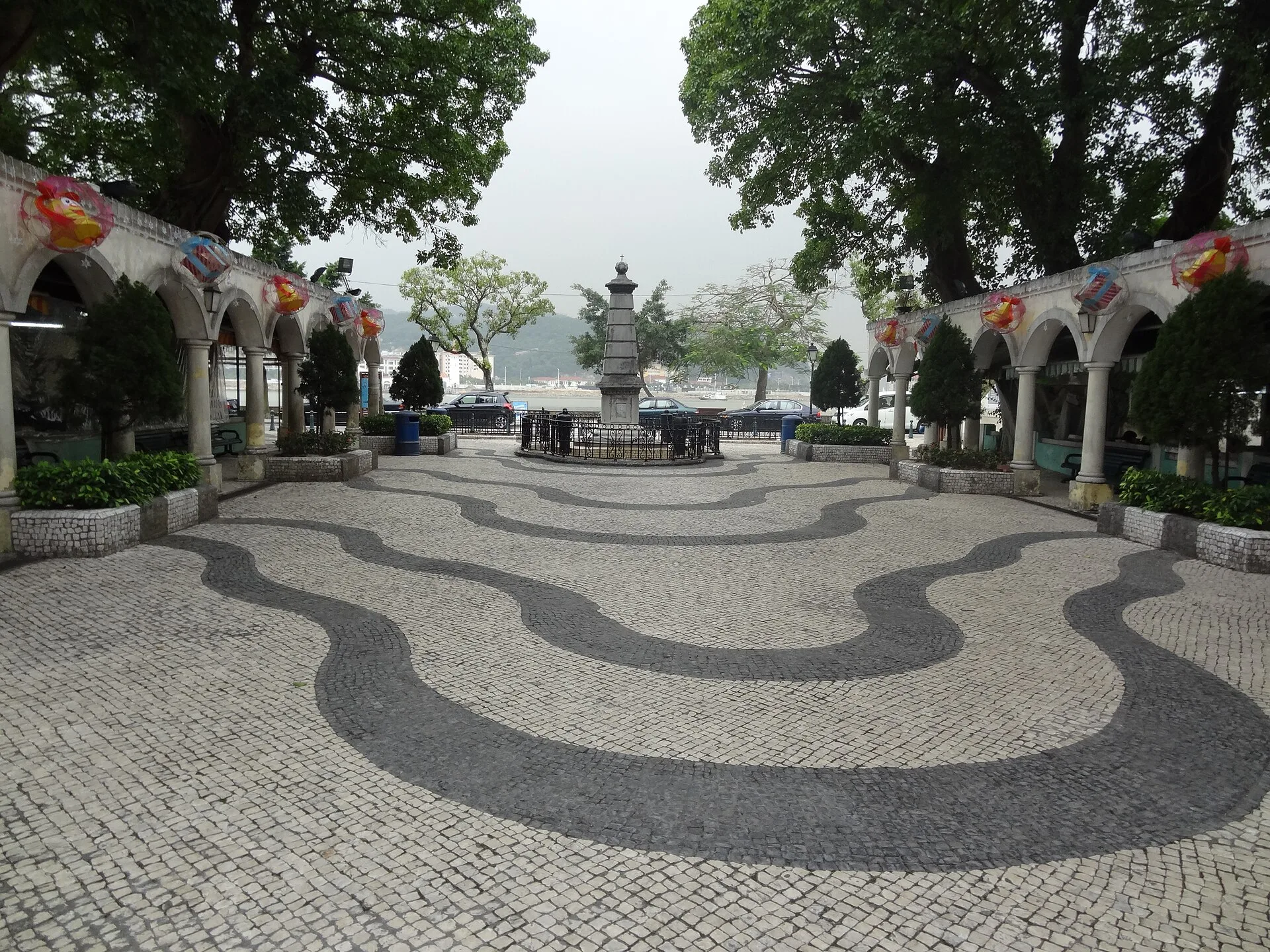
Coloane is a Macau island whose residents relied on ferries until road links arrived: the Estrada do Istmo to Taipa in 1968 and the Governor Nobre de Carvalho Bridge in 1974. Coloane Village keeps a chapel rebuilt in 1928, a group of Chinese temples from the 18th and 19th centuries and, along the shore, the Lai Chi Vun Shipyards, described in the Macao Yearbook 2025 as the only relatively well-preserved heritage site of the territory's shipbuilding industry. The Cultural Affairs Bureau lists Tam Kong Temple, the Chapel of St Francis Xavier and Coloane Pier among Macau's classified immovable properties. Beyond the village are the beaches of Hac Sa and Cheoc Van, walking trails and, on Alto de Coloane, a white marble statue of the goddess A-Ma completed in 1998.
HOW DID PEOPLE REACH COLOANE BEFORE THE CAUSEWAY?
According to the Cultural Affairs Bureau, Coloane's north and east coasts are steep cliffs and its south coast a series of headland beaches, while the west coast faces the calm, spacious water of the Cross Gate Waterway, which made it the side suited to mooring ships. Regular ferries ran between Salt-stove Bay, the area that is now urban Coloane, and the Macao Peninsula. Until the Governor Nobre de Carvalho Bridge opened in 1974, they were the only means by which island residents could travel and transport supplies.
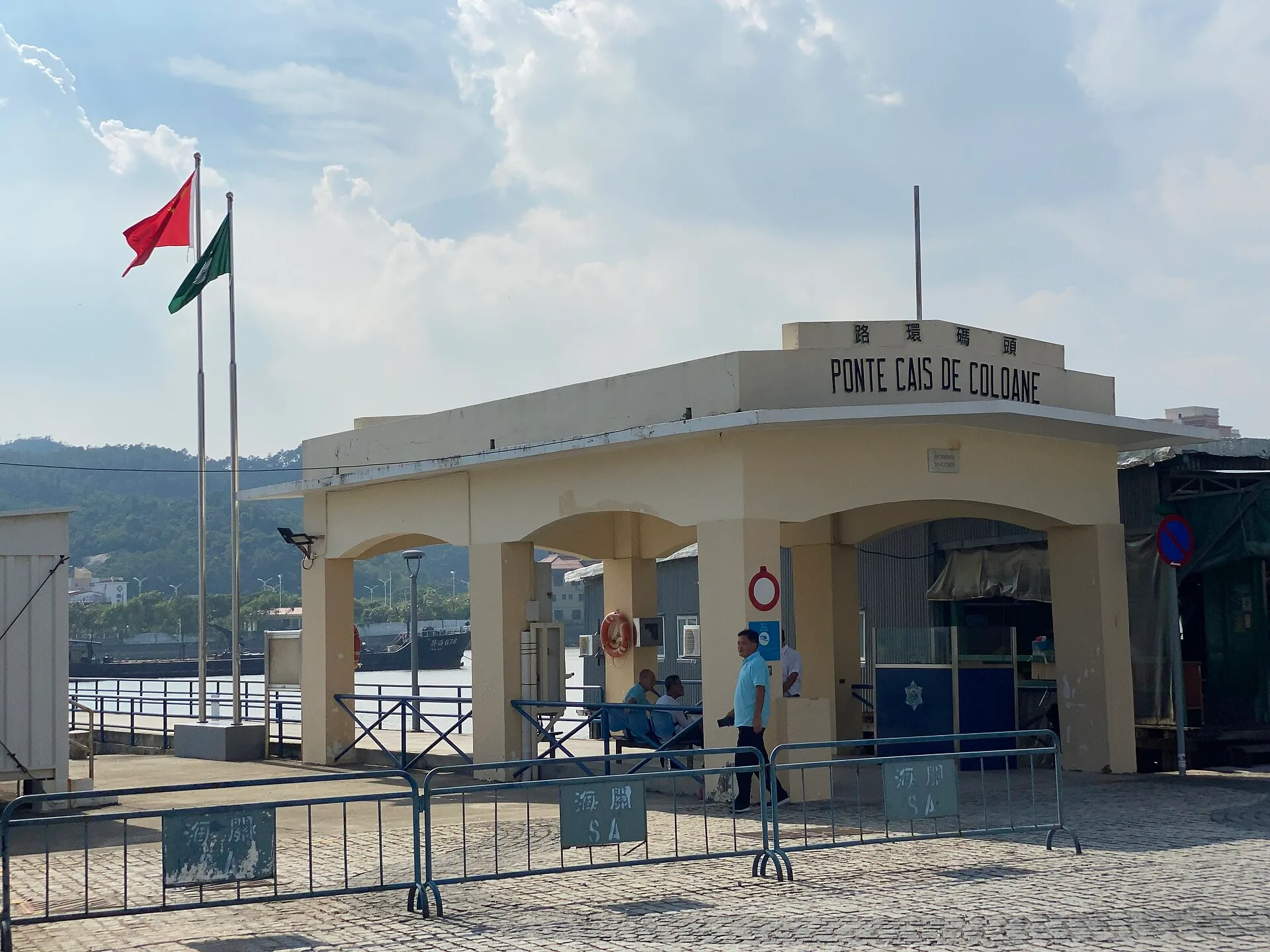
Because the riverbed had silted up, a trestle bridge was built north of Rua dos Navegantes as early as the 1920s. The surviving structure has three parts: the trestle bridge, granite for its first half and reinforced concrete for the second; a covered corridor; and a sloped quay. The corridor is a freestanding portico with an arched entrance, a symmetrical façade, two levels of parapet and a projecting eave, plastered light yellow in a simple design with a strong Art Deco character, with "Coloane Pier" inscribed in Portuguese and Chinese on the front and rear. The portico and quay were added after a franchise system for passenger ferries between the peninsula and the islands took effect.
The Macao Government Tourism Office records that the pier was rebuilt in 1873 and served as a major public terminal linking Coloane, Taipa and the peninsula, with small boats docking alongside. Road links ended the ferry era. Services declined after the Estrada do Istmo opened in 1968 and again after the bridge opened in 1974, and passenger ferries stopped in the early 1980s. Today the drive to Coloane passes along the Cotai Strip, and the pier at Largo do Cais is a classified monument.
WHAT IS THE CHAPEL OF ST FRANCIS XAVIER IN COLOANE?
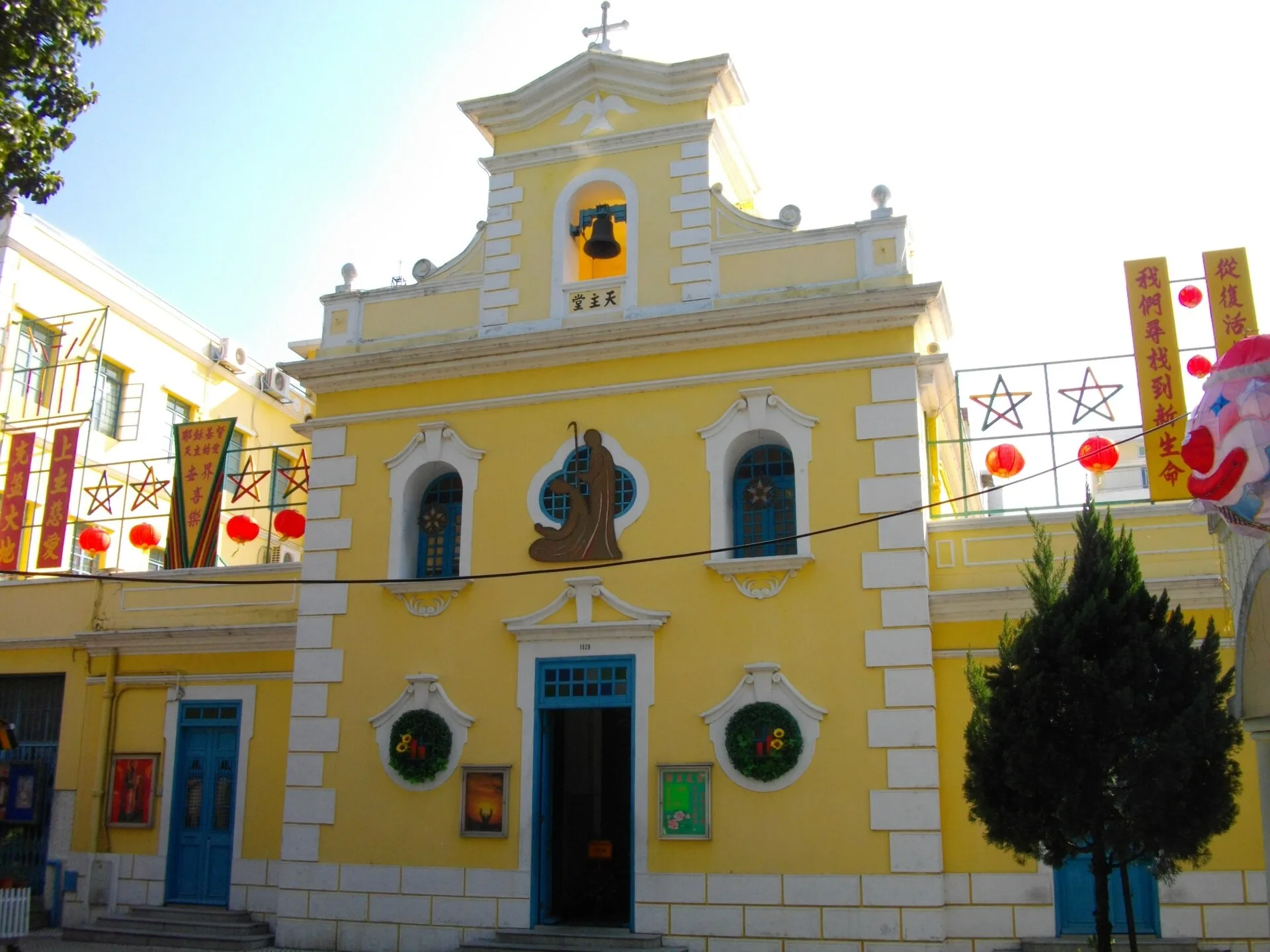
The Chapel of St Francis Xavier stands on Largo Eduardo Marques. The Cultural Affairs Bureau records that the building was first a nursery run by the Canossian Sisters and was rebuilt in 1928 to commemorate the missionary St Francis Xavier. The tourism office describes it as Baroque in style, like Macau's major churches, with a cream-and-white façade, oval windows and a bell tower, standing behind a monument. For many years the chapel held a relic of the saint, and it still houses his statue. A painting on the transept wall shows a Chinese goddess holding a baby, which the bureau presents as a Chinese counterpart to the Virgin Mary and an example of exchange between East and West.
The chapel was a filming location for the Hong Kong film Look for a Star, and Nga Tim, a seaside eatery listed by the tourism office, sits beside it. Close by, Largo do Presidente António Ramalho Eanes, a small square named after a visit to Macau by the Portuguese president, is the pedestrian hub where many of the village's old lanes and streets meet. Lord Stow's Bakery, which takes its name from the nickname of the English-born Andrew Stow, opened in Coloane Village on 15 September 1989; Stow developed his own recipe for the Portuguese egg tart, or pastel de nata.
WHICH TEMPLES STAND IN THE VILLAGE?
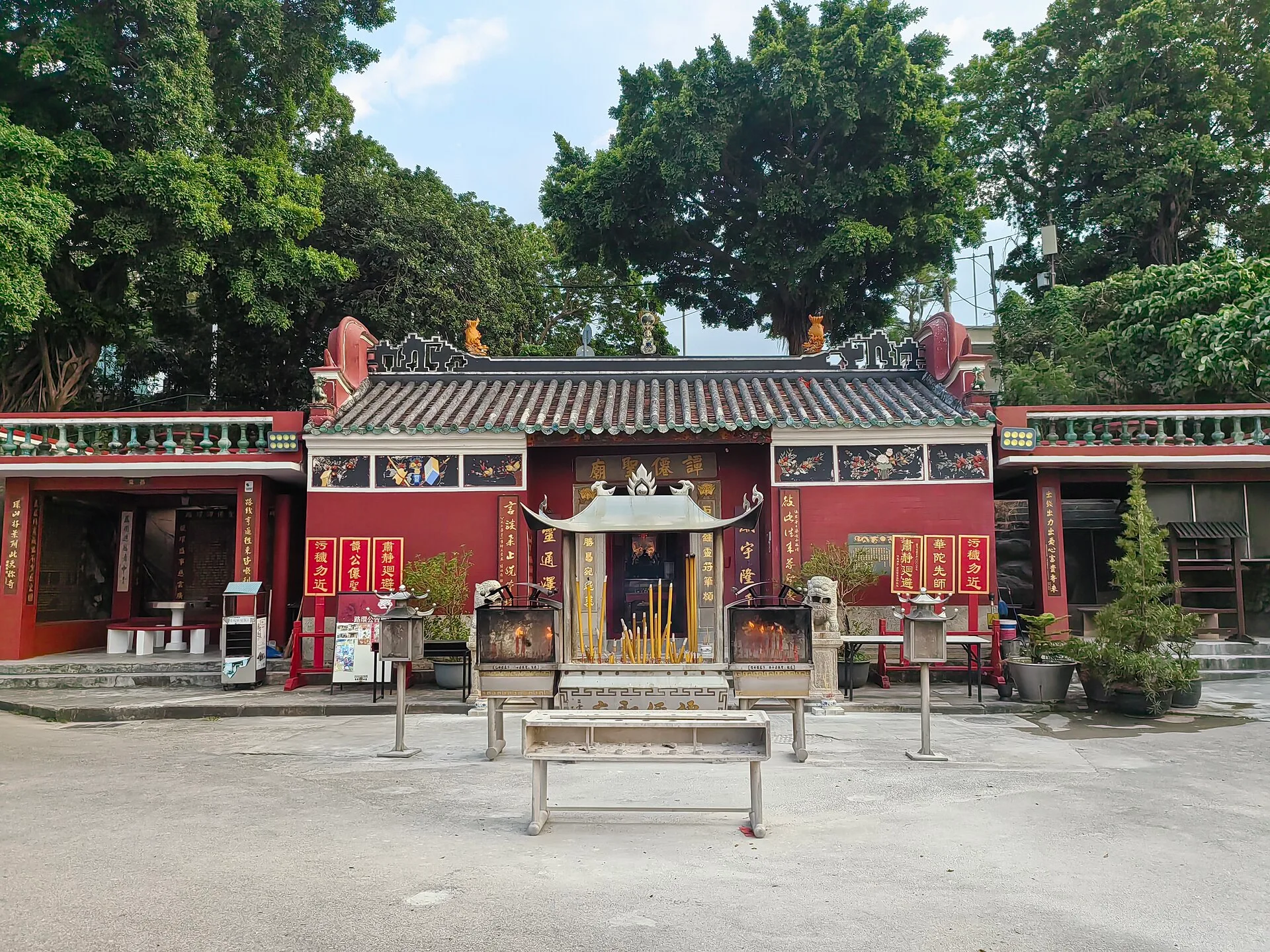
Tam Kong Temple at Largo Tam Kong Miu was built in 1862 and, according to the Cultural Affairs Bureau, has been renovated three times in the past 135 years. It is dedicated to Tam Kong, a god who protects fishermen and often appears as a child; the tourism office calls him a Taoist god of seafarers. The present temple has three horizontal chambers with a pavilion on either side, frescoes and sculptures on the exterior walls and a pair of stone guardian lions at the front. The tourism office notes porcelain figures decorating the roof.
The temple's best-known object is a three-metre dragon boat made of whale bone, a gift from fishermen, with carved dragon heads and tails, a silk banner, a parasol, a gong, a drum and canoeists. A legend recorded by the bureau holds that a tiger follows Tam Kong whenever he leaves home, and a painting of the tiger is on one of the temple's walls. The Tam Kung Festival falls on the eighth day of the fourth lunar month, when many residents of Hong Kong and Macau attend to pray for blessings and watch Cantonese opera. Two murals by local artists on Rua do Caetano take the god as their subject: No. 48A uses the legend of Tam Kung, described by the tourism office as the god of the sea, and No. 66 the theme "God Tam Kong and Fish".
Three more temples stand within the village. The tourism office dates the Tin Hau Temple to around 1763 and describes it as the oldest temple on the island, with an entrance hall and a main hall with a pavilion. The Kun Iam Temple, dedicated to the Goddess of Mercy, was built around 1800, the fifth year of the Jiaqing reign, by local sea traders, according to its inscription. The small Sam Seng Temple dates from 1865, the fourth year of the Tongzhi reign. Other murals show local life: at Pátio do Galo No. 5 a group of graffiti murals shows the daily lives of fishing families, and a mural at Largo do Estaleiro depicts fishermen returning home from the sea at sunset.
WHAT ARE THE LAI CHI VUN SHIPYARDS IN COLOANE?
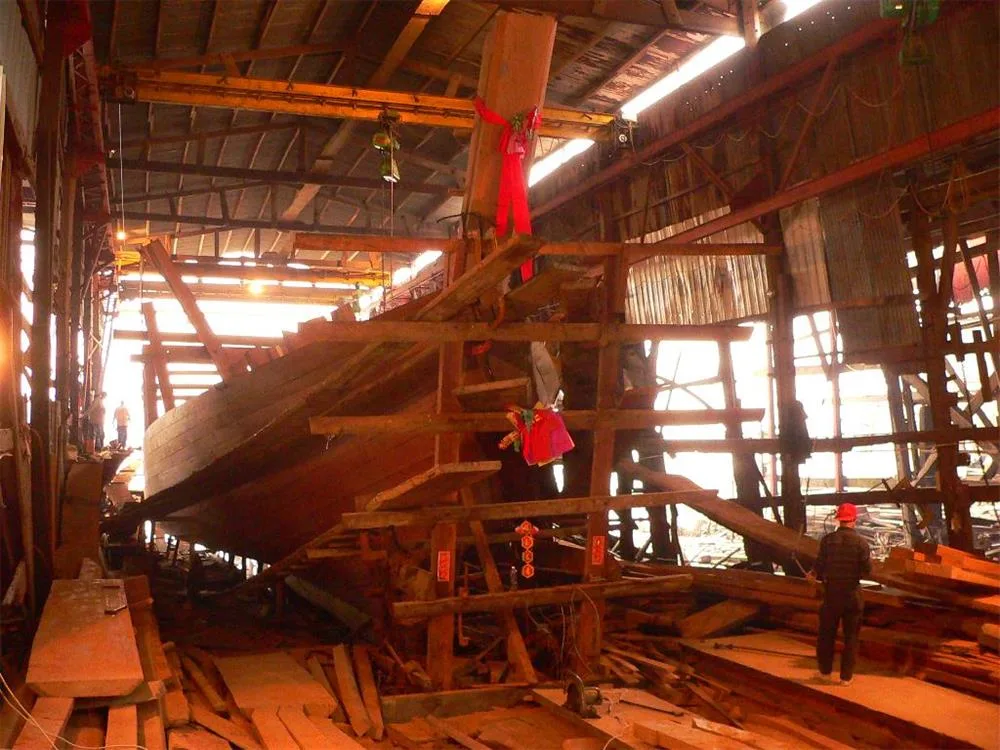
The Lai Chi Vun Shipyards line the Coloane shore on Estrada de Lai Chi Vun. The Cultural Affairs Bureau dates shipbuilding in Macau to the end of the Ming and the early Qing dynasties and counts it as one of the territory's four main traditional industries, which kept developing until the 1990s. The yards at Lai Chi Vun, previously called Lai Chi Van, were first built in the 1950s, and the 1965 to 1966 Annual Record of Commercial and Industrial Activities lists six of them. More followed, some relocating from the piers at Lam Mau, Fai Chi Kei and Avenida do Almirante Lacerda, where changes in the river estuary and river flow had made work difficult, until the group offered both shipbuilding and ship repair.
A 2023 government announcement states that the yards were mainly used to build and repair wooden vessels and that part of their value lies in preserving traditional wooden fishing boat craftsmanship. The sheds are similar in volume, built parallel to one another and arranged in a row along the coastline, all facing the water, and they extend partly over it. The bureau's listing ties their cultural value to that connection with the waterfront and with the hill behind them, and to Lai Chi Vun Village, whose way of life was shaped by the trade. From the 1990s a drop in fishing and competition from neighbouring areas closed the yards one after another, and most no longer build boats.
HOW IS LAI CHI VUN BEING REVITALISED?
The shipyards are a classified site on Macau's heritage list, and the Cultural Affairs Bureau began a phased revitalisation and restoration plan for them in 2021. The X11 to X15 section of the first stage opened to the public on 24 June 2023, with an opening ceremony that evening. The tourism office gives the revitalisation plan an area of more than 3,000 square metres, used as a space for cultural activities. According to the Macao Yearbook 2025, the plots now hold a historical exhibition hall, children's playground facilities and spaces for arts, culture and leisure, and they received 73,156 visitors in 2024.
The exhibition in Plot X11, Moments in History: The Story of Lai Chi Vun Village, is arranged in three sections: "Ships Carrying Tales", "Shipbuilders Practicing Craftsmanship and Techniques" and "Memories Passing Through Generations". At the opening, the bureau announced guided tours in Cantonese and Mandarin every Saturday, a featured market of 15 stalls selling Coloane-themed souvenirs, original products and snacks from Friday to Sunday and on public holidays and an improvisation and art area with paint and tools provided on weekends and public holidays.
WHERE ARE COLOANE'S BEACHES, TRAILS AND THE A-MA STATUE?
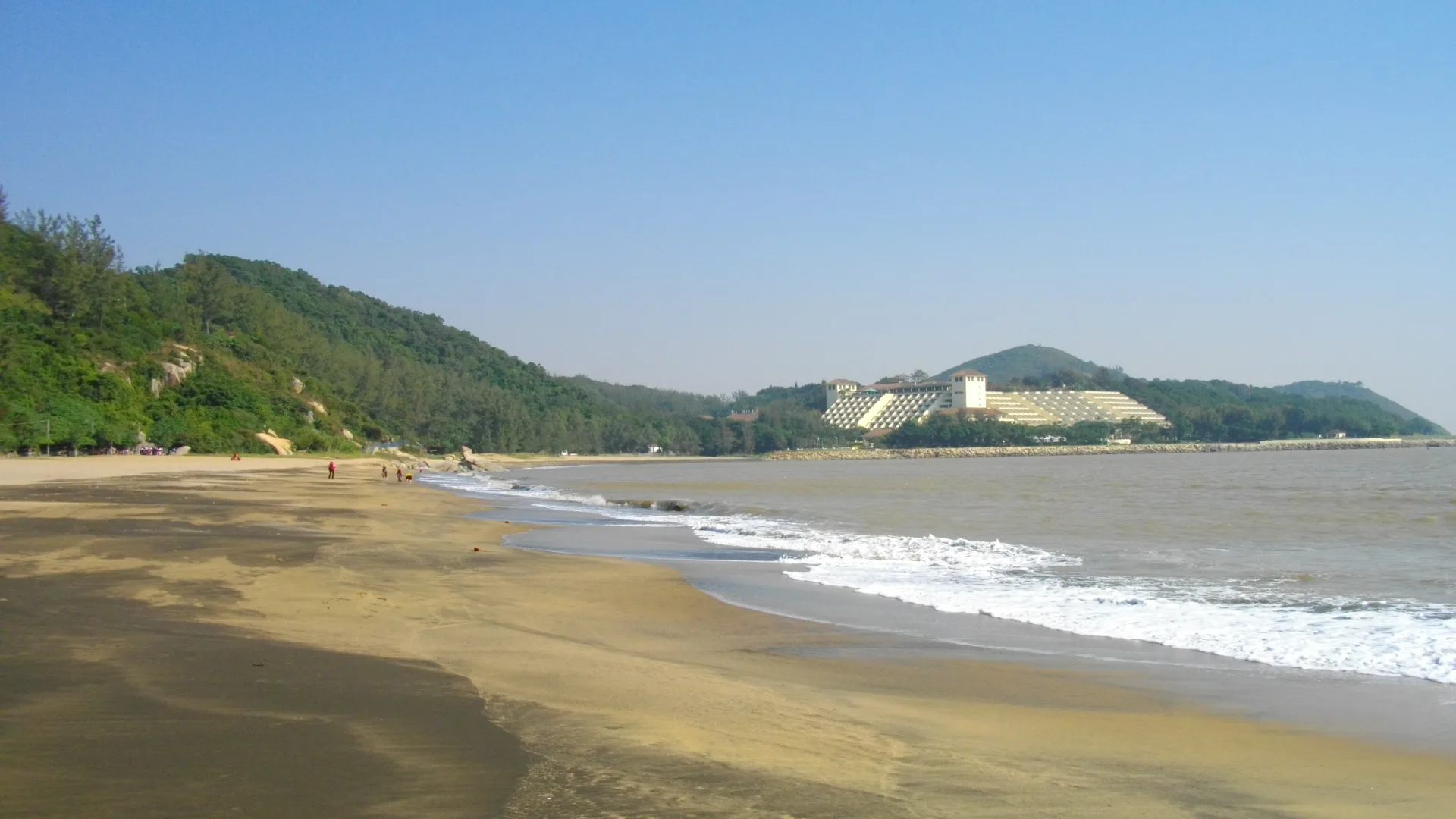
The South China Morning Post noted in 2015 that Hac Sa translates as "black sand" and that the waters there are often murky. Hac Sa and Cheoc Van both have public swimming pools, which the paper listed at 15 patacas for adults and 5 patacas for children under 12. At Hac Sa, Fernando's is a well-known restaurant that many Hong Kong visitors go to; at Cheoc Van, the Italian restaurant La Gondola sits above the beach and public pool. The same article describes the tiled patio of the Pousada de Coloane as a popular sunset spot for hikers, with Hengqin's Chimelong International Ocean Resort visible in the distance.
The Macao Yearbook 2025 counts sixteen trails covering a total of 37 kilometres on Taipa and Coloane. The Coloane trails include the Coloane Trail at 8,100 metres, the Coloane Northeast Trail at 4,290 metres, the Coloane Fitness Trail at 1,250 metres and the Coloane Stone Washbasin Ancient Route at about 1,375 metres. Among the easier routes, the Post described the Hac Sa Reservoir Family Walk, which passes barbecue pits and circles the reservoir with views over Hac Sa Bay; canoes and paddle boats are available for hire. The Ka-Ho Height Family Trails start near the reservoir and add about a kilometre of incline.
The A-Ma Statue stands at the top of Alto de Coloane. The Macao Yearbook 2025 describes it as the tallest white marble statue of the goddess in the world, built from 120 white marble boulders and completed on 28 October 1998. It is 19.99 metres high and weighs 500 tonnes, and its face is carved from a single white marble boulder. The same yearbook records that promotional videos for Coloane community tourism featured intangible cultural heritage elements such as Cantonese opera and the A-Ma beliefs and customs.
HYATT REGENCY HENGQIN ON THE NEIGHBOURING ISLAND

After passenger ferries stopped in the early 1980s, Coloane Pier served only residents of Hengqin, who brought agricultural products to sell in Macau, and from the patio of the Pousada de Coloane, Hengqin's Chimelong International Ocean Resort is visible in the distance. On Hengqin Island, Hyatt Regency Hengqin, completed in 2019, anchors the Lai Sun Creative Culture City in Novotown and has 493 rooms and suites. The hotel is connected to Hong Kong and Macau via the Hong Kong-Zhuhai-Macao Bridge.
Silverfox Studios' design for the hotel was shaped by its views to the Hengqin hills and to Macau. The interiors use vertical timber slats, woven linen, rattan and pale veined stone. On Coloane, the Lai Chi Vun Shipyards built and repaired wooden vessels in sheds of similar volume, built parallel to one another in a row along the shore and facing the water, and Coloane's trails include the 8,100-metre Coloane Trail, the 4,290-metre Coloane Northeast Trail and the Coloane Stone Washbasin Ancient Route.
SOURCES
- Macao Government Tourism Office Tranquility Tour in Coloane Village
- Cultural Affairs Bureau, Cultural Heritage of Macao MC001 St. Francis Xavier's Church (Coloane)
- Cultural Affairs Bureau, Cultural Heritage of Macao MC002 Tam Kong Temple
- Cultural Affairs Bureau, Cultural Heritage of Macao MC009 Coloane Pier
- Cultural Affairs Bureau, Cultural Heritage of Macao SC003 Lai Chi Vun Shipyards
- Lord Stow's Bakery About Andrew
- Government Information Bureau of the Macao SAR Lai Chi Vun Shipyards
- Macao Yearbook 2025 Culture and Sport
- Macao Yearbook 2025 Tourism
- South China Morning Post Coloane: Where to go to take a break from Macau