AN ISLAND OF OYSTER BEDS AND VILLAGES BESIDE MACAO, REBUILT AS A ZONE RUN JOINTLY WITH ITS NEIGHBOUR
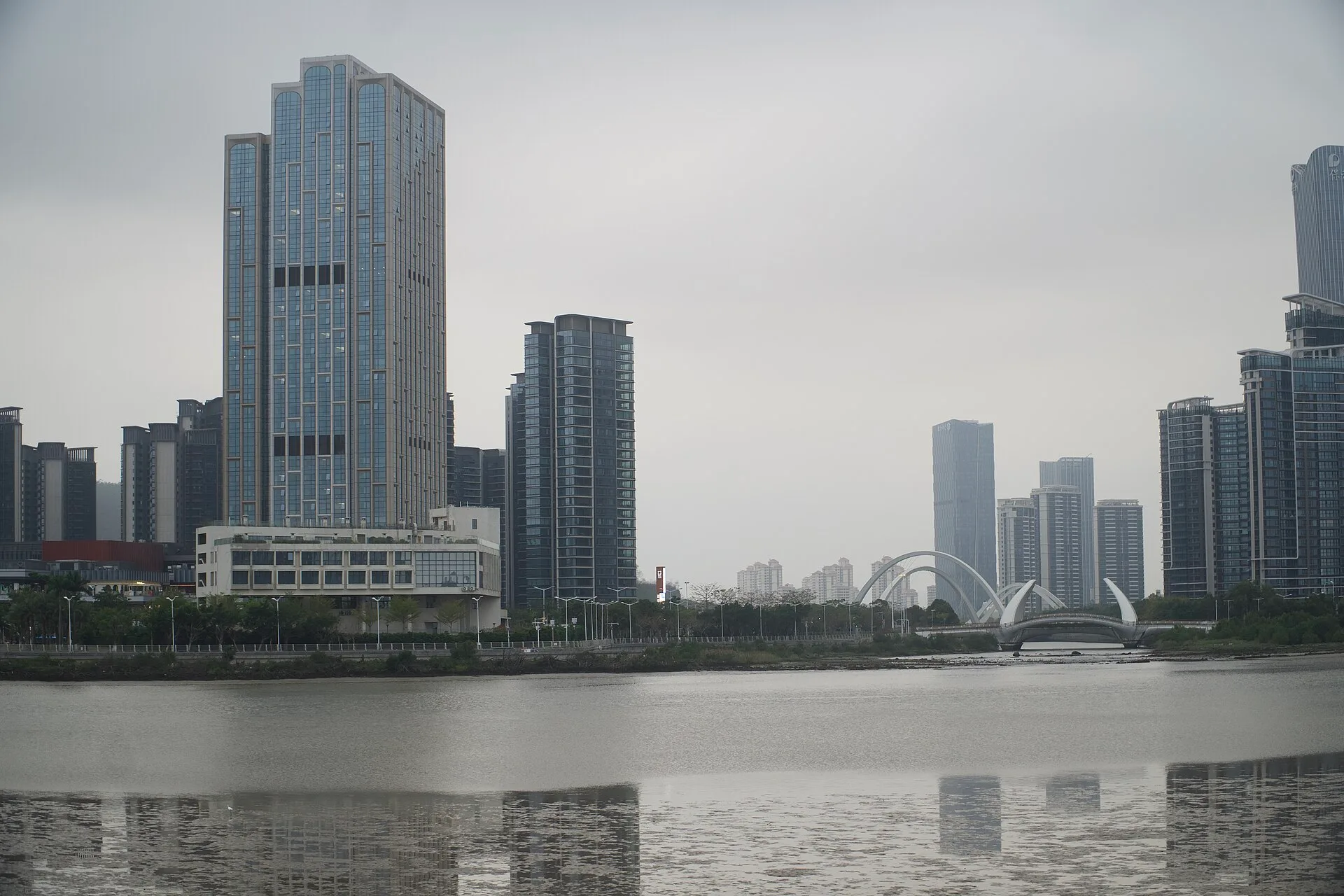
Hengqin Island lies beside Macao, within the city of Zhuhai in Guangdong province. It covers 106.46 square kilometres, about three times Macao's land area, and at its closest point it is 180 metres from Macao. Until 2009 it had a population of several thousand, mostly farmers and fishermen, and oyster farming was its main industry. In 2009 the State Council made Hengqin a state-level new area, and the same year Macao was granted jurisdiction over a new University of Macau campus on its eastern shore. Hengqin joined the China (Guangdong) Pilot Free Trade Zone in 2015, and in 2021 part of the island became the Guangdong-Macao In-Depth Cooperation Zone in Hengqin, governed jointly by Guangdong and Macao. Since March 2024 the zone has operated its own customs arrangement, under which qualifying goods from Macao enter duty-free and are taxed only when they pass on to the rest of the mainland.
WHERE IS HENGQIN ISLAND, AND WHY WAS IT ONCE TWO ISLANDS
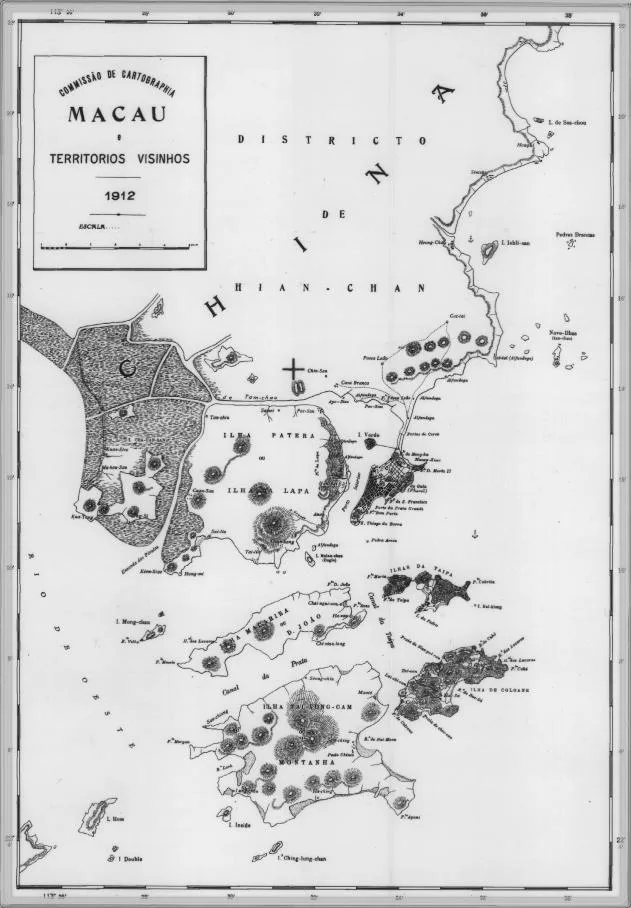
Hengqin was originally two islands, Xiao Hengqin and Da Hengqin, which the Portuguese in Macao called Montanha and Dom João. A landfill carried out in the 1990s joined them into a single landmass. According to Macau Business, only about 28 square kilometres of the island's 106.46 are good for development, and the landfill between the two former islands covers almost all of that area. The rest is largely hills. When the 2009 plan for the island was drawn up, 58 square kilometres were set aside to be left undeveloped to protect the environment, according to the South China Morning Post.
The Portuguese name lasted into the 2010s. Macau Business reports that official documents in 2010 alternated between Hengqin and Montanha, that Portuguese-language official documents in 2013 still used Ilha da Montanha while the Chinese versions used Hengqin, and that Montanha had disappeared from official publications by 2014. Before the newer rail and port links, the island was connected to Macao by the Lotus Bridge and by a pier at Coloane. At the end of 2011 its population was estimated at 4,000 to 6,000, about 90 times smaller than Macao's.
HENGQIN UNDER PORTUGUESE CLAIMS AND WARTIME OCCUPATION
According to Macau Business, Portugal never showed sustained interest in occupying the two islands. The first Portuguese soldiers went to the islands at the request of local residents, to fight the pirates who operated along the southern Chinese coast. The colonial authorities collected taxes from the islanders and built a leprosarium and a police station on Dom João. The 1887 treaty between China and Portugal left the status of the islands open. Portugal made some attempts to secure sovereignty after 1887 but withdrew in 1909.
In 1938 Portugal officially occupied the islands, citing the need to protect missionaries living there. Two years later Japanese forces expelled the Portuguese, and at the end of the Second World War Montanha and Dom João passed definitively to China. The same report notes a 1938 Portuguese-language newspaper account that Chiang Kai-shek had proposed a landfill to link the two islands; the islands were eventually joined by landfill in the 1990s. In the 1980s, Macao and Zhuhai discussed building an airport on Hengqin together and developing the island jointly, but nothing came of the talks.
HENGQIN'S FARMERS, FISHERMEN AND OYSTER FIELDS
In the Maoist era Hengqin was a frontier zone, occupied by the military and a small number of farmers and fishermen, according to the South China Morning Post. Macau Business records that five organised groups from Shunde and Zhuhai were relocated to the island in 1968 to farm, and that the first calls to urbanise Hengqin were made in 1989. In 2008, the year before the new area plan, the island had about 4,000 residents and a GDP of 400 million yuan, under 8,000 yuan per person.
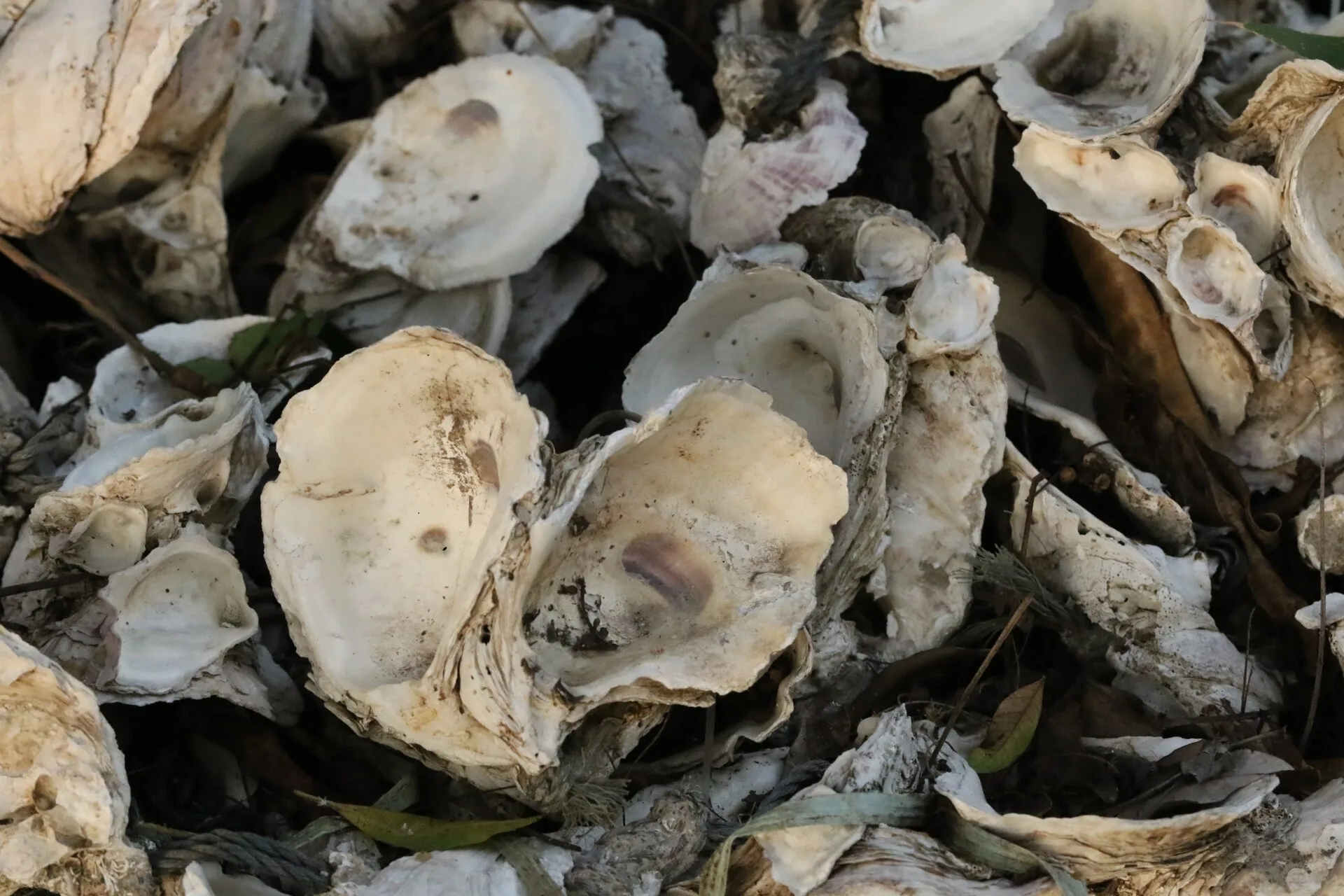
Oysters were the island's best-known product. A 2011 report by students at the University of Macau describes oyster farming as Hengqin's former main industry and records how construction was already shrinking it: oyster fields had declined, fewer places served oysters, and oyster business owners had lost land to requisition, with one considering moving his operation back to Yangjiang. The island then had 11 villages, and most villagers lived in houses they had built themselves. Because compensation for requisitioned homes depended on size and number of floors, and floors above the fifth were reportedly not compensated, most of these houses were four or five storeys tall.
THE 2009 HENGQIN NEW AREA PLAN
In January 2009, Xi Jinping, then China's Vice President, announced that Guangdong and Macao would develop Hengqin together. In August 2009 the State Council approved the island as the third new area of the reform era, after Pudong and Binhai. Fan Hengshan of the National Development and Reform Commission described the plan as an experiment with new policies. The plan reserved the south of the island for resort and leisure uses and the north for an international residential community, a high-technology industrial district, a science and technology zone, cultural and creative industries, and business services. It set population targets of 120,000 by 2015 and 200,000 by 2020.
Chimelong, a Guangzhou company, began building an ocean resort on the island's southern tip in April 2009. By 2014, Macao Magazine, published by the Macao government's Government Information Bureau, reported that the Chimelong Ocean Kingdom covered 132 hectares, that more than 4,000 companies had registered on Hengqin, 101 of them from Macao and Hong Kong, and that property prices had passed 26,000 yuan per square metre, more than twice those in urban Zhuhai. On 6 March 2011, Guangdong and Macao had signed a cooperation framework agreement, and a joint Guangdong-Macao industrial zone of 4.5 square kilometres was planned for industries including Chinese medicine, education and creative work.
THE UNIVERSITY OF MACAU CAMPUS ON HENGQIN
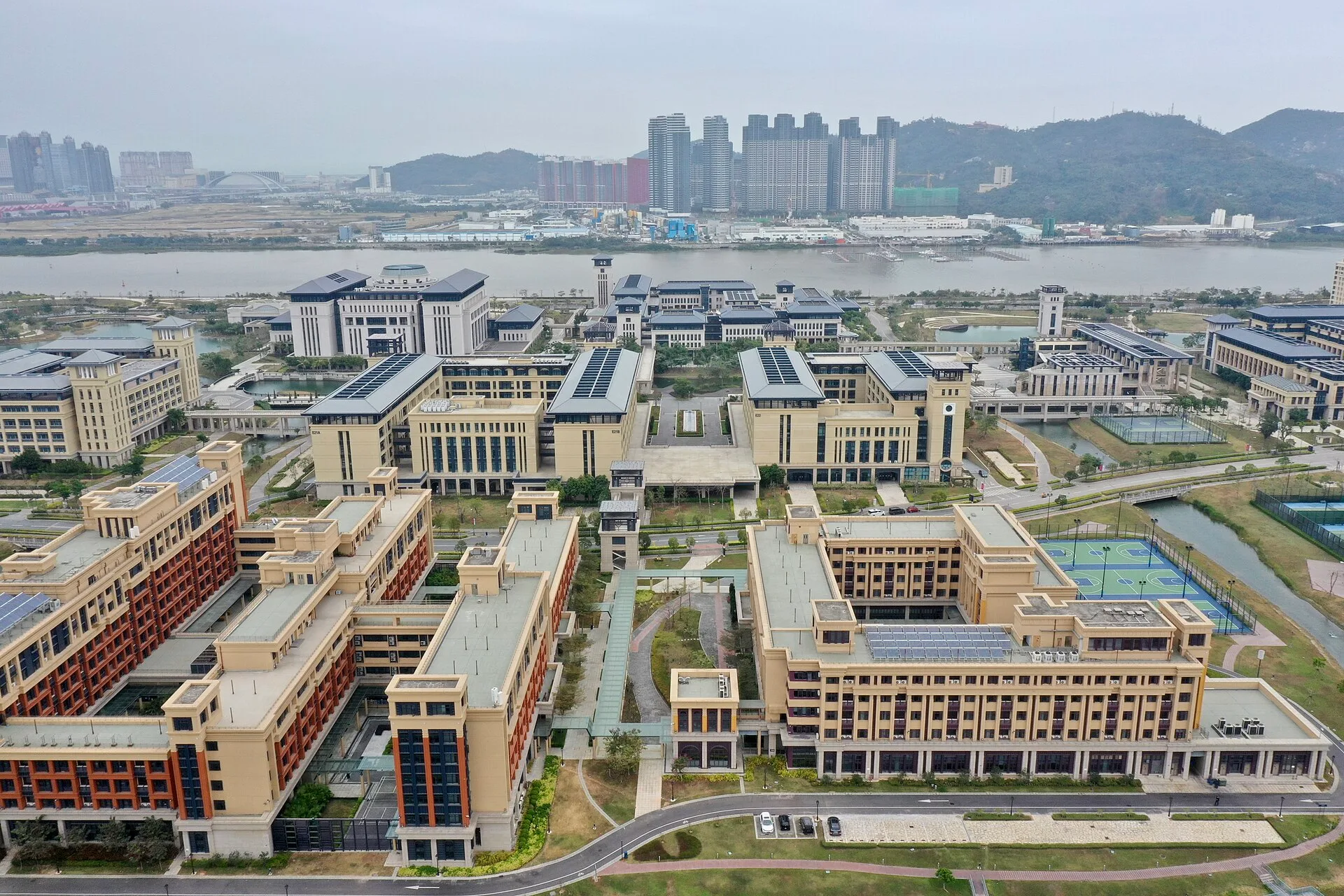
Under the 2009 arrangements, Macao law was to apply on Hengqin only to a new university campus. On 27 June 2009 the Standing Committee of the National People's Congress passed a decision giving Macao jurisdiction over a new University of Macau campus on the island's eastern coast, south of the Lotus Bridge and across a narrow channel from Macao. The site covered 1.0926 square kilometres, about 20 times the university's existing campus, and Macao leases it until 19 December 2049. A tunnel under the channel was planned for 24-hour travel, so that people entering or leaving the campus would not pass through border control. The decision limited the site to educational, academic, cultural, recreational and sports uses, with no gaming or commercial activity.
The campus was built in three years. Its chief designer was He Jingtang, and it was officially inaugurated on 5 November 2013 in a ceremony at which Vice-Premier Wang Yang and Macao's Chief Executive Chui Sai On unveiled the plaque. Tens of thousands of workers took part in its construction, and the contractor was Nam Yue Group. The Macao government had described the campus in 2009 as a pilot project for the wider joint development of Hengqin by Guangdong and Macao, and it was intended to host activities for the Macao community as well as the university.
FROM FREE TRADE ZONE TO THE GUANGDONG-MACAO COOPERATION ZONE
On 21 April 2015, the China (Guangdong) Pilot Free Trade Zone was launched across three areas with a combined 116.2 square kilometres: Nansha in Guangzhou, Qianhai-Shekou in Shenzhen and Hengqin in Zhuhai, which accounted for 28 square kilometres. Hengqin's area was assigned tourism, leisure and health, commercial and financial services, culture, science and education, and new and high technology, with the stated aim of supporting the diversification of Macao's economy. Its plan also called for a pilot zone for opening up cultural and education services and an international base for commercial services and leisure tourism, and it named the Lianhua (Lotus) Bridge as the area's link to Macao.
On 5 September 2021, the Central Committee of the Communist Party of China and the State Council released the General Plan for the Guangdong-Macao In-Depth Cooperation Zone in Hengqin. The two governments jointly set up a Management Committee to decide major plans, policies, projects and senior appointments, with an Executive Committee beneath it handling investment, land development, construction and public services. Qualifying enterprises pay a 15% enterprise income tax rate, and high-level and scarce talent working in the zone is exempt from personal income tax above 15%. The zone's target industries are scientific research and high-end manufacturing, traditional Chinese medicine and other Macao brands, culture, tourism and exhibitions, commerce and trade, and modern finance.
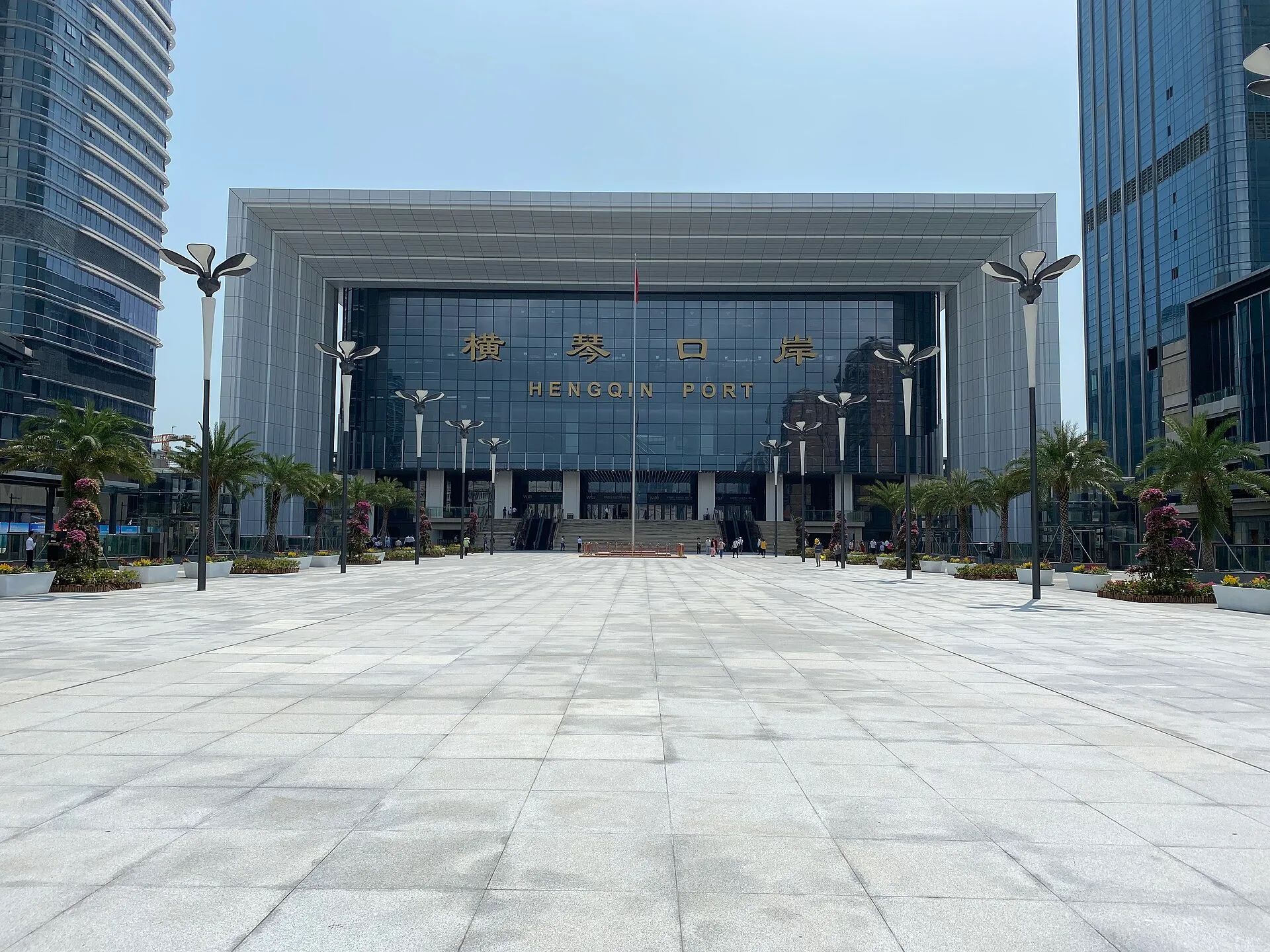
On 1 March 2024 the cooperation zone began operating a separate customs arrangement described as opening the first line and controlling the second line. The first line is the boundary between Hengqin and Macao; the second line is the boundary between Hengqin and the rest of the mainland. Qualifying goods entering from Macao across the first line are duty-free and others are bonded, while goods passing from Hengqin into the mainland across the second line are taxed under existing rules. China Daily reported targets of 120,000 Macao residents living in the zone and 80,000 Macao residents working there by 2035. On 2 December 2024, Macao's Light Rapid Transit Hengqin Line opened, extending the network from Lotus Station to Hengqin Port, a journey of about two minutes.
HYATT REGENCY HENGQIN ON THE ISLAND

Hyatt Regency Hengqin, completed in 2019, is the hospitality anchor of Lai Sun Creative Culture City on Hengqin Island, within Novotown, with 493 guestrooms and suites and interiors by Silverfox Studios. The hotel is connected to Hong Kong and Macau via the Hong Kong-Zhuhai-Macao Bridge. Its interiors use material warmth and Asian craft, with vertical timber slats, woven linen, rattan and pale veined stone, and the design was shaped by views toward the Hengqin hills and toward Macau.
SOURCES
- Macao Magazine, Government Information Bureau of the Macao SAR Pushing the Frontier
- South China Morning Post Heady plans for pristine island
- Macau Business MB Special Report: Hengqin, our precious neighbour
- University of Macau, Faculty of Social Sciences Hengqin Brings Spaces to Macao
- Government Information Bureau of the Macao SAR Macao granted jurisdiction over new university campus on Hengqin
- Government Information Bureau of the Macao SAR The New Campus Inauguration: a Historic Moment
- Belt and Road Portal China (Guangdong) Pilot Free Trade Zone
- Guangdong-Macao In-Depth Cooperation Zone in Hengqin General Situation of the In-depth Cooperation Zone
- China Daily Hengqin cooperation zone starts official operation
- Government Information Bureau of the Macao SAR LRT Hengqin Line Officially Opens Today