FROM WILD FLAX FIBRES IN A GEORGIAN CAVE TO THE MILLS OF BELFAST AND THE FLAX FIELDS OF NORMANDY
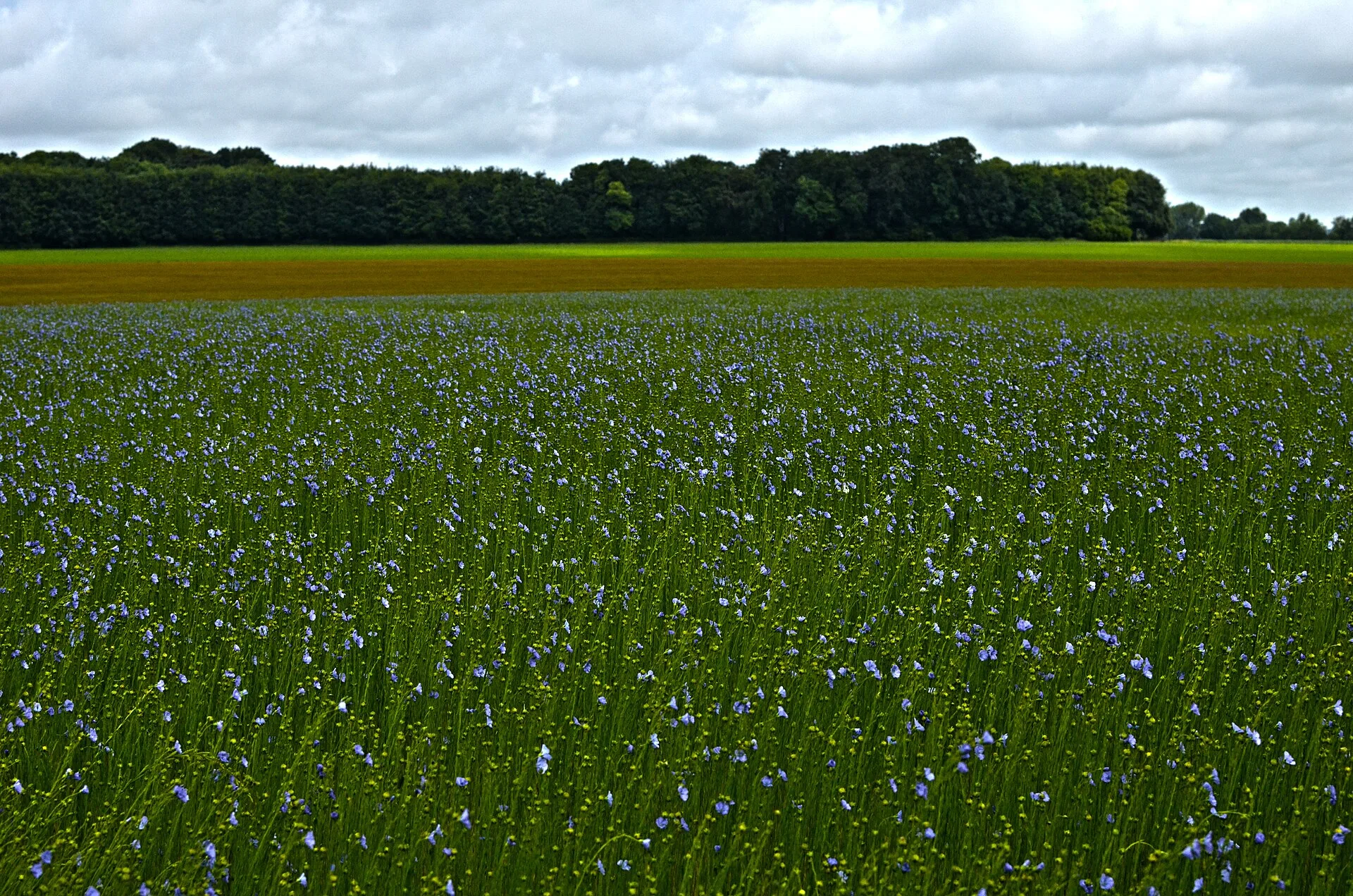
Linen is the fibre, yarn and fabric made from the flax plant, Linum usitatissimum, which is grown both for the fibre in its stalks and for the seed that yields linseed oil. Linen is made through a long sequence of field and workshop steps: the plants are pulled rather than cut, retted until the woody stalk rots, then broken, scutched and hackled to free the fibre before it is spun and woven. Twisted and dyed flax fibres more than 30,000 years old survive in a cave in Georgia, and ancient Egyptian tombs held some of the finest linen known. Flanders built a linen industry on the River Lys from the 15th century, and by the end of the 19th century, after the arrival of wet-spinning mills in Ulster, Belfast was the linen capital of the world. Today France, Belgium and the Netherlands produce three quarters of the world's long flax fibre.
WHERE DID LINEN COME FROM?
Some of the earliest evidence for the use of flax fibre comes from Dzudzuana Cave, in the foothills of the Caucasus in Georgia. A team including Eliso Kvavadze, Ofer Bar-Yosef of Harvard University, Anna Belfer-Cohen and Tengiz Meshveliani published the find in Science in 2009 as wild flax fibres 30,000 years old. Microscopic analysis of 27 clay samples from the cave's Unit D, dated to about 36,000 to 31,000 calibrated years before present, recovered 488 flax fibres. The later Unit C, dated to about 28,000 to 24,000 years ago, produced 787 fibre fragments.
Some of the Dzudzuana fibres had been worked. Unit D held 13 spun fibres and a twisted thread; Unit C held 18 spun fibres, a string with numerous knots and samples that appear to be two-ply and S-twisted. Many were coloured: the Unit D fibres were mostly black to grey and turquoise, and Unit C added a single pink fibre. The authors read the finds as evidence that hunter-gatherers were making cords for hafting stone tools, weaving baskets or sewing garments, and suggest the coloured fibres may indicate the production of colourful cloth. Britannica records later evidence of flax, among the oldest textile fibres used by humans, in the prehistoric lake dwellings of Switzerland.
WHAT DID LINEN MEAN IN ANCIENT EGYPT?
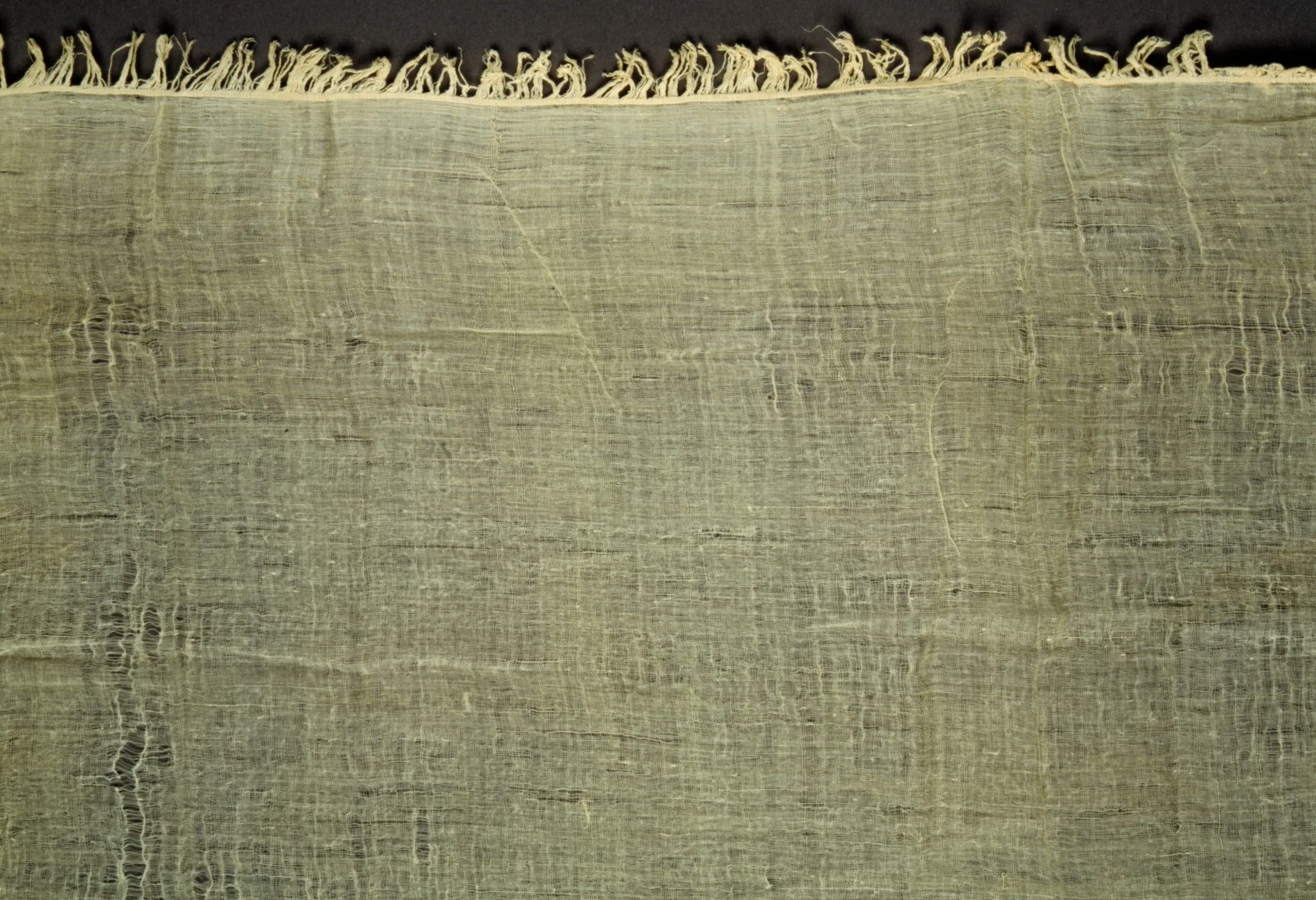
Fine linen fabrics have been found in ancient Egyptian tombs, and the Metropolitan Museum of Art notes that the earliest Egyptian funerary texts list linen cloth among the principal offerings for the deceased. One of the Met's examples, a length of very sheer linen cloth, dates to early Dynasty 18, about 1491 to 1473 BCE. It came from the tomb of Hatnefer and Ramose at Sheikh Abd el-Qurna in Thebes, which the museum excavated in 1935 to 1936. The tomb held linen sheets from the storehouses of Queen Hatshepsut, given as a funerary gift for the parents of Senenmut.
The Met sheet has 46 warp and 30 weft threads per square centimetre and weighs 140 grams. According to the museum, its superfine thread must have been spun from flax harvested when the plants were very young, and the length would have taken months of constant work to weave. The Met identifies it as the cloth the Egyptians called royal linen, the highest quality, and records that it was repaired and laundered in ancient times. Linen also wrapped the dead. A British Museum fragment of mummy wrapping made between 1000 and 600 BC is fine brown linen in a plain tabby weave, its threads S-spun and S-spliced, with about 31 warp ends and 12 weft picks per 10 millimetres. It is coated with a yellow pigment that the museum suggests may be yellow ochre.
HOW IS LINEN MADE FROM FLAX?
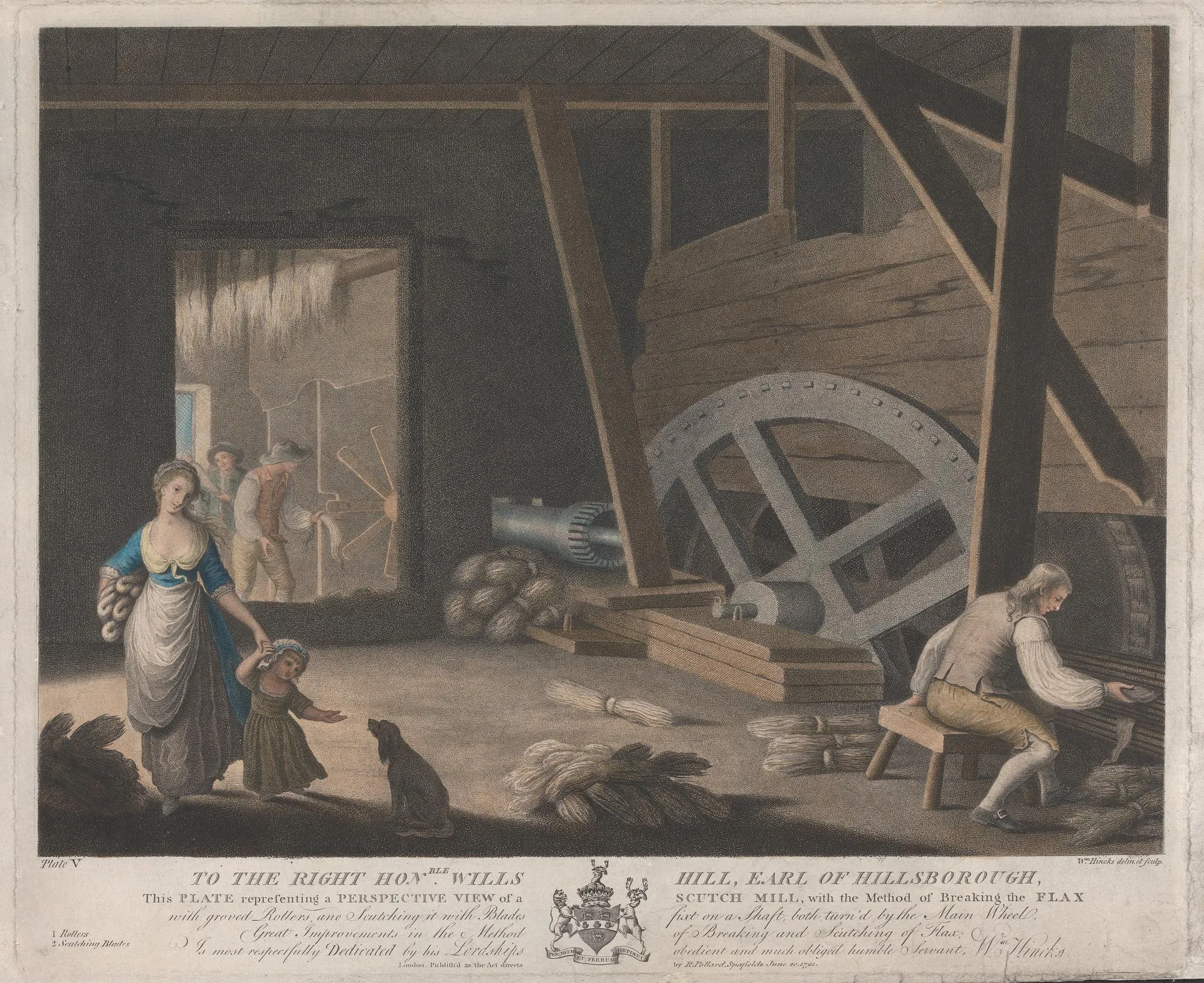
Britannica summarises linen production as a series of operations on the plant stalks, beginning with retting, a fermentation process, followed by drying, crushing and beating. A resource from CCEA, Northern Ireland's Council for the Curriculum, Examinations and Assessment, sets out the traditional Ulster sequence. Flax seed was sown in April and the crop harvested in late July or August. The plants were pulled up rather than cut down, because the fibre used for cloth runs right down into the roots, and were tied into bundles called beets. The beets were retted for up to 14 days in a lint dam, where soaking rotted the woody material of the stalk, then laid out to dry in the open air; in Ireland they often also needed a hot kiln.
Three stages then separated fibre from wood. Breaking beat the beets with a wooden mallet to break up the woody parts. Scutching knocked the broken wood away with a long wooden blade; both stages raised a fine dust called pouce. Hackling drew the fibres through a big metal comb to untangle them and remove the last woody pieces. The Alliance for European Flax-Linen and Hemp defines long fibre as the main product of scutching and the grade used in textiles. Women traditionally spun the dried and combed flax into yarn on spinning wheels in their cottages, and the yarn was woven on a loom into brown linen. That cloth was then bleached white on a bleach green, usually beside a river, from March to October.
HOW DID FLANDERS BUILD A LINEN INDUSTRY ON THE RIVER LYS?
In Flanders, according to The Low Countries, the Flemish and Dutch cultural journal, linen played a major role from the 15th century, when Kortrijk specialised in weaving damask. Production rose sharply in the 16th century, when Flemish linen found a large market in Spain and, through Spain, in its trade with the Americas. In the 18th century flax was still the only industry in Flanders. In the 19th century the flax and linen trade brought unprecedented prosperity to the region of the Leie, the river known in French as the Lys, and above all to Kortrijk, whose flax exchange opened on Mondays.
Flax stalks were first soaked in pools and marshes, and later retted in massive quantities in the flowing water of the Leie. A legend credited the river with special retting properties and gave it the name the Golden River; The Low Countries suggests that cause and effect were reversed, since retting turned the water a yellowish colour. Hot retting later allowed processing to take place further from the Leie, whose bends were straightened for shipping. Mechanisation, foreign competition, cotton and synthetic textiles dealt the Flemish industry a severe blow, and a flax crisis followed in the 1960s. Kortrijk's Texture museum began as the Flax Museum in 1982, founded by Bert Dewilde, and occupies a warehouse built just before the First World War by the English Linen Thread Company.
HOW DID BELFAST BECOME THE LINEN CAPITAL OF THE WORLD?
In the north of Ireland in the early 19th century linen was still made on farms. The Open University's history of the Belfast linen industry describes flax harvested and scutched at home, spun into yarn by the women of the household, woven into cloth and sold in local market towns. Drapers and bleachers controlled much of the wealth, buying raw brown linen and bleaching it over roughly six months before selling the white cloth. The Linen Board built a White Linen Hall in Dublin in 1728; bleached linens were sold there for export, and northern bleachers later built their own White Linen Hall in Belfast to deal directly with English traders.
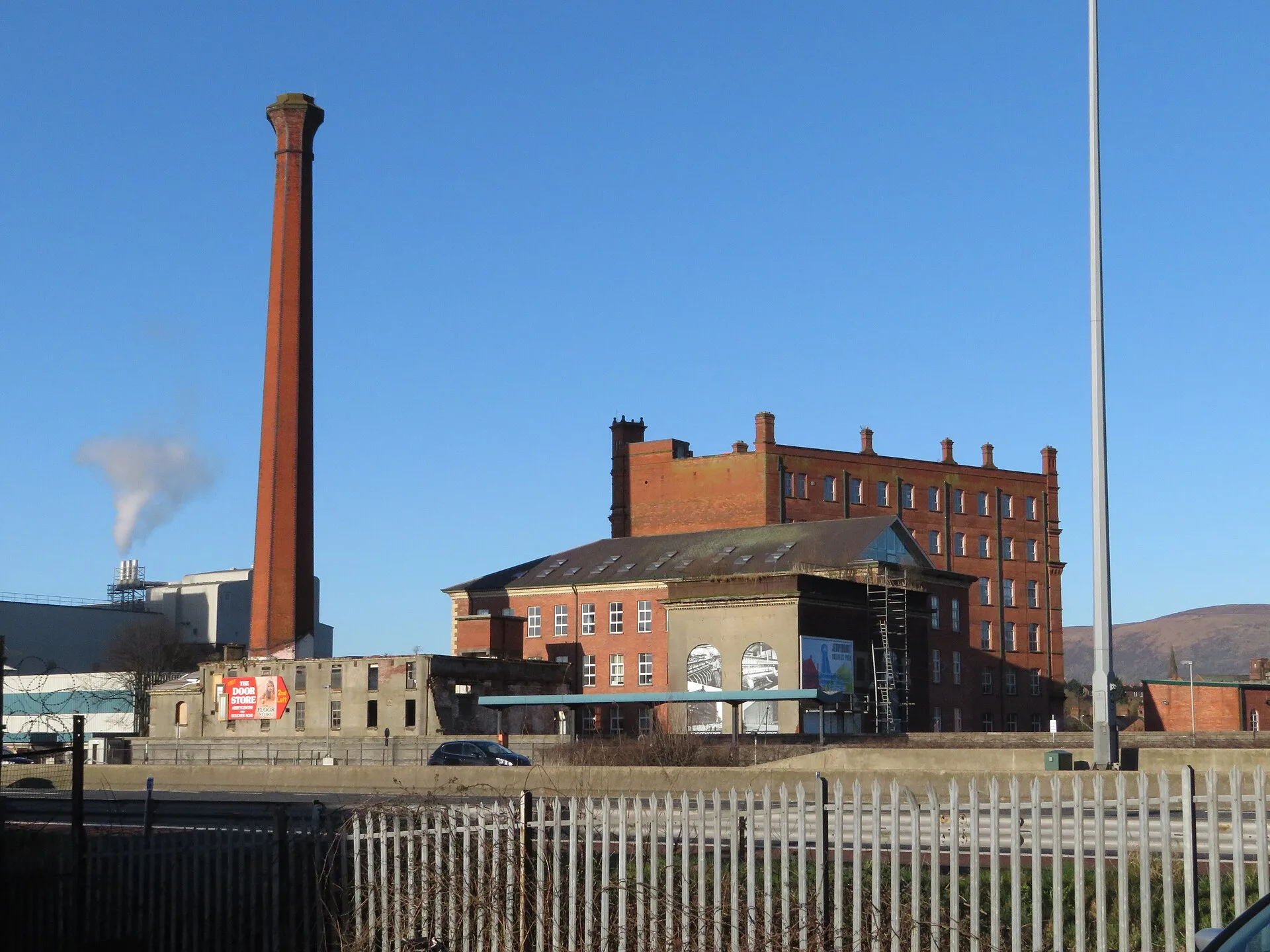
Mechanisation came through spinning. Flax is more brittle than cotton, which by 1811 employed over 50,000 people in and around Belfast, and its brittleness meant a new spinning machine had to be invented. In 1825 James Kay of Preston developed wet spinning, which passed flax through warm water and allowed a much finer yarn. Water-powered wet-spinning mills appeared in Ulster in the late 1820s. By 1850 there were 62 mills with 19,000 workers, and by 1871 there were 78 mills with 43,000. Linen grew fastest in the 1860s, and by the end of the 19th century Belfast was known as the linen capital of the world. Its population more than doubled between 1841 and 1871, doubled again by 1901, and had outstripped Dublin's by 1891.
WHERE IS LINEN FLAX GROWN TODAY?

The Alliance for European Flax-Linen and Hemp, formerly known as CELC and founded in 1951, describes Europe as the world's leading producer of flax fibre. France, Belgium and the Netherlands produce three quarters of the world's long fibre. In 2022 Europe grew 145,000 hectares of flax, about 127,000 of them in France, where the main growing regions are Normandy, Hauts-de-France and Île-de-France. Its area under flax rose by 133 per cent from 2010 to 2020. The Alliance, which has more than 10,000 members across 16 European countries, lists flax as an excellent first crop in a rotation cycle.
European flax, according to the Alliance, is grown with zero irrigation outside exceptional circumstances, a position it notes is being studied in the context of climate change. The Alliance describes flax as a zero-waste plant of which 100 per cent is used, divided into long fibres, short fibres, shives and seeds. Its listed end uses include textiles, fashion, technical composites, insulation, particle boards for construction, animal bedding, horticultural mulch, seed production and oils for painting and solvents. The Alliance's European Flax label guarantees traceability for flax fibre grown in Western Europe, and its Masters of Linen label covers linen made by European companies on European and Euromed sites.
WHY IS LINEN USED IN INTERIORS?
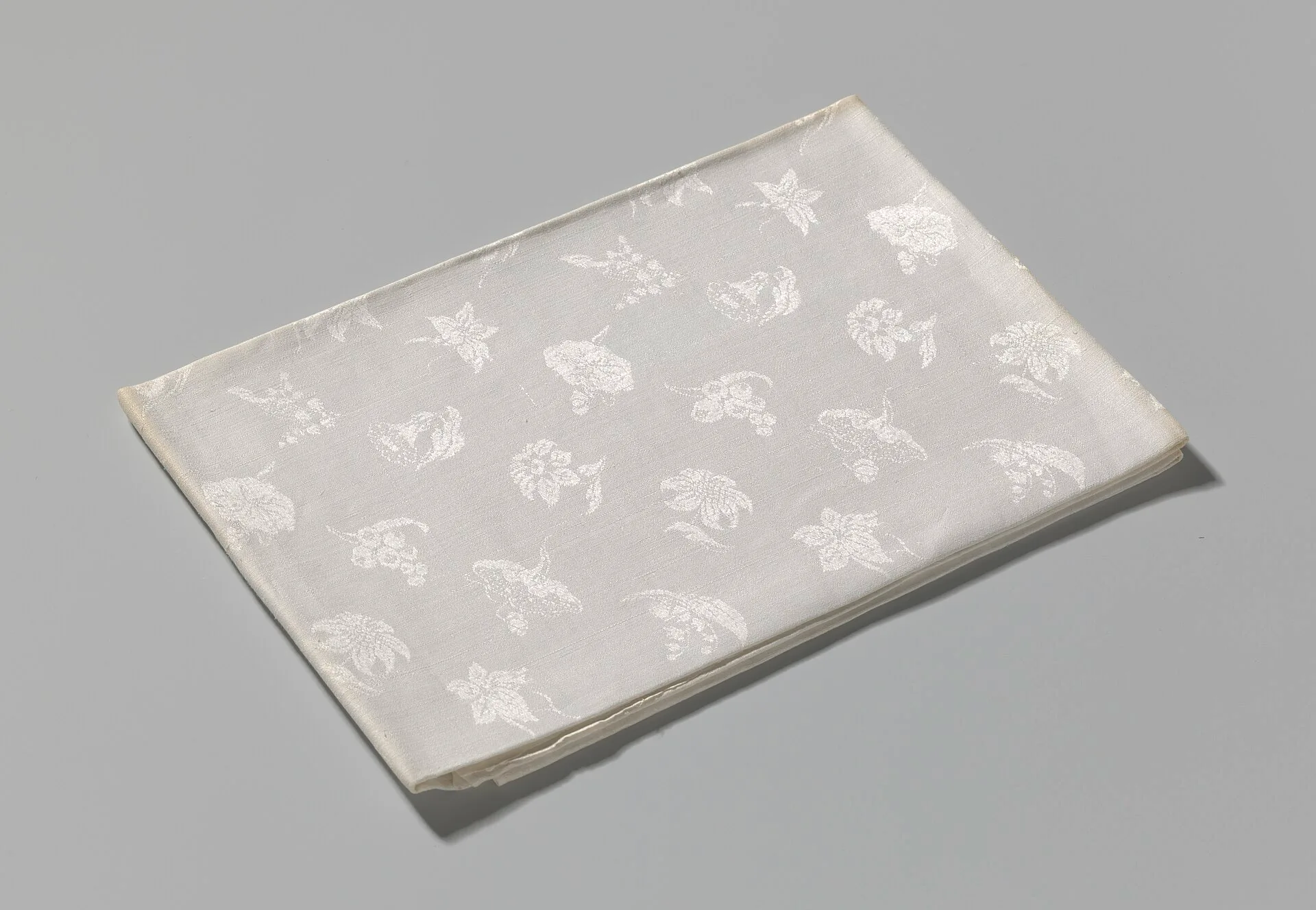
Britannica sets out the properties of linen. It is stronger than cotton, dries faster and is less affected by sunlight. It absorbs and releases moisture quickly and conducts heat well, which is why linen garments feel cool to wear. Its low elasticity gives it a hard, smooth texture and makes it prone to wrinkling. Fine grades are made into woven fabrics and laces for apparel and household furnishings. The Alliance for European Flax-Linen and Hemp lists the home among the end uses of European flax.
Linen has also served as a base for printed furnishings. The Victoria and Albert Museum holds a French furnishing fabric made between 1550 and 1599, museum number 1546-1899, block printed in colours on linen. The V&A describes it as a printed wall covering whose pattern derives from woven silks, with ogival compartments of flowers in a velvet pattern. Its surface texture was achieved by sprinkling it with crushed fragments of the mineral mica. The V&A attributes the piece to France with a question mark and records its maker as unknown.
HYATT REGENCY HENGQIN IN ZHUHAI, CHINA

Hyatt Regency Hengqin, completed by Silverfox Studios in 2019, is the anchor of Lai Sun Creative Culture City in Novotown on Hengqin Island and has 493 rooms and suites. The hotel is connected to Hong Kong and Macau via the Hong Kong to Zhuhai to Macau Bridge, whose construction is covered in our article on the sea crossing. Views to the Hengqin hills and Macau shaped the design. The interiors combine vertical timber slats, woven linen, rattan and pale veined stone. Rattan, the Southeast Asian palm used in furniture, is the subject of a separate article on rattan.
The woven linen at Hyatt Regency Hengqin is the end product of the sequence traced above: flax pulled from the ground with its roots, retted to rot the woody stalk, broken, scutched and hackled to free the long fibre, then spun into yarn and woven. It is the same material that Egyptian weavers made into royal linen around 1491 to 1473 BCE, that Flanders traded from the 15th century and that Belfast's wet-spinning mills produced in the 19th century. Three quarters of the world's long flax fibre now comes from France, Belgium and the Netherlands.
SOURCES
- Harvard University DASH (Science) 30,000 years old wild flax fibers: testimony for fabricating prehistoric linen
- Britannica Flax
- Britannica Linen
- The Metropolitan Museum of Art Length of Very Sheer Linen Cloth
- British Museum Textile; cloth; mummy-wrapping (EA6607)
- CCEA Flax: From Seeds to Stricks, Teacher Information Card
- The Low Countries Texture
- The Open University (OpenLearn) The Belfast linen industry
- Alliance for European Flax-Linen and Hemp Alliance Flyer (EN)
- Victoria and Albert Museum Furnishing fabric, France, 1550 to 1599