HOW A CLIMBING PALM FROM THE FORESTS OF SOUTHEAST ASIA BECAME CANED CHAIRS, VICTORIAN WICKER AND SINGAPORE WORKSHOP FURNITURE

Rattan is the stem of climbing palms that grow in the tropical forests of Asia, Africa and the western Pacific, with the greatest diversity in the Malay Peninsula and Borneo. Botanists count roughly 550 to 600 species, most of them in the genus Calamus, and Indonesia supplies an estimated 80 to 90 percent of the world's raw cane. Split into narrow strips, rattan reached London through the East India Company after 1660 and became the caned chair of Restoration England. In Massachusetts, Cyrus Wakefield built a rattan business on imported cane that employed more than 1,000 people by 1873. In Singapore, 17 Cantonese rattan workshops formed a guild on Hock Lam Street in 1910, and the local industry peaked in the 1960s and 1970s. Overexploitation and shrinking forests have left at least 117 species threatened in the wild.
WHAT IS RATTAN?
Rattan is a group of spiny climbing or trailing palms. C.B. Sastry of the University of Toronto, writing in the FAO forestry journal Unasylva, gives a figure of some 600 species and describes rattan as strictly an Old World plant, found in tropical and subtropical Asia, the Pacific and equatorial Africa. Diversity peaks in the Malay Peninsula and Borneo, with a secondary centre in New Guinea, and four genera occur in equatorial Africa, three of them found nowhere else. A 2014 field guide by Charles Peters and Andrew Henderson, published by WWF with IKEA and the New York Botanical Garden, counts over 550 species in 12 genera, all in the palm subfamily Calamoideae. According to Singapore's National Heritage Board, the word is believed to come from the Malay rotan.
The largest genus is Calamus. Andrew Henderson's revision of the genus at the New York Botanical Garden recognises about 500 species, roughly one sixth of all palm species, and identifies Calamus as the source of the canes used in the international rattan furniture industry. The WWF guide separates species by the spines on their leaf sheaths and by whether they carry flagella or cirri, which are present in some species and absent in others. Not every species climbs: some Calamus and Daemonorops species are free-standing.
WHERE DOES MOST OF THE WORLD'S CANE COME FROM?
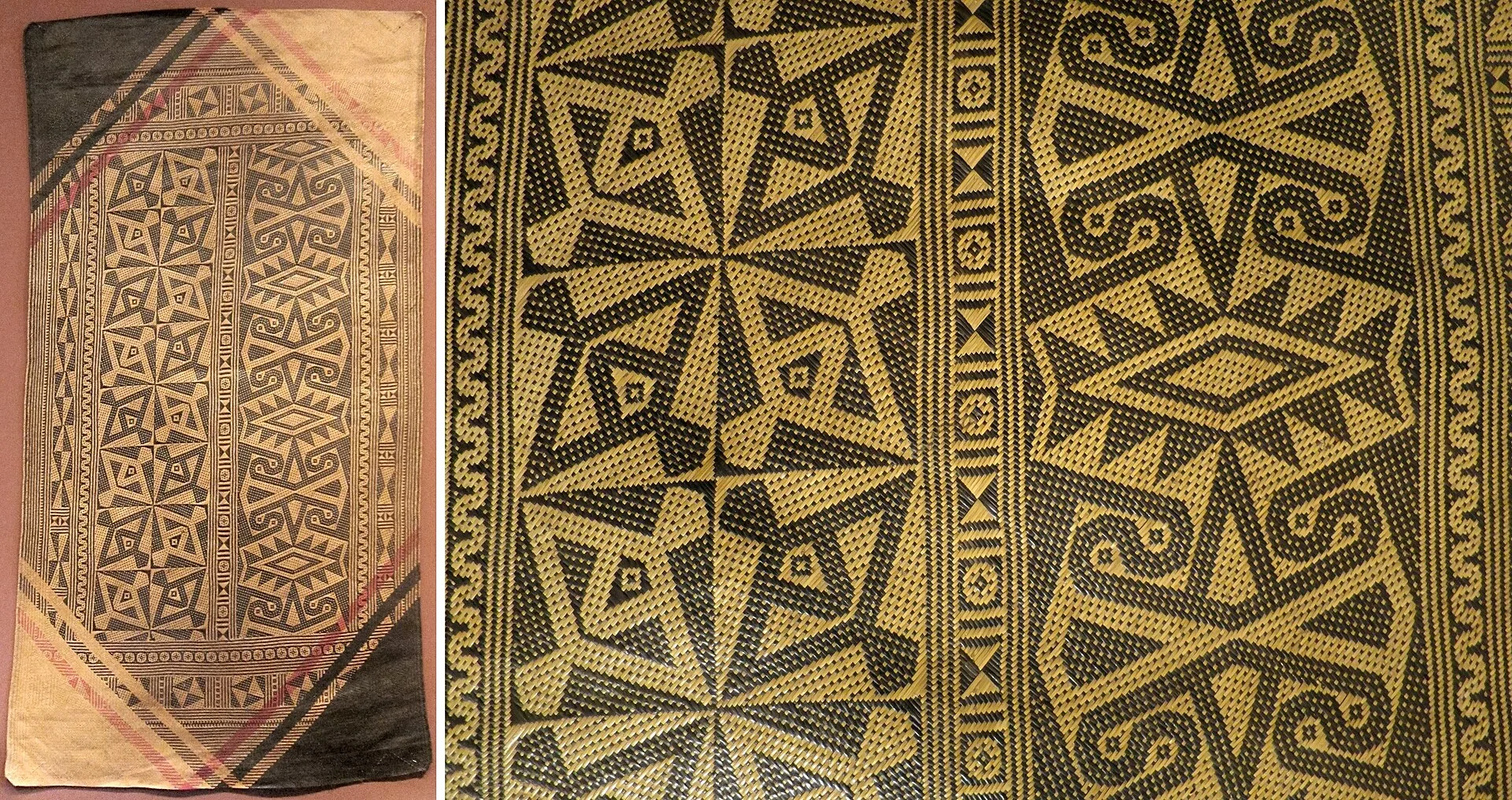
Indonesia holds the largest share of the resource. A case study by Nancy Lee Peluso, prepared for FAO before July 1988, records 300 rattan species in seven genera in Indonesia, about 100 of them in Kalimantan, and cites an estimate that Indonesia supplied 90 percent of the raw rattan traded on world markets. Sastry puts Indonesia's share at an estimated 80 to 90 percent of the world's raw material, from 11.5 million hectares of rattan-rich forest with an estimated annual allowable cut of 700,000 tonnes. The 2014 WWF guide gives a figure of about 80 percent.
Only a few species carry the trade. Peluso found that nine or ten commercial types were widely traded in East Kalimantan, led by Calamus caesius, C. manan, C. trachycoleus and C. scipionum. East Kalimantan had the largest wild rattan production area of Kalimantan's four provinces: it produced 7,000 tons in 1979, of which about 4,405 tons were exported, and as late as 1966 the province exported more rattan than timber. Peluso notes that Indonesia's minor forest products, rattan among them, have been traded on world markets since at least the fifth century.
HOW IS RATTAN HARVESTED AND PROCESSED?

Peluso's East Kalimantan study describes how collectors harvest wild cane in the province. Collectors cut the cane and remove its sheath with a machete and pull it down from the treetops, or tug climbing stems free with a hook-like knife tied to a long cane or bamboo pole. The cut rattan is folded in half in lengths of 4 to 6 metres, tied into bundles of about 28 kilograms and air-dried. For some varieties, collectors remove the outer coating by wrapping the cane round a tree trunk and rubbing it back and forth, or by washing it with sand at the river's edge.
Processors then re-wash and re-sand the canes and air-dry them for 7 to 14 days. Small canes are smoked with sulphur for 12 to 24 hours, while larger canes are boiled in a diesel-based mixture for 20 to 60 minutes and dried upright for 5 to 14 days. For weaving material, canes are cut to 3 metres, sanded, sulphured and dried, then split by hand or machine into strips 2.5 to 3.0 mm wide. Splitting machines let processors use both the outer peel and the inner pith, which reduces waste.
The two parts became separate products. In 19th-century Massachusetts, Cyrus Wakefield sought uses for the other parts of rattan cane, the pith and shavings, most of which were then discarded. In Singapore, the National Heritage Board records that machines can heat and shape rattan but assembly is done by hand: thick canes form the chair frame, thin rattan is woven by hand for the seat and back, the step that tests a maker's skill, and staining or colouring comes last.
HOW DID RATTAN CANE REACH EUROPE?

Cane furniture reached England in the 17th century. According to the Victoria and Albert Museum, caned chairs appeared in England soon after the Restoration of King Charles II in 1660, and both the technique and the material, rattan split into long narrow strips, came from Asia. The East India Company imported the canes to London in large quantities, and production of caned furniture was concentrated in London workshops. The museum's carved walnut armchair with a caned seat, made in London around 1690 to 1710, is one example of the type.
The V&A records that caned chairs quickly became popular and were cheaper and lighter than upholstered chairs and less prone to dust and pests. They appear in the inventories of both middle-class and noble households into the first half of the 18th century and were often used with a light seat cushion. Caned chairs were also exported from London in such numbers that they were known in France as chaises d'anglaise and in the German states as englische Stühle.
CYRUS WAKEFIELD AND VICTORIAN WICKER

The Wakefield Historical Society traces the Wakefield Rattan Company to 1836 and Wakefield and Company, a Boston grocery run by Cyrus Wakefield and his younger brother Enoch. The society dates his start in rattan, probably, to the early 1830s, when he bought a small lot of rattan discarded on a Boston wharf by a sailing ship from the South Pacific, which had used it to pack its cargo. Within a few years his imports of Canton split rattan were known throughout the United States. In 1855 he moved production to South Reading, Massachusetts, beginning with baskets and skirt hoops, then woven cane chair seats.
The company expanded into home and office furniture, and its workforce grew from 75 in 1860 to more than 1,000 by 1873. On 17 October 1873 Wakefield incorporated the business as the Wakefield Rattan Company, capitalised at $1,000,000, and he died of a heart attack nine days later; the town had just renamed itself Wakefield in his honour. In 1897 the company merged with Heywood Brothers and Company and the Heywood and Morrill Rattan Company to form Heywood Brothers and Wakefield. A Wakefield armchair of 1880 to 1900 at Historic New England, in rattan wicker and maple with a diamond-woven back, carries a label naming Boston, New York and Chicago.
SINGAPORE'S CANE MERCHANTS AND WORKSHOPS

Singapore was historically a centre for the entrepot trade in rattan, and the National Heritage Board records traders and makers concentrated in the city centre at Boat Quay, Hock Lam Street, Carpenter Street, Victoria Street and Telok Ayer. Cantonese firms dominated raw rattan processing for much of the 20th century. In 1910, 17 rattan workshops merged to form the Cantonese Rattan Guild at No. 25A Hock Lam Street, renamed the Kwong Pong (Cantonese) Rattan Guild in 1947 and the Singapore Rattan Industry Association in 1978. Rattan furniture makers were often Hakka, while cane exporters and rattan basket makers were often Teochew.
The industry peaked in the 1960s and 1970s, and in the 1980s Singapore was a centre for regional rattan research. Peluso's FAO study, prepared before July 1988, records about 20 percent of Indonesia's raw rattan going to Singapore and about 60 percent to Hong Kong, where canes were made into furniture or cleaned and re-sorted for re-export to Europe, the United States and Japan. Workshops moved out to Kampong Bugis, Balestier, Kallang Bahru, Alexandra and Joo Chiat, and later to industrial estates at Sungei Kadut, Ang Mo Kio, Hougang and Tampines. The trade declined from the 1980s and 1990s, and the association was dissolved at the end of 2011.
The National Heritage Board listed the making of rattan products in Singapore's intangible cultural heritage inventory in October 2019. Its record features Chen Foon Kee of Chun Mee Lee Rattan Furniture, from a Hakka family of Xing Ning county in Guangdong, whose father entered the trade in the 1930s. Chen learned the craft from his parents from the age of 11, took over in the 1960s and moved the shop from Anson Road to Alexandra Brickworks Estate in 1979. He makes chairs, mosquito net frames, baskets, beds and lamps.
IS RATTAN FURNITURE SUSTAINABLE?
Furniture is the most popular rattan product. Sastry estimates that rattan furniture is probably under 4 percent of world furniture trade but over 25 percent of the output value of Asia's furniture industry, and that more than 700 million people trade in or use rattan. He attributes rattan's scarcity primarily to overexploitation and shrinking forest area, and cites the IUCN Red List in recording at least 117 rattan species as threatened in the wild. The 2014 WWF guide, written for Cambodia, Laos and Vietnam, where it identifies 65 species, notes that most, if not all, rattan there is harvested in an uncontrolled manner, with quotas based more on demand than on the actual supply of cane.
Cultivation is one response. Brian Belcher of CIFOR, writing in Unasylva on village rattan gardens in Kalimantan, found that Calamus caesius made up more than 90 percent of plantings. He records first harvests 8 to 10 years after planting and peak output at 24 to 30 years, with 50 to 350 clumps per hectare, a mean of around 170, on gardens averaging 1.4 hectares. Fires in 1997 destroyed up to 90 percent of the rattan gardens in some villages, and Belcher records that exports of rattan products, above US$350 million in 1995 and 1996, fell and then recovered to almost US$300 million in 1999.
EMBU AT MANDARIN ORIENTAL, SINGAPORE

Embu is the all-day dining restaurant on level 3 of Mandarin Oriental, Singapore. Silverfox Studios completed the project in September 2023, with the design led by Susan Heng and Patrick Waring. The restaurant takes its name from the Tembusu, a tree known for its fragrant flowers and its sturdy wood. The restaurant's interior is organised around the themes of Singapore's Garden City: canopy, botanical planting, pavilions and greenhouses. Curved louvred timber canopies and framing echo the perpendicular branching of the Tembusu tree.
Underfoot, the restaurant uses Peranakan black-and-white porcelain floor tiles, and the interior also includes open-weave rattan. Rattan is the stem of climbing palms, chiefly Calamus, and Indonesia supplies an estimated 80 to 90 percent of the world's raw cane. Split into strips, it reached London with the East India Company after 1660, supplied Cyrus Wakefield's rattan company in South Reading, Massachusetts and supplied the Cantonese, Hakka and Teochew workshops of Hock Lam Street, Boat Quay and later Sungei Kadut in Singapore.
SOURCES
- National Heritage Board, Roots.gov.sg Making of Rattan Products
- National Heritage Board, Roots.gov.sg Notice and Certificate of Registration of the Singapore Rattan Industry Association
- FAO Case Study One: Rattan Industries in East Kalimantan, Indonesia
- FAO, Unasylva Rattan in the twenty-first century: an overview
- FAO, Unasylva Rattan cultivation and livelihoods: the changing scenario in Kalimantan
- WWF Systematics, Ecology and Management of Rattans in Cambodia, Laos and Vietnam
- New York Botanical Garden Revision of Calamus
- Victoria and Albert Museum Armchair, London, about 1690 to 1710
- Wakefield Historical Society John Wall, The Wakefield Rattan Industry
- Historic New England Chair, Wakefield Rattan Co., 1880 to 1900