HOW A SCREW-TOP GLASS JAR PATENTED IN 1858 BECAME THE RECOMMENDED HOME CANNING JAR

A Mason jar is a glass home-canning jar with a threaded neck and a screw-on lid, named after John Landis Mason, a New Jersey-born tinsmith who patented the screw-top design on 30 November 1858 as US Patent 22,186. It followed Nicolas Appert's work in France half a century earlier, which showed that food sealed in glass and heated in boiling water would keep. The Ball brothers mass-produced the jar in Muncie, Indiana, Alexander H. Kerr patented a two-piece sealing lid in 1915, and the University of Georgia's National Center for Home Food Preservation now calls Mason-type jars the best choice for home canning.
WHERE DID PRESERVING FOOD BY HEAT COME FROM?
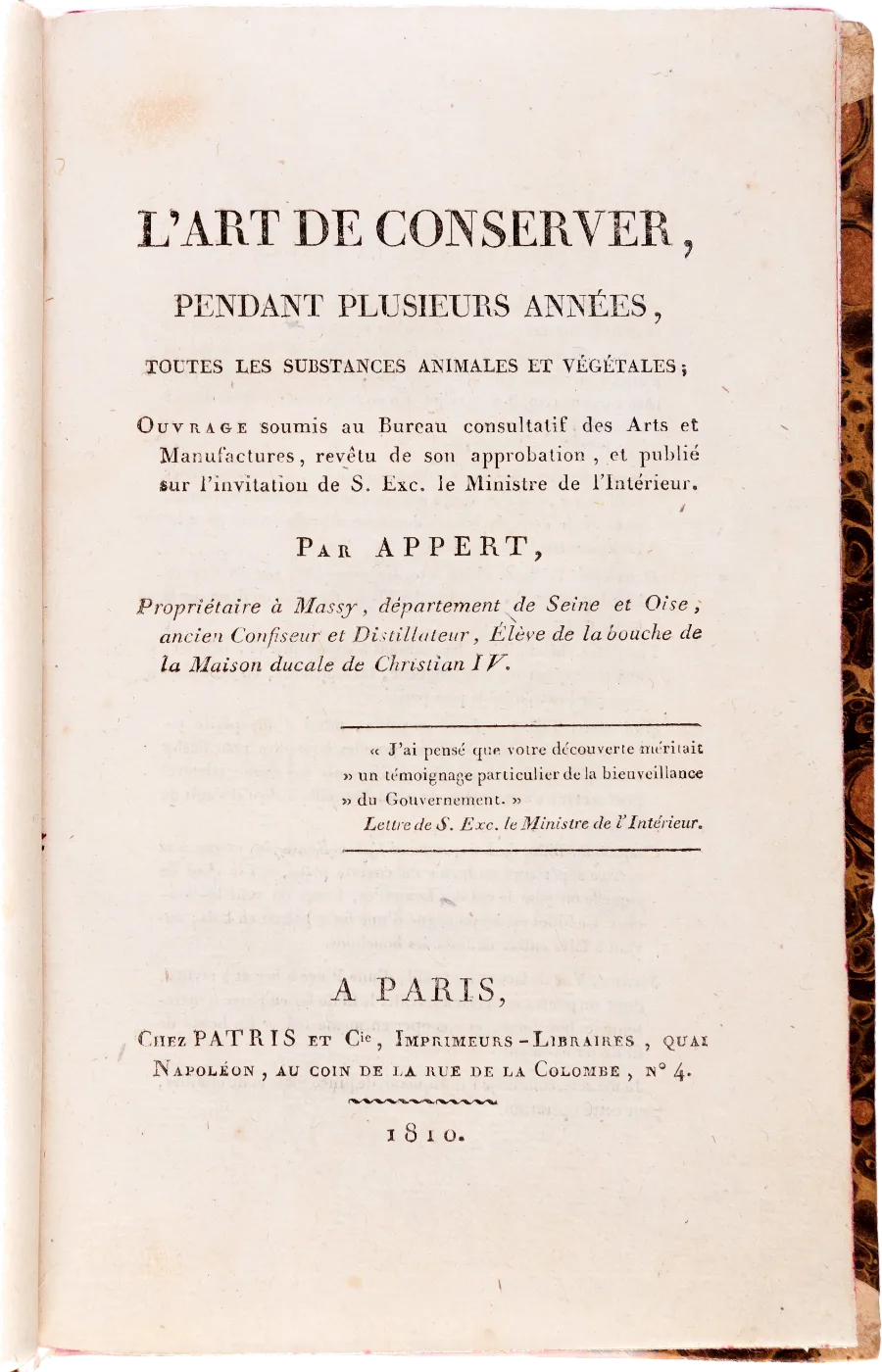
Heat preservation in sealed containers is credited to Nicolas Appert (c. 1749 to 1841), a chef, confectioner and distiller born in Châlons-sur-Marne. According to Britannica, he responded to a prize offered by the French Directory for a way to preserve food for transport, and began about 14 years of experiments in 1795. His method used glass containers stoppered with cork, reinforced with wire and sealing wax, then kept in boiling water for set lengths of time. The University of California's Master Food Preserver programme records that his jars measured 2 to 4 inches across, with walls of even thickness and no threads.
In 1810 Appert received a 12,000 franc award on condition that he publish his process; the University of California notes that a typical French worker then earned 3 francs a day. He published L'Art de conserver, pendant plusieurs années, toutes les substances animales et végétales that year and used the money to open the House of Appert at Massy, near Paris, which operated from 1812 to 1933. The method worked for about 50 years before Louis Pasteur explained that boiling killed the microbes that cause spoilage. The USDA's National Agricultural Library dates Peter Durand's tin canister to the same year.
WHO INVENTED THE MASON JAR?

Smithsonian magazine describes John Landis Mason as a New Jersey-born tinsmith who, in the 1850s, set out to improve home canning, at a time when home canners sealed jars with wax and stoppered them with corks. He patented the threaded screw-top jar in 1858, aged 26. US Patent 22,186, dated 30 November 1858, names the inventor as John L. Mason of New York and covers improvements in the necks of bottles and jars. The document refers to caps from Mason's earlier patents rather than claiming a new one.
The patent describes a jar made in a mould, with the screw thread formed on the outside of the neck. Mason stopped the thread short of the top, because a thread running to the rim would be damaged when the rim was ground smooth, leaving sharp points that cut the cap. He also stopped it short of the shoulder, leaving a plain groove between the thread and the swell of the jar. A thread running into the shoulder, the patent explains, would block the cap as it came down, so the rubber washer would not seat closely and the jar would lose its airtight seal.
The patent's two claims cover the groove that separates the thread from the shoulder and a thread that vanishes into the neck at both ends. Smithsonian magazine places the Ball brothers' entry into the business in 1880, the year after Mason's original patent expired. It also records that Mason did not patent the rubber ring seal for the lid until 1868, that he lost control of the invention after court cases and failed partnerships, and that he died in 1902, allegedly penniless.
HOW WERE EARLY MASON JARS MADE?
Mason was a tinsmith, not a glassblower, so the jars were made by glassmakers. The University of California account credits Samuel Crowley's shop in Crowleytown, New Jersey, with the first jars, and names Clayton Parker, a glassblower there, as the maker of the first Mason jar. Smithsonian magazine is more cautious: collectors often call the earliest aqua glass jars Crowleytown jars, as many believe they were first made there. Mason's caps were zinc, and two problems followed. The zinc gave the contents a metallic flavour, and the shoulders of the jars often broke under the twisting force of a tightened lid.
Lewis Boyd's opal glass plate, fitted inside the lid, solved the flavour problem for the time being, according to the University of California. A jar in the Corning Museum of Glass shows the combined result. Made by the Hero Fruit Jar Company between about 1867 and 1875, it is aquamarine glass, blown in a mould and ground at the rim, with screw threads on the neck and the embossed words MASON'S PATENT NOV 30TH 1858. Its zinc cap holds a pressed white glass liner marked for the Consolidated Fruit Jar Company of New York, and the jar stands 14.3 cm tall.
HOW DID THE BALL BROTHERS MASS-PRODUCE THE MASON JAR?
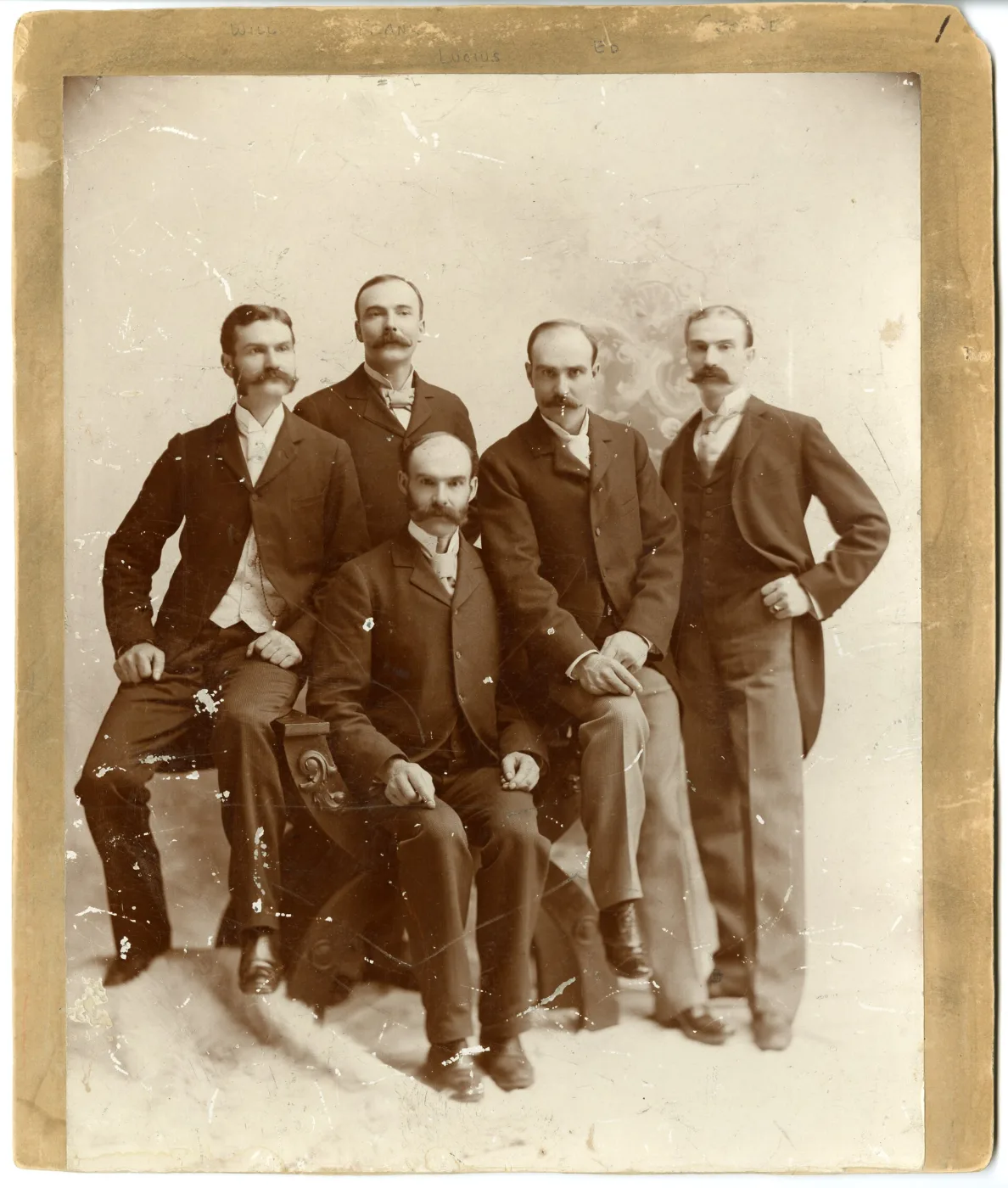
In 1880 five brothers, Edmund, Frank, George, Lucius and William Ball, bought the Wooden Jacket Can Company of Buffalo, New York, with a $200 loan from their uncle, according to Smithsonian magazine. They renamed it the Ball Brothers Manufacturing Company, and their early jars carried the words Mason's Patent 1858. The University of California records their first jar as the Buffalo Jar, marked with a BBGM Co insignia. The USDA's National Agricultural Library dates the start of Ball's glass jar production for home canning to 1884.
An Indiana Historical Bureau marker, installed in Muncie with Minnetrista in 2008, records that the Ball Brothers Glass Manufacturing Company was incorporated in New York in 1886 to make glassware, especially fruit jars. The marker's notes list the town's incentives as $7,500 in cash, three acres of land, railroad facilities and free gas for five years. The furnaces were fired on 18 February 1888, and the first glassware was made on 1 March 1888. The University of California credits the Ball-Bingham machine, a powered glass-blowing machine, with a sharp rise in output. The marker's notes quote the 1900 census: the largest fruit jar plant in the world, with a daily capacity of 240,000 jars, all machine-made, was in Indiana. Ball closed the Muncie plant in 1962. Smithsonian magazine notes that Ball no longer makes the jars: they are produced under the Ball name by Newell Brands.
HOW DID KERR'S LID AND USDA GUIDANCE SHAPE MASON JAR CANNING?

The USDA's National Agricultural Library records that Alexander H. Kerr and the Kerr Glass Manufacturing Corporation started a home canning supply business in 1903, and that Kerr received a patent in 1915 for a two-piece disposable metal canning lid. The University of California describes Kerr as a grocery wholesaler whose lid carried a sealing compound that flowed when heated to form an airtight seal, with a separate band holding the lid in place. It calls the design the precursor of today's two-piece method. Ball, meanwhile, published the first edition of its Blue Book of canning instructions and recipes in 1909.
The 1914 Smith-Lever Act created the post of Home Demonstration Agent, and in 1917 the USDA determined that pressure canning was the only safe way to process low-acid foods. During the Second World War, Smithsonian magazine records, propaganda posters urged women to Can All You Can, and the USDA timeline puts the peak of home canning in 1943, with more than four billion cans and jars processed. The USDA first published its Complete Guide to Home Canning in 1988, and a 2005 national survey found that up to 57 per cent of home canners used methods the USDA considered unsafe.
The National Center for Home Food Preservation at the University of Georgia now recommends regular and wide-mouth Mason-type threaded jars with self-sealing lids, with mouths of about 2 3/8 inches and 3 inches and sizes from half a pint to half a gallon. The flat metal lid is crimped at its edge to form a trough filled with gasket compound and is held by a screw band. During processing the gasket softens and flows while air escapes; as the jar cools, the contents contract and pull the lid down into a high vacuum. Jars can be reused many times, with a new lid each time.
HOW DID THE MASON JAR BECOME A COLLECTED OBJECT?
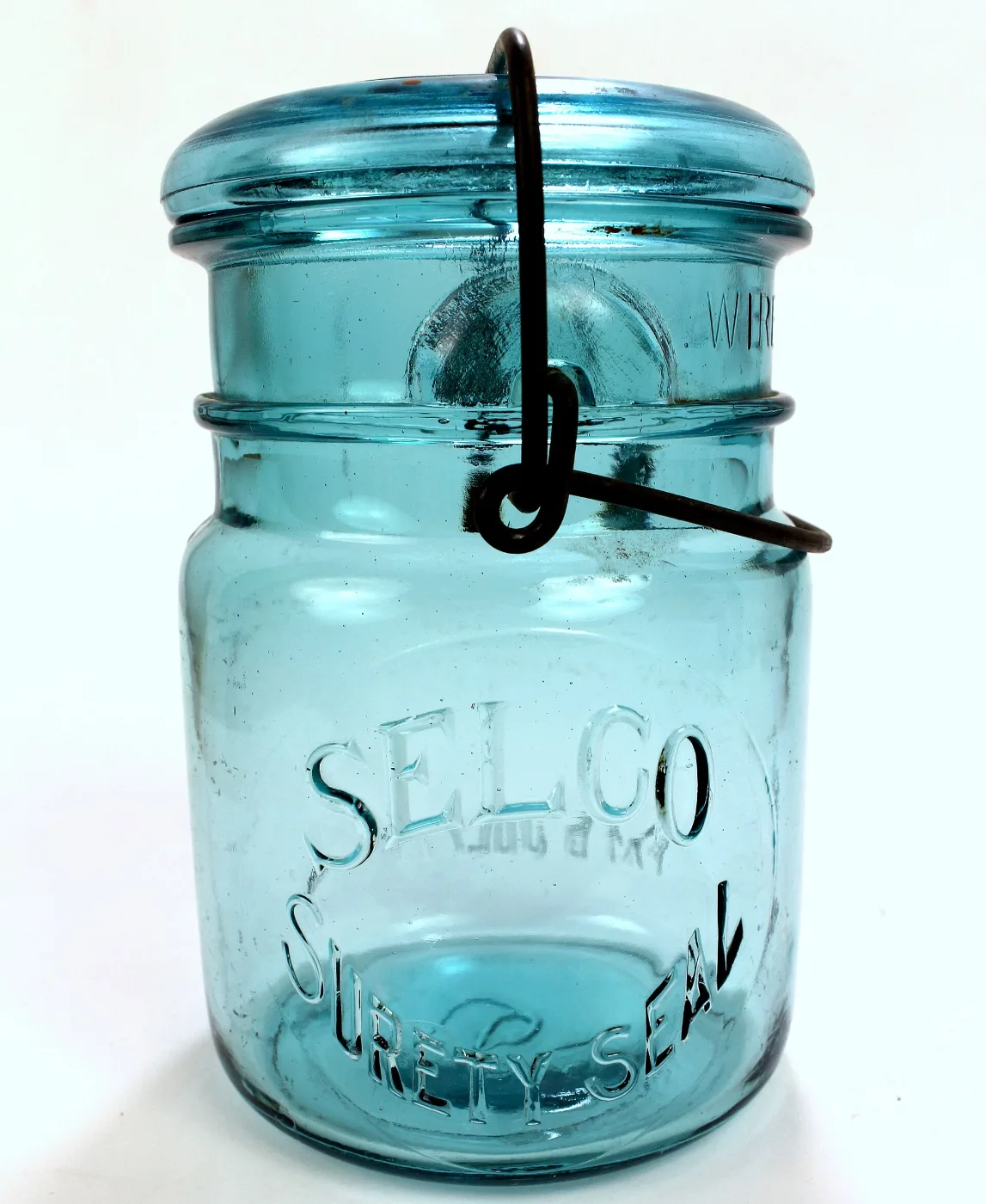
Home canning declined from the late 1940s, Smithsonian magazine records, as food companies promoted processed foods such as Birds Eye frozen peas, and the USDA timeline dates a faster decline from 1945, as home refrigeration became more widely available. Smithsonian dates a new wave of interest to the 1960s counterculture, receding in the 1970s, while the USDA timeline credits the do-it-yourself movement of 1970 with a resurgence of home canning and pressure canners. A 2015 Smithsonian article notes that Mason's jars, unlike many other canning jars of their day, were transparent, and quotes Megan Elias, author of Stir It Up, on the value of seeing what was stored.
Smithsonian magazine lists antique jars in pink, cobalt, aqua, amber and violet, and reports that collectors have paid up to $1,000 for a rare upside-down Ball jar made between 1900 and 1910. Tinted glass originally blocked light that could spoil the contents, and Ball has reissued jars in blue glass. The National Museum of American History holds more than 1,000 canning jars, according to its curator of food history, Paula Johnson. A retiring home economics professor at Ohio State University donated them in 1976, and they include jars by Ball, Kerr and Atlas.
HOW DID THE MASON JAR BECOME A DRINKING GLASS?
The 2015 Smithsonian article suggests that iced tea and moonshine may have ended up in Mason jars because the jar was the closest glass container to hand. It also notes that cocktails at fancy bars now came in the jar and that 7-Eleven had begun selling Slurpees in Mason jars. It credits writers such as Michael Pollan, Dan Barber and Alice Waters with making readers more aware of where food comes from and encouraging local produce and canning. In 2020 Smithsonian reported that rustic-chic restaurants, barn weddings and farmhouse-style kitchens had put Mason jars to use as drinking glasses, flower vases and utensil holders.
The Southern Foodways Alliance, an institute of the University of Mississippi, examined the trend in episode 24 of its Gravy podcast, released on 22 October 2015 under the title The Mason Jar Pickle. The episode notes jars in use in both upscale cocktail bars and country restaurants, asks how the jar reached the chicken and waffles restaurant, and treats its popularity as a question about the cultural standing of the American South. The episode page also links to John Kessler's Atlanta Journal-Constitution column criticising the trend and to an account of his Twitter exchange with the chef Hugh Acheson.
YARDBIRD SOUTHERN TABLE & BAR AT MARINA BAY SANDS

Yardbird Southern Table & Bar was founded by John Kunkel of 50 Eggs Hospitality Group, and the original Yardbird restaurant opened in Miami in 2011. Its fried chicken, the dish covered in the history of Southern fried chicken, is brined for 27 hours and served with a Vermont cheddar waffle and watermelon. Chicken and waffles is also the restaurant type that the Southern Foodways Alliance named in its 2015 Gravy episode, which asks how the Mason jar reached that kind of restaurant.
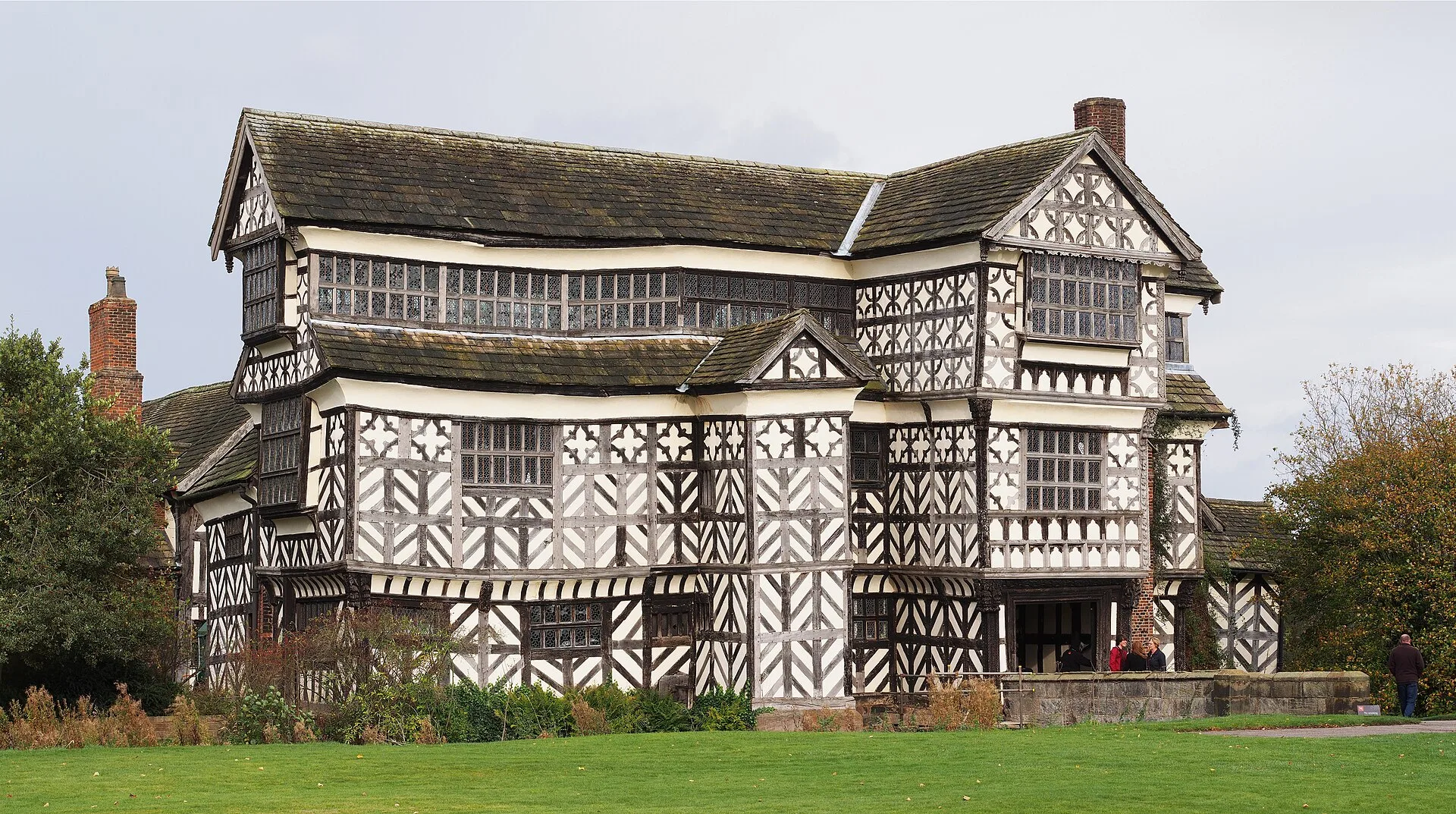
The Singapore restaurant at Marina Bay Sands opened in July 2017 and is the only Yardbird location outside the United States. Its interior follows a Barnhouse concept, with reclaimed barn doors, white walls, and reclaimed wood and metal; the farm building behind the name is the subject of the history of the American barn. Barn weddings are one of the settings Smithsonian magazine names for the Mason jar's use as a drinking glass. The bar at Marina Bay Sands centres on bourbon.
SOURCES
- Britannica Nicolas Appert
- University of California Agriculture and Natural Resources A Brief History of the Canning Jar
- USDA National Agricultural Library How Did We Can? Canning Timeline Table
- Google Patents US 22,186: John L. Mason, Improvements in the Necks of Bottles, Jars, &c. (1858)
- Smithsonian Magazine A Brief History of the Mason Jar
- Corning Museum of Glass Preserving Jar with Cap, Hero Fruit Jar Company
- Indiana Historical Bureau Ball Brothers Glass Manufacturing Company
- National Center for Home Food Preservation, University of Georgia Recommended Jars and Lids
- Smithsonian Magazine How Mason Jars Went from Thrifty to Hip
- Southern Foodways Alliance, University of Mississippi The Mason Jar Pickle, Gravy Ep. 24