HOW CRETACEOUS AND EOCENE LIMESTONE, QUARRIED FROM MA'AN TO AJLUN, BECAME THE CLADDING OF JORDAN'S CAPITAL
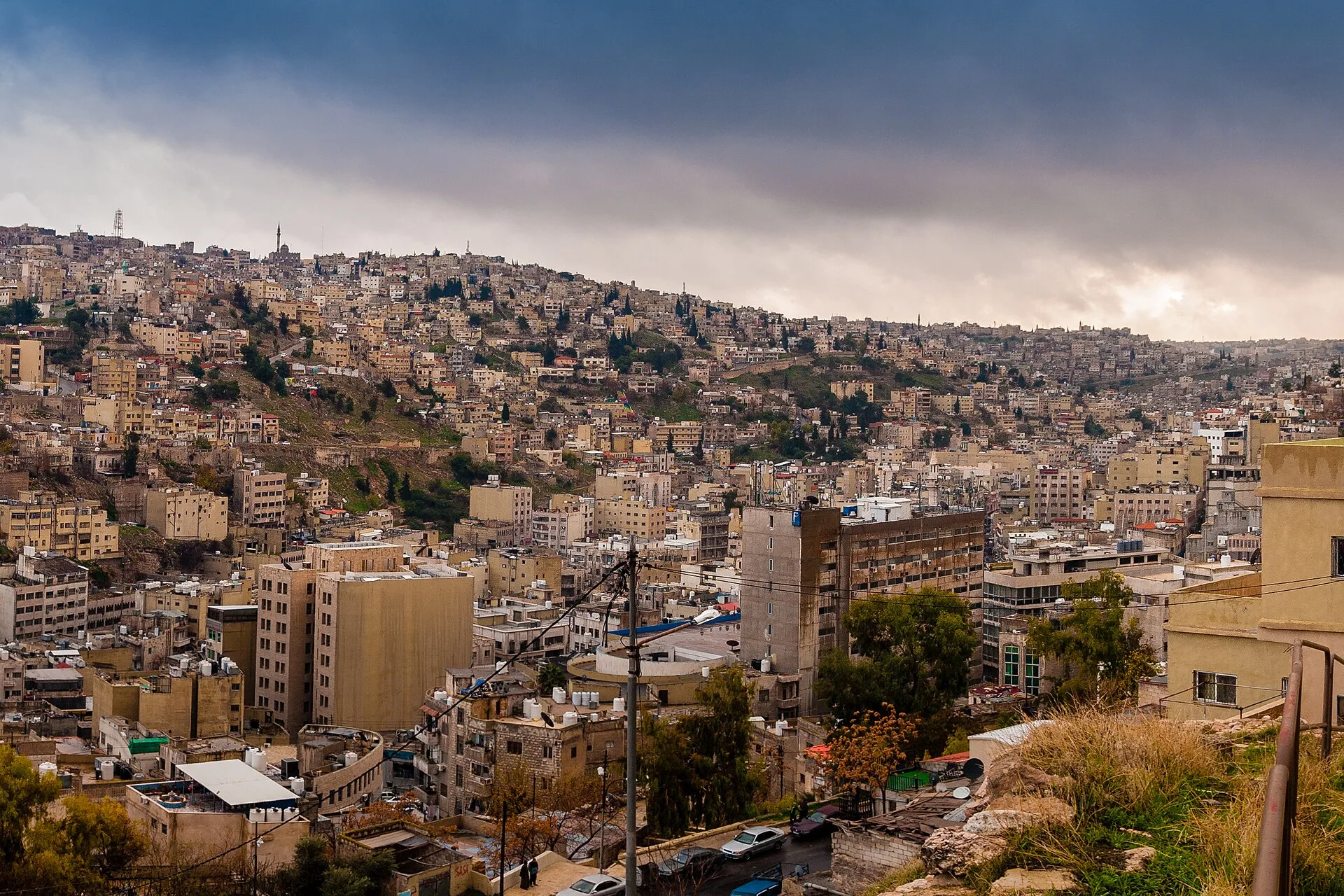
Amman limestone is the pale building stone that faces most of the Jordanian capital, quarried across Jordan from Ma'an in the south to Ajlun in the north. A 2000 documentation project by the Center for the Study of the Built Environment (CSBE) and the Conservation and Restoration Center in Petra (CARCIP) states that, except in very few cases, limestone is the material used to clad façades in Amman, and records a shift in its role during the twentieth century from load-bearing walls to a cladding used mainly for appearance. It catalogues more than 80 façades. National Geographic describes the view from the Citadel as blocks of tightly compacted limestone houses.
WHAT IS JORDAN'S LIMESTONE AND HOW OLD IS IT?
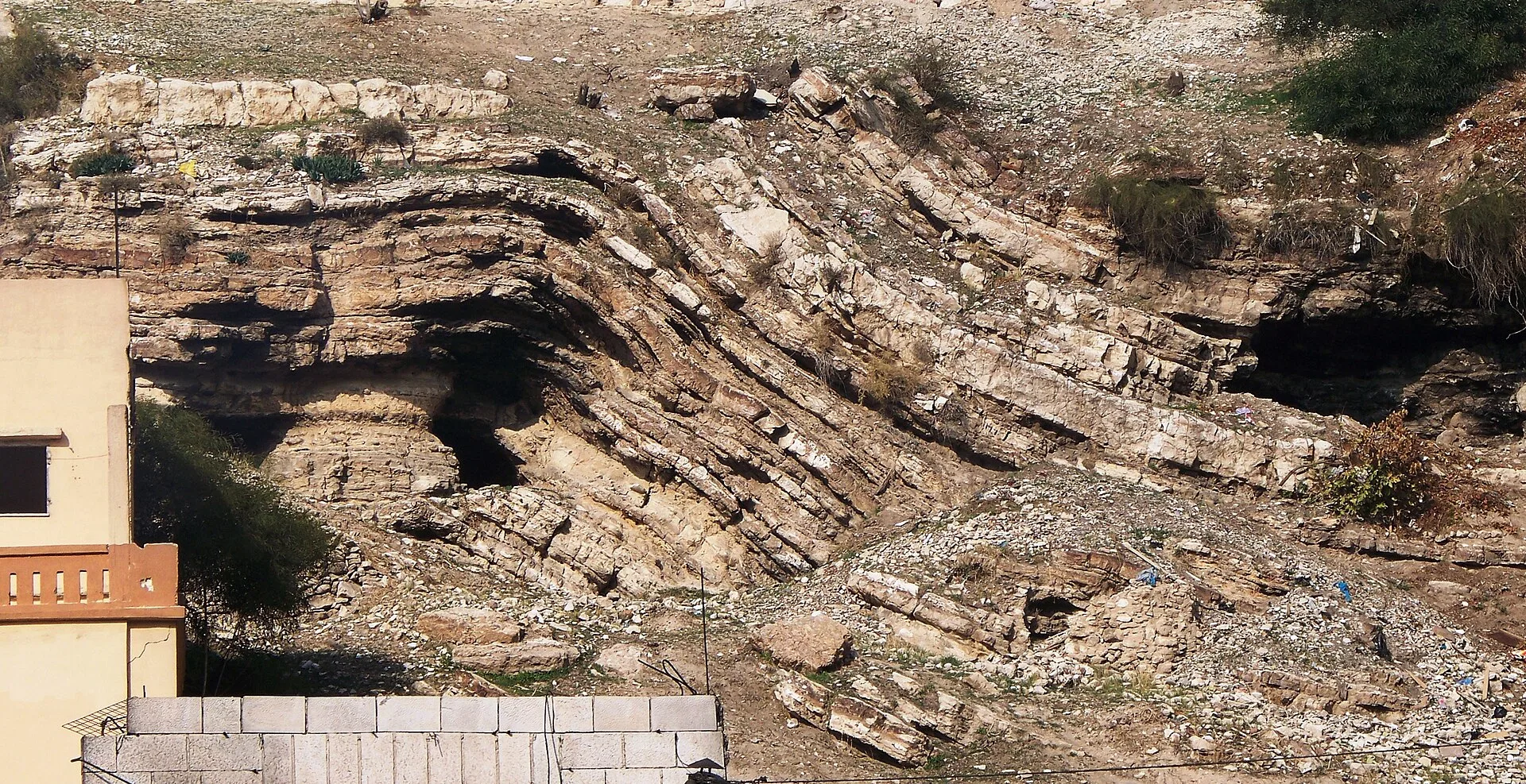
Jordan's building limestone is a sedimentary rock, much of it of Late Cretaceous age. In a 1980 UNIDO country report, Marwan Abdallah of Jordan's Public Mining Company wrote that Cretaceous rocks cover most of Jordan and that limestone occurs all over the country, used as building stone and lime for ages. Around Jarash, north of Amman, the Yarmouk University geologists Nizar Abu-Jaber, Ziad al Saad and Nihad Smadi describe the bedrock as dominated by Late Cretaceous sedimentary rocks, divided into the Ajloun Group, of Cenomanian to Turonian age, and the Belqa Group, of Coniacian to Campanian age. Not all of the stone is Cretaceous: a 2007 study by Khalid Tarawneh, Salah Al-Thyabat and Mohammad Al-Harahsheh of Al Hussein Bin Talal University in Ma'an states that Jordanian building stone is quarried from Upper Cretaceous and Tertiary horizons, and dates the Ma'an stones they sampled, from the Umm Rijam Chert-Limestone Formation, to the middle Eocene on the evidence of Nummulites gizehensis.
The Ajloun Group includes the Naur, Fuheis, Hummar, Wadi Shuayb and Wadi As Sir formations; the Belqa Group includes the Wadi Umm Ghudran and Amman Silicified formations. A 2025 study in the journal Geosciences by Al-Dabsheh and six co-authors describes the Turonian Wadi Sir Limestone, the uppermost part of the Ajlun Group, as bedded massive limestone and hard dolomitic limestone with thin layers of marl and chert nodules. The Amman Silicified Limestone, of Santonian to Campanian age, alternates silicified limestone with chert and phosphatic chert, and was deposited on a marine shelf in northern Jordan. The authors note that these limestones have been used as building stones for decades.
WHERE DOES AMMAN'S LIMESTONE COME FROM?
The CSBE survey names five main sources for the limestone on Amman's façades. Ma'an, in southern Jordan, supplies a white, hard, low-porosity stone rated first grade, and a lower-grade beige stone. Ajlun supplies a white, high-strength limestone; Irbid, white and reddish limestone and black volcanic rock; al-Azraq, a white and reddish limestone known as desert stone; and Salt, a soft white and yellow limestone. A 2015 paper by Diala Atiyat of the University of Jordan's architecture department adds Qatraneh stone, with a uniform colour and high absorption, and Hayyan stone, used widely because of its low price.
Ma'an leads production. Tarawneh and his co-authors put Jordan's annual building stone output at about 10 million linear metres from more than 130 quarries, of which more than 3 million come from the Ma'an area. The stone is classified locally by quarry site as Juththa, Jazeera, Jardaneh and Ma'an Sateh. Stone from Jabal Al Juththa is mostly white to greyish white, Ma'an Sateh stone is reddish to reddish white, and Al Jazeera stone is mostly white. The authors list its uses as composite walls built for aesthetic purposes, thin polished tiles, floor tiles and monumental architecture.
Quarrying in the region is far older than the modern city. At the ancient quarries of Gerasa, at Jarash, Abu-Jaber, al Saad and Smadi measured the largest site, Asfur, at 77 by 175 metres and estimate that about 26,000 cubic metres of stone were removed there, assuming an average depth of 2 metres. Asfur is cut into the Fuheis Formation, mainly dolostone. The authors note that more recent extraction has focused on the Wadi As Sir Formation, and describe Quaternary caliche, easily mined and devoid of joints, as ideal for extracting large building stones.
WHO BUILT AMMAN'S STONE HOUSES?
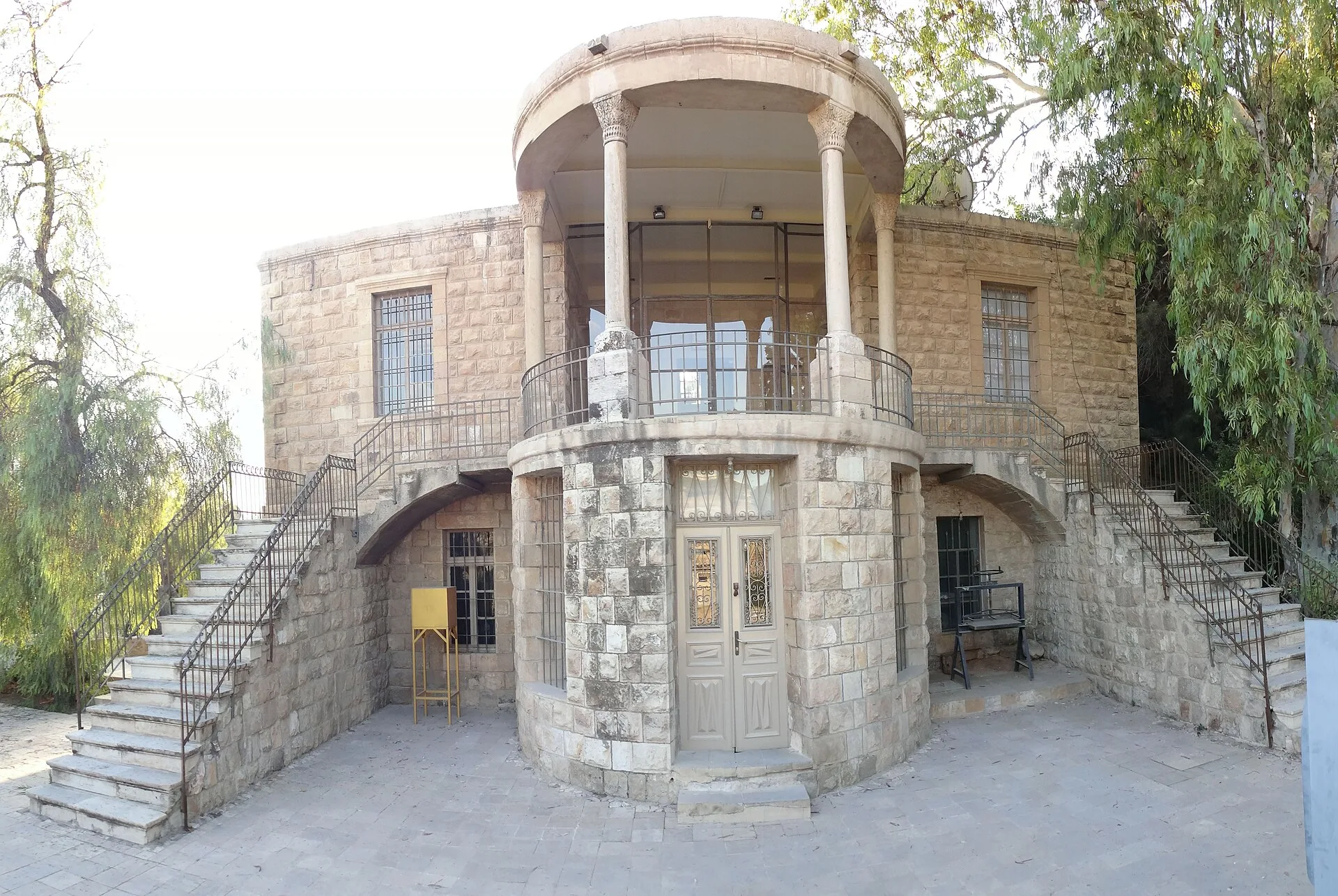
Amman was deserted by the fourteenth century and resettled in the late nineteenth, so almost none of its modern structures predate the twentieth century, according to the CSBE project. Atiyat writes that the rebuilding of Amman in the late nineteenth century started with stones collected from the ruins; the city's Roman remains are covered in a separate article on the Roman Theatre of Amman. By the turn of the century, she writes, skilled stone cutters and master builders had arrived in Amman from two directions, one of them Syria and Lebanon, with Syrian and Druze master builders.
Builders, not architects, designed most of Amman's early buildings, so the names of their designers are usually unknown. According to the CSBE project, architects began to be more fully entrusted with design in the 1950s, after the founding of the Jordanian Engineers Association. Its database names architects from that decade onward, among them Fawwaz Muhanna in the 1950s, Na'il Malhas with the Astra Building in the 1960s, Rasem Badran in the 1970s and Jafar Tukan and Partners, whose 1990s work includes the Jubilee School and Astra Plaza.
The CSBE project also names the masons' tools. The tumbor is a pitching tool used to split blocks and chip their faces, the shawkah a point chisel, the izmil a flat chisel and the shahuta a scraper once used for polishing, alongside the tooth chisel and the bush-hammer. CSBE records that polishing later moved to machines and that a mechanical bush-hammer is also used. Farouk Yaghmour, one of the Jordanian architects discussed in Atiyat's paper, links the thin cladding of modern buildings to the disappearance of professional stone hammerers.
HOW IS AMMAN LIMESTONE DRESSED? TUBZEH, MUSAMSAM AND MATTABEH
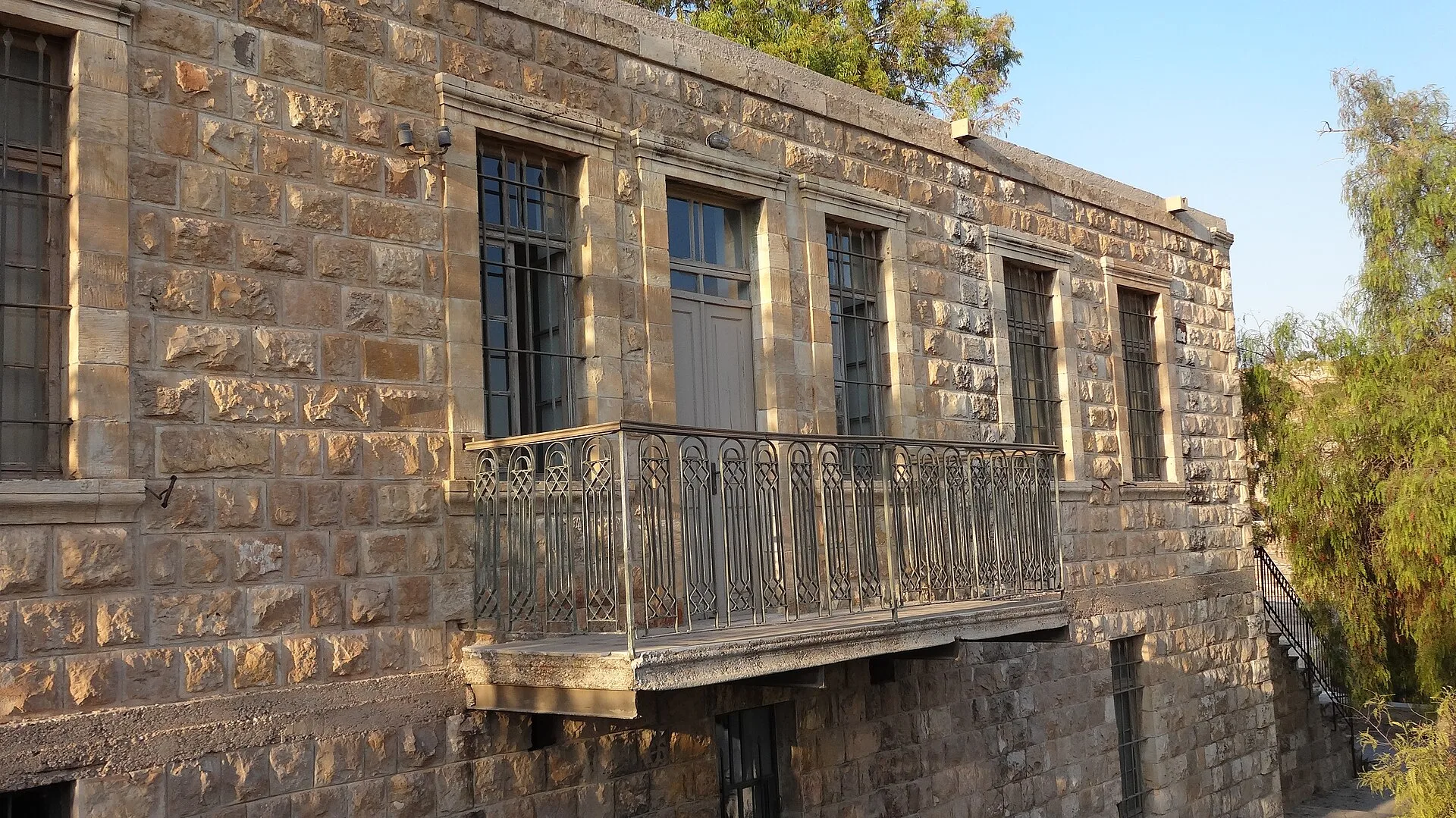
The CSBE project lists 14 surface treatments. Tubzeh is a rough dressing in which pieces are chipped from the face with the tumbor, leaving a protrusion of about 5 centimetres, and it requires thick blocks. Mufajjar, of medium roughness, is worked with the shawkah to give a speckled surface; its matari variant cuts parallel lines with the point chisel held at about 45 degrees. Musamsam consists of short, fine parallel lines cut with a tooth chisel. Mattabeh is a fine speckling made with a bush-hammer. Atiyat describes the dressed blocks laid either in regular courses of equal or varying height, usually with tubzeh stone, or in random patterns.
Other finishes come from the saw and the quarry bed. Saw-cut stone is left undressed after cutting with an electric diamond saw and shows circular saw marks, while shuhaf are the thin, irregular slabs left over from cutting. Polished stone was traditionally finished with the shahuta and later by machine, with sandblasting giving a rougher polish. Flamed stone has its grains burst by a flame, barrel-shaped pieces are half-cylinders laid in courses, and zamleh is a frame cut along the block edges with the izmil.
FROM LOAD-BEARING WALLS TO STONE CLADDING
As stone moved from load-bearing construction to facing, its thickness fell. Atiyat describes the stone in later buildings as a thin shell over the exterior elevation, and Yaghmour notes that such cladding does not exceed 5 centimetres in thickness. The CSBE survey traces the change in the façades decade by decade. In the 1920s and 1930s most buildings used tubzeh in 25 centimetre horizontal courses with thin white or beige pointing, and rubble occasionally. In the 1940s musamsam became dominant and black recessed pointing replaced flush pointing. The 1950s combined musamsam, tubzeh and polished surfaces in pinkish white and yellow stone.
The 1960s brought more varied patterns, with mixed dressings, alternating colours, varied course heights and the first thin marble slabs. The 1970s favoured regular grids of musamsam, random grids of tubzeh and thicker flush pointing. In the 1980s mufajjar spread as a cheaper alternative to tubzeh, which needs thick blocks and manual labour, and barrel-shaped blocks became popular. In the 1990s, 50 centimetre courses became common, with mufajjar and machine-made mattabeh and some 50 by 100 centimetre grids, though 25 centimetre courses still predominated. Commercial buildings used more polished stone and larger blocks.
WHAT DO AMMAN'S BUILDING RULES SAY ABOUT STONE?
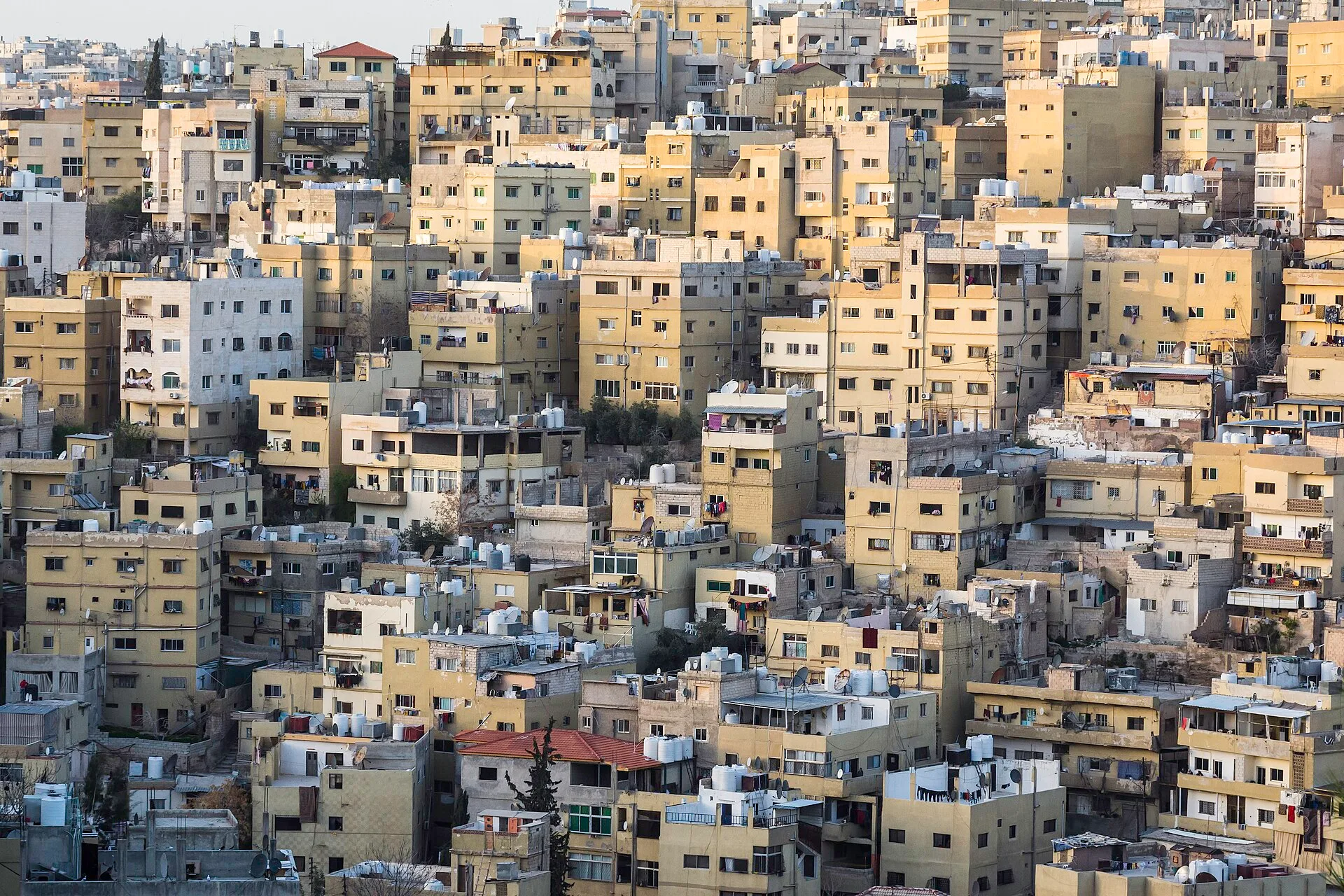
National Geographic's Amman guide notes that a city law required houses to be built in the same light colour palette. Atiyat cites the city's building permit system, issued under Article 37 of Law No. 31 of 2009 on the organisation of cities, villages and buildings. In her translation, Article 52 requires the exterior walls of first-class and second-class buildings to use stone or any other stronger material, and Article 20(B) limits colours other than natural stone or white to no more than 20 per cent of a façade's area, with anything more needing prior approval.
The Citadel, from which National Geographic describes the limestone houses, stands on Jabal al-Qala'a, the city's highest hill. National Geographic notes that Amman was originally built over seven jabals, which gave their names to its neighbourhoods, and now spans 19 hills; the growth of those districts is traced in a separate article on the seven hills of Amman. The same publication describes the bowl-shaped centre as monochrome as far as the eye can see, and the CSBE project credits limestone with giving the city its homogeneous character.
HOW DOES PETRA'S SANDSTONE DIFFER FROM AMMAN LIMESTONE?

Petra, in southern Jordan, was cut from a different rock. The Petra Project of the University of Arkansas Department of Geosciences identifies Petra's two primary formations as the Cambrian Umm Ishrin and Cambro-Ordovician Disi sandstones, which it describes as among the oldest, most widespread and relatively unaltered sandstone units on Earth. Petra is a crescent-shaped valley confined by high, fault-bound sandstone walls, and many of its tombs and temples were hewn from the rock and have not been moved, as described in a separate article on Petra and the Siq.
The two stones were worked differently. Amman's façades are assembled from limestone blocks and slabs quarried, cut and dressed before they reach the building, while Petra's sandstone was carved where it stands. Al-Dabsheh and his co-authors note that Petra was carved into sandstone in Nabataean times, in the first century BC, and that limestone, abundant in Jordan's geological record, has remained one of Jordan's most-used building stones to the present. The Arkansas researchers found that where iron concentrations in the sandstone matrix exceed 4 to 5 per cent by weight, the original stonemasons' dressing marks are still clearly evident, as iron and silica in the matrix reduce weathering.
AMMAN LIMESTONE AND PETRA'S ROCK AT W AMMAN

W Amman opened in April 2018 as W's first hotel in Jordan, and Silverfox Studios designed the full interiors of its 40-storey building. The design references Petra's rose rock and canyon, and Amman's limestone hillside city. The first is carved from Cambrian and Ordovician sandstone that the Nabataeans cut in place; the second is faced in Cretaceous and Eocene limestone quarried at sites such as Ma'an and Ajlun and dressed in finishes from the rough tubzeh to the bush-hammered mattabeh.
Arrival follows a "Canyon Walk" that recalls the Siq, the gorge at Petra's entrance, with angled planes and lines of light. Movement through the hotel, described as a "Journey of Discoveries", is shaped like canyons and shards, and the building's façade is faceted and shard-like. In Petra the canyon is the fault-bound sandstone valley in which many Nabataean tombs and temples were hewn from the rock; in Amman the hillside city is the spread of limestone-clad houses across the jabals.
SOURCES
- Center for the Study of the Built Environment Stone as Wall Paper: The Evolution of Stone as a Sheathing Material in Twentieth-Century Amman
- Geosciences (MDPI) Composition and Potential Industrial Uses of Upper Cretaceous Carbonates of the Wadi Sir Limestone (WSL) and the Amman Silicified Limestone (ASL) Formations, North Jordan
- Annual of the University of Mining and Geology St. Ivan Rilski Mineralogical, Physical and Mechanical Properties of Limestone Rocks in Ma'an Area, South Jordan
- Geological Survey of Norway The quarryscapes of Gerasa (Jarash), Jordan
- UNIDO Non-metallic Raw Materials of Jordan (country report, 1980)
- Journal of Multidisciplinary Engineering Science and Technology The Stone as a Main Building Material: Case Study of Amman, Jordan
- National Geographic Craft, culture and cuisine in Amman, Jordan's mountain-fringed capital
- National Geographic Amman Travel Guide
- University of Arkansas Petra Project