A CUSTARD TART TIED TO A ROYAL MONASTERY, A SUGAR REFINERY SHOP AND A BRITISH PHARMACIST IN MACAU
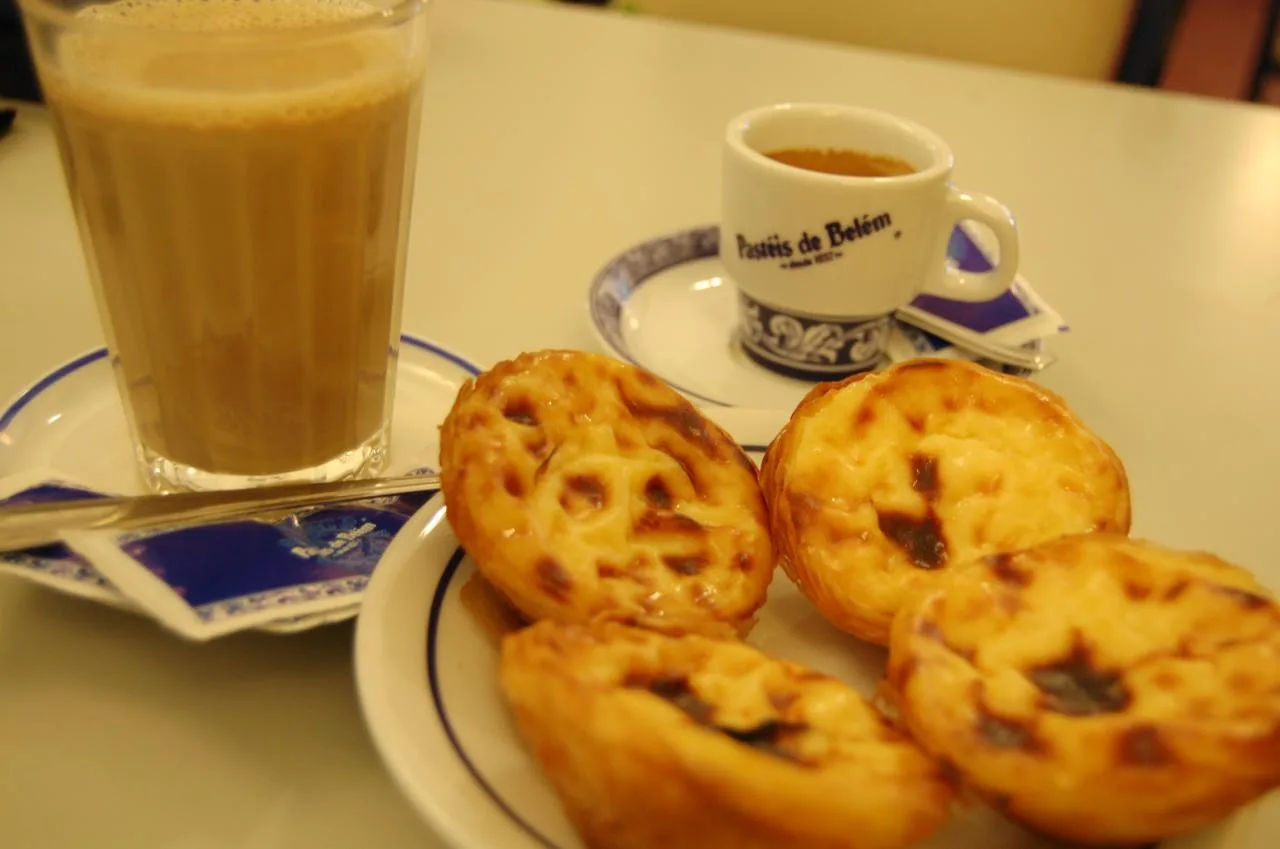
The pastel de nata is a Portuguese custard tart in a flaky pastry case, and one bakery beside the Jerónimos Monastery, in the Lisbon district of Belém, has made it since 1837. Its history rests on a story told by the bakery and by Lisbon's tourism board: that the recipe came from the monastery, and that after Portugal closed its religious houses in 1834, someone from Jerónimos sold the pastries in a shop attached to a sugar refinery next door. The pastel de nata then travelled a long way from Belém. In 1989 an English pharmacist opened a bakery in Macau that adapted the tart for a Chinese clientele, and his former wife later sold her own recipe to KFC, which sells Portuguese egg tarts across China. This is the history of the Portuguese tart, from convent sugar to Asian bakery counters.
WHERE DID THE PASTEL DE NATA COME FROM: THE JERÓNIMOS MONASTERY
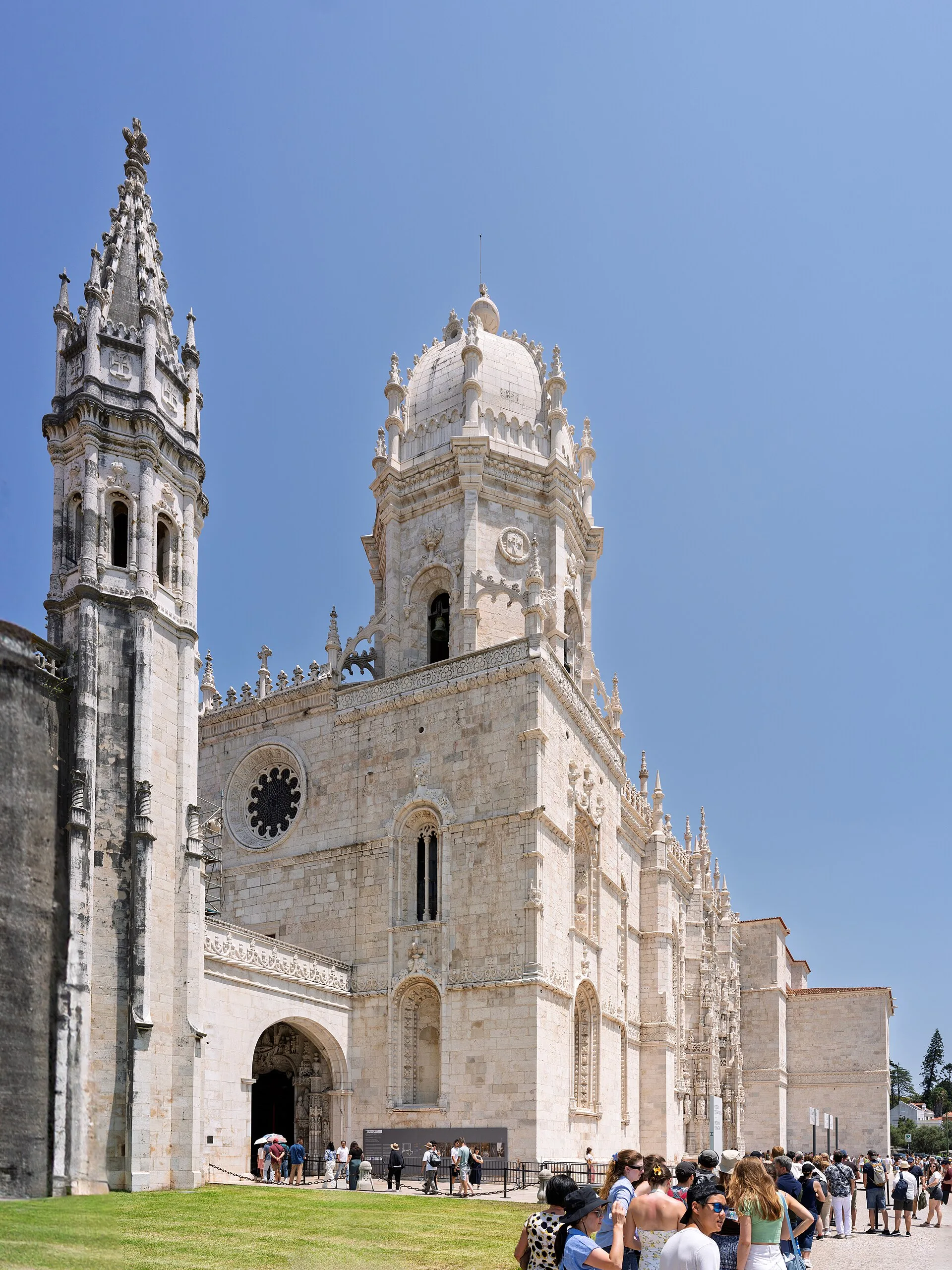
UNESCO, which inscribed it on the World Heritage List in 1983 together with the nearby Tower of Belém, records that construction began in 1502 on the orders of King Manuel I, who gave the monastery to the monks of Saint Jerome. Their duties were to pray for the king and to give spiritual support to seafarers leaving Lisbon, and the building was intended to perpetuate the memory of Prince Henry the Navigator. UNESCO describes it as directly associated with the golden age of the Portuguese discoveries, and notes that its sixteenth-century cloister, former refectory and library survive, while its church still serves as the parish of Santa Maria de Belém.
Britannica describes the monastery as a significant example of Manueline architecture, the Portuguese style of the early sixteenth century, commissioned by Manuel I as a royal burial monument. It was designed by Diogo Boitac, with João de Castilho and Diogo de Torralva working on it later, and its decoration includes nautical motifs such as ropes, anchors and shells. The building came to honour Vasco da Gama, whose tomb is inside, and it also holds Portuguese monarchs and the poets Luís de Camões and Fernando Pessoa. It stands about 6 kilometres downstream from central Lisbon.
EGG YOLKS, SUGAR AND THE PORTUGUESE CONVENT SWEET
If the Belém recipe did come from the monastery, it belongs to a larger Portuguese tradition of doces conventuais, or convent sweets. Gilberto Costa of the Estoril Higher Institute for Tourism and Hotel Studies (ESHTE) describes these as recipes that use large quantities of egg yolk, sugar and almonds and very little flour. They appeared in Portugal in the fifteenth century. Before then, sweets made with honey were a palace tradition, and women's convents took them up. The convents also housed wealthy women who had not made good marriages, and their maids helped develop and refine the recipes.
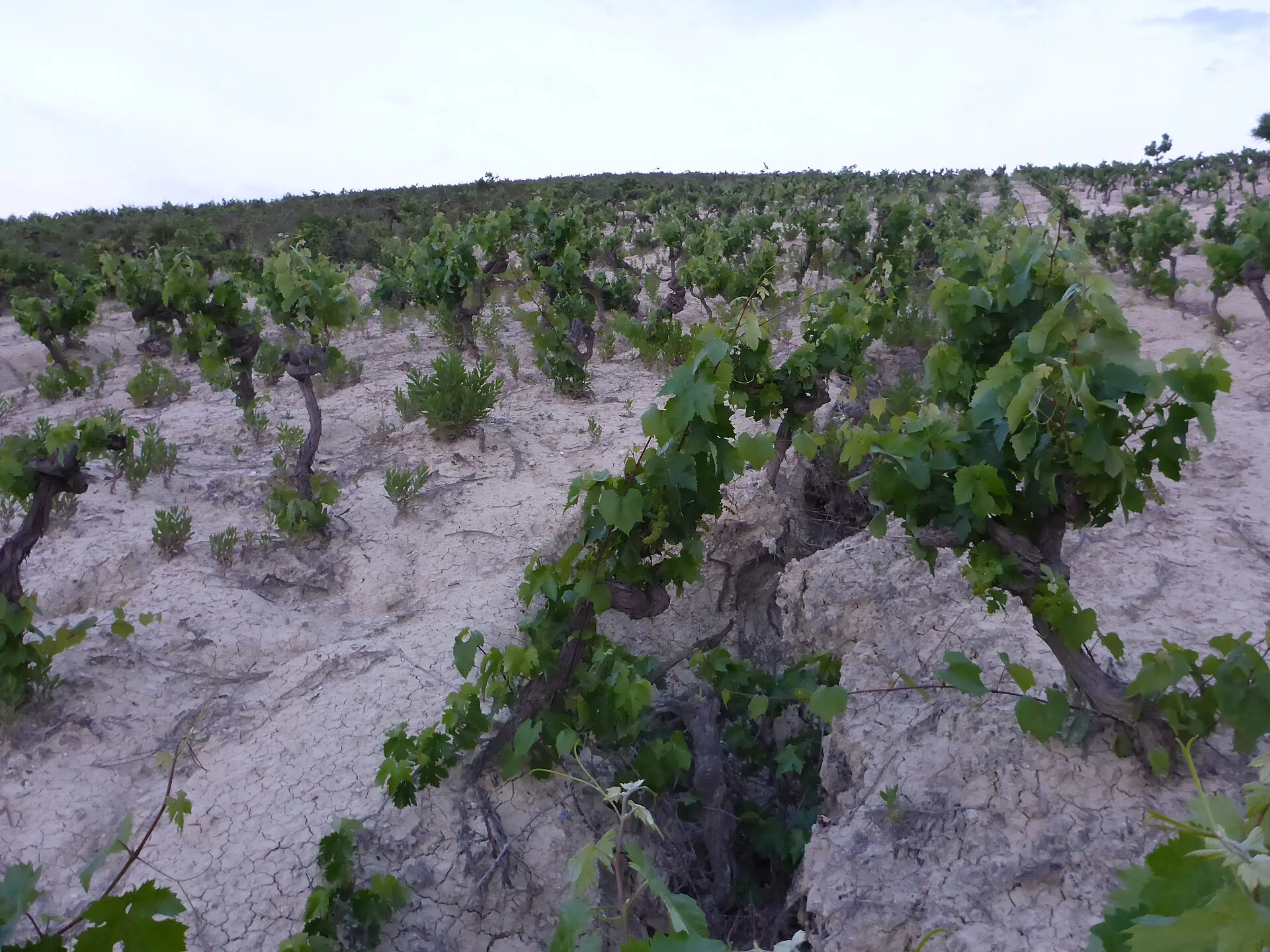
The decisive ingredient was sugar. According to the same account, sugar was rare and expensive until the middle of the fifteenth century. Portugal tried growing sugar cane in the Algarve and then in Madeira, and sugar became plentiful and cheaper once cane was grown in Brazil. The convent repertoire built on egg yolk and sugar includes spoon sweets such as ovos moles, trouxas de ovos and barriga de freira, small cakes such as papos de anjo, and larger cakes such as toucinho do céu and bolos reais.
1834, THE LIBERAL REVOLUTION AND THE SHOP NEXT TO THE REFINERY
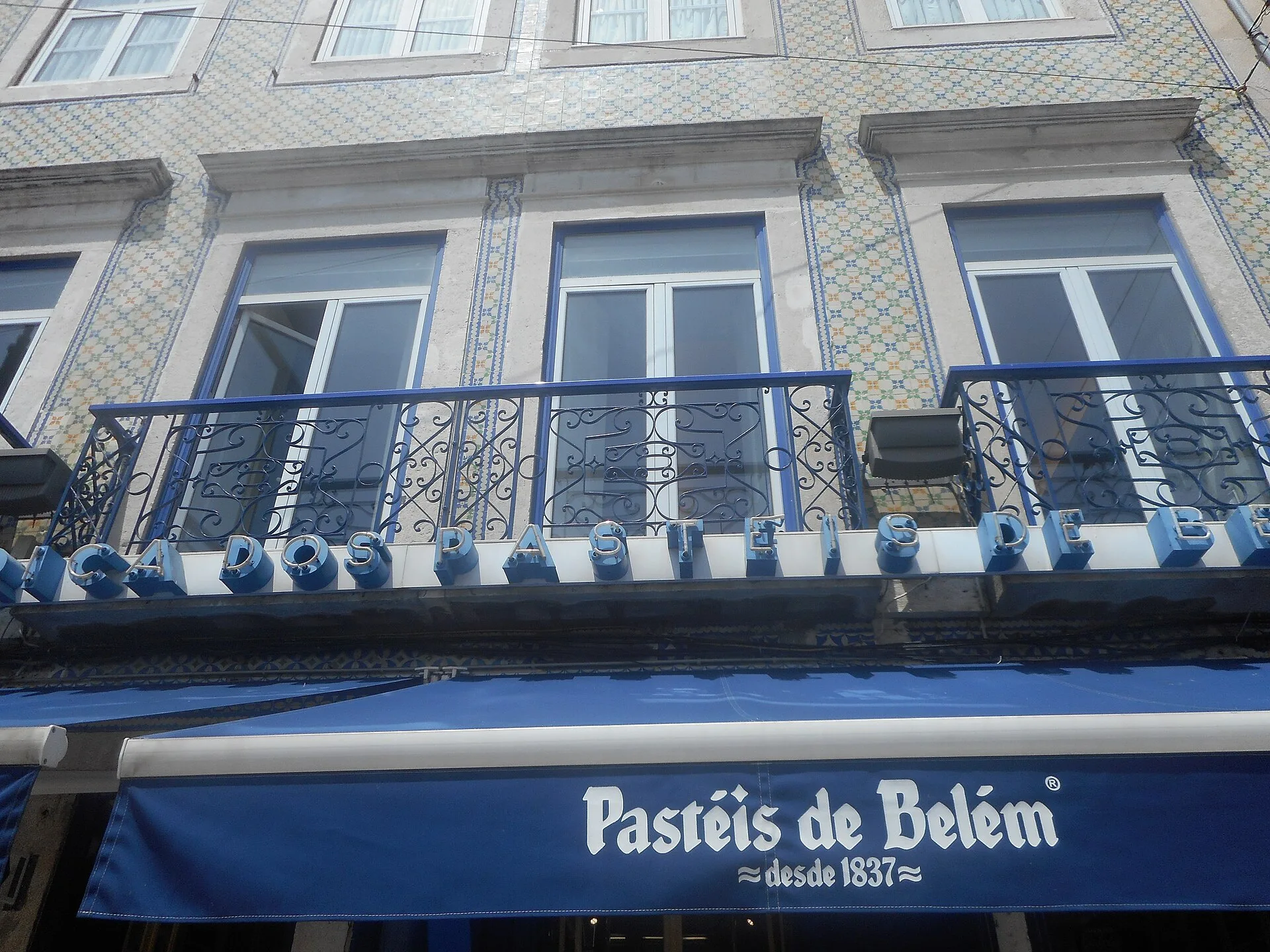
Visit Lisboa, the city's official tourism site, gives the sequence that links the monastery to the shop. In the early nineteenth century a sugar cane refinery stood beside the Jerónimos Monastery, with a small general store attached. After the liberal revolution of 1820, Portugal closed its convents and monasteries in 1834 and expelled their clergy and workers. To make a living, someone from the monastery sold sweet pastries in the refinery's shop, and they quickly became known as Pastéis de Belém. Baking began in buildings attached to the refinery in 1837.
The Portuguese newspaper Correio da Manhã, reporting the business's 175th anniversary in 2012, adds the merchant behind it. Domingos Rafael Alves owned the former sugar refinery on the site of the present shop, at a time when sugar was still scarce and costly. According to the legend the paper repeats, he either bought the recipe or hired the monk who knew it. The paper reports that the pastries were known mainly locally until tram and steamboat services made Belém easier to reach, and that their fame spread further from the 1960s, when Lisbon joined international tour routes.
THE SECRET RECIPE OF PASTÉIS DE BELÉM
Secrecy is part of the product. Visit Lisboa states that the recipe has been handed down among master confectioners who make the pastries in a secret room, and that it has stayed essentially unchanged, with the pastries still made every day by traditional methods. Correio da Manhã reported in 2012 that only five people knew it: three working master bakers, one retired master and Pedro Clarinha of the family that runs the business. The formula was patented and written down in a safe place, and the masters never travelled together. Some ingredients and tools had been dropped over time for reasons of hygiene and food safety.
The same report gives a sense of scale. In the 1940s Leonilde Clarinha inherited the business from her father-in-law and ran it with her husband, and the Clarinha family has led it for five generations. In 2012 its 150 employees made about 20,000 pastries a day, with orders of 5,000 to 10,000 for large events and a labyrinthine set of rooms seating up to 500 that was rarely lent out, and the office occupied what had been Dona Leonilde's living room, on the first floor of the blue-tiled building that houses the shop.
HOW THE PORTUGUESE EGG TART REACHED MACAU
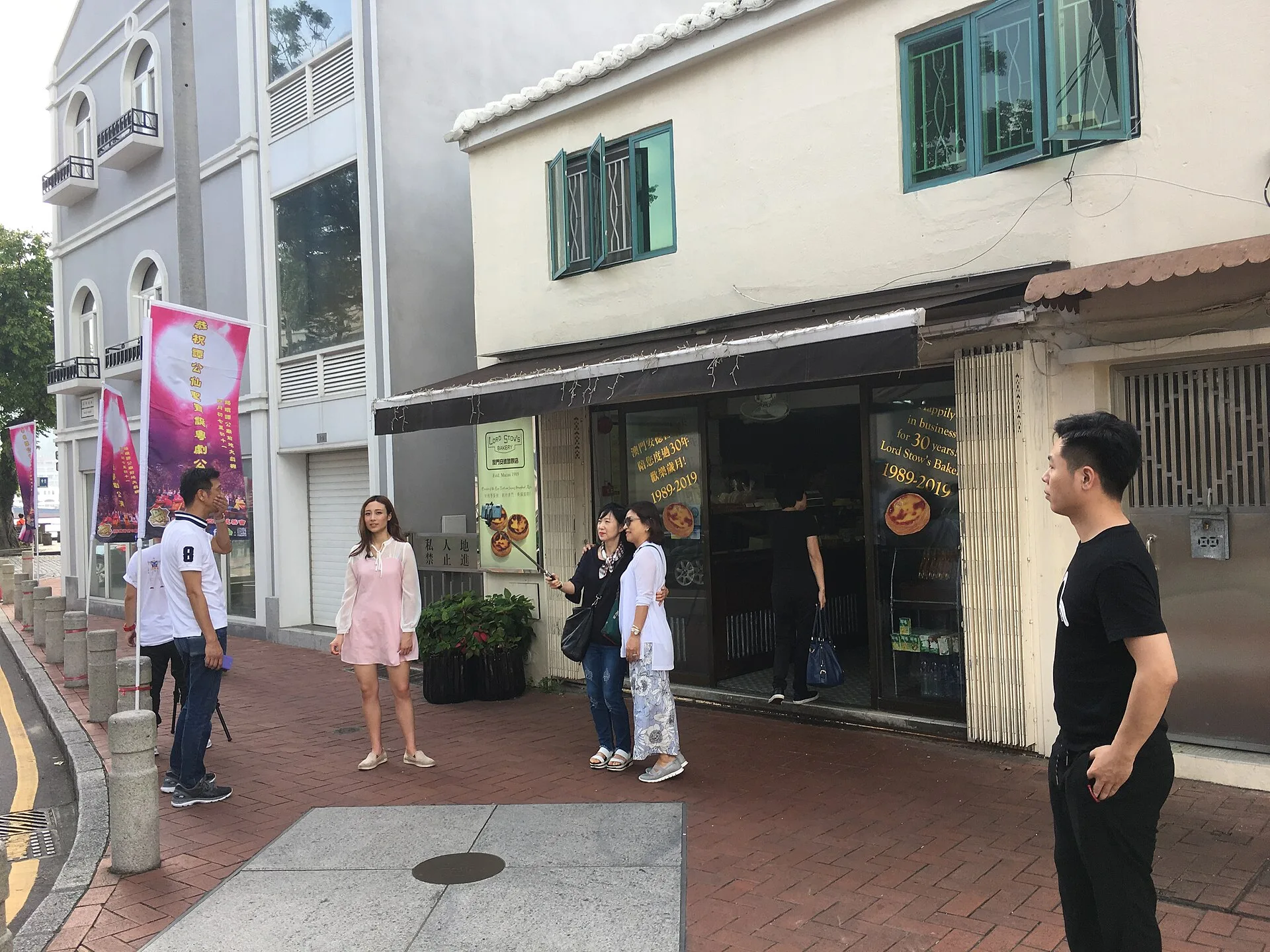
In Asia, the tart's story continues in Macau. Andrew Stow was born in England in 1955 and moved to Macau in 1979 to work for Anglo French Laboratories, according to his bakery. The South China Morning Post reports that he trained as a pharmacist, tasted pastéis de nata in Belém and began experimenting with his own version, wanting Macau to have the pastry to go with an espresso. Lord Stow's Bakery opened in Coloane Village on 15 September 1989. With no original recipe to work from, AFP reported in the Taipei Times, Stow combined a heavier British custard from a family recipe with Portuguese pastry techniques, producing a tart with a flaky casing, a creamy filling and a caramelised top.
His Portuguese friends were sceptical, but Macau's Chinese community took to the tart, and visitors from Hong Kong spread its reputation. Locals call it po tat, the Portuguese tart, to distinguish it from the egg tart already served in Cantonese dim sum. Stow died in 2006 and his sister Eileen took over the bakery, which AFP reported in 2019 was making 21,000 handmade tarts a day. His former wife and business partner, Margaret Wong, founded a rival Macau bakery that AFP describes as well regarded, and she sold her recipe to KFC, which now sells Portuguese egg tarts across China. Over three decades, AFP notes, rival Portuguese tart bakeries have opened in Hong Kong, Taiwan and Singapore.
PORTUGUESE TART OR HONG KONG EGG TART
The tart that the Macau version had to be distinguished from has a separate origin. The South China Morning Post's Lisa Cam traces the Hong Kong egg tart to British custard tarts, a dish that the food historian Laura Mason dates in Britain to 1399. Cam places its background in 1920s Guangzhou, a prosperous port city with strong British influence, where rival Western-style department stores such as Sincere, Wing On and Sun Sun opened. Traditional Hong Kong versions use lard for a flaky, multilayered pastry.
AFP describes the version found in Cantonese dim sum as a British-influenced tart with shortcrust pastry and a jelly-like filling, while the Macau tart has a flaky casing, a creamy custard and a brûlée topping. The difference is why Macau's customers needed a separate name for the newcomer. Cam notes that Hong Kong's tart, shaped like Macau's by European trade and colonial influence, evolved into something the city now regards as its own. Both have British roots of a kind: the Hong Kong tart in British custard tarts, and the Macau tart in the British family custard recipe that Stow combined with Portuguese pastry.
PORTUGUESE CERAMICS AND BLUE AT TASCA, MANDARIN ORIENTAL JUMEIRA DUBAI
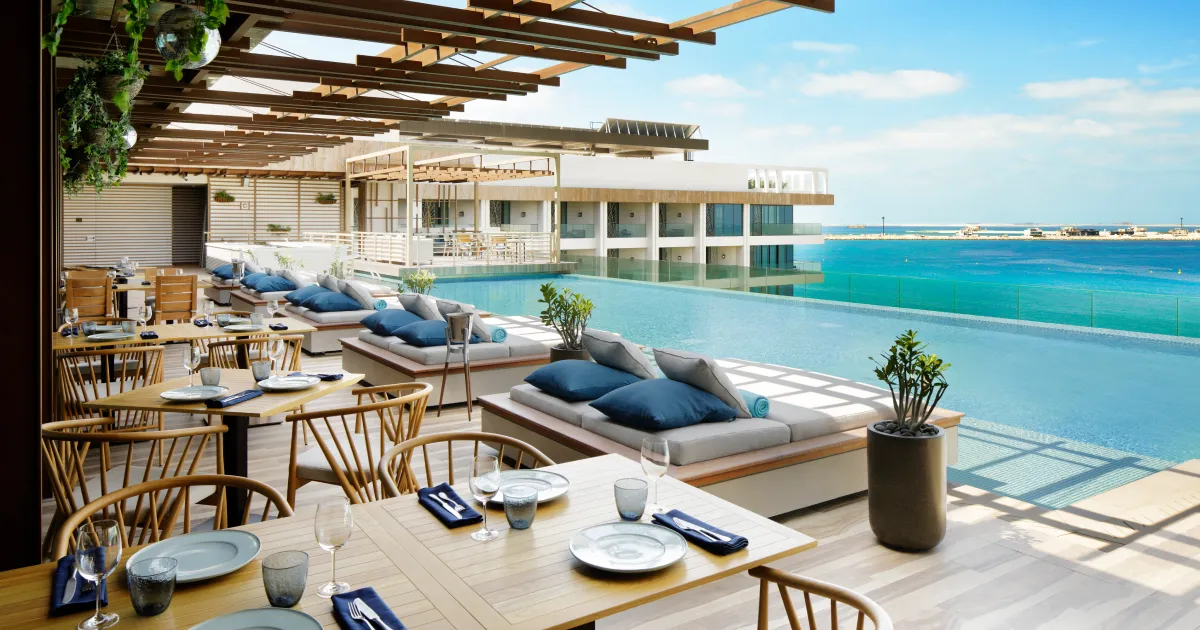
Tasca at Mandarin Oriental Jumeira Dubai is a contemporary Portuguese restaurant by chef José Avillez, with terrace and bar dining, designed by Silverfox Studios and completed in 2019. It holds One MICHELIN Star. Illuminated shelving holds ceramics, and turquoise glassware and blue cushions are used as accent colours, a blue that also appears on the tiled building that houses the Belém bakery. The ceramics and the blue accents bring Portuguese material culture into the room, alongside the cooking, without reproducing a Lisbon interior.
The rest of the room is built from timber and stone. Timber tables sit under a slatted timber ceiling, the bar counters are marble, and the rooftop terrace overlooks the Arabian Gulf. The pastel de nata reached Asia through a bakery that adapted a Portuguese recipe outside Portugal, combining Portuguese pastry with a custard from another tradition. Tasca brings contemporary Portuguese cooking by chef José Avillez to a hotel on the Arabian Gulf, with the same pairing of a Portuguese source and a new setting.
SOURCES
- UNESCO World Heritage Centre Monastery of the Hieronymites and Tower of Belém in Lisbon
- Britannica Jerónimos Monastery
- ESHTE, Estoril Higher Institute for Tourism and Hotel Studies Doces conventuais
- Visit Lisboa Pastéis de Belém
- Correio da Manhã 175 anos de Pastéis de Belém
- Lord Stow's Bakery About Andrew
- South China Morning Post How Macau's Portuguese egg tart was created by a British pharmacist-turned-baker
- Taipei Times (AFP) The surprising origin of Macau's Portuguese egg tarts
- South China Morning Post Hong Kong egg tarts are not vegetarian, and here's why