FROM A TURIN STEAM BREWER TO THE ITALIAN COUNTER BAR
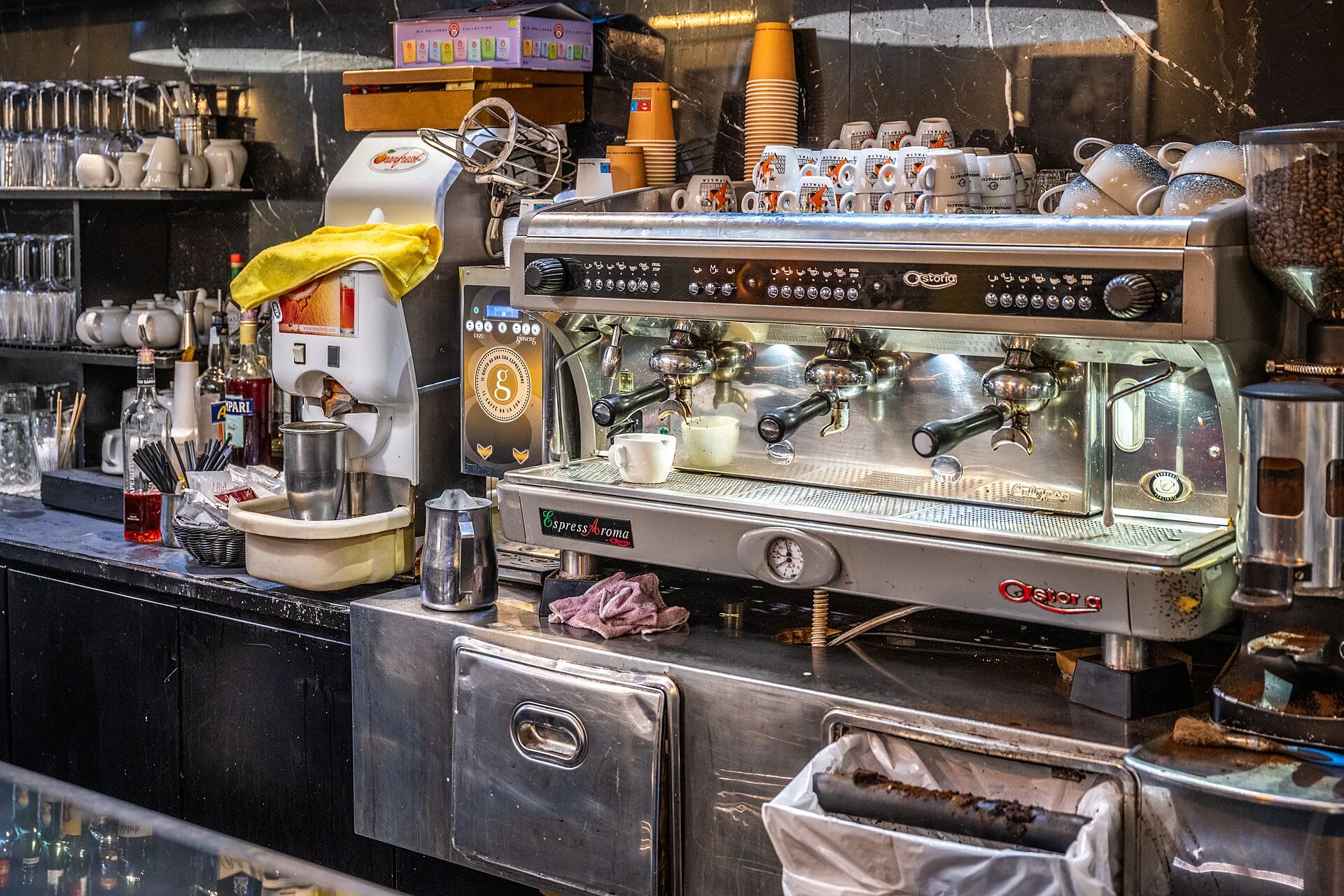
Espresso history begins with a steam brewer patented in Turin in 1884 and continues through the small counter bars that opened in most Italian neighbourhoods after the Second World War. Over those decades a group of engineers, manufacturers and café owners, most of them based in Milan, moved brewing from bulk machines to single cups made to order, raised the pressure from about 1.5 bar to about nine and produced the layer of foam known as crema. The machines shaped how Italians drink coffee: quickly, standing at the bar, at prices that local councils were allowed to cap. Merriam-Webster dates the English word espresso to 1930 and derives it from the Italian caffè espresso, probably meaning coffee made on the spot at the customer's request. In 2021 and 2022, Italian groups also sought UNESCO recognition for the way the drink is prepared.
WHERE DOES ESPRESSO HISTORY BEGIN

The invention of the espresso machine is usually attributed to Angelo Moriondo of Turin. In 1884 he was granted a patent for "new steam machinery for the economic and instantaneous confection of coffee beverage". Writing in Smithsonian magazine in 2012, Jimmy Stamp describes the machine as purely a bulk brewer, built for the Turin General Exposition of that year and working with a boiler at about 1.5 bar. Its purpose was speed. A 2023 article in the Johns Hopkins University magazine, built on an interview with the coffee historian Jonathan Morris, notes that the machine used steam power to cut the time needed to brew coffee.
Moriondo showed the machine in Turin in 1884 and won a bronze medal, but he never produced it commercially. Smithsonian notes that no machines, photographs or other records survive apart from the patent itself. Morris is professor of modern European history at the University of Hertfordshire and the author of Coffee: A Global History, published by Reaktion Books in 2019. The Johns Hopkins article describes the first machines as built around upright boilers that brewed at about one and a half times standard atmospheric pressure, in line with the figure of about 1.5 bar given by Smithsonian.
WHO MADE THE FIRST SINGLE-SHOT ESPRESSO MACHINE
The next steps were taken in Milan. Luigi Bezzera, whom Smithsonian describes as a Milanese manufacturer and "maker of liquors", invented single-shot espresso in the early years of the 20th century. He made several improvements to Moriondo's machine and introduced the portafilter and multiple brewheads. The machine was heated over an open flame, which made pressure and temperature hard to control, and it relied on steam alone, which reached only about two bar, short of what later counted as espresso, and gave the coffee a burnt or bitter taste. It was, however, fast: machines of this type could produce up to 1,000 cups of coffee an hour.
Desiderio Pavoni bought Bezzera's patents in 1903 and improved many aspects of the design. Smithsonian credits him with the first pressure release valve and with the steam wand, and records that the two men worked together on the machine, which Pavoni named the Ideale. The company he founded in 1905 in a small workshop on Via Parini in Milan, La Pavoni, still names the Ideale as its first espresso machine. At the 1906 Milan International Exposition, Bezzera and Pavoni put the words "caffé espresso" on the sign above their stall, which the Johns Hopkins article describes as effectively the first espresso bar.
HOW DID GAGGIA'S LEVER CREATE CREMA
During the years in which Pavoni dominated the market, espresso remained, in Smithsonian's description, a mostly regional drink for Milan and the surrounding area. That changed with Pier Teresio Arduino, a rival manufacturer whom Stamp calls "a businessman and master marketer". By the 1920s Arduino ran a much larger workshop in Milan than Pavoni did, and he was largely responsible for exporting machines out of the city and spreading espresso across the rest of Europe. He also commissioned the graphic designer Leonetto Cappiello to create what Smithsonian calls the famous espresso poster. Brewing pressure, however, still stood at 1.5 to 2 bar.
Smithsonian identifies the man who finally passed that two-bar barrier as Achille Gaggia, a Milanese café owner. The Gaggia company dates the change to 1938, when he filed patent no. 365726 for the "Lampo" system, a piston mechanism that replaced the hot steam used by earlier machines. A second patent followed in 1947 and described a piston driven by a lever. Pushing hot water through the coffee with a spring-loaded lever raised the brewing pressure from 1.5 to 2 bar to 8 to 10 bar, according to Smithsonian. The cylinder on each lever group held only about an ounce of water, which standardised the size of a shot.
Baristas working Gaggia's spring-loaded levers coined the phrase "pulling a shot". The higher pressure also left a layer of foam on the surface of the coffee, which Smithsonian calls the defining characteristic of a quality espresso. Stamp repeats the story that early customers were dubious about this "scum" until Gaggia began calling it "caffe creme". The company's own history says that Milanese customers hesitated at first and then queued for the new coffee at the city's best cafés and bars, and it describes this moment as the first appearance of "Italian espresso".
HOW THE FAEMA E61 CHANGED ESPRESSO HISTORY
In 1948 La Pavoni manufactured its first machine with a horizontal boiler, the model 47, nicknamed La Cornuta because its brewing groups stood out from the cylindrical body of the boiler. The company credits the design to Gio Ponti, Antonio Fornaroli and Alberto Rosselli. Morris explains what the change meant at the bar. Once the boiler was horizontal, customers could actually see the person making their drink, and a single operator could work the whole machine while continuing to talk to the people at the counter. The Johns Hopkins article places this arrangement in Italian bars by the 1960s.
The next change removed the lever. Ernesto Valente's Faema E61 of 1961 replaced the barista's manual force with a motorised pump that supplied the nine bar of pressure needed for brewing. The pump drew tap water from a plumbing line through a copper pipe inside the boiler, where a heat exchanger kept it at a steady brewing temperature. In the same year La Pavoni launched the Europiccola, its first electric machine for domestic use, based on an idea from a Milanese artisan. Smithsonian sums up the craft with the saying of the four Ms: macchina, the machine; macinazione, the grind; miscela, the blend and roast; and mano, the skilled hand of the barista.
WHY DO ITALIANS DRINK ESPRESSO STANDING AT THE BAR
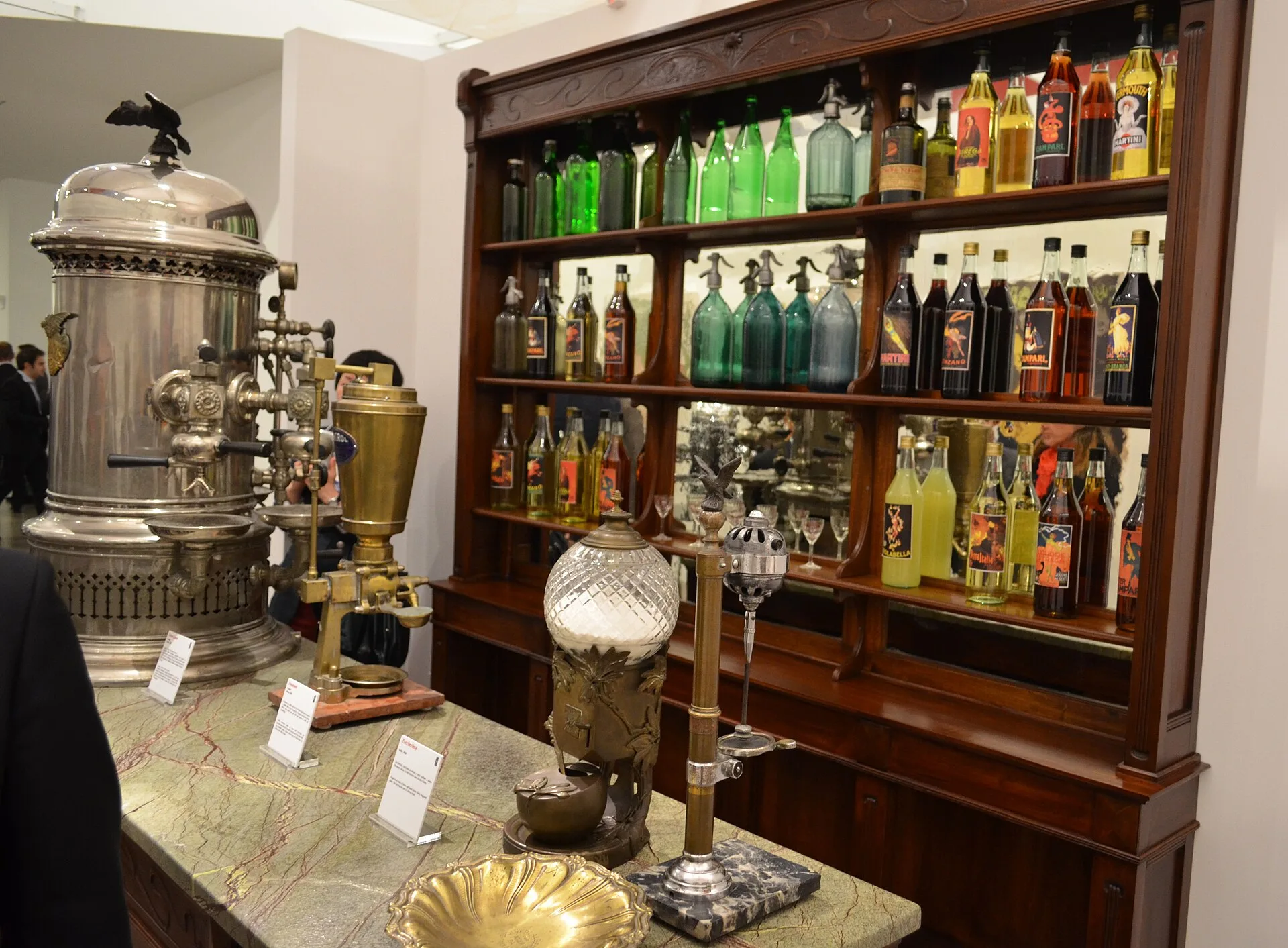
Morris points out that the first American-style cocktail bar opened in Italy in the late 1800s, and that those American bars were among the first institutions in the country to install espresso machines. The format that most Italians know today grew from the practice of standing at the counter, or al banco. As people moved into the cities after the Second World War, small bars opened in most neighbourhoods to serve locals espresso all day. Homes and workplaces were not practical places to socialise over coffee, and an espresso was drunk quickly, so customers came in, drank and left within minutes.
Price rules reinforced the habit. To fight inflation, the Italian government allowed local councils, working with bar owners, to set maximum prices for basic items, and those prices were based on a cup of coffee without service, meaning one drunk standing at the counter. Sitting down at a table counted as service and cost more, and Morris cites cases in which a drink doubled in price once the customer sat. In 2022, reporting on the heritage bid for Italian espresso, The Local quoted Nunzia Clemente of the food site Dissapore, who argued that pressure to keep an espresso under one euro had hurt its quality.
CAPPUCCINO, MACCHIATO AND THE ITALIAN ESPRESSO MENU
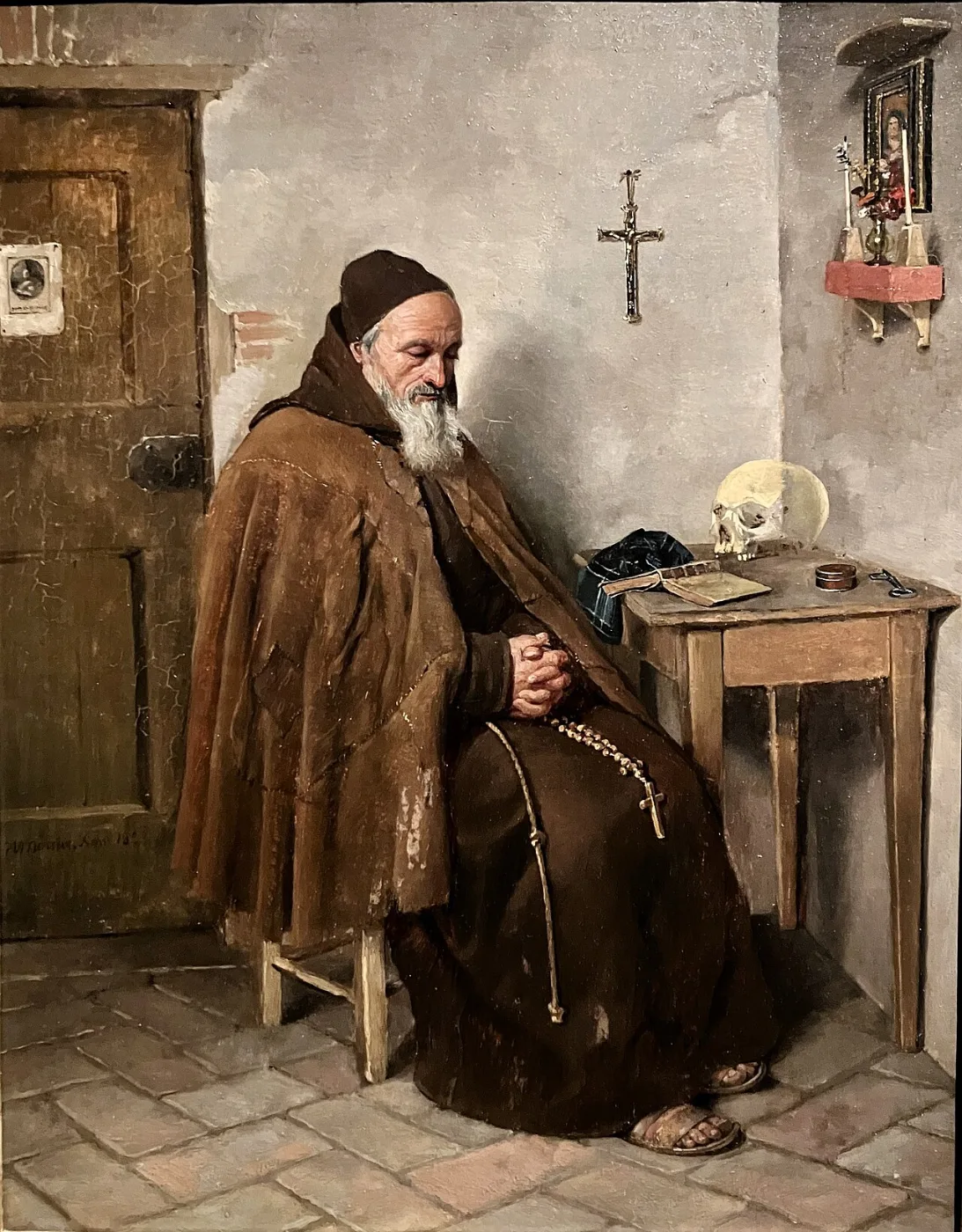
Merriam-Webster defines espresso as a strong coffee brewed by forcing hot water under high pressure through finely ground beans and typically drunk in small servings. Britannica describes the cappuccino as espresso, steamed milk and frothed milk in three equal parts. Its name comes from the brown robes of the Capuchin friars, and it was influenced by an Austrian predecessor, the Kapuziner, a coffee with whipped cream first recorded in the 18th century. The Italian cappuccino itself first appeared in the early 20th century, after the espresso machine was invented, and became a common breakfast drink after the Second World War, when espresso machines grew cheaper and more widely available.
Britannica adds that cappuccinos are seldom served in Italy after about 10 or 11 in the morning, and that many bars put away their steaming pots by late morning. The drink reached Italian restaurants in the United States in the 1930s and spread across the country with the nationwide coffee chains of the 1980s. Merriam-Webster defines the macchiato as espresso topped with a thin layer of foamed milk, short for caffè macchiato, which translates roughly as coffee with a spot of milk. The dictionary records its first known use in English in 1980, fifty years after espresso itself.
ESPRESSO HISTORY AND THE UNESCO HERITAGE BID
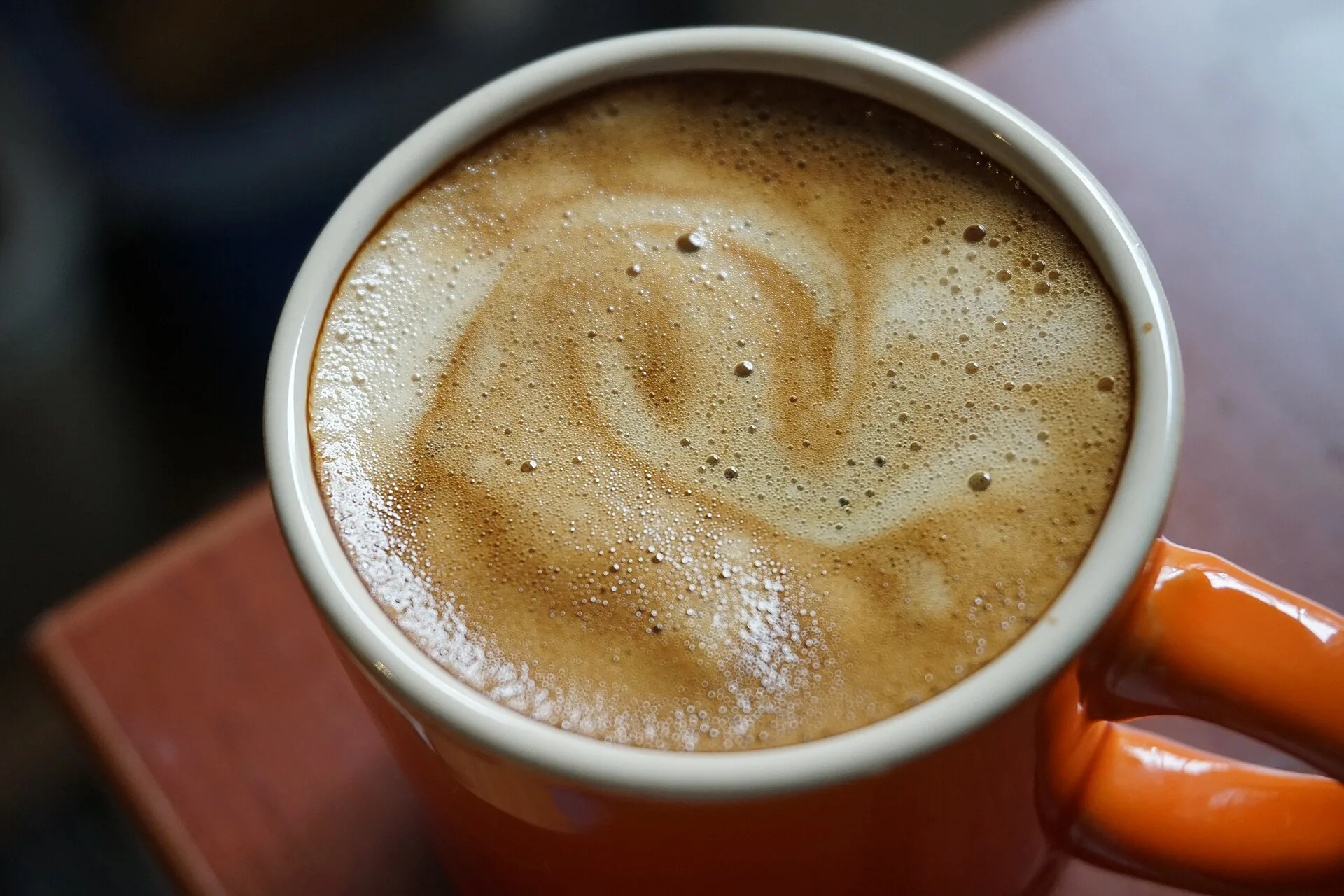
In 2021 two separate applications were made for Italian espresso to be recognised by UNESCO as intangible cultural heritage. One came from the Consortium for the Protection of Traditional Italian Espresso Coffee in Treviso, founded by Giorgio Caballini, on behalf of the whole of Italy; the other came from the Region of Campania on behalf of Naples. Italy's national UNESCO committee disallowed both and asked the groups to apply together the following year. In January 2022 the Ministry of Agricultural, Food and Forestry Policies unanimously approved a new application, which, as The Local reported, sought recognition not for the drink itself but for the traditional process by which it is made.
The consortium's regulations set out that process in detail: freshly ground coffee brewed for 20 to 27 seconds, a crema that stays uniform for at least 120 seconds without stirring, a porcelain cup with a narrow bottom, between 13 and 26 grams of coffee in the cup and a temperature of 90 to 96 degrees Celsius. On 29 March 2022 the Italian National Commission for UNESCO, meeting under the chairmanship of Franco Bernabè, chose L'arte italiana dell'Opera lirica, the Italian art of opera, for the 2023 cycle. L'Adige and Dissapore reported that the espresso dossier, titled Caffè italiano espresso tra cultura, rituali, socialità e letteratura nelle comunità emblematiche da Venezia a Napoli, was not put forward, although the board had greatly appreciated it.
CAFÉ AND PASTRY OUTLETS AT MANDARIN ORIENTAL, MUSCAT

Mandarin Oriental, Muscat opened on 3 June 2024 in Shatti Al-Qurum. Silverfox Studios designed the hotel's food and beverage outlets: Rawya, The Pool Bar, Essenza, Essenza Bar and The Mandarin Cake Shop. Rawya is an elegant European café with subtle Eastern accents. It serves from breakfast to dinner, and its interior is arranged in zones that change through the day. A juice bar and a bakery stand at its entrance. The Mandarin Cake Shop has carved lattice screens and a pastry counter.
In the Italian bars described above, the counter decided both how coffee was drunk and what it cost: a cup taken standing was the one whose maximum price local councils could set, while sitting down counted as service. Post-war neighbourhood bars in Italian cities served locals espresso all day, and the cappuccino became a breakfast drink, seldom served after about 10 or 11 in the morning. At Rawya the hours run from breakfast to dinner, across zones that change as the day goes on.
SOURCES
- Smithsonian Magazine The Long History of the Espresso Machine
- Johns Hopkins Magazine A short (or tall) history of the espresso bar
- Gaggia History
- La Pavoni La Pavoni history
- Encyclopaedia Britannica Cappuccino
- Merriam-Webster Espresso
- Merriam-Webster Macchiato
- The Local Italy Italy bids for UNESCO status for traditional Italian espresso (again)
- L'Adige Unesco: bocciata candidatura caffè, passa opera lirica
- Dissapore Caffè espresso: la commissione nazionale boccia la candidatura all'Unesco