FROM DRAUGHT CATTLE TO REGISTERED, GRADED AND REGIONAL BEEF
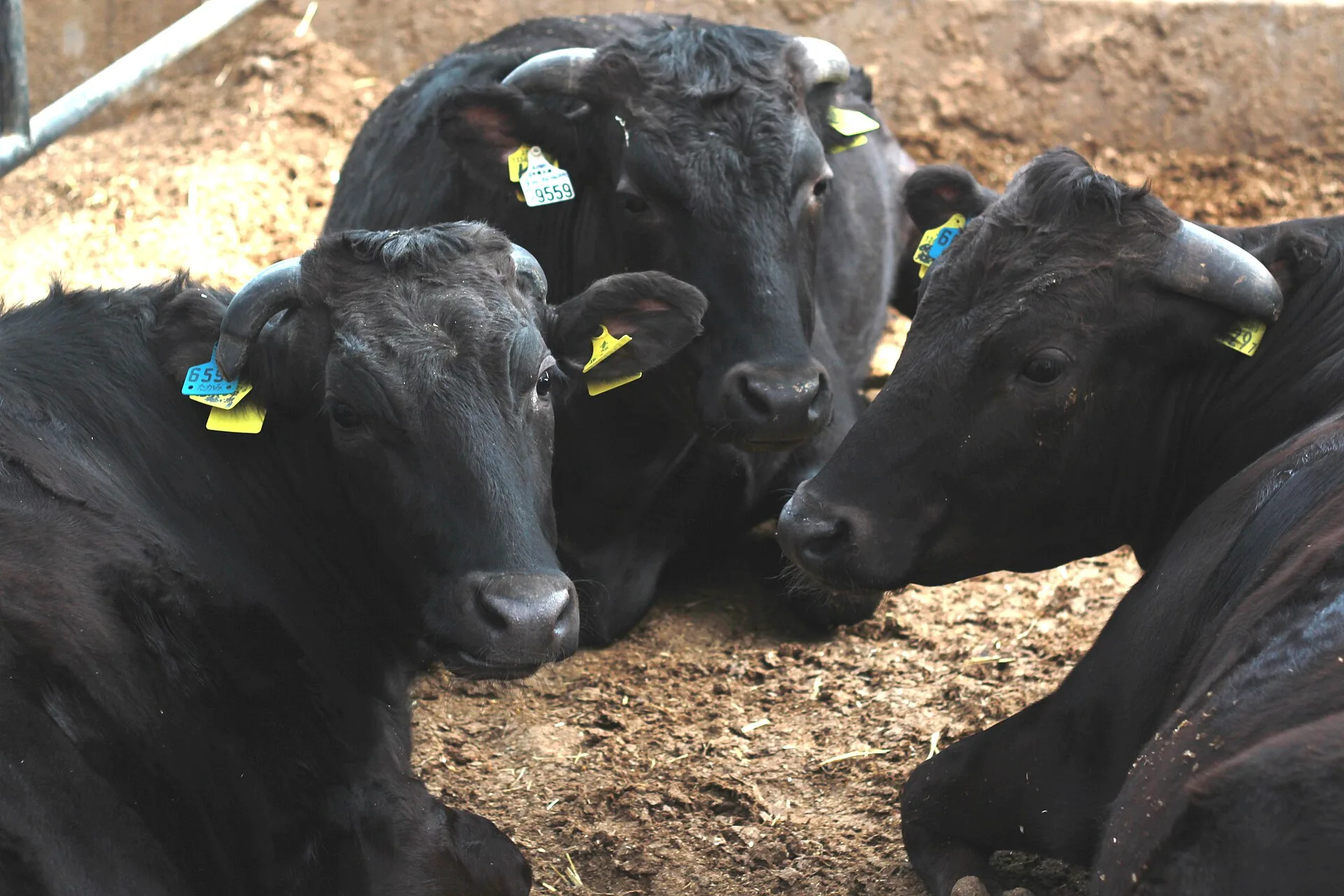
Wagyu beef is the meat of four Japanese cattle breeds, and one of them, the Japanese Black, accounts for 98% of all wagyu raised in Japan, according to Nippon.com. For most of Japanese history these cattle pulled carts and ploughed fields. Their conversion into meat animals began in the Meiji era (1868 to 1912), passed through a period of crossbreeding with imported European breeds, and settled into registered bloodlines bred within Japanese stock. Carcasses are graded by the Japan Meat Grading Association for yield and quality, and regional brands such as Kobe, Matsusaka and Omi add their own rules on birthplace, sex, age, fattening area and marbling.
WHAT IS WAGYU BEEF? JAPAN'S FOUR NATIVE BREEDS

Japan recognises four wagyu breeds: Japanese Black (Kuroge Washu), Japanese Brown (Akage Washu), Japanese Shorthorn (Nihon Tankaku Shu) and Japanese Polled (Mukaku Washu). The Ministry of Agriculture, Forestry and Fisheries (MAFF) notes that each breed is registered by its own livestock registry body, and the Japan Meat Grading Association's yield formula adds 2.049 points for carcasses of these four breeds and crosses among them. A 2018 review in the Asian-Australasian Journal of Animal Sciences by Takafumi Gotoh and colleagues counted about 1.6 million Japanese Black cattle among Japan's 2.5 million beef cattle in 2017.
A 1996 paper in the Japan Agricultural Research Quarterly by Taro Obata and co-authors describes how the three smaller breeds were formed. Japanese Brown has two strains: the Kumamoto strain developed from imported Korean cattle and was later crossed with Simmental, Devon and other breeds, while the Kochi strain came from crossing Simmental with Korean cattle from Kyushu. Japanese Shorthorn dates from crossbreeding begun in 1871 between indigenous cattle of northern Honshu and imported dairy Shorthorn, and is distributed mainly in Tohoku and Hokkaido. Japanese Polled was developed from 1916 by crossing indigenous cattle with Aberdeen Angus bulls imported from England. In 1995 the paper put Japanese Black at 90.2% of indigenous wagyu and Japanese Polled at 0.1%.
WHERE DID WAGYU COME FROM? DRAUGHT CATTLE AND MEIJI CROSSBREEDING
For most of Japanese history, cattle were draught animals, and Nippon.com notes that eating beef was considered unthinkable until the end of the 19th century because Buddhism prohibited consuming animal flesh. Regional types still formed. Obata and co-authors trace several pre-crossbred strains, called tsuru, to the Chugoku district in the Edo era (1600 to 1867), where cattle carried firewood used to smelt iron sand for steel. Nippon.com reproduces an illustration from the late Kamakura-period scroll Kokugyu Juzu (Ten Illustrations of Native Cattle), which describes Tajima cattle from northern Hyogo as having fine bones, firm muscles, thin hide and rounded backs.
After the Meiji Restoration, the government promoted foreign breeds for crossbreeding with native cattle, according to Obata. Gotoh and colleagues date the main crossbreeding to the early 1900s and name the imports as Braunvieh and Simmental from Switzerland, Ayrshire, Devon and Shorthorn from the United Kingdom, and Holstein from Germany and the Netherlands. The aim was to raise size and meat yield as Japanese diets became more Western. Meat quality declined and body size increased excessively, so Japan stopped crossbreeding and began breeding within its own cattle, which in Gotoh's account led to the establishment of the Japanese Black breed in 1944. Obata dates the decline of draught work to the mid-1950s, when machinery and chemical fertilisers spread, and from then the cattle were raised mainly for highly marbled beef, known in Japanese as shimofuri.
PEDIGREES, TAJIRI-GO AND WAGYU GENETICS ABROAD

Wagyu registration began prefecture by prefecture in 1920 and 1921, according to MAFF. Calves are inspected, and those that pass receive a calf registration certificate listing their sires and dams up to two generations back and the sire in the third generation. Each animal's nose print, unique to the individual, is attached to prove that calf and certificate match. Under the Beef Traceability Law, in force since 1 December 2003, every calf also carries a 10-digit identification number on an ear tag.
Tajiri-go, a bull born in 1939 at a farm in the Ojiro district of Kami, deep in the mountains of Hyogo Prefecture, sired 1,463 calves over a 15-year life. Nippon.com reports that a 2012 survey by the Wagyu Registry Association found 99.9% of female Japanese Black cattle in Japan were his descendants, and names him as the founding ancestor of the Matsusaka, Omi and Yonezawa brands. Nippon.com adds that wagyu semen went to Canada in 1967, and in 1976 two Japanese Black and two Japanese Brown bulls were sent to the United States for research. Australian ranchers began importing wagyu genetic material in 1989. By the end of 1998, 247 head of cattle and some 13,000 straws of semen had gone to the United States, after which Japan halted exports, and it now strictly regulates them.
KOBE, MATSUSAKA AND OMI: JAPAN'S REGIONAL WAGYU BRANDS
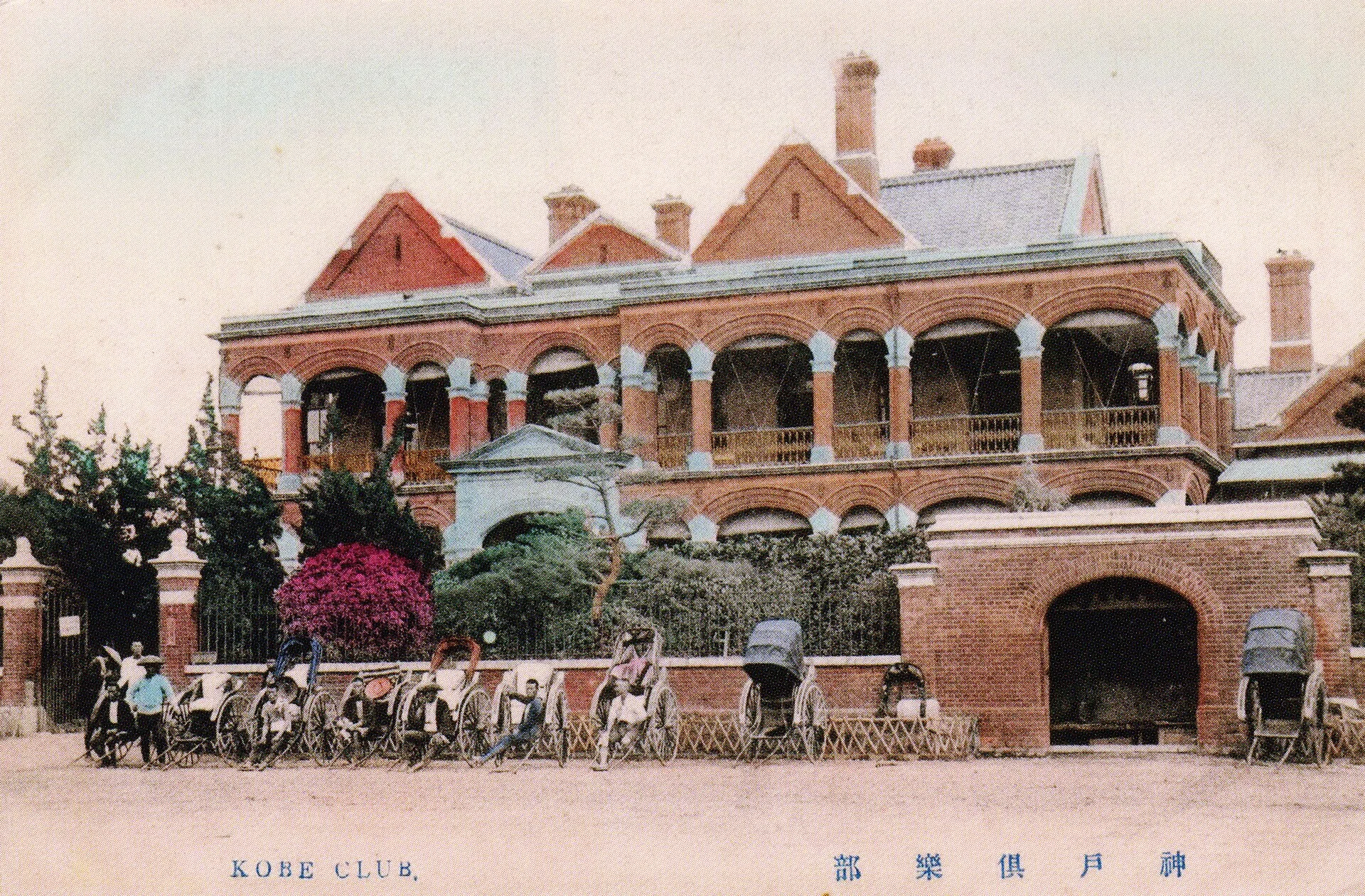
The port of Kobe opened in 1868. VISIT KOBE, the city's official travel guide, says foreigners living there tried beef from Tajima cattle, animals then used to haul and plough, and that the reputation of Kobe beef spread before the city's own name did. The guide states that Kobe beef comes from purebred Tajima cattle raised in Hyogo Prefecture and makes up less than 0.2% of the total beef market in Japan. The Kobe Beef Marketing and Distribution Promotion Association was established in 1983 to protect the brand, with a management system covering production through distribution.
Matsusaka beef, from Mie Prefecture, is defined by the sex of the animal and where it is fattened. According to the Mie Prefecture Tourism Federation, it must be a Japanese Black heifer that has never calved, registered in the Matsusaka beef identification system, and fattened longest and last within a production area covering Matsusaka, Meiwa, Taki, Tamaki and Odai in full and parts of Tsu, Ise and Taiki. Cattle must enter the area by 12 months of age and may move only within it afterwards. A special grade, Tokusan Matsusaka beef, requires a calf from Hyogo Prefecture fattened in the area for 900 days or more.
Omi beef from Shiga Prefecture is registered under Japan's Geographical Indication system as GI No. 56, held by the Shiga Prefecture Livestock Industry Promotion Association. The MAFF register entry states that it has more than 400 years of production history, and that while beef consumption was prohibited in the Edo period, the Hikone Domain, which governed the area, was the only domain the shogunate allowed to produce beef. Rice cultivation around Lake Biwa led farmers to fatten cattle mainly on rice straw.
HOW IS WAGYU BEEF GRADED IN JAPAN?
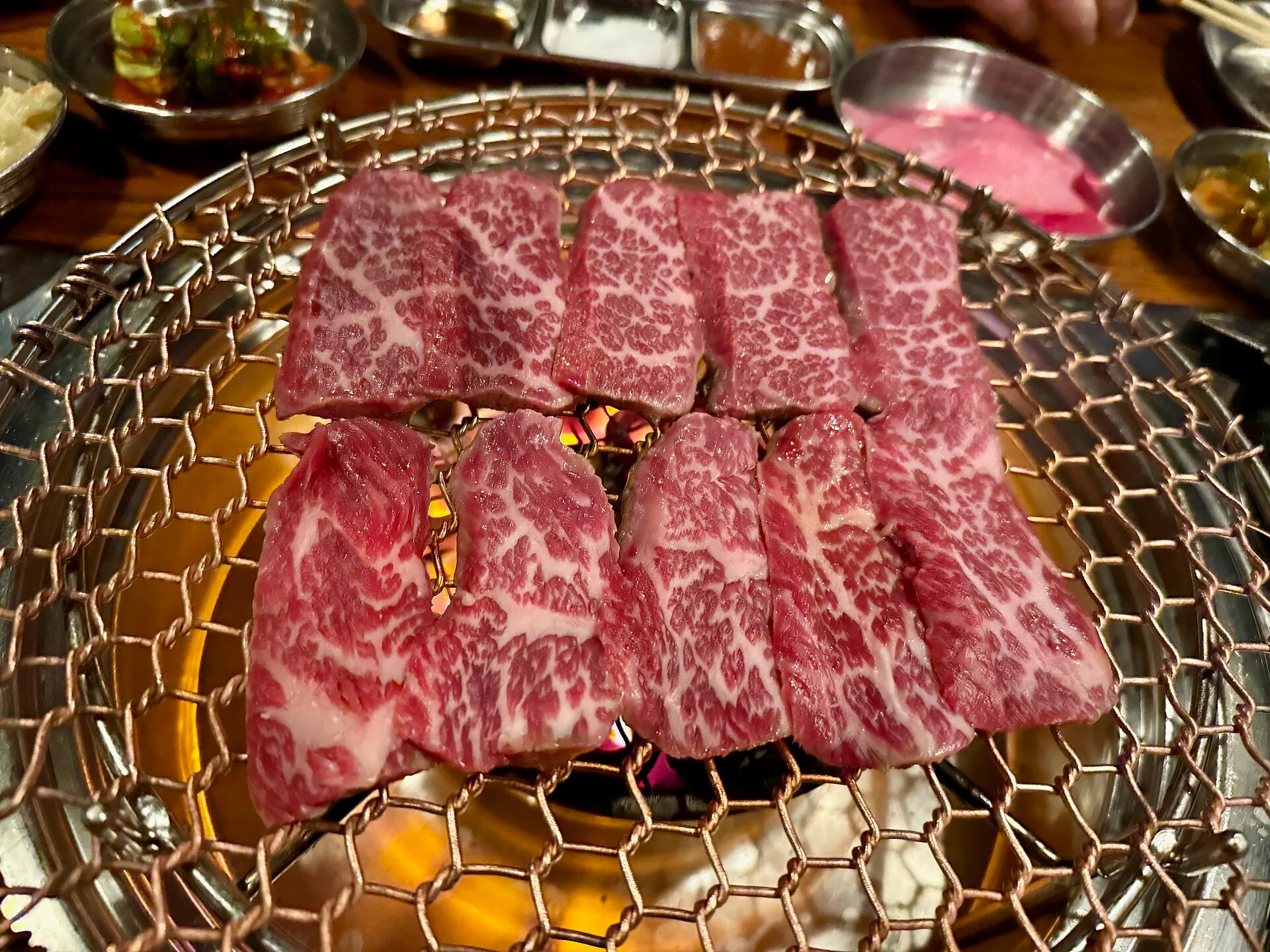
Japanese beef carcasses are evaluated by accredited graders from the Japan Meat Grading Association (JMGA), Gotoh and colleagues explain, under a trading standard that applies to every carcass except calves. The half carcass is cut flat between the sixth and seventh ribs, and the grader works from that surface, measuring rib-eye area, the thickness of the bara (belly) and subcutaneous fat. Each carcass receives a yield grade of A, B or C and a meat quality grade from 1 to 5, shown together as a code such as A5 or B3. The yield standard value starts from 67.37, adds 0.130 per square centimetre of rib-eye and 0.667 per centimetre of bara, and subtracts 0.025 per kilogram of hot carcass weight and 0.896 per centimetre of subcutaneous fat. A value of 72 or more earns grade A, 69 to under 72 grade B, and under 69 grade C.
The meat quality grade combines four criteria: marbling, meat colour and brightness, firmness and texture, and fat colour, lustre and quality. Each is scored separately, and the lowest sets the final grade. Marbling is judged against the Beef Marbling Standard (BMS), a scale numbered 1 to 12 against which graders compare the carcass. Quality grade 5 requires BMS No. 8 to 12, grade 4 No. 5 to 7, grade 3 No. 3 to 4, grade 2 No. 2 and grade 1 No. 1. An A5 carcass therefore combines the top yield band with BMS No. 8 or above and top marks on the other three criteria.
THE RULES BEHIND KOBE BEEF CERTIFICATION
Kobe beef is a selection from a larger category, Tajima beef, and both are defined in the bylaws of the Kobe Beef Marketing and Distribution Promotion Association. Tajima beef must come from Tajima cattle born in Hyogo Prefecture at a breeding farm registered with the association, bred and fattened in Hyogo, and processed at a slaughterhouse in the prefecture. The animal must be a steer or a cow aged more than 28 and less than 60 months, and the carcass must reach yield grade A or B with a quality grade of 2 or above. Meat that passes may be sold as Tajima beef or Tajima-gyu.
Kobe beef is drawn from Tajima beef that meets those conditions and adds further limits. The animal must be a heifer or a steer. The carcass must reach yield grade A or B with a meat quality score of 4 or above, and its marbling must reach BMS No. 6 or above, a threshold inside the JMGA's quality grade 4 band. Gross carcass weight must fall between 270 and 499.9 kg for females and between 300 and 499.9 kg for steers. Meat that passes may be labelled Kobe Beef, Kobe-gyu or Kobe-ushi.
HOW IS WAGYU BEEF COOKED IN JAPAN?
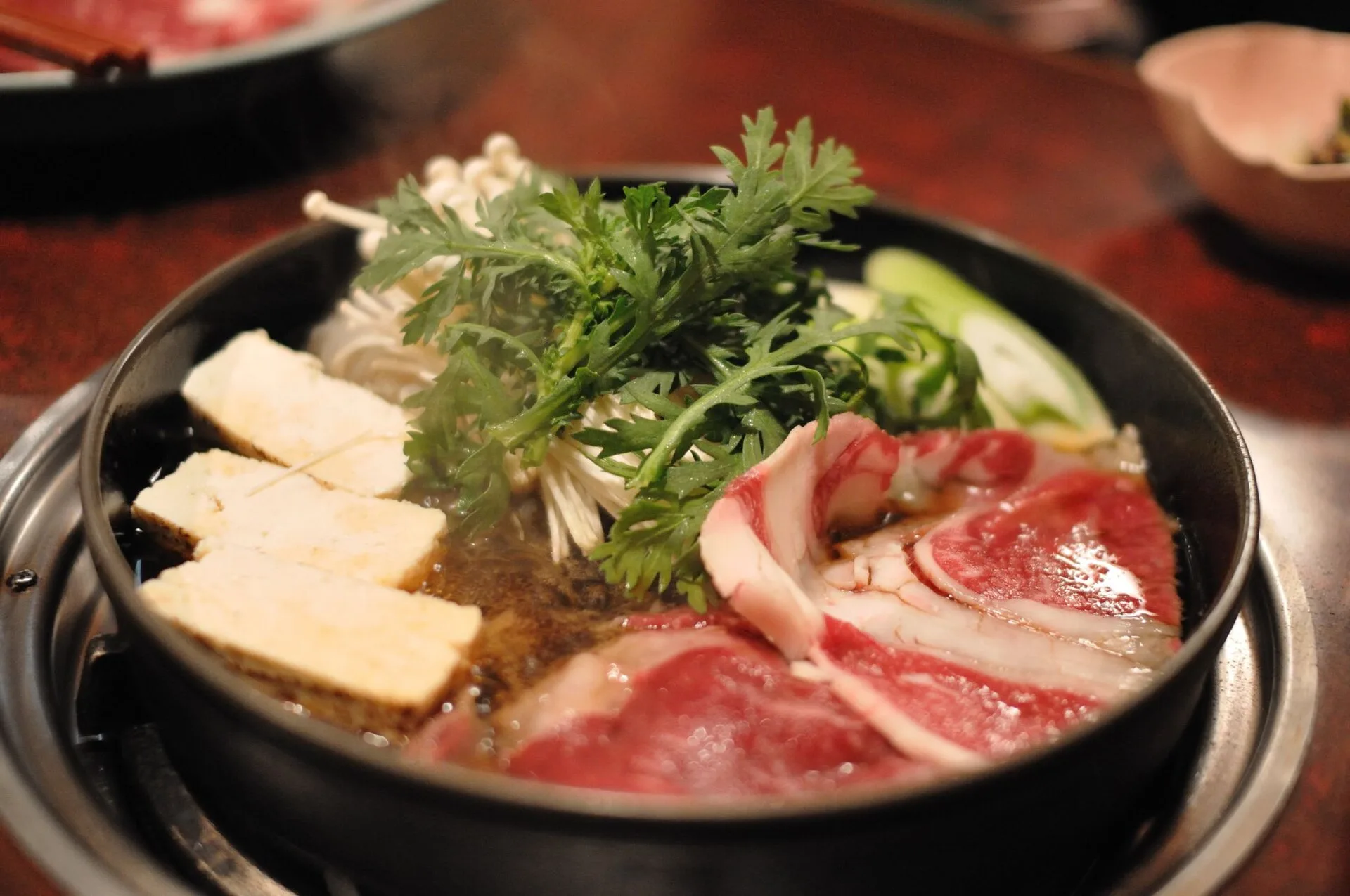
Sukiyaki emerged in the Meiji era, when Western influence made meat a more regular part of the Japanese diet, and JETRO, Japan's trade promotion body, cites gyunabe, beef hot pot, as a prime example. Beef is cooked in an iron pot in a broth of soy sauce, sugar, sake and mirin, with green onion, chrysanthemum greens and grilled tofu, and each piece is dipped in raw egg before eating. Gotoh and colleagues note that in a Japanese meal rice is the main dish and beef a side dish, and that marbling is a prerequisite for dishes such as sukiyaki.
Shabu-shabu, which JETRO says is regarded as the ideal way to appreciate wagyu, uses thinly sliced meat swished through a broth that often contains kombu, then dipped in ponzu or gomadare, a sesame sauce. VISIT KOBE lists four common preparations of the local beef: teppanyaki steak cooked on a hot iron plate, sukiyaki in sweet soy broth, shabu-shabu in kelp broth, and yakiniku grilled over a plate or open flame and dipped in sauce. The guide states that Misono, a Kobe restaurant established in 1945, was the first restaurant in the world to serve teppanyaki steak.
NETSU: A ROBATA STAGE AT MANDARIN ORIENTAL JUMEIRA DUBAI

Japanese preparations of wagyu range from the iron pot of sukiyaki and the kombu broth of shabu-shabu to the iron plate of teppanyaki and the open flame of yakiniku. Netsu, at Mandarin Oriental Jumeira, Dubai, is built around another Japanese cooking format. It is a Japanese robata by chef Ross Shonhan, completed in 2019 and centred on the robatayaki grill. Silverfox Studios designed the interior on a double-height kabuki theatre concept, placing the robata grill as the central stage, with guests watching from several levels.
The other elements of the plan also come from the kabuki theatre. A raised walkway leading from the back kitchen recalls the hanamichi of the kabuki stage, and graphics in the style of 1950s kabuki posters are applied to the columns and to a wall of the restaurant. Within the double-height volume, an upper bar and a DJ lounge occupy the upper level of Netsu. Outside the restaurant, horizontal recessed lighting set into the exterior references the tiered seating of a theatre auditorium.
SOURCES
- Nippon.com The Roots of Wagyu: From Local Cattle to Global Brand
- Asian-Australasian Journal of Animal Sciences (Kobe University Repository) The Japanese Wagyu beef industry: current situation and future prospects: A review
- Japan Agricultural Research Quarterly (JIRCAS) Progress in Breeding Techniques for Effective Beef Cattle Production in Japan
- Ministry of Agriculture, Forestry and Fisheries aff August 2016, Feature 1: Wagyu (4)
- Japan Meat Grading Association Beef Carcass Trading Standard
- Kobe Beef Marketing and Distribution Promotion Association Kobe Beef Marketing and Distribution Promotion Association Bylaws
- VISIT KOBE Special Feature on Kobe Beef, Japan's World-Class Brand
- Ministry of Agriculture, Forestry and Fisheries GI Register No. 56: Omi Ushi / Omi Gyu
- Mie Prefecture Tourism Federation (Kanko Mie) The Secret of Matsusaka Beef's Flavour Is in Its Marbling
- JETRO The nabe (Japanese-style hot pot) dishes that bring people together in the Japanese winter