SOMERSET ORIGINS, THE CHEDDARING METHOD AND VERMONT CREAMERIES
Cheddar cheese is a hard cow's milk cheese named after the district of Cheddar in Somerset, England, and Britannica counts it among England's oldest cheeses. Its recipe has a technical step of its own, cheddaring, in which slabs of curd are stacked and turned to drain whey, a process given scientific form by the Somerset cheesemaker Joseph Harding in the 19th century. Today the name covers two very different products: a small output of farmhouse cheese, traditionally bound in cloth and made by hand in four counties of south-west England under a protected designation, and a far larger factory output made in Britain, the Commonwealth and the United States. Vermont, home to the farmer cooperative Cabot and to Grafton Village Cheese, kept a tradition of naturally white cheddar that differs from the coloured cheddar long made in states such as Wisconsin and Ohio.
WHERE DOES CHEDDAR CHEESE COME FROM?
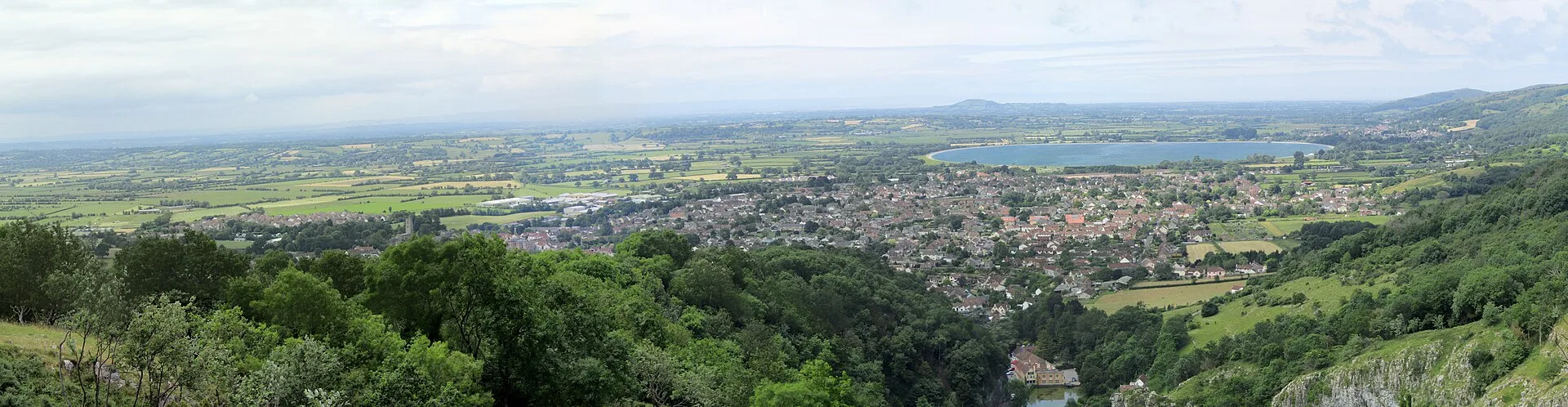
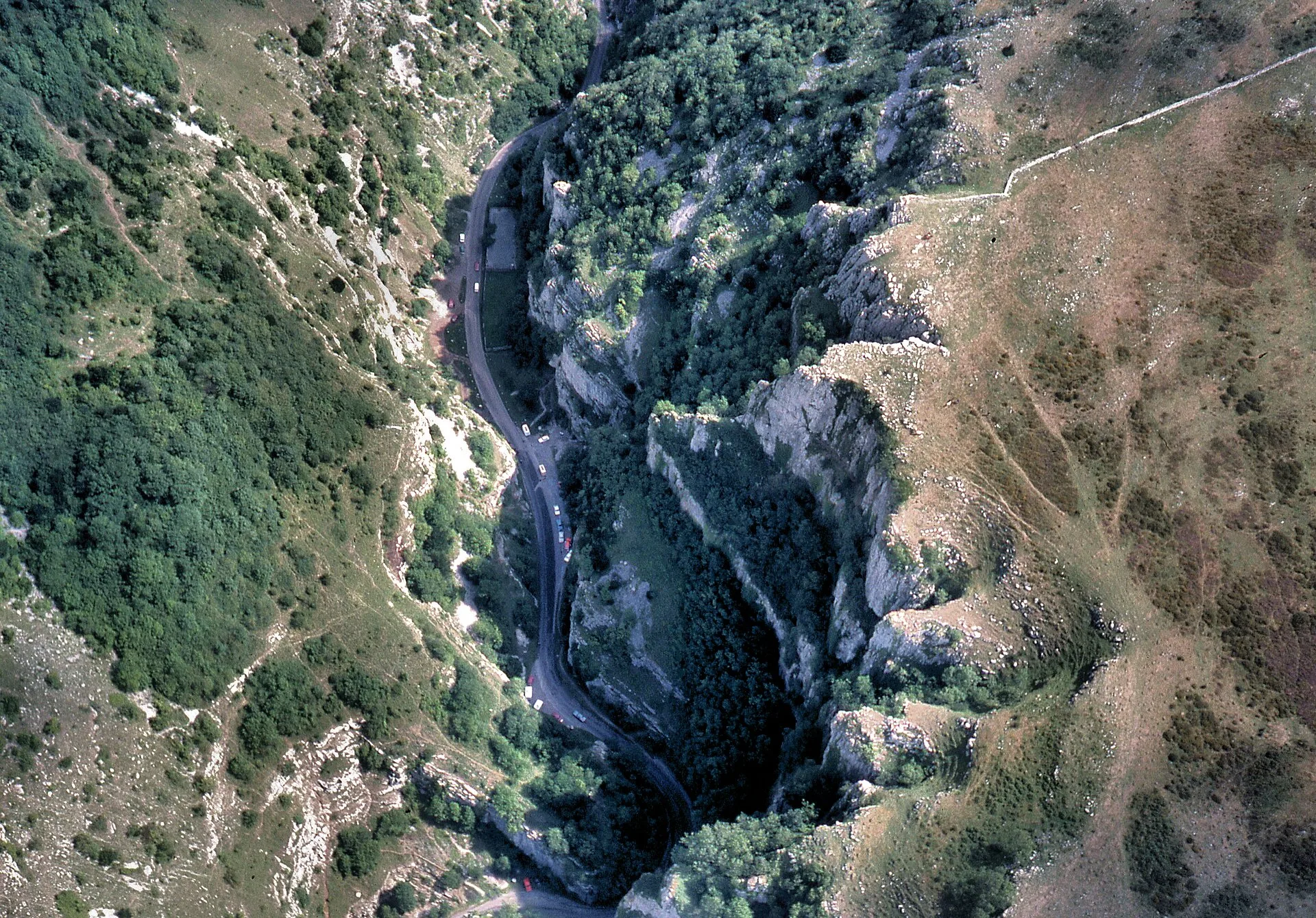
Cheddar is a limestone village in Somerset, about 31 km south-west of Bristol, at the mouth of Cheddar Gorge, which cuts through the Mendip Hills with rock walls rising up to 137 metres above the road. In a 2026 report for The Canberra Times, travel writer David Whitley dated the first mention of cheddar cheese to 1170 and wrote that its reputation grew in the 15th century, when the area's dairy industry expanded and surplus milk was turned into cheese. The product specification for West Country Farmhouse Cheddar, published by the UK government, likewise states that cheddar was reportedly first made around Cheddar as far back as the 15th century, on farms whose cheese was sold at local markets.
The same specification gives the traditional explanation for the name: the best cheddar was said to come from the area around the gorge, and tradition holds that cheese made nearby was stored in the caves beneath the Mendip Hills, where conditions suited maturation. The Canberra Times report puts the temperature of the caves at a constant 11°C. The Cheddar Gorge Cheese Company was formed in 2003 to bring cheesemaking back to the village; it uses raw, unpasteurised milk from one farmer's two herds, cheddars all its cheese by hand, and matures cheeses on shelves inside Gough's Cave.
JOSEPH HARDING AND THE SCIENCE OF CHEDDAR
Joseph Harding was born in 1805 into a family of Somerset farmers and is known as the father of cheddar cheese. According to the London cheesemonger Neal's Yard Dairy, which has published a history of the Harding family, most of his experimental work took place at the Marksbury dairy of his aunt, Elizabeth "Betsy" Harding, an established farmer and cheesemaker who taught him the craft. What became known as the Joseph Harding System applied scientific method to cheddar production, with the stated aim of making the best possible cheese with the least possible labour. The techniques associated with it include slip-scalding, rapid ripening, a mechanical curd-breaker, improved dairy hygiene and testing the acidity of the cheese. In 1860 Harding published an article on his methods in the Journal of the Royal Agricultural Society of England.
The cheesemaking was a family undertaking. His wife Rachel helped with the experiments, gave travelling demonstrations and took over his lectures when he fell ill, and his daughters also made cheese. In 1854 a deputation from the Ayrshire Agriculture Association visited Somerset, and the cheese for its demonstration at Marksbury was made by Harding's eldest daughter. The deputation's report on his methods helped make Scottish cheddar viable, and Harding later lectured in Ayrshire and taught many dairymen from continental Europe. Neal's Yard Dairy traces his influence to all parts of Britain, the Dominions, America and Scandinavia.
WHAT IS CHEDDARING AND HOW IS CHEDDAR CHEESE MADE?
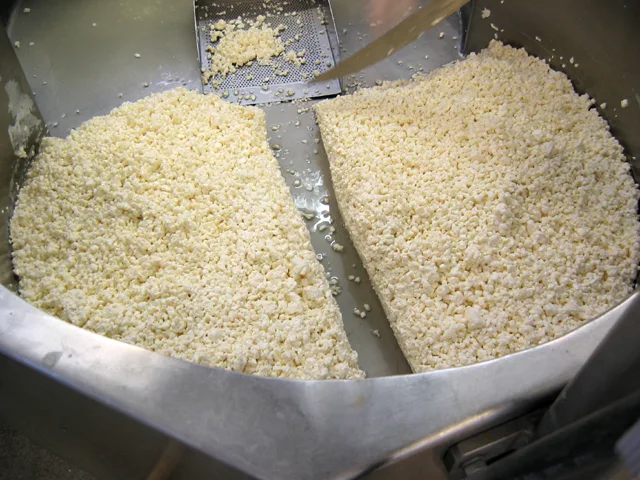
Cheddar begins like most hard cheeses, with milk set by rennet into a curd that is cut to release whey. The West Country Farmhouse Cheddar specification sets out the traditional sequence. After cutting, the curds are scalded at around 103 to 106°F (about 39 to 41°C). The curd is then cut into large rectangular pieces, which are stacked and turned by hand so that the whey drains away. This stacking and turning is cheddaring, and the specification describes it as labour-intensive. The slabs are then milled into small pieces, salted, mixed thoroughly and packed into moulds for pressing.
Cheddaring drains whey and moisture from the curd, which, as the Canberra Times report notes, helps the finished cheese keep and travel. Britannica describes the traditional result as cylinders commonly 30 to 38 cm in diameter and weighing 27 to 34 kg, though sizes vary widely. The farmhouse specification permits both traditional cylinders and rectangular blocks of varying sizes, and records that most makers now use rectangular moulds because supermarkets prefer blocks. It also sets composition limits for the protected cheese: at least 48 percent fat in dry matter and no more than 39 percent moisture.
CLOTH-BOUND CHEDDAR AND THE WEST COUNTRY FARMHOUSE CHEDDAR PDO
West Country Farmhouse Cheddar is a protected food name covering cheese made in Dorset, Somerset, Devon and Cornwall, within county boundaries as they stood in 1955. The milk must come from cows grazed within that area, and about half of it comes from the makers' own farms. The specification requires the cheese to be made by hand using in-vat methods rather than moving belts or cheddarmaster machines, with natural animal rennet or vegetable rennet. Cheese sold under the name must be matured for at least nine months.
The traditional finish is cloth binding. Cylinders are bandaged in muslin dipped in melted lard or another suitable natural fat or oil, or the fat is smeared on before bandaging; the cloth is removed before sale. Blocks are instead wrapped in a food-grade semi-permeable membrane and packed in wooden slats or boxes. The organisation behind the name dates from the 20th century: farmhouse cheesemakers' federations formed between 1928 and 1932, a certification trade mark for Farmhouse Cheddar Cheese was registered in 1955, and Farmhouse Cheesemakers Ltd was formed in 1981. In 1993 its members sold about 12,000 tonnes, worth more than £66 million at retail prices.
HOW IS CHEDDAR CHEESE AGED AND GRADED?
Britannica states that cheddar ages for at least three to six months, ideally one and a half to two years, and that its flavour becomes richer and more intense with age without turning bitter. Ageing rules differ by scheme. The West Country Farmhouse Cheddar specification sets a nine-month minimum for its protected cheese and requires samples to be graded when the cheese is two to four months old. Britannica notes that the cheese is traditionally wrapped in thin muslin and coated with wax.
In the United States, the Department of Agriculture's grade standards for cheddar took effect on 1 May 1956. They set four grades, U.S. Grade AA, A, B and C, each judged on four characteristics: flavour, body and texture, colour, and finish and appearance, with separate rules for bandaged or paraffin-dipped cheese and for rindless blocks. Requirements are set out for three degrees of curing, named fresh or current, medium cured, and cured or aged. The final grade is fixed by the lowest rating given to any one characteristic. Grade AA, the highest, requires a fine, highly pleasing flavour, a firm, smooth and compact body, and uniform, bright colour.
WHY IS SOME CHEDDAR ORANGE?
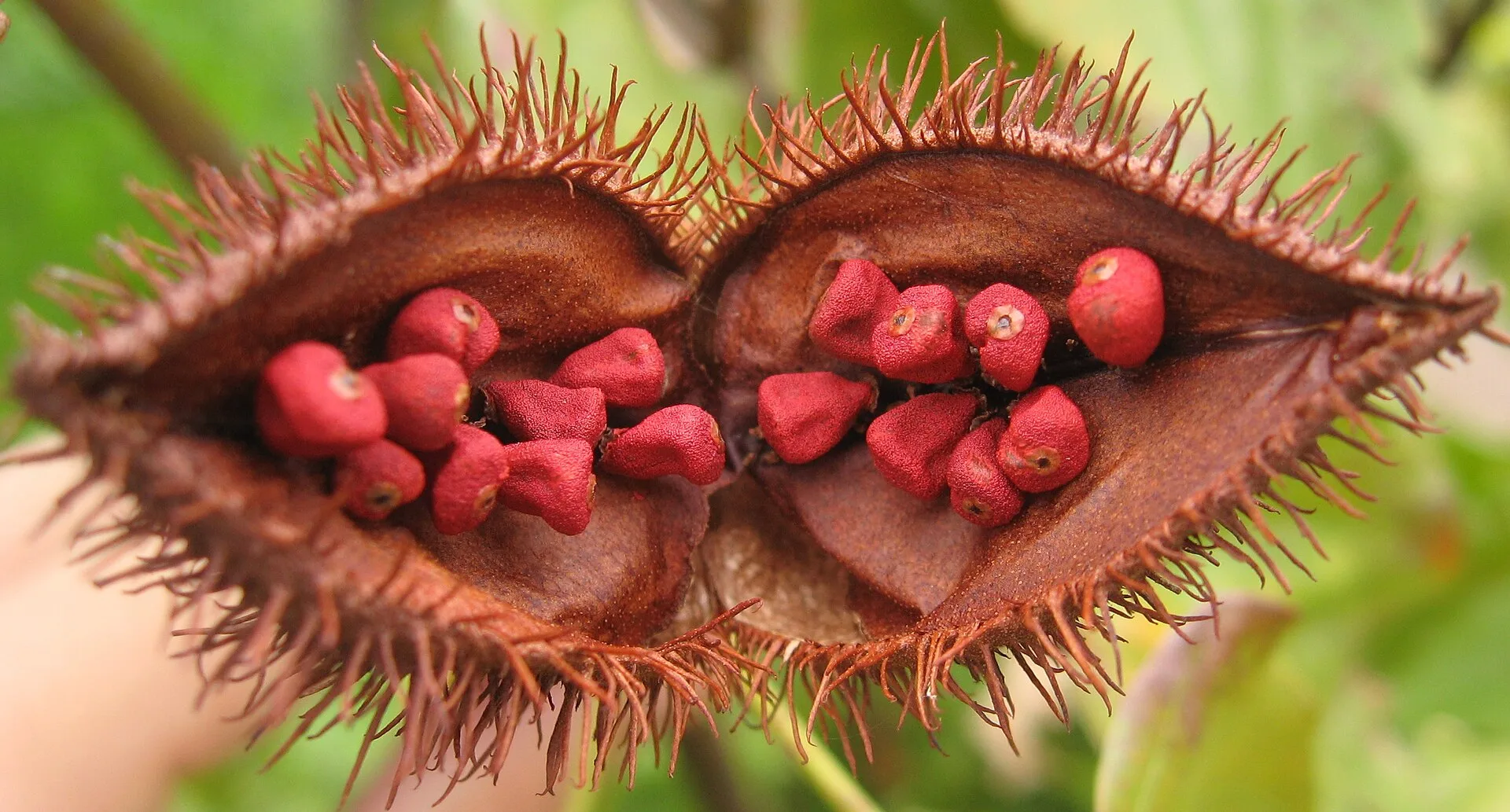
Britannica describes cheddar as a light orange-yellow, and the colour has a dairy origin. As NPR reported in 2013, many older English cheeses had a natural yellowish-orange tint from beta-carotene in the grass the cows ate, and breeds such as Jersey and Guernsey gave especially richly coloured milk, so a deep tint came to signal quality. In the 17th century many English cheesemakers skimmed off the cream to sell or to make butter. Because the pigment travels in the fat, the lower-fat cheese came out white, and makers added colouring so that it resembled the full-fat product. The colourings used were saffron, marigold, carrot juice and later annatto, which comes from the seeds of a tropical plant.
Seasonal grazing still changes the colour of uncoloured cheese. Nat Bacon, a cheesemaker at Shelburne Farms in Vermont, told NPR that the change is visible once the cows move onto pasture in early May. The colouring habit crossed the Atlantic: cheesemakers in Indiana, Ohio, Wisconsin and New York long coloured their cheddar, for tradition, market distinction and a uniform shade. New England dairy farms never widely adopted it, which Paul Kindstedt of the University of Vermont gives as the reason naturally white cheddar remains common in Vermont. The USDA standards allow both, stating that cheddar may be coloured or uncoloured and, if coloured, should be a medium yellow-orange.
VERMONT CHEDDAR CHEESE: CABOT, GRAFTON AND THE VERMONT CHEESE COUNCIL
Britannica notes that factory-made cheddar is now by far the most common type and that factory versions reach a high standard in England and in North American varieties from Canada, Vermont, New York and Wisconsin. Cheddar was also the base of an early American processed cheese. On 6 June 1916 James Lewis Kraft of Chicago was granted a US patent for a process that cut cured cheese of what it called the Cheddar genus into small pieces, heated it to about 175°F while stirring, and sealed it hot in clean cans or jars so that it would keep without spoiling. NPR reported in 2013 that annatto is the colouring Kraft uses in its macaroni and cheese.
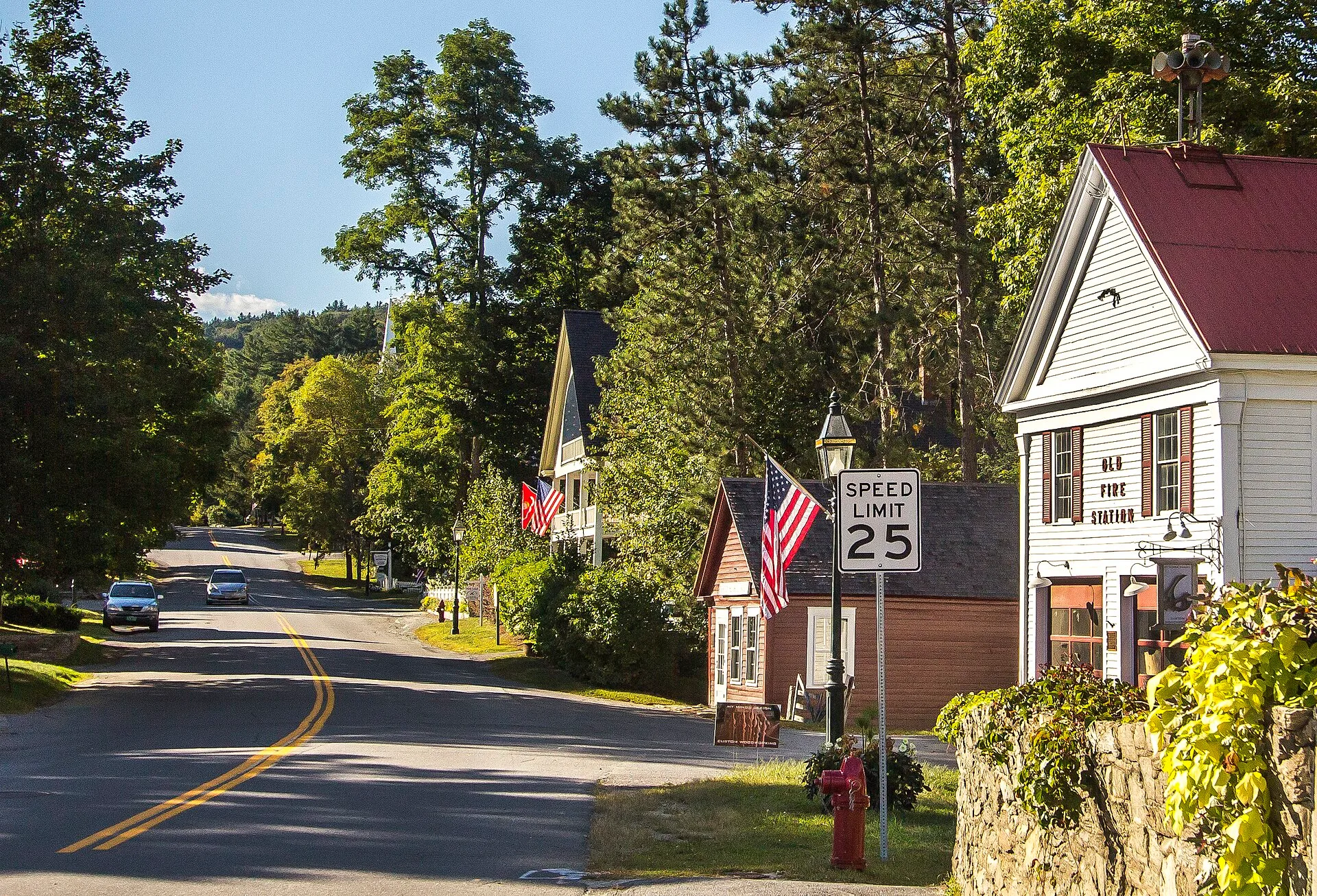
Vermont's two best-known cheddar makers both began as farmer cooperatives. Cabot traces its origins to 1919, when 94 families from Cabot, Vermont, formed a cooperative to secure their livelihood; it remains owned and operated by farm families in New England and New York. Grafton Village Cheese continues the Grafton Cooperative Cheese Company, founded in 1892 by local dairy farmers to turn surplus milk into cheese. According to Yankee magazine, a fire destroyed the original factory in 1912, and the Windham Foundation, established in 1963 by the New Jersey banker and philanthropist Dean Mathey, revived the operation in the mid-1960s. The same report mentions Grafton cheddars aged for one year and two years, the latter in a maplewood-smoked version.
The state's cheesemakers are represented by the Vermont Cheese Council, a member-driven organisation founded more than 20 years ago by Vermont cheesemaking businesses. It has more than 40 core members, most of them cheese producers across the state. Its Principal Members are licensed Vermont cheese producers who make up most of the board and set its strategic direction, while Associate Members include suppliers, distributors, retailers, state agencies, out-of-state cheesemakers and supporters. The council's mission includes hosting educational events for the public and for food professionals on the artisan and farmstead cheeses made in Vermont.
VERMONT CHEDDAR AT YARDBIRD SOUTHERN TABLE & BAR

Yardbird Southern Table & Bar was founded by John Kunkel of 50 Eggs Hospitality Group, and the original restaurant opened in Miami in 2011. The Singapore restaurant at Marina Bay Sands opened in July 2017 and is the brand's only location outside the United States. Its interior follows a "Barnhouse" concept, with reclaimed barn doors, white walls, and reclaimed wood and metal. The history of the building type itself is set out in our guide to the American barn and its regional types.
Cheddar appears on the menu through the restaurant's signature dish. The fried chicken, whose wider story is told in our history of Southern fried chicken, is brined for 27 hours and served with a Vermont cheddar waffle and watermelon. Vermont, as described above, is the state where the farmer cooperatives behind Grafton, founded in 1892, and Cabot, founded in 1919, began making cheese. The bar at Yardbird centres on bourbon, the American whiskey whose legal definition is covered in what makes bourbon bourbon.
SOURCES
- GOV.UK West Country Farmhouse Cheddar Cheese: protected food name specification
- Encyclopaedia Britannica Cheddar cheese
- The Canberra Times This tiny English village quietly created the world's most famous cheese
- Neal's Yard Dairy Women in Cheese: The Harding Family
- United States Department of Agriculture, Agricultural Marketing Service United States Standards for Grades of Cheddar Cheese
- NPR How 17th Century Fraud Gave Rise To Bright Orange Cheese
- Google Patents US1186524A: Process of sterilizing cheese and an improved product produced by such process
- Cabot Creamery About us
- Yankee Magazine Grafton, Vermont: a quiet and cozy winter town
- Vermont Cheese Council About