COCKTAIL STICKS, BAR ROUNDS AND COOKING CLUBS IN THE BASQUE CITY
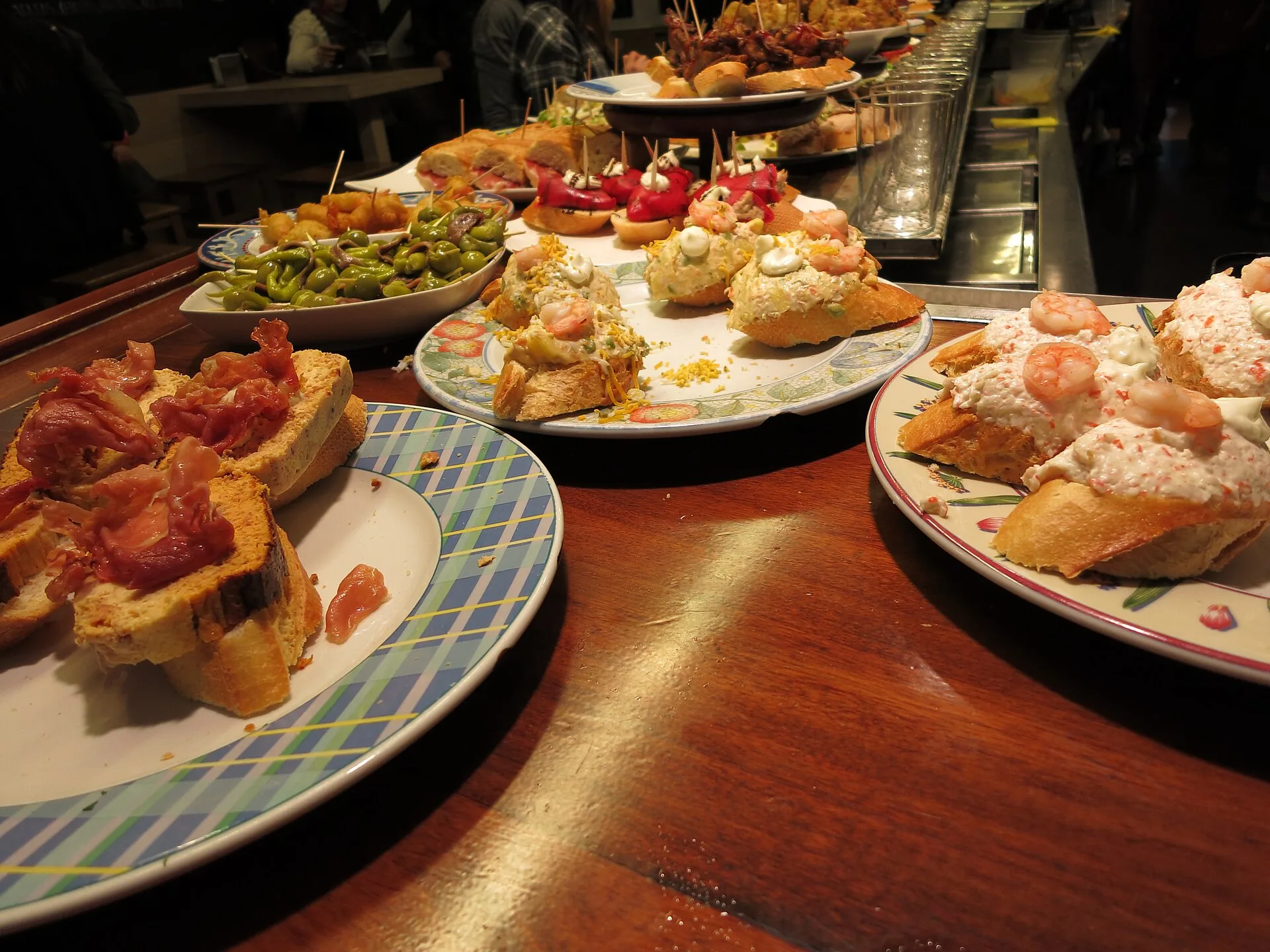
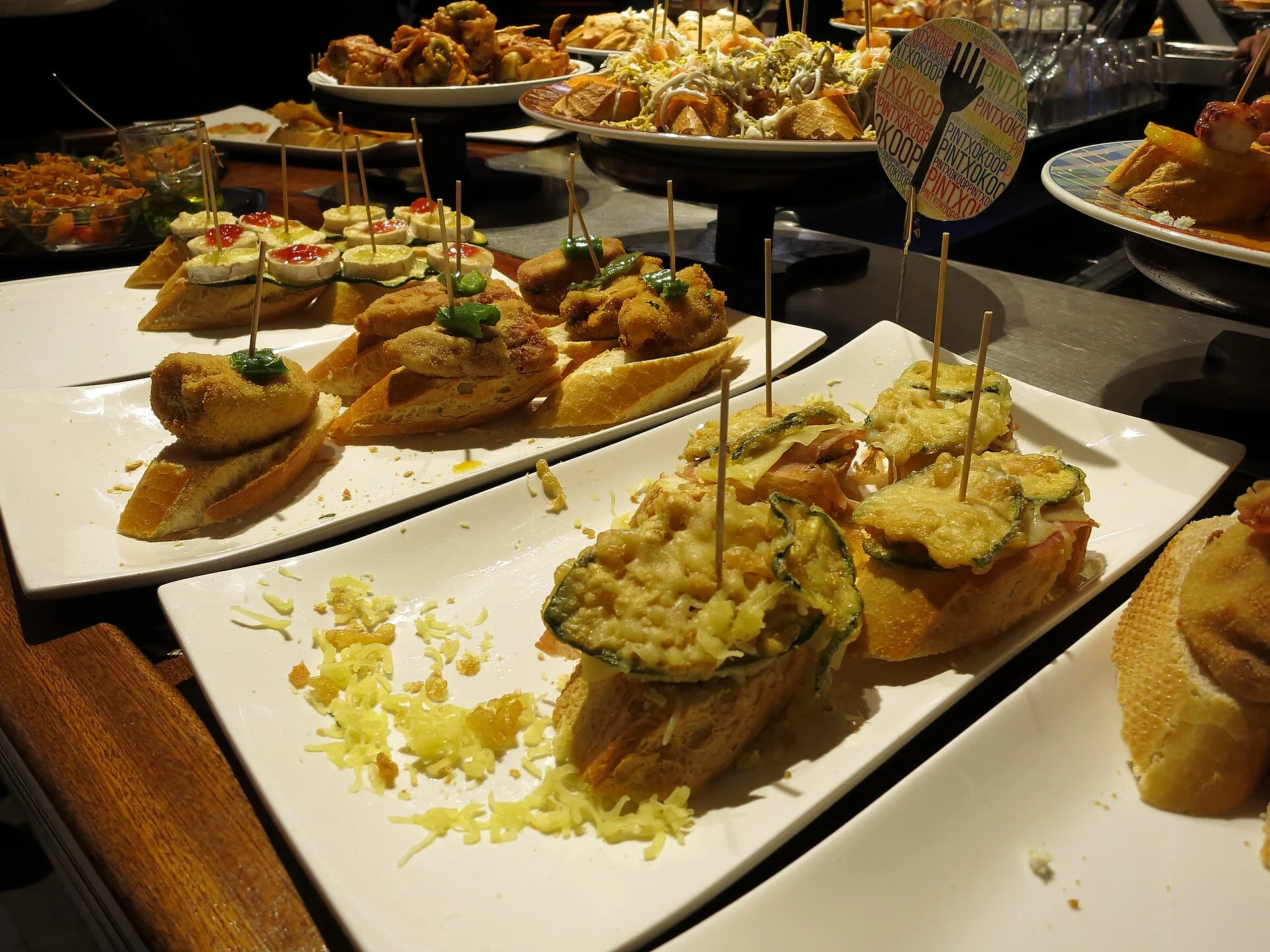
Pintxos in San Sebastián are small portions of food set out on bar counters and eaten with a drink, one or two at a time, as people move from one bar to the next. The city's food culture runs on several levels at once: crowded pintxo bars in the Parte Vieja and Gros, members' cooking clubs known as gastronomic societies, and a group of Michelin-starred restaurants within a short drive of City Hall. The best-known pintxo, the Gilda, is usually dated to 1946. The first of the city's popular societies was founded more than a century earlier, in 1843, and the three-star restaurant Arzak occupies a building put up in 1897 as a wine cellar and tavern.
WHAT ARE PINTXOS IN SAN SEBASTIÁN?
In 2016 The Independent described pintxos as "a Basque version of tapas", a comparison that places them inside the wider Spanish habit of small plates traced in our history of tapas. The same article described visitors stacking the ingredients of a Gilda onto cocktail sticks in an old town bar. Writing in 2018 in The Hindu, the newspaper's Shonali Muthalaly said that pintxos pack the style and flavour of Basque tradition "into miniature courses", and told visitors to bar hop, eat standing up and move fast, because the most popular items sell out well before the bars close at midnight.
San Sebastián Turismo, the city's tourism office, describes going out for pintxos as a local tradition and an essential part of a visit. Its advice is to visit several bars, try one or two pintxos at each stop, and choose from what is on the bar or written on the blackboard. The Independent advised ordering one pintxo at a time together with a drink, because bar staff may otherwise pile tourists' plates high. It estimated in 2016 that a lunch of pintxos came to about six bites at roughly two euros each.
WHERE DID THE GILDA PINTXO COME FROM?
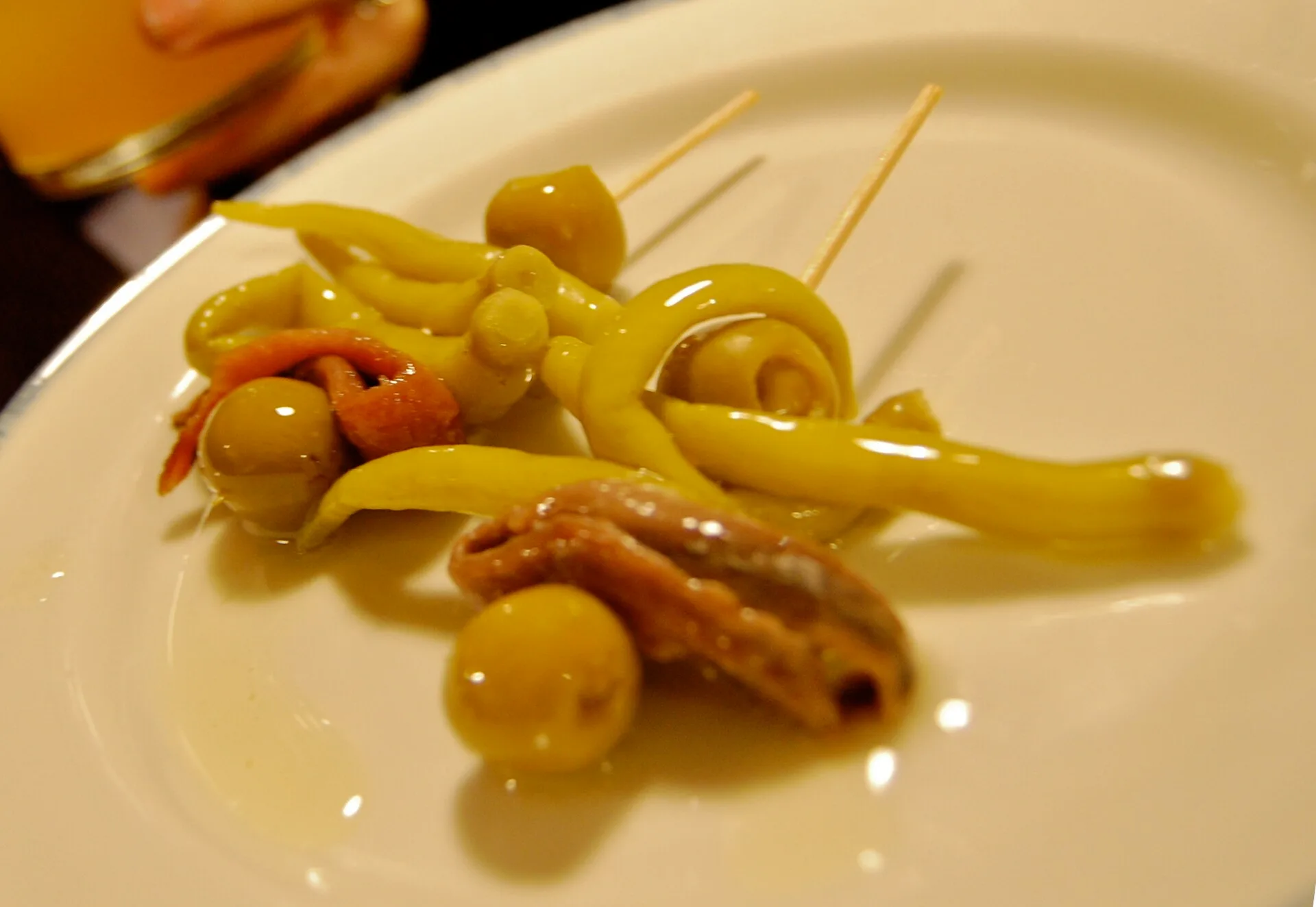
The usual origin story of the Gilda is set at Casa Vallés, a bar on Calle Reyes Católicos. As retold by the journalist Eva de la Parra in the Spanish magazine ¡Hola! in 2023, a regular customer known by the nickname "Txepetxa" began spearing three appetisers on a toothpick in 1946, and the bar started serving the combination. The three ingredients are a pitted olive, a piparra, a green guindilla chilli, and an anchovy. According to the same account, the name comes from Gilda, the film starring Rita Hayworth that was released that year. The magazine presents the story without naming a written record from the time.
Other accounts give a slightly later date for pintxos in general. The Independent's Sarah Marshall wrote in 2016 that the snacks served in the old town's bars started in the 1950s, and that the Gilda is named after the 1940s femme fatale played by Rita Hayworth. She also described Atari Gastroteka, an old town bar where visitors could stack green peppers, anchovies and olives on cocktail sticks themselves. The Hindu called the Gilda "a salty explosion of chilli peppers wrapped around an anchovy and olive". San Sebastián Turismo illustrates its pintxo page with a photograph of a Gilda and Iberian ham, the cured meat explained in our guide to jamón ibérico.
HOW DOES THE TXIKITEO BAR ROUND WORK?
The sociologist Andreas Hess, in a 2018 chapter on Basque gastronomic societies published by Springer, describes the txikiteo, also called the poteo, as a round through the different bars of one particular zone or barrio. In his account the round is made by a cuadrilla, a circle of usually five to ten friends who often share a generation or grew up in the same neighbourhood. The group meets for drinks regularly, usually before lunch or before dinner, and also on festival days and occasions such as birthdays. Hess adds that in most Basque cities the zone for the round is the casco viejo, the old town.
The custom has its own small rules. The Hindu told readers not to feel guilty about tossing the toothpick that spears a Gilda, and described toothpicks and crumpled receipts underfoot in the busiest bars. Saveur, describing the city's food culture in 2017, referred to San Sebastián's "napkins-on-the-floor pintxo joints". Hess links the cuadrilla to the city's gastronomic societies as well, describing the society as an institutional expression of this kind of established circle of friends. The same groups that make the round of the bars before a meal are, in his account, the groups that keep the societies running.
WHERE TO EAT PINTXOS IN SAN SEBASTIÁN: THE PARTE VIEJA
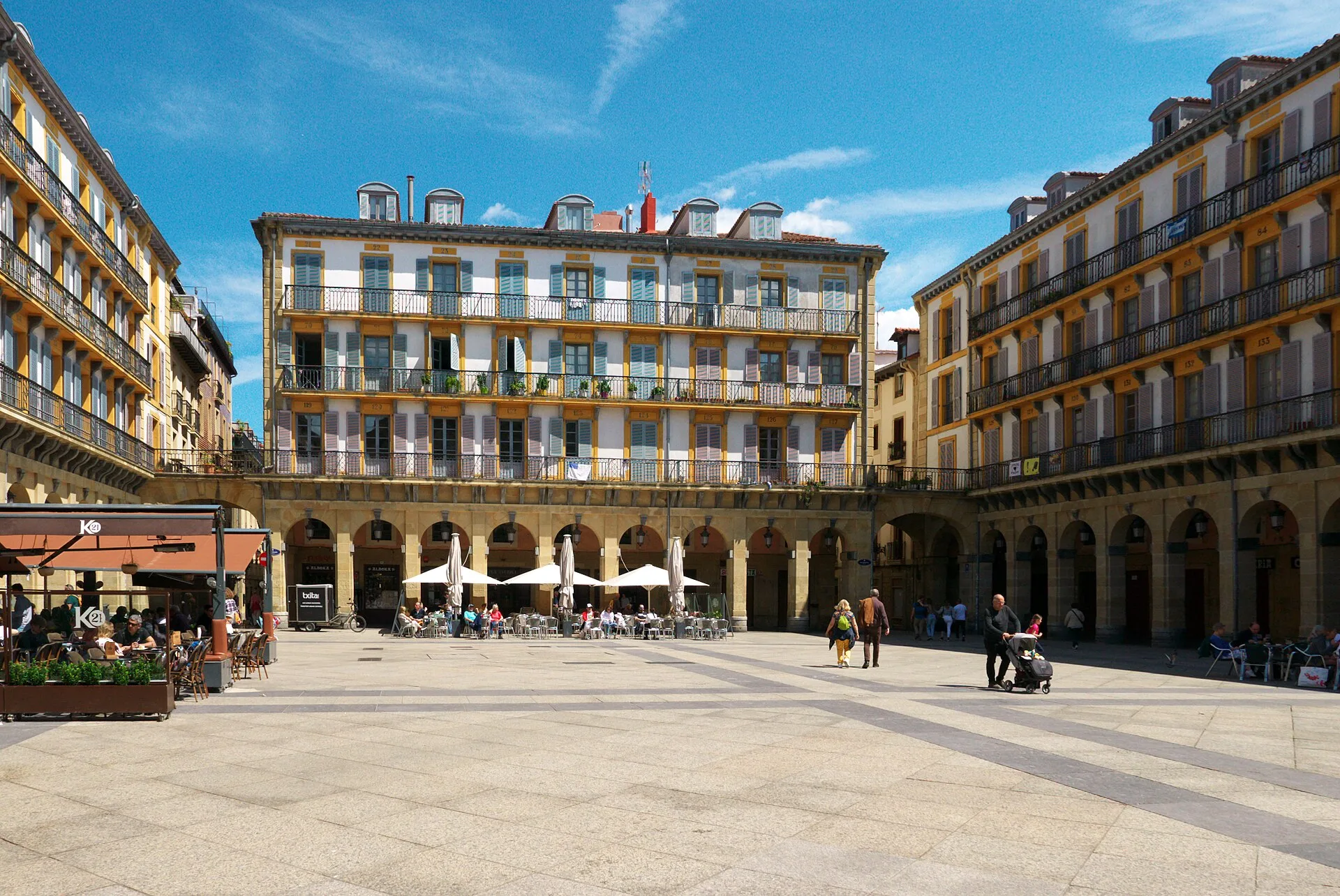
The Parte Vieja, the old quarter, is described by San Sebastián Turismo as the heart of the old walled city, set at the foot of Mount Urgull between the Urumea river and the port. Its cobbled streets, the office says, are packed with pintxo bars. The quarter contains the Basilica of Santa María, the Church of San Vicente, the San Telmo Museum, the Maritime Museum and the Aquarium, with La Mota Castle on Mount Urgull above. Its main square, the Plaza de la Constitución, is known locally as the "Consti" and hosts festivities including the Tamborrada. According to the tourism office the city's greatest concentration of bars is in lo viejo, as locals call the Parte Vieja, and The Independent counted 200 bars in the old town in 2016.
San Sebastián Turismo's list of recommended pintxos by neighbourhood shows what the old town's bars are known for. It names seared foie gras at Casa Bartolo, roasted mushroom with pine nuts and egg yolk at Casa Urola, a monkfish pintxo at Ganbara, gratinated scallops at Haizea and a cheese and anchovy cone at La Viña. It also lists a red pepper stuffed with bonito at Martínez and bluefin tuna with caramelised onions at Txakolina. Bar Tamboril, which the office describes as a traditional pintxo bar, is known for pipa, battered prawns, and for its mushroom pintxo.
PINTXOS IN SAN SEBASTIÁN BEYOND THE OLD TOWN: GROS AND THE CENTRE
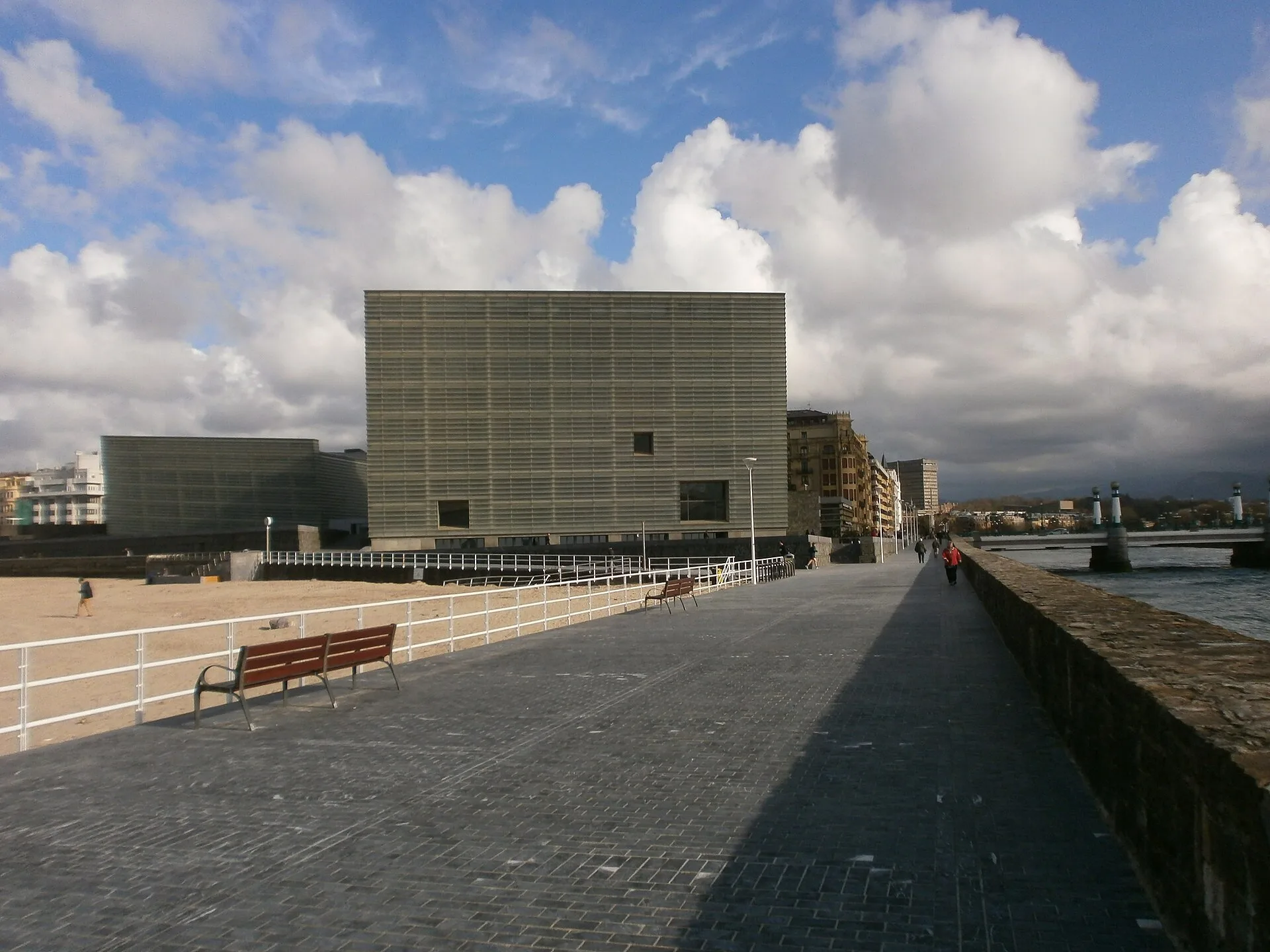
Gros is reached from the centre by crossing the Kursaal Bridge, and lies along the coast facing Zurriola beach, which San Sebastián Turismo calls the city's wildest beach and a regular spot for surfers. The district contains Rafael Moneo's Kursaal Conference Centre, two cubes that host the San Sebastián Film Festival and the Jazzaldia jazz festival, and the Zurriola bridge, built in 1921. The tourism office describes Gros as the city's liveliest neighbourhood, with many pintxo bars and pavement cafés on the pedestrian streets Peña y Goñi and Zabaleta. On Thursdays the district runs the Pintxopote, when a pintxo comes with a drink at a reduced price.
The tourism office's neighbourhood list shows how varied the bars outside the old town are. In Gros it names potato, mushroom and egg yolk at Bar Gure Txoko, a cochinita pibil taco at Taquería Kursaal and picantillas, a tuna tartlet with mayonnaise, lettuce and onion, at Bar Urtxori Bi. In the Centre it names ravioli with a white Martini sauce at Antonio Bar, a cod "Club Ranero" at Bar Iturrioz and oysters at Bar Kata 4. In Antiguo it lists Russian salad at Bar Kiki and a "Pintxo Arzak" at La Rebotika. The office gives the Parte Vieja, the Centre, Reyes Católicos and Gros as the city's main areas for going out at night.
WHAT ARE SAN SEBASTIÁN'S GASTRONOMIC SOCIETIES?
Hess calls the gastronomic society a Basque invention and places its origins in San Sebastián. In his account the first "popular society", La Fraternal, was founded in 1843 for the purpose of eating and singing, comer y cantar. By 1868 the city council recorded 58 popular establishments, and by 1882 the figure had grown to 106. Societies whose main purpose was to cook and eat appeared at the start of the 20th century, most prominently Cañoyetan in 1900 and Euskal Billera in 1901. In his account artisans became the main organisers of popular events such as the drum parade known as the tamborrada, and the societies supplied the infrastructure for preparing parades and festivities.
A society works like a restaurant that is not open to the public. Members and their guests use the kitchen and dining room, the cooking is done voluntarily by members, and everyone who has eaten pays a share of the costs. Hess describes the money being placed in an envelope with an itemised bill. Saveur's Christopher Bagley reported in 2017 that members of La Unión Artesana paid an initiation fee of around 3,000 euros plus yearly dues, which brought a key to the front door. Members bring their own meat, fish and vegetables, use basics stocked in a communal pantry, and pay for wine and cider on an honour system.
Hess cites a figure of 120 cooking societies in San Sebastián at the start of the new millennium, with an estimate that one in every 3.5 adults belonged to one. Bagley gave the same approximate count of 120 in 2017, with 270 members at La Unión Artesana. He also described La Cofradía Vasca de Gastronomía, founded in 1961 to protect and promote Basque cuisine. Membership has changed over time: Saveur reported that many societies first admitted women as guests and later as full members, while some of the oldest clubs, Unión Artesana among them according to Hess, remain all-male.
HOW SAN SEBASTIÁN GAINED ITS MICHELIN STARS
San Sebastián Turismo credits Pedro Subijana and Juan Mari Arzak as the main driving forces in the 1970s behind New Basque Cuisine, which it calls Spain's first gastronomic avant-garde. Hess writes that the movement pressed for a return to culinary basics and that its avant-garde was made up largely of innovative restaurant chefs and cooking-society experts. The Arzak building was put up in 1897 by Juan Mari Arzak's grandparents as a wine cellar and tavern, and his mother, Paquita Arratibel, turned it into a restaurant. Mother and son worked together from 1966, and Elena Arzak joined in the 1990s.
San Sebastián Turismo counts 19 Michelin stars within 25 kilometres of City Hall, about ten minutes' drive. Three restaurants hold three stars: Akelarre, run by Subijana on Mount Igueldo; Arzak; and Martín Berasategui, opened in 1993. The office notes that these are three of Spain's 16 three-star restaurants. Amelia and Mugaritz hold two stars; Mugaritz opened in 1998 and has held its two since 2006. Alameda, Ama, Ibai, Itzuli, Elkano and Kokotxa hold one star each, and Elkano was founded in 1964 as a family restaurant. The office claims that only Kyoto has a higher concentration of Michelin stars per square kilometre.
TAPAS AT MANDARIN ORIENTAL SHENZHEN

Silverfox Studios designed Tapas, a restaurant and bar at Mandarin Oriental Shenzhen, completed in 2022. The interior is built from exposed brick and steel-framed glazing, a window type covered in our history of steel windows. A glass-fronted wine display is set into the brick walls. The seating includes red leather banquettes, and the room also displays a series of framed photographs. Suspended black metal shelving and a wrought-iron chandelier, a material traced in our article on Spanish wrought iron, complete the main room.
The bar counter at Tapas is marble and looks out over city views. In San Sebastián's pintxo bars, the counter is where the food is set out and chosen, following the tourism office's advice to pick from what is on the bar, and where each stop of the txikiteo takes place. At Tapas the marble counter sits within the same set of materials as the rest of the room: the brick walls with their glass-fronted wine display, the steel-framed glazing, the black metal shelving overhead, the wrought-iron chandelier and the red leather banquettes.
SOURCES
- The Independent (via San Sebastián Turismo press archive) Take a bite of the Basque Country
- The Hindu (via Euskal Kultura) San Sebastian is becoming the gourmet capital of the world
- ¡Hola! San Sebastián en 7 paradas con 'glamour' y un pincho de cine
- Springer (Andreas Hess, Knowledge and Institutions, 2018) Gastronomic Societies in the Basque Country
- Saveur Inside the Members-Only Eating Clubs of San Sebastián
- San Sebastián Turismo Going for pintxos
- San Sebastián Turismo The top pintxos from every neighbourhood
- San Sebastián Turismo Centre and Old Town
- San Sebastián Turismo Gros
- San Sebastián Turismo Michelin stars