A FARMHOUSE HEARTH, A POSTWAR SAKE TAVERN AND A FISHING PORT BEHIND JAPAN'S MOST THEATRICAL GRILL
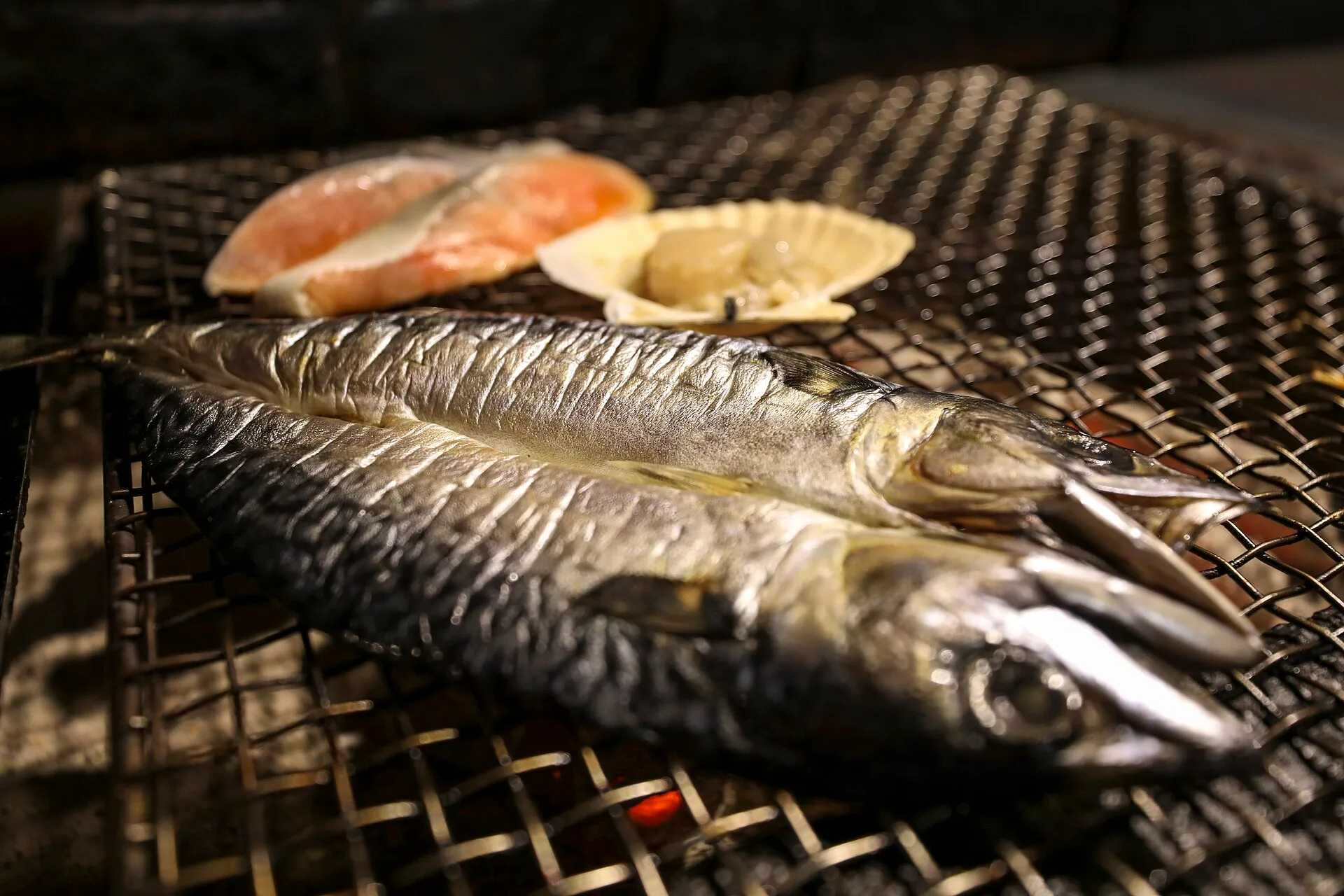
Robatayaki, often shortened to robata, is a style of Japanese charcoal grilling in which seafood and vegetables are cooked over a hearth while diners sit around it and watch. The name combines ro, a hearth or furnace, with bata, an edge: robata means the edge of the hearth, and robatayaki is food grilled there. Its setting is the irori, the sunken hearth of the traditional Japanese farmhouse, but robatayaki as a restaurant format is a twentieth-century idea, and two cities claim it. Sendai, in Miyagi Prefecture, points to a tavern called Robata that opened in 1950. Kushiro, a fishing port in eastern Hokkaido, presents itself as the birthplace of robatayaki. A third account, the story of Hokkaido fishermen cooking on boats, is told as legend.
WHAT IS ROBATA: THE IRORI AND THE JAPANESE HEARTH
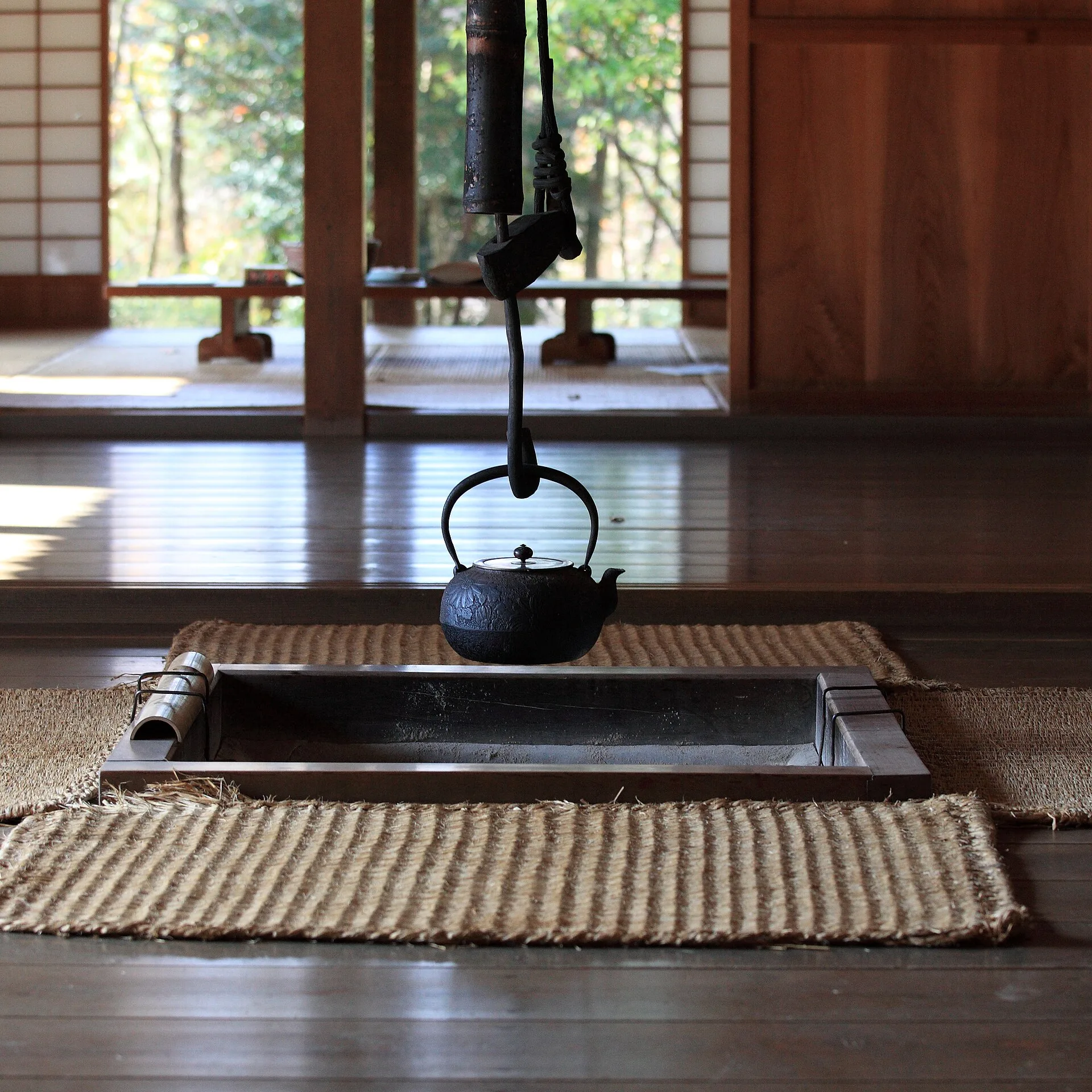
The irori is a square, stone-lined pit set into the floor of a traditional house. A farmhouse description in the Japan Tourism Agency's multilingual explanation database lists its uses as heat, light and the preparation of meals, with a hook above the fire from which a pot or kettle could be hung. The farmhouse it describes, at the Shizukuishi History and Folklore Museum, has a thatched roof and is thought to be more than 100 years old. The restaurant name follows from this room: robata, the edge of the ro, is the place where the household sat around the fire.
These are the elements that the robatayaki restaurant takes from the farmhouse: a fire at floor level, a ring of people seated around it, and food cooked and eaten in the same place. The Hokkaido Tourism Organization describes robatayaki in exactly those terms, with diners seated around an irori while skilled cooks grill fresh seafood and vegetables over charcoal. In restaurant use the cook at the hearth is called the yakite, the grill hand, and according to LIVE JAPAN the irori is used both to grill food and to warm sake. The Malay Mail describes traditional robatayaki as a large room of patrons seated around the chef's hearth, and notes that some robata restaurants today still keep communal irori where customers watch the cook at work.
WHERE DID ROBATAYAKI COME FROM: SENDAI, KUSHIRO AND A FISHERMEN'S LEGEND
One origin story is not tied to a restaurant at all. As the Malay Mail's Kenny Mah reports it, legend has it that robatayaki was introduced by Hokkaido fishermen who wanted hot food on long, cold trips; because an open fire was unsafe on a wooden boat, they carried stone hearths filled with charcoal on board, which also kept them warm. The Malay Mail presents this as legend rather than history, and no dated source for it has been identified. The restaurant record is more specific, and it points to two cities rather than to the sea.
The earliest dated restaurant is in Sendai. Kyodo Shutei Ganso Robata, a tavern in the city's Kokubuncho entertainment district, gives its founding year as 1950 and its founder as Tomiya Amae, who converted a billiards hall into a room with a counter around an irori and served sake from his family's brewery, Tensho Shuzo, with dishes from the Tohoku region. The restaurant describes itself as the origin of the robata style. It still seats guests at a counter around the irori, 27 seats in all, and its house sake is still Tensho, served warm. Kushiro makes the competing claim. The Hokkaido Tourism Organization calls Kushiro the birthplace of robatayaki and traces it to a single restaurant that opened in the late 1950s, while Kushiro City's own visitor guide is more cautious, stating only that Kushiro is said to be the birthplace.
KUSHIRO: ROBATAYAKI IN A HOKKAIDO FISHING PORT
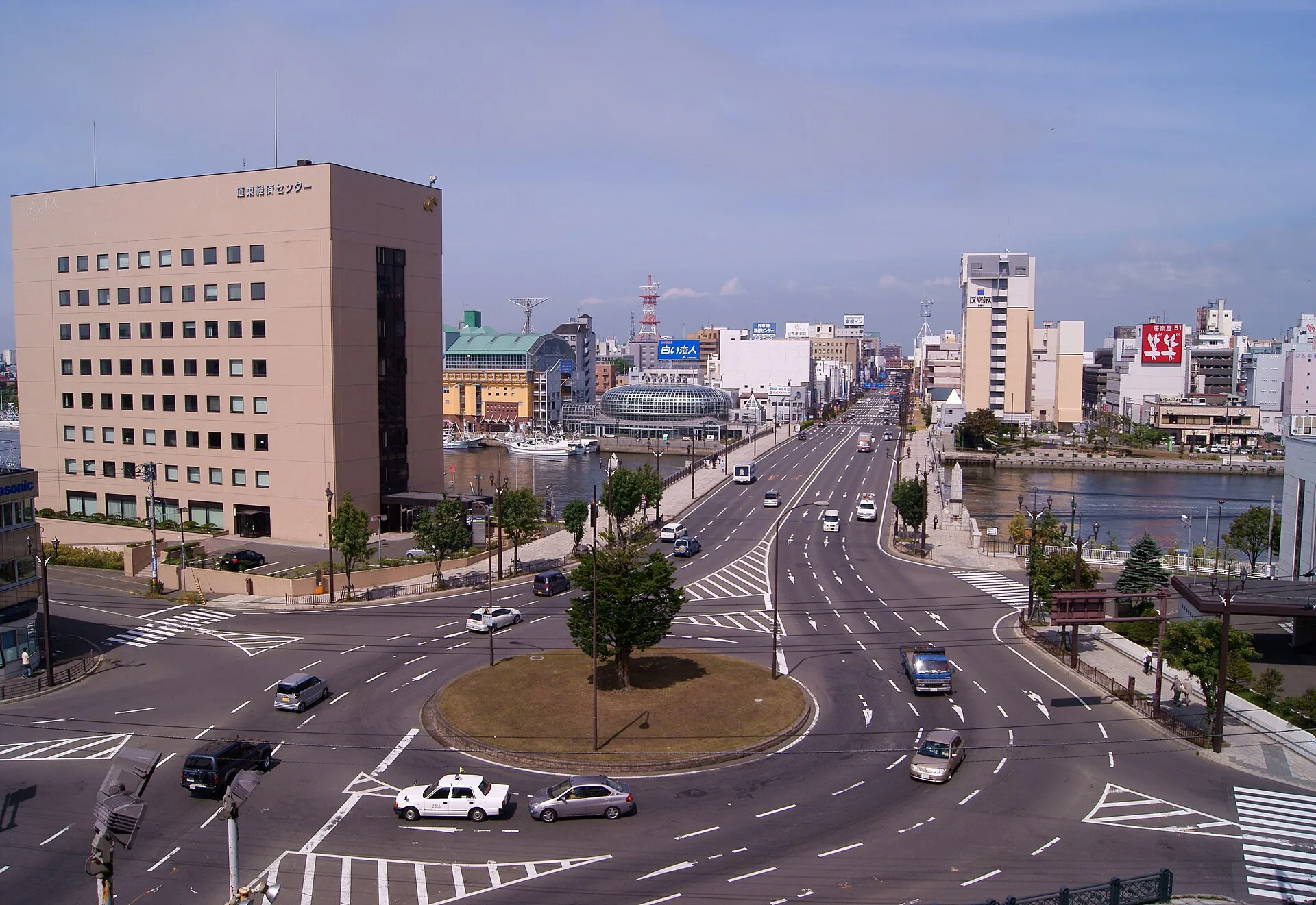
The two claims are connected. Staff at Robata, a restaurant in Kushiro's Sakaemachi district, told LIVE JAPAN that it opened around 1953, when Kushiro was booming as a fishing town, and that its founder was inspired by a Sendai restaurant that warmed sake in an irori. The same report states that the restaurant's charcoal is mostly oak from Tsurui, a village neighbouring Kushiro, and that it was originally an entertainment venue for local notables and visitors. The founder was the aunt of Shizuko Nakajima, who has long worked as the restaurant's yakite and was due to turn 86 in 2022. LIVE JAPAN's account is that the style spread throughout Japan after it reached Kushiro, a seafood-rich region in eastern Hokkaido.
The Hokkaido Tourism Organization links the style to Kushiro's rich fishing grounds and notes that many robatayaki restaurants are clustered in the city centre. It recommends pairing the food with sake from Fukutsukasa, a Kushiro brewery producing since the Taisho era. Kushiro City's visitor guide recommends robatayaki for seasonal seafood, grilled over a charcoal fire that it credits with adding umami, and lists Ganpeki Robata and Minato no Yatai, where visitors grill seafood and produce for themselves, and in winter, the Malay Mail reports, outdoor robatayaki stalls are set up on the banks of the Kushiro River below Nusamai Bridge.
BINCHOTAN AND THE CHARCOAL BEHIND THE ROBATA GRILL
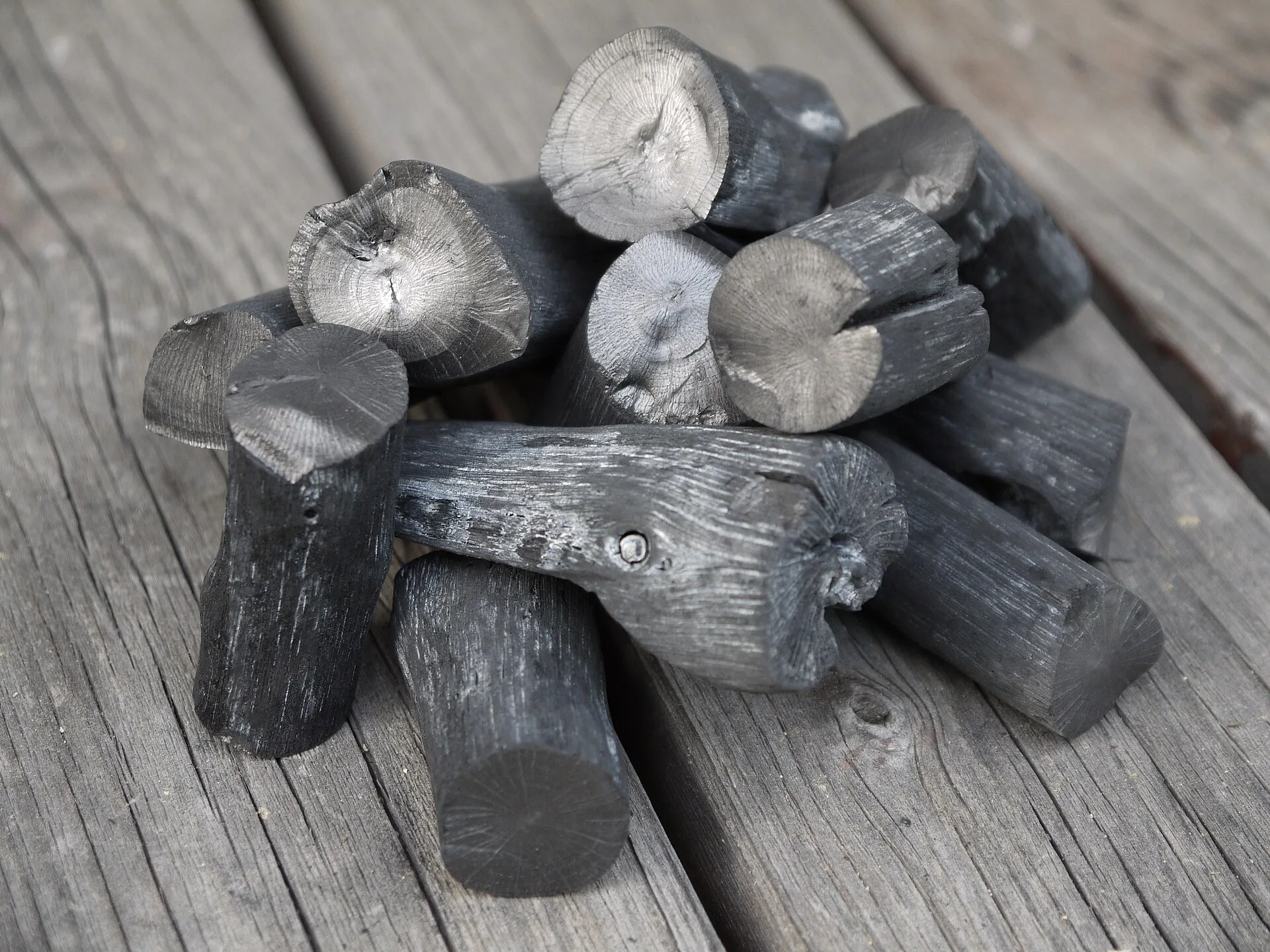
Robatayaki is grilled over charcoal, and according to the Malay Mail the better robata restaurants use only binchotan, Japanese white charcoal. Binchotan was first produced in Wakayama Prefecture during the Edo period and is made from ubame oak; compared with ordinary black charcoal it is harder, burns longer and produces less smoke. A study of its microstructure published in the Journal of Analytical and Applied Pyrolysis describes the process. Oak is stacked upright in a clay kiln and heated slowly for about 120 hours, then the temperature is raised to around 1,000°C. The glowing charcoal is pulled from the kiln and smothered in a damp mixture of earth, sand and ash, which gives the surface the pale grey colour behind the name white charcoal.
The result is almost pure carbon: the same study measured fixed carbon above 95 per cent and a density of 1.27 grams per cubic centimetre, heavier than water. Its authors note that white charcoal has traditionally been used in Japan mainly as a smoke-free barbecue fuel. Nipponia, the Japanese government-backed magazine, photographed the process at the Tamai Kiln in Wakayama, where workers use a long-handled tool called an eburi to rake red-hot Kishu binchotan out of the kiln. The magazine notes that a single gram of charcoal has about 250 square metres of surface area because of its many tiny cavities and that charcoal absorbs moisture in humid conditions and releases it in dry ones. The pyrolysis study adds that white charcoal yields about 5 per cent less than conventional black charcoal, the cost of the higher final temperature, and lists modern uses from water purifiers to deodorisers.
THE PADDLE, THE KNEELING COOK AND ROBATA AS PERFORMANCE
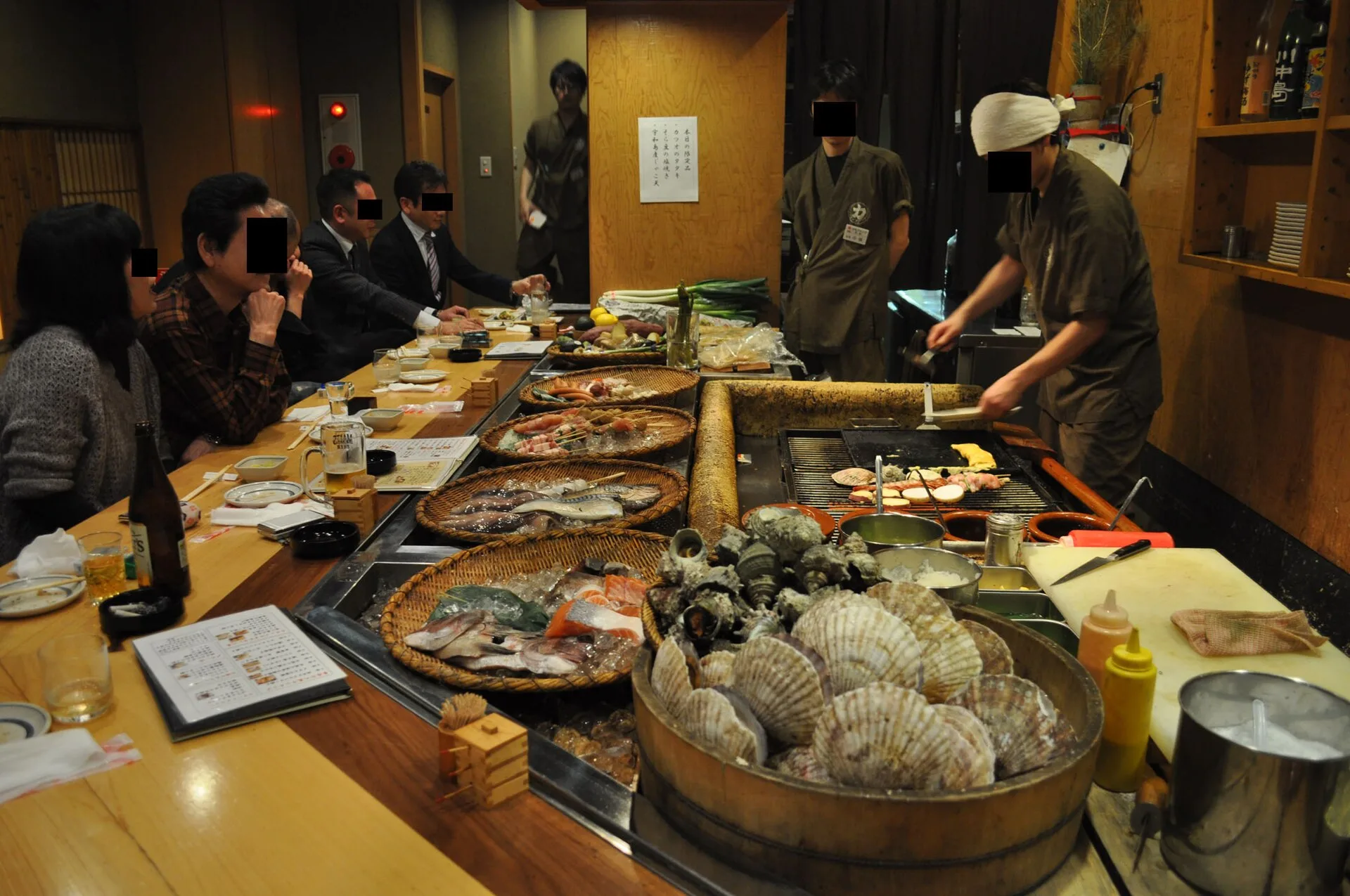
In larger cities robatayaki has also been staged as a performance. One example is Inakaya, which began in Tokyo's Roppongi district. When it opened in New York in 2009, NBC New York described staff shouting diners' orders to the grill cooks, who kneel while they cook and pass the finished food to diners on large wooden paddles. The New York branch was laid out in three areas, a robata counter, a communal dining room and a lounge, and each night diners chosen at random joined a mochi-pounding ceremony. Its signature kinki fish was flown in from Tokyo daily.
Time Out's review of the Singapore branch describes the same format in more detail. Chefs kneel on three raised timber platforms behind a trough of fresh seafood, vegetables and meat; diners choose what they want and it is grilled on the spot. Guests sit close together in rows around the platforms, the chefs call out from their places while service staff clap, and the grilled food is handed across the counter on long wooden paddles. Little is heavily seasoned, so the freshness of the ingredients carries the meal.
THE ROBATA GRILL AS A STAGE AT NETSU, MANDARIN ORIENTAL JUMEIRA DUBAI

Netsu at Mandarin Oriental Jumeira Dubai is a Japanese robata restaurant by chef Ross Shonhan, designed by Silverfox Studios and completed in 2019. The design builds on the performance side of robatayaki, the cook at the fire with guests watching: the restaurant is designed as a double-height kabuki theatre. The robata grill is the central stage and guests watch the kitchen from several levels, as robata diners watch the yakite from around the hearth, while the upper level is a bar and DJ lounge overlooking the show kitchen.
A raised walkway runs from the back-of-house kitchen to the central kitchen, recalling the hanamichi, the bridge a performer uses to enter the stage in kabuki theatre. Columns and a large wall carry 1950s-style kabuki poster graphics, the same decade in which the robata taverns of Sendai and Kushiro opened. Outside, horizontal recessed lighting references the tiers of theatre seating. In place of the counter that rings the hearth in Sendai and Kushiro, the audience at Netsu is arranged around and above the grill, with the kitchen walkway serving as the performers' entrance.
SOURCES
- Hokkaido Tourism Organization, HOKKAIDO LOVE! Robatayaki in Kushiro
- Kushiro City and Kushiro Tourism and Convention Association MICE in Kushiro
- Japan Tourism Agency, Multilingual Explanation Database Shizukuishi History and Folklore Museum
- Gurunavi Kyodo Shutei Ganso Robata, Sendai
- LIVE JAPAN What is Robatayaki? Discover Japan's Ultimate Grilling Experience
- Malay Mail When it snows in Hokkaido, it's time for the smoky flavours of robatayaki
- Journal of Analytical and Applied Pyrolysis (accepted manuscript) Microstructural Characterization of White Charcoal
- Web Japan, Nipponia No. 19 Charcoal Adds to the Good Life
- Time Out Singapore Inakaya Robatayaki
- NBC New York Much Anticipated Japanese Grill Opens in Midtown