UBAME OAK, THE NERASHI FIRING AND JAPAN'S MAIN WHITE CHARCOAL REGIONS
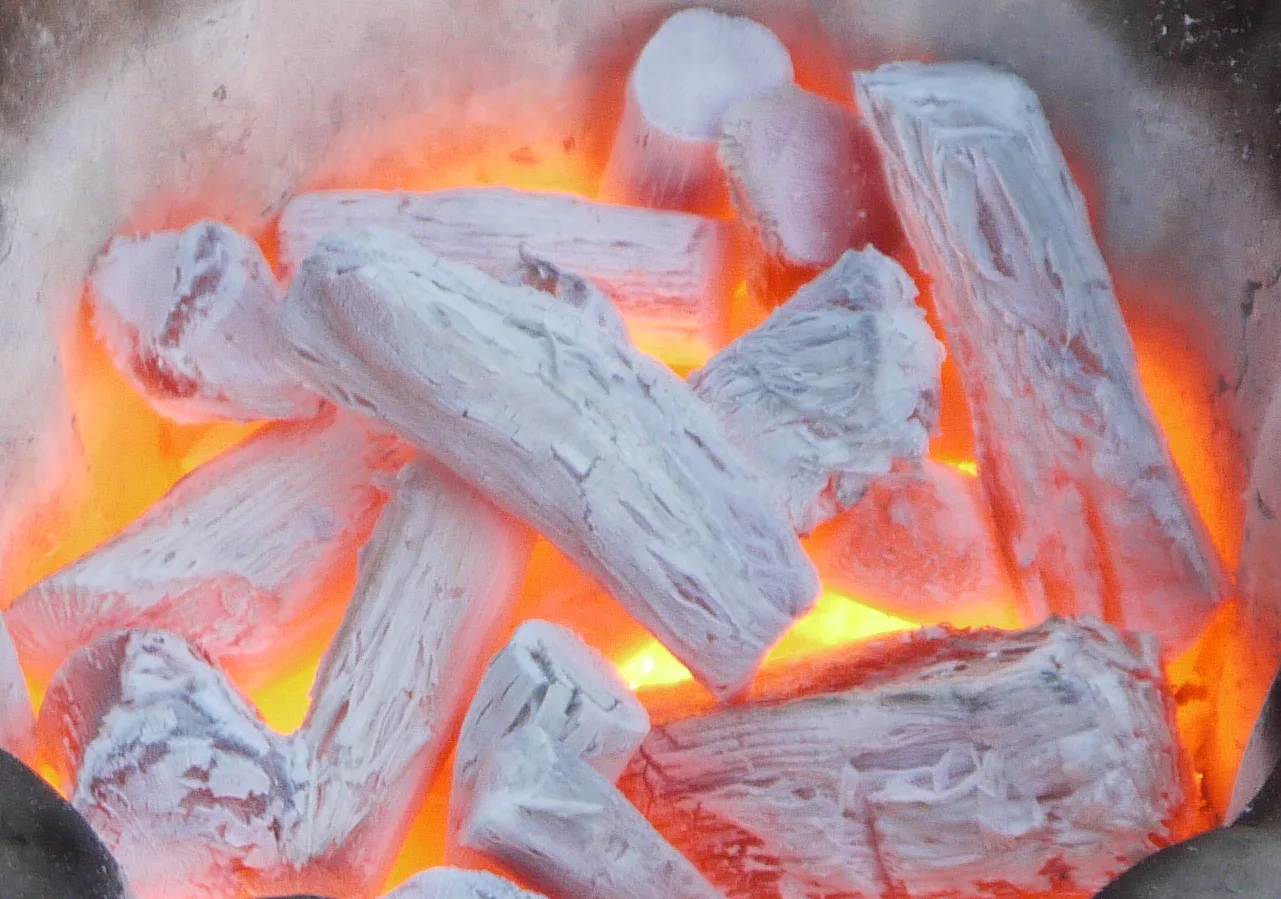
Binchotan charcoal is a Japanese white charcoal, or shirozumi, made mainly from ubame oak, fired to more than 1,000°C and then smothered in a mixture of ash and soil. Wakayama Prefecture describes it as slow to ignite but steady and long burning once lit, with a heat that grill cooks adjust with a hand fan. Wakayama names three prefectures as the main producing regions: Wakayama itself for Kishu binchotan, Kochi for Tosa binchotan and Miyazaki for Hyuga binchotan. In 2024 Wakayama's 165 producers made about 871 tonnes, while Kochi made 1,311 tonnes of white charcoal, about half of Japan's output.
WHAT IS BINCHOTAN CHARCOAL? WHITE AND BLACK CHARCOAL IN JAPAN

Japanese charcoal falls into two broad types. Black charcoal, kurozumi, is carbonised at 400 to 700°C in a kiln that is then sealed and left to cool; according to Web Japan's Nipponia magazine, it keeps its bark, lights easily and accounts for nearly all the charcoal made worldwide. White charcoal is charred at a relatively low temperature, heated at the end to about 1,000°C, then removed and quickly covered with a moist mixture of earth, sand and ash. Nipponia explains that this rapid heating and cooling burns away the bark and leaves a smooth, hard surface that rings like metal when struck, under a whitish ash coating that gives the charcoal its name.
Nipponia traces charcoal use in Japan back several thousand years to the Jomon period. It records that Chinese charcoal-making techniques were adopted in the medieval period, that charcoal was in common use by around the 14th century, and that the growing importance of the tea ceremony in the early modern period led to finer charcoal being made for it. One such charcoal is Ikeda-zumi, a black oak charcoal from northern Osaka Prefecture, also called kiku-zumi because its cut ends crack in a chrysanthemum pattern. Nipponia names binchotan, made in kilns in southern Kishu, as the white charcoal considered the best grade because it is hard and burns for a long time.
WHERE DID BINCHOTAN COME FROM? KOBO DAISHI, KUMANO CHARCOAL AND BITCHUYA CHOZAEMON
The trademark entry for Kishu binchotan published by the Japan Patent Office says the technique is said to have been brought back from Tang China by Kobo Daishi and spread to places across the prefecture, and Minabe Town dates the origin of Kishu binchotan to his time in the 800s. Wakayama Prefecture says that Kishu binchotan is said to have been perfected in the Edo period and that its method has changed little since, and the prefecture's production plan for 2026 to 2030 describes the industry as more than 400 years old.
Minabe Town's account of the Edo period runs through the Kishu domain. The domain took note of a high-quality hard charcoal known as Kumano charcoal, made in the villages of the Kinan region, and encouraged its trade within the domain, where it became a source of revenue and helped support local residents. In the Genroku era, according to the town, a Kishu charcoal dealer named Bitchuya Chozaemon popularised the charcoal, and it is said to have been named binchotan after him. The town gives both the Kobo Daishi origin and the naming as accounts that have been handed down, not as documented events.
UBAME OAK AND THE COPPICE FORESTS BEHIND BINCHOTAN CHARCOAL
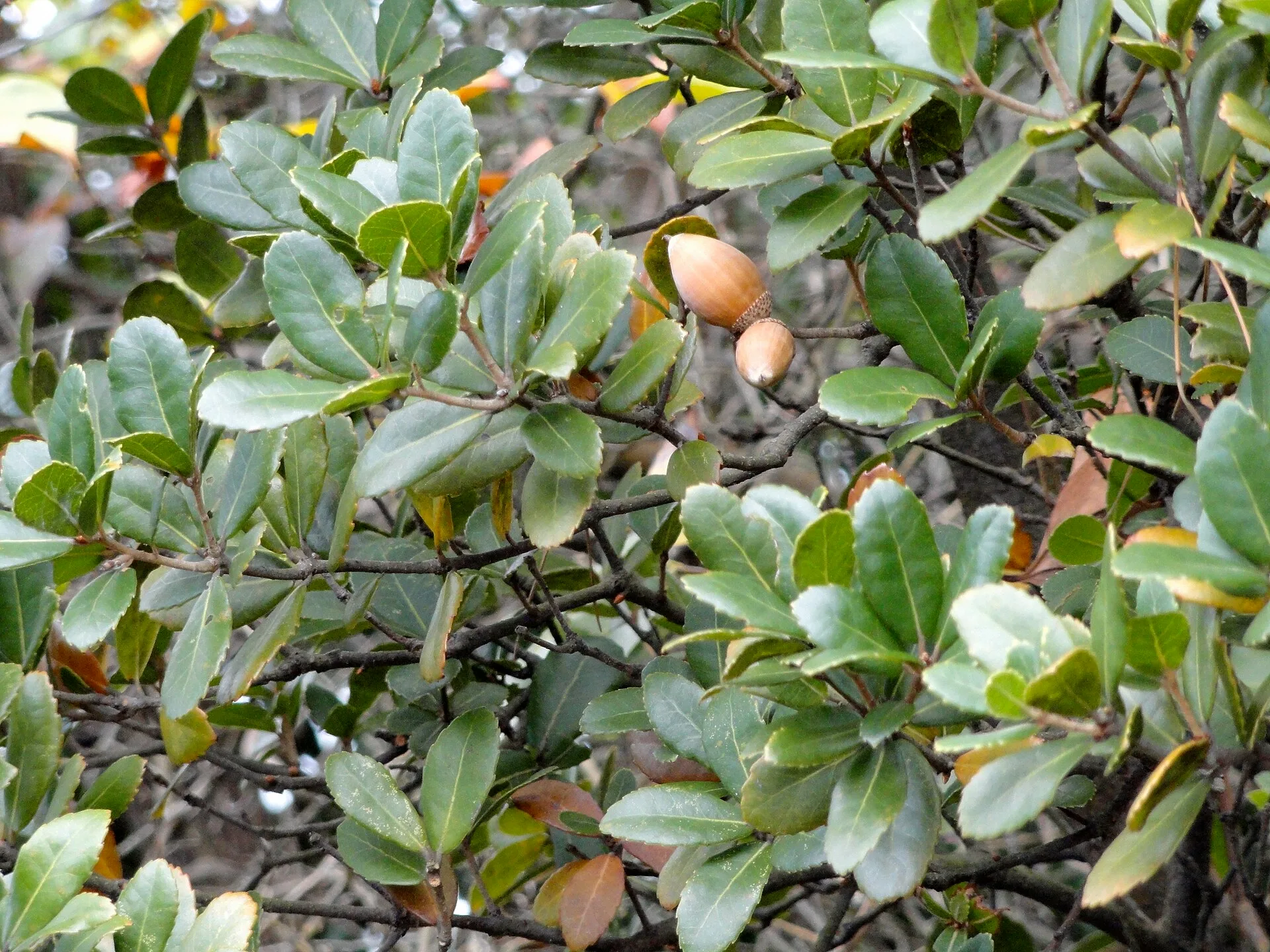
Ubame oak, Quercus phillyreoides, is an evergreen shrub or tree of 1 to 15 metres, native to Honshu, Shikoku, Kyushu and the Ryukyu Islands, according to the International Dendrology Society's Trees and Shrubs Online. It is the prefectural tree of Wakayama and the town tree of Minabe, and Wakayama names it as the main raw material of Kishu binchotan. The prefecture describes it as slow growing on nutrient-poor coastal soils. It grows in a multi-stemmed form, kabudachi, and under selective felling the cutters leave the thinner stems standing so that the stump survives and sends up new shoots. Wakayama says the method has been practised for 300 years.
The same forests form part of the Minabe-Tanabe Ume System, recognised as a Globally Important Agricultural Heritage System by the Food and Agriculture Organization of the United Nations since 2015. FAO describes coppice forests left above and around the ume plum orchards and managed by selective cutting since the 1700s. The cutters take trees of the right thickness for charcoal making and trees that hinder the growth of the oak, which allows a harvest every 10 years; if every tree were felled, harvesting would come round only once in 30 to 40 years. The forests also provide a habitat for honeybees, which pollinate the plum trees.
HOW IS BINCHOTAN CHARCOAL MADE IN KISHU?

Wakayama Prefecture sets out the Kishu method in stages. In kizukuri, crooked ubame oak logs are straightened by cutting notches and driving in wooden wedges. In kamazume, the logs are stood upright in the kiln. Traditional methods load the new wood while the kiln is still hot, and the prefecture's production plan says this technique, hanegi, is held to improve the efficiency of the kiln as well as the yield and quality of the charcoal. In kuchidaki, scrap wood is burned at the kiln mouth to dry the logs, and the maker judges when they have caught by the smell and colour of the smoke seen through a small opening.
Once the logs ignite, the kiln mouth is closed and the wood is carbonised in the sealed kiln. Then comes nerashi, which the prefecture calls the defining step of white charcoal: the kiln mouth is gradually widened, air is let in and the carbonised wood burns red, with the interior passing 1,000°C. The charcoal is raked out of the kiln a little at a time and covered with subai, a mixture of ash with soil or sand, to extinguish it. The pieces are then cut to length and sorted by diameter and shape under grading standards that date from the Meiji era.
The Wakayama grading table has an ubame oak series and a series for arakashi, another oak, each running from thin rounds 1.5 to 2 centimetres across to split pieces cut from logs of 3 to 6 centimetres, with every graded piece at least 20 centimetres long. The prefecture says that learning the full sequence of charcoal making and forest management takes about three to five years of training. The technique is held today by the Kishu Binchotan Technique Preservation Society, formed in 1970 to keep the method in use and pass it on.
KISHU BINCHOTAN AS FOLK HERITAGE AND A REGIONAL TRADEMARK
In April 1974, four years after the preservation society was formed, Wakayama designated the Kishu binchotan charcoal-making technique an intangible folk cultural property of the prefecture. The name itself is protected as a regional collective trademark, registration number 5003837, held by the Wakayama Prefecture Charcoal Cooperative. The registration covers binchotan produced in Wakayama Prefecture for cooking, water purification, soil improvement, humidity control, baths, deodorising and interior decoration. The cooperative's product description names ubame oak, the prefectural tree, as the main raw material of a white charcoal made from natural wood.
Wakayama's production plan for 2026 to 2030 puts the prefecture's 2024 output at about 871 tonnes from 165 producers, an average of 5.3 tonnes each, after about 927 tonnes in 2023. Hidakagawa, Tanabe and Minabe together account for about 80 per cent of production. The plan lists the main difficulties as the small number of new producers being trained, larger trees that are harder to cut and haul, and damage from deer, which has spread from Kinan to Hidaka, and from insect pests.
TOSA BINCHOTAN: HOW KOCHI BECAME THE LARGEST PRODUCER
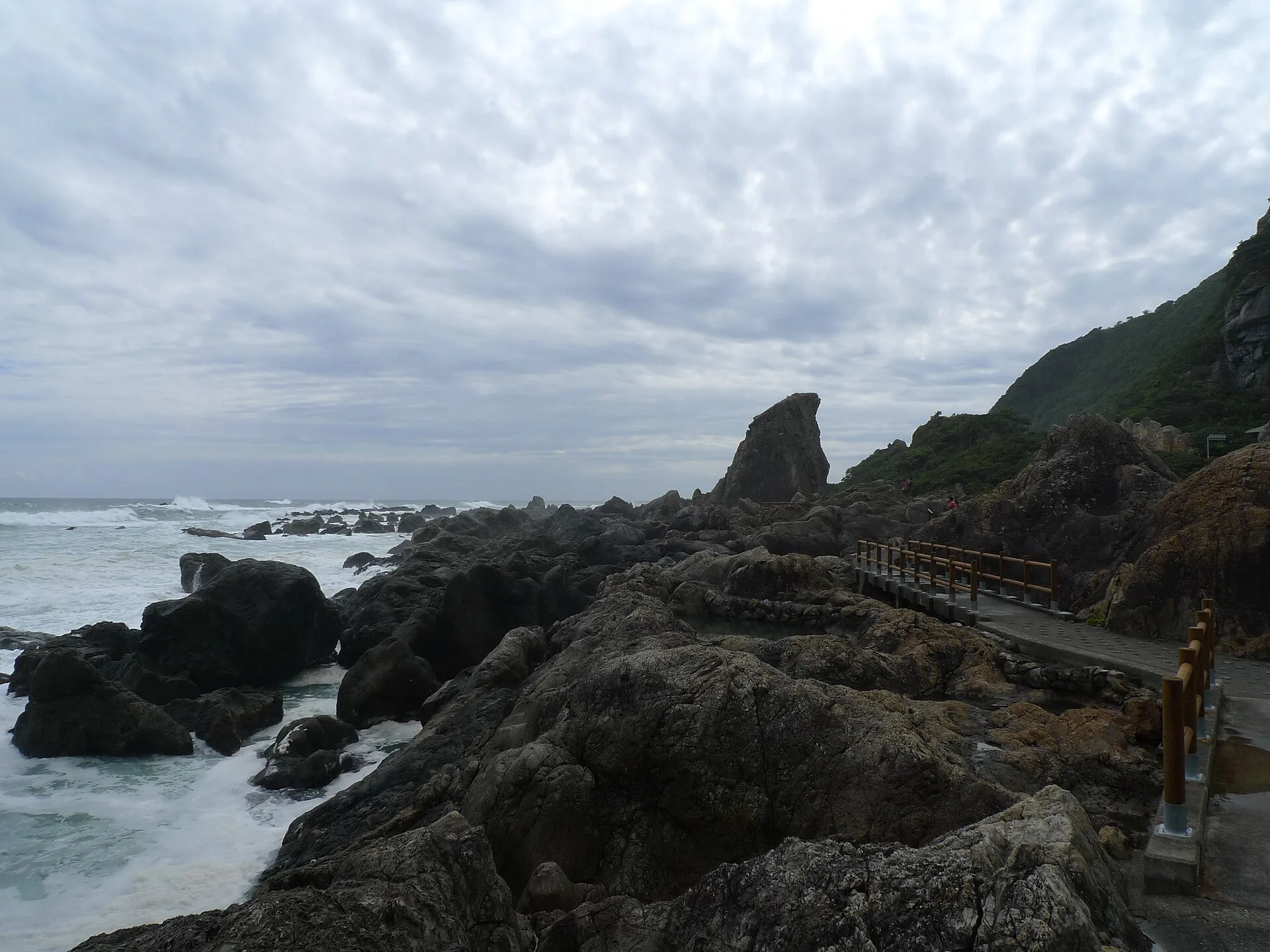
Wakayama Prefecture notes that its charcoal makers passed their techniques on to other parts of Japan and helped regional binchotan brands to form. A 2017 Kochi University research report by Kazuya Masuda records that in 1957, the year Japan's charcoal output peaked, Kochi was the country's second-largest producer. In the Hata district production was mainly black charcoal. In the east of the prefecture, in Muroto and Aki District, and at Tosa-Shimizu and Otsuki in the far west, output was smaller but binchotan made up most of it, because those areas have forests dominated by kashi oaks, ubame oak above all.
Masuda links the growth in binchotan demand to the oil crisis of the 1970s and to the more expensive food that came with economic growth in the 1980s. From around the 1980s, charcoal makers in Sakihama, in Muroto, fixed their kilns near villages and roadsides and brought wood in by lorry. Because Sakihama has few ubame oak groves, they looked more and more to western Kochi, southern Tokushima, western Ehime and Awaji Island for wood. The report notes that ubame oak groves are limited to the coast and that ageing cutters now work gentler slopes and roadside forests, where the oak is running out.
Kochi's forestry statistics chart the growth. The prefecture's white charcoal output fell from 724 tonnes in 1998 to 329 tonnes in 2006, then rose to 1,444 tonnes by 2019. In 2024 Kochi produced 1,311 tonnes of white charcoal, about 50 per cent of national output, its 11th consecutive year as Japan's largest producer. The 2024 report counts 90 white charcoal producers, names Toyo, Muroto and Otsuki as the main charcoal areas, and says that demand and supply of Tosa binchotan are both growing as a result of measures to secure new makers and improve quality.
HOW BINCHOTAN CHARCOAL BURNS: EEL, YAKITORI AND THE GRILL COOK'S FAN
Wakayama Prefecture calls Kishu binchotan the ideal material for heating and grilling food. Because white charcoal has a high ignition temperature it is slow to catch, but once lit it burns at a steady heat for a long time, and the prefecture identifies the main practical difference from black charcoal as the grill cook's ability to adjust the heat with an uchiwa fan. Minabe Town says binchotan has long been prized as the fuel for kabayaki, grilled eel, and for high-end cooking. Black charcoal, by the town's account, lights easily and reaches a high heat, but burns out sooner.
Nipponia reported that binchotan emits far-infrared rays, which it said enhance the flavour of grilled food, and that grilled eel and yakitori restaurants were increasingly advertising their use of it. Wakayama's production plan reports that demand for Kishu binchotan from restaurants in Tokyo, Osaka and Nagoya and from across Japan is high, and that producers are not able to meet it in full. Away from the grill, Minabe Town lists deodorisers, humidity-regulating building materials, food additives and textile processing among the newer uses of binchotan.
NETSU, MANDARIN ORIENTAL JUMEIRA DUBAI: THE ROBATA GRILL AS A STAGE

Netsu, at Mandarin Oriental Jumeira, Dubai, is a Japanese robata by chef Ross Shonhan, completed in 2019. The interior is designed on a kabuki theatre concept and occupies a double-height space. Within it, the robata grill is set as the central stage, and guests watch the grill from several levels of the restaurant. The upper level holds a bar and a DJ lounge, so the double-height volume contains both the levels from which guests watch the robata grill and a space for drinks and music above them.
Further kabuki references run through the design. A raised walkway leads from the back kitchen into the restaurant and recalls the hanamichi of the kabuki theatre. The walkway, the poster graphics and the exterior lighting each take a different element of the kabuki theatre: its walkway, its printed posters and its tiered seating. The columns and a wall carry graphics in the style of 1950s kabuki posters. Outside the restaurant, horizontal recessed lighting references tiered theatre seating, repeating on the exterior the arrangement of levels that the interior gives to guests watching the robata grill.
SOURCES
- Wakayama Prefecture 紀州備長炭 (Kishu binchotan)
- Wakayama Prefecture 生産振興計画 紀州備長炭 (Kishu binchotan production promotion plan, 2026 to 2030)
- Minabe Town みなべ町の特産物 (Specialities of Minabe)
- Japan Patent Office 地域団体商標 紀州備長炭 (Regional collective trademark: Kishu binchotan)
- Food and Agriculture Organization of the United Nations Minabe-Tanabe Ume System, Japan
- Web Japan, Nipponia Charcoal Adds to the Good Life
- International Dendrology Society, Trees and Shrubs Online Quercus phillyreoides
- Kochi University 土佐備長炭の生産をめぐる変容と持続的生産に向けた資源確保に関する研究 (Kazuya Masuda, 2017)
- Kochi Prefecture 令和6年 高知県の特用林産 (Special forest products of Kochi Prefecture, 2024)
- Kochi Prefecture 令和元年 高知県の特用林産 (Special forest products of Kochi Prefecture, 2019)