HOW MUSCAT GREW FROM A WALLED HARBOUR TOWN ALONG THE GULF OF OMAN COAST
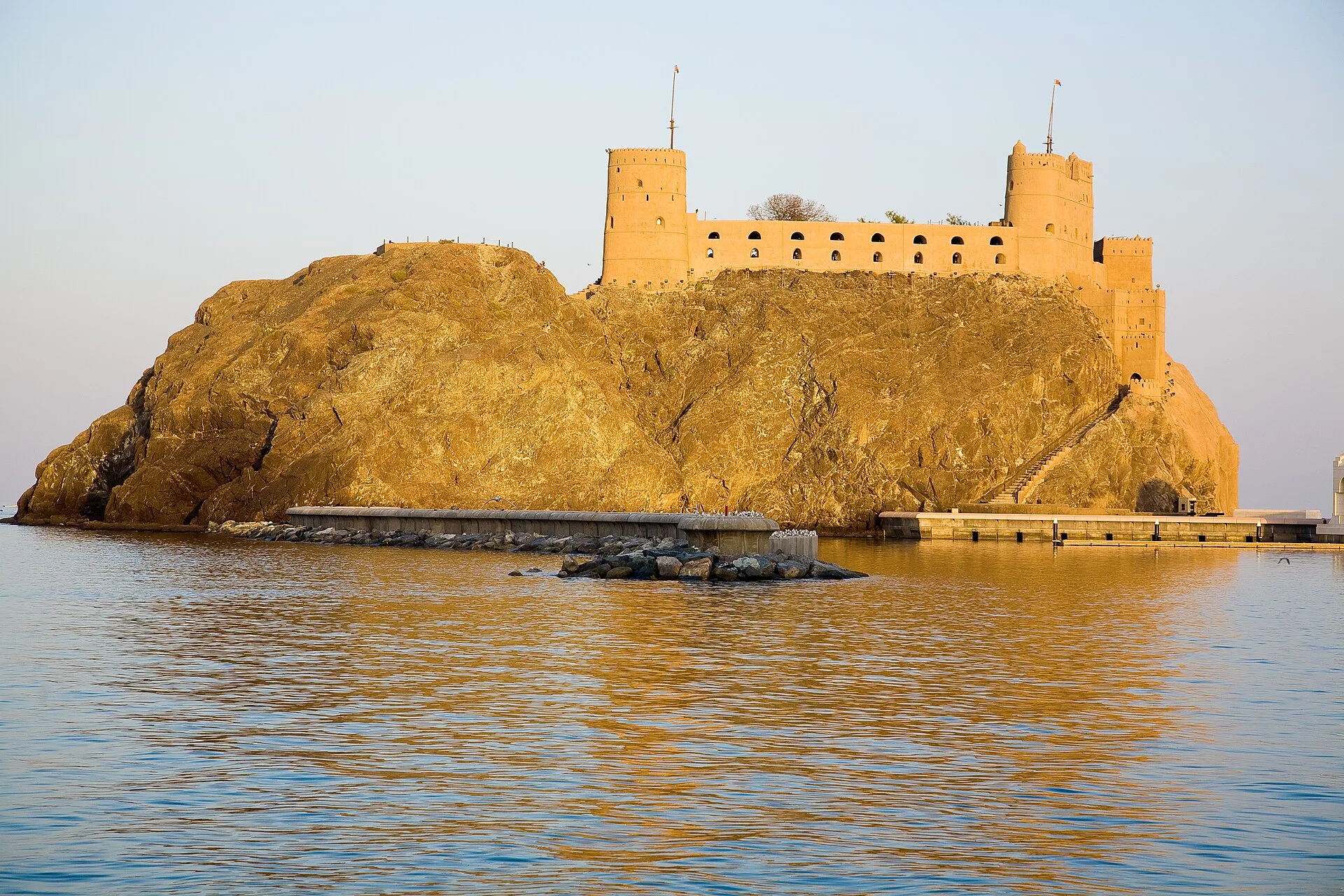
Muscat, the capital of Oman, grew from a walled harbour town on a cove of the Gulf of Oman into a capital region that extends along the coast towards the airport at Sib. The old town sits on a narrow, rocky strip between the sea and the Hajar Mountains, below two forts, Al Jalali and Al Mirani, built and rebuilt by the Portuguese in the 1580s. With little room left in the cove, development spread along the coastal strip through Mutrah, Ruwi, Qurum and Al Khuwair. The Qurum mangroves were made a nature reserve in 1975, the Sultan Qaboos Grand Mosque opened in May 2001, and the Royal Opera House Muscat opened at Shatti Al-Qurum on 12 October 2011.
WHERE IS OLD MUSCAT? THE HARBOUR, THE WALL AND THE GATES
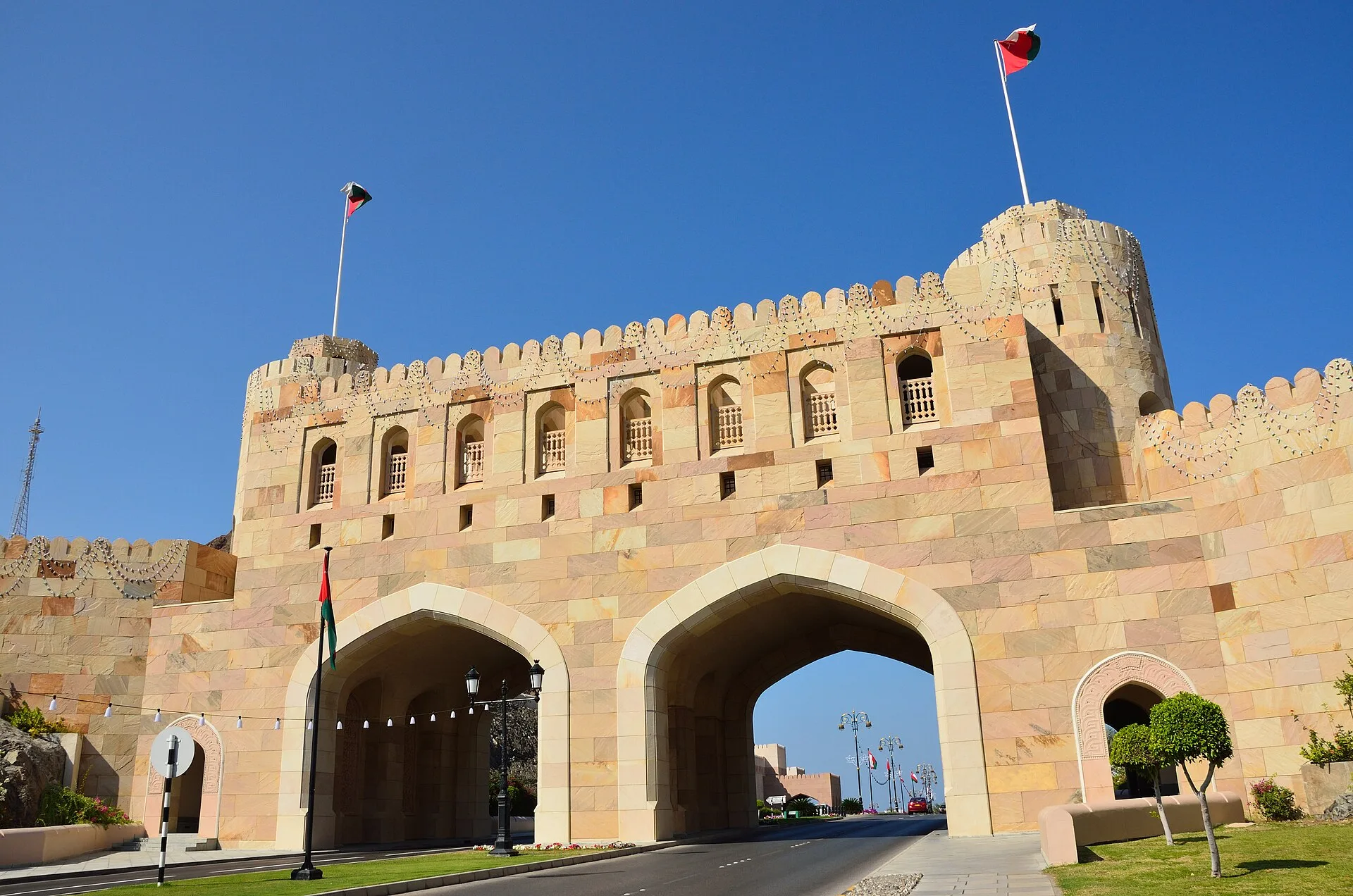
Old Muscat occupies a cove surrounded by volcanic mountains, according to Britannica. The Encyclopedia of the Modern Middle East and North Africa describes the town as lying on a narrow, rocky strip of land wedged between the sea and the Hajar Mountains, and notes that its fine natural harbour attracted local and foreign maritime powers for centuries. The town gave its name to the whole country, which was called Muscat and Oman until 1970. Britannica records that Muscat's old wall still stands, together with some of its gates, and describes the town's architecture as showing Arab, Portuguese, Persian, Indian, African and modern Western influences.
The walled town has remained small while the capital around it has grown. Britannica gives Muscat a population of 24,893 in 2003, against 632,073 for the urban agglomeration. The Oxford World Encyclopedia, reproduced on Encyclopedia.com, gives 60,100 for the city and 776,300 for the metropolitan area in 2002, and the Gale encyclopedia estimates 55,000 for the town in 2003. Britannica and the Oxford entry both separate the harbour town from a metropolitan area many times its size, and the Gale entry names lack of space as the factor that has limited the growth of Muscat itself.
WHO BUILT THE AL JALALI AND AL MIRANI FORTS?

The two forts above Muscat harbour date from the Portuguese period. Britannica records that the Portuguese gained control of Muscat and the adjacent coast in 1508 and maintained a trading post and naval base there until 1650, and describes two 16th-century Portuguese forts overlooking the town. Al Jalali, also known as Ash Sharqiyah Fort, stands on Al Bahri Road. Archnet records that the Portuguese built it in the 1580s on the foundations of an earlier fortress, to a plan of two towers joined by a wall with gun ports. The fort was restored in 1983 and converted into a museum.
Experience Oman, the tourism site of Oman's Ministry of Heritage and Tourism, states that the site of Al Mirani was originally a tower, which the Portuguese rebuilt in 1588 with fortifications, cannon platforms, armouries and residences for commanders. It was restored in the Ya'rubi era, and expansions under the Al Busaidi dynasty gave the fort its current form. Al Mirani now operates as a cultural and tourist site with a weapons museum displaying Omani and Portuguese models, exhibits of traditional battle attire, an open-air theatre, interactive digital experiences on the fort's history, and views of the Sea of Oman, with telescopes for observing the towers and ships carved into the rocks.
Britannica's survey of Omani culture dates the forts guarding Muscat harbour mostly to the 17th century, and lists restored forts and castles among the country's most important historic sites. The inland example it singles out is Bahla Fort, a pre-Islamic stone and mud-brick structure inscribed as a UNESCO World Heritage site in 1987. The other Omani UNESCO listings it names include the prehistoric settlements at Bat, Al-Khutm and Al-Ayn in 1988 and the Frankincense Trail in 2000, the resin trade covered in a separate article on Oman's frankincense trade.
HOW DID MUSCAT GROW? MUTRAH, RUWI, QURUM AND AL KHUWAIR
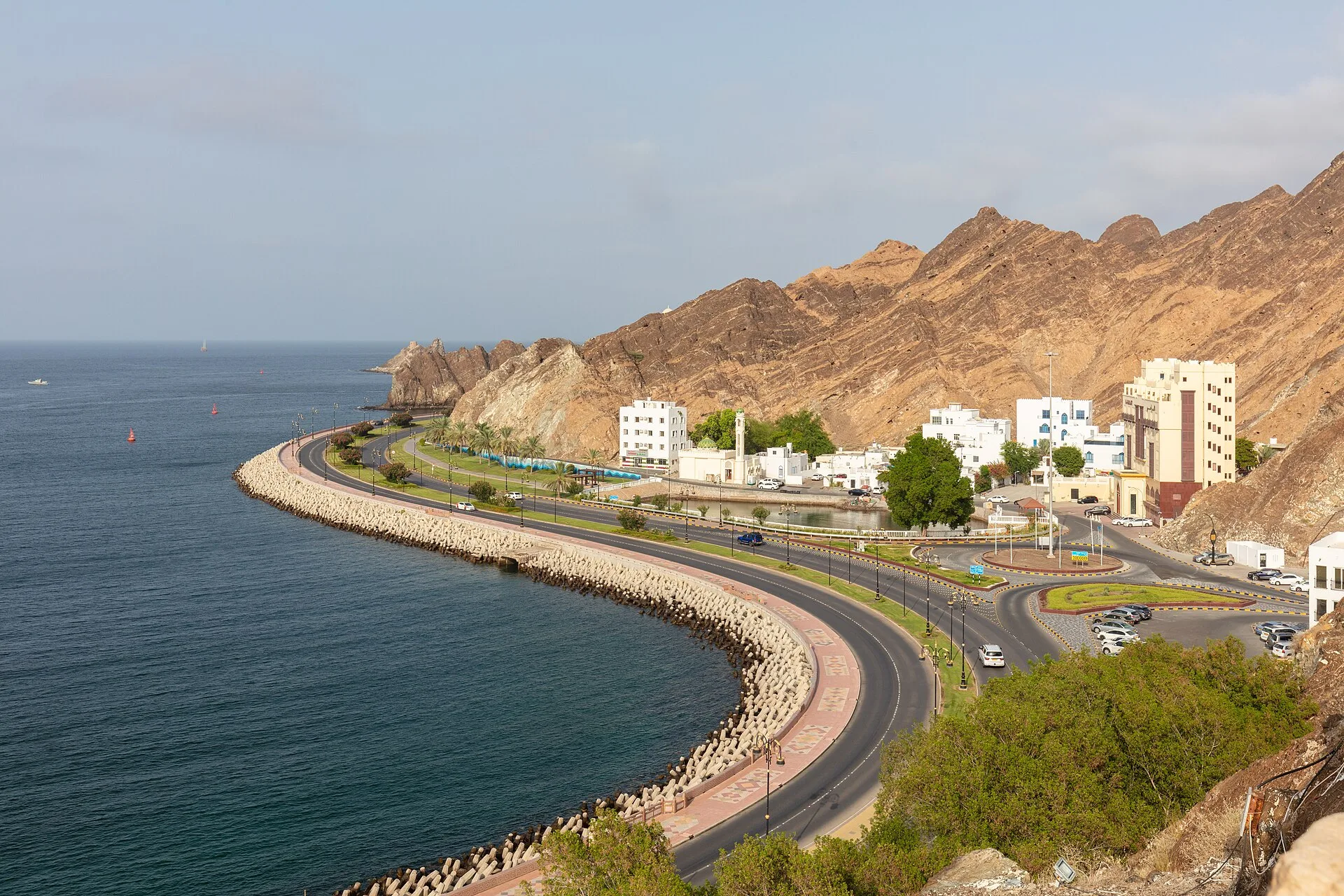
Commercial activity in the capital is centred on Mutrah, just to the west of the old town, according to Britannica, and the Gale encyclopedia describes Mutrah as famous for its traditional souq. The National calls Mutrah Souq one of the oldest souqs on the Arabian Peninsula and places it along the corniche, while noting that the souq was rebuilt in the 1970s. A fish market stretches along the same Mutrah waterfront. Britannica's survey of Omani arts lists woodcarving, weaving, silver and gold work and the making of daggers and swords among the crafts of Omani artisans, whose work is sold at the souq in Muscat.
Beyond Mutrah, the Gale entry links the more extensive development of nearby towns to the greater availability of land along the coastal strip between the capital and the international airport at Sib. It lists the towns of the capital region as Mutrah, Darsayt, Qurum, Madinat Qaboos, Ghubra and Al Khuwair, and gives Ruwi 112,000 inhabitants, with much of the region's commercial, government and residential development. On the style of that development, Britannica notes that traditional elements of architecture have been incorporated into new buildings across Oman.
WHAT IS QURUM NATURE RESERVE? MUSCAT'S MANGROVES
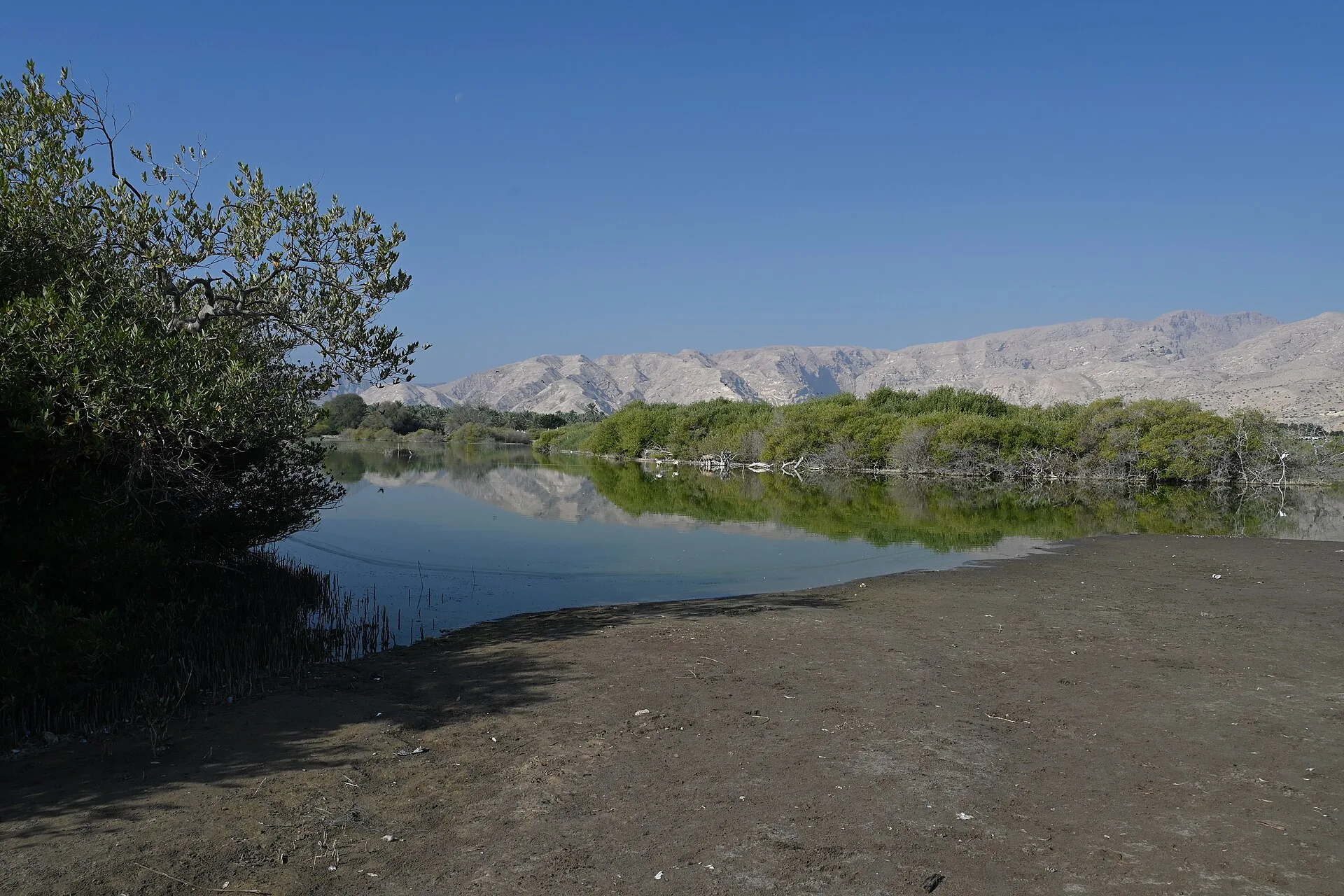
The mangroves at Qurum were declared a reserve by Royal Decree No. 38/75 in 1975, and the Times of Oman counts it among the most important and oldest reserves in the country. The reserve lies in Bausher in Muscat Governorate, forms part of the Wadi Adai area and covers about 1,045,775 square metres. Its mangrove forest, of about 60 hectares, is made up of Avicennia marina, which the newspaper describes as the only mangrove species adapted to the Omani environment. It counts 304 bird species, including migrants from Africa and Russia, along with 26 halophytic plant species, 27 crustacean species, 48 mollusc species and 40 fish species.
The Ramsar Convention on Wetlands designated the site, as Qurm Nature Reserve, on 19 April 2013, recording an area of 106.8 hectares in the Qurm neighbourhood, facing the Gulf of Oman at the foot of the Hajar Mountains. Its site description calls the reserve one of the largest areas of natural mangrove forest along the east coast of the Arabian Peninsula, and notes that the mangroves provide natural control against the tropical storms and cyclones that regularly affect the city, stabilise the shoreline and help maintain water quality by retaining stormwater run-off. The Ramsar record lists 194 bird species, fewer than the Times of Oman figure, and archaeological remains of fishing activity that may be more than 4,000 years old.
WHEN WAS THE SULTAN QABOOS GRAND MOSQUE IN MUSCAT BUILT?
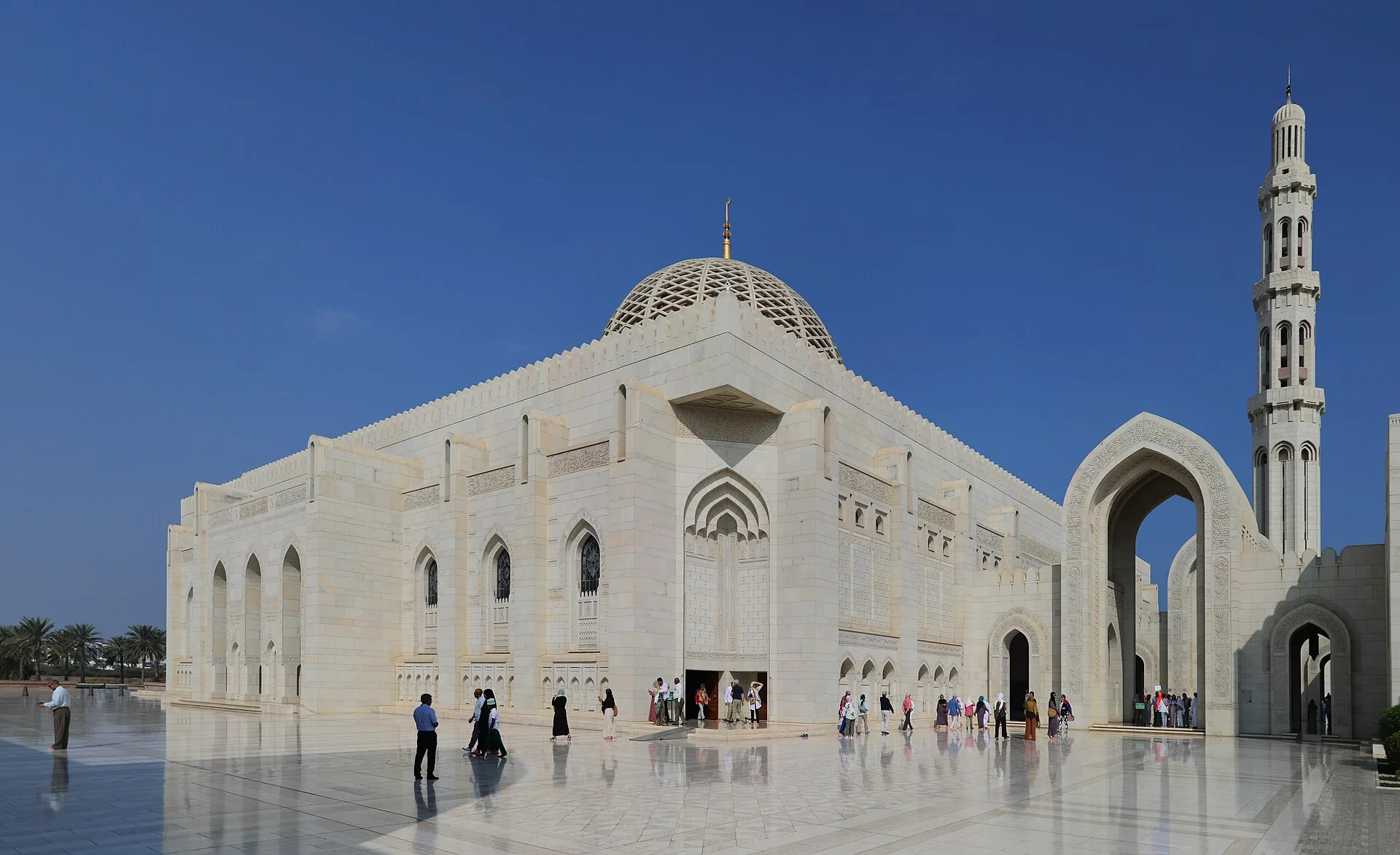
The Sultan Qaboos Grand Mosque was commissioned in 1992. The National reports that a design competition was held in 1993, construction began in December 1994 and the mosque opened in May 2001. The building has a square roof surrounded by a central dome with a total height of 50 metres, and five minarets, the main one 92 metres tall and the others 45 metres. A guide quoted by The National describes the mosque as reflecting Islamic, Oriental and Omani art. It holds 6,500 worshippers inside, the gardens outside can accommodate 10,000, and a separate women's hall holds 4,000.
The chandelier above the prayer hall was designed by the Austrian crystal manufacturer Swarovski. It is 8 metres in diameter and 14 metres high, weighs about 8 tonnes and has 1,000 halogen lamps surrounded by 600,000 pieces of crystal glass. When it was installed it was the largest chandelier in the world, a title later taken by the chandelier at the Sheikh Zayed Mosque in Abu Dhabi. The carpet, brought from Iran and laid by Iranian women over an area of 4,263 square metres, weighs 21 tonnes and took 27 months to make.
WHERE IS THE ROYAL OPERA HOUSE MUSCAT? SHATTI AL-QURUM
The Royal Opera House Muscat stands in Shatti Al-Qurum, which the Times of Oman describes as one of Muscat's most prestigious neighbourhoods. The complex was designed by the Omani firm Carillion Alawi, which was awarded the contract to build it in April 2007; the start of work was delayed by Cyclone Gonu. The opera house opened officially on 12 October 2011 with a performance of Turandot conducted by Plácido Domingo, one of the Three Tenors. The newspaper calls it the first opera house of its kind in the Middle East.
The works comprised a 1,000-seat concert and opera theatre, with a floor area of 15,380 square metres over six levels and three basement floors. The main structure is reinforced concrete with block infill, and the external finishes are Omani marble and render. Inside, the Times of Oman describes dark teak panelling, marble work with intricate carvings and chandeliers. An extension, the House of Music and Art, was built on the other side of the road and is connected to the main building by a pedestrian skywalk incorporating Omani architectural styles.
MANDARIN ORIENTAL, MUSCAT AT SHATTI AL-QURUM

Mandarin Oriental, Muscat opened on 3 June 2024 at Shatti Al-Qurum, the neighbourhood that has housed the Royal Opera House Muscat since 2011. Its opening came 13 years after the opera house, 23 years after the Sultan Qaboos Grand Mosque, 49 years after the Qurum mangroves were declared a reserve and more than four centuries after the Portuguese built Al Jalali Fort above the old harbour in the 1580s. Silverfox Studios designed five of the hotel's food and beverage venues.
The five venues designed by the studio are Rawya, The Pool Bar, Essenza, Essenza Bar and The Mandarin Cake Shop. Rawya is an elegant European café with subtle Eastern accents. It is open from breakfast through to dinner, its zones change through the day, and its entrance has a juice bar and a bakery. The Mandarin Cake Shop has a pastry counter and carved lattice screens. Turned-wood lattice windows in Arab architecture are the subject of a separate article on mashrabiya.
SOURCES
- Britannica Muscat
- Britannica Oman: Cultural life
- Encyclopedia.com Muscat (Encyclopedia of the Modern Middle East and North Africa; World Encyclopedia)
- Archnet Fort al-Jalali
- Experience Oman Al Mirani Fort
- The National Places to visit in Oman: Nizwa Fort, Mutra Souq, Sultan Qaboos Grand Mosque and more
- Times of Oman Qurum Natural Reserve shows Oman's commitment to protect environment
- Ramsar Sites Information Service Qurm Nature Reserve
- The National Sultan Qaboos Grand Mosque connects Oman's past and future
- Times of Oman 10 years on, ROHM is still inspiring curiosity and wonder