THE TREE RESIN FROM DHOFAR THAT SUPPLIED THE TEMPLES OF THE ANCIENT WORLD AND BUILT THE CARAVAN CITIES OF ARABIA
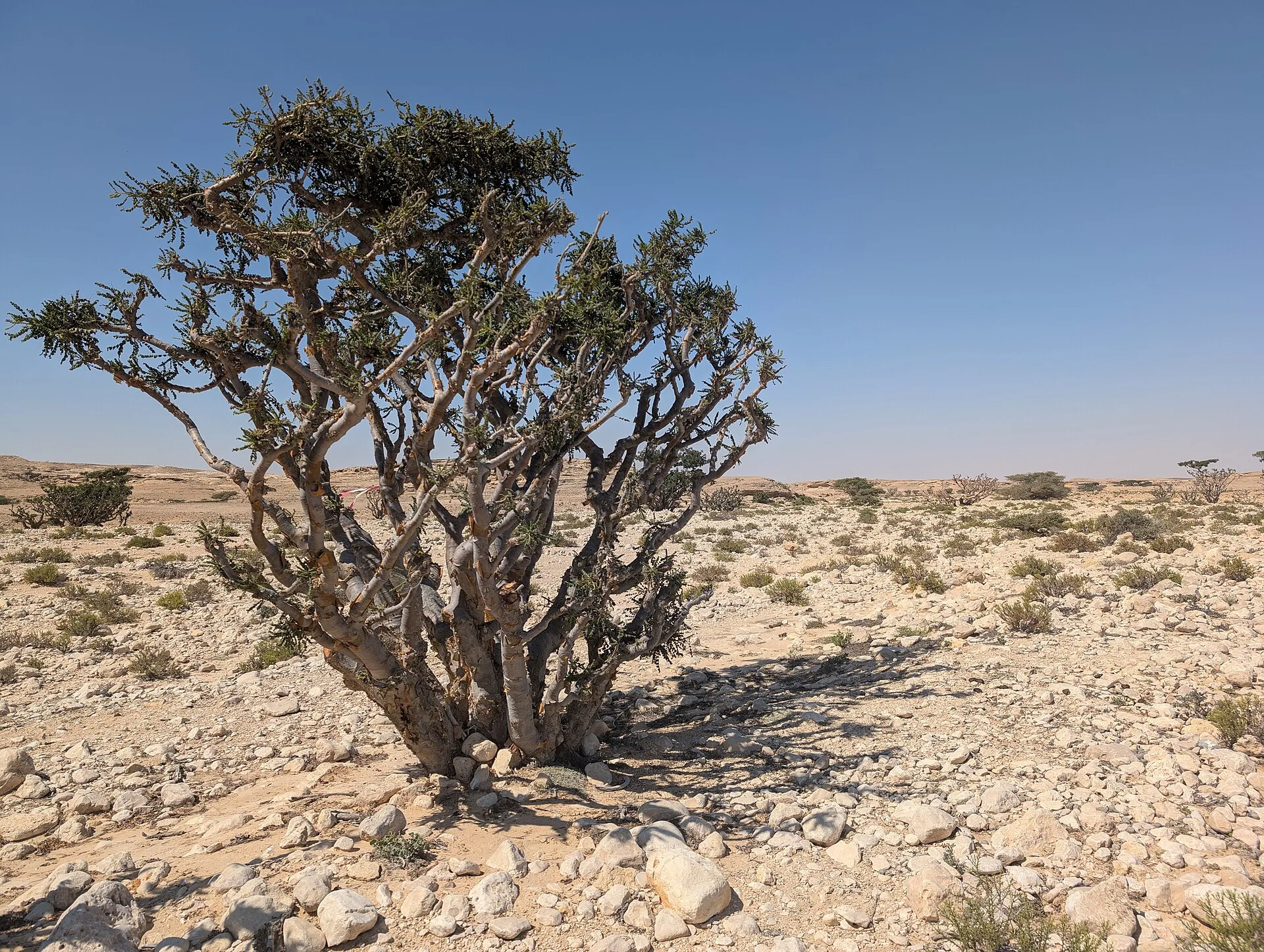
Frankincense is an aromatic gum resin tapped from trees of the genus Boswellia, and one species, Boswellia sacra, still grows and is harvested in the Dhofar region of Oman. In antiquity its resin was one of the most important luxury goods in the trade of the Old World, burned in the religious rites of Egypt and the Jewish sanctuary and later in Christian worship, and carried by camel caravan and by ship from southern Arabia towards the Mediterranean. The trade supported desert forts and ports, enriched caravan cities such as Petra and was described in detail by the Roman author Pliny the Elder. In 2000 UNESCO inscribed four sites in Dhofar as the Land of Frankincense: Wadi Dawkah, where the trees grow, the caravan oasis of Shisr, and the ports of Khor Rori and Al-Baleed. Together they record how frankincense was grown, gathered, stored and shipped.
WHAT IS FRANKINCENSE AND WHERE DOES IT GROW?
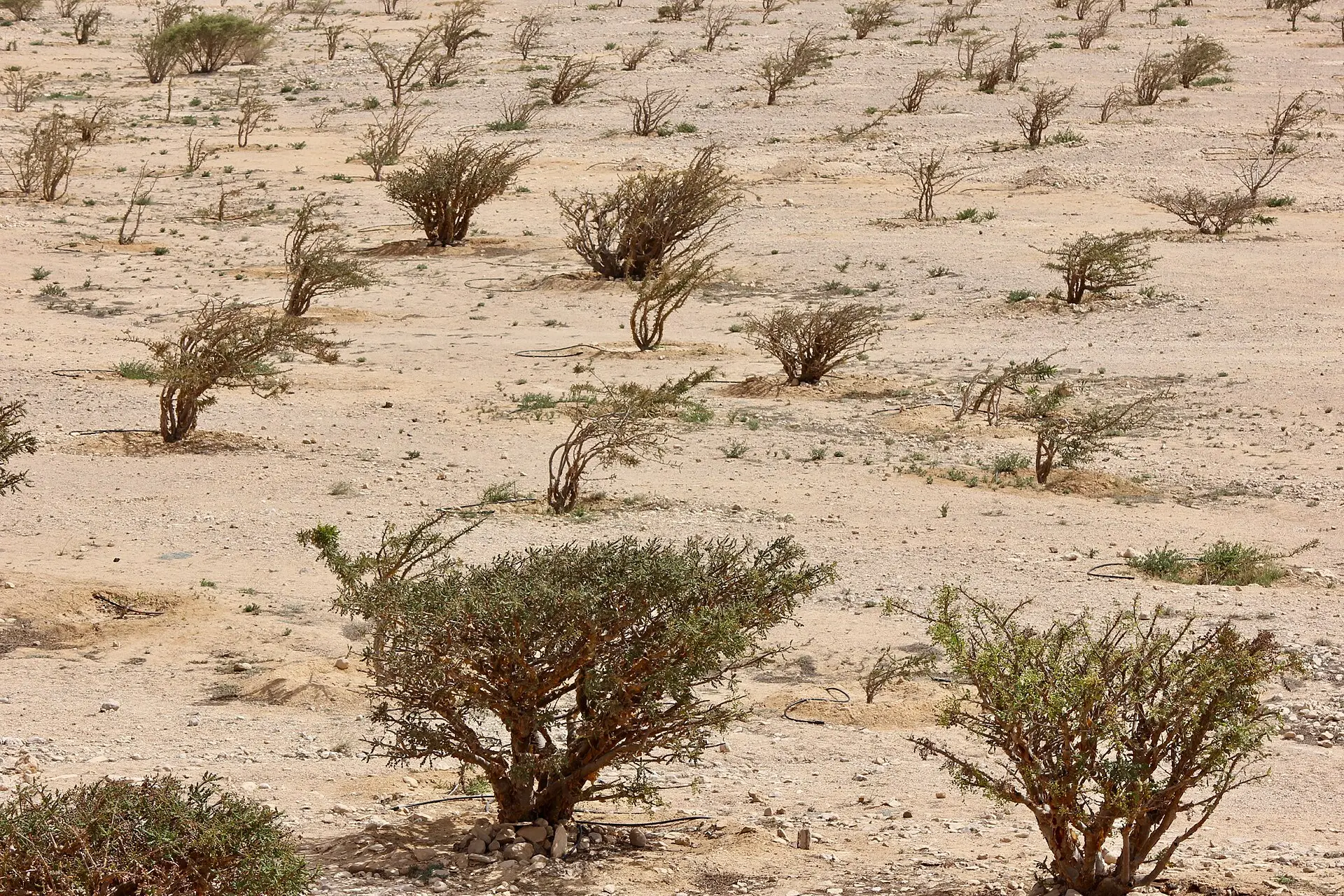
Britannica defines frankincense as a gum resin containing a volatile oil, valued for incense, perfume and medicine. It comes from several Boswellia species, among them B. sacra, B. frereana, B. papyrifera and B. serrata, trees of the Burseraceae family found in Somalia, the Hadhramaut region of Yemen, Oman and parts of India and Pakistan. Live Science puts the genus at about 50 species, most of them in the Horn of Africa, with B. serrata the Indian species. Resin today is mostly collected from farmed trees in East Africa and parts of the Arabian Peninsula, although wild trees are also tapped.
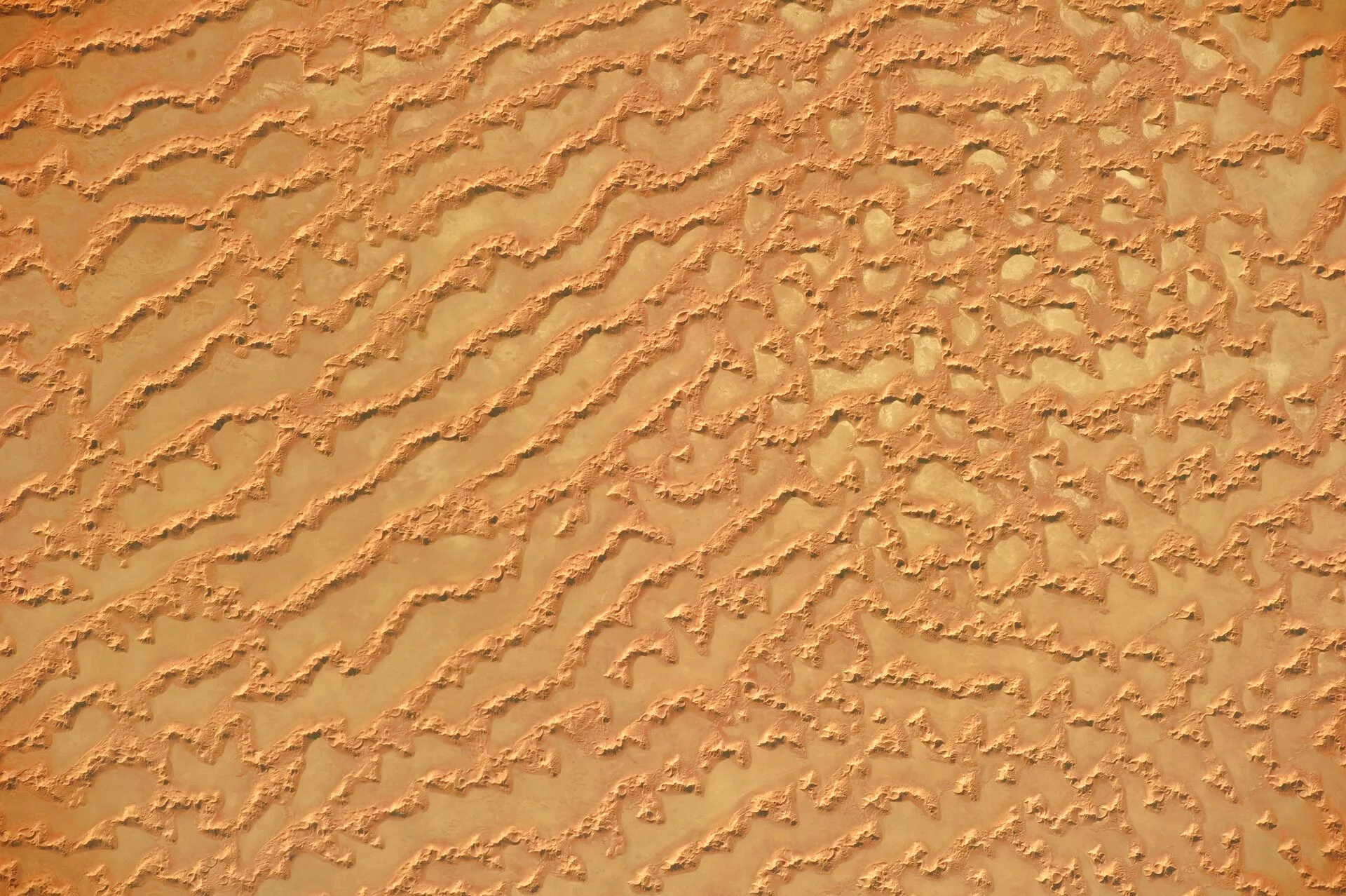
In Oman the trees are protected at Wadi Dawkah, one of the four components of the Land of Frankincense. The ICOMOS evaluation prepared for UNESCO describes it as a park of just under eight square kilometres on the edge of the desert, with frankincense trees growing on the flat bed of a north-draining wadi and acacias on the higher ground, near the Rub al Khali desert. ICOMOS identifies three areas of Dhofar where B. sacra still grows with the frankincense districts described in the sources of the geographer Ptolemy. Britannica notes that several Boswellia species are now threatened by habitat loss, overgrazing, beetle infestations and changes to fire patterns.
HOW IS FRANKINCENSE HARVESTED?
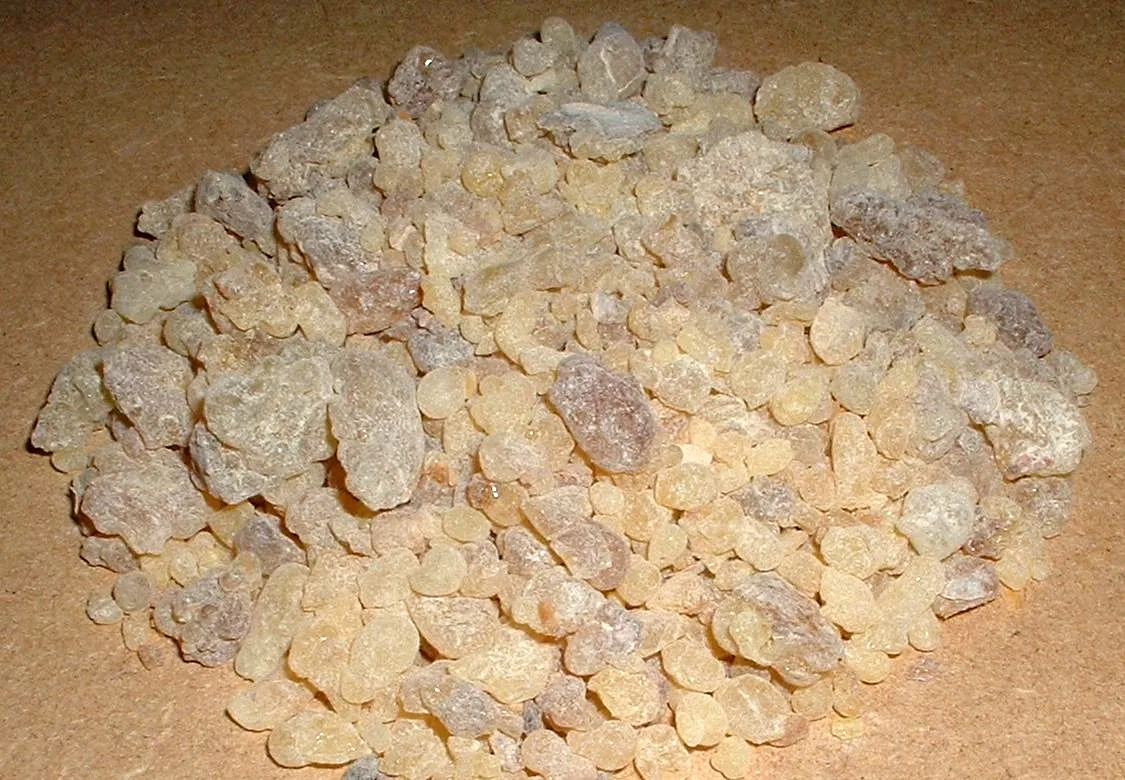
Harvesters cut into the trunk with a chisel-like tool, and a milky sap seeps out and hardens in the air into lumps known as tears, which are collected and dried. Tapping is repeated several times a year. Pliny the Elder gives a detailed account in his Natural History. The main cutting, he says, was made around the rising of the Dog Star, in the hottest part of the year, where the bark was fullest of sap. The incision was widened gradually so that a foam oozed out and set. It was caught on mats of palm leaves or on ground beaten hard around the tree, and what stayed on the trunk was scraped off with an iron tool, often with bark attached.
Pliny distinguished two harvests. Resin gathered in autumn, after building up through the summer, was the purest and white; a second gathering in spring, from cuts made in winter, was red and of lower quality. He also recorded who was allowed to collect it: only about three thousand hereditary families held the right, and while harvesting they had to avoid contact with women and with the dead. The ancient sailing guide known as the Periplus of the Erythraean Sea gives a harsher picture of the Frankincense Country. It describes a mountainous, foggy land where the resin forms as drops on the bark of small trees and is gathered by the king's slaves and by men sent there as punishment, many of whom die from the climate and lack of food.
WHO BOUGHT FRANKINCENSE IN THE ANCIENT WORLD?
The trade is far older than Rome. ICOMOS traces long-distance trade routes in the region back to Neolithic pastoral nomads and says the frankincense trade grew in response to demand from southern Mesopotamia. Writing shows the trade increasing by 3200 BC, and by the later third millennium BC it reached Egypt. ICOMOS describes the Bronze Age, from 2200 to 1300 BC, as a period of retrenchment in which camel domestication began, and in the Iron Age, from 1300 to 300 BC, the states of southern Arabia rose and a formal incense network took shape.
Its main value was as incense for religious ceremonies. Britannica records its use in the rites of ancient Egypt and as part of the incense of the Jewish sanctuary, which is frequently mentioned in the first five books of the Hebrew Bible. In Christian tradition it was one of the three gifts the Magi brought to the infant Jesus, and it remains an important incense in Roman Catholic and Eastern Orthodox worship. At the cathedral of Santiago de Compostela a giant censer, the botafumeiro, is still swung on a pulley system during mass. Pliny recorded its use as a medicine, including as an antidote to hemlock, and listed prices of six, five and three denarii a pound for the three grades, warning that it was often mixed with cheaper white resin.
THE INCENSE ROUTE: HOW FRANKINCENSE CROSSED ARABIA
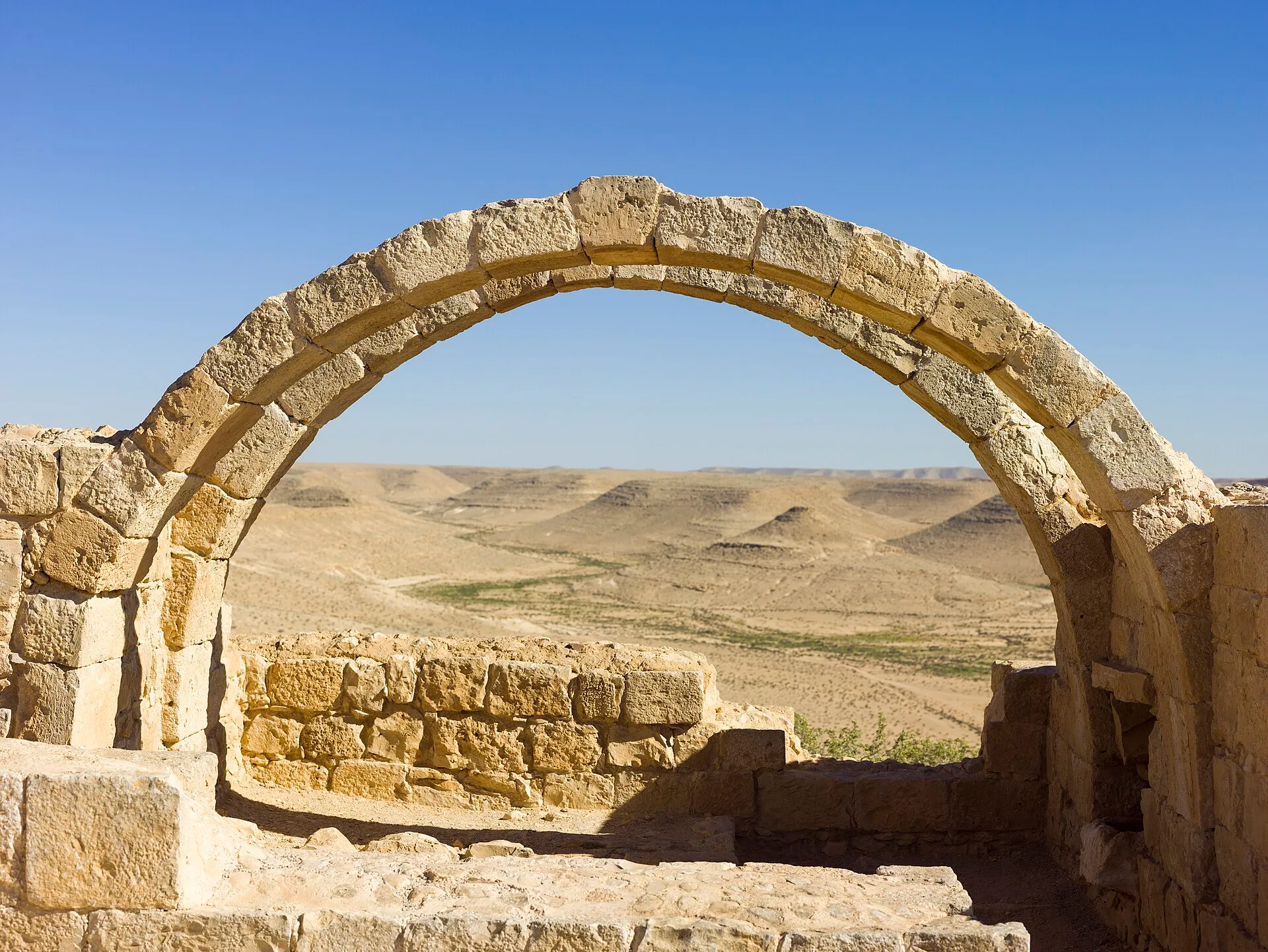
Overland, the resin travelled north by camel. The Metropolitan Museum of Art describes the Incense Route as a network controlled by Arabs, separate from the Silk and Spice Routes, along which frankincense and myrrh were brought by caravan from southern Arabia. UNESCO describes the network as extending over two thousand kilometres from Yemen and Oman to the Mediterranean, flourishing from the third century BC to the second century AD. In the Negev desert, the Nabataean towns of Haluza, Mamshit, Avdat and Shivta, with their forts and caravanserais, were inscribed as a World Heritage Site in 2005 for their role in the trade. On the fringes of the Syrian Desert, the Met notes, Petra and Palmyra grew rich by supplying the merchant caravans and policing the routes.
Pliny lists the charges that built up along the way. Camels carried it to the city of Sabota, which had a single gate, and leaving the road was punishable by death. There the priests took a tenth, measured by volume, in honour of their god Sabis, and nothing could be sold until they had done so. The resin could only be exported through the land of the Gebanitae, whose king also taxed it, and priests, royal secretaries, guards and gatekeepers each took a share. Water, fodder and lodging were paid for along the way. From the capital, Thomna, to Gaza on the Mediterranean was a journey of sixty-five days by camel, and Pliny puts the cost of each camel load at 688 denarii before it reached the coast.
DHOFAR'S PORTS AND THE FRANKINCENSE TRADE BY SEA
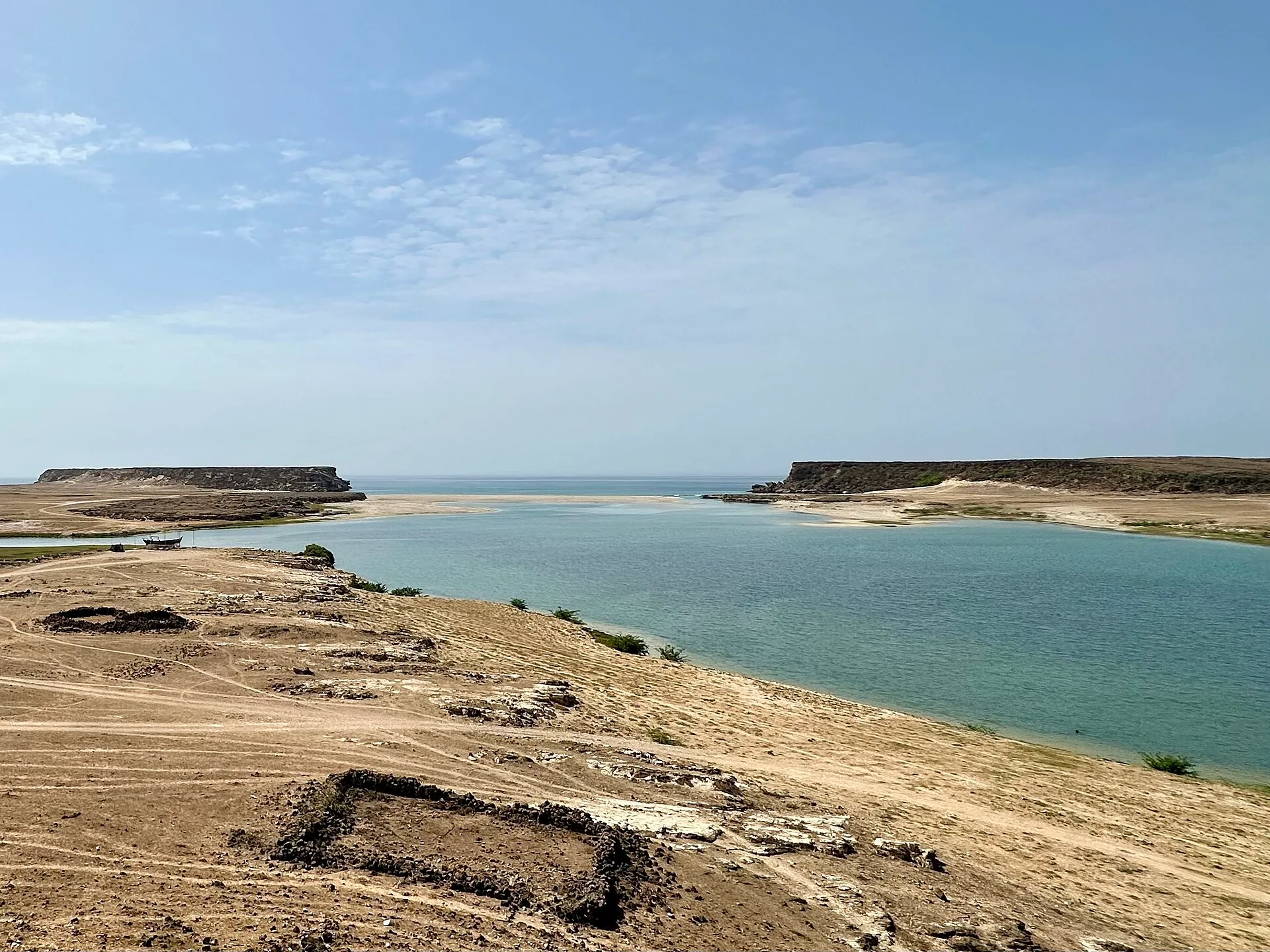
The Periplus names Cana as the market town of the Frankincense Country, ruled by a king called Eleazus, where frankincense was brought for export on rafts buoyed by inflated skins and on boats, and from where camels carried it inland to the royal capital, Sabbatha, for storage. It also describes Moscha, the harbour for the frankincense of the Sachalite coast, where ships from Cana called regularly. The resin lay there in open heaps with no visible guard, but according to the Periplus none could be loaded without the king's permission, and a ship carrying even a single unauthorised grain could not leave the harbour.
ICOMOS identifies Moscha with Khor Rori, the ancient Sumhuram, about 40 kilometres east of Salalah. Inscriptions record that it was founded at the end of the first century BC by a king of Hadhramawt to control the Dhofar incense trade, and its name, Smhrm, is read as "His Name is Great". It was a fortified town of about one hectare, with a fortress approached up a steep path through three successive gates, and Indian sailors overwintered there while waiting for the monsoon winds. Sumhuram began to decline in the first half of the third century AD, and by the end of that century it had been reclaimed by the sea and vegetation.
THE LAND OF FRANKINCENSE: OMAN'S UNESCO WORLD HERITAGE SITE
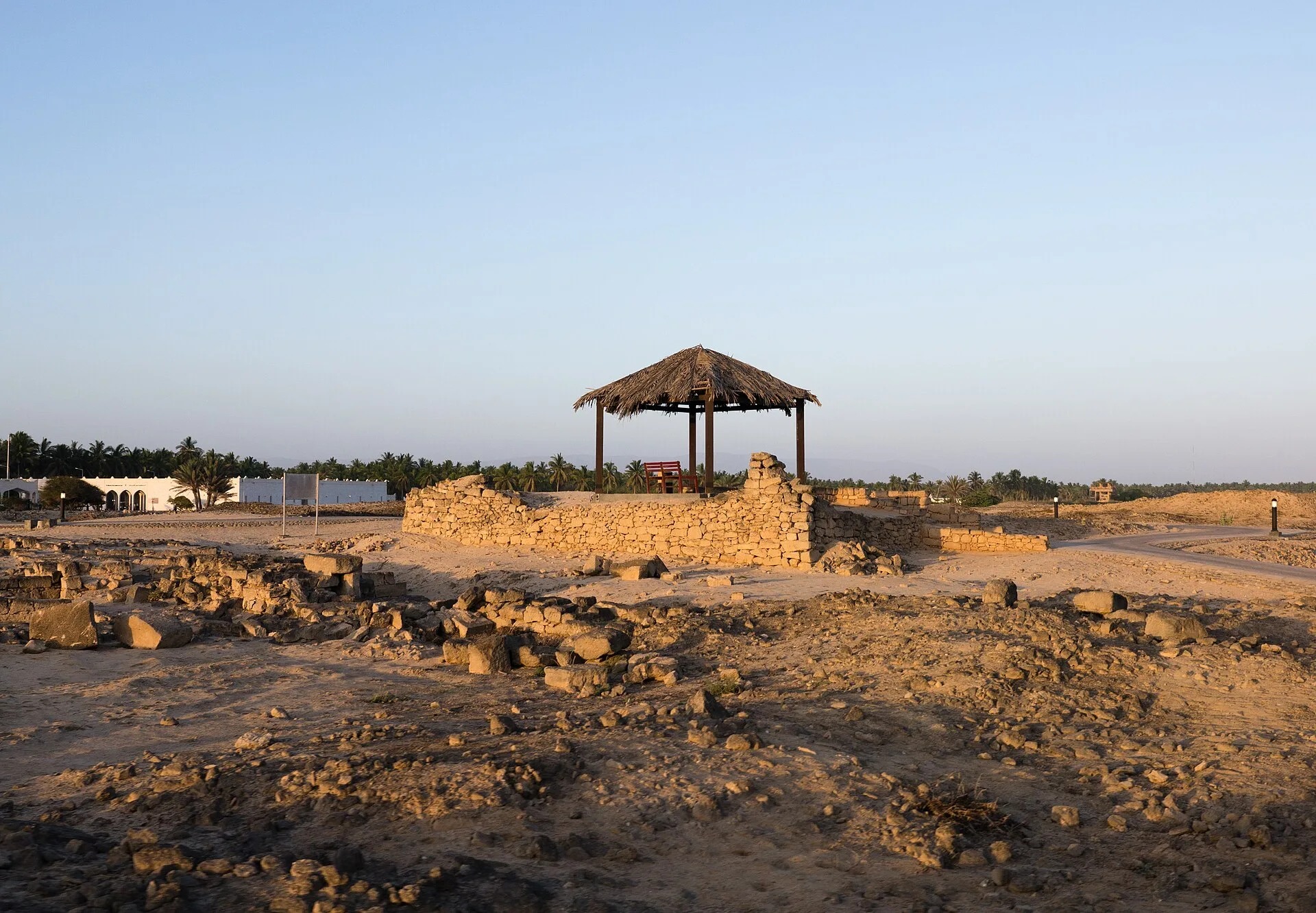
UNESCO inscribed the Land of Frankincense in 2000 on two grounds: the sites represent the production and distribution of frankincense, one of the most important luxury goods of the ancient world, and Shisr, Khor Rori and Al-Baleed are examples of medieval fortified settlements in the region. The inland component, Shisr, lies about 180 kilometres north of Salalah beside a collapsed limestone dome with a cave and a permanent spring. An Iron Age fortress dominated the oasis from the second century BC, supplying water to caravans heading from the interior to the coast. ICOMOS notes that it has been suggested as the site of either Ubar or Ptolemy's Omanum Emporium.
Al-Baleed, the medieval port of Zafar on the Indian Ocean shore, is the latest of the four sites. UNESCO dates its activity from the eighth to the sixteenth century AD, and Chinese Ming artefacts found there show its place on the maritime routes; its Great Mosque, ICOMOS records, had 144 octagonal columns. ICOMOS places the peak of the incense trade in the Abbasid period. Zafar was raided in the thirteenth century, and the changes to trade imposed by the Portuguese and other Europeans in the late fifteenth century sealed its fate. The sites are protected under Omani royal decree, and the visitor centres at Al-Baleed and Khor Rori received more than 150,000 visitors in 2014.
MANDARIN ORIENTAL, MUSCAT ON THE SHATTI AL-QURUM COAST

Mandarin Oriental, Muscat opened on 3 June 2024 on the Shatti Al-Qurum coastline of Oman's capital. Silverfox Studios designed its food and beverage outlets: Rawya, The Pool Bar, Essenza, Essenza Bar and The Mandarin Cake Shop.
Rawya is described as an elegant European café with subtle Eastern accents. It is planned for breakfast, lunch and dinner, with zones that change character through the day, and its entrance holds a juice bar and a bakery. The Mandarin Cake Shop has carved lattice screens and a pastry counter.
SOURCES
- UNESCO World Heritage Centre Land of Frankincense
- ICOMOS, via UNESCO World Heritage Centre Advisory Body Evaluation: Frankincense Trail (Oman)
- UNESCO World Heritage Centre Incense Route: Desert Cities in the Negev
- Britannica Frankincense
- Britannica Boswellia
- Live Science What is frankincense?
- The Metropolitan Museum of Art Trade Routes between Europe and Asia during Antiquity
- Perseus Digital Library, Tufts University Pliny the Elder, The Natural History, Book 12
- Silk Road Seattle, University of Washington The Periplus of the Erythraean Sea (trans. W. H. Schoff, 1912)