A MORNING TONIC OF SPIRITS, SUGAR, WATER AND BITTERS THAT A NEW YORK BARTENDER TURNED INTO A CRAFT AND A PERFORMANCE
The history of the cocktail starts with a medicine. Before the word covered a whole category of mixed drinks, the cock-tail was one specific formula: spirits, sugar, water and bitters, taken in the morning to settle the stomach. Its first clear printed definition appeared in a New York newspaper in May 1806. Over the next half century American bar-keepers added ice, fruit and technique, and in June 1862 a New York bartender named Jerry Thomas published How to Mix Drinks, or The Bon-Vivant's Companion, which the Smithsonian Libraries describe as the first recipe book for mixed drinks published in the United States. The book fixed recipes that had circulated by word of mouth, and Thomas's showmanship behind the bar, above all with the flaming Blue Blazer, made the bartender a performer as well as a supplier of drinks.
WHERE DID THE COCKTAIL COME FROM? BITTERS AND THE MORNING DRAM
The formula can be traced to London. The Oxford Companion to Spirits & Cocktails identifies its starting point as Richard Stoughton (1665 to 1716), an apothecary who completed his apprenticeship in 1687 and soon opened a shop just south of London Bridge. Around 1690 he began selling an alcoholic extract of bitter barks, roots and herbs called Elixir Magnum Stomachicum, which was added to ale or Canary wine and, by the early 1700s, to brandy and later gin. Stoughton advertised it heavily as a stomach settler and a remedy for hangovers. By the 1710s the product was simply called bitters, and in 1712 he received a royal patent for it, only the second granted to a medicine.
By the middle of the eighteenth century, Stoughton's bitters mixed with sweet wine, brandy or gin was an established eye-opener or pre-dinner tonic in Britain and its American colonies. The Companion records that in 1783, while negotiating the surrender of New York City, George Washington offered wine and bitters to the British governor. The name came later. Between 1783 and about 1803, drinkers in the area between New York City, Albany and Boston attached the word cock-tail to the formula. It was British sporting slang for a stimulant, borrowed from a horse-trader's trick of using an irritant to make a tired horse look lively, and its earliest recorded figurative use dates to 1790.
THE 1806 DEFINITION OF A COCKTAIL
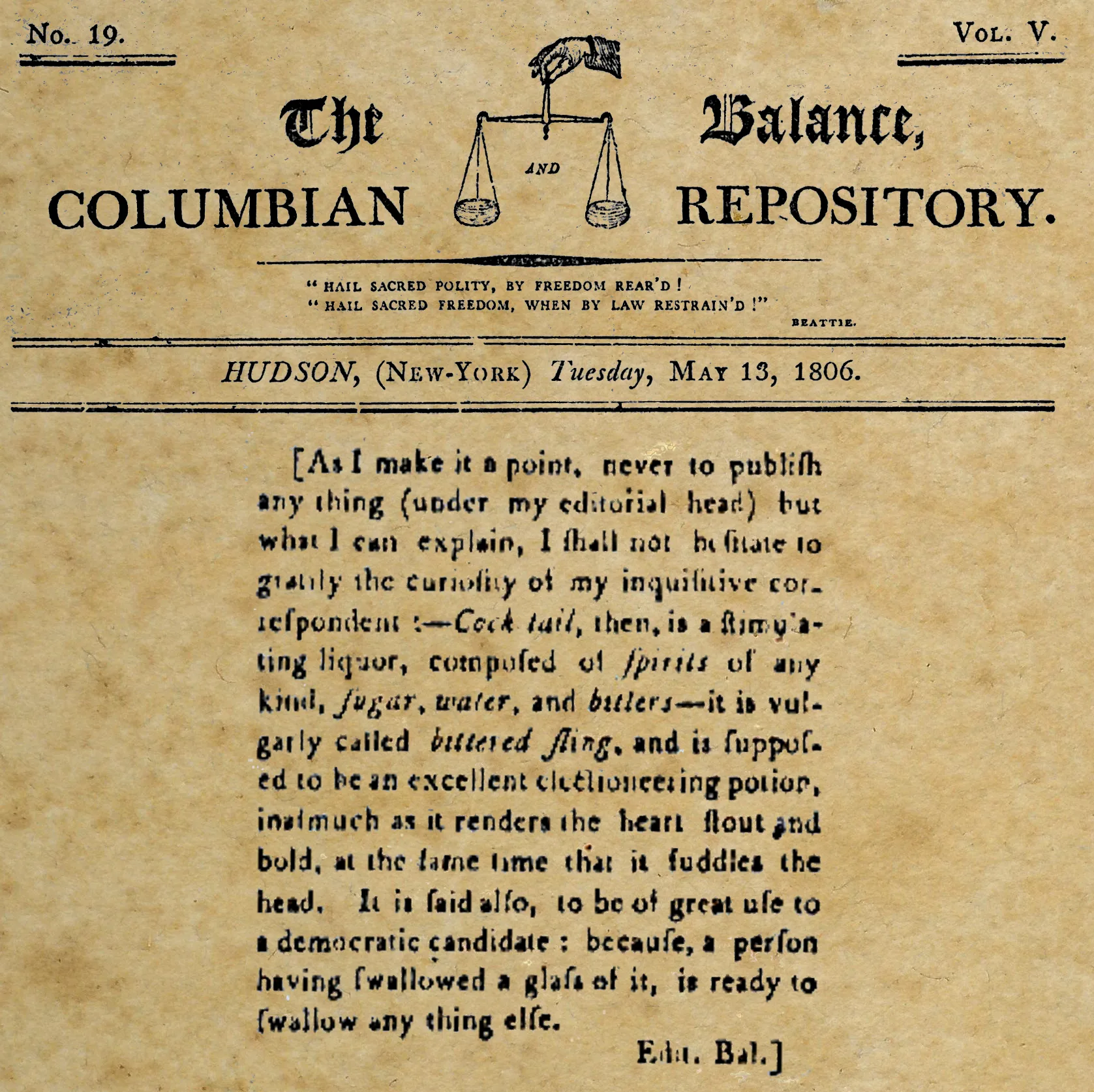
The name and the formula first appear together in print on 13 May 1806, in The Balance and Columbian Repository, a newspaper edited by Harry Croswell in the Hudson Valley of New York. The paper defined a cock-tail as a stimulating liquor composed of spirits of any kind, sugar, water and bitters, and added that it was vulgarly called a bittered sling. An earlier mention, in a London newspaper of 1798, is less clear. The Oxford Companion notes that the price quoted suggests a non-alcoholic ginger drink, and the name was still used in Britain for ginger extract as late as 1828.
The comparison with the sling places the cocktail in a family of early American drinks. The sling, spirits with sugar and water, is first recorded in Maryland in 1778. According to the Companion, the sling, the cocktail and the julep all descend from punch: the cocktail adds bitters, the julep adds mint, and the sling adds neither. Some early cocktails left out the bitters, which made them hard to tell apart from a sling, and some used cayenne pepper instead. The formula had settled by 1820, and by 1830 the drink had spread across the United States. The date of the 1806 definition is now marked as World Cocktail Day, and in 2026 New York State presented a proclamation honouring it at an event in Hudson.
ICE, STRAWS AND THE SHERRY COBBLER
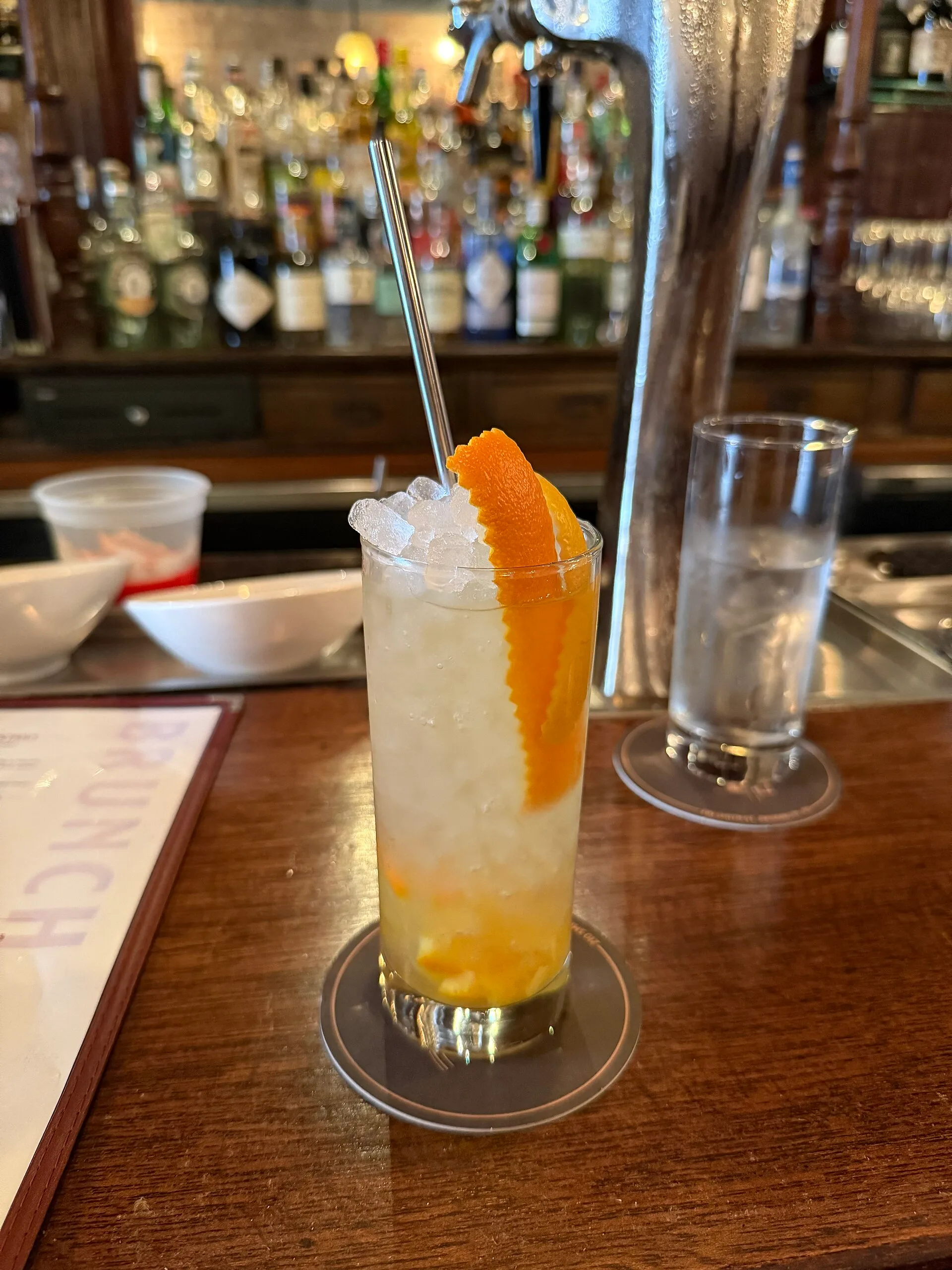
Alongside the cocktail and the julep, the cobbler was one of the foundations of nineteenth-century American drinking. It was a wine drink, occasionally made with a spirit, shaken or tossed with sugar, ice and citrus and garnished with berries and fruit. The earliest known mention, in a New York newspaper of 1837, refers to a Madeira Cobbler as if it were new. The Sherry Cobbler appears in 1838 and was popular in New York and elsewhere by 1839. Its inventor is unknown. A mid-century story credited the actor William H. Burton with creating it at a Philadelphia saloon, but the saloon keeper named in the story did not arrive in America until 1839.
Ice was central to the cobbler, and the name itself may come from cobbles, meaning pebbles of ice. The Oxford Companion credits the drink with doing more than any other to spread iced, made-to-order drinks around the world, and with popularising the drinking straw, through which it was almost always drunk. In 1843 Peter Brigham's saloon in Boston included arrack and brandy cobblers on a drink list that became famous. Claret, Hock and Champagne versions followed after the Civil War, until the rickey, the highball and coolers largely replaced the cobbler in the 1890s. By the start of Prohibition it still appeared in bartending guides but was rarely ordered in bars.
WHO WAS JERRY THOMAS?
Jeremiah P. Thomas was born on 30 October 1830 in Sackets Harbor, New York, on Lake Ontario, and grew up in New Haven, Connecticut. In the mid-1840s he worked as a barback at the Park House hotel in New Haven, which his older brother David managed. He went to sea in 1847 or 1848, and his last voyage, on the bark Ann Smith, left New Haven in March 1849, rounded Cape Horn and reached San Francisco in November. Thomas deserted the ship for the gold fields and left California in 1851 with about $16,000 in gold.
Over the following years he tended bar in New York, New Haven, Charleston, New Orleans, Chicago and Keokuk, Iowa, and was head bartender at the Planter's House in St Louis. In 1858 he took over the bar at the Metropolitan Hotel in New York, a prestigious room with a theatrical and sporting clientele. A bar he opened with his brother George at 622 Broadway in 1860 had failed by the end of 1861, and he returned to the Metropolitan. By late 1863 he had worked at the Occidental Hotel in San Francisco and in Virginia City, Nevada, before he came back to New York and the Metropolitan in early 1865.
HOW TO MIX DRINKS: AMERICA'S FIRST BAR BOOK
How to Mix Drinks, or The Bon-Vivant's Companion, also known as the Bar-Tender's Guide, was published in New York by Dick & Fitzgerald in June 1862. The Smithsonian Libraries, which hold a copy in the Dibner Library of the History of Science and Technology, note that it standardised drinks that had spread through oral tradition and regional custom. The first edition sorted drinks into classes: cobblers, cocktails, fixes, juleps, punches, sours, slings, smashes, toddies and fancy drinks. It credited only one other American bartender, Joseph Santini of New Orleans, and included only two drinks of Thomas's own, the Blue Blazer and the Japanese Cocktail.
Thomas did not own the rights to the book. In 1863 he self-published a second one, The Portrait Gallery of Distinguished Bar-Keepers, with recipes, biographies of bartenders, an autobiography and his own illustrations; no copy is known to survive. A second edition of the Bar-Tender's Guide appeared in 1876 with an appendix of newer drinks, including the Collins, the Fizz and the Improved Cocktail, a precursor of the Sazerac. A third edition followed in 1887, after his death. Other manuals followed. Harry Johnson, a Prussian-born bartender who opened his first bar in Chicago in 1868, published his New and Improved Bartenders' Manual in 1882 in a printing of 50,000 copies. The Oxford Companion describes its 24 pages on managing and operating a bar as the first work of their kind, and by the 1900 edition that section had grown to 157 pages.
THE BARTENDER AS SHOWMAN: JERRY THOMAS AND THE BLUE BLAZER
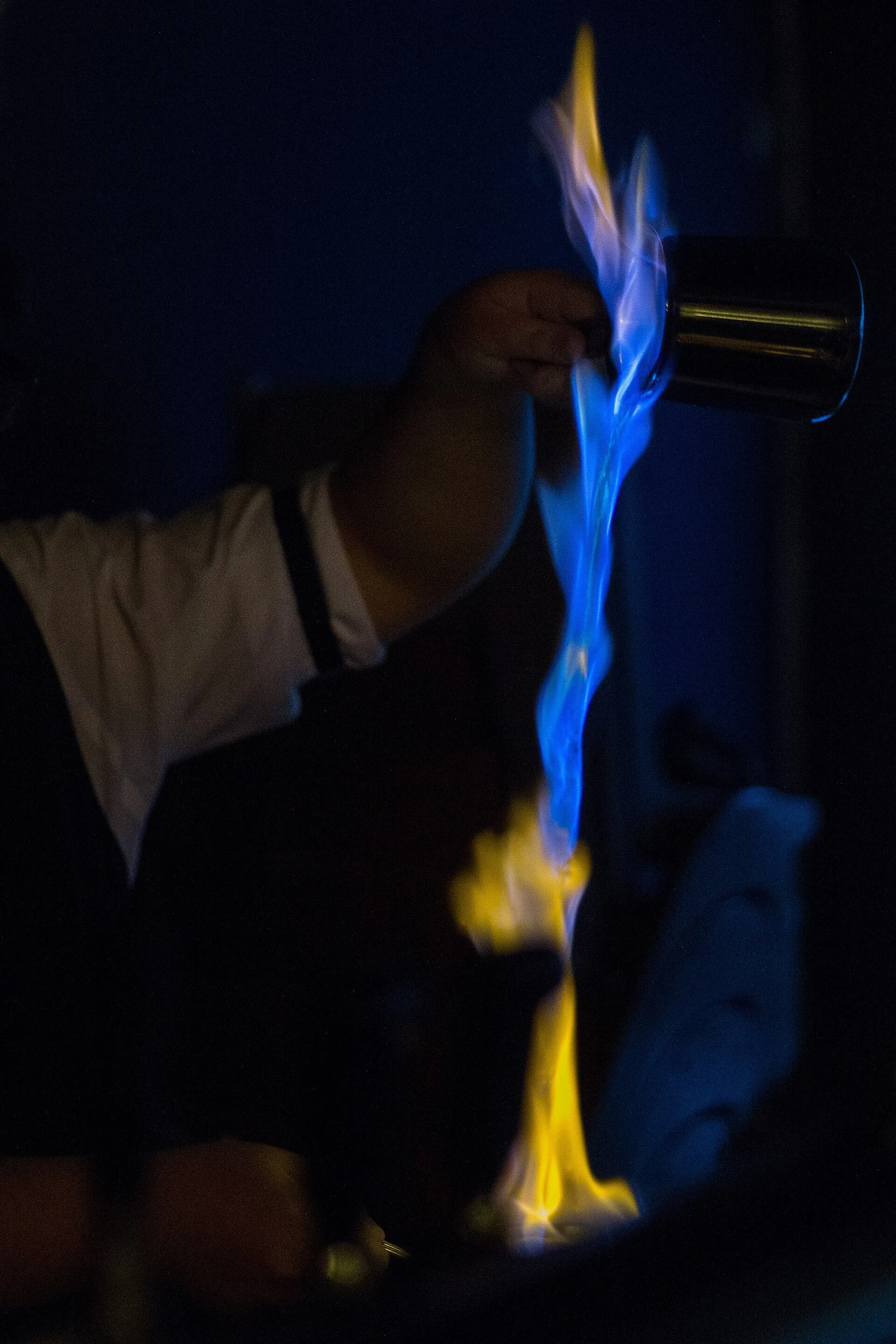
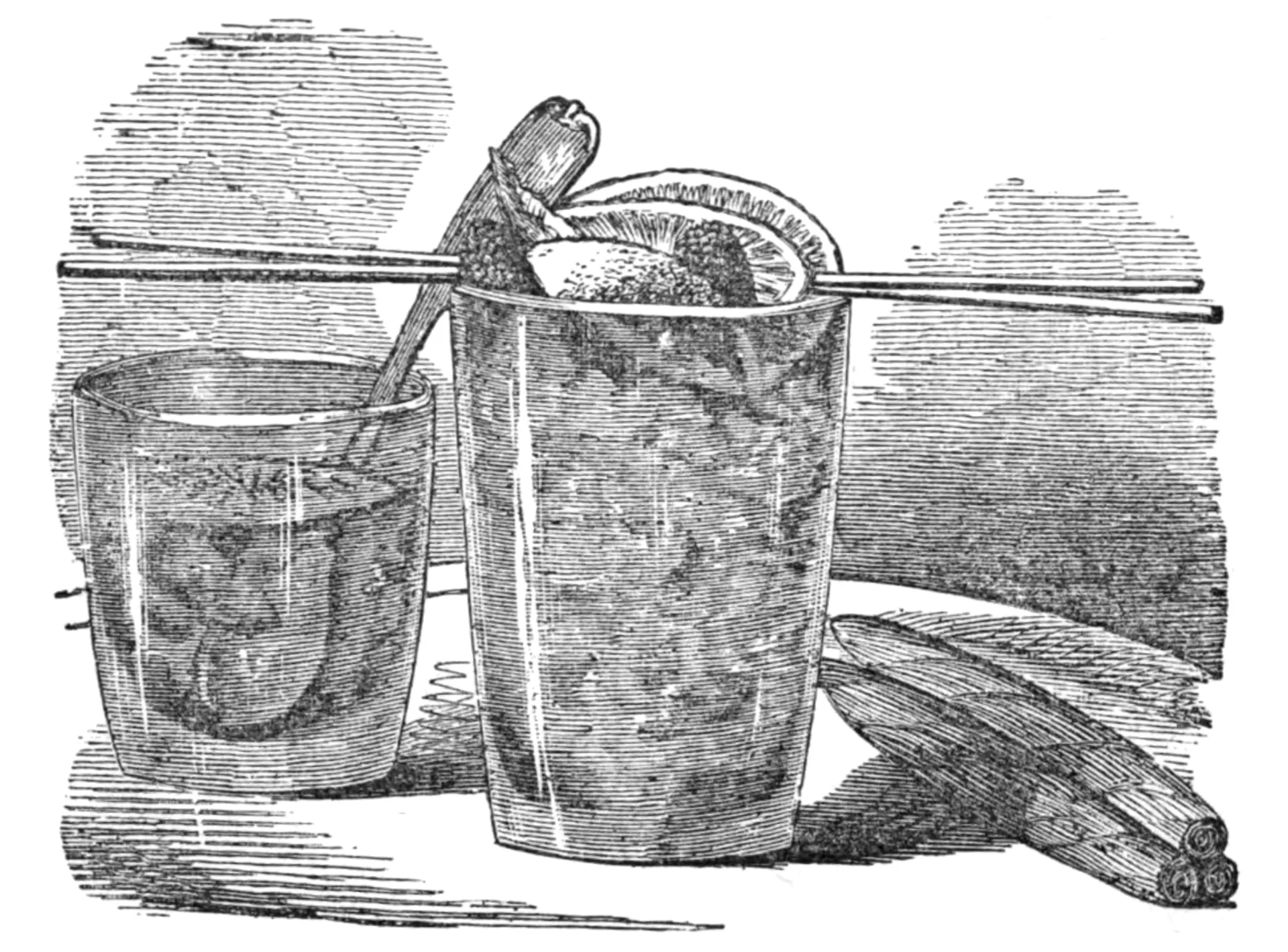
The Blue Blazer is a hot Scotch whisky toddy set alight and poured in a wide arc between two metal mugs. It first appeared in the 1862 book, with an engraving of Thomas mixing one that was reportedly based on a photograph he displayed behind his bar, and it stayed popular from the 1860s until the early 1900s. Thomas reportedly claimed in his lost 1863 book that the drink was entirely his own. The Oxford Companion questions this, citing a naval officer's recollection of sailors drinking a "blue blazes" during the War of 1812. In the 1862 text Thomas wrote that an onlooker would take it for a drink of Pluto rather than Bacchus.
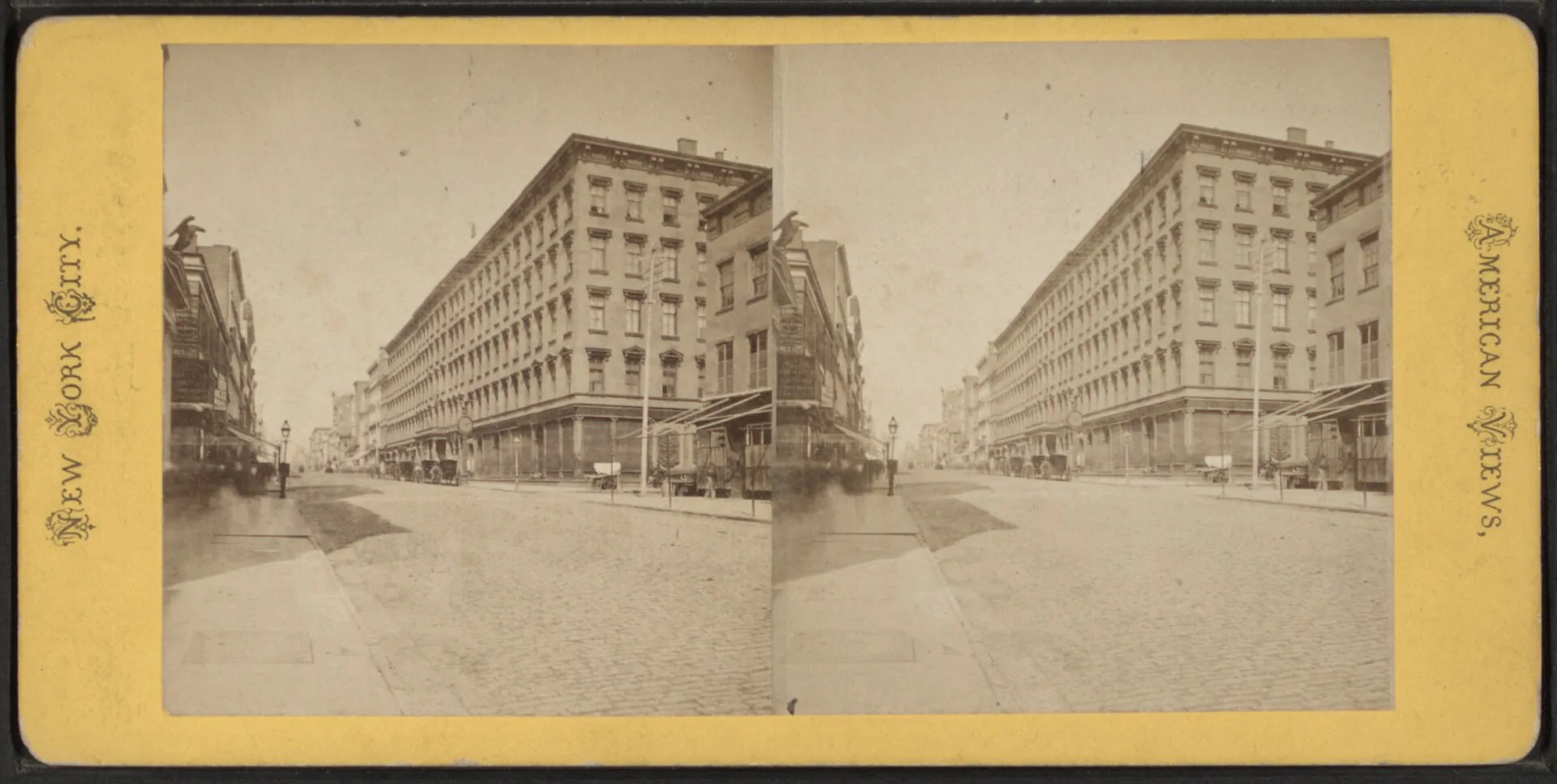
The bars Thomas ran were built on the same idea of spectacle. In 1866 he and George opened a bar on Broadway at Twenty-Second Street that became one of the most popular in the city, known for its etchings and its drinks. In 1872 they moved a few blocks up Broadway to a larger room with billiards, sports betting, bowling, a basement shooting gallery, life-size portraits and a statue of Thomas. By the end of 1876 he had left for a bar downtown across from the Astor House, and his business declined. When he died on 14 December 1885, his flamboyant style was out of fashion, and customers preferred the more reserved William Schmidt.
The nickname that stuck came later: in 1928 the journalist Herbert Asbury called him the Professor. In 1988 Joe Baum, the new operator of the Rainbow Room in New York, told his head bartender Dale DeGroff to build the bar programme from Thomas's book, and DeGroff later rediscovered the method of preheating the whisky so that it would ignite, making the Blue Blazer a signature showpiece. Thomas's influence grew through the twenty-first-century cocktail revival, and in 2003 a celebration at the Plaza Hotel in New York honoured him with cocktails mixed from his book.
PROHIBITION BAR AT MANDARIN ORIENTAL SHENZHEN

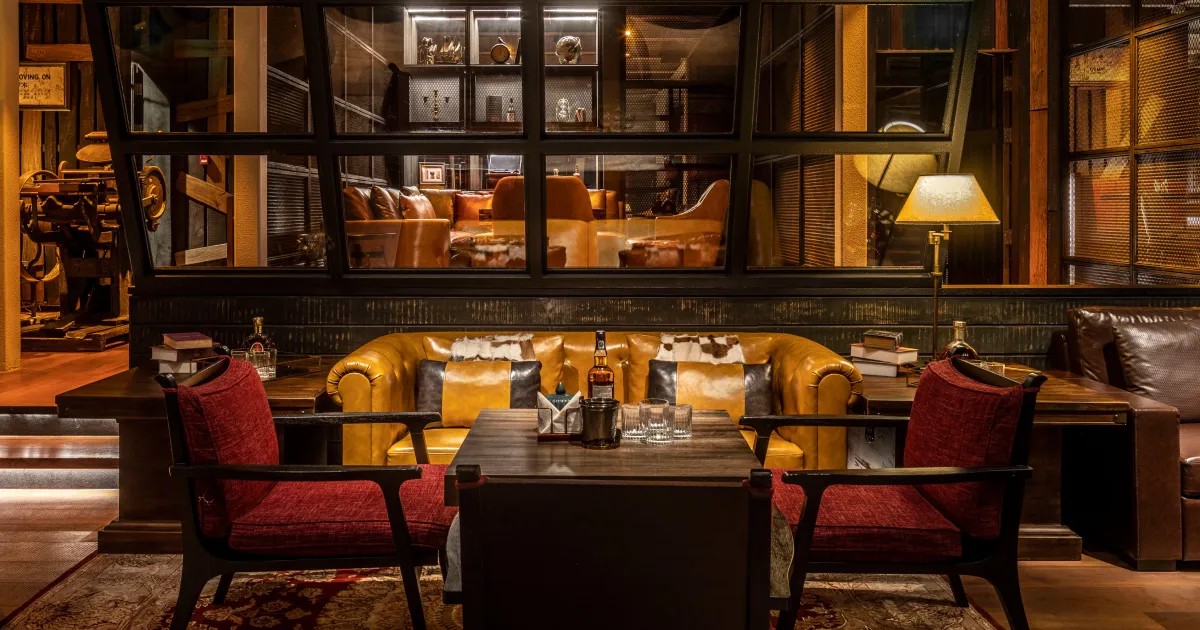
Prohibition Bar is the MO Bar of Mandarin Oriental Shenzhen, on the 79th floor, completed in 2022 and described as a semi-hidden bar that recreates the intrigue of Prohibition. Guests take a separate lift from Level 78 and walk a long corridor to find it. The arrival corridor is a storage-style passage lined with aged, hand-painted liquor adverts, crates of bottles and exposed ductwork. The main bar is built around a long bar top with an integrated DJ booth and a cocktail station, the working counter where the drinks are made. Distressed timber planks and steel beams give the room a warehouse feel. Beyond the bar, a lounge has Chesterfield sofas, iron screens and views over the Shenzhen skyline.
SOURCES
- The Oxford Companion to Spirits & Cocktails Cock-Tail
- The Oxford Companion to Spirits & Cocktails Stoughton's Bitters
- The Oxford Companion to Spirits & Cocktails The Sling
- The Oxford Companion to Spirits & Cocktails The Cobbler
- The Oxford Companion to Spirits & Cocktails Thomas, Jeremiah P. "Jerry"
- The Oxford Companion to Spirits & Cocktails The Blue Blazer
- The Oxford Companion to Spirits & Cocktails Johnson, Harry
- Smithsonian Libraries and Archives How to Mix Drinks
- I LOVE NY, New York State New York State Recognizes World Cocktail Day Honoring Hudson Valley Origins at Klocke Estate