TAMIL MUSLIM TRADERS, PULLED TEA AND ROUND-THE-CLOCK DINING IN MALAYSIA
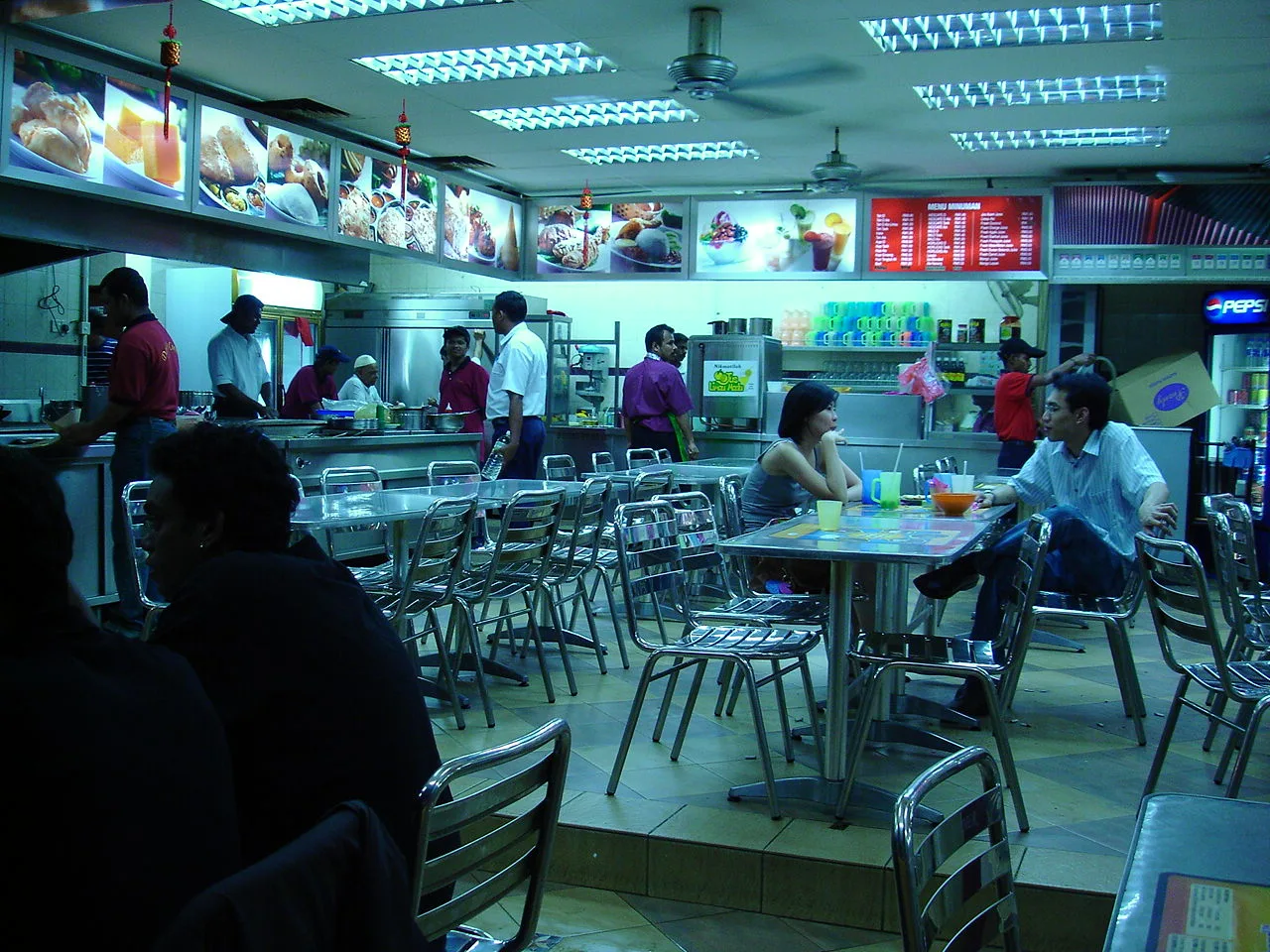
Mamak stalls are the Indian Muslim eateries of Malaysia, known for roti canai, teh tarik, nasi kandar and fried noodles, and many of them stay open through the night. The Malaysian Muslim Restaurant Owners Association (Presma) represents more than 8,000 mamak eatery operators nationwide, including restaurants, cafes and catering businesses, and The Star reported in May 2026 that over half of major mamak restaurants keep extended hours as part of their regular business model. The food traces back to Tamil Muslim merchants from south India, who settled in Penang and opened restaurants around George Town's Kapitan Keling Mosque. Penang's nasi kandar, rice served with mixed curries, is named after the shoulder pole that its first hawkers used to carry rice and curry. Singapore's National Library Board describes the community's fried noodles as a blend of Chinese, Indian, European and Malay flavours.
WHO ARE THE MAMAK? TAMIL MUSLIM TRADERS OF THE COROMANDEL COAST
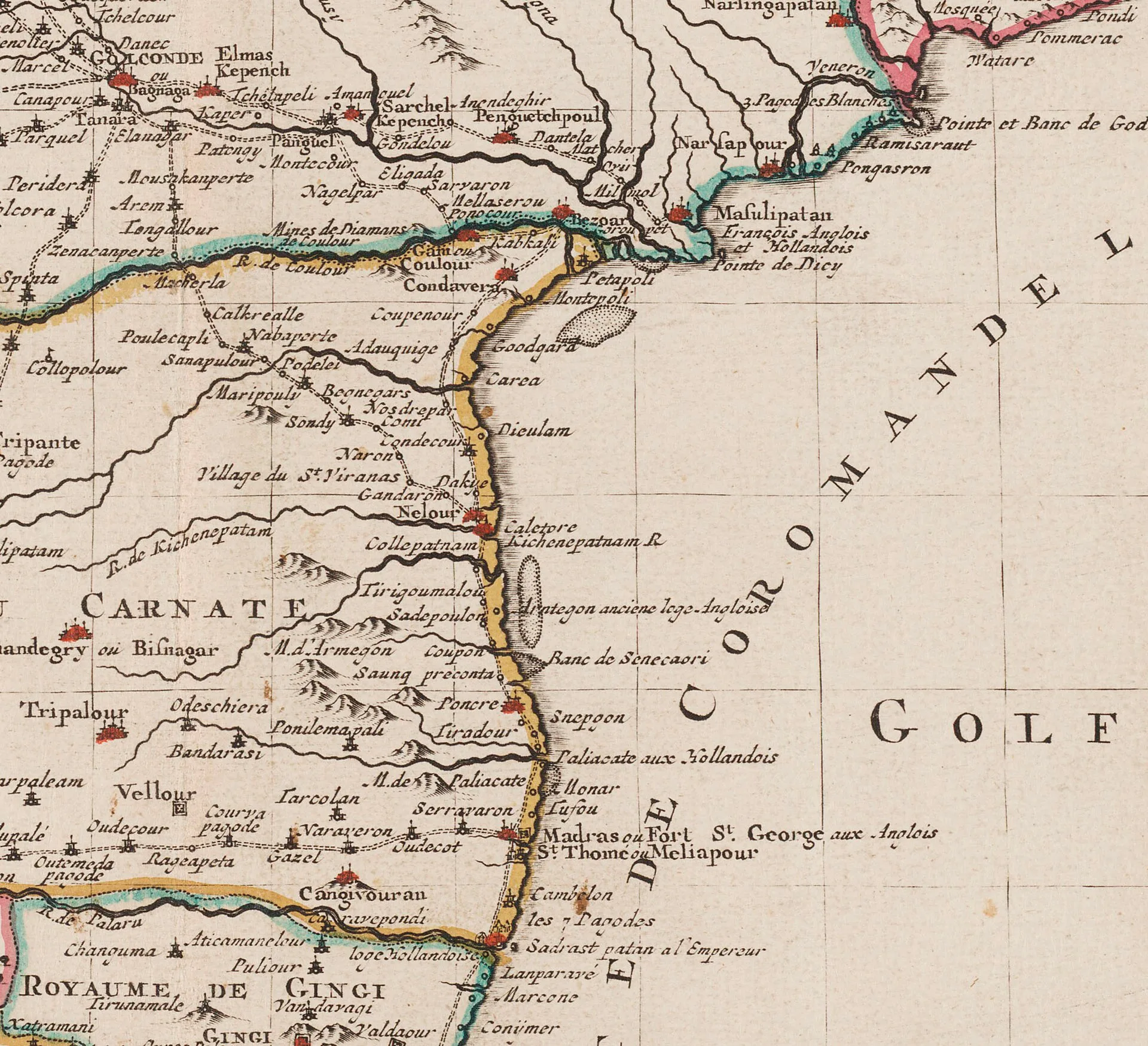
The Tamil Muslim merchants of the Malay Peninsula were known as Chulias. Writing in the New Straits Times in 2016, Aneeta Sundararaj cited a long-held belief that people from the Chola kingdom of south India were referred to as Chulia; the Chola lands, Cholamandalam, were called the Coromandel Coast by Europeans. After the Chola dynasty declined, traders from southern India, who tended to be Tamil Muslim, took over much of the trade of the Straits of Malacca and came to be referred to as Chulias. Pelikat cloth and pepper were among the goods the early traders brought. In time the Chulias married local Malays, and their descendants were known as Jawi Pekan or Jawi Peranakan; the community's performing arts include boria and bangsawan.
The Chulias also published Malay and Tamil literature and newspapers, which flourished until the First World War; one title was Janopakari of 1914, edited by A. Mohamed Abdul Cader. The word mamak, according to Singapore's National Library Board, is a local term for an Indian and can be traced to a Tamil word meaning uncle. In Malaysia it refers to the localised south Indian or Tamil Muslim community, and the eateries the community runs are known as mamak restaurants or stalls. The library's entry on mee goreng, the community's fried noodles, notes that the dish remains strongly associated with the Indian Muslim community, although it is sometimes classed as Malay food. In Malaysia the dish is called mamak mee goreng, after the community that cooks it.
THE CHULIA COMMUNITY IN GEORGE TOWN, PENANG
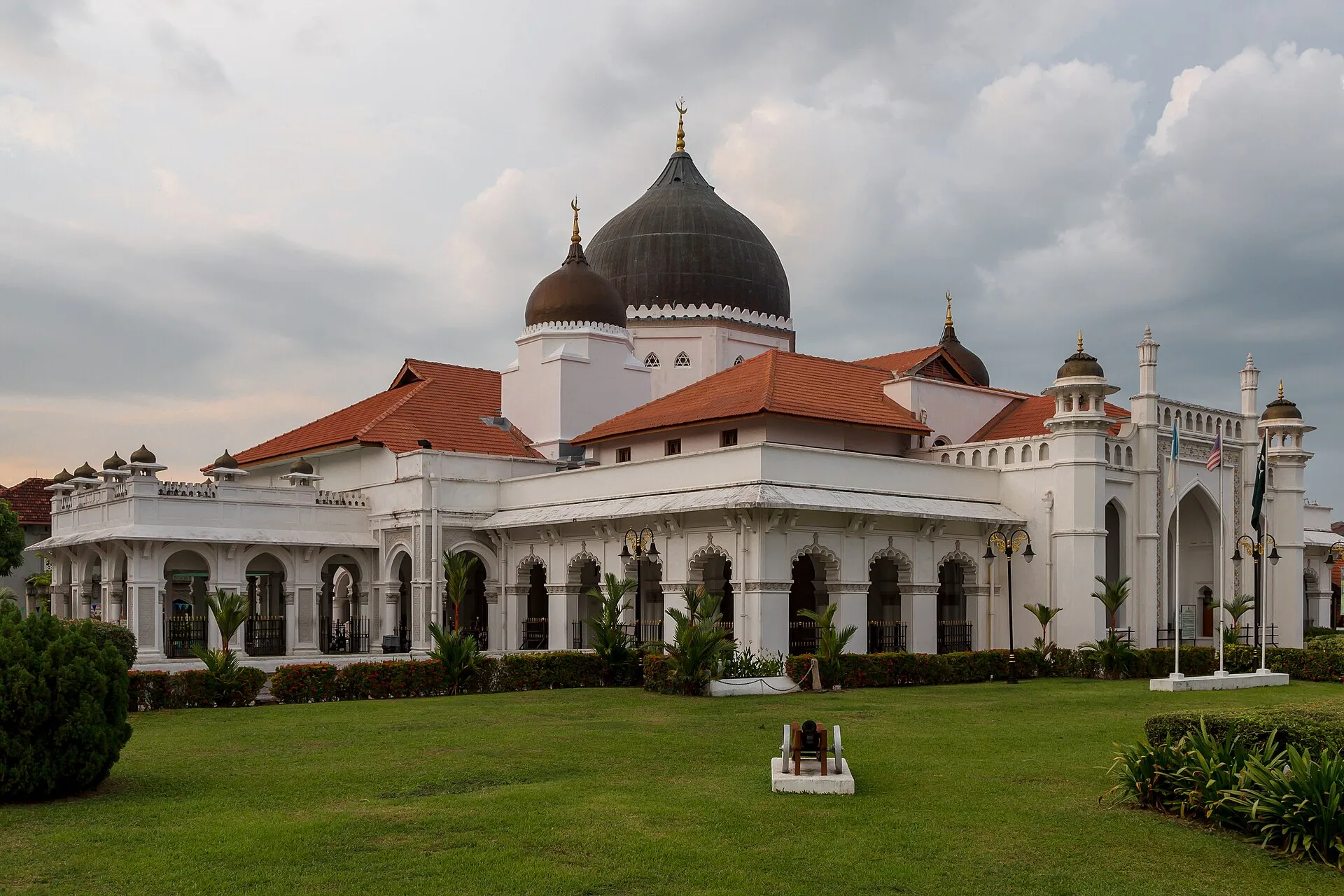
In Penang, the community's centre was the Kapitan Keling Mosque in George Town. Citing the Penang State Museum and Gallery, The Star reported in October 2026 that the mosque was commissioned in 1801 by the south Indian trader Cauder Mohudeen Maicar. It first served Indian Muslims who worked as traders and labourers for the East India Company, and it was enlarged in the 1930s to its current Moorish form, with a main central dome flanked by two smaller domes. The road it stands on, Jalan Masjid Kapitan Keling, is named after it, and the mosque shaped the layout of what is now Little India.
The mosque drew Indian Muslim traders to settle nearby, and they opened money-changing businesses, restaurants, and gold and spice shops. The Kelly Map of 1893 marks it as Musjid at the corner of Buckingham Street and Pitt Street, surrounded by endowed waqf properties that at their height covered some 18 acres, or seven hectares. By the 19th century the Chulias had also endowed Sufi shrines, burial grounds, a water tank and schools. Sundararaj recalls that in the 1970s and 1980s a day in the area meant visits to money-changers and pharmacies, sari shopping on Market Street, the jewellers of Pitt Street and a Chulia Street sundry shop selling ghee, dhal, red onions, shallots, pepper and other spices imported from India.
WHAT IS NASI KANDAR AND WHERE DID IT COME FROM?
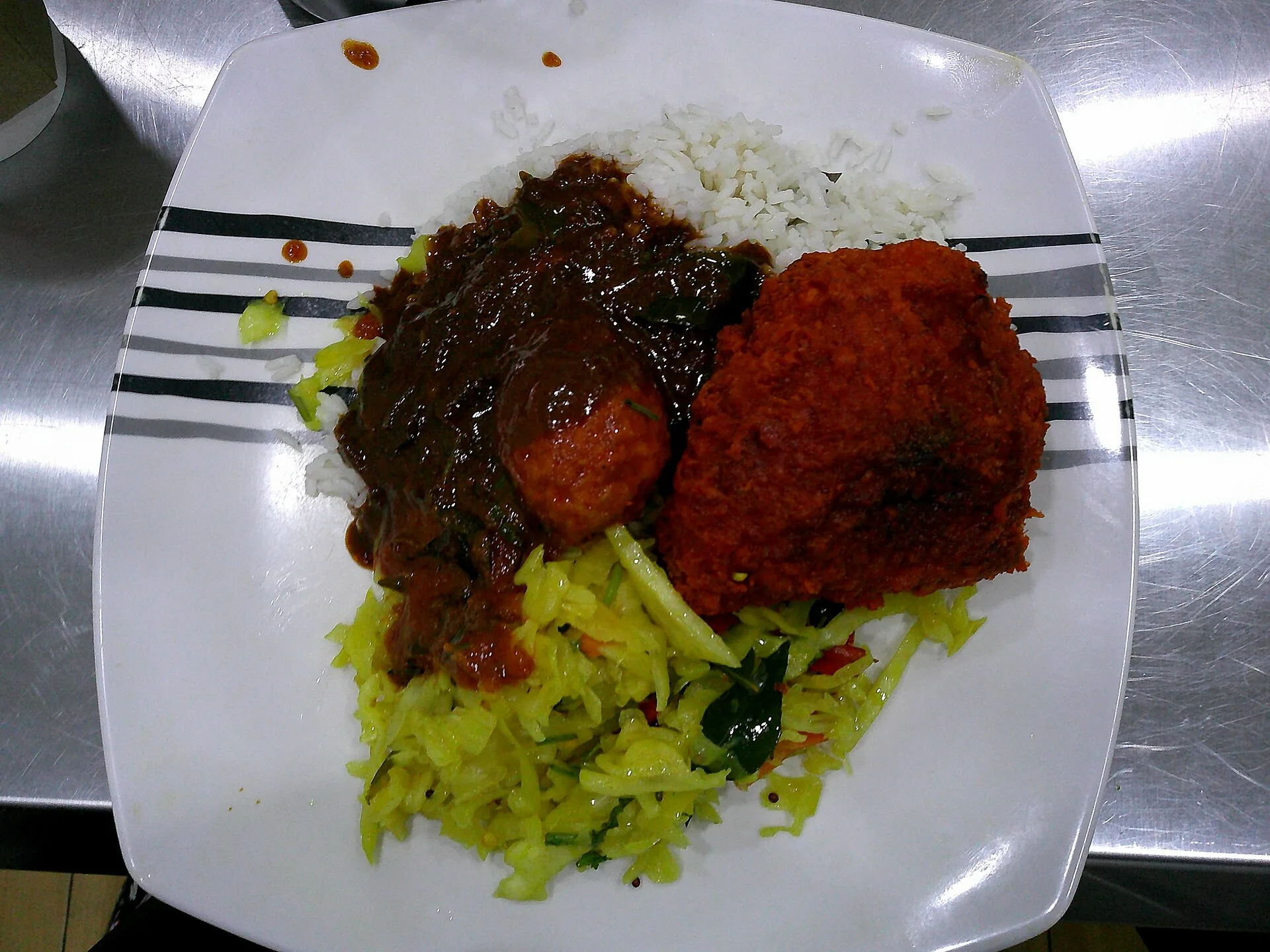
Nasi kandar is steamed rice served with a choice of curries and side dishes. According to Malaysia's National Department for Culture and Arts (JKKN), the name comes from hawkers who carried a long wooden pole, the kandar, across their shoulders, with containers of rice and dishes hanging from both ends. The load was carried by two traders, one in front and one behind, and the rice sat in a wooden container about three feet high. Malay Mail reported in 2015 that the name is believed to combine nasi, rice, with kandar, balance.
JKKN records that the meal began as a breakfast for manual labourers before work, and relays a story that workers at the Weld Quay port in Penang ate it as a quick daily meal. Some vendors later sold it from bicycles and three-wheeled motorcycles until local authorities provided shops. The curries use ground spices, chilli and curry leaves, with cinnamon bark, cardamom, cloves and fennel seeds, red onions and garlic, and chicken, beef, fish or eggs. JKKN states that the original recipe contains no coconut milk, which can be added later.
Malay Mail notes that curry recipes were traditionally passed from father to son. The rice is served banjir, flooded with a medley of curries poured over the plate. Typical dishes include ayam ros, a spicy reddish chicken curry, fried chicken, fish curry, crab curry, cubed beef, minced mutton and onion omelette, with okra in fish curry and cabbage stir-fried with turmeric. Penang's Indian Muslim style is darker, thicker and spicier, while the Malay style is less spicy, with hints of turmeric.
PENANG'S NASI KANDAR RESTAURANTS AND ROTI CANAI SHOPS
A 2012 directory of traditional trades in the George Town World Heritage Site records the founding dates of several nasi kandar restaurants. The earliest is Hameediyah on Lebuh Campbell, founded in 1907 and listed under the name Hameediyah Tandoori House. Nasi Kandar Beratur at Nos. 96 and 98 Jalan Masjid Kapitan Keling dates from 1943, Restoran Ramzan on Lebuh Ah Quee from 1947, serving duck curry and chapati, and Nasi Kandar Merlin on Lebuh Penang from 1977. The directory recommends businesses founded in 1962 or earlier for inclusion.
The same directory lists two roti canai shops. Kedai Kopi Haja Alavudin Bin Ismail, beside No. 113 Jalan Masjid Kapitan Keling, was founded in 1928, and Restoran Roti Canai Jalan Argyll, at No. 23 Jalan Argyll, in 1955. Malay Mail's 2015 guide to Penang nasi kandar named ten outlets, among them Nasi Kandar Imigresen on Jalan Masjid Kapitan Keling, Tajuddin Hussain on Queen Street, Nasi Kandar Deen Maju on Jalan Gurdwara and Hameediyah on Campbell Street. Opening hours varied: Nasi Kandar Kampung Melayu served from 7am to noon, while Nasi Kandar UOB in Butterworth opened from 5pm to 11pm.
HOW IS ROTI CANAI MADE? FLATBREAD, FILLINGS AND MEE GORENG MAMAK
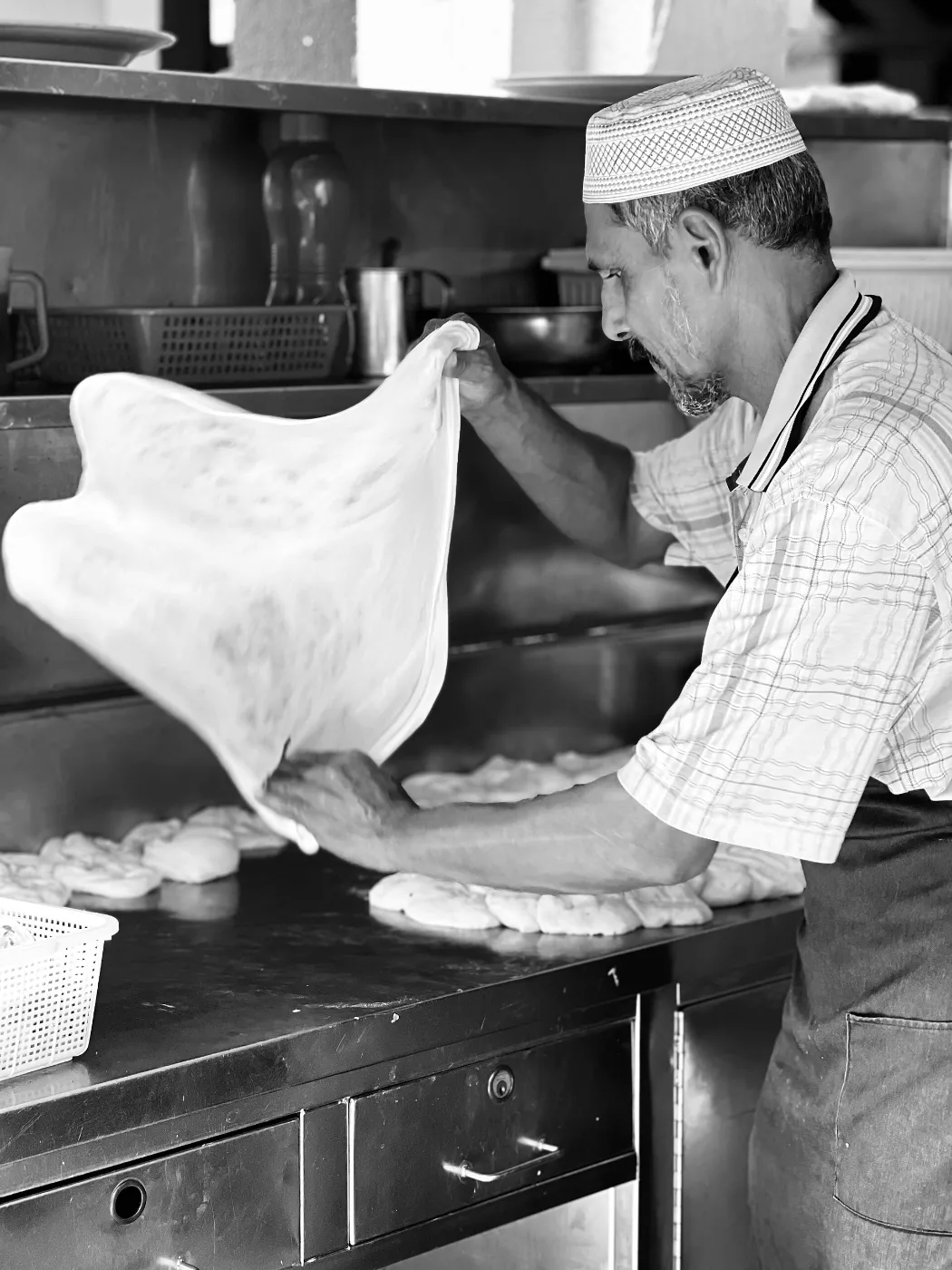
Roti canai is the griddle flatbread of the mamak menu. Singapore's National Library Board describes the closely related roti prata, or paratha, as a bread indigenous to India, sold mostly by Indian Muslim stallholders and eaten mainly at breakfast with mutton or dhal curry. Flour, ghee or margarine and salt are mixed with water into a stiff dough, kneaded and rested for at least five hours or overnight. The cook greases the table and his hands with oil, then whirls the dough until it is paper thin and four to five times its original size. It is folded into a rectangle or disc and fried on a greased griddle until dark brown blisters appear.
Egg versions have an egg added, and a filled version, spelt muruthapa in the library's entry, adds minced meat, eggs and onions. For mee goreng mamak, the National Library Board records that some sources credit the Muslim Chulias of Madras with popularising the dish, and that the earliest known outlet, Bangkok Lane Mee Goreng in Penang, began on a push-cart in the early 20th century. Chinese-derived yellow egg noodles are fried with Indian spices, mutton or chicken, onions, potatoes, peas, cabbage, bean sprouts, beancurd and egg. Tomato ketchup adds colour and sweetness, and the Penang version is thoroughly red.
WHAT IS TEH TARIK AND HOW IS IT PULLED?
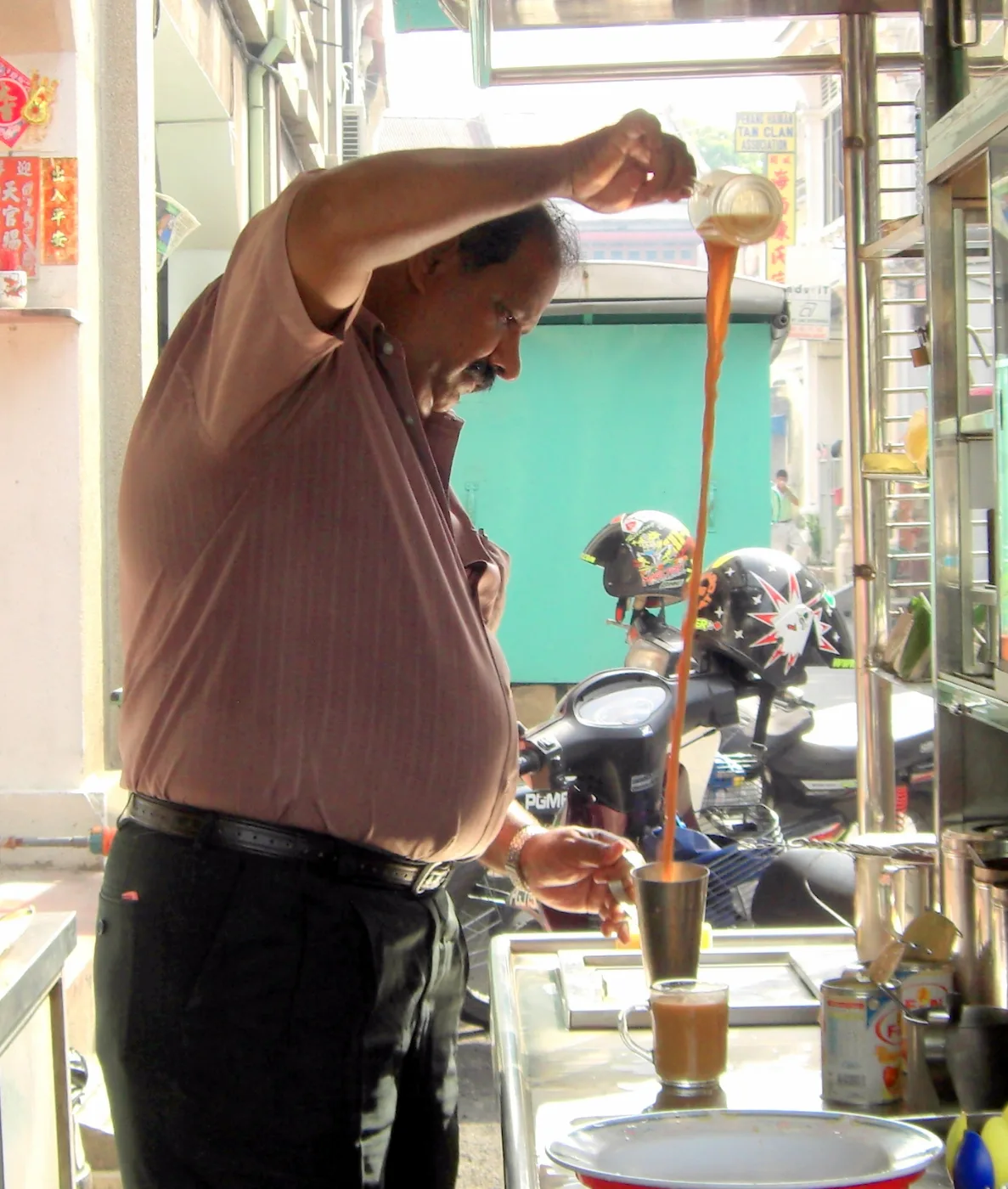
Teh tarik means pulled tea in Malay. Singapore's National Library Board traces it to Indian Muslim immigrants in the Malay Peninsula who set up sarabat, or drink, stalls at the entrances of rubber plantations after the Second World War. Sarabat stalls remain common at Malaysian factories and construction sites, while in Singapore they were moved into hawker centres in the 1970s. Water was traditionally boiled in aluminium pots over an open flame. The library entry credits part of the drink's revival to the rise of 24-hour Indian Muslim eateries selling it with roti prata.
Evaporated and condensed milk are added to boiling water and the tea is strained into a tin mug. It is then poured from about a metre high into a second mug, and the process is repeated until a froth forms; the tea should preferably be pulled longer than an arm's length. Tea dust is preferred over leaves for its stronger flavour and orange colour, and Sri Lankan tea dust is regarded as producing the best brew. Some stalls blend up to six types of tea. Cardamom, cloves or ginger may be added, and teh halia, made with ginger juice and condensed milk, is usually pulled as well.
WHY ARE MAMAK RESTAURANTS OPEN 24 HOURS? FOOTBALL AFTER MIDNIGHT
Many mamak outlets, mainly in urban areas, operate round the clock or until late at night, and Presma told The Star that watching football at mamak restaurants has become part of Malaysian culture. Ahead of the 2026 FIFA World Cup, held from 11 June to 19 July in the United States, Mexico and Canada with 48 teams, some outlets upgraded to larger LED screens and projector systems. Others improved sound systems, added tables and chairs and prepared outdoor viewing areas. Outlets that usually close around midnight planned to stay open until early morning for knockout matches.
In July 2026 Presma president Datuk Mohammed Mosin Abdul Razak told the New Straits Times that members had recorded a 20 to 30 per cent increase in sales compared with normal days, with patrons typically staying two to three hours. Crowds peaked for 1am kick-offs, followed by 3am, and customers arrived about 30 minutes before kick-off and stayed until the final whistle. Teh tarik, coffee, roti canai and murtabak were among the most popular orders. Mohd Nazri Ahmad, director of GM Nasi Kandar, said that in World Cup years “24-hour mamak restaurants become the preferred venue”.
HYATT CENTRIC CITY CENTRE KUALA LUMPUR IN MALAYSIA

The mamak trade traced above began with Chulia merchants in George Town, where the Kapitan Keling Mosque was commissioned in 1801 and Hameediyah's nasi kandar restaurant was founded in 1907, and Presma, the Malaysian Muslim Restaurant Owners Association, now represents more than 8,000 mamak eatery operators across Malaysia. Kuala Lumpur is one of the four areas, with Selangor, Johor Baru and Penang, where The Star reported that mamak operators planned to add staff and extend kitchen hours for the 2026 World Cup.
In the city, Hyatt Centric City Centre Kuala Lumpur was completed in 2024. The hotel occupies a repurposed 22-storey building, and Silverfox designed the whole tower. Its design has three influences: graffiti, batik and tin mining, the industry described in a separate history of tin mining in Kuala Lumpur. Batik, the wax-resist dyed textile covered in a separate article on Malaysian batik, informs the interiors' pattern, print and colour, as well as their layered finishes. Underfoot, leaf-patterned carpets and hand-tufted rugs evoke reflected water.
SOURCES
- New Straits Times The Chulias of Penang
- The Star George Town’s harmonious revival
- National Department for Culture and Arts (JKKN), Malaysia Nasi Kandar, Arts and Culture Information Gateway
- Malay Mail Nothing hits the spot quite like Penang nasi kandar
- George Town World Heritage Incorporated Directory of Traditional Trades and Occupations in George Town World Heritage Site (2012)
- National Library Board Singapore Roti prata
- National Library Board Singapore Mee goreng
- National Library Board Singapore Teh tarik
- The Star Eateries get ‘stadium’ ready
- New Straits Times World Cup fever lifts mamak restaurant sales by up to 30pct