A WAX-RESIST CRAFT SHARED ACROSS SOUTHEAST ASIA THAT MALAYSIA'S EAST COAST MADE ITS OWN

Batik is a method of decorating cloth in which hot wax is applied to the fabric so that the covered areas resist dye. The technique was practised across Southeast Asia and is most closely associated with Java, where UNESCO inscribed Indonesian batik on its Representative List of the Intangible Cultural Heritage of Humanity in 2009. Malaysian batik grew out of trade with Java but has its own history, centred on the east coast states of Kelantan and Terengganu, where small workshops began producing batik in the early 20th century. East coast makers learnt the copper wax block from Javanese batik makers and developed a repertoire of plant, geometric and cosmic motifs. Official support for the craft dates from 1950, and it is now a national textile: federal civil servants must wear Malaysian batik on Thursdays, and 3 December has been Malaysia Batik Day since 2021.
WHAT IS BATIK? HOW WAX-RESIST DYEING WORKS
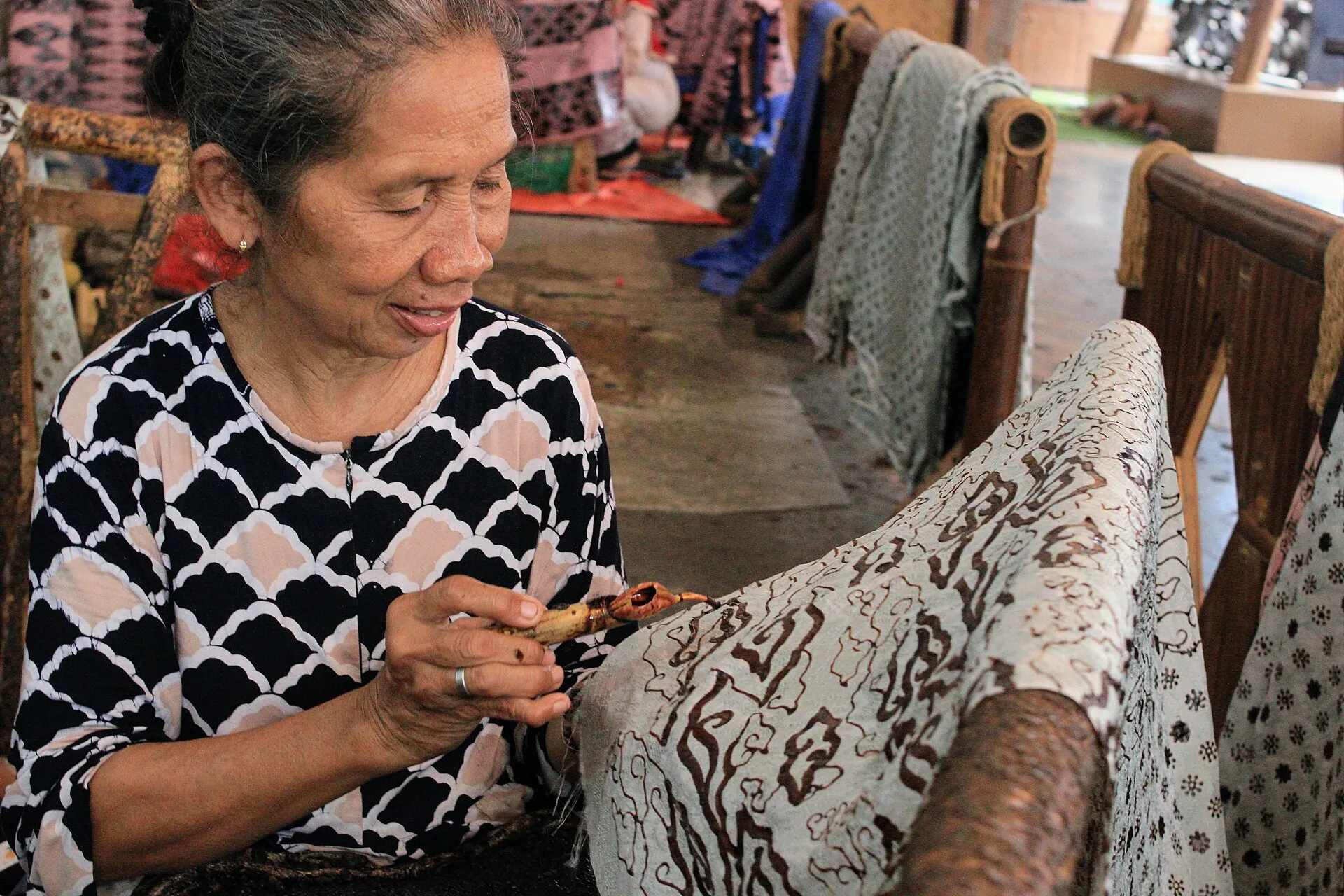
Batik is a resist technique. The maker applies melted wax to the parts of the cloth that should keep their existing colour, then dyes the fabric, and the wax stops the dye from reaching the fibres beneath it. UNESCO's description of Indonesian batik sets out the full cycle: designs are drawn in dots and lines of hot wax on cotton or silk, the cloth is soaked in one colour, the wax is removed with boiling water, and the process is repeated for each additional colour. A multicoloured cloth is therefore built up in layers, with new wax applied before each dyeing.
Britannica notes that the origins of batik are unknown and that it was widely practised across Southeast Asia with local variations: on Celebes (Sulawesi), for example, wax was applied with strips of bamboo. It is used mainly on cotton, and the traditional colours were blue, brown and red. The Dutch later imported both the cloth and the technique to Europe, and machines now apply wax in traditional Javanese patterns, reproducing effects of the hand process such as the staining caused by cracks in the wax. A 2023 paper in Design Ideals, a journal of the International Islamic University Malaysia, gives indigo, brown and white as traditional batik colours, noting that a deep brown called sogan gives its name to batik sogan.
HOW BATIK IS MADE: THE CANTING AND THE COPPER BLOCK
Hand-drawn batik depends on the canting, a pen-like tool with a small copper bowl that holds hot wax and one or more spouts through which the wax is drawn onto the cloth. Tools with several spouts allow more intricate designs. Britannica dates the use of a small copper crucible with a handle and narrow spout in Java to the mid-18th century, and credits it with allowing much more elaborate patterns. Cloth decorated by hand in this way is known as batik tulis, and Singapore's National Heritage Board, describing a Javanese canting in its collection, notes that this work was done almost exclusively by women.
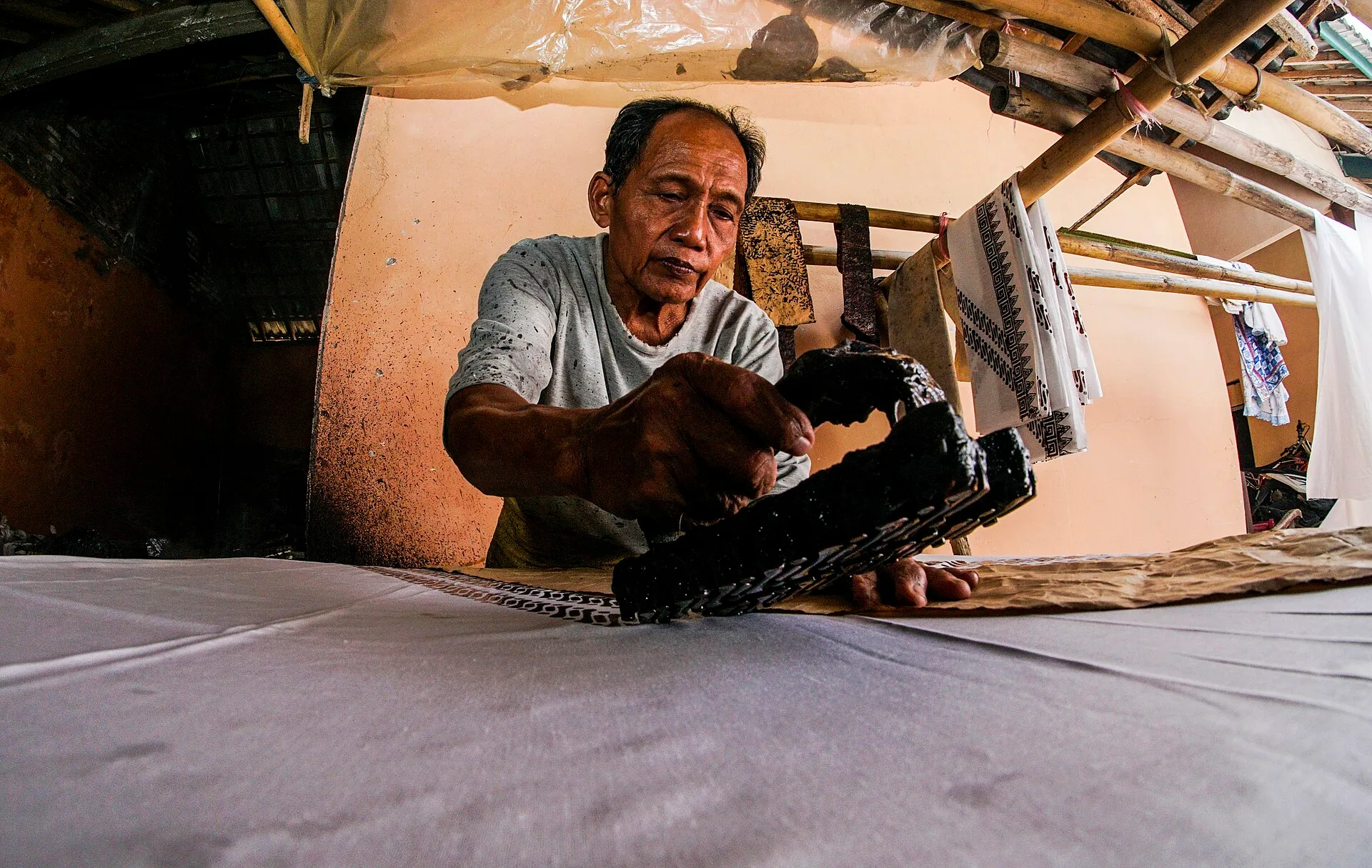
The second method stamps wax onto the cloth. Britannica records that a wood-block wax applicator was introduced in Java in the 19th century. In the Malay states the stamp is usually metal: a 2023 study of Kuala Terengganu block batik describes copper blocks and wax, with copper or iron blocks used for finer detail, and the National Heritage Board notes that waxing with copper stamps was dominated by men. According to the same study, Indonesian batik makers introduced block batik, hand-drawn batik and silkscreen printing to entrepreneurs on the east coast. The Terengganu sarongs it examines are cotton lengths about 1.8 metres long and 1.07 to 1.12 metres wide, folded and sewn into a sarong.
WHERE DOES MALAYSIAN BATIK COME FROM? KELANTAN AND TERENGGANU
Batik was traded across Southeast Asia from the 15th century, and Javanese coastal batik was imported into Malaya into the 19th century, according to the batik timeline published by ILHAM Gallery in Kuala Lumpur. Local production came later. ILHAM records that Haji Ishak bin Haji Che Su started a batik workshop in Kota Bharu, Kelantan, in 1911, and that Malay and British officers founded an Arts and Craft Association in Kelantan in 1930. The Terengganu block batik study dates the start of batik production in Malaya to the 1920s, mainly on a small scale in Kelantan and Terengganu.
In Terengganu, the same study records that the copper block and wax method arrived in 1936, when Haji Ali bin Ismail learnt it from Javanese makers in Singapore and brought it home. He founded the first batik business in Kampung Hiliran, Kuala Terengganu, which grew into the largest in the state. Other early businesses were run by Awang in Kampung Seberang Takir and Haji Mat in Kampung Ladang, and batik companies later operated in Kuala Ibai, Bukit Bayah, Pasir Panjang, Cendering, Pulau Rusa, Beladau and Marang.
The craft then became a matter of public policy. In 1950 the authorities in Terengganu and Kelantan raised import duties on foreign sarongs to protect local producers. From 1960 RIDA, the Rural Industrial Development Authority, began setting up rural batik factories, and in 1966 MARA replaced it as the main agency supporting the batik cottage industry. The Malaysian Handicraft Board was established in May 1973. In 1974, after Kelantan's traditional makers complained about factory-made imitation batik, the board restricted batik production to Bumiputera makers and helped export their work. It was replaced in October 1979 by Perbadanan Kemajuan Kraftangan Malaysia, the Malaysia Handicraft Development Corporation.
MALAYSIAN BATIK MOTIFS: FLOWERS, LEAVES AND GEOMETRY
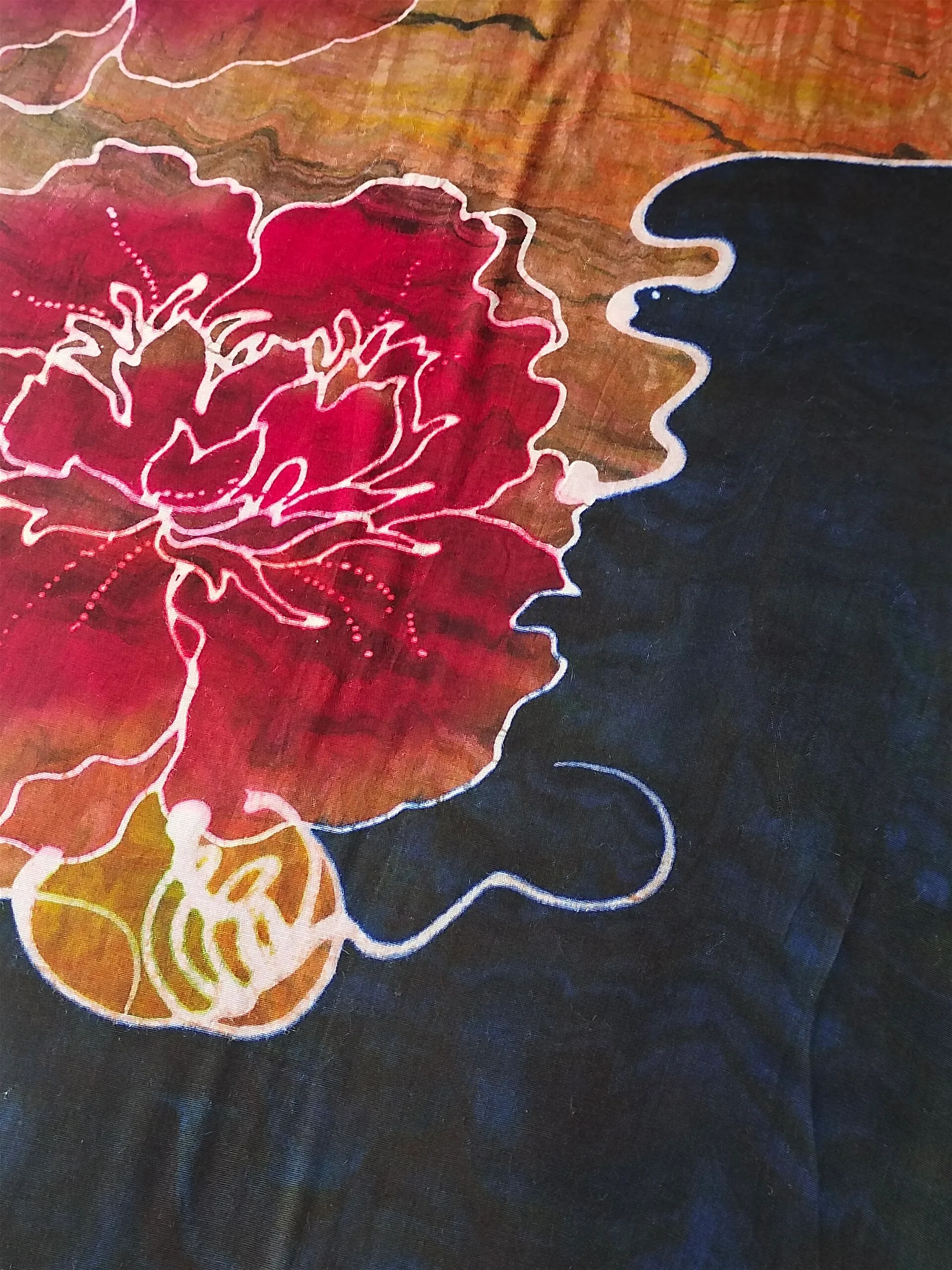
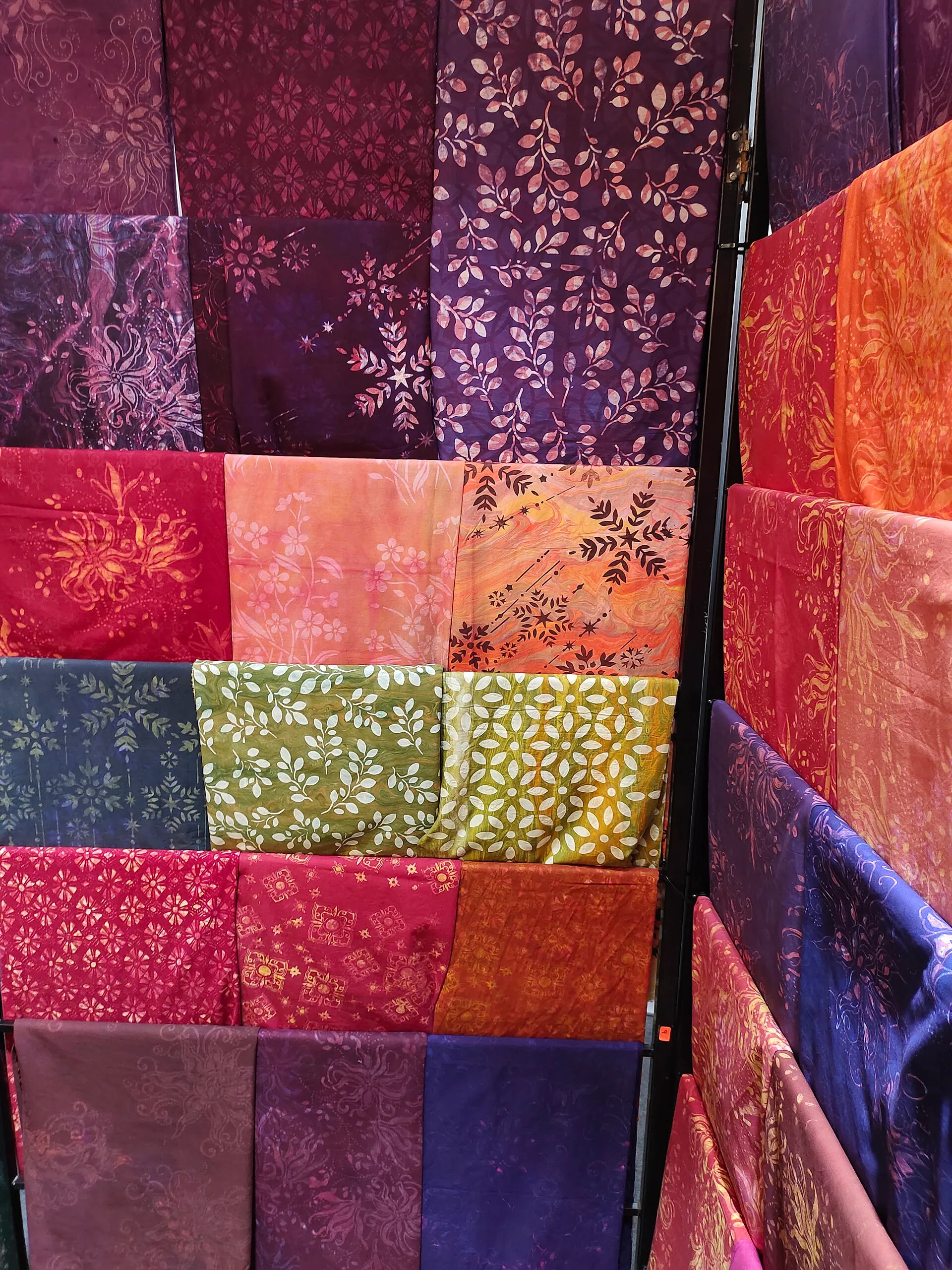
The Design Ideals paper groups traditional Malay batik motifs into five types. Flora include flowers such as jasmine and hibiscus, pucuk rebung (bamboo shoots), pucuk paku (fern shoots) and irisan (serrated leaves). Fauna include birds and other animals. Geometric patterns include triangles, diamonds and squares, the keris and tumpal motifs and ikat patterns. Random or organic designs include bersurai, scattered flowers, and gelombang, waves. A final group covers symbols, wayang kulit shadow puppets and the wau bulan kite. The paper itself assesses neo-traditional designs by young designers, which it notes do not necessarily use wax and dye.
The Kuala Terengganu study grouped the motifs on its sarongs into flora, geometric patterns and cosmic themes, arranged within the traditional sarong structure of head, border, body and edge. The researchers compared eight sarong cloths from two Terengganu companies, Mokhtar and Ibrahim, printed in two to five layers of block batik. Both companies used flowers, leaves, twigs, stems and buds. Mokhtar's five-layer sarong borrows decorative structures from the Pekalongan batik of Java, with a yam leaf flower motif on the head and body. Ibrahim's sarongs repeat a single flower motif inside a bamboo shoot frame across most of the design. Early sarongs were blocked first with black flowers and then with yellow.
HOW IS MALAYSIAN BATIK DIFFERENT FROM INDONESIAN BATIK?
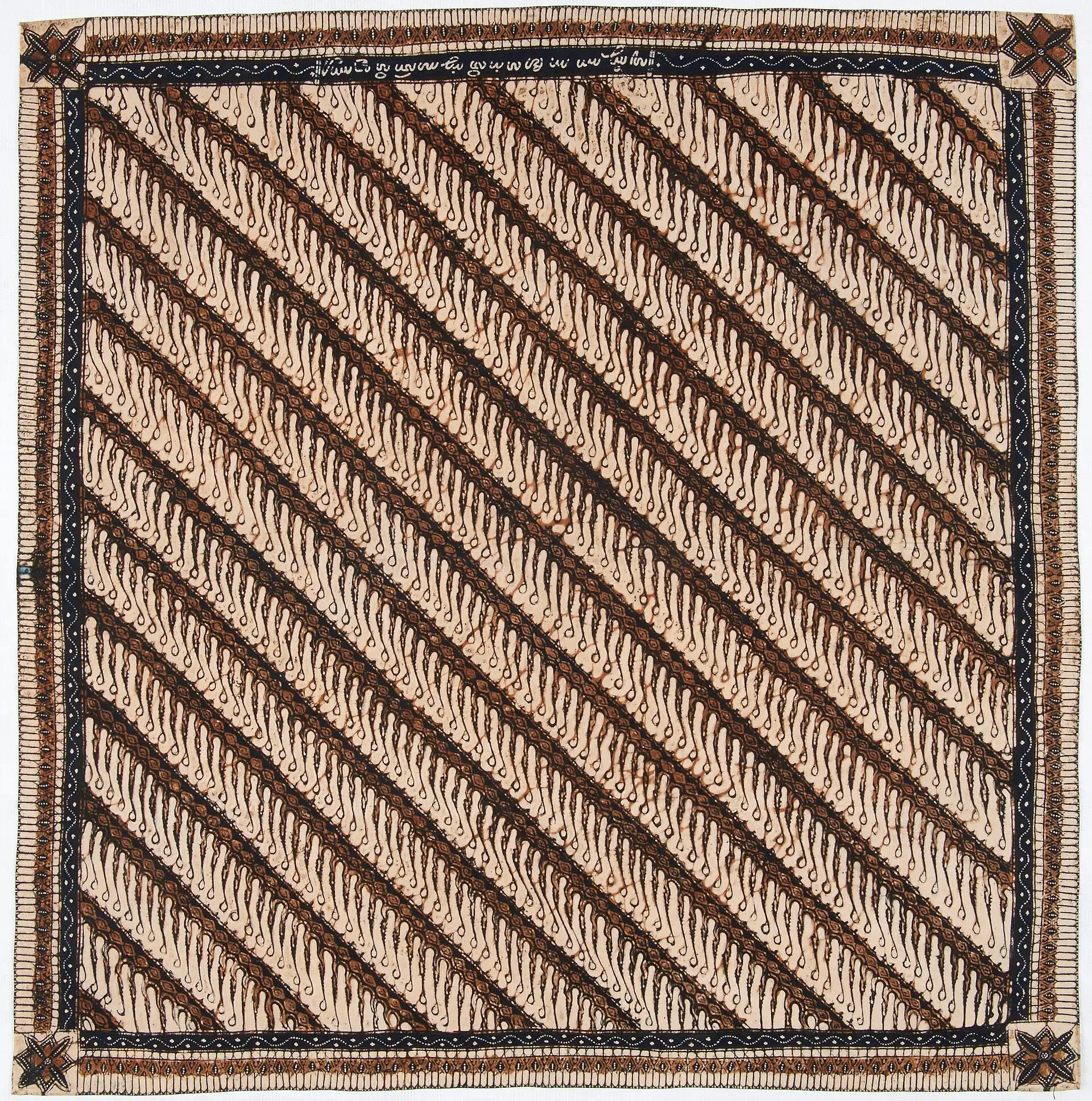
The two traditions share a technique and a long history of exchange. UNESCO records that the colours and designs of Indonesian batik carry symbolic meanings: infants are carried in batik slings decorated with symbols intended to bring luck, and the dead are wrapped in funerary batik. Its motifs draw on sources ranging from Arabic calligraphy and European bouquets to Chinese phoenixes, Japanese cherry blossoms and Indian or Persian peacocks. UNESCO inscribed Indonesian batik on the Representative List at the fourth session of its Intergovernmental Committee in 2009.
Research on Malaysian batik identifies the differences in specific pieces rather than in a general rule. In the Terengganu study, Mokhtar's five-layer sarong follows a Javanese layout but leaves out the fauna motifs common in Javanese batik. The Design Ideals paper notes that some designers have produced motifs that are not permissible in Islam, such as explicit animal figures, and argues that new designs should remain shariah-compliant without displacing traditional patterns. A 2020 UiTM doctoral thesis by Rabiatuadawiyah Mohd Kari, based on 421 block batik motifs from Kelantan and Terengganu, starts from the position that Malaysian block batik has a weaker identity than Indonesian block batik and sets out to produce design guidelines based on Malaysian identity.
BATIK AS NATIONAL DRESS AND MALAYSIA BATIK DAY
Batik's role as Malaysian dress grew out of these promotion efforts. In 1967, concern about competition from cheaper imports led to efforts to promote local batik, including overseas marketing, and in February 1968 the member of parliament Wan Kadir Ismail proposed in the Dewan Rakyat that batik become a uniform for government officers. Some departments began a weekly batik day. Batik also developed as a fine art. Chuah Thean Teng held his first solo batik painting exhibition at the Penang Library in September 1955, and his 1956 exhibition at the British Council Hall in Singapore presented batik painting as a fine art form. The National Art Gallery of Malaysia showed 125 of his paintings in February 1965, and batik painting was one of five prize categories at the first Salon Malaysia art competition in 1968.
Batik has been worn in the civil service since 1985. A Public Service Department circular dated 21 August 2023 made it compulsory for federal civil servants to wear Malaysian batik on Thursdays, with exemptions for officers issued with uniforms and those attending ceremonies with set dress codes, replacing a 2021 circular that had only encouraged it. The department said the aim was to support the industry and keep batik a heritage and symbol of Malaysian identity. On 1 December 2021 the then Prime Minister, Ismail Sabri Yaakob, declared 3 December Malaysia Batik Day, a date agreed by the Cabinet on 26 November. It honours Tun Endon Mahmood, wife of former Prime Minister Abdullah Ahmad Badawi, who launched the Malaysian Batik: Crafted for the World movement on 3 December 2003. The Piala Seri Endon batik prize was established the same year.
BATIK AT HYATT CENTRIC CITY CENTRE KUALA LUMPUR

Hyatt Centric City Centre Kuala Lumpur, completed in 2024, occupies a repurposed 22-storey building, and Silverfox Studios designed the whole hotel tower. The design draws on three local influences: graffiti art, batik and tin mining. Batik informs the pattern, print, colour and layered surface finishes used through the hotel. Floors carry leaf-patterned carpets, and hand-tufted rugs evoke reflected water.
SOURCES
- UNESCO Intangible Cultural Heritage Indonesian Batik
- Britannica Batik
- Roots, National Heritage Board Singapore Canting
- ILHAM Gallery Love Me in My Batik: Batik Timeline
- Environment-Behaviour Proceedings Journal A Comparison of the Motifs on Kuala Terengganu Block Batik Sarong
- Design Ideals Journal, International Islamic University Malaysia Narrative Appraisal of Malaysian Neo-Traditional Batik Design Produced by Young Designers
- UiTM Institutional Repository Preserving the motif identity of Malaysian local block batik
- Malay Mail PM Ismail Sabri declares Dec 3 as Malaysia Batik Day
- Malay Mail PSD: Civil servants required to wear Malaysian batik on Thursdays