HOW THE WHITE STONE OF THE APUAN ALPS WAS FORMED, QUARRIED AND CARVED, FROM ROMAN LUNA TO MICHELANGELO
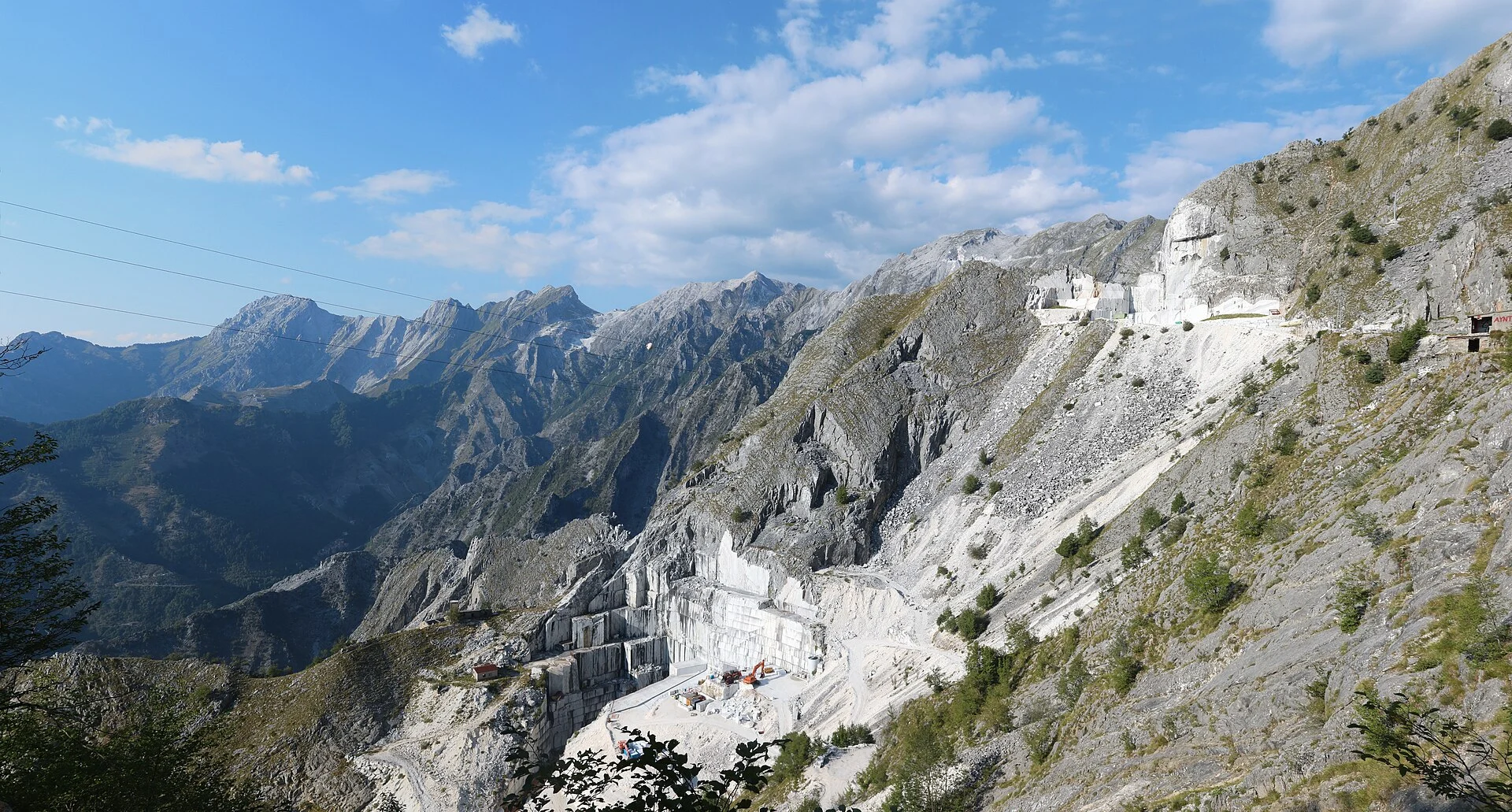
Carrara marble is a white metamorphic stone quarried in the Apuan Alps above the town of Carrara in northern Tuscany. It began as limestone laid down in the Late Triassic and early Jurassic, which was buried and recrystallised after about 27 million years ago. The Romans reached the quarries in the 1st century BC and shipped the stone through the colony of Luna; Trajan's Column is made entirely of it. Michelangelo chose the block for his Pietà here in 1497, and the David was carved from a block cut at Fantiscritti in 1465. Today about 90 quarries in three basins, Torano, Fantiscritti and Colonnata, produce around 1.5 million tonnes of blocks a year.
WHAT IS CARRARA MARBLE AND HOW DID IT FORM?
Britannica defines Carrara marble as a white statuary marble and a recrystallised form of limestone, prized by sculptors from Michelangelo to Henry Moore for its purity and fine grain. Limestone forms from the calcite-rich shells of marine organisms. NASA's Earth Observatory explains that heat and the pressure of burial under thick layers of rock turn it into marble, and that the purest limestone produces white marble like Carrara's, while impurities such as clay or iron oxide produce darker stone. Mark Barron of the British Geological Survey, writing in the Mercian Geologist in 2018, gives typical temperatures for the change as 300 to 450°C.
In the Apuan Alps, carbonate platforms hundreds of metres thick were deposited on Palaeozoic rocks in the Late Triassic and early Jurassic. Around 27 million years ago a thick sheet of rock known as the Tuscan Nappe slid over them, burying them deeply enough to turn them into marble. These rocks are now exposed in a window of roughly 300 square kilometres, at least half of it marble. The succession is more than 1,000 metres thick, which Barron estimates as several hundred cubic kilometres of stone.
Carrara itself lies on the Carrione river in the foothills of the range, about six kilometres inland from the Ligurian Sea at roughly 85 metres above sea level. Marina di Carrara on the coast has port facilities for handling the stone. The name covers more than the town's own hills: according to the stone consultant Piero Primavori, in a 2014 paper nominating the stone as a Global Heritage Stone Resource, "Carrara Marble" is a commercial term for over 200 varieties from five areas of the Apuan Alps, Lunigiana, Garfagnana, Versilia, Massa and Carrara itself.
ROMAN LUNA AND THE FIRST CARRARA MARBLE TRADE
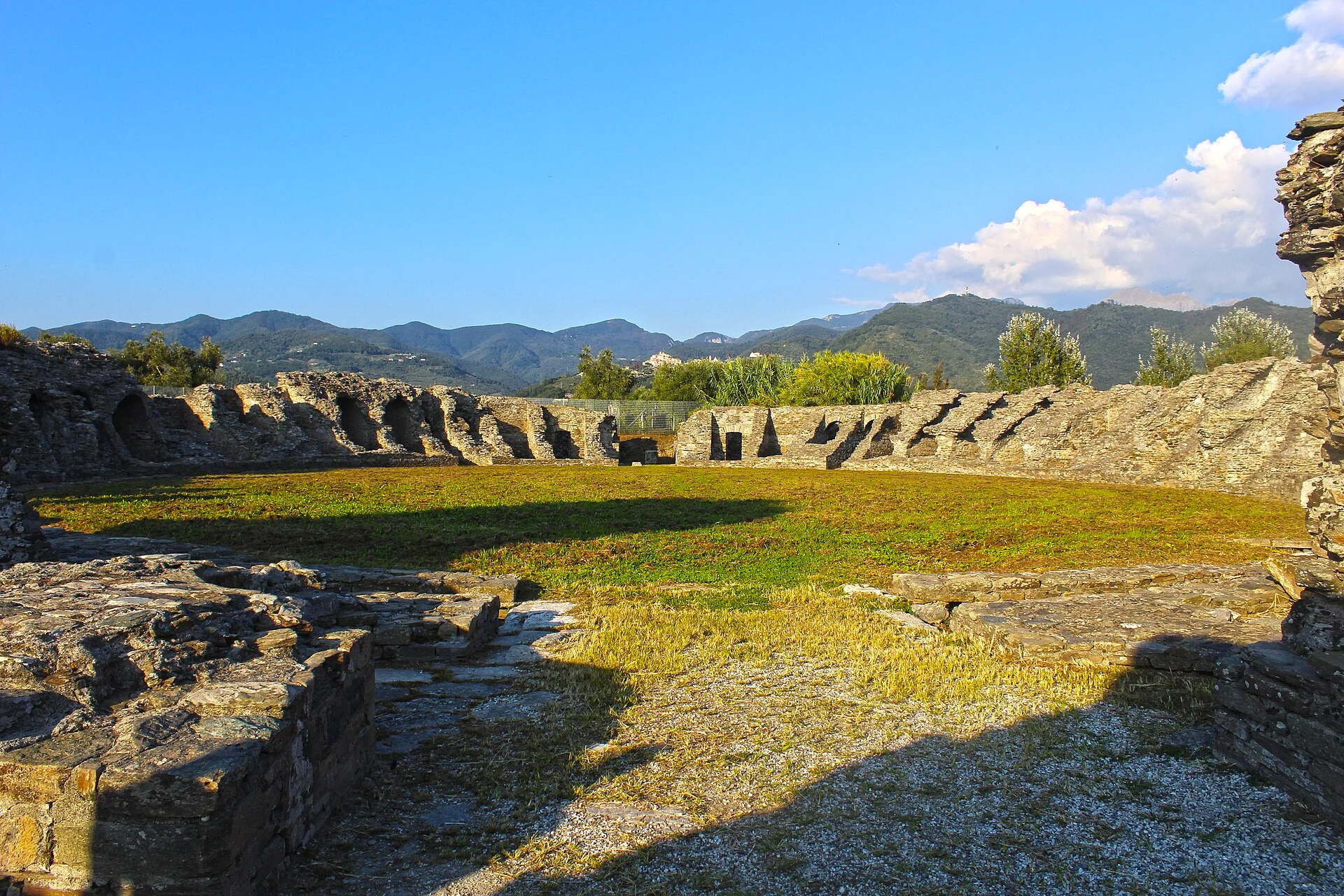
Barron cites radiometric evidence of pre-Roman, Etruscan quarrying at Fantiscritti, which would take extraction back more than 2,300 years. The Romans first took marble from coastal quarries at Punta Bianca near La Spezia and reached Carrara in the 1st century BC. The stone moved through Luna, now Luni, a Roman colony founded in 177 BC at the mouth of the river Magra. Italy's Ministry of Culture records that the Romans called the stone Lunense after the town, and that the colony grew rich by managing the quarries directly and trading their marble. The wealth shows in its floors, wall frescoes and public and religious buildings.
In Rome the stone was used for solid columns, pediments and statues, and often as a cladding over cheaper local materials. Trajan's Column is built entirely of Luna marble: 29 blocks totalling about 1,100 tons, each weighing between 25 and 77 tons, according to the University of Washington's Engineering Rome programme. NASA's Earth Observatory also notes that Carrara marble is said to adorn the Pantheon. Luna itself was partly destroyed by an earthquake in the 4th century AD and abandoned in the Middle Ages, after floods from the Magra reshaped the plain and pushed the coastline away from the town.
TORANO, FANTISCRITTI AND COLONNATA: THE CARRARA MARBLE QUARRIES
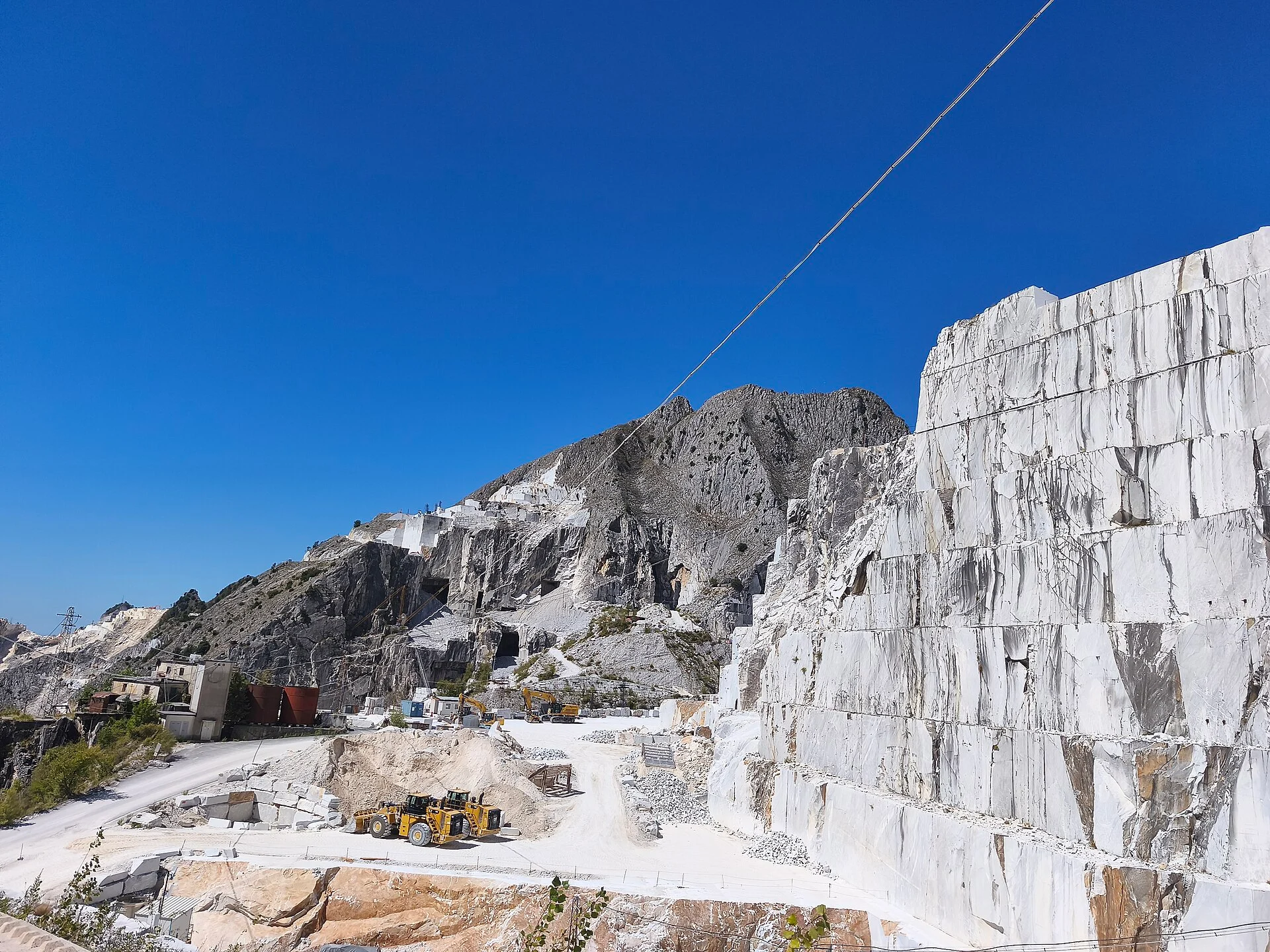
The marble around Carrara is worked in three basins, which run from west to east as Torano, Fantiscritti and Colonnata. Barron counts about 90 working quarries, split roughly equally between them, and notes that most consider the finest statuary marble to come from the Cava del Polvaccio in the Torano basin. Fantiscritti holds the evidence of the earliest quarrying and is home to a marble museum. Colonnata produces the hardest Carrara marble, though hardness does not make it the best stone for carving statues. The Met notes that marble has been quarried at Carrara, at the northernmost tip of Tuscany, for nearly 2,000 years.
Across the wider district, Primavori counts more than 100 active quarries over an area of about 30 by 12 kilometres, with usable marble outcropping over more than 75 square kilometres. The basins around Carrara produce about 1.5 million tonnes of squared and rough blocks each year, according to Barron, along with more than two million tonnes of calcium carbonate for industry. The local yards also cut, finish and re-export roughly two million tonnes of stone imported from around the world.
MICHELANGELO, THE DAVID AND THE PIETÀ
The block that became the David came from Fantiscritti. In 1465 the sculptor Agostino di Duccio, commissioned by the overseers of Florence cathedral to carve a David, travelled to Carrara and bought a huge block of bianco ordinario, the standard white grade. By the time it reached Florence in December 1466 he had lost the commission. Antonio Rossellino worked on it in 1476 and 1477, and the damaged block then lay outside for about 25 years. NASA's Earth Observatory notes that in 1501, aged 26, Michelangelo took on this block, which other artists had worked with little success. The commission, agreed that year, was worth 400 ducats.
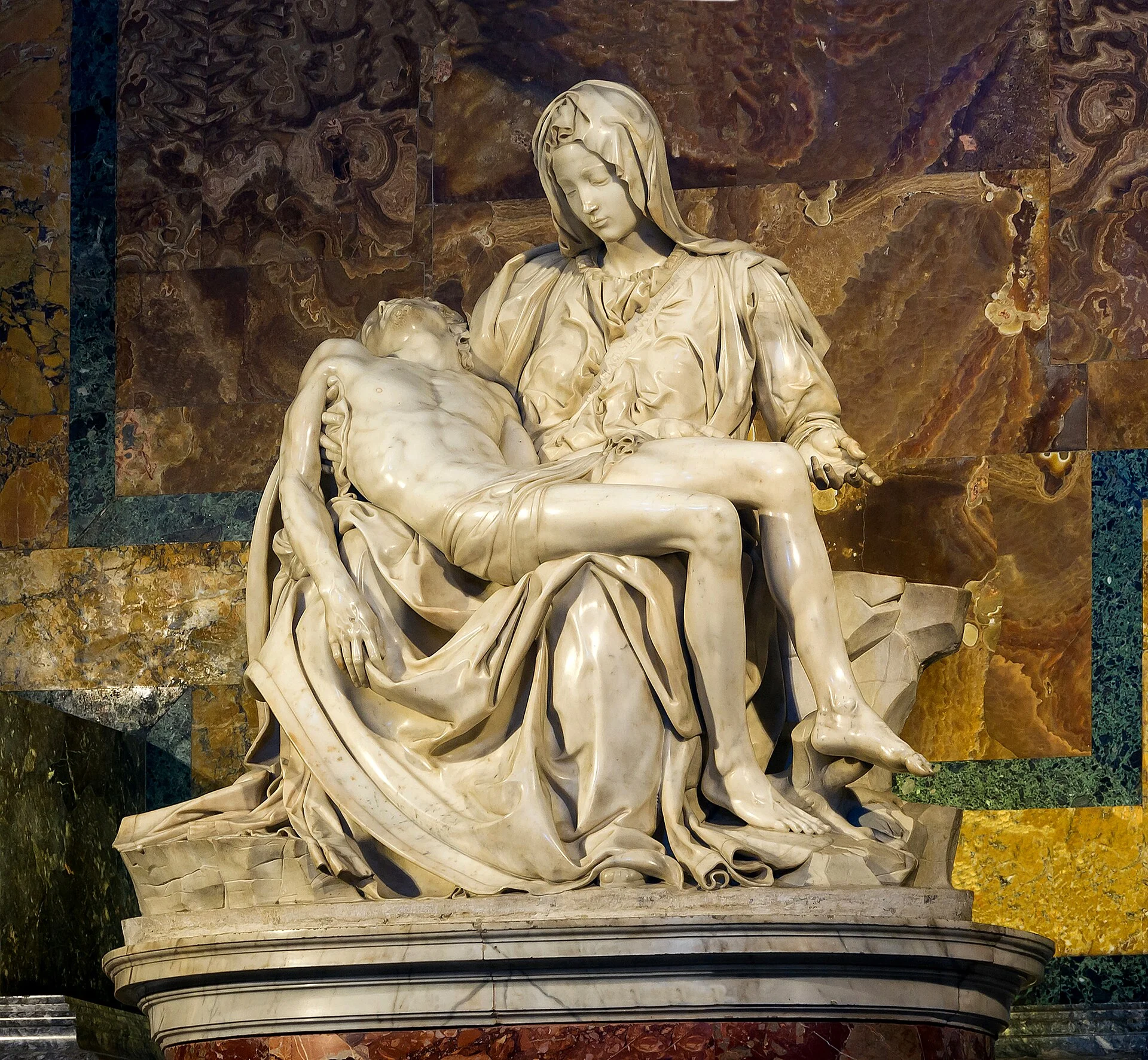
Michelangelo had first visited Carrara in 1497 to find a block for a statue of the Virgin Mary. He chose bianco statuario from Polvaccio in the Torano basin, and the resulting Pietà was completed in 1499 and is now in St Peter's Basilica. The David is 5.17 metres tall and weighs 5,660 kilograms, which means Michelangelo removed at least 20 tonnes of marble as chips and dust. It was installed in the Piazza della Signoria in 1504, moved to the Accademia in 1873, and replaced outdoors by a copy in 1910. He carved with a pointed chisel (subbia), a toothed chisel (gradina) and a bow drill.
Barron records at least ten and possibly more than twenty visits by Michelangelo to Carrara or Seravezza over 35 years. Carmen C. Bambach, a curator at The Metropolitan Museum of Art, describes long periods on site at the quarries of Carrara and Pietrasanta, where he selected marble and gave precise orders on the size and shape of each block. He oversaw the building of roads to move the stone and held contracts with excavators, quarry cutters and block squarers. A letter he wrote from Florence on 20 August 1519 to his servant Pietro Urbano, who often worked for him at the Carrara quarries, asks about the stones for his figures.
HOW WAS CARRARA MARBLE QUARRIED AND BROUGHT DOWN THE MOUNTAIN?
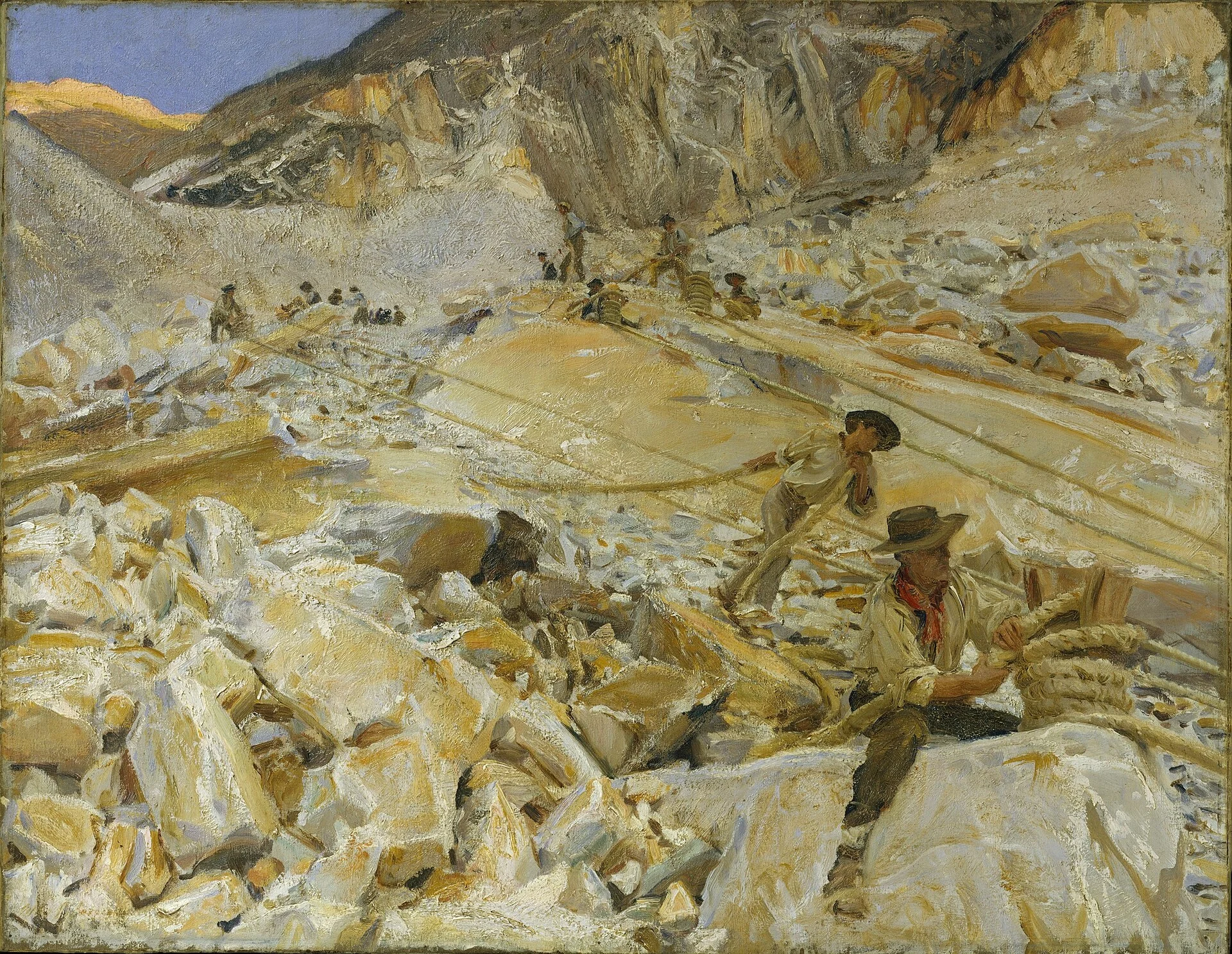
Quarrying in the Renaissance began with roped climbers called tecchiaioli, who freed blocks from the rock face. Stone cutters (scarpellini) roughed the blocks out and squaring crews finished them. The blocks then came down by lizzatura: loaded on sledges, they were controlled by sled men (lizzaturi) and cable men (mollatori) on slopes as steep as 60 degrees. Oxen hauled the stone onwards. One carrata, about 850 kilograms, was the load two oxen normally drew. The Met notes that extraction methods changed little between Michelangelo's time and the late 19th century.
Explosive charges set in drilled holes were used from the 1800s, but they could crack good blocks. In 1876 the Marmifera railway opened to carry marble from the basins, and it ran until 1964, when road vehicles replaced it. A bigger change at the quarry face was the electric wire saw, a continuous cable studded with corundum or diamond that slices through the rock. Today's quarries use chain saws mounted on crawler tracks, hydraulic cushions, cranes and loaders. The lizzatura has not disappeared entirely: Carrara stages a re-enactment of the method every August.
CARRARA MARBLE GRADES: STATUARIO, CALACATTA, BIANCO AND BARDIGLIO
Primavori groups the commercial production into seven main varieties, each divided into many subtypes: Bianco or Ordinario (white or ordinary), Venato (veined), Bardiglio, Nuvolato (clouded), Arabescato (with arabesque-like veining), Statuario and Statuario Venato, and Calacatta. Subtypes often differ only slightly in colour, and may be specific to one small area, a single quarry or a short period. In Barron's breakdown, white marble makes up about 85 per cent of production, in types including chiaro, venato, brouille and arabescato. Bardiglio is grey, plain or streaked.
The remaining 15 per cent includes cipollino, with thin green and white stripes, bluish and violet varieties, and breccias. Statuario sits at the top of the range. Barron describes the best of it, from Polvaccio, as tight, close-grained and semi-transparent, the qualities Britannica attributes to Carrara marble in general when it calls the stone prized for its purity and fine grain. NASA's Earth Observatory traces the difference to the original rock: the purest limestone becomes white marble, while impurities such as clay or iron oxide produce darker stone.
LARDO DI COLONNATA: PORK FAT CURED IN MARBLE FOR THE QUARRYMEN
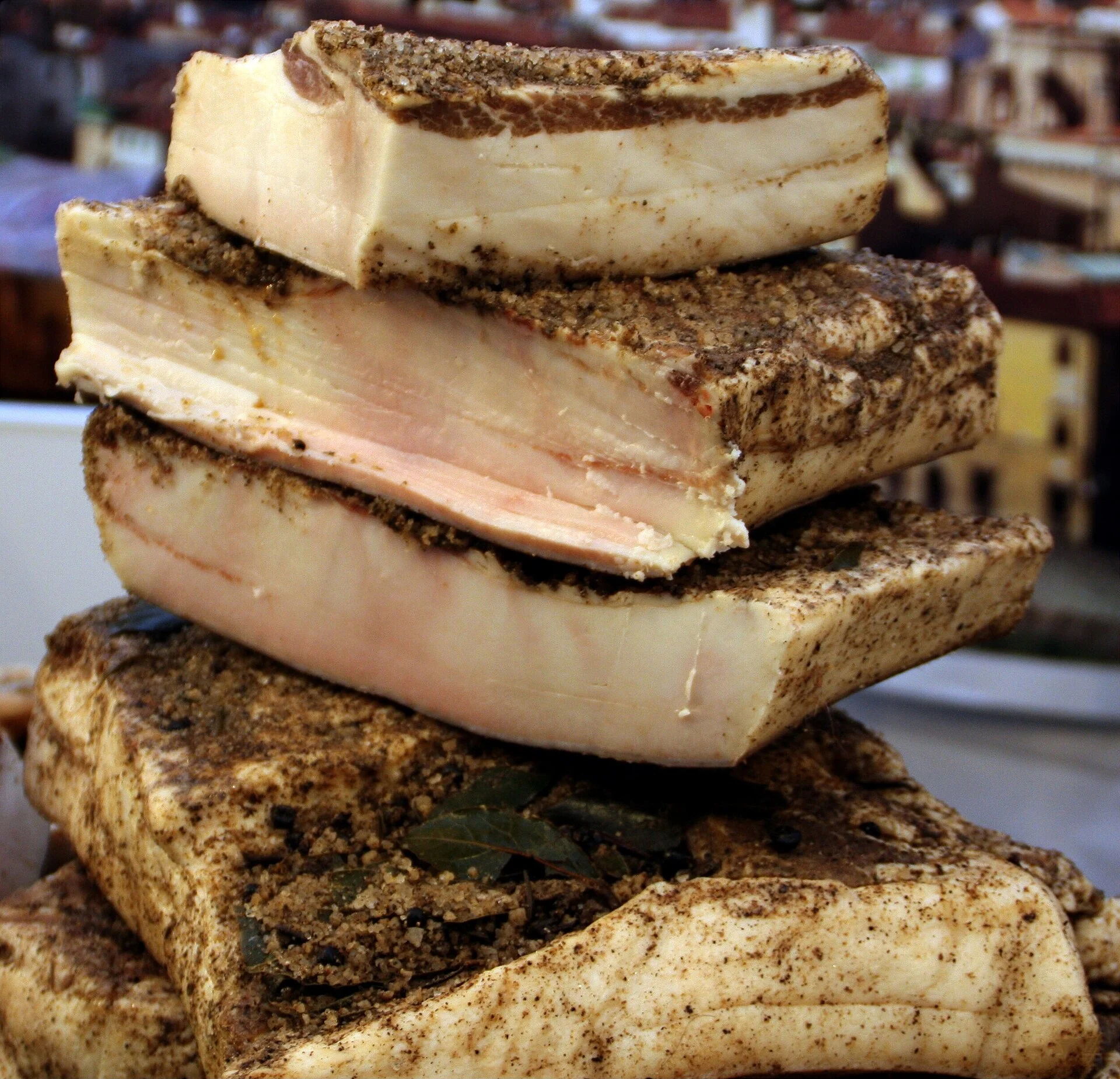
Colonnata, the easternmost of the three basins, also gave its name to a food. Visit Tuscany, the region's official tourism site, describes Lardo di Colonnata as a product of the small village of Colonnata, set among the marble quarries above Carrara. It was first made to give quarrymen the calories they needed for heavy work and for the climb to and from the quarries. The lard is the back fat of selected pigs, salted and then matured in basins made of marble. Curing in the basins gives it a roughly rectangular shape, and the finished piece is at least three centimetres thick.
The salt and the herbs and spices used in curing form a dark layer on top of the lard, with the rind underneath. The fat itself is white, sometimes slightly pink, moist and soft, and may carry a streak of lean meat. It holds the IGP mark, the European protected geographical indication, and is overseen by the Associazione Tutela Lardo di Colonnata. Visit Tuscany recommends eating it plain, sliced thin on toasted bread. Colonnata's quarries also yield the hardest marble of the three Carrara basins, according to Barron.
THE BAY AT MANDARIN ORIENTAL JUMEIRA, DUBAI

The Bay is a long dining room at Mandarin Oriental Jumeira, Dubai, completed by Silverfox Studios in 2019. Marble is used across its serving areas: a marble buffet counter, white marble stations with chalkboard menus, and a marble-fronted bar. A timber-topped bread and pastry island sits under pendants. The room combines white brick over a geometric tiled floor with green banquettes, a beamed timber ceiling and steel-framed glazing. The bar's marble front faces out to the beach terrace and the sea.
Barron describes two Roman uses of the stone: solid marble for columns, pediments and statues, and marble as cladding over cheaper local materials. The bar at The Bay is marble-fronted, using the stone as a facing, while the buffet counter and the white marble stations use it as serving surfaces. Around 85 per cent of Carrara's production today is white marble, and Primavori's list of commercial grades runs from Bianco to Statuario and Calacatta. At The Bay the marble is set against timber, white brick, a geometric tiled floor, steel-framed glazing and green banquettes.
SOURCES
- British Geological Survey (Mercian Geologist) Carrara Marble, A J Mark Barron, Mercian Geologist 19 (3), 2018
- Britannica Carrara marble
- Britannica Carrara
- NASA Earth Observatory Carrara Marble Quarries
- EGU General Assembly 2014 Carrara Marble: a nomination for Global Heritage Stone Resource, Piero Primavori
- Italian Ministry of Culture, Musei Nazionali della Liguria National Archaeological Museum and Archaeological Zone of Luni
- University of Washington, Engineering Rome Trajan's Column
- The Metropolitan Museum of Art Michelangelo at the Marble Quarries
- Visit Tuscany Lardo di Colonnata PGI