HOW CITIES MOVED FOOD TRADING UNDER ONE ROOF, AND HOW THOSE HALLS BECAME PLACES TO EAT
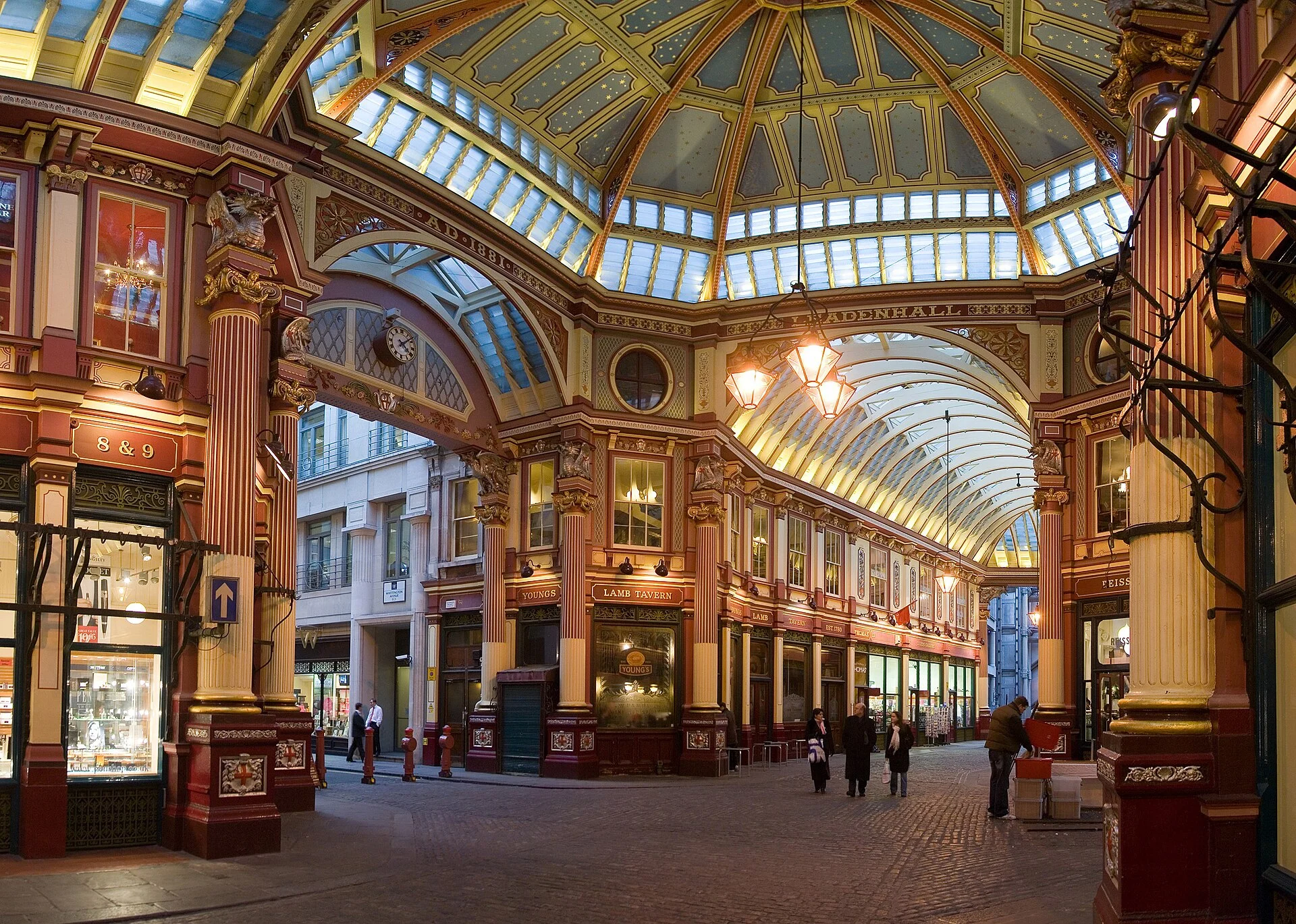
A market hall is a covered building in which food traders sell from fixed stalls under one roof. A food hall is a later adaptation of the same building type, in which most of the stalls are counters that cook and serve food to be eaten on site at shared seating. The two are linked by history and often by the same buildings. Leadenhall Market in the City of London traces its trade to a market allowed on a private manor in 1309. Paris built iron and glass pavilions for its central market, Les Halles, from 1854. Berlin opened 14 municipal market halls between 1886 and 1892. In the late 20th and early 21st centuries several of these halls changed use as wholesale trade left city centres: Borough Market turned to retail in 1998, the Mercado de San Miguel in Madrid became a gourmet market in 2009, and Time Out opened its food hall inside Lisbon's Mercado da Ribeira in May 2014.
WHAT IS A MARKET HALL? LEADENHALL AND THE MEDIEVAL COVERED MARKET
The land at Leadenhall was a manor held by Sir Hugh Neville, who allowed a small fair or market there in 1309, according to the catalogue of the City of London's market records held by the London Metropolitan Archives. The site became known first for poulterers and, by 1397, for cheesemongers. In 1408 the Lord Mayor, Richard Whittington, acquired the leasehold of the manor, and in 1411 the freehold passed to the City of London. The market then sold fish, meat, poultry and corn, and it gathered further trading rights over the following two centuries: a beam for weighing wool was installed in 1463, and the City granted the market sole rights to sell leather in 1488 and cutlery in 1622.
By the 19th century the market had outgrown its arrangements. In 1871 the City sought parliamentary powers to end the hide and meat trades at Leadenhall and keep it as a poultry market, and those powers were granted in 1879. The present building went up in 1881 to designs by Sir Horace Jones, the architect who also designed the City's Billingsgate and Smithfield markets. Historic England, which lists it at Grade II*, describes it as a complex of roofed footways lined with open-fronted shops. The outside is red brick and Portland stone; the inside is cast iron with giant Corinthian columns, an octagonal crossing and an arched roof of timber and glass.
LES HALLES: BALTARD'S IRON AND GLASS MARKET HALLS IN PARIS
In 1842 the Count of Rambuteau, prefect of the Seine, commissioned a study for a central market in Paris, and in 1845 he asked the architects Baltard and Callet for a detailed design. The first building, completed in 1853, was a metal structure enclosed in a stone shell, so solid that Parisians nicknamed it the market fort. According to the Fondation Napoléon, it was poorly ventilated and hard to reach, and Napoleon III had it demolished and a new competition held. He is reported to have told Baron Haussmann that he needed vast umbrellas and nothing more.
Baltard won with a scheme of well-lit pavilions in iron and glass. The pavilions of the eastern section were built from 1854 to 1858, and those of the western section from 1860 to 1874. The Fondation Napoléon presents the result as a showcase of metal architecture and of the emperor's modern ideas, in contrast to the academic style of the École des Beaux-Arts. Pavilion 8 was the market for eggs and poultry. Émile Zola set his novel Le Ventre de Paris (The Belly of Paris) in Les Halles.
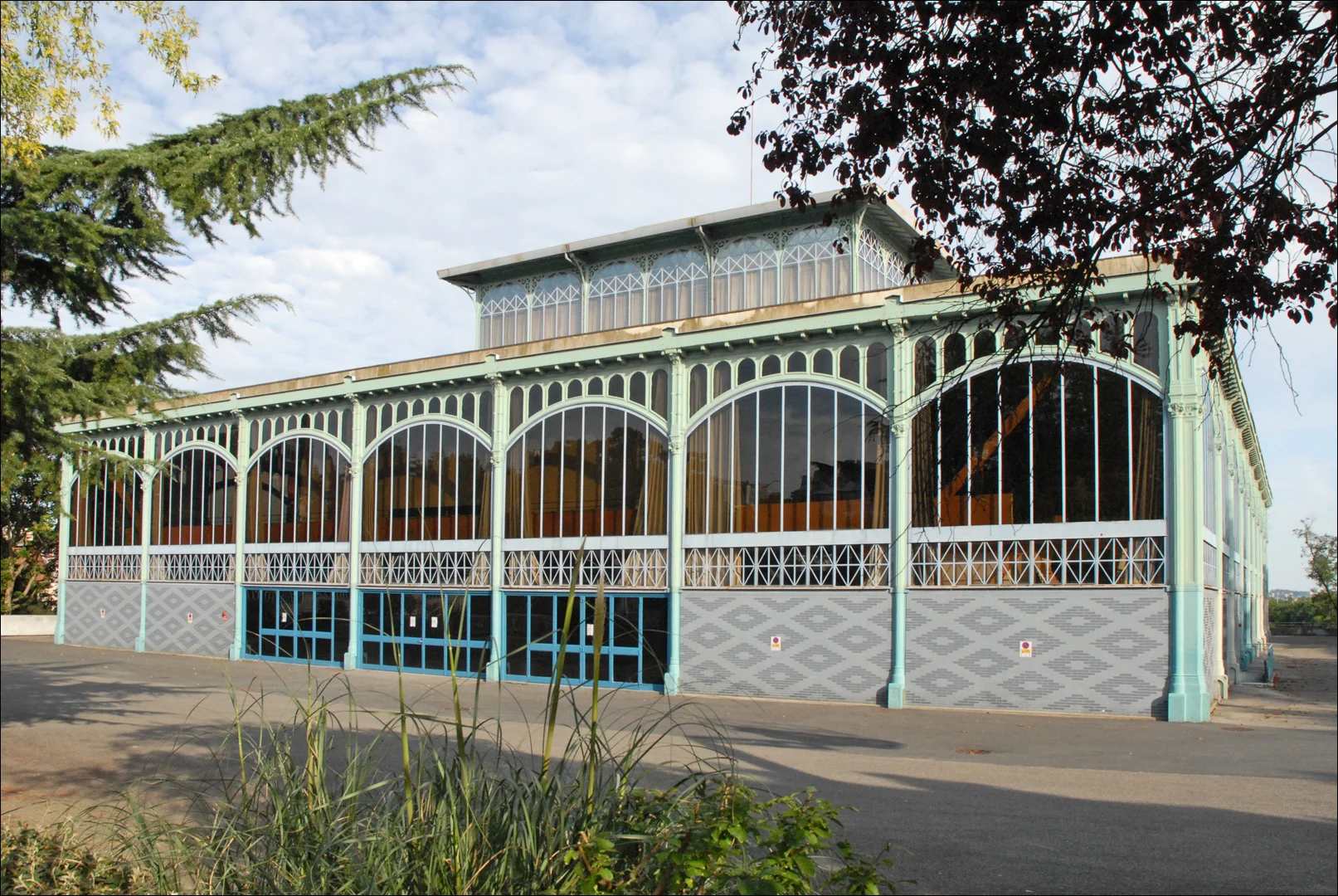
In 1969 the wholesale business moved out of central Paris to Rungis. A debate followed over what to do with the empty pavilions, including a purchase offer from an American banker, a petition, press campaigns and demonstrations, but demolition began on 2 August 1970. Pavilion 8 was the only one saved, through the persistence of the town of Nogent-sur-Marne. It was dismantled in 1972, rebuilt at Nogent in 1976 and opened in 1977 as the Pavillon Baltard, a venue for exhibitions, concerts, seminars and conferences, with blue mosaic panels reproducing the old brickwork and tinted glass façades.
BERLIN'S MUNICIPAL MARKET HALLS AND MARKTHALLE NEUN
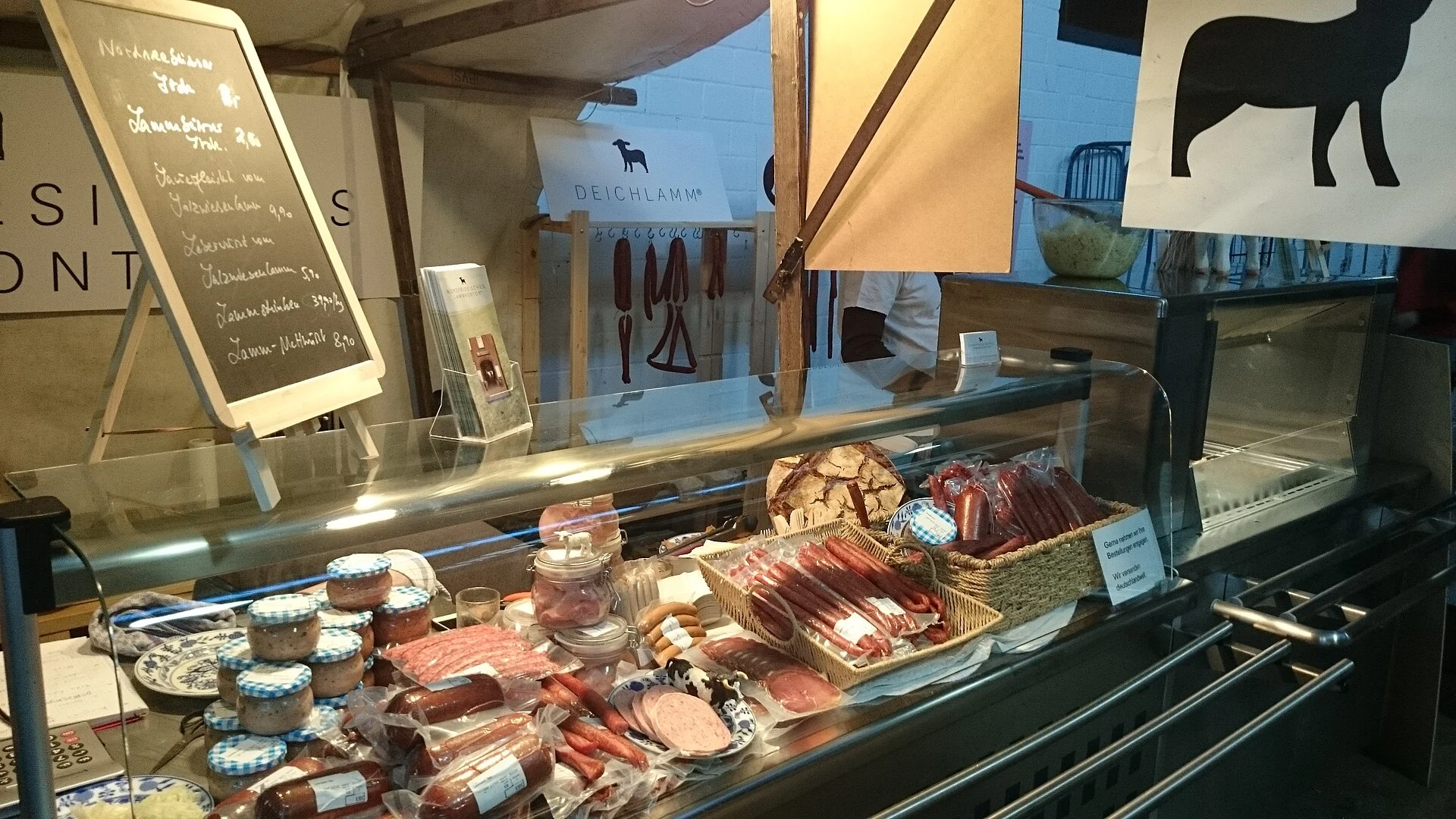
Berlin built its market halls as a public health and food supply programme. According to the history published by Markthalle Neun, food shortages and price rises in 1847 led to the potato revolt in the city, after which its leaders began to consider covered markets. In 1881 the city council, with the physician Rudolf Virchow involved, adopted a market hall plan intended to replace unhygienic open-air weekly markets and secure an affordable food supply. The new Stadtbahn railway, whose tracks opened in February 1882, gave the city fast links to large trading hubs. The plan was for one central hall with rail access at Alexanderplatz and a network of smaller neighbourhood halls.
The city building councillor Hermann Blankenstein designed the scheme. The central hall and the first three neighbourhood halls opened on 2 May 1886, 14 halls were in use by 1892, and the weekly street markets were closed. Markthalle IX in Kreuzberg, with structural work by Blankenstein's colleague August Lindemann, opened on 1 October 1891 with about 300 stalls, all of them let within the first year. Its later history follows the decline of many urban markets: bomb damage in February 1945, an occupancy of only 60 per cent by 1976 as supermarkets spread, and the arrival of the discounter ALDI in 1977. In 2003 the owner decided to sell, and after a residents' campaign the hall was offered in 2010 at a fixed price of €1.15 million to bidders who would include small-scale retail and cultural uses. The Projektgruppe Markthalle Neun won with its concept for the building.
BOROUGH MARKET: FROM WHOLESALE YARD TO RETAIL FOOD MARKET

Borough Market is in Southwark, on the south side of the Thames. The market's own history records that in the 1270s the City of London banned its citizens from buying food in Southwark and stopped Borough traders from setting up on London Bridge. In 1550 the City took over the market and extended trading from two to four days a week. The market house, its administrative centre and grain store, burnt down in a fire on Borough High Street in 1676. In 1754 Parliament moved to close the market because it was congesting the high street, and in 1756 local parishioners set it up on a new site just off the street, where it remains today.
The railway shaped the market's next phase. In 1862 a railway viaduct was cut through the site, and the growth of rail traffic made Borough a major wholesale centre for fruit and vegetables. It held that role after the Second World War, until the growth of supermarkets in the 1980s and 1990s threatened its future. In November 1998 the market hosted a Food Lovers' Fair, and after its success Borough began to reinvent itself as a retail market for high-quality food. It is run today as a charity by a board of volunteer trustees, and in 2021 it began opening on Sundays for the first time in its recent history.
LA BOQUERIA AND THE MERCADO DE SAN MIGUEL: SPAIN'S MARKET HALLS

La Boqueria, on the Rambla in Barcelona, began as an open-air market. The market's own history dates the earliest documents confirming meat stalls on the Pla de la Boqueria to 1217, many of them run by farmers from villages around the city. In 1827 the Marquis of Campo Sagrado introduced the first market regulations, when the market had about 200 stalls, 100 of them for fresh and salted meat and 48 for fish. After a fire destroyed the Carmelite Convent of Sant Josep in 1835, traders moved onto its site in March 1836. The foundation stone of a permanent market, designed by Josep Mas i Vila as a square with arcades, was laid on 19 March 1840. The architect Antoni de Falguera added the Modernist arches at the Rambla entrance in 1913 and the metal roof in 1914.
In Madrid, the Mercado de San Miguel opened in May 1916 as a local food market close to the Plaza Mayor. The city's official tourism site describes it as a leading example of cast-iron architecture. In 2009 it became Madrid's first gourmet market. It was relaunched in 2018 with several internationally known chefs, and after a nine-month closure it reopened in July 2021 with four new stands. It now has about 30 stands selling food from across Spain, including seafood tapas, cheese, cured meats and desserts, and receives more than 10 million visitors a year.
WHAT IS A FOOD HALL? EATALY, STREET FOOD THURSDAY AND TIME OUT MARKET

Eataly, founded by Oscar Farinetti, opened at the end of January 2007 in the former Carpano vermouth factory on Via Nizza in Turin, a listed national monument. Slow Food, which advised on the project, reported that the building covered 11,000 square metres, with 3,200 for teaching and 2,450 for selling and tasting food and drink. It combined a formal restaurant, several small themed eateries, a gastronomy library, a 200-seat lecture hall and a museum of vermouth. The project was developed with three Italian retail cooperatives, and Slow Food built its supplier database.
In Berlin, Markthalle Neun added a weekly evening event in 2013. Street Food Thursday, started by Kavita Meelu, Anna Lai and Tobias Bürger, gives cooks without their own restaurant a place to sell their food every Thursday from 17:00 to 22:00, with a changing line-up of about 30 vendors. In Lisbon, Time Out Portugal opened Time Out Market in the Mercado da Ribeira at Cais do Sodré in May 2014, bringing restaurants chosen by the magazine's editors into a historic market hall. In March 2018 Time Out reported 32 restaurants and kiosks, eight bars and cafés and five shops, and 3.6 million visitors in 2017. That year the market received the Hamburg Foodservice Award, a European prize first presented in 1983.
BAZAAR AT MANDARIN ORIENTAL SHENZHEN

Bazaar at Mandarin Oriental Shenzhen, completed by Silverfox Studios in 2022, is built around open kitchen stations, a bakery and a bar lounge. The stations include a raw bar, grill seating and an open dim sum station, where bamboo steamers sit under a cylindrical stainless steel hood. The arrangement of several separate cooking stations in one space is the principle of the food hall, the format that Eataly in Turin, Street Food Thursday at Markthalle Neun and Time Out Market in Lisbon each brought into a single building.
The materials of the room relate to those of the historic halls. Leadenhall Market, built in 1881, has a cast iron interior with an arched roof of timber and glass, and Baltard's pavilions at Les Halles, built from 1854 to 1874, were made of iron and glass. Bazaar has a timber post-and-beam structure and a slatted timber ceiling, and its grill seating sits under a steel frame with gear-wheel forms. The seating includes rattan armchairs, and the room has city views.
SOURCES
- London Metropolitan Archives via AIM25 Leadenhall Market (Collection CLA/011)
- Historic England Leadenhall Market with subsidiary numbering
- Fondation Napoléon Baltard Pavilion
- Markthalle Neun Geschichte
- Markthalle Neun Street Food Thursday
- Borough Market History
- Mercat de la Boqueria History
- esMadrid, Madrid City Council Mercado de San Miguel
- Slow Food Eataly Opens in Turin
- Time Out Group Time Out Market Lisbon receives international award