FROM SCHIST TERRACES IN THE DOURO TO THE LODGES OF GAIA
Port wine is a sweet fortified wine from the Douro region of northern Portugal, made by stopping fermentation with grape spirit so that part of the grapes' sugar stays in the wine, which usually ends at 19 to 22 percent alcohol by volume. Its history includes a shipping document of 1675, a royal charter of 1756 that created a company to classify the vineyards and control the wine, and granite boundary markers carved with the word FEITORIA. The vineyards stand on schist-walled terraces inscribed by UNESCO as the Alto Douro Wine Region, and the trade ran through British merchant houses and the lodges of Vila Nova de Gaia. The main styles, ruby, tawny, Late Bottled Vintage, vintage and white, differ in how long the wine ages and whether it matures in wood or in bottle.
WHAT IS PORT WINE AND WHERE DOES IT COME FROM
Britannica defines port as a sweet, fortified, usually red wine from the Douro region, named after Oporto (Porto), where it is aged and bottled. Portuguese law strictly limits where true port can be produced, although other countries have used the name for wines that are sometimes unaged and often not made from the same grapes. Wine in the valley is far older than port. According to ICOMOS, UNESCO's advisory body on cultural sites, grapevine seeds have been found at a Chalcolithic site near Mirandela, while the more significant evidence of viticulture dates to Roman times, especially the 3rd and 4th centuries AD. From the 16th century, quality wine made for trade became increasingly important.
The first known reference to "Port Wine" appears in a shipping document of 1675, for wine sent to Holland. ICOMOS describes this period as the start of a large trade with England, in which port rapidly dominated the British wine market, overtaking wines from France, Spain and Italy. The 1703 Treaty of Methuen between Portugal and England gave the trade formal approval. Through the 18th century the sale of the Douro's fortified wines depended on the British market, and the number of British wine merchants rose quickly. Demand moved towards darker, stronger and sweeter wines with a higher alcohol content, while Douro farmers were forced to accept continuously lower prices.
THE DOURO DEMARCATED REGION AND THE ROYAL CHARTER OF 1756
Conflict between the merchants and the farmers led the Portuguese state to regulate the production and trade of the wine. A Royal Charter of 10 September 1756 created the Companhia Geral da Agricultura das Vinhas do Alto Douro, the General Company for the Agriculture of the Vineyards of the Upper Douro. Its work, as ICOMOS summarises it, included making an inventory of the vineyards, classifying them and their wines, and setting up institutional mechanisms to control and certify the product. UNESCO states that the quality of port has been defined and regulated since 1756.
The boundary was marked on the ground. ICOMOS records 335 large granite markers, rectangular, flat or semi-circular, placed around the whole perimeter of the vineyards. Each carries the word FEITORIA and the date on which it was set in place, usually 1758 and occasionally 1761. When the state undertook a profound revision of the laws governing the wine sector in 1907, the new demarcation covered the entire area under vines, including the Upper Douro as far as the Spanish border.
SCHIST TERRACES AND QUINTAS OF THE ALTO DOURO WINE REGION
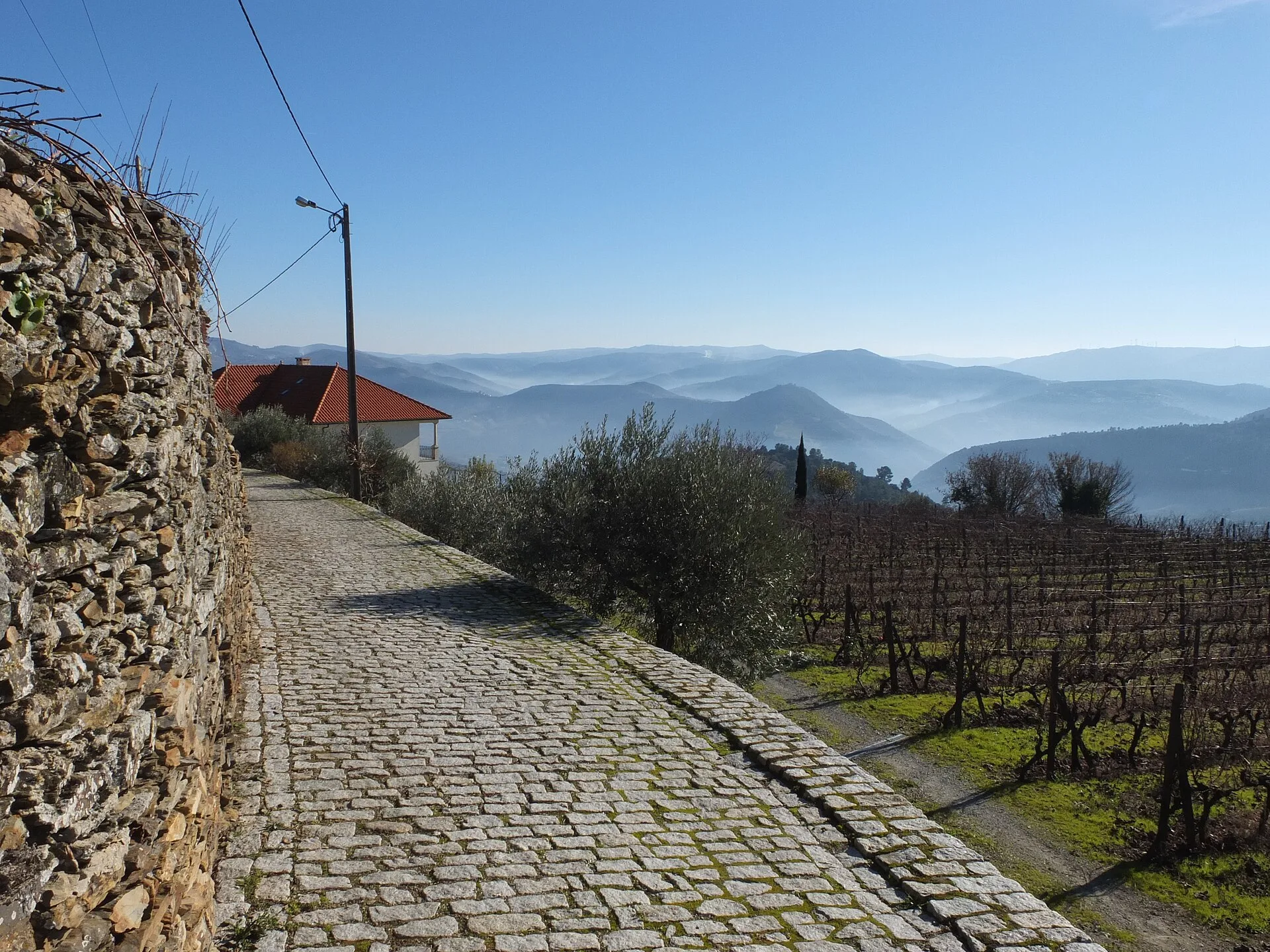
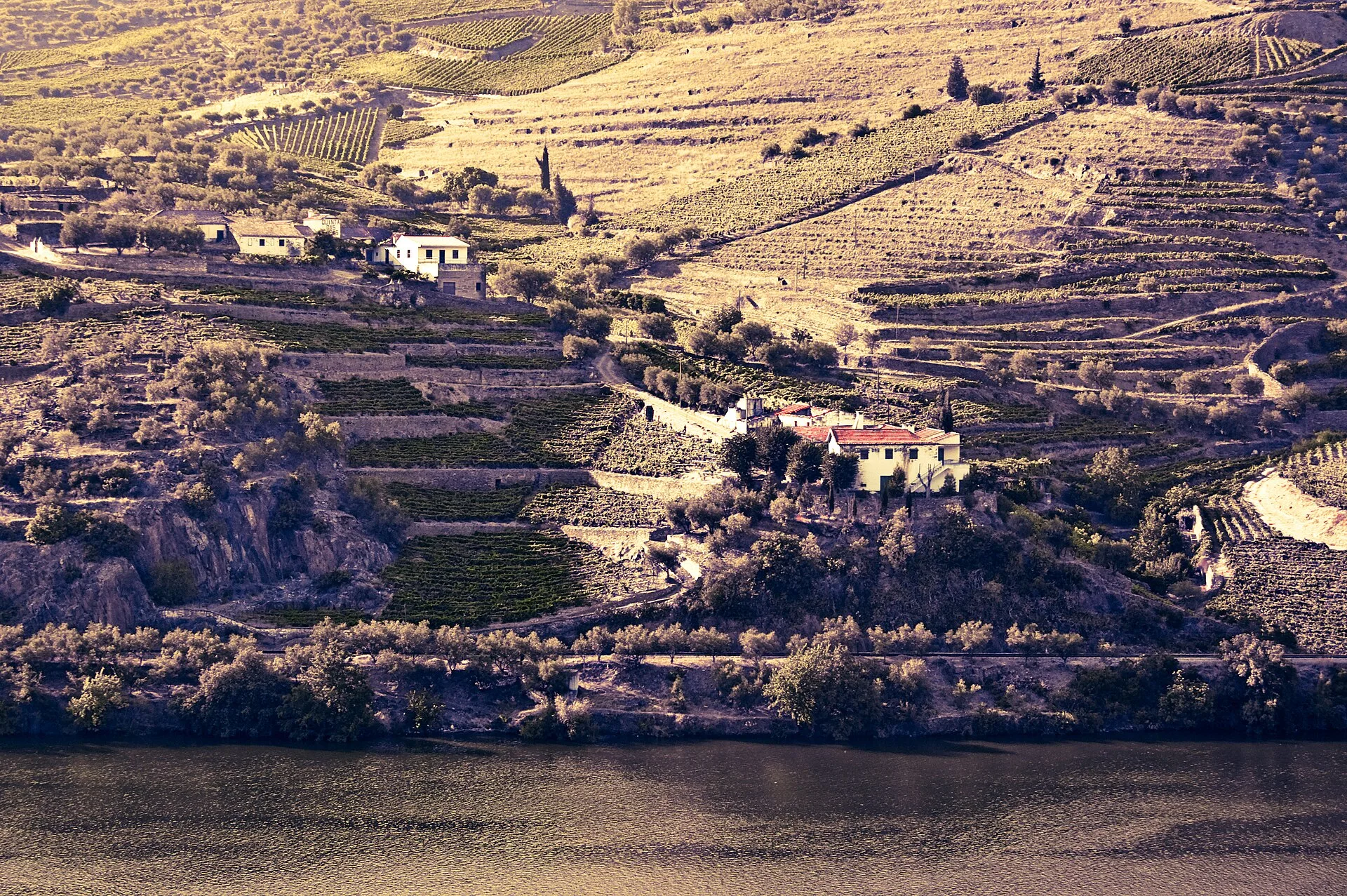
UNESCO inscribed the Alto Douro Wine Region on the World Heritage List in 2001. The property covers about 24,600 hectares, mostly terraced vineyards, and UNESCO describes it as an outstanding example of a traditional European wine-producing region, where landholders have made wine for about 2,000 years. The Douro and its tributaries, the Varosa, Corgo, Távora, Torto and Pinhão, form the backbone of the site. The landscape includes quintas, large estates with farm buildings and wineries, which ICOMOS calls major landmarks, along with casais, or small landholdings, white-walled villages, 18th-century parish churches, chapels and orange groves. The Douro railway, built between 1873 and 1887, encouraged the vineyards to spread eastwards.
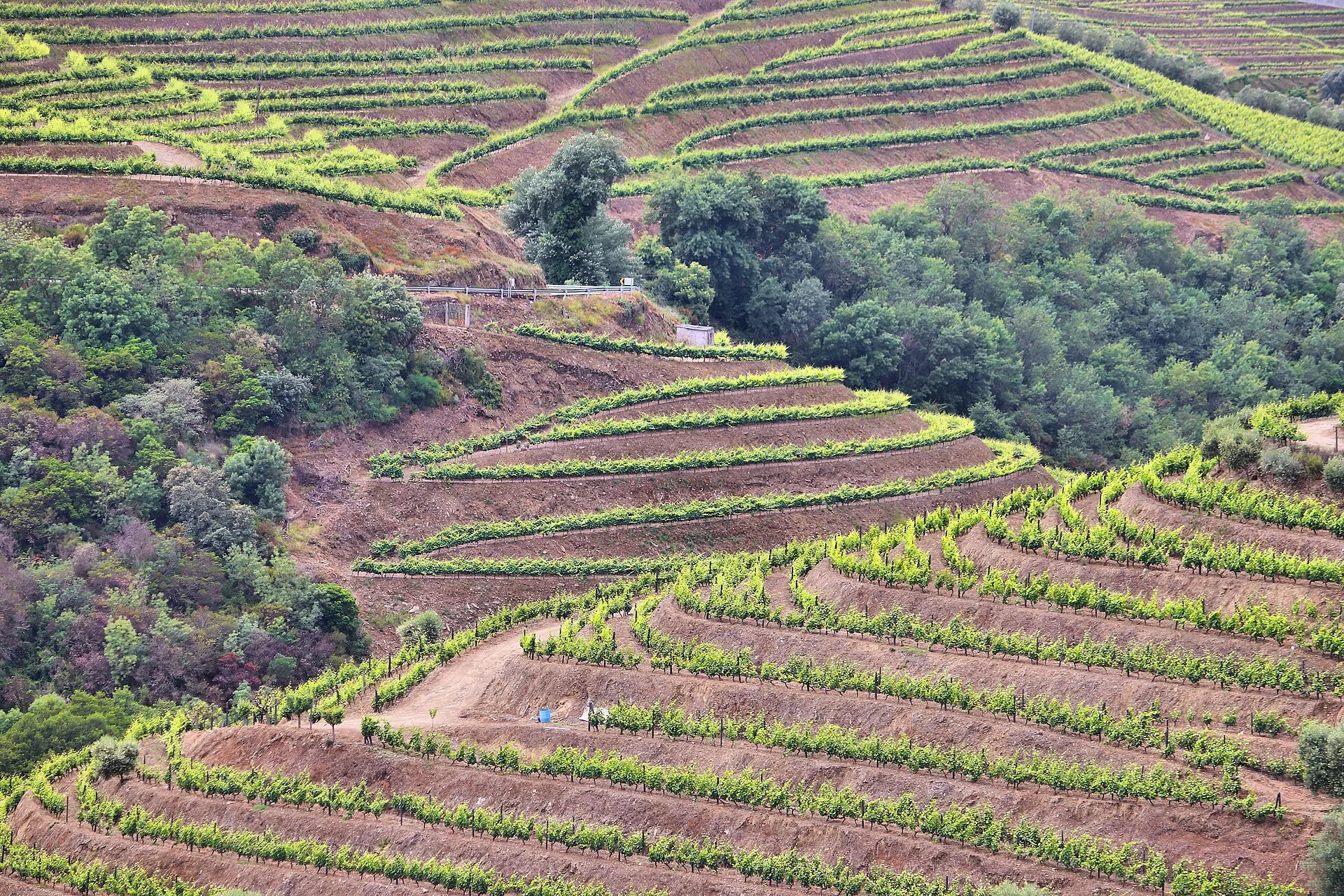
The terraces record changes in viticulture. The earliest, which UNESCO dates to before 1860 and the phylloxera blight, were narrow, irregular socalcos held up by schist walls, with room for one or two rows of vines. The IVDP, the Douro and Port Wine Institute, records phylloxera in the region from 1862. From 1876 farmers began to recover the damaged vineyards, and the lasting solution came with American rootstock. The vineyards were rebuilt on longer, wider and more regular terraces, while the abandoned old ones, the mortórios, were left. From the late 1960s and 1970s came mechanised patamares with earthen banks and vertical planting, the vinhas ao alto, on slopes of up to about 40 percent.
WHICH GRAPE VARIETIES ARE USED FOR PORT WINE
The IVDP names six red varieties as the most noteworthy: Tinta Amarela, Tinta Barroca, Tinta Roriz, Touriga Francesa, Touriga Nacional and Tinto Cão. Its fuller tables add Bastardo, Mourisco Tinto, Tinta Francisca, Cornifesto, Donzelinho, Malvasia, Periquita, Rufete and Tinta Barca. For white port, the main group is Esgana Cão, Folgasão, Gouveio (also called Verdelho), Malvasia Fina, Rabigato and Viosinho, of which Malvasia Fina, Viosinho, Donzelinho and Gouveio predominate. The authorised and recommended varieties, and their permitted percentages, are set out in a Decree-Law.
The vineyards that may supply port are also limited. According to the IVDP, 26,000 hectares are authorised for port wine, and vines must be at least five years old before their grapes can be considered for it. The maximum authorised yield is 55 hectolitres per hectare, about 7,500 kilograms of grapes, and the average is about 30 hectolitres. Planting density follows the terrace: about 3,000 to 3,500 vines per hectare on the old pre-phylloxera terraces, about 6,000 on the post-phylloxera terraces, and 4,500 to 5,000 in vertical rows.
HOW PORT WINE IS MADE: TREADING AND FORTIFICATION
The harvest begins between late August and mid-October, and grapes for red port are picked riper than those for white. The traditional method treads the grapes in lagares, large stone tanks. Many wineries now use electric crushers, robotic treading tanks, stainless steel tanks and automatic presses, mainly for hygiene and temperature control. In his Decanter guide to port styles, Richard Mayson notes that Graham's 2000 was the first classic vintage made partly with robotic feet. As yeasts turn sugar into alcohol, the rising temperature and alcohol draw colour and aroma from the skins.
Before fermentation is complete, the IVDP explains, the must-wine is drained into a tank beside the lagar and grape spirit is added to stop it. The most common ratio is one part grape spirit to four parts of must-wine, and Mayson gives the spirit as 20 percent of the finished wine, which keeps some residual sweetness. Port is one of the fortified wines of the Iberian Peninsula, alongside sherry from Jerez. The young wine rests in vats until the end of winter, and in spring the wines are selected, blended and classified. The winemaker then decides whether each wine will age in the Douro or in the bonded lodges of Vila Nova de Gaia.
RUBY, TAWNY, LBV, VINTAGE AND WHITE: HOW PORT IS AGED
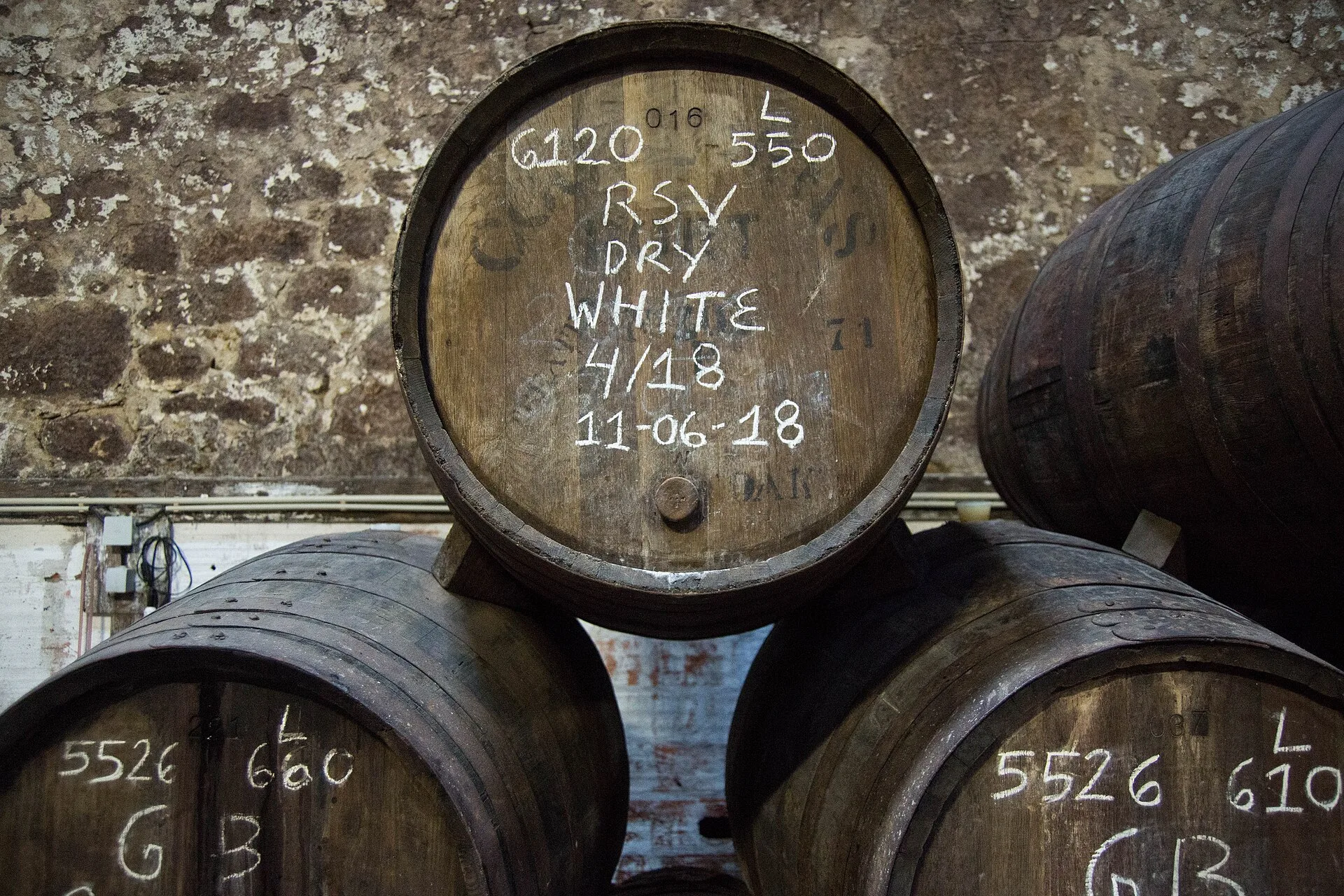
Mayson describes ruby as a blend of wines from more than one year, aged in bulk for up to three years before bottling. The IVDP defines Late Bottled Vintage (LBV) as the wine of a single year aged four to six years in wood; Taylor's states that it launched its first LBV in 1970, using the 1965 vintage. Vintage port is also from a single year but is bottled two to three years after the harvest, and the IVDP calls it the only port that ages in bottle, where it can develop for 10 to 50 years. Mayson notes that no law governs how often vintages are declared, but there are usually three or four a decade.
Tawny styles age in wood. Britannica notes that tawny is blended and matures in cask, changing colour as it ages. Mayson explains that aged tawnies mature in small casks called lodge pipes, holding 600 to 640 litres, and carry age indications of 10, 20, 30, 40 or 50 years approved by the IVDP. The IVDP gives 20 year old tawny aromas of toasted vanilla and dried fruit. Colheita is a tawny from a single year, aged in cask for at least seven years, and its label shows both the harvest year and the year of bottling.
White port, Britannica notes, is usually made from white grapes. The IVDP's special categories for it include Reserve White, aged in wood for about seven years, white with an indication of age, and White Colheita. The institute describes these whites as golden, fresher and less full-bodied than a tawny of the same age. Taylor's dates its Chip Dry, which it describes as the first dry white port, to 1934. For pink, or rosé, port, Mayson credits Croft with pioneering the style.
VILA NOVA DE GAIA, THE RIVER AND THE BRITISH SHIPPERS

The municipal history of Vila Nova de Gaia describes the town as a major commercial centre where most of the exporting companies set up their warehouses, and notes that the Companhia Geral had warehouses there. From 1777 all of the wine export houses were concentrated in Gaia, and several port wine companies now keep museum collections on their premises. ICOMOS lists the river and the railway among the site's cultural elements, which served the shipping of the region's products down river to Porto. The municipality attributes the rabelo boats, the traditional Douro cargo boats, to the legacy of the Vikings and Normans.
ICOMOS dates the founding of the British Factory House in Porto to 1727. The Oxford Companion to Wine describes its Georgian building as the only surviving example of its kind and probably the only one built as a meeting place for a trading "factory". Work began in 1786 and was finished four years later under the consul John Whitehead. The land and building were paid for from the Outward Fund, a levy that British shippers voluntarily placed on their own exports of port.
Taylor's states that it was founded in 1692 by Job Bearsley, an English merchant who arrived in Portugal that year. Joseph Taylor, a manager in the London office, gave the firm its name and became sole owner around 1826. A partnership deed of 1838 with John Fladgate and Morgan Yeatman, a wine merchant from Dorchester, created the name Taylor Fladgate & Yeatman. The firm bought Lower and Middle Vargellas in 1893 and Upper Vargellas in 1896, joining them as Quinta de Vargellas.
TASCA AT MANDARIN ORIENTAL JUMEIRA, DUBAI
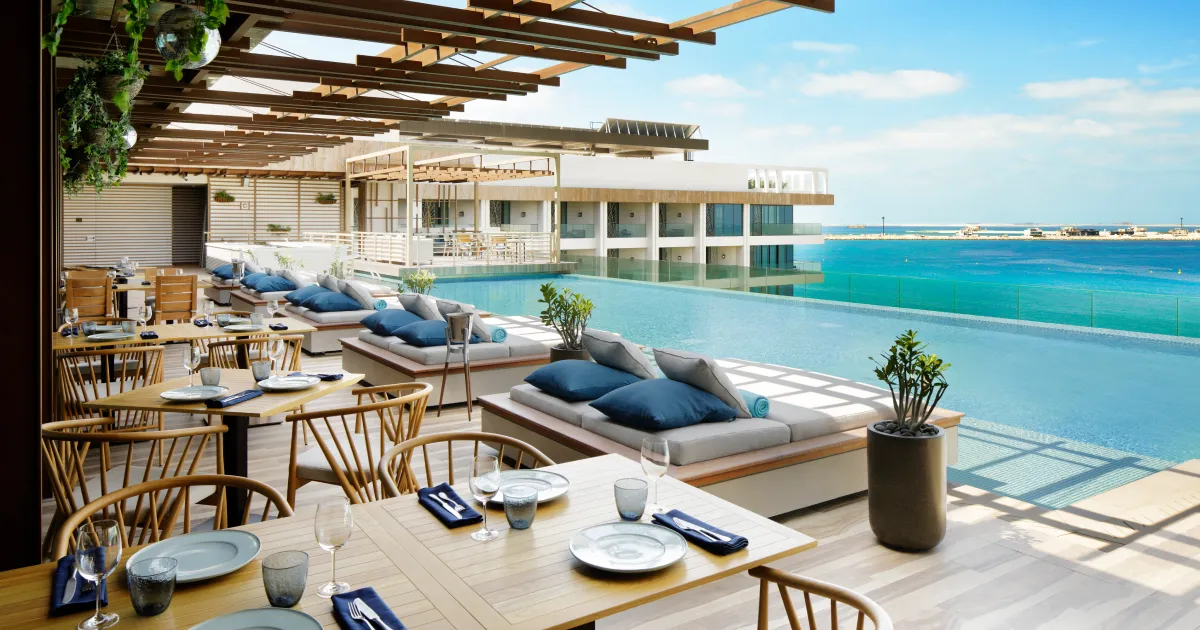
Tasca at Mandarin Oriental Jumeira, Dubai, is a contemporary Portuguese restaurant by chef José Avillez, a Silverfox Studios project completed in 2019. It holds One MICHELIN Star. The restaurant's plan includes a bar as well as a terrace, and its rooftop terrace looks out over the waters of the Arabian Gulf. The Portuguese tavern known as a tasca, together with the petiscos, or small plates, served in it, is the subject of a separate article on the history of Portugal's small-plate taverns.
Inside, Tasca has timber tables and a slatted ceiling, and its bar counters are marble. Turquoise glassware and blue cushions add colour, and illuminated shelving displays ceramics. In the port trade described above, the working materials were schist for the terrace walls of the Alto Douro, granite for the 335 boundary markers set in place from 1758, stone for the lagares in which grapes are trodden, and oak for the casks in which tawny ports mature, including the lodge pipes of 600 to 640 litres used for aged tawnies.
SOURCES
- UNESCO World Heritage Centre Alto Douro Wine Region
- ICOMOS / UNESCO World Heritage Centre Advisory Body Evaluation: Alto Douro (Portugal), No 1046
- Encyclopaedia Britannica Port
- Instituto dos Vinhos do Douro e do Porto (IVDP) Port Wines: The Winemaking
- Instituto dos Vinhos do Douro e do Porto (IVDP) Port Wines: Special Categories
- Instituto dos Vinhos do Douro e do Porto (IVDP) Vine Culture
- Decanter Know your Port styles: the Decanter guide
- Oxford Companion to Wine (ckbk) Factory House
- Câmara Municipal de Vila Nova de Gaia Breve síntese histórica do Município de Gaia
- Taylor's Our History