HOW TIN TURNED A KINTA VALLEY SETTLEMENT INTO PERAK'S CAPITAL
Ipoh, the capital of the Malaysian state of Perak, stands on the Kinta River in the Kinta Valley, a basin between the Keledang and Main ranges that Britannica describes as the largest field along the western Malayan tin belt. Ipoh tin mining history begins in the 1880s, when largely Chinese-operated open-pit mines opened in the valley's gravels. Its population grew from 3,184 in 1891 to 53,183 in 1931, a mine owner built a planned New Town across the river, and the town became known as the "City of Millionaires". The limestone hills around the valley hold cave temples, and the city's coffee shops are known for white coffee and bean sprout chicken.
WHERE IS IPOH AND HOW DID IT BEGIN?
The Kinta Valley is formed by the Sungai Kinta, a tributary of the Sungai Perak, and lies between the Keledang Range and the Main Range of the peninsula. Britannica calls it one of the most productive and easily worked tin regions in the world. The river and its tributaries laid down alluvium rich in cassiterite, the ore of tin, over a bed of limestone. To the east the limestone rises into hills of about 610 metres (2,000 feet), and north and south of Ipoh it rises through the alluvium. Ipoh itself lies on a flat alluvial plain, surrounded by steep hills on every side except the south.
The Borneo Post describes the early town as a settlement surrounded by thick jungle and limestone hills. Britannica traces the name to a local tree whose poisonous resin was once used by indigenous hunters, and dates the modern city to the 1890s, when British tin-mining companies transferred their operations from around Taiping to the Kinta ores. Several towns grew up around these early mines, among them Gopeng, Batu Gajah and Kampar. According to a 2019 study in the Ritsumeikan University geography journal, Ipoh became the hub of the valley's mining and, from its central position, the economic centre of Perak.
IPOH TIN MINING HISTORY: THE KINTA TIN RUSH OF THE 1880S
The Economic History of Malaysia project, in an extract from T. M. Ho's 2014 book Ipoh: When Tin Was King, dates the Kinta Tin Rush to 1884 to 1889. In the latter part of the rush, rich deposits were found at Rotan Dahan, and land there changed hands at very high prices. By 1902 most of the town's vegetable gardens had disappeared into large mining excavations, and most fruit and vegetables were imported from Penang, where they were cheaper. Tin exports drew foreign capital and migrant labour into the valley, and Ipoh's fortunes moved with the tin price, through recessions in the late 1890s, in 1908 and in the early 1930s.
Much of that labour was Chinese. A 2021 cultural profile of Ipoh commissioned by the British Council describes the Kinta Valley in the late 19th century as a key employment centre for migrant Chinese. It estimates the valley's Chinese population in 1921 at 123,278, of whom about 48 per cent were Cantonese and about 38 per cent Hakka. Ipoh's own population figures show the pace of change. The Ritsumeikan study records 3,184 residents in 1891 and 12,791 in 1901. By 1911 Ipoh had 23,978 people and had overtaken Taiping, which then had 19,556.
HOW WAS TIN MINED AROUND IPOH?
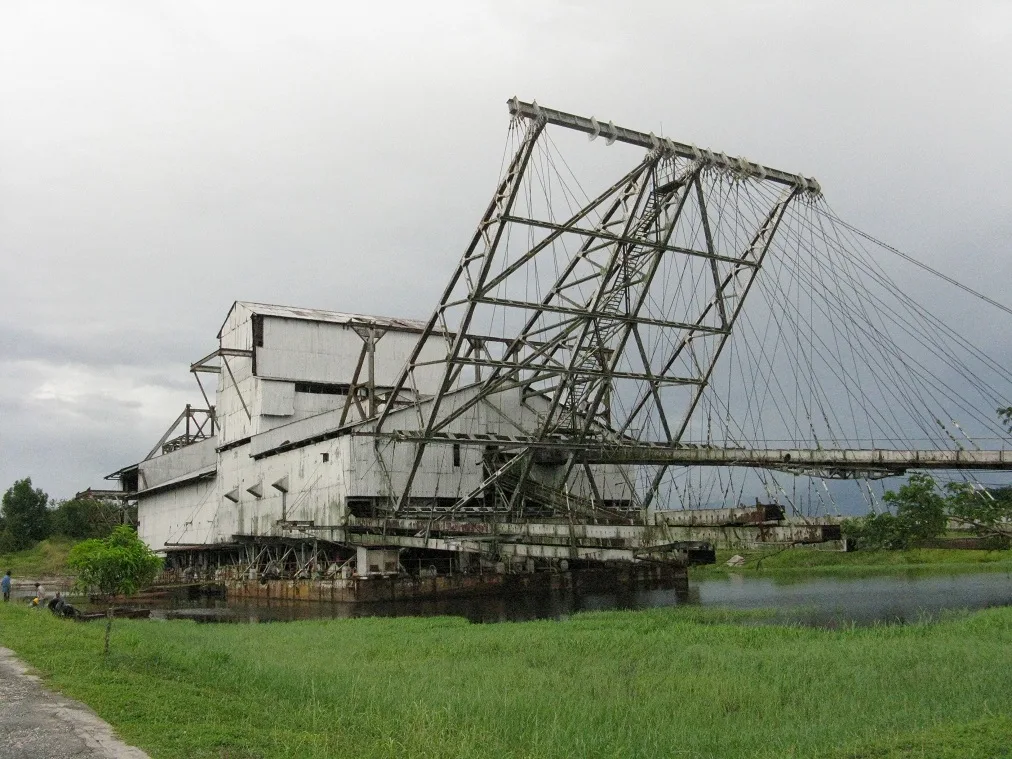
Kinta tin occurs as cassiterite, which appears as black, sandy grains in the surface gravels of the valley. The early Chinese mines were shallow open pits dug into these gravels. Britannica describes the two methods that later dominated around Ipoh: dredging, and washing the ground with high-pressure hoses. South of the city the ore lies deeper, down to about 60 metres (200 feet) in wetter ground, and dredges are used there, as they were in the mines covered in tin mining and dredging in Kuala Lumpur. Both methods left the countryside around Ipoh, in Britannica's words, pocked with large sandpits.
The mines also changed the river that ran through the town. The Economic History of Malaysia records that the opening of numerous mines caused the Kinta River to silt up slowly with tailings. In the late 19th century the river was 12 to 15 feet deep, and its bed rose by more than eight feet in 30 years. The town's crossings were rebuilt as it grew: the wooden Hugh Low Bridge was replaced with an iron and stone structure in 1900, and the Brewster Road Bridge followed in 1907. Cheap hydro-electric power from the Perak River later allowed other industries to develop.
WHY WAS IPOH CALLED THE CITY OF MILLIONAIRES?
The Economic History of Malaysia states that tin produced more millionaires in Ipoh than in any other Malayan town, and the Borneo Post notes that Ipoh earned the nickname "City of Millionaires" in its heyday, when many Chinese immigrants grew rich working the mines and supplying services to the industry. Britannica records that the suburbs still contain imposing residences of wealthy mine owners. The Royal Ipoh Club, founded in 1895, is the oldest social club in the city, and Padang Ipoh was established in 1898 to commemorate Queen Victoria's Diamond Jubilee.
One of the miners who reshaped the town was Yau Tet Shin, described by the IpohWorld heritage archive as a miner and property owner. With his long-time business manager Wong Kap Soot, a member of the Ipoh Sanitary Board, he built a New Town of some 350 houses on the padi fields of Datoh Panglima Kinta, across the Kinta River from the Old Town. A photograph from 1908 shows it under construction, advancing block by block from the river towards Gopeng Road. A new market, a Mandarin school and a theatre formed part of the scheme. The river still divides the city into its old and new towns.
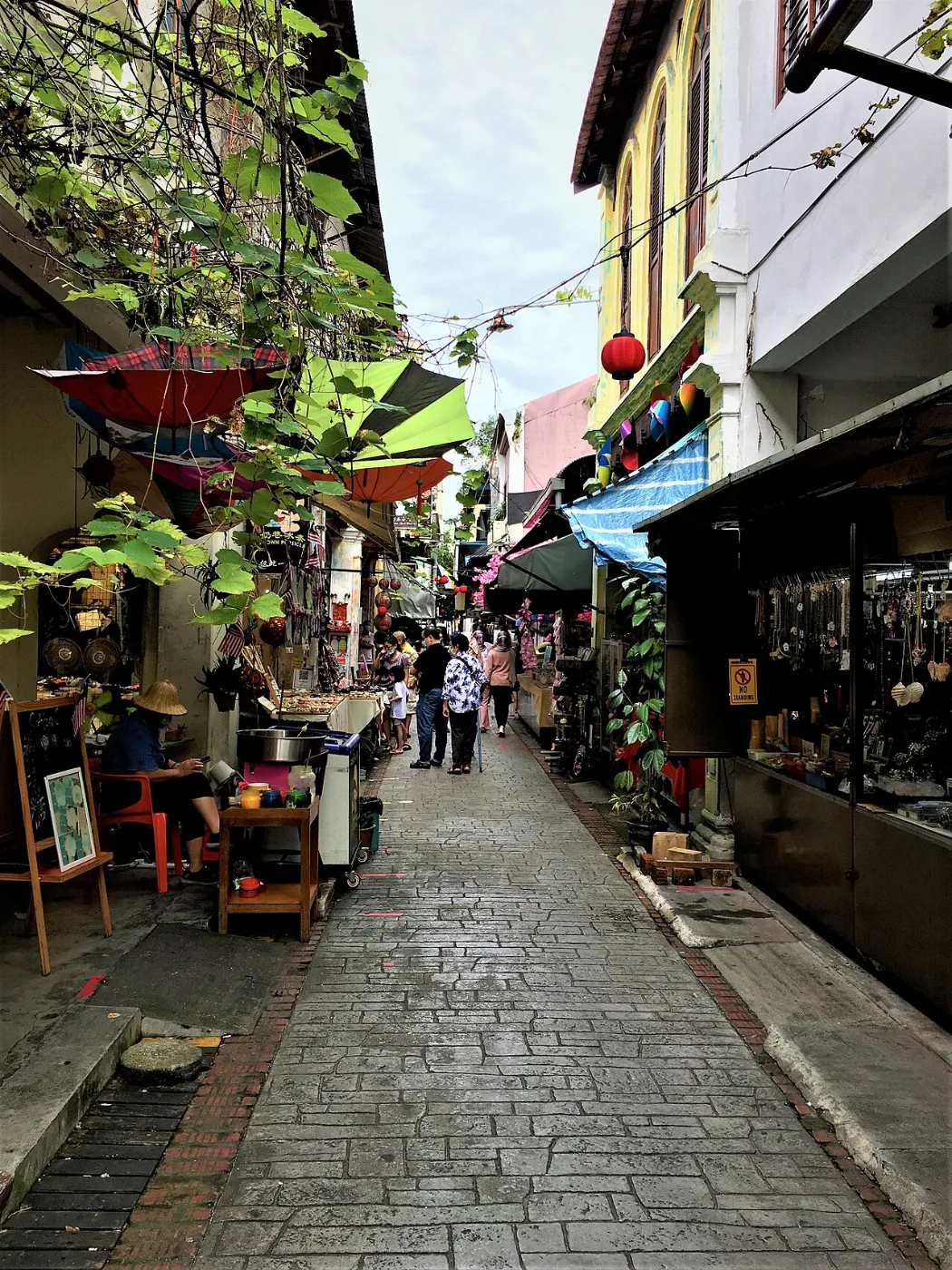
Yau Tet Shin's name is also attached to Concubine Lane in the Old Town. The British Council profile records two versions of its origin. In the first, rich men used the lane to hide their mistresses from their wives; in the second, the mining tycoon built it for his three wives. The profile presents both as stories rather than settled history. Ipoh has since become known, the profile adds, for hipster cafés housed in regenerated shopfronts, and the Old Town for wall paintings: the Lithuanian artist Ernest Zacharevic painted seven murals there, including a tin-mining work titled Evolution on Jalan Bijeh Timah.
IPOH'S COLONIAL BUILDINGS: RAILWAY STATION, TOWN HALL AND BIRCH MEMORIAL
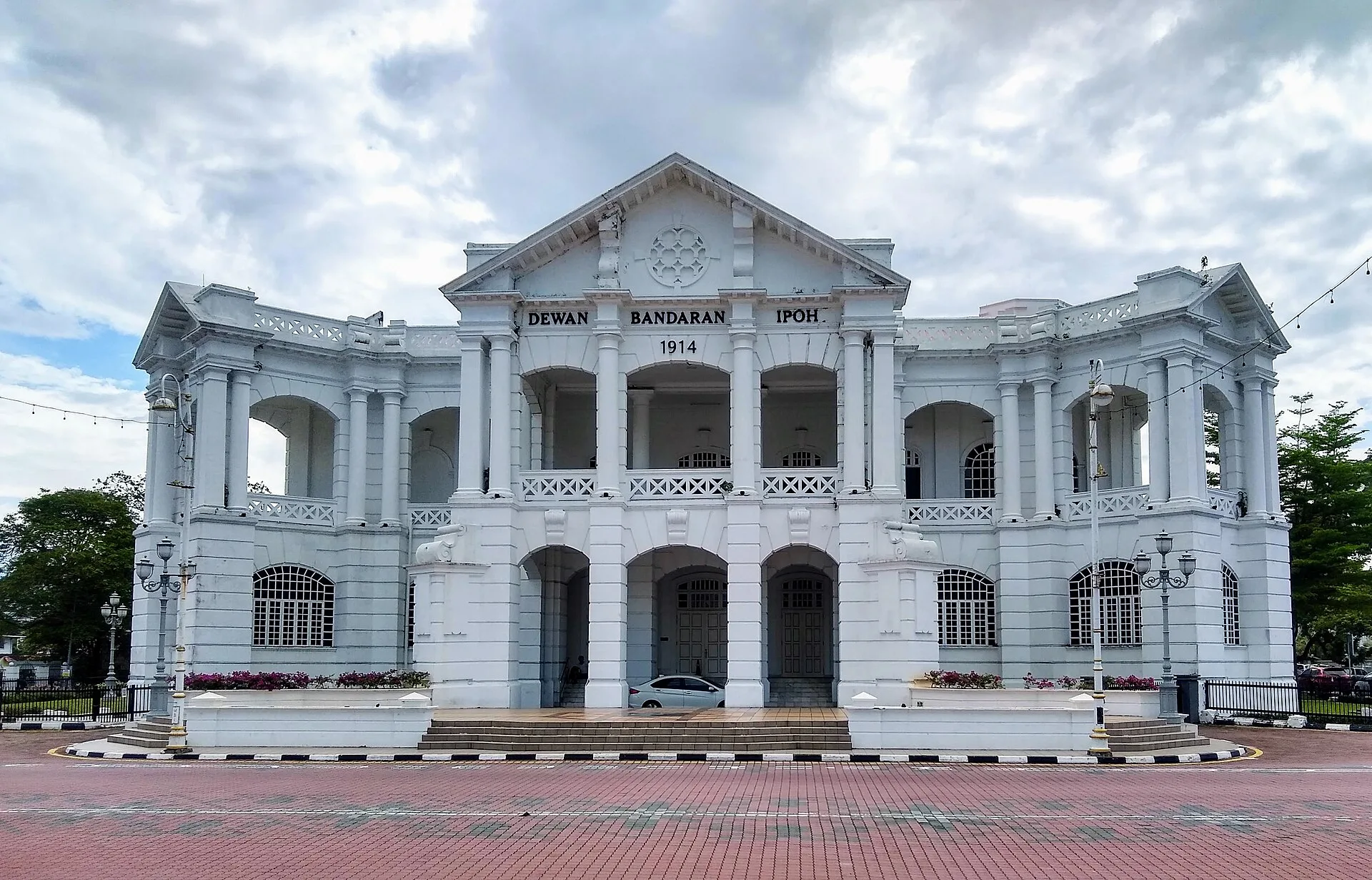
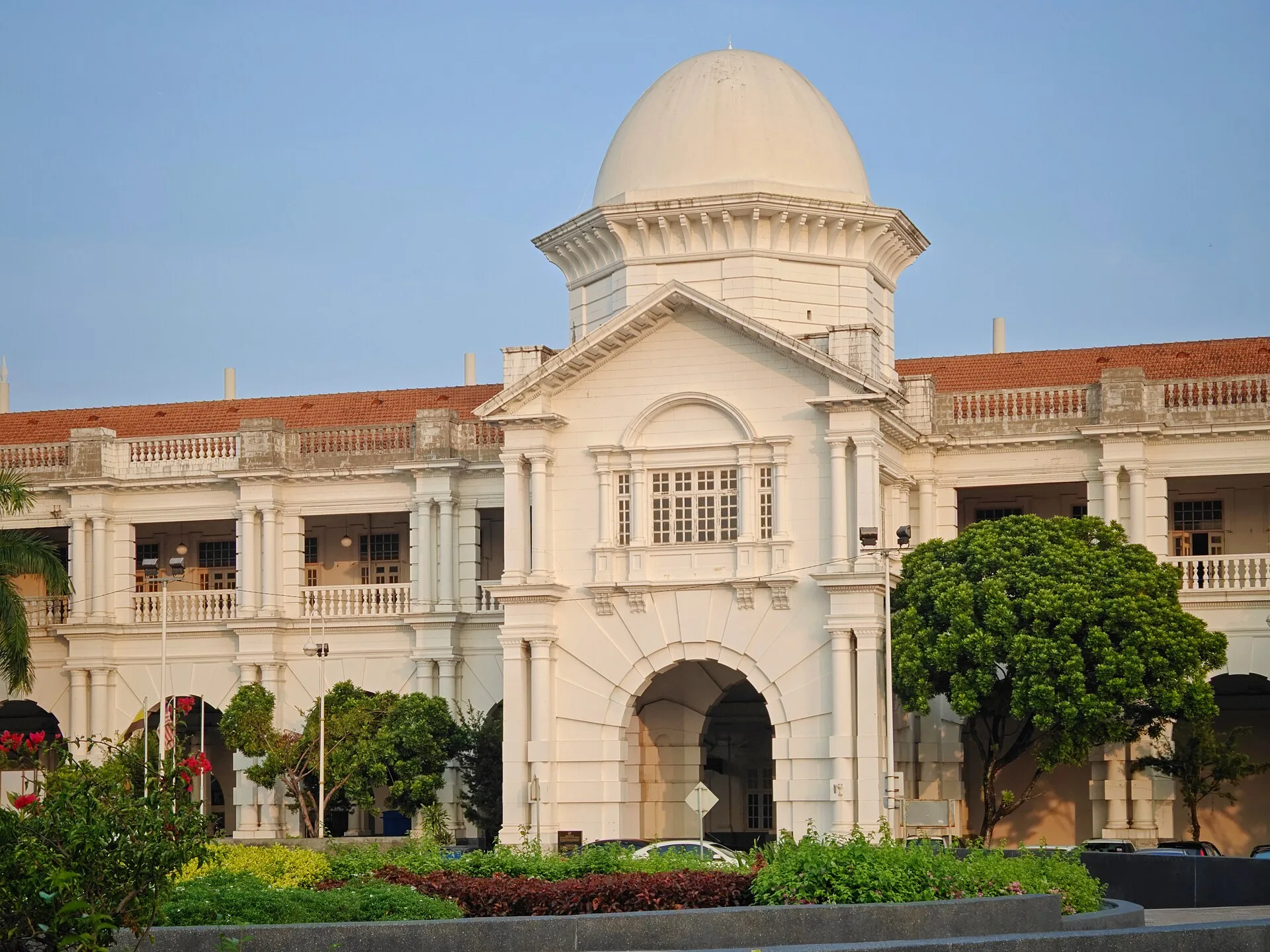
Ipoh Railway Station was constructed in 1917. The British Council profile describes its style as a mix of Neo-Moorish, Mughal, Indo-Saracenic and Neo-Saracenic, and notes that the station served as a shooting location for the film Anna and the King. Britannica calls Ipoh the most important station on the Kuala Lumpur to Butterworth railway. The station's architect, A.B. Hubback, also designed the Ipoh Town Hall and Old Post Office, whose construction began in 1914 and was finished in 1916. The Borneo Post notes that the railway station, town hall and court house, all from the British period, stand a short distance from one another.
The Birch Memorial Tower dates from 1909. It was a project initiated by E. W. Birch, who had it erected in memory of his father, J. W. W. Birch, the first British Resident of Perak. The Ipoh Heritage Trail now covers 27 historical buildings and locations in the city. Padang Ipoh was the setting on 31 May 1962 for the ceremony that declared Ipoh a municipality, and the city was granted city status on 27 May 1988. By then the industry that had built it was in decline: the Borneo Post dates the collapse of the tin market to the late 1970s, after which Ipoh rebuilt its economy as a tourist destination and food centre.
LIMESTONE HILLS AND CAVE TEMPLES OF THE KINTA VALLEY
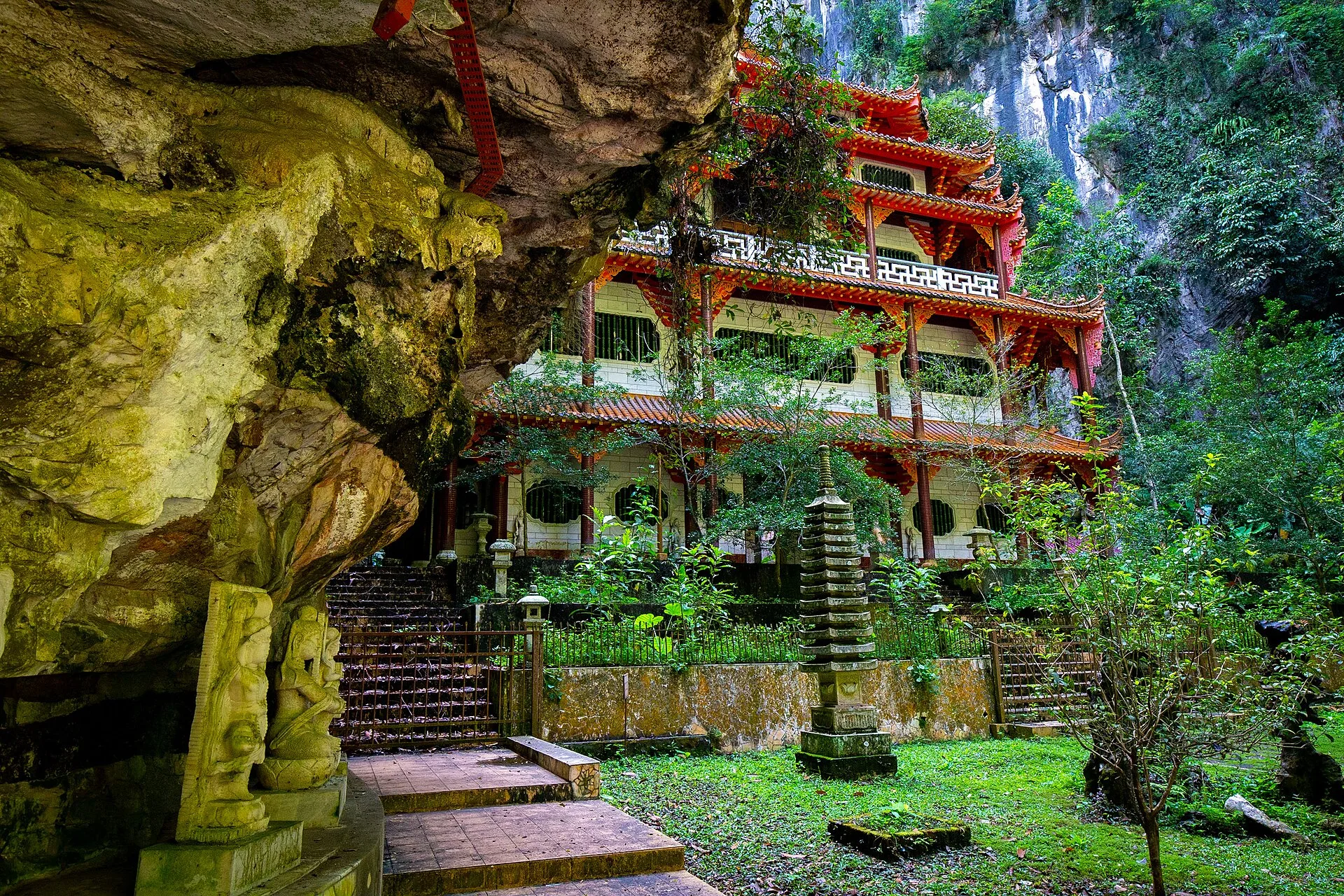
Beneath the Kinta gravels, according to Britannica, lies a limestone structure riddled by solution, and the limestone rocks that rise north and south of Ipoh contain gigantic caves used as Chinese temples. The British Council profile notes that the hills around the city are said to be among the oldest karst landscapes in the world, with cave networks and rich biodiversity. Among the temples set within the limestone is Sam Poh Tong at Gunung Rapat. The profile records it as built by a Buddhist priest from China in 1962 and as housing more than 40 Buddha statues.
On 25 October 2018, Malay Mail reported, Perak's ruler Sultan Nazrin Muizzuddin signed a plaque at Gunung Lang Recreational Park declaring the Kinta Valley Malaysia's second national geopark. The geopark spans the Kinta and Kampar districts of Perak and contains 18 geosites, among them Gunung Lang, Tambun Cave, Naga Mas Cave, Tempurung Cave, Gunung Korbu and the Sungai Salu waterfall. The report quoted a description of the valley as consisting of historical mining heritage, geological history and several other natural landscapes.
WHAT FOOD IS IPOH KNOWN FOR? WHITE COFFEE AND BEAN SPROUT CHICKEN
Ipoh white coffee dates from the years when Perak was a booming tin-mining state and British tin-mining companies set up in Ipoh, according to a 2019 history in Free Malaysia Today. The article credits Hainanese migrants who came to Malaya in the late Qing dynasty: finding Western coffee bitter and acidic, they adapted it by slow-roasting the beans in margarine. The name is a misnomer, since the drink is caramel brown. It comes from the transliteration of its Chinese name, introduced in the 19th century by Chinese migrants who came to Ipoh to work in the tin mines.
Free Malaysia Today tells the story of Wong Poh Chew, a Hainanese chef who opened Kedai Kopi Sin Yoon Loong in Ipoh's Old Town in 1937 with his brother Wong Poh Ting. The brothers experimented with roasting until they settled on a coffee served with condensed milk, which they named Ipoh White Coffee. The same article calls Sun Yuan Foong, in business for more than 80 years, the first kopitiam to serve white coffee, so the article records two claims to the drink.
Malaysia Airlines' Going Places magazine describes nga choy kai, or bean sprouts chicken, as poached chicken served with blanched bean sprouts and silky noodles, and credits Ipoh's limestone water for both. The British Council profile records the legend behind the claim, that limestone makes the water in Ipoh special. The magazine also lists kai si hor fun, rice noodles in a clear broth with chicken strips and shelled prawns, and the salt-baked chicken of Restoran Aun Kheng Lim, which has served that single dish since opening in 1940.
HYATT CENTRIC CITY CENTRE KUALA LUMPUR: TIN MINING AS A DESIGN INFLUENCE

Tin mining is one of three influences behind Silverfox Studios' design for Hyatt Centric City Centre Kuala Lumpur, completed in 2024. The hotel occupies a repurposed 22-storey building, and Silverfox designed the whole tower. The other two influences are graffiti and batik. Tin is the industry that, from the Kinta Tin Rush of the 1880s onwards, drew capital and migrant labour into the valley around Ipoh and made the town the largest in the Federated Malay States after Kuala Lumpur at the start of the 20th century.
Batik informs the pattern, print, colour and layered finishes of the interiors, and on the floors, leaf-patterned carpets and hand-tufted rugs evoke reflected water. The wax and dye textile behind the first of these is traced in Malaysian batik, and the third influence in the history of graffiti art. In Ipoh's Old Town, which the Kinta River separates from Yau Tet Shin's New Town, one of Ernest Zacharevic's seven murals, Evolution on Jalan Bijeh Timah, takes tin mining as its subject.
SOURCES
- Economic History of Malaysia Ipoh: lifted then left behind by tin
- British Council Cultural Cities Profile: Ipoh, Perak
- Britannica Ipoh
- Britannica Kinta Valley
- Borneo Post The city that tin built
- Ritsumeikan University Tin mining activities and sustainability of mining-based cities in Peninsular Malaysia
- Malay Mail Kinta Valley declared Malaysia's second national geopark
- Free Malaysia Today Intriguing and interesting inception of Ipoh White Coffee
- Going Places by Malaysia Airlines Ipoh Eats
- IpohWorld Yau Tet Shin's New Town under construction 1908