FROM THE TALLY HO AND THE HOPE AND ANCHOR TO STIFF RECORDS AND PUNK

Pub rock was a British back-to-basics movement of the early and mid-1970s, played in London pubs such as the Tally Ho and the Hope and Anchor as an alternative to progressive and glam rock. Britannica describes it as rooted in country and rhythm and blues, notes that its musicians rejected the flamboyance of glam by performing in everyday clothes, and credits it with returning rock to the small clubs of its early years. The same entry calls the pub circuit a breeding ground for many of the punk and new wave artists of the late 1970s. Several of those careers passed through Brinsley Schwarz, Dr Feelgood, Kilburn and the High Roads and Stiff Records, an independent label launched in the summer of 1976.
WHAT WAS PUB ROCK?
Britannica lists the best-known pub rock groups as Brinsley Schwarz, Ducks Deluxe, Dr Feelgood, Bees Make Honey and Ace, and states that none of them achieved widespread popularity. The scene's alumni were more successful: Britannica names Joe Strummer of the Clash, Nick Lowe, Dave Edmunds, Chris Difford and Glenn Tilbrook of Squeeze, Dire Straits and Graham Parker, and notes that Elvis Costello, like many onetime pub rockers, initially recorded on the Stiff label. Contemporary Musicians, the Gale reference series, writes that the pub rock bands abjured the slick and expensive production values of progressive groups such as Yes, Genesis and Jethro Tull, and that they are considered direct influences on mid-1970s British punk.
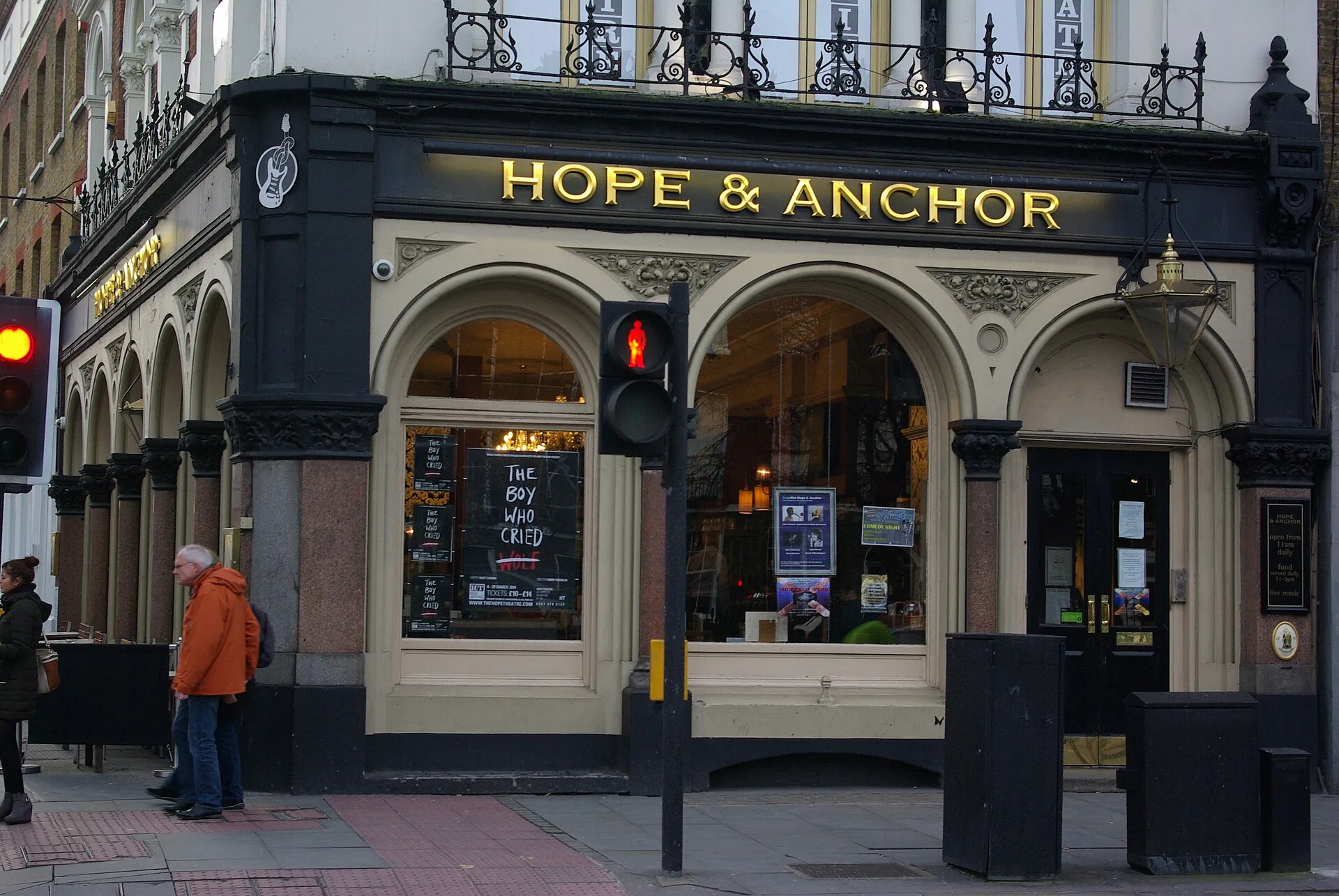
The Hope and Anchor at 207 Upper Street, Islington, is one of the two pubs Britannica names. Historic England dates the building to about 1880 and listed it at Grade II on 30 September 1994. It is a brick pub with stucco and stone dressings, four storeys over a basement, with frontages on Upper Street and Islington Park Street. The ground floor has round-arched arcades of grey and pink polished granite Corinthian columns, the first floor has round-arched windows, some of them pedimented, and both facades finish in a modillion cornice and an arcaded parapet. Historic England records that the interior was very extensively refurbished around 1988 and that no original features of interest survive. An Associated Press tour of London's punk sites describes a ground-floor pub with a small theatre upstairs and a music venue in the basement, whose roster has included the Jam, the Ramones and the Police, and records that the Hope and Anchor also hosted pre-punk bands playing what was called pub rock.
HOW DID EGGS OVER EASY START PUB ROCK AT THE TALLY HO?
The rock historian Ed Ward, reviewing a 2016 reissue for NPR's Fresh Air, traces pub rock to Eggs over Easy, a band from California that recorded with Chas Chandler, the former bassist of the Animals. In October 1970 Chandler and the band went to England and rented time at Olympic Studios, because Chandler was well connected in London and recording there was much cheaper than in America. The band needed income, and Ward writes that its members found the Tally Ho, a pub that occasionally featured jazz, and offered to play on its worst night of the week.
Almost nobody came on the first night, but word of mouth brought a larger crowd the next time. Playing covers and originals for fun, with no record to promote, Eggs over Easy drew an audience that Ward says included members of Brinsley Schwarz and the BBC disc jockey John Peel. Ward describes pub rock as the genre that grew directly out of the band's tenure at the Tally Ho. It spread to the Hope and Anchor and produced Ducks Deluxe, Bees Make Honey and a revitalised Brinsley Schwarz, whose bassist, Nick Lowe, emerged as a songwriter. Ward notes that Eggs over Easy released a single in 1976 and another album in 1980.
HOW DID BRINSLEY SCHWARZ BECOME A PUB BAND?
Brinsley Schwarz grew out of Kippington Lodge, a pop band that Nick Lowe and the guitarist Brinsley Schwarz formed in 1965 in Tunbridge Wells, Kent, and which released several singles with little success. When the keyboard player Barry Landerman left in 1969 to join Vanity Fare, Bob Andrews replaced him, the group took the guitarist's name and brought in the drummer Billy Rankin. It hired Dave Robinson, a former tour manager for Jimi Hendrix, as manager and coproducer of its debut album.
Robinson convinced the band to spend its entire United Artists advance on a private jet that flew 134 British music journalists to New York in 1970, where Brinsley Schwarz opened for Van Morrison and Quicksilver Messenger Service at the Fillmore East. The flight was diverted to Shannon, and Charlie Gillett, writing in Record Mirror, called the show “hard to take, even in the twentieth row”. Contemporary Musicians records that the press either dismissed or ignored the debut album. A second album, Despite It All, followed in 1970.
According to Contemporary Musicians, the band members attended a concert by Eggs over Easy in the summer of 1972, were inspired by the Americans' minimal amplification and sought out smaller venues, which is why Brinsley Schwarz is often credited as a progenitor of the pub rock sound. Ian Gomm joined as second guitarist and vocalist in 1972. Silver Pistol and Nervous on the Road were released in 1972 and Please Don't Ever Change in 1973. Original Golden Greats (1974) was a parody of greatest hits packages made up of new material, and Dave Edmunds produced The New Favourites of Brinsley Schwarz (1974), the final album of original material. The band split in 1975, during a tour with Edmunds.
WHO WERE DR FEELGOOD?
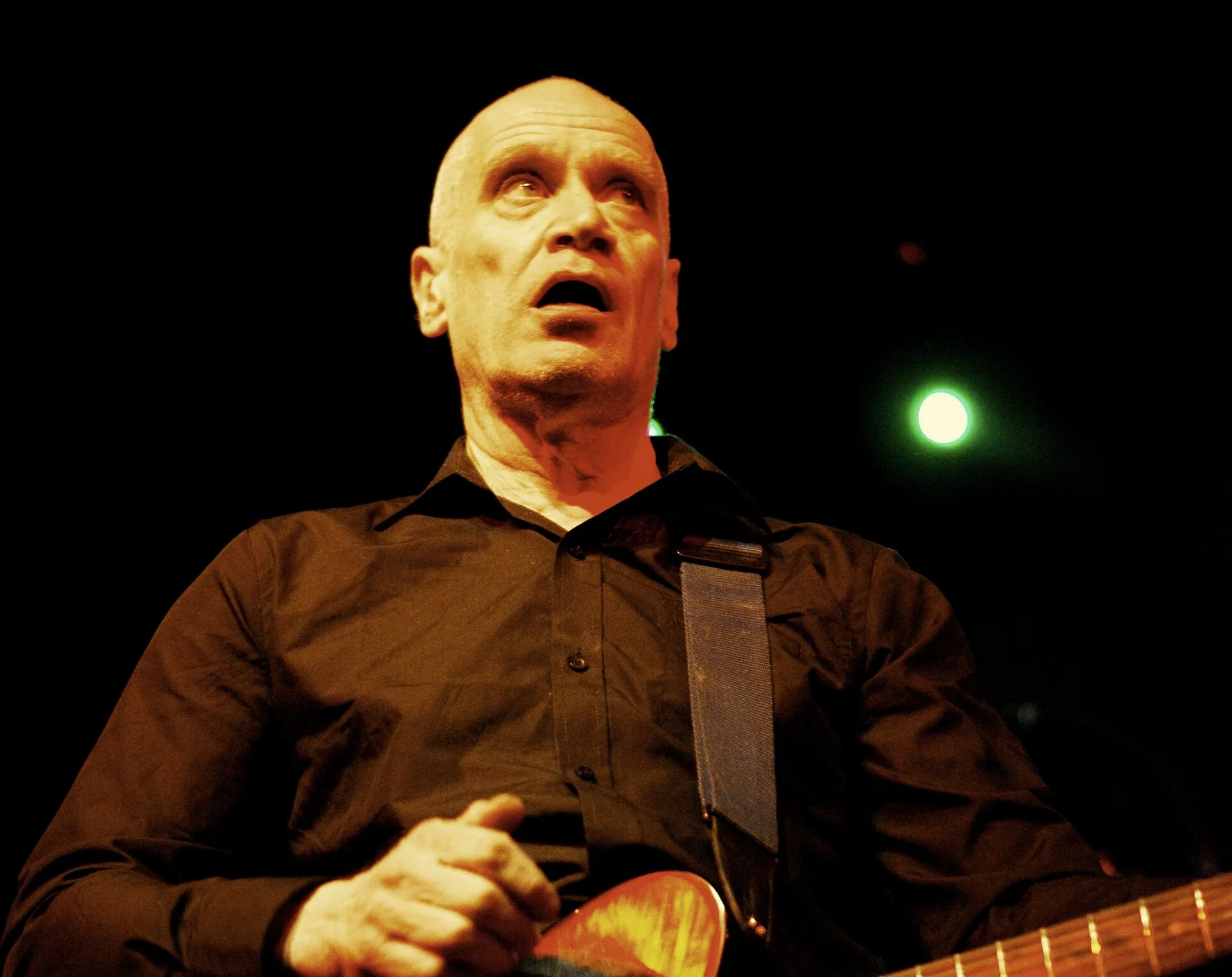
Dr Feelgood came from Canvey Island, which the Associated Press describes as a marshy, industrial oil town in the Thames estuary. The guitarist Wilko Johnson was raised there, studied Anglo-Saxon literature at Newcastle University and worked as a schoolteacher before forming the band with local friends, with Lee Brilleaux as lead singer. Britannica lists Dr Feelgood among the best-known pub rock groups, and the AP describes the band as playing a then-unfashionable brand of blues and rhythm and blues at a time of flamboyant glam and indulgent progressive rock.
The AP records that Dr Feelgood scored a UK number one album, toured the United States and signed a deal with CBS Records. In 1977 Johnson walked out amid friction with Brilleaux, who died in 1994. The AP's 2022 obituary of Johnson credits the band with inspiring the groups that would soon drive the UK punk explosion, and Contemporary Musicians makes the same claim for the pub rock bands as a group, describing them as direct influences on mid-1970s British punk.
WHO WERE KILBURN AND THE HIGH ROADS?
Ian Dury, born on 12 May 1942, graduated as an associate of the Royal College of Art in July 1966, according to the Glasgow School of Art Archives and Collections, and took work as an art lecturer, including a spell at Canterbury College of Art. With some of his students and other musician friends, among them the pianist Russell Hardy, he started a group, Kilburn and the High Roads. The archive records that the band initially made little impact and that its personnel changed constantly.
The Kilburns were then taken up by the pub rock scene, which the archive locates in the smoke-filled bars and pub back rooms of London in the early to mid-1970s, and which gave bands outside the mainstream a platform to play live. Their single “Rough Kids” and “Billy Bentley” was released in November 1974 on Dann, a subsidiary of Pye, and the album Handsome followed in 1975. The band had a cult following, but its live reputation did not translate into sales, and Handsome sold only about 3,000 copies. Britannica names Dury as one of the former pub rockers behind Stiff Records' first success.
HOW DID STIFF RECORDS START?
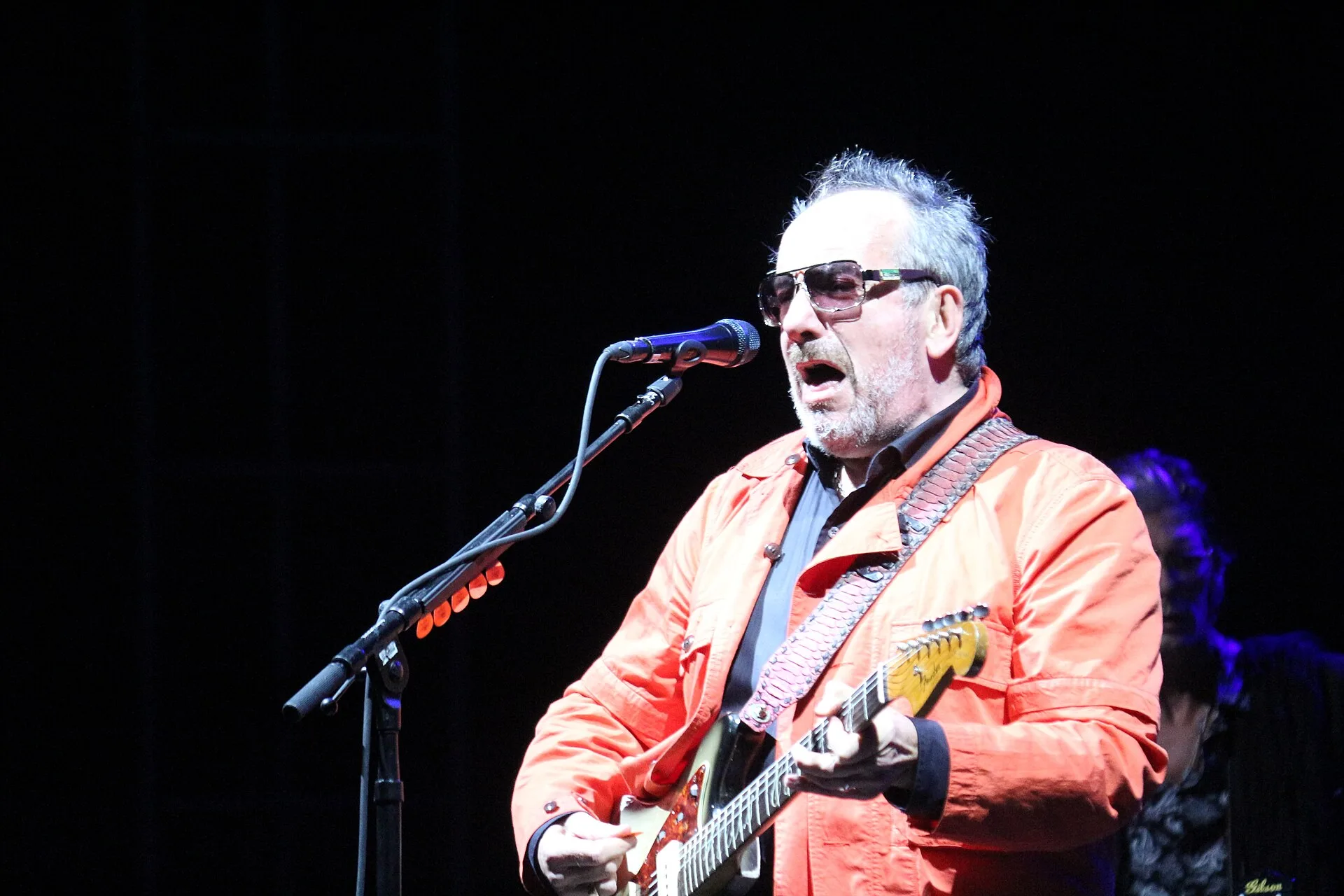
Stiff Records was launched in the summer of 1976, and Britannica names Jake Riviera as one of its heads. Its releases were mostly overseen by Nick Lowe, and its look was the work of the graphic designer Barney Bubbles. Lowe, who became the label's house producer, also produced the Damned's “New Rose”, which Contemporary Musicians says is considered the first punk single. Britannica states that Stiff released the first punk record, by the Damned, but never signed another punk act.
The label's first success came instead from Elvis Costello, Ian Dury and Jona Lewie, whom Britannica describes as former pub rockers who reinvented themselves. Costello had befriended Lowe, then the bassist of Brinsley Schwarz, and Lowe brought him to Riviera's attention; around this time he adopted the performing name Elvis Costello. Dury toured with Costello on the Live Stiffs tour of 1977, the year of his album New Boots and Panties. Britannica credits Stiff with starting Britain's do-it-yourself independent label boom. Contemporary Musicians also records that Schwarz and Andrews formed the Rumour, which recorded several albums and backed Graham Parker, and that Lowe formed Rockpile with Dave Edmunds and became a successful producer of acts for Stiff. In its account of new wave, Britannica groups Lowe, Parker and Costello together as pub rock veterans.
HOW DID PUB ROCK LEAD TO PUNK?
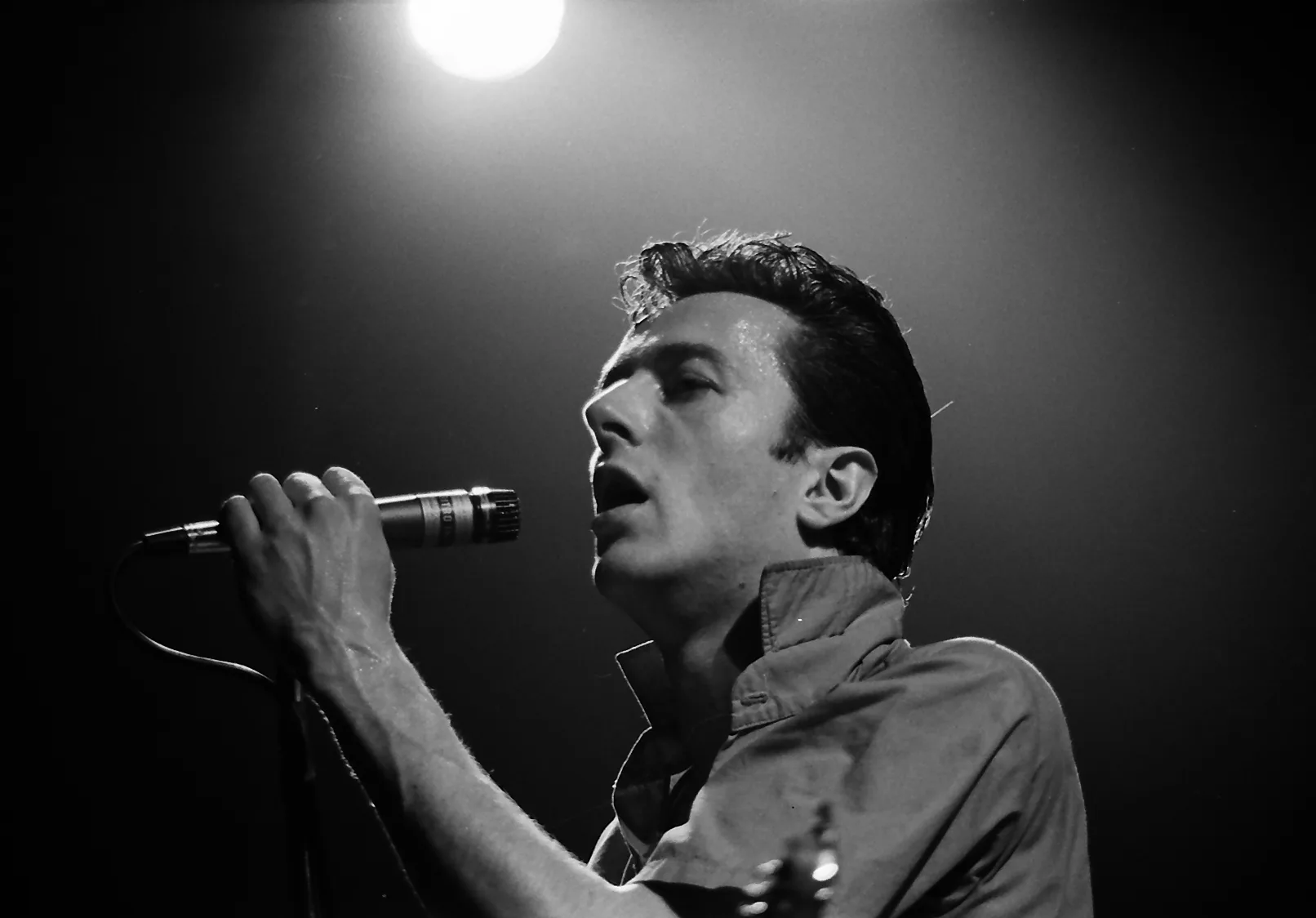
Joe Strummer, born John Graham Mellor on 21 August 1952, formed his first rhythm and blues band, the 101ers, in 1974, and Britannica's pub rock entry names him among the artists the scene produced. Influenced by the Sex Pistols, he converted to punk, and in 1976 he joined Mick Jones, Paul Simonon and other musicians to form the Clash. The Clash released the single “White Riot” and the album The Clash in 1977, followed by Give 'Em Enough Rope in 1978 and London Calling in 1979.
The AP's tour of London punk sites records that the Sex Pistols played the 100 Club at 100 Oxford Street in May 1976 and that the club hosted a punk festival in the autumn of that year. On 29 August 1976 the Clash, the Sex Pistols and the Buzzcocks played together at the Screen on the Green cinema in Islington, and in September 1976 the Clash played their fifth show at the Roundhouse, a former railway repair building. Britannica credits British groups such as the Damned and the Sex Pistols with later fuelling regional punk scenes in Seattle, San Francisco and Los Angeles.
GORDON RAMSAY PUB & BAR AT THE LONDONER MACAO

Silverfox Studios completed Gordon Ramsay Pub & Bar at The Londoner Macao in 2023. Its design cue is the London Bridge to Greenwich railway viaduct, built in the 1830s with 878 brick arches, many of which now house shops, restaurants, bars and pubs. Steel, timber, metal and cast iron are layered into the brickwork and vaults of the interior, and the dining room sits under arched brick vaults. The ceilings are scalloped, and the columns are cast iron finished in dark green enamel.
The fittings are Victorian pub cabinetry, panelling and mouldings. The Hope and Anchor, one of the two London pubs Britannica names as pub rock venues, is itself a Victorian pub: Historic England dates it to about 1880 and records polished granite Corinthian columns set in round-arched arcades along its ground floor. At Gordon Ramsay Pub & Bar the columns are enamelled cast iron rather than granite, and the arches are the brick vaults over the dining room rather than an arcaded street front.
SOURCES
- Encyclopaedia Britannica Pub rock
- Encyclopaedia Britannica Nick Lowe
- Encyclopaedia Britannica Joe Strummer
- Encyclopaedia Britannica The Damned
- Gale, Contemporary Musicians, via Encyclopedia.com Brinsley Schwarz
- NPR How the band Eggs Over Easy kicked off the pub rock movement of 1970s London
- Glasgow School of Art Archives and Collections Dury, Ian
- Associated Press Wilko Johnson, British rocker who defied cancer, dies at 75
- Associated Press Touring sites from London's punk rock scene, 40 years later
- Historic England Hope and Anchor Public House, list entry 1195774