FROM KOBE'S 8-TRACK MACHINES TO TAIWAN'S PRIVATE-ROOM KTV CHAINS
KTV, the private-room karaoke sold in Taiwan by chains such as Cash Box, grew out of coin-operated machines leased to Japanese bars and snack bars from the late 1960s. In 1985 a converted shipping container in Okayama Prefecture opened as a karaoke box, moving the singer from a bar audience into a room for a closed group. Laserdisc video from 1982 and songs delivered over telephone lines from 1992 gave karaoke on-screen lyrics and catalogues of thousands of titles. Hong Kong's karaoke lounges followed the Japanese private-room model in the 1990s, by 2006 Cash Box ran a Taipei outlet with 110 rooms, and Taiwanese chains later opened outlets in Shanghai.
WHO INVENTED KARAOKE?
The most widely told origin story belongs to Daisuke Inoue, born in Osaka in 1940. Writing in Time in 1999, Pico Iyer recounted that by 1970 Inoue and six colleagues were playing clubs in Kobe, and that when the president of a small steel company asked Inoue to play for him on an overnight trip to a hot springs resort, Inoue gave him a tape of his accompaniment. In 1971 the group had 11 homemade machines built, fitted with custom tapes and amplifiers, and began leasing them to bars in Kobe. Iyer reported that Inoue made almost no money from the machine.
The All-Japan Karaoke Industrialist Association's chronology dates the start of the karaoke business to the same machine. It records Inoue, founder of the company Crescent, renting out an 8-track player with a microphone input and a coin timer, supplied with 40 songs on 10 tapes, at 100 yen for five minutes, and notes its popularity in Kobe. The chronology also credits Toshiharu Yamashita, founder of Taiyo Records, with an 8-track accompaniment tape released in 1970, which it counts as the first karaoke software. Inoue never patented the machine; Time noted that the only patent he briefly held was for plastic-covered songbooks.
Inoue is not the only claimant. The IEEE, which dedicated a Milestone plaque in Tokyo's Itabashi ward in June 2025, credits Shigeichi Negishi of Nichiden Kogyo with a machine built in October 1967 that mixed live vocals with pre-recorded accompaniment. His Music Box held 20 instrumental tracks on 8-track tapes, a lyrics card and a coin timer charging 100 yen for 10 minutes. The trading company Kokusai Shohin sold and leased it to restaurants, coffee shops and snack bars from the end of 1967, and it was renamed the Sparko Box in 1969. According to the IEEE, an investigation by the karaoke association, founded in 1994, concluded that Negishi built the first karaoke machine with its essential characteristics.
FROM 8-TRACK TAPES TO LASERDISC KARAOKE
Through the 1970s karaoke was a format for bars and banquet halls. The IEEE history notes that use shifted from listening to music to singing during the decade, driven by the recession in restaurants after the mid-1970s oil crisis, and that machines spread to small bars, restaurants and hotel banquet halls. The association's chronology records hardware and software makers renting out equipment from 1973, and Teichiku selling karaoke tapes from 1976, the year Clarion and JVC entered the market. Nippon.com describes early singers working from cassette tapes with printed lyrics, performing in bars or banquet rooms in front of large audiences.
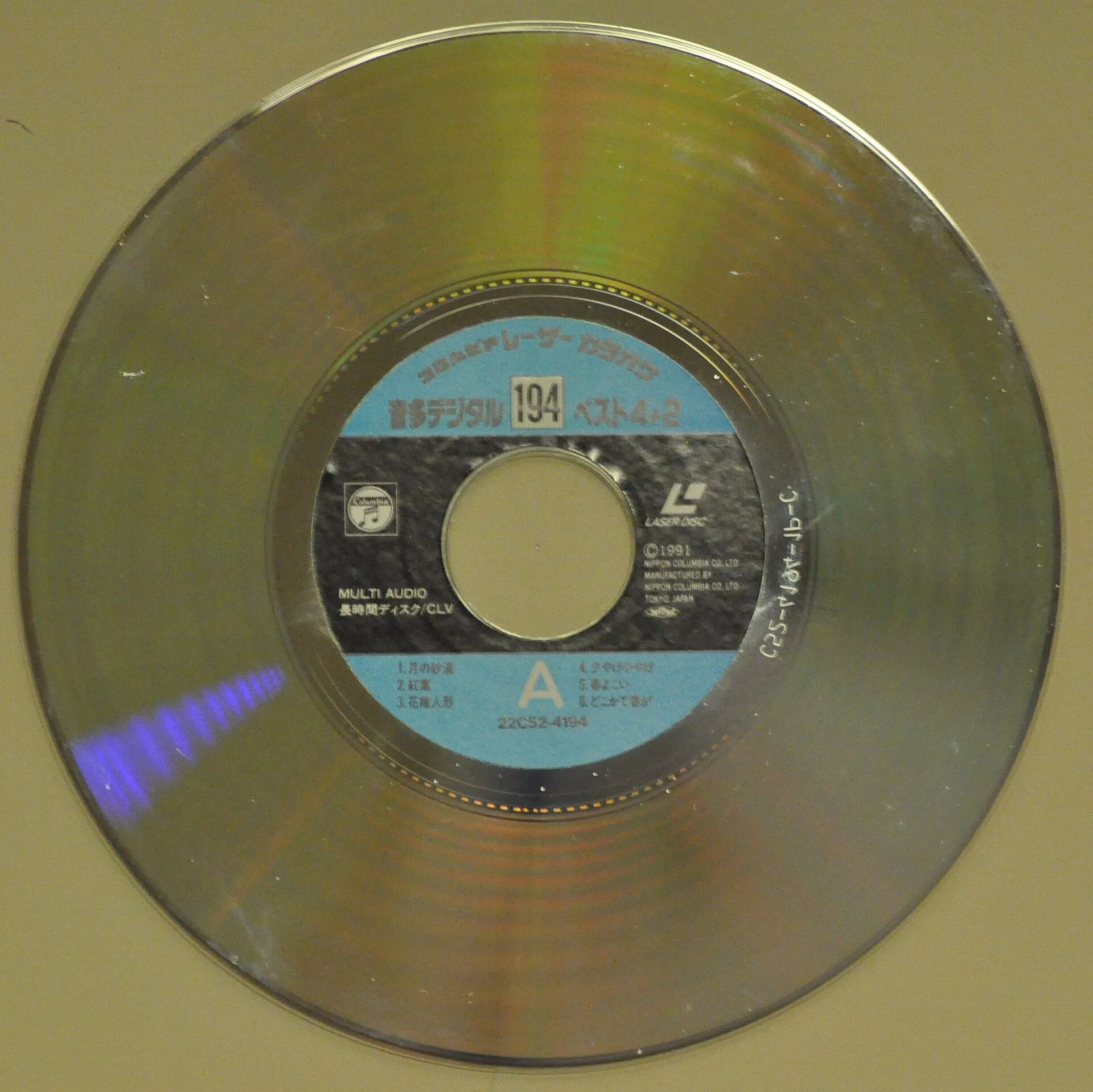
Video arrived in the early 1980s. Pioneer developed the first commercial laserdisc karaoke system in 1982, a date also given by the International Directory of Company Histories, and JVC followed in 1983 with its VHD video disc format. Laser karaoke, in the IEEE's summary, added lyrics and images to the accompaniment. In 1984 Daiichikosho and Sony jointly developed a compact CD autochanger operated by remote control. By the association's figures, video karaoke made up about 80 per cent of karaoke shipments in Japan from 1989 to 1991.
WHAT IS A KARAOKE BOX?

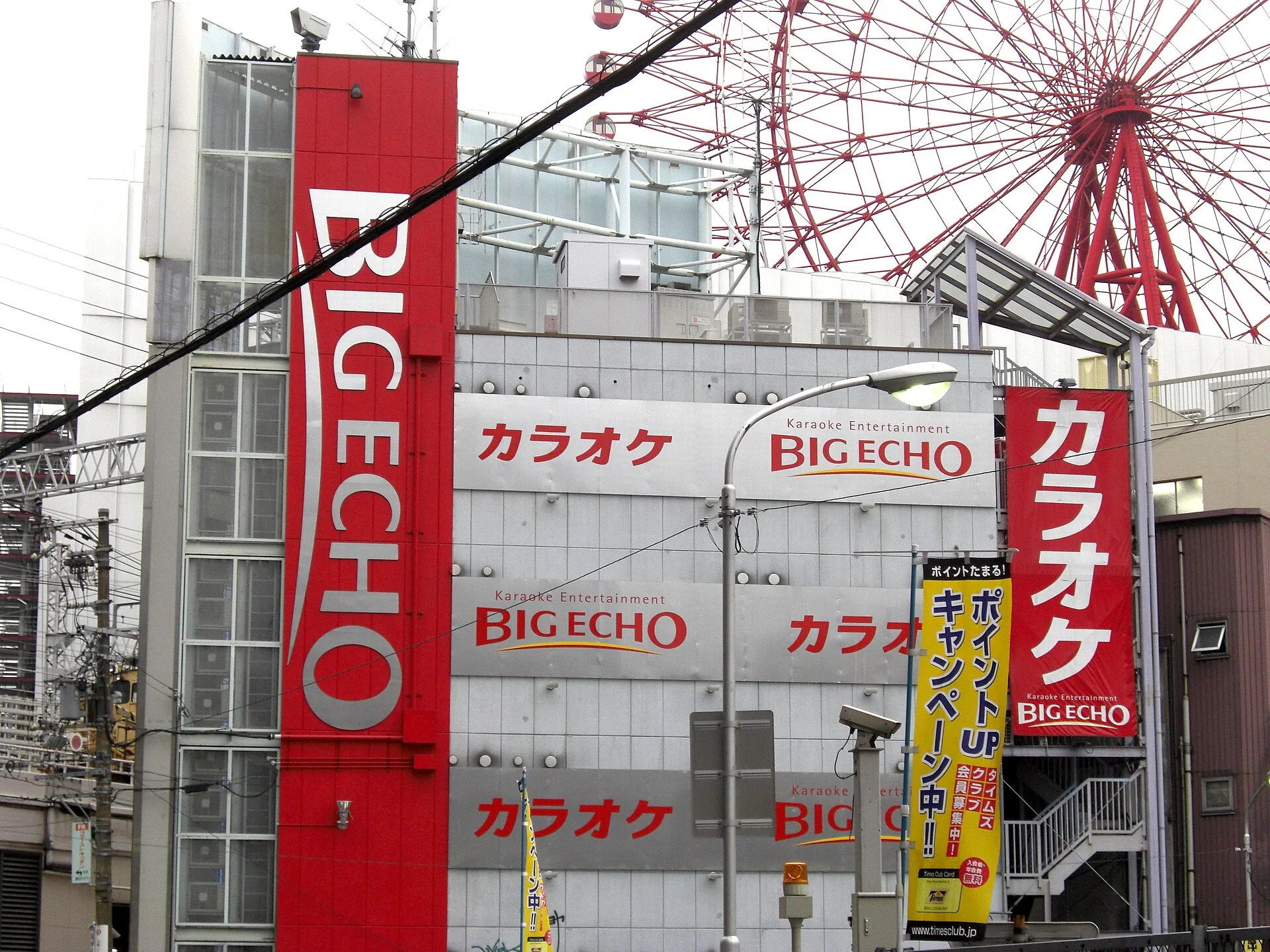
A karaoke box is a room rented by a group for private singing. According to the International Directory of Company Histories, an Okayama entrepreneur converted a shipping container into singing cubicles in 1985, and the association's chronology records a container-type outdoor karaoke box opening in Okayama Prefecture that year, equipped with CD autochangers. Nippon.com describes these converted containers as small private spaces for friends or family, in place of the bar audience. Daiichikosho, a company incorporated in 1973, opened its own karaoke box chain, Big Echo, with a first branch in Hiroshima in 1988.
From the 1990s, according to Nippon.com, soundproofed rooms inside buildings replaced containers as the norm, and teenagers became a major audience. The IEEE history dates soundproofed karaoke boxes to the mid-1980s and records the Japanese karaoke market peaking at about 1.298 trillion yen in 1996, before falling to about 600 billion yen by 2014. The association has published an annual Karaoke White Paper on the industry since 1995. Nippon.com also reports a more recent rise in solo karaoke, with venues adding dedicated one-person rooms.
HOW DID COMMUNICATION KARAOKE AND SCORING CHANGE THE ROOM?
The association's chronology records centralised systems from 1990 that delivered karaoke over coaxial cable to contracted venues, and the launch of communication karaoke in 1992 with about 3,000 songs. The IEEE describes this as streaming karaoke, with MIDI data sent to machines over telephone lines. By 1995 all 15 makers, running 10 systems between them, had released communication products, and shipments reached 104,000 units, about 80 per cent of the total. In 1998 communication karaoke accounted for 94 per cent of the year's shipments.
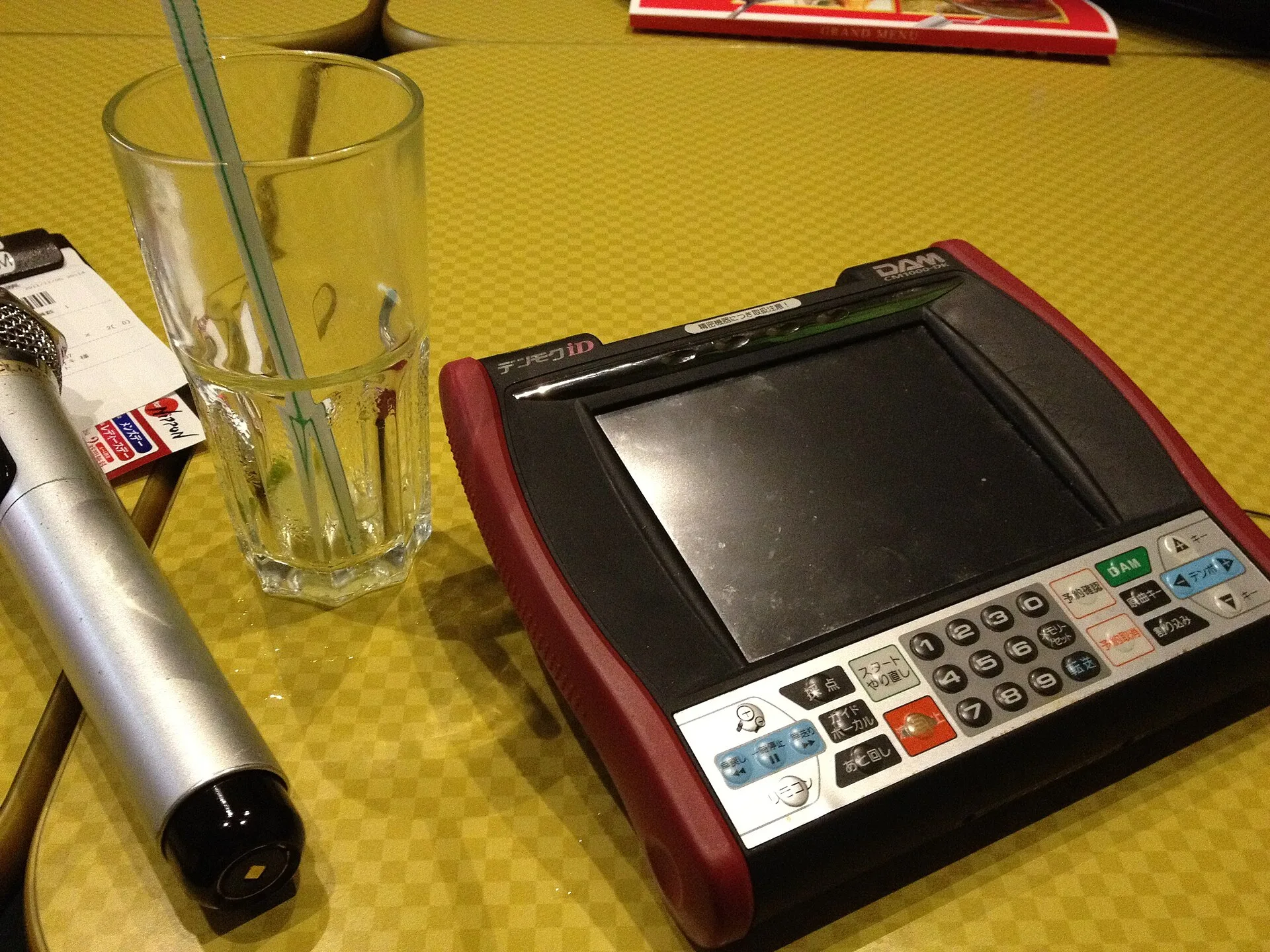
Song selection moved from printed books to handsets. The chronology lists the first electronic songbook in 1995 and the Denmoku electronic songbook in 2002, alongside broadband-compatible systems. Daiichikosho, according to the International Directory of Company Histories, introduced its own remote song-delivery systems in 1994 and internet-based systems under the DAM brand in 2000, with catalogues of tens of thousands of songs. A series of mergers then left Japan with two makers, Daiichikosho and Exing, after BMB merged with Exing in July 2010.
Song scoring spread with the box. The association's chronology records a boom in scoring machines in the early 1990s, during the growth period of karaoke boxes. The DAM systems of 2000 tracked singers' scores and let users share song lists and scores and compete online. Nippon.com describes current machines that grade singers on how accurately they hit the notes, and that let them change key and speed, add echo, or play the vocal track for practice. A typical songbook, it reports, now lists more than 100,000 songs.
HOW DID KTV SPREAD ACROSS HONG KONG, TAIWAN AND MAINLAND CHINA?

Karaoke reached Hong Kong from Japan in the 1990s, according to a 1997 report by Vivian Chiu in the Japan Times ST edition. A few restaurants in Tsim Sha Tsui installed machines first. One chain opened its first lounge in Causeway Bay in 1990 and had eight by 1997, and by 1993 the city had hundreds of karaoke lounges. Most lounges followed the Japanese model, renting private rooms known as boxes, with songs in Cantonese, Mandarin, English, Japanese and Thai. Daiichikosho opened the first Big Echo outside Japan in Hong Kong, and the Big Echo Club Karaoke Box had six Hong Kong outlets in 1997.
In Taiwan, the Taipei Times described Cash Box in 2007 as the island's largest karaoke chain by sales, with annual sales that had peaked at NT$3.97 billion in 2005; two closures announced that year would cut it to 17 stores. Its Chunghua Road outlet near Ximen MRT station in Taipei had 110 rooms and averaged NT$24 million in monthly sales in 2006, and its replacement across the street had nearly 180 rooms. Its rival Holiday Entertainment operated 57 outlets, with 2006 revenue of NT$3.09 billion.
Japanese and Taiwanese operators also moved to the mainland. Daiichikosho established Daiichikosho (Shanghai) in 2002 and a Beijing music and culture company in 2005, before announcing in December 2006 that it would close its Chinese operations. Cash Box and Holiday expanded together. In 2007 the Taipei Times reported that Holiday planned to invest US$1.69 million in a new Shanghai outlet held in a 40 to 60 joint venture with Cash Box, and that the two companies expected to have 17 stores in China by the end of that year, up from an original plan of 13.
HOW DOES A KTV PRIVATE ROOM WORK?

Nippon.com contrasts Japanese karaoke venues, where groups of all sizes have their own room, with US karaoke bars, where customers take turns in one large room. Guests give their group size and planned hours at reception, and staff guide them to a room. Venues charge by the hour rather than by the song, with lower prices at quiet times such as weekday afternoons; many open 24 hours, some offer all-you-can-drink plans, and some supply tambourines, maracas and costumes. Songs are chosen by number from a songbook or on a touchscreen controller, and play in the order selected.
Room size sets the price. In 1997 the smallest Hong Kong box, for six or seven people, cost about US$3.60 an hour, and a deluxe party box about US$13. In Taiwan, a 2024 Guardian report republished by the Taipei Times described cities with hundreds of KTV options, from Partyworld-type chains to two-person booths in metro stations. Popular orders at a Partyworld branch on Zhongxiao Dunhua included dumplings, beef noodle soup and beer, and the report cited Statista data showing that more than half of Taiwanese respondents had visited a KTV in the past year.
GRAND IMPERIAL COURT AT MGM MACAU

Grand Imperial Court is a Chinese fine dining restaurant at MGM Macau, completed by Silverfox Studios in 2024. An automated sliding entry opens onto a Moutai display wall of floating, lit red-and-gold jewel-box vitrines holding rare vintage bottles. Beyond the entry are the restaurant's private suites, themed on sapphire, emerald, ruby and gold and furnished with custom hand-crafted tapestries. The longer history of such rooms in Chinese restaurants is set out in the history of private dining rooms in Chinese hospitality.
The private suite and the karaoke box share one arrangement: a single party takes a room of its own rather than a seat in a shared hall. In karaoke, that arrangement appeared in the converted shipping container in Okayama in 1985, in the box rooms of Hong Kong lounges in the 1990s, and in Taiwan's KTV chains, where Cash Box was enlarging its party rooms in 2007. At Grand Imperial Court the room is a dining suite, identified by its gemstone or gold theme and its tapestries.
SOURCES
- TIME Daisuke Inoue, by Pico Iyer, 1999
- IEEE / Engineering and Technology History Wiki Milestones: First Karaoke Machine, 1967
- All-Japan Karaoke Industrialist Association Karaoke History Chart
- Nippon.com Japan Glances: Karaoke
- Encyclopedia.com Daiichikosho Company Ltd. (International Directory of Company Histories)
- The Japan Times ST Hong Kong Outlook: In the Shadow of the Karaoke Boom, by Vivian Chiu, 2 May 1997
- Taipei Times Cash Box KTV shutters Taipei outlet, 2007
- Taipei Times / The Guardian FEATURE: Taiwan sings through typhoon, by Helen Davidson, 2024