FROM SHINJIRO TORII'S YAMAZAKI DISTILLERY AND TAKETSURU'S YOICHI TO THE HIGHBALL, WORLD AWARDS AND A 2021 LABELLING STANDARD
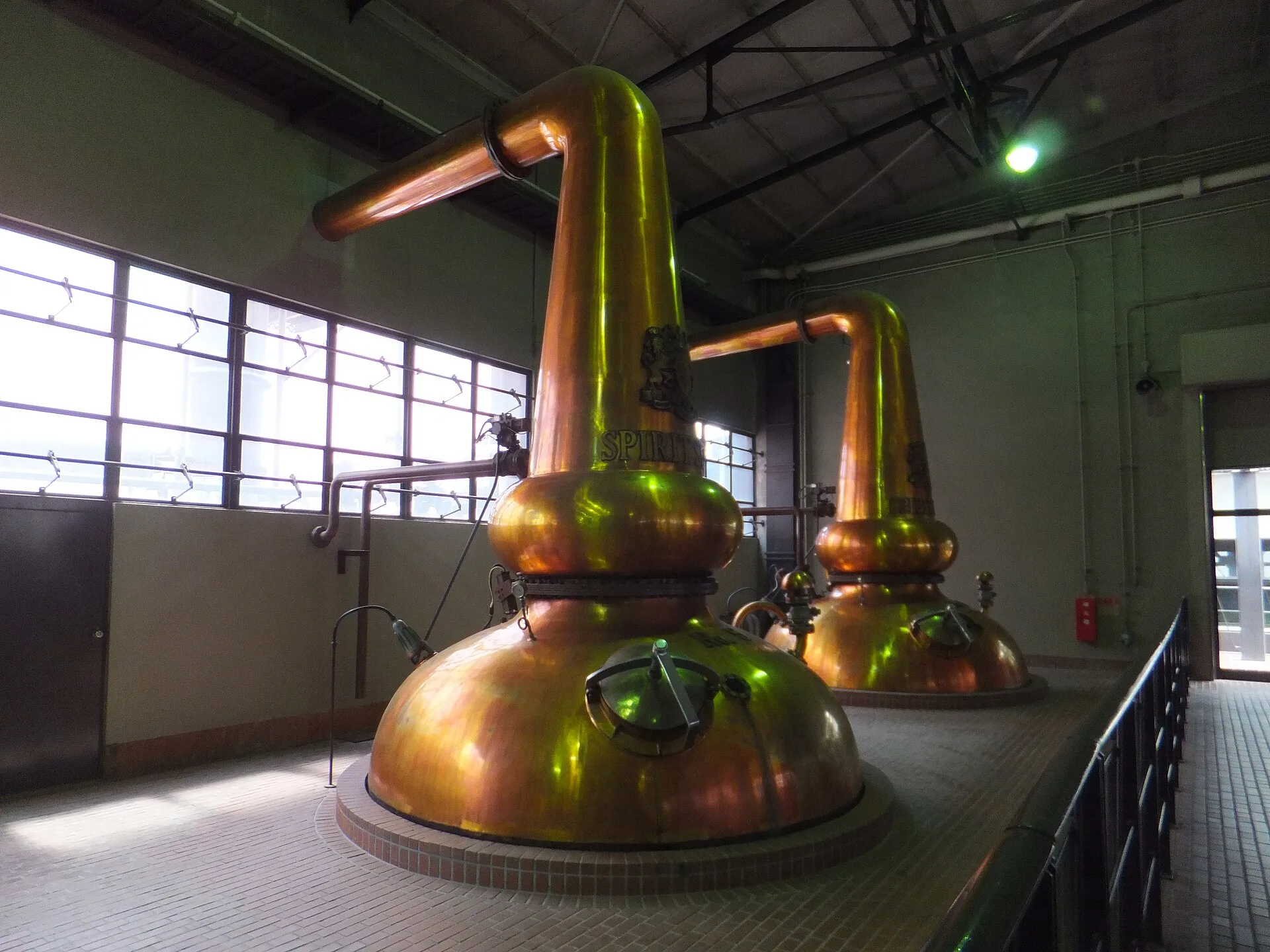
Japanese whisky dates its start to 1923, when Shinjiro Torii of Kotobukiya, the Osaka company now called Suntory, began building the Yamazaki distillery southwest of Kyoto. The man he hired to build it, Masataka Taketsuru, had studied chemistry in Glasgow and trained at Scottish distilleries, and in 1934 he left to found the company that became Nikka, with its own distillery at Yoichi in Hokkaido. Over the next century the category went through a postwar highball fashion, a production peak in 1983, a market that had shrunk to a fifth of that size by 2008, a revival from 2008 and a run of international competition wins from 2001. On 12 February 2021 the Japan Spirits & Liqueurs Makers Association established a standard setting out which products may use the term on a label.
WHO STARTED JAPANESE WHISKY?
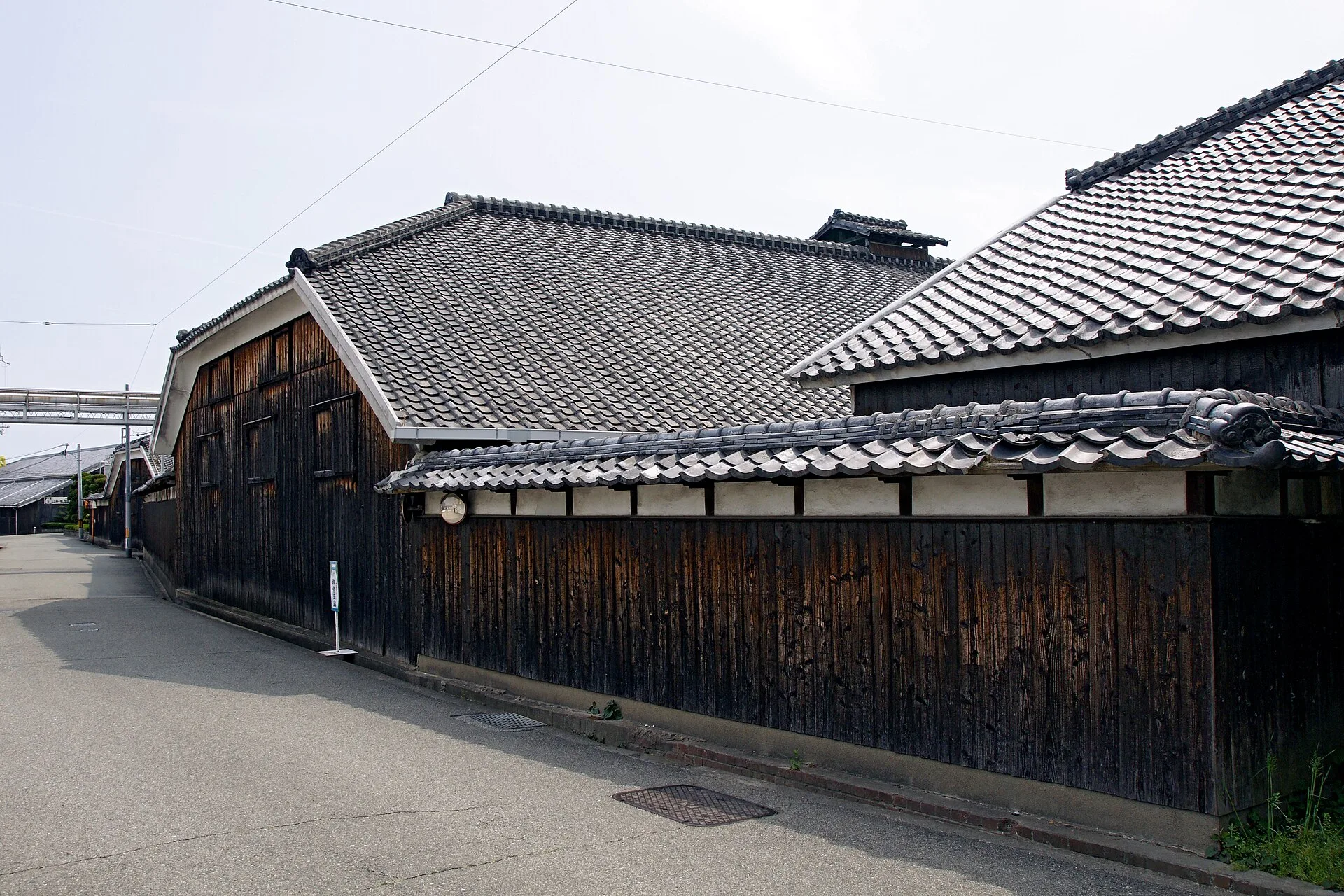
Shinjiro Torii was born in Osaka on 30 January 1879, according to the National Diet Library. He entered Osaka Commercial School in 1890 and in 1892 joined Konishi Gisuke Shoten, where he learned to blend imitation whisky. In 1899 he opened his own business, Torii Shoten. He launched Akadama Port Wine in 1907, and in 1921 he founded Kotobukiya Co., Ltd., the company later renamed Suntory. The Diet Library calls him the founder of the foreign liquor industry in Japan.
Torii was not the only Japanese producer interested in whisky. Eigashima Shuzo, a sake maker in Akashi, Hyogo Prefecture, founded in 1679 and incorporated in 1888, obtained a whisky production licence in 1919, before Yamazaki was built, although it did not begin pot-still production until 1961. In 1923 Torii invited Taketsuru to build a whisky distillery at Yamazaki in Osaka Prefecture. Nippon.com treats that year as the beginning of Japanese whisky and describes Torii and Taketsuru together as its fathers. Taketsuru went on to found Nikka Whisky and served as its first master blender, while Torii's grandson Torii Shingo later became Suntory's third-generation master blender.
HOW MASATAKA TAKETSURU LEARNED TO DISTIL IN SCOTLAND
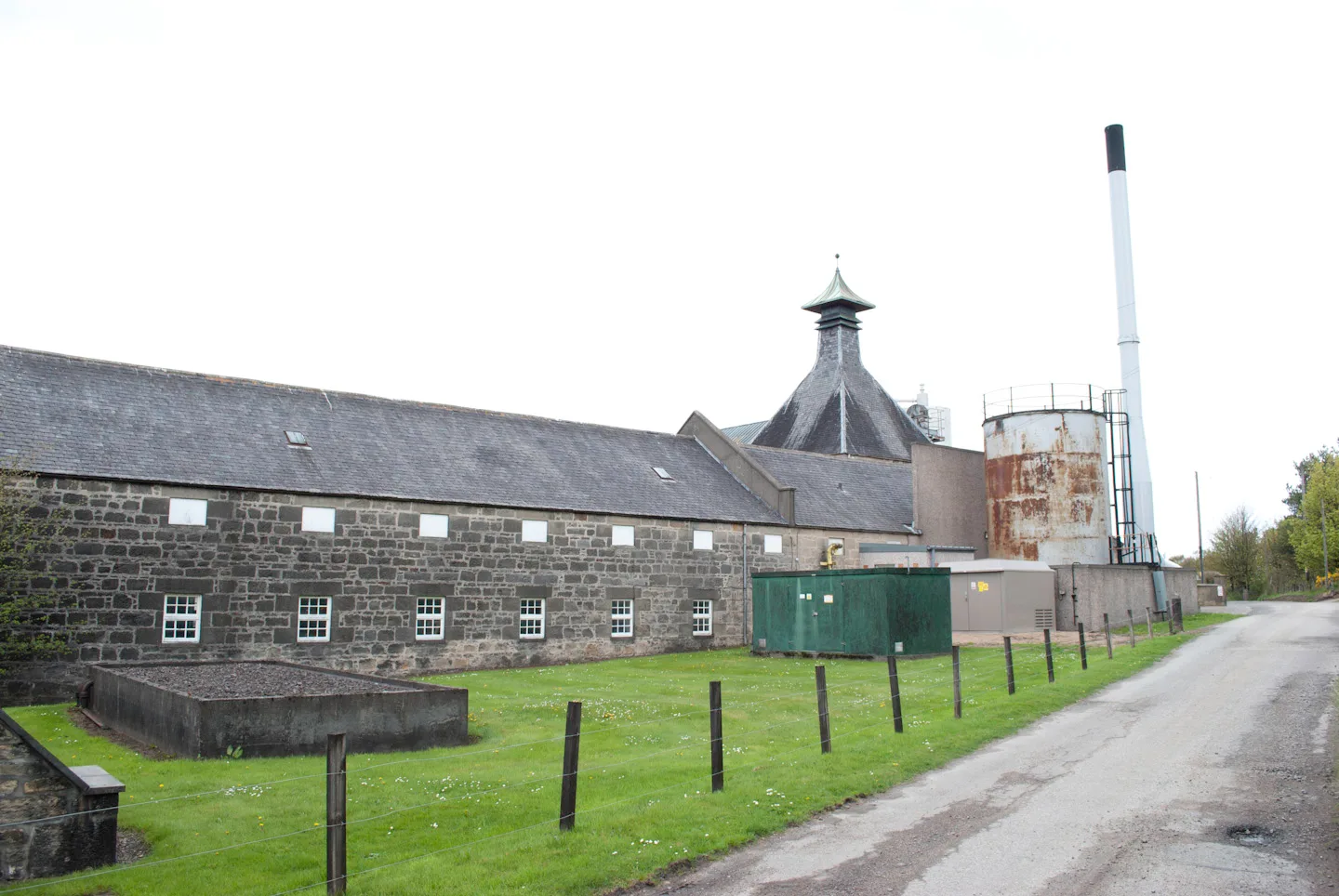
Masataka Taketsuru was born in 1894 into a sake brewing family in Hiroshima Prefecture. In 1918 his employer, the sake brewer Settsu Shuzo, sent him to Scotland to train in whisky production. In 1919 he enrolled at the University of Glasgow's Gilmorehill campus to study organic chemistry under Thomas Stewart Patterson, who then held the Gardiner Chair of Chemistry. A 2015 university news item calls him the father of Japanese whisky, and in March 2015 a crew from the Tokyo Broadcasting System programme Sekai Fushigi Hakken filmed on campus for a documentary about his student years.
Alongside his studies, Taketsuru did practical training at two distilleries: Longmorn in Speyside and Hazelburn in Campbeltown. In Kirkintilloch, near Glasgow, he lodged at a guesthouse run by the mother of Rita Cowan, whom Japan's national tourism organisation names as Jessie Roberta Cowan, and she became his wife. Ishii Masato, writing for Nippon.com, dates his return to Japan to 1920. Nikka's own timeline records her death in 1961 at the age of 64, and Taketsuru's in 1979 at 85. NHK broadcast Massan, a morning drama based on the couple's lives, from September 2014 to March 2015.
WHEN WAS THE YAMAZAKI DISTILLERY BUILT?
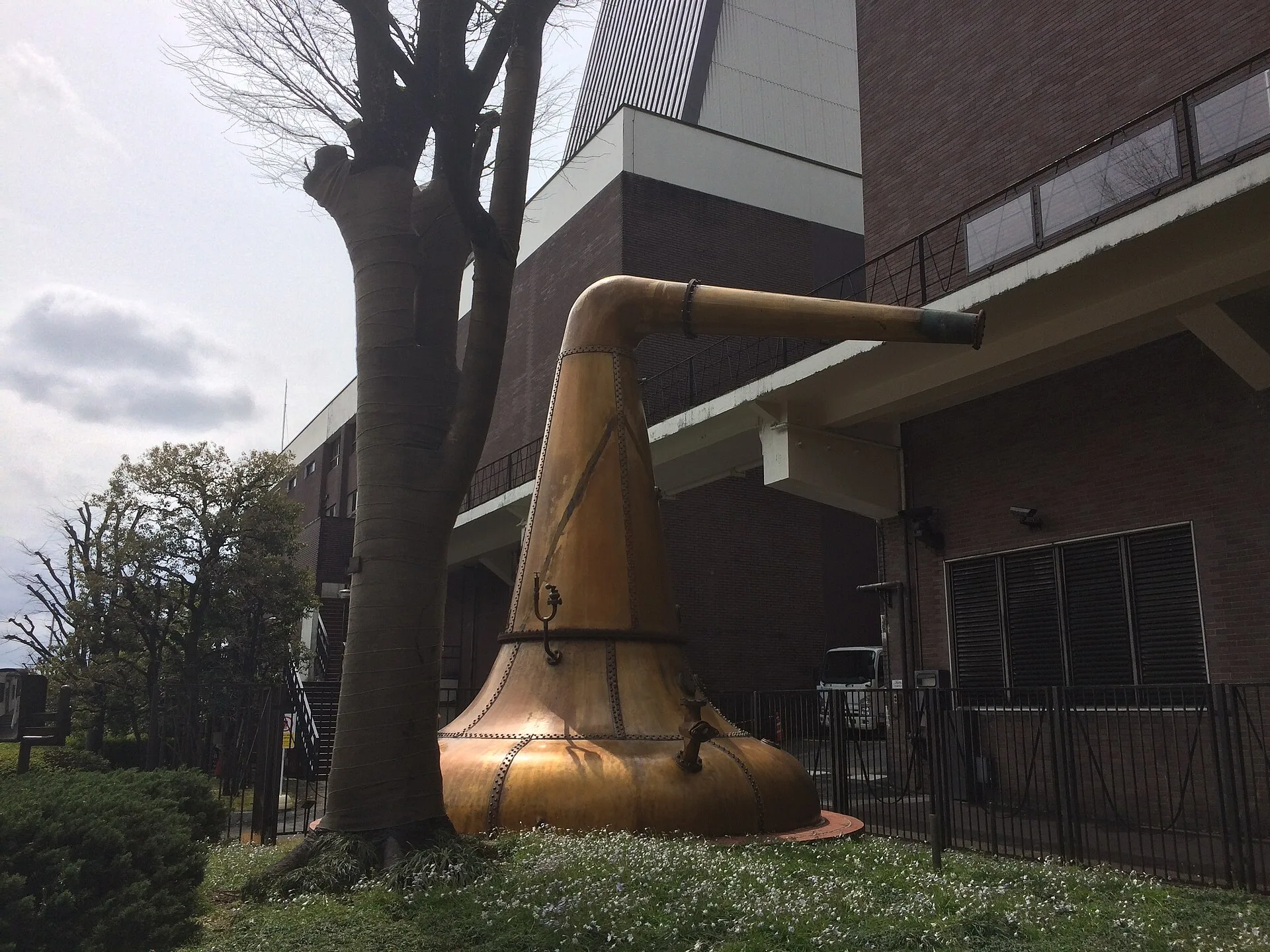
Construction of the Yamazaki distillery began in 1923 at the foot of Mount Tennozan, southwest of Kyoto, in Osaka Prefecture. Japan's national tourism organisation notes that three rivers converge near Yamazaki, creating thick mists for much of the year, and credits the shifting temperatures and high humidity for good maturation conditions. Production began in 1924, and Kotobukiya waited for its first whiskies to age for between three and five years before putting them on sale. Suntory now runs Yamazaki alongside two other distilleries, Hakushu and Chita.
That product was Suntory Whisky Shirofuda, or White Label, launched in 1929. The National Diet Library's biography of Torii describes it as Japan's first domestic whisky. In 1937 the company released Kakubin, named after its square bottle. Torii became chairman of Suntory in 1961 and died on 20 February 1962. The company opened a second distillery, Hakushu, in 1973 at 700 metres above sea level in the Southern Japanese Alps, at Hokuto in Yamanashi Prefecture, and launched its Hibiki blend in 1989.
HOW NIKKA BUILT THE YOICHI DISTILLERY
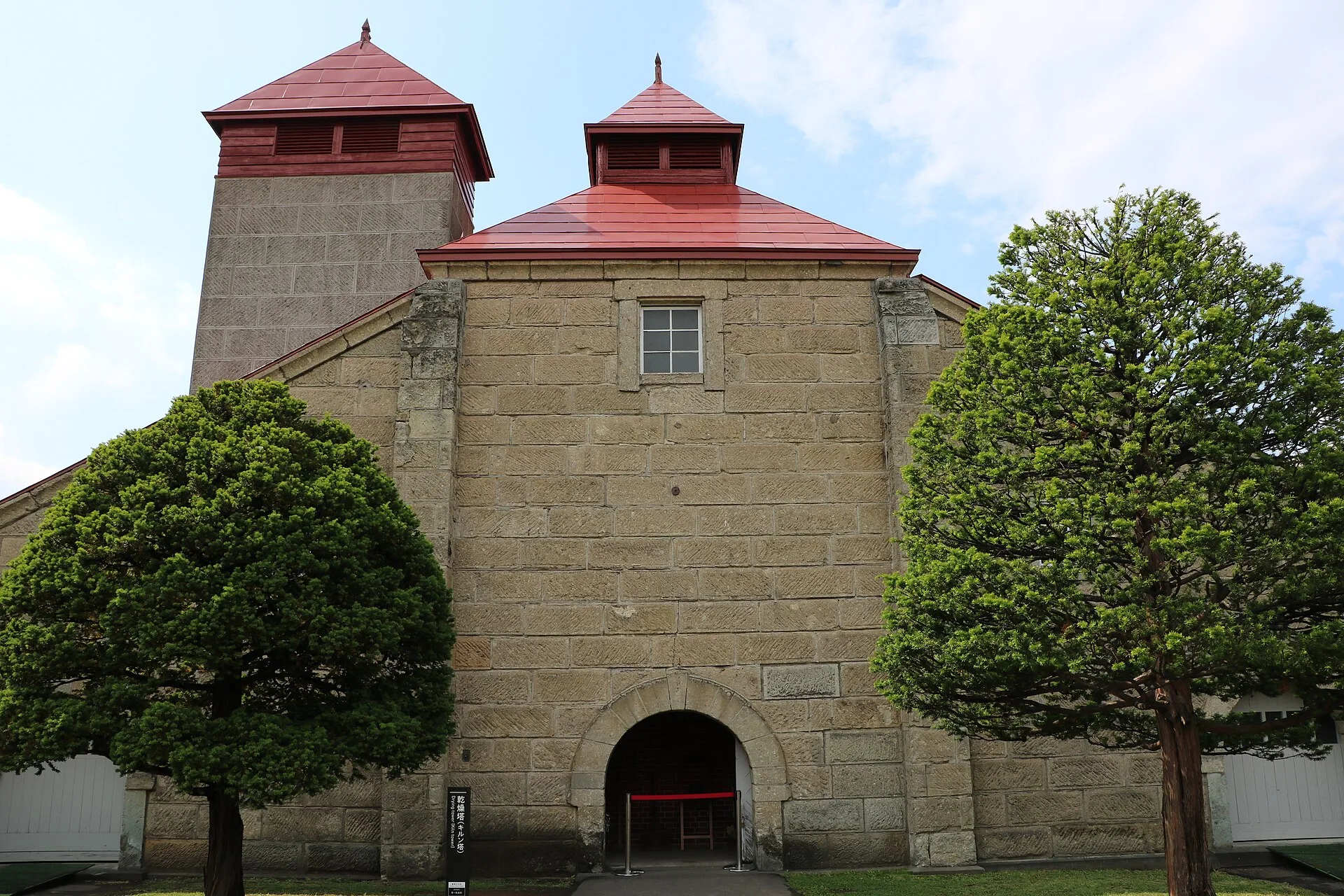
Taketsuru left Kotobukiya around 1934. On 2 July that year he founded Dai Nippon Kaju Co., Ltd., the predecessor of Nikka Whisky, and construction of its distillery at Yoichi was completed in October. Yoichi is a town of about 20,000 people some 50 kilometres west of Sapporo, and the distillery stands about 900 metres from the Sea of Japan. Nippon.com reports that Taketsuru chose it for a cool, humid climate close to Scotland's, and the government magazine Highlighting Japan adds abundant water and peat as reasons for the choice.
Because whisky needs years in cask, the company first sold apple juice to support itself, launching Nikka Apple Juice in 1935. Whisky and brandy production started in 1936, the first Nikka Whisky went on sale in 1940, and the company took the name The Nikka Whisky Distilling Co., Ltd. in 1952. Yoichi heats its pot stills directly with coal, a method that, according to Highlighting Japan, takes the stills above 1,000 degrees Celsius and is rarely used today even in Scotland. A second malt distillery, Miyagikyo, opened near Sendai in 1969, and a Coffey still for grain whisky, installed at Nishinomiya in 1963, moved there in 1999. Scotland's Ben Nevis distillery joined Nikka in 1989 and joined Asahi Breweries in 2001. In 2022 ten Yoichi buildings were designated Important Cultural Properties.
HOW THE HIGHBALL SHAPED JAPANESE WHISKY DRINKING

Writing for Nippon.com, Ishii Masato records that around 1955 Tory's bars spread across Japan's major cities and whisky highballs became fashionable. Grain whisky production in Japan followed in 1964, according to Ishii. Japan's national tourism organisation now names a dry, fizzy highball with karaage fried chicken as the most common order at izakaya across Japan. Japan liberalised alcohol imports in 1971, and Kirin Seagram opened a distillery at Fuji-Gotemba in 1973. Japanese whisky production peaked in 1983 at 379,000 kilolitres.
The decline that followed had several causes, according to Ishii: a whisky tax increase in 1984, lower import tariffs and a shift in taste towards shochu highballs, known as chu-hai, and wine. By 2008 the market had shrunk to a fifth of its size 25 years earlier, and Mercian's Karuizawa distillery closed during the slump. A 2016 report by the US Department of Agriculture's Tokyo office notes that producers cut back on the whisky they set aside for ageing, and links the later shortfall in premium aged whiskies to that decision.
In 2008 Suntory began an advertising campaign that promoted the highball and presented whisky as a casual drink for younger consumers. Ishii dates the market's return to growth to 2009. Suntory and its major competitors then released canned highballs for convenience stores and vending machines, and Suntory's canned highball volume rose 14 per cent from 2014 to 2015. Using Ministry of Finance figures, the same report puts Japan's whisky market at 96,195 kilolitres in the 2011 fiscal year and an estimated 139,157 kilolitres in 2015, when whisky held 1.6 per cent of the country's alcohol market, up from 1.1 per cent in 2011.
HOW JAPANESE WHISKY WON INTERNATIONAL AWARDS
In 2001 Nikka's Yoichi Single Cask 10 Years Old placed first overall at an international whisky competition, with Suntory's Hibiki 21 Years Old second. Nikka records the title as Best of the Best. In 2003 Yamazaki 12 Years Old won a gold medal at the International Spirits Challenge, and the same year Hibiki 17 appeared in the film Lost in Translation, advertised by Bill Murray's character. According to the USDA report, Japanese whisky exports reached 4,694 kilolitres in 2015, up nearly 179 per cent over five years, and Suntory alone exported 256,000 cases that year.
In 2014 Yamazaki Single Malt Sherry Cask 2013 was named World Whisky of the Year in Jim Murray's Whisky Bible 2015. Smithsonian Magazine reported in 2018 that Japan and Tasmania had been added to Scotland, Kentucky, Tennessee and Ireland on the list of places making the best whiskies. The award came in the same year as Massan, which Smithsonian credits with starting a domestic whisky craze. Nikka's Taketsuru brand, launched as Taketsuru Pure Malt 12 Years Old in 2000, has won international prizes since 2007. Demand then outran stock: Smithsonian reports that distilleries had not set enough aside during the slump about 20 years earlier, and Suntory replaced Hibiki 12 with the non-age-statement Hibiki Harmony in 2015 and in 2018 stopped selling Hakushu 12 and Hibiki 17, while Nikka replaced older aged lines with whiskies carrying no age statement.
WHAT COUNTS AS JAPANESE WHISKY UNDER THE 2021 STANDARD?
The Japan Spirits & Liqueurs Makers Association established its Standards for Labeling Japanese Whisky on 12 February 2021, and they took effect on 1 April 2021. Products already on sale by 31 March 2021 could keep their existing labels until 31 March 2024, the end of a three-year transition. Nippon.com describes the standards as voluntary. Under Article 5, raw materials are limited to malted grains, other cereal grains and water extracted in Japan, and malted grain must always be used.
Saccharification, fermentation and distillation must all take place at a distillery in Japan, with the spirit distilled to less than 95 per cent alcohol. It must then mature in wooden casks of no more than 700 litres for at least three years in Japan, and be bottled in Japan at a strength of at least 40 per cent. Plain caramel colouring is permitted. The term must appear as one unbroken phrase, and Article 6 bars translations or equivalent wording, such as Nihon whisky, on products that do not qualify. A 2022 guide reviewed by Nippon.com counts more than 70 Japanese craft distilleries, including planned ones, among them Akuto Ichiro's Venture Whisky in Chichibu, Saitama Prefecture.
THE AUBREY AT MANDARIN ORIENTAL HONG KONG
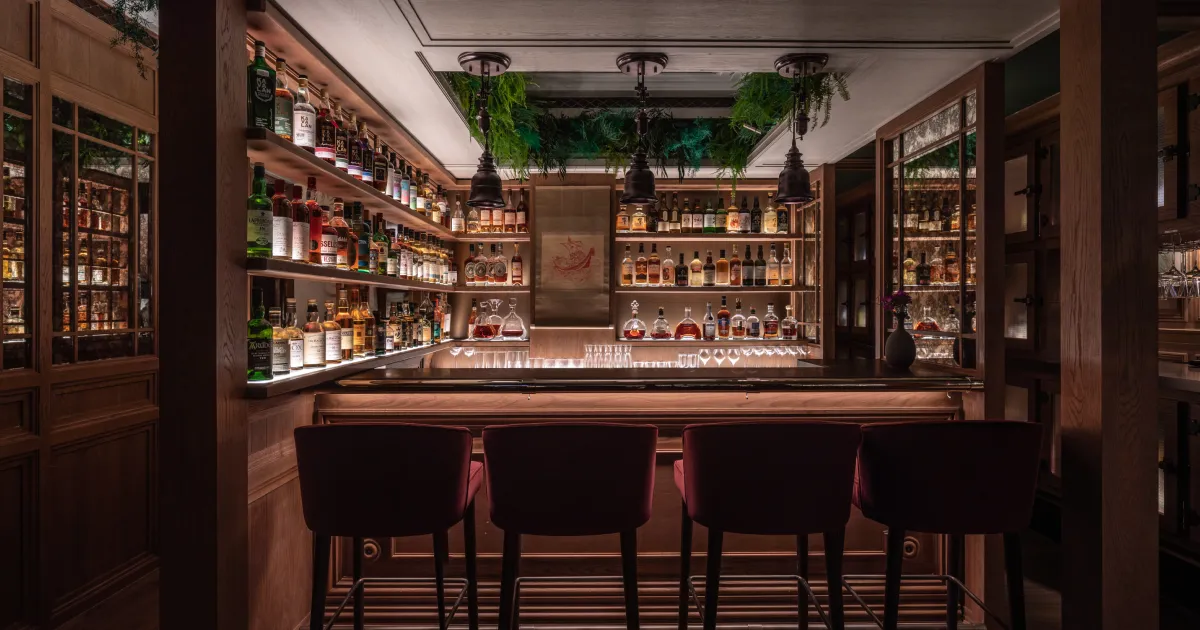
The Aubrey is a Japanese izakaya and bar on the top floor of Mandarin Oriental, Hong Kong, completed in 2021. For the highball and karaage order that it names as the most common at izakaya, Japan's national tourism organisation suggests a simple Suntory Kaku or a Nikka whisky, one of which most restaurants in the major cities carry. Its lesser-known recommendations are Kirin Whisky Fuji Sanroku, for summer highballs, a Yoichi Single Malt, and Akashi White Oak, a younger single malt with no age statement.
The concept is the manor of an eccentric English gentleman shaped by a collector's obsession with Japan, and the venue is named after Aubrey Beardsley. The interior uses Japonisme and ukiyo-e motifs: Mount Fuji, a pagoda, torii gates and crashing waves. These are set within dark timber panelling, gilded frames and gallery walls, and a curio lounge holds bespoke display cabinetry. Japanese whisky's ties to Britain date from 1919, when Taketsuru studied organic chemistry at the University of Glasgow before his training at Longmorn and Hazelburn.
SOURCES
- Nippon.com L'histoire du whisky japonais
- Nippon.com A Century of Japanese Whisky: A Delightfully Detailed Book on the Drink in Japan
- National Diet Library Portraits of Modern Japanese Historical Figures: TORII Shinjiro
- University of Glasgow Japanese TV on campus
- Nikka Whisky Nikka Whisky's History
- Government of Japan, Highlighting Japan Enjoy Drinking: Yoichi Single Malt Whisky (October 2020)
- US Department of Agriculture, Foreign Agricultural Service Whisky Market Japan, GAIN Report JA6503 (2016)
- Japan National Tourism Organization Japanese Whisky
- Smithsonian Magazine Why There's a Japanese Whisky Shortage
- Japan Spirits & Liqueurs Makers Association Standards for Labeling Japanese Whisky