FROM PACK HORSES TO THE RESTAURANT WINE LIST
The sommelier meaning most diners know today is the restaurant professional in charge of the wine cellar and the service of wine, the definition Larousse gives in its French dictionary. The word is much older than the restaurant. It began with medieval officers who moved a lord's baggage on pack horses, passed through the courts of the Ancien Régime, and is now tied to the restaurant, an institution that began in Paris in the 1760s and 1780s. Over time the job gained its own instruments, examinations and contests: a silver tasting cup associated with Burgundy, a Master Sommelier Diploma first examined in London in 1969, and an international association that has held a Best Sommelier of the World contest since the same year. Training bodies and national associations then spread the profession across Asia, from Japan to Hong Kong, mainland China and South Korea.
WHAT DOES SOMMELIER MEAN?
Larousse traces sommelier to an alteration of sommerier, from sommier, a pack animal or bête de somme. The oldest sense the dictionary records belongs to the Middle Ages: an officer assigned to transport the baggage of a prince or a lord on sommiers, the horses used to carry loads. In this first meaning the sommelier was responsible for goods on the move, and the title had no connection with tasting, cellars or the table. The link with wine came only with a later sense of the word, recorded at court under the Ancien Régime.
Under the Ancien Régime, Larousse records a second sense: a court officer charged with laying the table and preparing the wines. The duties had shifted from baggage to the service of meals, and wine had become part of the brief. The modern entry places the role in the restaurant, defining the sommelier as a professional in charge of the cellar and the service of wines. The dictionary also notes a regional use of the feminine form. In Switzerland, sommelière is the word for a waitress in a café or a restaurant, with no specialism in wine implied.
WINE IN THE FIRST PARIS RESTAURANTS
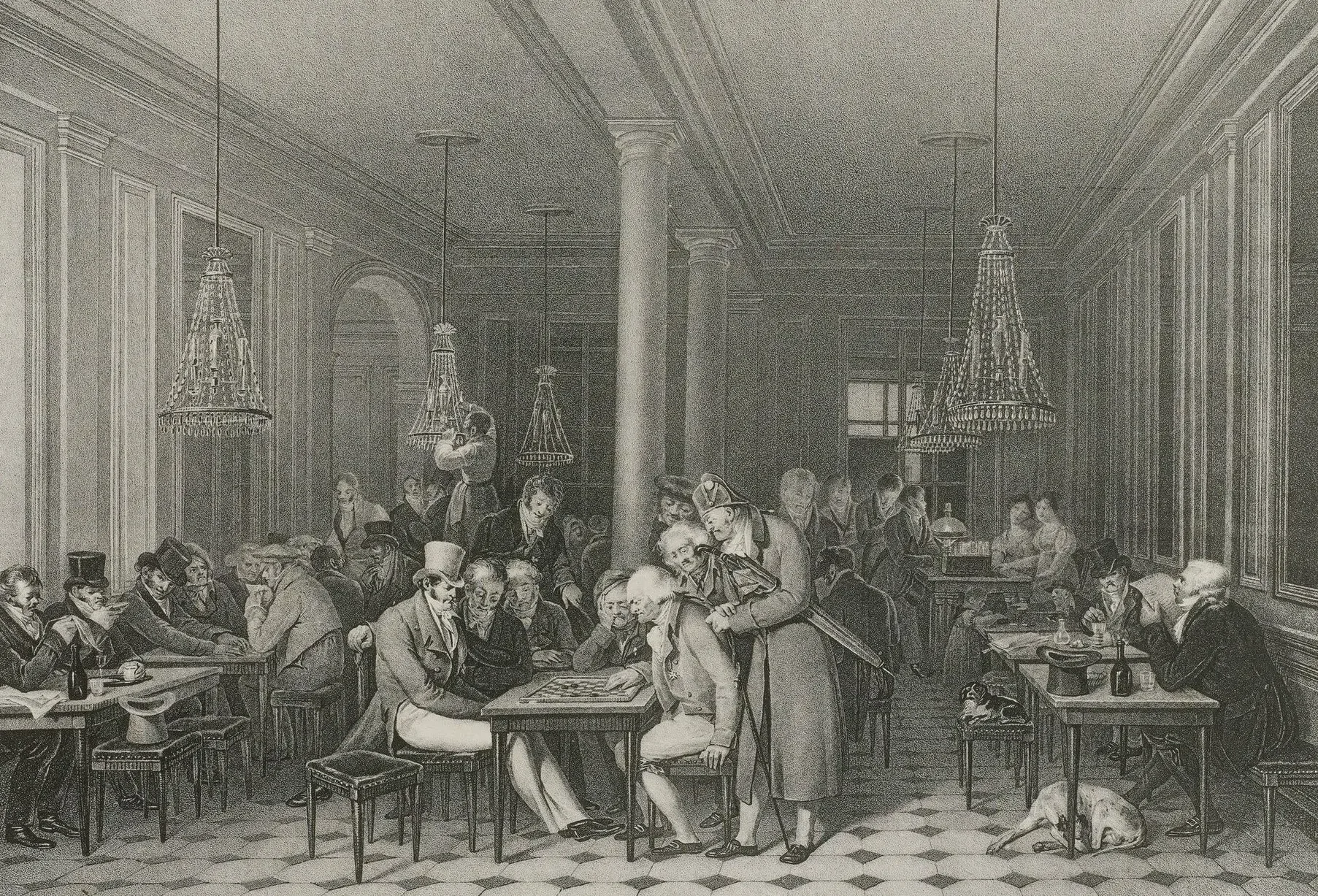
The restaurant as a public dining room began in Paris in the second half of the 18th century. According to Britannica, a soup vendor named A. Boulanger, who opened a business in Paris in 1765, is believed to have been the first restaurant proprietor. His sign advertised restoratives, or restaurants, which gave the new kind of establishment its name, and his was probably the first public place where a diner could order from a menu offering a choice of dishes. In 1782 La Grande Taverne de Londres was founded in Paris; Britannica describes it as the first luxury restaurant and names its owner as Antoine Beauvilliers.
Wine was part of that luxury from the start. The gastronome Jean Anthelme Brillat-Savarin wrote that Beauvilliers would send for wine from the cellar, the key of which he produced from his own pocket. Brillat-Savarin credited him with being the first to combine an elegant room, smart waiters, a choice cellar and superior cooking. Before the Revolution, aristocratic French households kept elaborate kitchens; once fewer private households offered employment, Britannica records, many chefs and cooks found work in restaurant kitchens or opened eating places of their own. By 1804, according to Britannica, Paris had more than 500 restaurants.
WHAT IS A TASTEVIN?

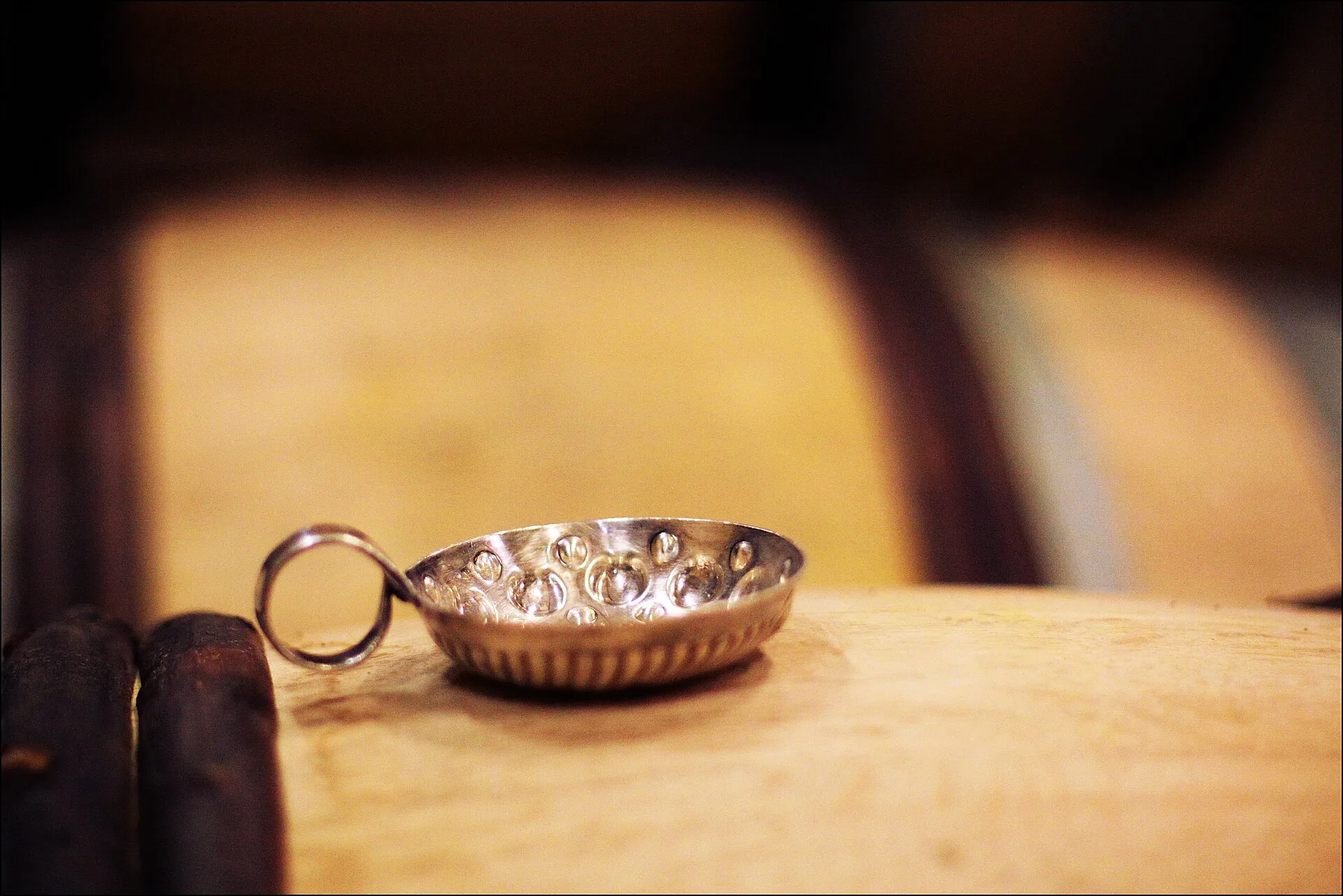
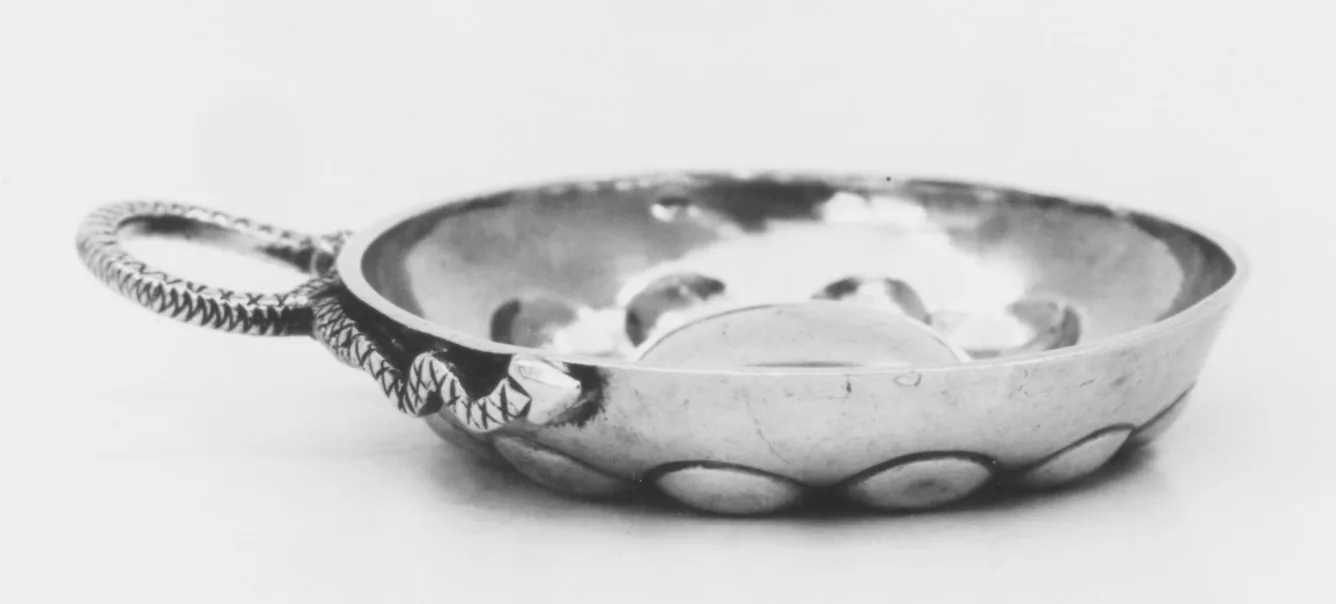
One object linked with the sommelier is the tastevin, a shallow silver bowl also called a tasse à vin or tâte-vin. The Metropolitan Museum of Art explains that wine merchants used it to judge a wine's clarity, colour and quality. Silver suited the task because it reflects light, resists corrosion and does not alter the taste of the wine. Many tastevins have convex bottoms and smooth or decorated surfaces, and they were often engraved with initials, names, dates or coats of arms that identified their owners.
The Met holds a silver example, bequeathed by Catherine D. Wentworth in 1948, made in Dijon, the capital of Burgundy, around 1760 by a maker marked E.G.D. The bowl is 11.7 centimetres across, decorated with vertical lobes and hearts, and engraved "F. Munneret", probably the name of a former owner. Its looped, serpent-like handle alludes to Dionysus, the god of wine. The museum notes that Burgundy was known for its wine trade in the 17th and 18th centuries, the period in which this taster was made.
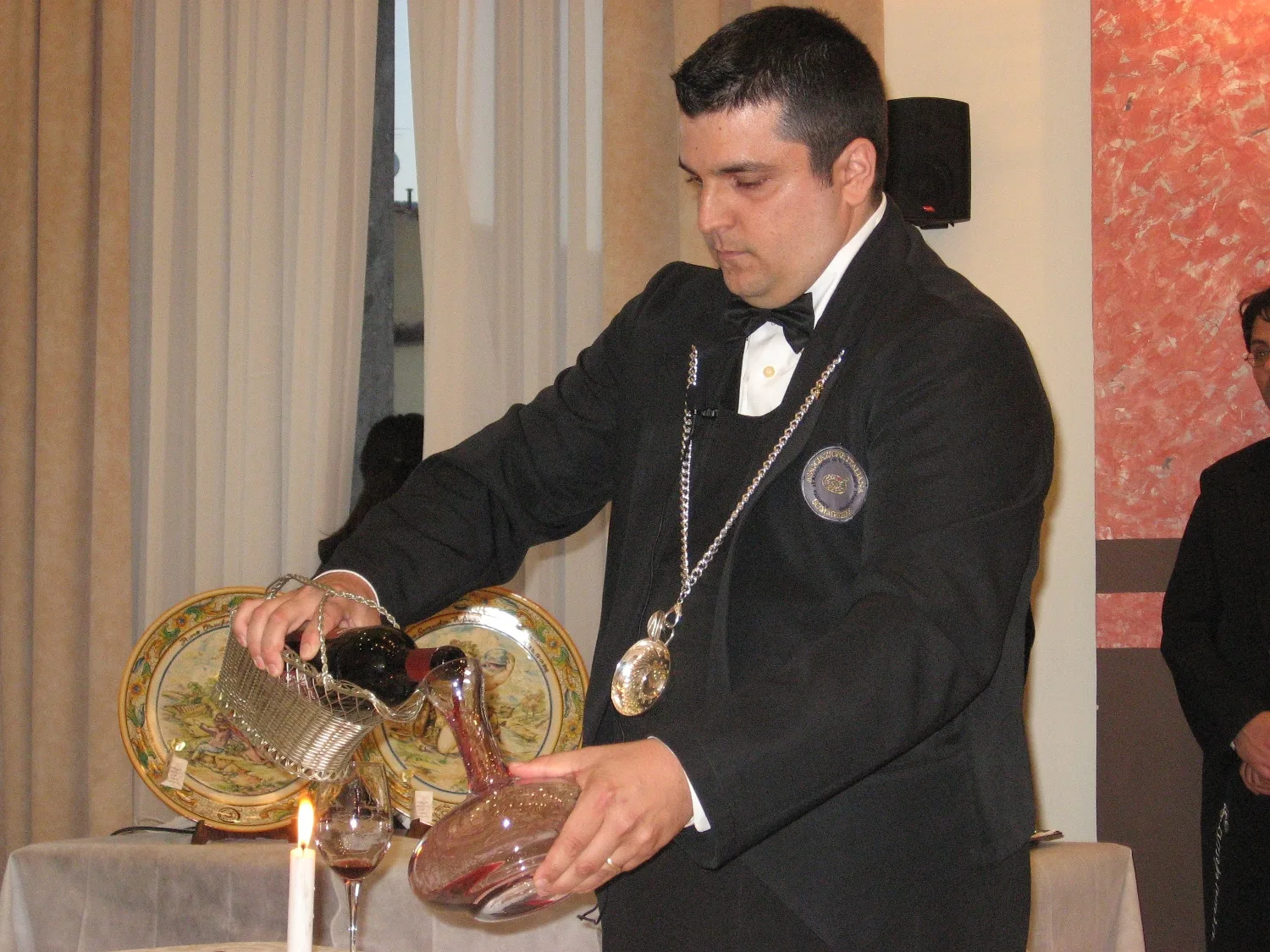
In the 20th century the tastevin gained a ceremonial role. The Confrérie des Chevaliers du Tastevin, the Fraternity of the Wine-Taster's Cup, was founded in 1934 at the Château du Clos de Vougeot in Burgundy to revive the region and celebrate its wine at a time of falling prices. Libraries Tasmania, which holds a tastevin bearing the fraternity's emblem among the papers of the winemaker Claudio Alcorso, describes its ribbon in red and gold as designed to be worn around the sommelier's neck, so that the wearer can swirl, sniff and sip quickly.
HOW DOES THE MASTER SOMMELIER EXAM WORK?
The Court of Master Sommeliers calls the Master Sommelier title the highest honour in the field. Writing in 2005, the wine critic Jancis Robinson recorded that the diploma was introduced in 1969 under the auspices of five bodies: the Vintners Company, the Institute of Masters of Wine, the British Hotels & Restaurants Association, the Wine & Spirit Association of Great Britain and the Wholesale Tobacco Trade Association. The Court, established in 1977, became the examining body for the diploma and for the Advanced and Introductory certificates. By 2005, she counted 132 people worldwide who had passed since 1969.
The Master Sommelier examination has three parts. The theory examination is oral and covers wine regions, grape varieties, international wine laws, fortified wines, spirits, beers, ciders and storage. The practical part tests restaurant wine service and salesmanship, from aperitifs and glassware to decanting and handling guest complaints. In the tasting, candidates have 25 minutes to identify six wines by grape variety, country, district and vintage where appropriate. The pass mark is 75 percent for each part. Candidates must pass the theory first and then have three consecutive years to pass the other two.
Few candidates get through. The Court puts the theory pass rate at about 10 percent, and only candidates who have already passed the Advanced examination may apply. Matt Stamp MS, writing in Decanter, described a service examination lasting 45 minutes, in which examiners pose as guests and tasks can include Champagne service and decanting mature red wines at the table. At one recent sitting he cited, seven of 60 candidates passed. The Court, which has partnered with Krug Champagne for four decades, awards the Krug Cup to a newly qualified Master Sommelier who passes all three parts at the first attempt.
WSET, ASI AND THE BEST SOMMELIER OF THE WORLD
Other bodies grew up alongside the Court. The Wine & Spirit Education Trust was set up in 1969 as a charitable trust to meet the educational needs of the UK wine and spirits trade, funded by the Vintners' Company, taking over education work begun by the Wine and Spirit Association of Great Britain. Its courses reached Ireland and Canada in 1977, France in 1991 and the United States in 1994, and in 1999 Australia hosted its first WSET Diploma course. WSET says its qualifications are now available in more than 70 countries and 15 languages, through more than 900 course providers.
The Association de la Sommellerie Internationale, known as ASI, emerged from a meeting in Reims on 3 and 4 June 1969 attended by representatives of four national organisations, with observers from other countries. Its legal headquarters are in Paris, and it now lists 70 national associations as full members on six continents. ASI's Best Sommelier of the World contest was first held in Brussels in 1969, where Armand Melkonian became the first champion, and it now takes place every three years. The association also runs regional contests and a three-level ASI Diploma, offered in three languages.
WHAT DOES A SOMMELIER DO TODAY?
The work combines the cellar, the wine list and service at the table. In Decanter, Matt Stamp listed the tasks of a restaurant sommelier: building and managing the wine list and wine programme, recommending wines and pairing them with food, timing each bottle to arrive before its course, and reading guests' tastes to adjust a recommendation. His own list at The French Laundry ran to more than 2,000 labels. He also noted that sommeliers were increasingly taking part in marketing and in winemaking, work carried out away from the dining room.
The Court's syllabus extends beyond wine. Its theory covers spirits, beers and ciders as well as wine, and its service section includes spirits service and the handling of complaints alongside the wine list. Stamp described his own routine while preparing for the examination: a tasting group in the morning, restaurant service from noon to midnight and study in the evening. The Court's tasting examination requires candidates to name the grape, country, district and vintage of six wines, and Stamp added that they must also describe tannin, alcohol, acidity, sweetness, aromas and finish.
HOW THE SOMMELIER SPREAD TO ASIA
According to ASI, the Japan Sommelier Association began in January 1969 as the Beverage Sales Promotion Study Group, and it now administers examinations for people seeking certification. Japan has 30,000 certified sommeliers, 13,000 of them women, and the pass rate in 2018 was 26.5 percent. The association marked its 50th anniversary on 30 March 2019 at the Tokyo International Forum. Shinya Tasaki of Japan was named ASI Best Sommelier of the World in 1995, and Wataru Iwata was named ASI Best Sommelier of Asia and Oceania in 2018.
Formal training followed across the region. WSET courses began in Japan in 1997, and the trust opened its first international office in Hong Kong in 2016, followed by a representative office in Shanghai in 2022. ASI holds a Best Sommelier of Asia and Pacific contest, including a 2025 edition, and its vice president for the region, Saiko Tamura-Soga, is from Japan. The Court of Master Sommeliers has also scheduled Master Sommelier examinations in Seoul, with a theory sitting on 7 March 2027 and practical and tasting sittings on 13 and 14 November 2027.
WINE CABINETS AND A CHEF'S TABLE AT OPUS, SHENZHEN

Larousse defines the sommelier by two places in a restaurant: the cellar, where wine is kept, and the dining room, where it is served. The Master Sommelier service examination adds the tasks carried out at the table, from glassware to decanting. Opus at Mandarin Oriental Shenzhen is a restaurant completed in 2022. Its interior includes glass wine cabinets, brass panelling, views across the city and a chef's table counter under a stainless hood, a seat with its own history in fine dining.
The Met's tastevin of around 1760 was made in silver because the metal reflects light, resists corrosion and does not alter the taste of wine. Metal also runs through the interior at Opus, in several forms: geometric metal and lattice screens, a stainless hood over the chef's table counter, and brass panelling, a material with a long history in interiors, in more than one part of the restaurant. Alongside the metalwork, the seating combines red leather banquettes with blue chairs, and the lighting includes globe pendants.
SOURCES
- Larousse Définitions : sommelier, sommelière
- Britannica Restaurant
- The Metropolitan Museum of Art Wine taster, ca. 1760
- Libraries Tasmania Conservation of a tastevin
- JancisRobinson.com Master Sommeliers: who are they?
- Court of Master Sommeliers Americas Master Sommelier Diploma Examination
- Decanter What does it take to become a Master Sommelier?
- Wine & Spirit Education Trust Our story
- Association de la Sommellerie Internationale About ASI
- Association de la Sommellerie Internationale Japan Sommelier Association celebrates 50 years