THE HIDDEN COCKTAIL BAR FROM THE LOWER EAST SIDE TO SHANGHAI
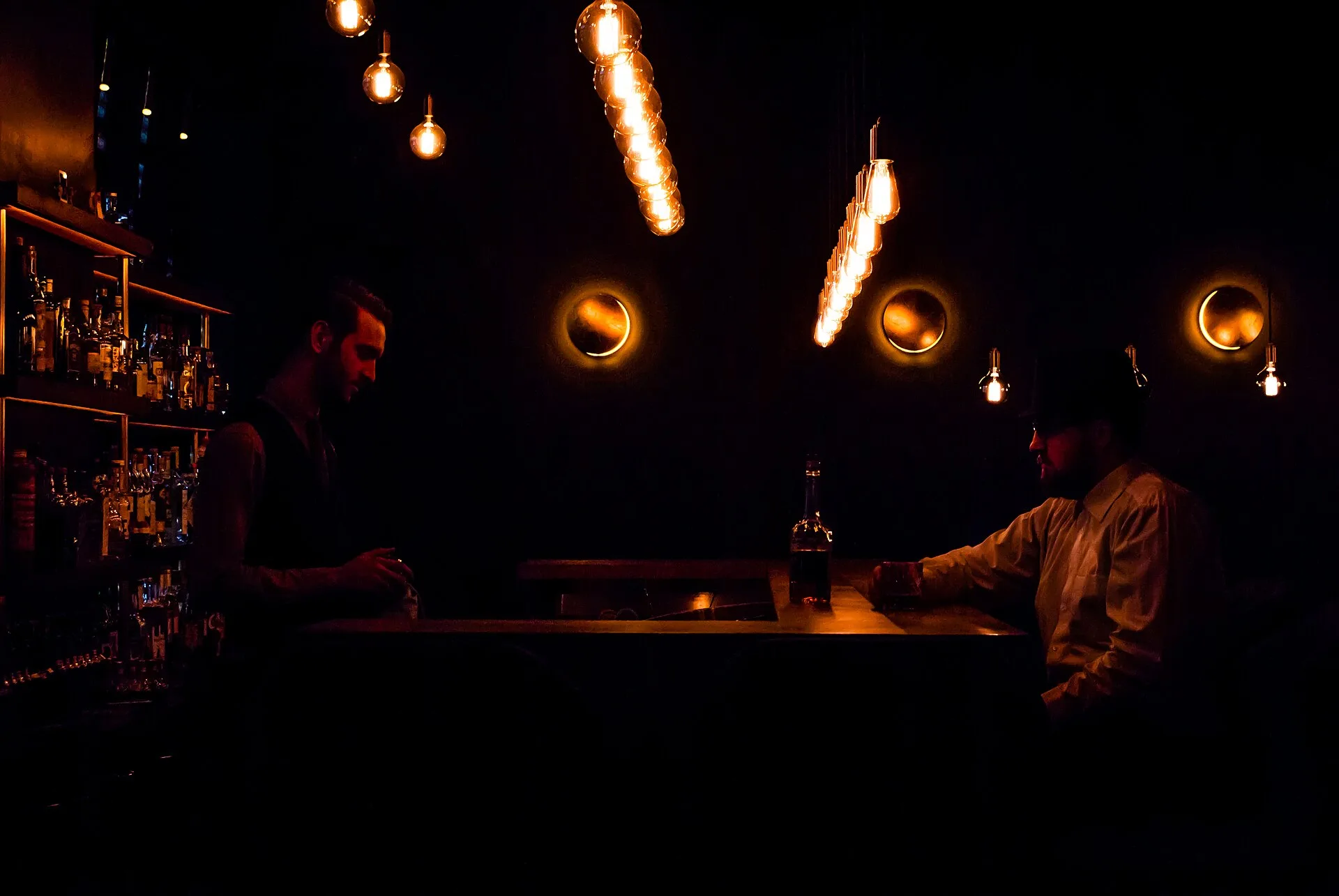
Speakeasy bars today are legal cocktail bars that borrow the conventions of Prohibition drinking dens: an unmarked door, a concealed entrance, limited seating and rules of conduct. Britannica notes that the word, used for the illegal drinking establishments of American Prohibition, has more recently also been applied to legal bars modelled on them. The modern format took shape in New York on 31 December 1999, when Sasha Petraske opened Milk & Honey at 134 Eldridge Street on the Lower East Side. Over the following decade a group of New York bars, including Employees Only, Death & Co and PDT, worked in the same vein, and Milk & Honey opened a sister bar in Soho, London, in 2002. By 2016, hidden bars in Singapore and Shanghai held the top two places on the first Asia's 50 Best Bars list.
WHAT WERE THE ORIGINAL SPEAKEASY BARS?
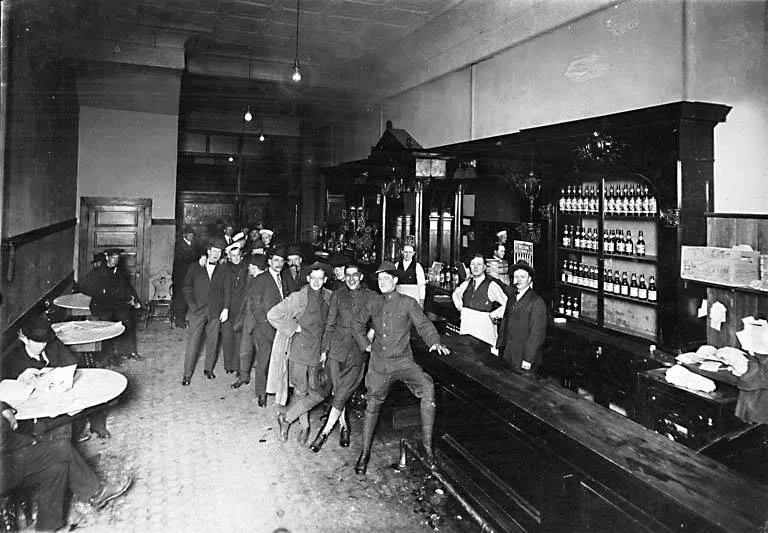
The original speakeasy bars operated in the United States during Prohibition, which began when the Eighteenth Amendment outlawed alcohol in 1920 and ended with the Twenty-first Amendment in 1933. Britannica records one account of the word's origin in the "speak-softly shops" of 19th-century England and Ireland, where drinkers kept their voices low, and notes that the term was in American use by the end of that century. Entry to a speakeasy during the Prohibition era often depended on a password or a secret knock, and New York alone is estimated to have had between 20,000 and 100,000 of them.
The hidden format returned to New York in the early 1990s with Angel's Share, a bar in the East Village reached through the Japanese restaurant Yokocho. Time Out New York credits it with starting the city's speakeasy-style resurgence in 1993; the Robb Report, which lists it among the bars that changed American cocktails, gives its opening year as 1994. According to the Robb Report, Angel's Share brought Japanese bartending methods to the United States, revived classic techniques and influenced Milk & Honey's founder. The bar also has a direct link to the later Asian revival: Shingo Gokan, who worked at Angel's Share, went on to open Speak Low in Shanghai in 2014.
HOW DID MILK & HONEY START THE SPEAKEASY REVIVAL?
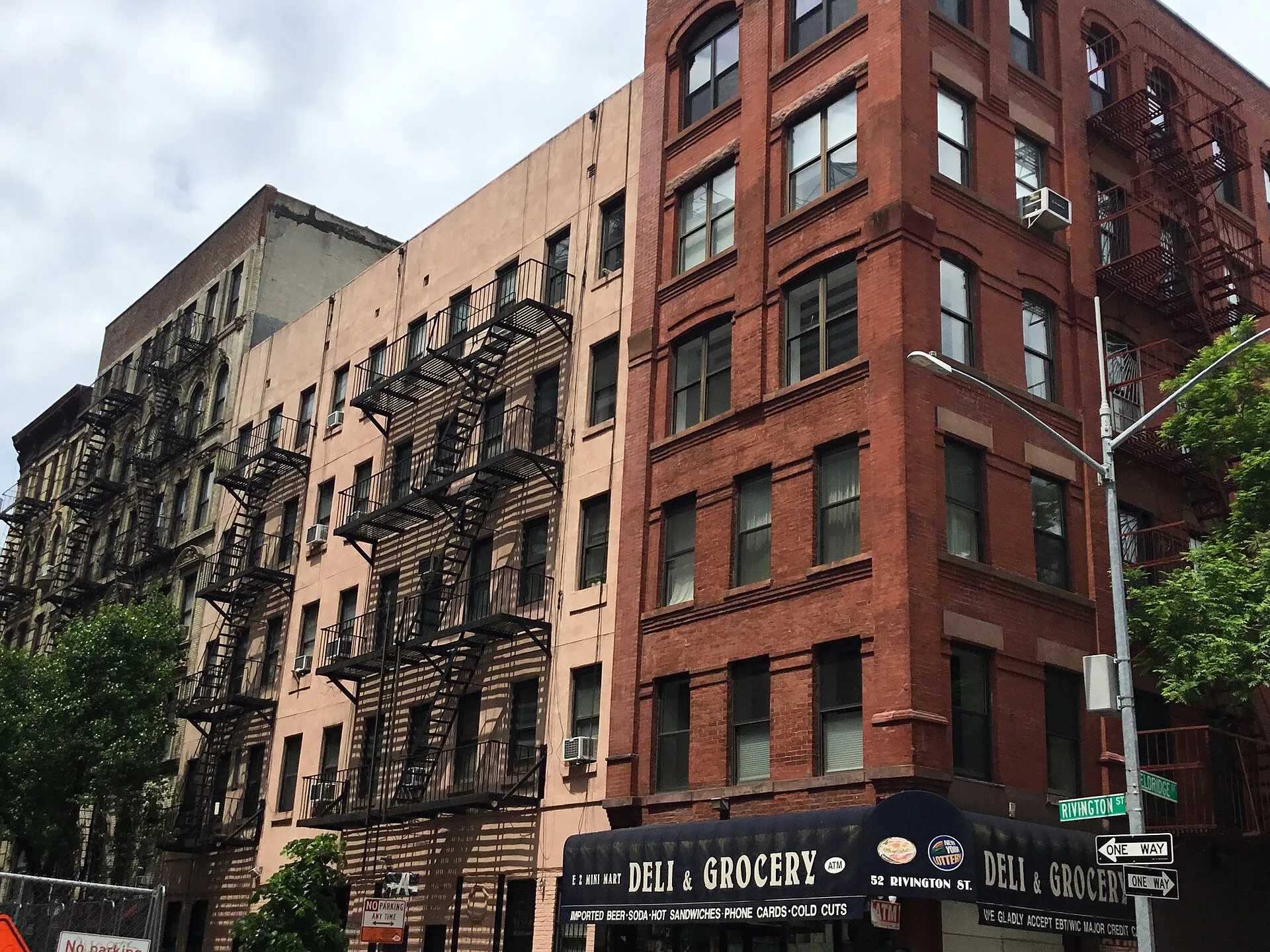
Milk & Honey opened a few hours before the year 2000 at 134 Eldridge Street. In his 2019 account for Punch, the drinks writer Robert Simonson records that there was no sign, no menu and no published phone number, and that the bar grew by word of mouth. The bartender Elizabeth Sun remembered walking through heavy velvet curtains on her first visit, and Christy Pope, a server and bartender there from 2001 to 2007, recalled that the first seating of the night was fully booked with a long wait list. The first employee was Kelvin Perez, barback from 1999 to 2012, and Toby Maloney was the first bartender hired, in 2000.
The bar's influence lay largely behind the counter. Pope credited Milk & Honey with popularising the jigger, economy of motion, building drinks by the round, adding ice last, chilled glassware, stainless steel straws and fresh juices, and described her first impression as cold glassware, big ice and care of service. The early list was built on classic cocktails: Perez recalled Old Fashioneds, Manhattans, Queen's Park Swizzles, Bee's Knees, Tom Collinses, Fitzgeralds, Negronis, Sazeracs and Mojitos. The Robb Report says the bar restored precision and formality to bartending and pushed back against sour mixes, and quotes one bartender who said the cocktail revival would have been slower without it.
MILK & HONEY'S HOUSE RULES AND ITS SUCCESSORS
Petraske's house rules became part of the format. Punch records that after a drunk customer sat down at a table with two women in the bar's first year, Petraske wrote eight rules, which hung in the bathroom. As summarised by Difford's Guide, they asked for no "hooting, hollering, shouting or other loud behaviour" and told gentlemen not to introduce themselves to ladies, who were free to start a conversation. Men were to remove their hats. There was to be no noise, no fighting and no talk of fighting. Guests were not to bring anyone they would not leave alone in their own home, and were not to linger outside the door.
Milk & Honey left Eldridge Street in early 2013 for 30 East 23rd Street in the Flatiron District, and the bar Attaboy later took over the original site. Difford's Guide lists further bars associated with Petraske, among them Little Branch, Middle Branch and Dutch Kills in New York, The Varnish in Los Angeles and Everleigh in Melbourne, and notes that he personally trained his staff. He died on 20 August 2015, aged 42. The Robb Report records that Milk & Honey's protégés spread across the United States, and that many copycats reproduced its drinks without its atmosphere.
Milk & Honey's sister bar opened in London in 2002 on Poland Street in Soho. Time Out London names Jonathan Downey as its owner, records that it was partnered with and inspired by Petraske's New York bar, and notes that its original cocktail menu was devised by Dale DeGroff. Unlike Eldridge Street, the London bar was a members' bar, and non-members could use its lower bar only with a booking before 11pm. It closed after a final run that ended on 27 September 2020. Reporting the closure, Time Out London called it London's original speakeasy bar and said it came to define and shape the speakeasy revival at the start of the millennium.
EMPLOYEES ONLY, PEGU CLUB, DEATH & CO AND PDT
Further New York openings followed in the mid-2000s. Employees Only opened on 15 November 2004, with an official grand opening on Repeal Day, 5 December 2004. Its founding partners were Igor Hadzismajlovic, Jason Kosmas, Dushan Zaric and Bill Gilroy, together with the late Henry LaFargue. In a 2024 oral history for VinePair, Gilroy recalled the idea of a speakeasy side entrance with a small sign above the doorway reading "employees only", which gave the bar its name. The Robb Report calls it "the industry bar" and records that it won World's Best Cocktail Bar at the 2011 Spirited Awards. Pegu Club, associated with the bartender Audrey Saunders, opened in 2005.
Death & Co opened in the East Village on 31 December 2006. The Robb Report places it at the head of a second wave of bars, with complex drinks built on blended spirits and unusual ingredients such as tarragon and honeydew juice. In 2007 PDT, short for Please Don't Tell, opened in the same neighbourhood inside Crif Dogs, a hot dog shop. Guests go down a few stairs into the shop and enter the bar through a phone booth. Time Out New York, in a 2022 survey of the city's speakeasy-themed bars, described hidden entrances ranging from a heavy, unmarked wooden door up a staircase to a simple curtain.
HOW DO SPEAKEASY BARS WORK TODAY?
The format that grew out of these bars rests on a few conventions. The first is an entrance that is concealed or unmarked. PDT's owner Jeff Bell told Time Out New York in 2022 that "anything unmarked, kind of is a speakeasy, in effect", because that is where the concept began. The same article observed that the common elements do not add up to a clear genre, and that the concept is a recent one, since alcohol is now legal. Some newer New York operators have set out to make the hidden bar more approachable; Alyssa Golub, co-founder of Pine & Polk, a planned provisions shop in Hudson Square with a cocktail bar called PS at the back, described the aim as an approachable hidden concept.
The second convention is controlled entry. At Milk & Honey, the first seating of the night was booked out with a wait list; in London, non-members needed a booking. Time Out New York reported that reservations are hard to get at many of the best-known speakeasies, and that UnPublished, opened in February 2022 inside the Pod hotel in Times Square and reached through Serafina in the Sky and a velvet curtain, would not list on reservation platforms and suggested guests obtain a "ghost number" for entry. The third is a code of conduct, set out at Milk & Honey in the eight rules and, at Speak Low in Shanghai, in a no-standing policy on its second floor.
SPEAKEASY BARS IN ASIA: SHANGHAI, SINGAPORE AND HONG KONG

In Shanghai, Shingo Gokan opened Speak Low in 2014. Difford's Guide describes the route in: a cocktail and bar equipment shop, a fake bookcase at the back that opens into a narrow brick tunnel, and steps up to the bars. The three floors become more formal and expensive with height. The first serves classic cocktails; the second, entered through a sliding wood panel under a pressed tin ceiling, has a more inventive menu and usually requires a reservation; the third, with exposed rafters and whisky lockers, sits past an "Employees Only" sign on the stairs, and access to it requires contacts.
In Singapore, 28 HongKong Street opened in 2011. An AFP-Relaxnews report described its frontage as having no awning, no flashing lights and no velvet-roped entrance, only beige doors. When the first Asia's 50 Best Bars list was announced in 2016, voted by a panel of 154 judges, 28 HongKong Street was ranked first and Speak Low second, with High Five in Tokyo third. Employees Only also opened in Singapore; Hadzismajlovic, who spent four years there, told VinePair the city was on the cusp of a cocktail scene when the bar arrived.
In Hong Kong, Foxglove occupies the second floor of Printing House at 6 Duddell Street in Central, with a second entrance at 18 Ice House Street. A South China Morning Post review describes a 1920s speakeasy-style secret entrance through what looks like an umbrella shop, and a 1950s luxury liner décor inside, down to cabin portholes in the ladies' toilets. The reviewer placed the bar in a retro trend looking back to the golden age of cocktails and to jazz, noted live music from 10pm several nights a week, and found its eras somewhat muddled.
PROHIBITION BAR AT MANDARIN ORIENTAL SHENZHEN
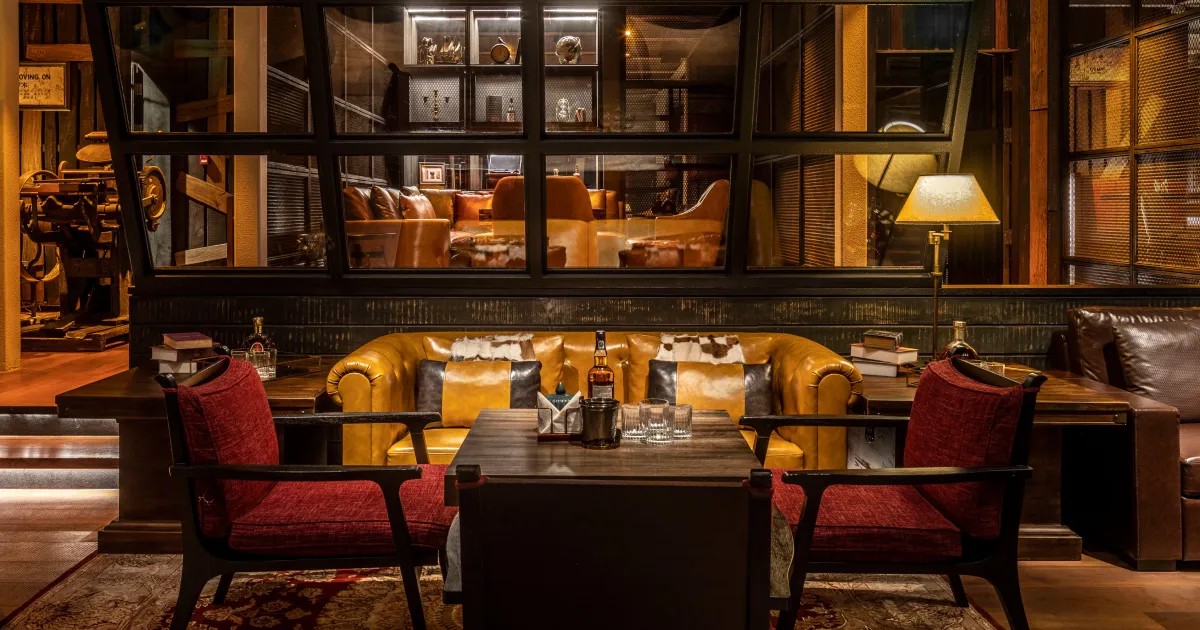
Prohibition Bar sits within the MO Bar on the 79th floor of Mandarin Oriental Shenzhen and was completed in 2022 as a semi-hidden bar designed to recreate the intrigue of Prohibition. Guests reach it by a separate lift from Level 78 and then a long corridor. The corridor is a storage-style passage lined with aged hand-painted liquor advertisements and crates beneath exposed ductwork. At Speak Low the route in runs through a shop, a bookcase and a brick tunnel; at PDT it runs through a phone booth; at Prohibition Bar it runs through a lift and a corridor.
Inside, a long bar combines a DJ booth and a cocktail station, set among distressed timber and steel beams. Beyond it, a lounge is furnished with Chesterfields and iron screens and looks out over the skyline. In Britannica's terms, the bar belongs to the later meaning of the word speakeasy: a legal bar modelled on the illegal establishments that operated in the United States between 1920 and 1933, here placed on the 79th floor of a hotel tower rather than behind a shopfront or below street level.
SOURCES
- Britannica Speakeasy
- Punch An Oral History of Milk & Honey's Opening Night
- Difford's Guide Sasha Petraske
- Robb Report 14 Bars That Changed Cocktails Forever in America
- VinePair Employees Only: An Oral History
- Time Out New York Speakeasy-themed bars are booming once again in NYC
- Time Out London London's original speakeasy bar Milk & Honey to close for good
- Difford's Guide Speak Low, Shanghai
- AFP-Relaxnews via Malay Mail Singapore's 28 HongKong Street named Asia's best bar
- South China Morning Post Bar review: Foxglove, Central