FROM MANHATTAN'S OYSTER CELLARS TO THE RAW BAR COUNTER
An oyster bar is a counter or restaurant where oysters are opened to order and eaten raw, usually on ice with lemon and a sauce of shallots, black pepper and vinegar. Its history runs through New York, where oysters from the Hudson estuary fed basement oyster cellars from 1763 and a 440-seat Oyster Bar opened in Grand Central Terminal in 1913. London has its own line, from a shellfish business near Haymarket in 1742 to Bentley's on Swallow Street in 1916. France built a separate tradition around the écailler, the trader who sells and opens shellfish, and the plateau de fruits de mer. Oyster bars such as Grand Central's now serve oysters beside clams, mussels and lobster, and diners are encouraged to order several oysters from different growing regions and compare them.
WHERE DID THE OYSTER BAR COME FROM?
New York City sits on the estuary of the Hudson River, and its tidal waters once held enormous oyster beds. The author Mark Kurlansky, whose history of the subject is titled The Big Oyster, told NPR that all five boroughs produced oysters. During the late 18th century oysters were sold in the street from carts or straight from boats. In 1763 the first of many oyster cellars opened: an oyster restaurant in the basement of a building on Broad Street. A review of Kurlansky's book for the Gotham Center for New York City History records that New Yorkers consumed oysters worth 6 million dollars in 1842, and that by 1880 the city produced 700 million oysters a year.
Prices stayed low throughout. Kurlansky told NPR that from the American Revolution until the last of the city's beds closed in 1927, the price of an oyster barely moved. Oysters were sold from stands on street corners, and the large open markets downtown served oyster stew or raw oysters at any hour of the night. On Canal Street, free Black New Yorkers opened oyster bars, and these places offered a deal known as the Canal Street Plan: as many oysters as a customer could eat for six cents.
The trade also served the city's wealthier diners. In 1825 Thomas Downing, born free in Virginia, opened an oyster bar for a wealthy clientele, at a time when most oysters were still sold from carts, stands and cellars. Kurlansky also told NPR that New Yorkers grew and ate oysters by the millions and sold them around the world. The history of Grand Central's Oyster Bar published by the terminal itself describes the oyster cellars, shacks and stands of the early 1910s as the coffee shops of their time.
GRAND CENTRAL OYSTER BAR AND ITS GUASTAVINO VAULTS

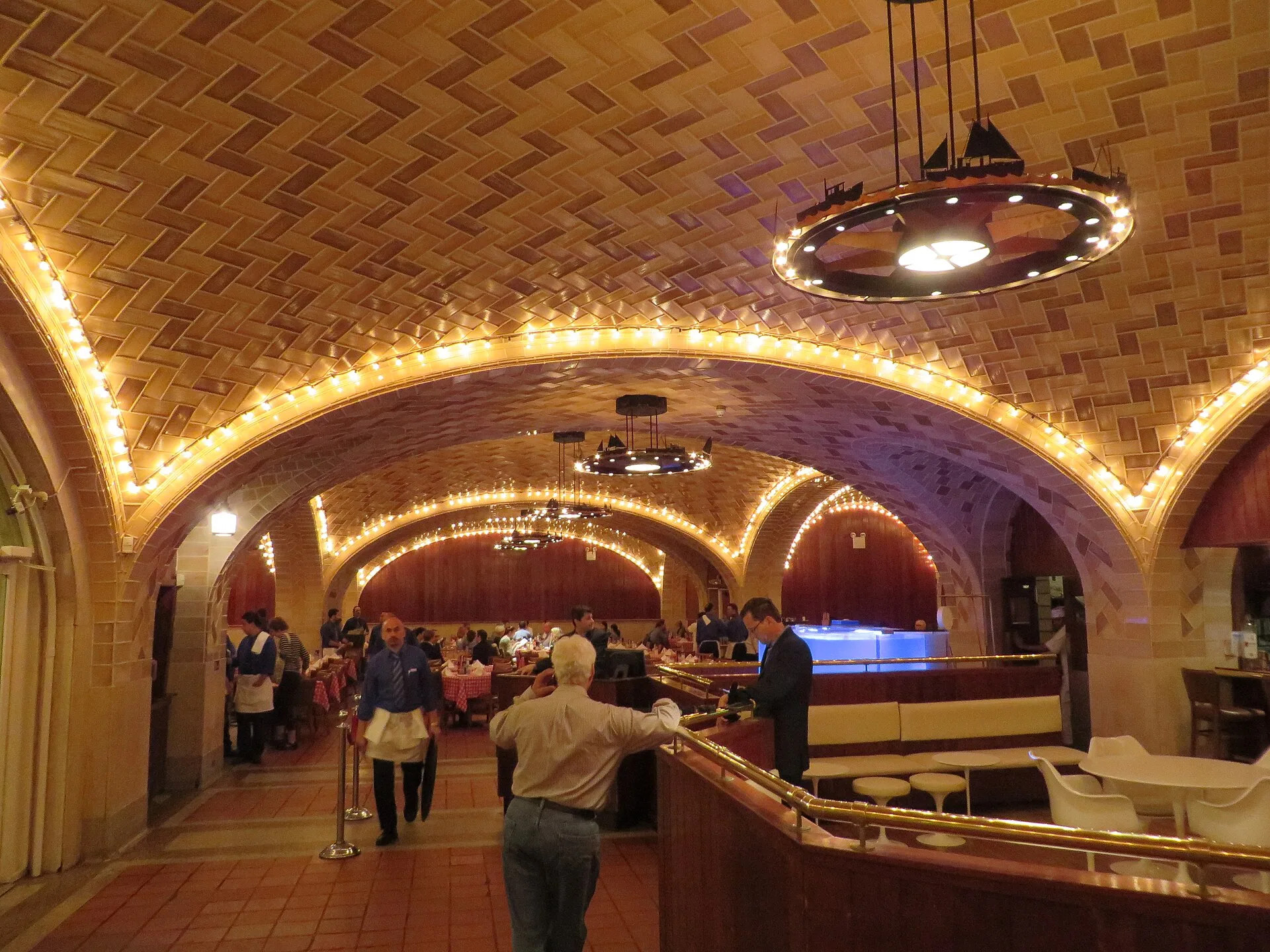
Grand Central Terminal opened on 2 February 1913, and the Oyster Bar opened the same year with 440 seats. The terminal's account places its opening at the height of long-distance train travel and of New York's oyster craze. The restaurant quickly became one of the busiest lunch counters in the city, serving an endless menu of raw clams and oysters. Its menu still changes daily according to the catch from the Fulton Fish Market, with oysters offered beside lobster, clams, mussels and crab cakes, and more than 30 wines by the glass.
The room is roofed with tile vaults. According to the Museum of the City of New York, they were designed by Rafael Guastavino Jr. in cream-coloured tile and built by the Guastavino Company, founded by his father, Rafael Guastavino (1842 to 1908). The Guastavinos brought thin-tile structural vaulting, a Mediterranean technique dating to the 14th century, to America in the late 1800s, and the terminal counts more than 250 of their works in New York and over 1,000 across the United States. At the Oyster Bar the tiles are laid in an interlocking herringbone pattern, with lights set along the ribs of the vaults.
LONDON'S OYSTER ROOMS: WILTONS AND BENTLEY'S
Wiltons, now on Jermyn Street, traces its history to 1742, when George William Wilton opened a shellfish mongers close to Haymarket. According to the restaurant's history, he began with an oyster barrow, which grew into fixed premises, and he ran the business for 28 years before passing it to his son, Francis Charles Wilton. In 1805 his nephew, William Nichol Wilton, renamed the Oyster Rooms "Wiltons Shellfish Mongers and Oyster Rooms". In 1840 Robert Thomas Wilton obtained a licence to sell alcohol, which turned the oyster rooms into a full restaurant, and in 1868 Wiltons received a Royal Warrant as purveyor of oysters to Queen Victoria and to the Prince of Wales.
The business moved several times. After William's death in 1824, his wife Frances moved it to Little King Street, then Great Ryder Street and then King Street. In 1889 David Edwin Winder bought it and moved it to Duke Street, and in 1913 it returned to King Street. In 1942 Olaf Hambro bought the restaurant and recruited Jimmy Marks, the oysterman at Bucks Club, to run it. Wiltons moved to Bury Street in 1964 and, after 20 years there, to Jermyn Street in 1984.
Bentley's Oyster Bar and Grill opened in 1916. Its founder, Bill Bentley, came from a family that ran an oyster bed and sold oysters from a cart by the pier at Clacton-on-Sea, before he opened a permanent restaurant in Piccadilly. The building at 11 to 15 Swallow Street, just off Regent Street, holds an Oyster Bar with a Grill upstairs. In 2005 the chef Richard Corrigan bought and restored the restaurant, which describes its oyster list as covering all that is wild, native and cultivated.
THE ÉCAILLER AND THE PLATEAU DE FRUITS DE MER
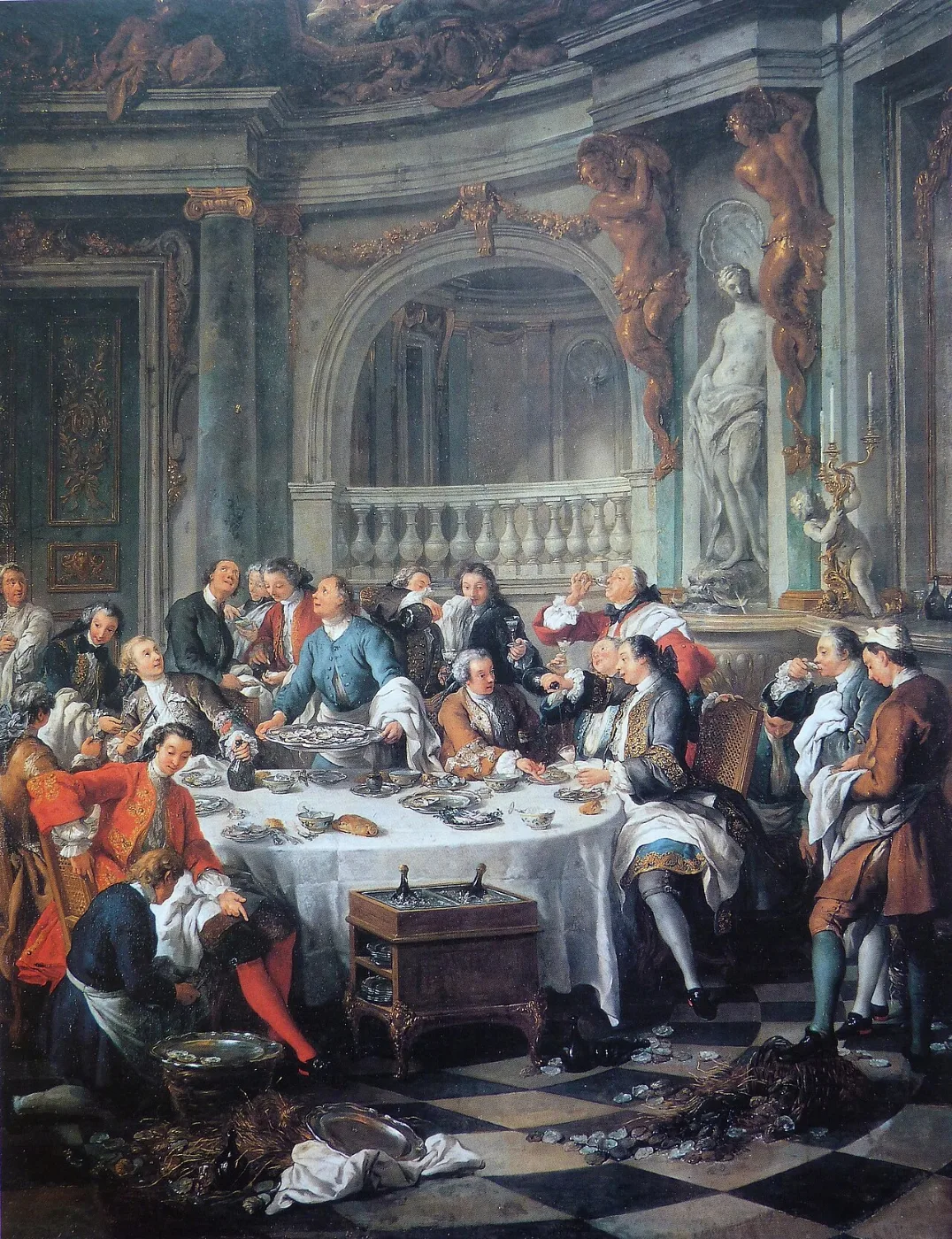
In France the person who opens oysters has a trade name. The Larousse dictionary defines the écailler, or in the feminine écaillère, as a trader who specialises in selling and opening oysters and other shellfish. The écailler's work feeds the plateau de fruits de mer, the shellfish platter of the French coast. Brittany's regional tourism board describes the ideal platter as a mix of cooked crustaceans with raw and cooked shellfish: spider crab, edible crab, velvet crabs, shrimp and langoustines, with oysters, periwinkles, whelks, dog cockles, clams and cockles. Shellfish are available all year in the Channel and the Atlantic, but the mix changes with the seasons; spider crab, for example, is absent in late summer and early autumn.
The board recommends serving the platter on a bed of seaweed rather than crushed ice, which it says dulls the taste of the seafood. The accompaniments are rye bread, lightly salted butter, homemade mayonnaise and a dry white wine, and the table is set with crab crackers, picks for the shellfish, scrapers for the crustaceans and a finger bowl of water with lemon slices. Among the places it lists for a platter is La Brasserie l'Amiral on the port of Concarneau, known for its plateau royal with half a lobster, and Le Vivier at Lomener near Lorient, which looks across to the island of Groix.
WHICH OYSTERS DOES AN OYSTER BAR SERVE?
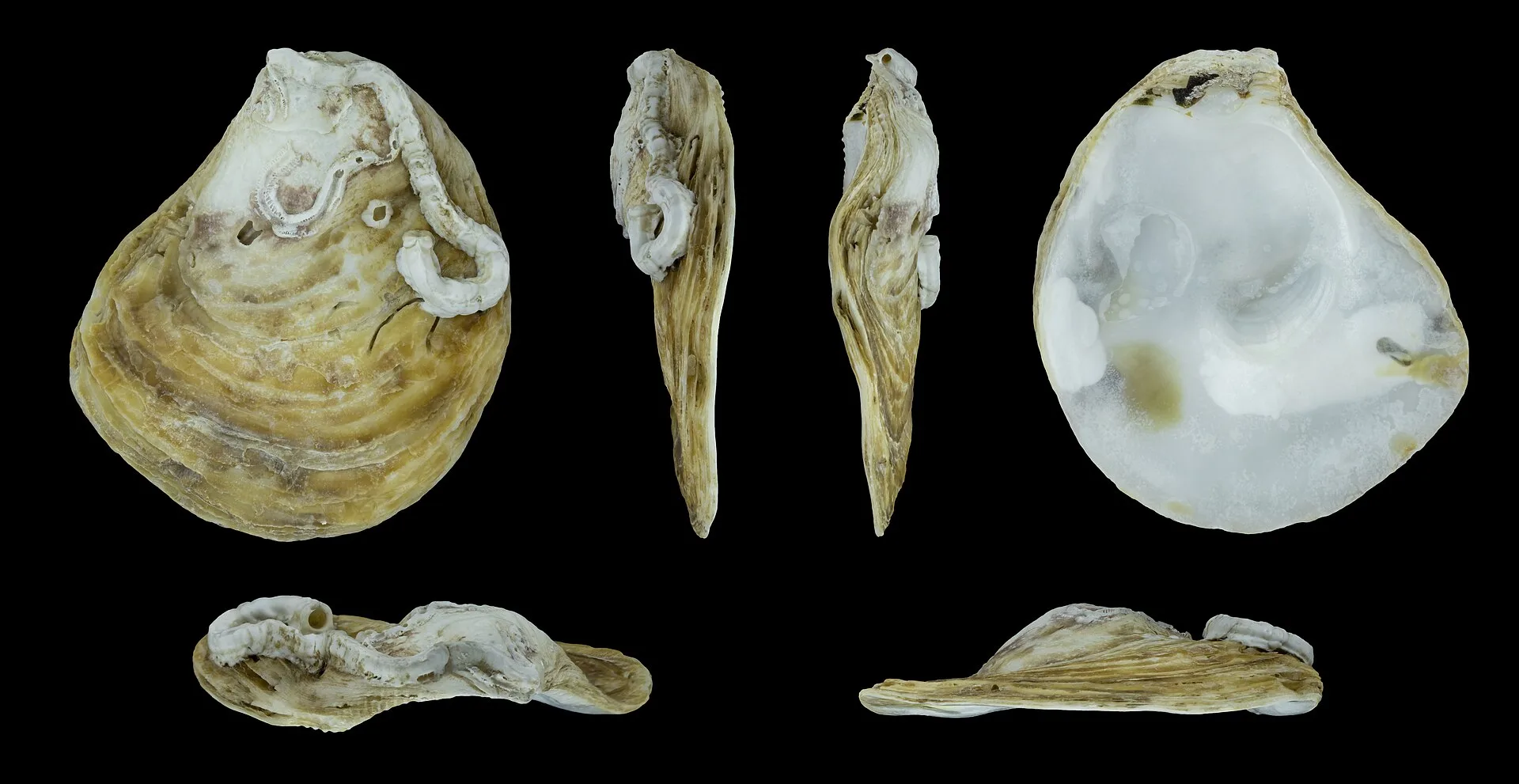
Edible oysters belong to the family Ostreidae, the true oysters, which includes the genera Ostrea and Crassostrea. Encyclopaedia Britannica describes four main species. The European flat oyster, Ostrea edulis, is found from Norway to Morocco, through the Mediterranean and into the Black Sea, and grows to about 8 cm. The Olympia oyster, O. lurida, lives in the Pacific coastal waters of North America and reaches about 7.5 cm. The Eastern or Virginia oyster, Crassostrea virginica, ranges from the Gulf of Saint Lawrence to the West Indies and grows to about 15 cm. The Japanese or Pacific oyster, C. gigas, is one of the largest, at about 30 cm.
True oysters have been cultivated as food for more than 2,000 years, and edible oysters are ready for harvest in three to five years. On a raw bar list, the place of growth matters as much as the species. NOAA Fisheries, the United States federal fisheries agency, explains that an oyster's flavour comes mainly from the region where it grows, shaped by salinity, water temperature, food supply and the surrounding waters. Oysters from the open ocean or high-salinity areas taste briny; those from bays and creeks, where salt and fresh water mix, taste sweeter. Most oysters served at oyster bars are about 3 inches long, the size growers call marketable.
HOW ARE OYSTERS OPENED AND SERVED AT A RAW BAR?
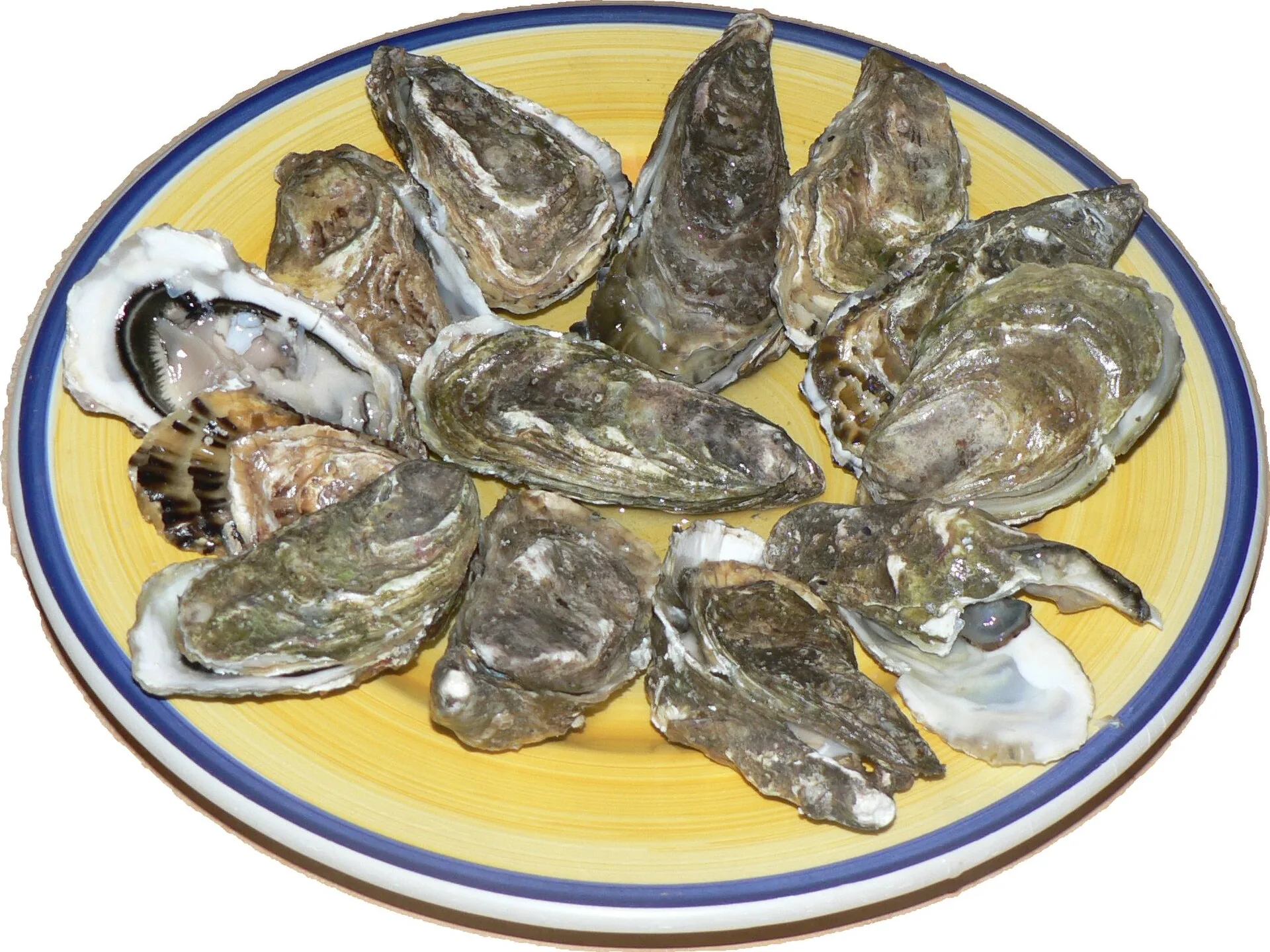
An oyster's two valves are joined by an elastic ligament and held shut by a large adductor muscle, and Britannica notes that oysters are shucked and eaten raw, cooked or smoked. At the counter, opening is repetitive, skilled work. Bentley's calls its oyster openers the "Oyster Boys" and says they open up to 1,000 oysters a day. NOAA Fisheries notes that shuckers aim to keep the small pool of clear liquor in the bottom of the shell. In France, the same task defines the écailler, whose trade name covers both selling and opening shellfish.
NOAA Fisheries shows raw oysters served on ice and lists the usual garnishes: lemon, cocktail sauce, horseradish, hot sauce and mignonette, which is typically made with shallots, black pepper and vinegar. It advises tasting each oyster on its own first, ordering several varieties from different growing regions and asking where each was farmed, what variety it is and how large it is. Servers, fishmongers and oyster farmers are named as the people to ask. The guide draws on tips and techniques from the chef Jeremy Sewall of Row 34.
BAZAAR, MANDARIN ORIENTAL SHENZHEN: A RAW BAR AMONG OPEN KITCHENS

Silverfox Studios completed the interiors of Bazaar at Mandarin Oriental Shenzhen in 2022. The restaurant is arranged around a series of open kitchen stations, and it also includes a bakery and a bar lounge. At the open dim sum station, bamboo steamers sit under a cylindrical stainless steel hood. Grill seating for diners is placed beneath a steel frame with gear-wheel forms, while rattan armchairs take in views across the city. The structure is timber post-and-beam, finished overhead with a slatted timber ceiling.
Alongside the open kitchen stations, Bazaar has a raw bar. As a restaurant counter, the raw bar has a history that runs from the first oyster cellar in a Broad Street basement in 1763, through the Canal Street oyster bars and their six-cent Canal Street Plan, to the Oyster Bar that opened in Grand Central Terminal in 1913. In London, Wiltons grew from an oyster barrow of 1742, and in France the écailler sells and opens shellfish for the plateau de fruits de mer.
SOURCES
- The Gotham Center for New York City History The Oyster in New York
- NPR 'History on the Half Shell' in 'Big Oyster'
- Museum of the City of New York Palaces for the People: Guastavino Tile in New York Buildings
- Grand Central Terminal Grand Central Oyster Bar
- Wiltons The History
- Bentley's Oyster Bar and Grill About Us
- Larousse Écailler, écaillère
- Tourisme Bretagne Le plateau de fruits de mer
- Encyclopaedia Britannica Oyster
- NOAA Fisheries The World is Your Oyster: A Beginners Guide to Ordering, Shucking, and Eating Oysters