HOW A LOOSE GROUP OF NEW YORK PAINTERS CHANGED POSTWAR ART

Abstract expressionism is the abstract painting developed by American artists in the 1940s and 1950s, most of them based in New York City. Its artists include Jackson Pollock, Willem de Kooning, Franz Kline, Mark Rothko, Barnett Newman, Clyfford Still, Lee Krasner, Helen Frankenthaler, Joan Mitchell and Elaine de Kooning. The work divides broadly into the gestural "action painting" of Pollock, de Kooning and Kline, in which paint was poured, dripped or swept across the canvas, and the colour field painting of Rothko, Newman and Still, built from large, simplified areas of colour. Both worked at a scale that was vast for the time. The Metropolitan Museum of Art credits the movement with shifting the art world's focus from Paris to New York.
WHERE DID ABSTRACT EXPRESSIONISM COME FROM?

During the Great Depression, the Met notes, many of the group took part in the Works Progress Administration (WPA), a federal jobs programme for unemployed Americans. The city also gave them access to European modernism. The Museum of Modern Art had opened in 1929, Albert Gallatin's Museum of Living Art at New York University ran from 1927 to 1943, and the Museum of Non-Objective Painting, forerunner of the Guggenheim, opened in 1939. Exhibitions such as Cubism and Abstract Art (1936) and Fantastic Art, Dada, Surrealism (1936 to 1937) were also on view. The German expatriate Hans Hofmann (1880 to 1966) became, in the Met's assessment, the most influential teacher of modern art in the United States.
The Second World War brought European artists to New York. The Met lists Salvador Dalí, Max Ernst, André Masson, André Breton, Piet Mondrian and Fernand Léger among those who sought refuge in the United States. Surrealism, the movement Breton led from 1924, gave the New York painters a working method. Tate traces abstract expressionism to the Surrealist idea that art should come from the unconscious mind and to the automatism of Joan Miró, automatism being the practice of creating art without conscious thought. In the early 1940s several of the group also turned to primitive myth and archaic art, and to Carl Jung's theory of the collective unconscious, to build personal systems of symbols.
WHO NAMED ABSTRACT EXPRESSIONISM?
The label came from a magazine review. In 1946 Robert M. Coates, art critic of The New Yorker, wrote about the work of Hans Hofmann and called him one of the most uncompromising representatives of the "spatter-and-daub" school of painting. Coates added that he had, more politely, christened the style abstract Expressionism. According to MoMA, the term then came to refer to a disparate group of artists working in New York after the Second World War, united by a belief in abstract art's potential to communicate profound human values, stories and emotions, though their individual styles differed widely.
Because most of these artists were based in New York City, Tate notes, they also became known as the New York School, a term that seems to have come into use in the 1940s. The group never had a formal membership, a manifesto or a shared technique. The Met describes its members as a small group of loosely affiliated artists who valued spontaneity and improvisation and gave the highest importance to process. Two broad tendencies nonetheless emerged: one built on gesture and the act of applying paint, the other on large fields of colour.
ACTION PAINTING: POLLOCK, DE KOONING AND KLINE
Pollock's method is the best-known example of the first tendency. In 1947, the Met records, he began pouring and dripping thinned paint onto raw canvas laid on the ground, instead of brushing pigment onto primed, stretched canvas on an easel. MoMA's notes on One: Number 31, 1950 describe how he poured, dribbled and flicked enamel paint, straight from the can, with sticks and stiffened brushes, through holes punched in the bottom of cans or with a turkey baster. He preferred to tack unstretched canvas to a hard wall or floor. MoMA links the method to the Surrealists' embrace of chance and accident, to European painters who dripped paint, including Hofmann, and to Navajo sand painting.
Willem de Kooning and Franz Kline kept the brush but shared the emphasis on gesture. Tate describes the action painters as attacking their canvases with expressive brush strokes, with de Kooning using large brushes to make sweeping gestural marks. The Met notes that de Kooning alternated between abstract work and powerful iconic figurative images, and that Krasner and Kline were equally engaged in an art of dynamic gesture. In 1952 the critic Harold Rosenberg gave the approach its name, coining the term "action painting". In his account, the canvas became an arena for the artist to act in rather than a surface on which to reproduce an object, and what went onto it was "not a picture but an event".
COLOUR FIELD PAINTING: ROTHKO, NEWMAN AND STILL
Mark Rothko, Barnett Newman and Clyfford Still took the other route. Tate describes all three as deeply interested in religion and myth, and their paintings as simple compositions with large areas of colour, intended to produce a contemplative or meditative response in the viewer. The Met describes Rothko's soft-edged, luminous rectangles as meant to evoke a quasi-religious experience. It describes Newman's reduced compositions as an attempt to free painting from memory, myth and legend, and to reach the "sublime" rather than the "beautiful". Tate dates the development of this approach into colour field painting, as a distinct style, to around 1960.
The critic Clement Greenberg (1909 to 1994) was involved in both stages. As art critic for The Nation from 1942 to 1949, he was, according to Britannica, the first writer to champion Pollock, and he read twentieth-century Western painting as a progression towards pure abstraction that ran from Paul Cézanne's experiments with flatness and colour to the abstract expressionists. In spring 1964 he organised Post-Painterly Abstraction at the Los Angeles County Museum of Art, with work by Helen Frankenthaler, Morris Louis, Kenneth Noland and Jules Olitski among others. Greenberg presented them as the next inevitable step in modern art, a development he had predicted as early as 1947.
WHAT ARE THE CHARACTERISTICS OF ABSTRACT EXPRESSIONISM?
Scale is the feature shared by both tendencies. The Met notes that the works were, for the time, vast in scale, and that scale contributed to their meaning. Pollock's One: Number 31, 1950, one of three wall-size paintings he produced in swift succession in the summer and autumn of 1950, measures 269.5 by 530.8 centimetres. His remark that "my painting does not come from the easel" describes how such works were made: on the floor or against a wall, with the painter able to walk around the canvas and work on it from all four sides.
Materials and process are the other constants. Pollock was not the first painter to explore liquid enamels, MoMA notes, but he harnessed their physical properties more dramatically than anyone before him, and also squeezed paint directly from the tube. Raw, unprimed canvas replaced the primed, stretched surface of easel painting in his work and, from 1952, in Frankenthaler's. Alfred H. Barr Jr., director of MoMA's collections, wrote of the paintings: "Painted at arm's length, with large gestures, they challenge both the painter and the observer."
THE NEW AMERICAN PAINTING: MOMA'S EUROPEAN TOUR
The exhibition that carried the movement abroad was The New American Painting, organised by MoMA's International Program, which had been set up in 1952. The selection was made early in 1958 by Dorothy C. Miller, curator of the museum collections, who chose 81 works by 17 artists, each represented by four to five major paintings. Alongside Pollock, de Kooning, Kline, Rothko, Newman and Still, the list included Arshile Gorky, Adolph Gottlieb, Philip Guston, Robert Motherwell, William Baziotes, James Brooks, Sam Francis, Theodoros Stamos, Bradley Walker Tomlin, Jack Tworkov and Grace Hartigan, the only woman in the selection.
During 1958 and 1959 the exhibition toured for a year to Basel, Milan, Madrid, Berlin, Amsterdam, Brussels, Paris and London, eight countries in all. Porter A. McCray, director of the International Program, wrote in the catalogue that in Europe "the paintings created a sensation". The works were lent by 31 private collectors, five galleries and three museums. On its return the show became the first exhibition from MoMA's International Program to be shown in New York after travelling abroad, and it ran at the museum from 28 May to 8 September 1959.
THE WOMEN OF THE NEW YORK SCHOOL
Lee Krasner (1908 to 1984), born Lenore Krassner in Brooklyn, trained at the Women's Art School of Cooper Union, the Art Students League and the National Academy of Design. In the mid-1930s she joined the WPA Federal Art Project as an assistant in its Mural Division, and from 1937 to 1940 she studied with Hofmann. A 1942 exhibition curated by John Graham at the McMillen Gallery began her acquaintance with Pollock, and they married on 25 October 1945 at Marble Collegiate Church in New York. At Springs, East Hampton, she created her "Little Image" series of all-over paintings between 1946 and 1949. Her first solo exhibition opened at Betty Parsons Gallery in 1951, and she began making collages in 1953.
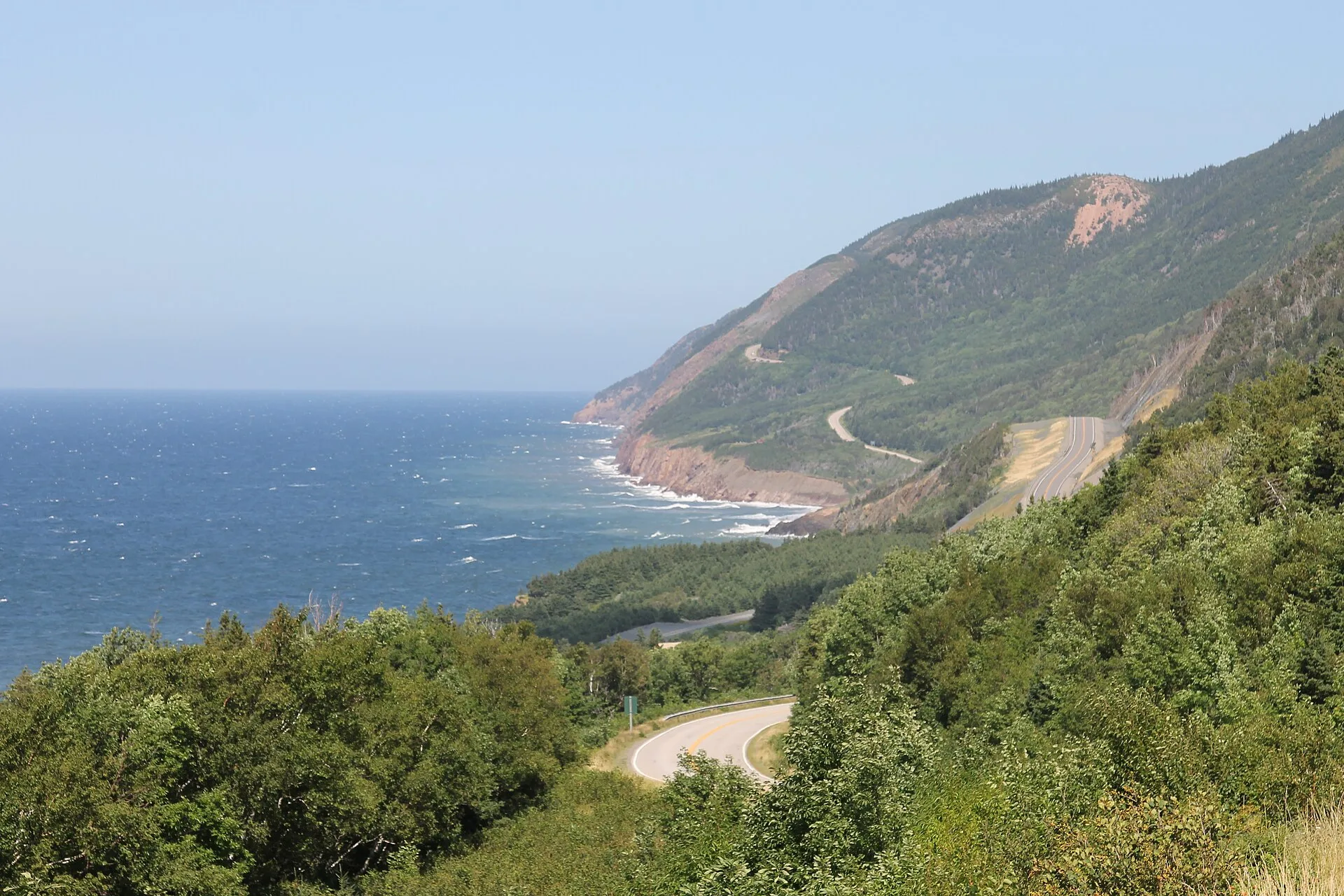
Helen Frankenthaler visited Cape Breton, Nova Scotia, in 1952 and painted Mountains and Sea the same year, when she was 23. The National Gallery of Art in Washington describes how she poured turpentine-thinned oil paint from coffee cans onto unprimed canvas laid on the floor, so that the paint completely permeated the canvas. Soon after it was made, Morris Louis and Kenneth Noland visited her studio, and Louis called the painting a "bridge between Pollock and what is possible". Frankenthaler, Louis and Noland were all later included in Greenberg's 1964 exhibition.
Joan Mitchell (1925 to 1992) was born in Chicago, educated at the Art Institute of Chicago and moved to New York in 1949. She began dividing her time between Paris and New York in 1955, settled in France in 1959 and moved in 1968 to Vétheuil, a village northwest of Paris. SFMOMA places her work in a tradition that includes Monet, Kline and de Kooning, and she is best known for large abstract oils on canvas. Elaine de Kooning (1920 to 1989), born Elaine Fried in New York, met Willem de Kooning in 1938 and married him in 1943. She began writing for ARTnews in 1949, covering Kline, Rothko and Gorky among others, and applied abstract expressionist brushwork to portraits of friends including Frank O'Hara and Allen Ginsberg.
ABSTRACT PAINTING AT THE CLUB LOUNGE, DUBAI

Silverfox Studios completed The Club Lounge at Mandarin Oriental Jumeira, Dubai in 2019. Rattan window seating with hanging planters overlooks the Dubai skyline and the Burj Khalifa. The buffet is built in white marble and timber under a black steel frame. Sofas are placed alongside timber display shelving and a bar counter, and marble-topped tables sit under a cove-lit ceiling with timber beams. In the lounge, a cushioned banquette and a dark timber armchair are set with a large abstract painting.
The abstract expressionists made their large paintings for viewing at close range. The Met notes that the works were meant to be seen in relatively close environments, so that the viewer was virtually enveloped by the experience of confronting the work. Rothko summed up the idea in a single line, "I paint big to be intimate", which the Met reads as pointing towards the personal, authentic expression of the individual rather than the grandiose. Pollock said that on the floor he felt nearer to his painting and more a part of it.
SOURCES
- The Metropolitan Museum of Art Abstract Expressionism (Heilbrunn Timeline of Art History)
- Tate Abstract expressionism (Art Term)
- The Museum of Modern Art Mythical Creatures and Radical Abstractions
- The Museum of Modern Art Jackson Pollock. One: Number 31, 1950
- Britannica Clement Greenberg
- The Museum of Modern Art The New American Painting (press release, 1959)
- National Gallery of Art Helen Frankenthaler, Mountains and Sea
- The Museum of Modern Art Lee Krasner: Selected Chronology (press archive, 1984)
- San Francisco Museum of Modern Art SFMOMA Presents World Premiere of Joan Mitchell
- Britannica Elaine de Kooning